
Best Furniture for Small Apartments: A Practical Guide
The best furniture for a small apartment is multifunctional, scaled to the room, and easy to move: a convertible sofa bed or futon, a wall bed or storage bed, a lift-top coffee table, storage ottomans, an expandable dining table, a wall-mounted or compact desk, and tall, narrow storage. Choose pieces that do two or three jobs, sit on exposed legs, and can be taken apart for the next move, and a small apartment can hold everything you need without feeling crowded.
Best Furniture for Small Apartments at a Glance
| Room / Need | Best Furniture | Why It Works |
|---|---|---|
| Living room seating | Convertible sofa bed, futon, loveseat sleeper | Daily seating plus a guest bed in one footprint |
| More seating and storage | Small sectional with storage chaise | Seating, a bed, and a storage chest |
| Sleeping | Wall bed, cabinet bed, storage platform bed, daybed | Frees floor space or replaces a dresser |
| Coffee table | Lift-top coffee table | Rises to desk or dining height, hides storage |
| Extra seating | Storage ottomans and benches | Seat, footrest, and hidden storage |
| Dining | Drop-leaf or extendable dining table, stools that tuck underneath | Small daily footprint that expands for guests |
| Work | Wall-mounted or compact desk | A real workspace in a corner or on a wall |
| Storage | Tall, narrow bookcases, floating shelves | Uses vertical space, not floor |
| Media | Slim TV stand with closed storage, or a wall-mounted TV | Hides cords and clutter |
For more ideas by type, see space-saving furniture ideas and convertible furniture for small spaces.
Plan Before You Shop
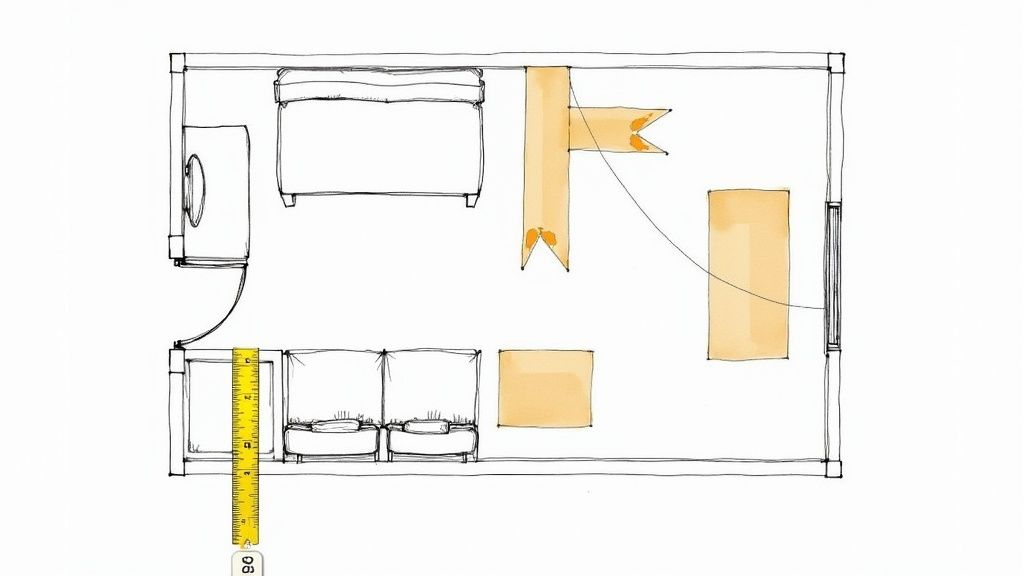
The most common small-apartment mistake is buying a piece that looks right online and swallows the room at home. Measure first.
Measure the Room
- Door swings: how far each door opens into the room.
- Windows: position and sill height, so tall pieces don’t block light.
- Outlets, switches, and vents: so the sofa or media console doesn’t cover them.
- Walkways: plan about 30–36 inches for main paths and at least 24 inches for secondary ones.
Outline each piece on the floor with painter’s tape before buying, including the open size of anything that converts. Futonland’s sizing charts list standard dimensions.
Give Every Piece a Job
Before choosing a design, ask what problem the piece solves. A living room that has to be an office by day, a dining room at night, and a guest room on weekends needs a lift-top coffee table, an expandable table, and a comfortable sofa bed, not a standard sofa and coffee table.
Multifunctional Furniture That Works Overtime
Sofa Beds and Futons
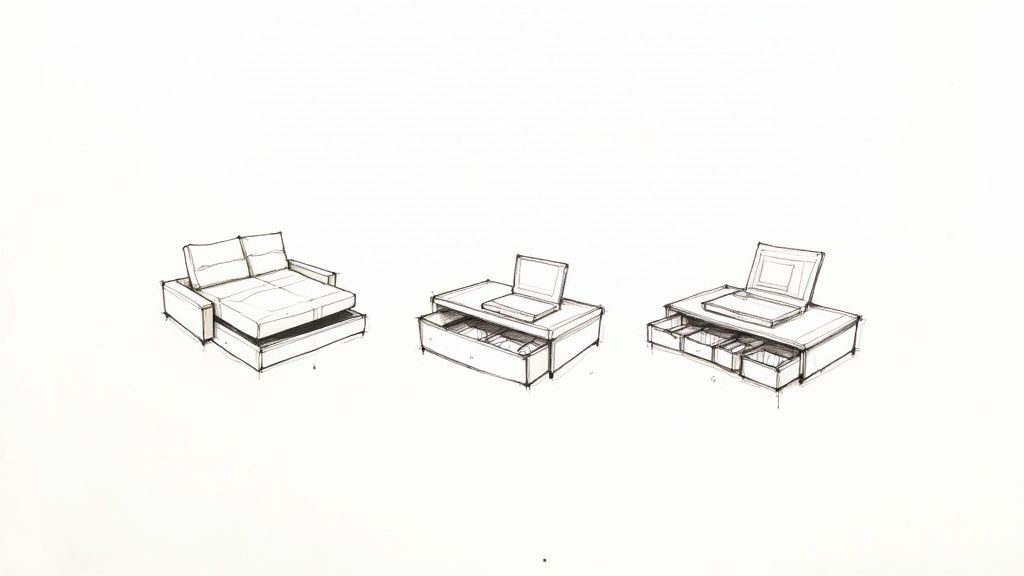
A quality convertible sofa bed or futon is the most valuable piece in most small apartments. It’s your everyday sofa and a real bed for guests, so you don’t need a guest room. Look for supportive cushions or an 8″ or thicker futon mattress, durable fabric, and a mechanism that converts in one smooth motion. Not sure which? Compare them in futon or sofa bed for a studio apartment.
Hidden Storage
- Storage ottomans: a footrest, extra seat, and hiding spot for blankets and games.
- Lift-top coffee tables: the top lifts and pulls forward to desk height, often over a hidden compartment.
- Sectionals with chaise storage: room for pillows, bedding, and off-season clothes.
- Storage beds: drawers or a lift-up base can replace a dresser.
Beds That Free the Floor
In a studio, a wall bed is the most powerful space-saver: it folds up during the day and frees the bed’s entire footprint. Many include desks, shelves, or sofas. If you can’t mount to a wall, a freestanding cabinet bed is a renter-friendly alternative. Learn more in What Is a Murphy Bed?
Dining and Work Surfaces
| Furniture | Primary Function | Secondary Function | Best For |
|---|---|---|---|
| Convertible sofa bed | Daily seating | Guest bed | Apartments without a guest room |
| Lift-top coffee table | Coffee table | Desk or dining surface | Working or eating from the sofa |
| Storage ottoman | Footrest | Seating, storage | Flexible seating and hidden storage |
| Expandable dining table | Small daily table | Expands for guests | Occasional hosts |
| Wall-mounted desk | Workspace | Folds away | A work corner in a bedroom or living room |
Prioritize by your routine: remote workers should start with a desk solution, and people who host often should start with an expandable table.
Small Furniture for Small Apartments: Getting the Scale Right
Multifunction matters, but so does size. Oversized furniture is the most common reason small rooms feel cramped.
- Apartment-size sofas and loveseats: shorter lengths and shallower depths than standard sofas. Check both the length and the depth.
- Armless or slim-arm designs: save several inches of width.
- Round tables: fit more people in less space and are easier to walk around.
- Shallow storage: bookcases and consoles around 12–16 inches deep hold plenty without jutting into walkways.
- Nesting tables instead of fixed end tables.
Modular and Smart Furniture
Modular Furniture
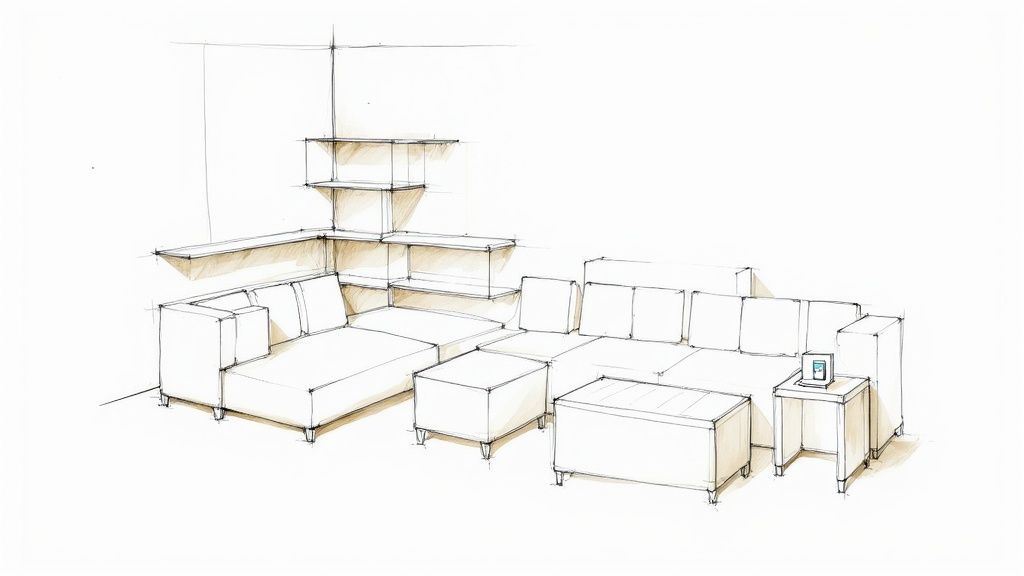
Modular seating comes as separate pieces (chairs, corners, chaises, ottomans) that you can rearrange as your needs or apartment change.
- Fits awkward layouts such as nooks and L-shaped rooms.
- Moves with you: reconfigure or add pieces for the next apartment.
- Easier delivery: smaller pieces fit through tight hallways and stairwells.
Smart Features Worth Having
- Built-in charging in end tables and headboards reduces cord clutter.
- Integrated lighting in shelving or beds replaces separate lamps.
- Smooth conversion mechanisms in wall beds and sofa beds mean you’ll actually use the second function.
Materials That Keep a Room Light
- Glass and acrylic: nearly invisible surfaces, especially for coffee tables.
- Slim metal legs: lift pieces off the floor so you can see beneath them.
- Light woods: birch, ash, and light oak reflect more light than dark finishes.
Arrange Furniture for Better Flow
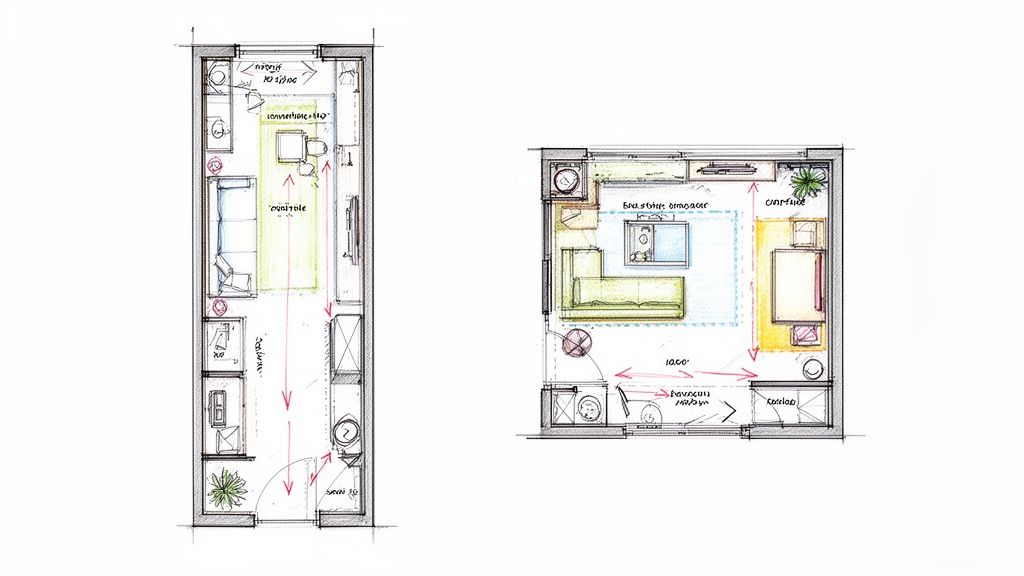
- Pull furniture off the walls. Even a few inches of breathing room makes the space feel larger.
- Anchor zones with rugs. Put at least the front legs of the sofa and chairs on the rug. A rug that’s too small makes the room feel choppy.
- Square rooms: float a small sofa facing the focal point, with a slim console behind it and two small chairs opposite.
- Long, narrow rooms: put the sofa on a short wall or split the room into two zones. A round coffee table and an angled chair break up the long lines.
Planning a single-room home? See studio apartment layout ideas, and for bedrooms, small apartment bedroom ideas.
Make a Small Apartment Look Bigger
- Light, neutral walls with color in pillows, throws, and art.
- Layered lighting: ambient (ceiling), task (reading and desk lamps), and accent (art or shelves), so there are no dark corners. See floor and table lamps.
- A large mirror opposite or beside a window to bounce daylight.
- Curtains hung high and wide, with the rod above and beyond the frame, in light fabrics.
- Low-profile, leggy furniture that keeps sightlines open.
Delivery and Assembly
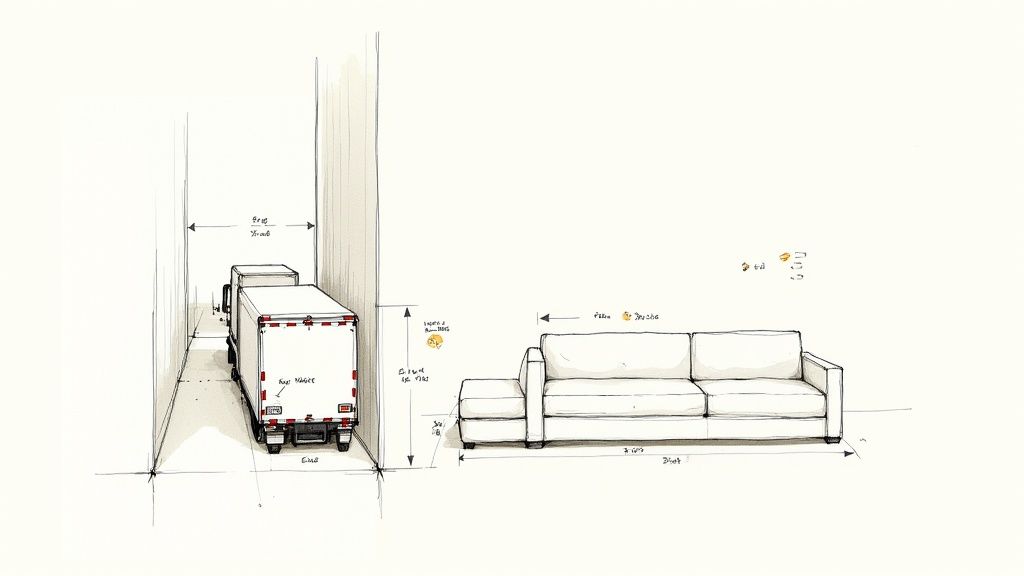
Many deliveries fail not because a piece is too big for the room but because it can’t get to the room.
Measure the Delivery Path
- Building and apartment doors: height and width.
- Hallways: width, especially at turns.
- Stairwells: width, headroom, and landing turns, which is where most items get stuck.
- Elevators: interior height, width, and depth, plus the door opening, which is usually smaller.
Also measure doorways diagonally, from one bottom corner to the opposite top corner. Large pieces are often tilted through.
Flat-Pack vs. Pre-Assembled
Flat-pack furniture arrives in manageable boxes that fit through tight halls and stairwells, but it has to be assembled. Pre-assembled pieces are ready to use but carry the biggest risk of not fitting through the building.
DIY or Professional Assembly?
Simple bookcases and tables are easy DIY projects. Consider professional assembly for heavy pieces, anything with a mechanism, and anything that mounts to a wall, such as wall beds. White glove delivery brings furniture to your room, assembles it, and removes the packaging. See Futonland’s delivery options and free-shipping futon sets.
Smart Renter’s Buying Checklist
Recheck the Fit
- Tape the exact product dimensions on the floor and check the walkways.
- Walk the delivery route with the product dimensions in hand.
- Check the piece’s height against windowsills, thermostats, and art.
Read the Fine Print
- Return policy: the window, any restocking fees, and who pays return shipping on large items.
- Warranty: what’s covered (frame, fabric, mechanism) and for how long.
- Disassembly: can it come apart for your next move? Removable legs and modular components make moving far easier.
Buy for Long-Term Value
Look for solid wood or metal frames rather than particleboard for pieces you’ll use daily, and read long-term reviews for signs of sagging cushions or pilling fabric. Furniture that moves with you to the next apartment is the better investment. For budget strategies, see how to furnish a studio apartment on a budget.
Small Apartment Furniture FAQ
What is the best furniture for a small apartment?
Multifunctional pieces scaled to the room: a convertible sofa bed or futon, a wall bed or storage bed, a lift-top coffee table, storage ottomans, an expandable dining table, a compact or wall-mounted desk, and tall, narrow storage.
What’s the one piece worth splurging on?
The sofa, usually a quality convertible sofa bed, futon, or storage sectional. It serves as your main seating, guest bed, and often storage, all in one footprint.
How can furniture make an apartment look bigger?
Choose pieces with exposed legs, low backs, and light colors, and use glass or acrylic surfaces. Keep walkways clear and don’t push everything against the walls.
Is a Murphy bed a good idea for a studio?
Yes. A wall bed gives you a real bed at night and open floor space during the day, and many include a desk, shelving, or sofa.
What are the biggest mistakes when furnishing a small apartment?
Buying furniture that’s too large for the room, blocking walkways, choosing single-purpose pieces when multifunctional ones exist, and forgetting to measure the delivery path.
The Bottom Line
Furnish a small apartment with fewer, harder-working pieces: a convertible sofa, a bed that saves space, hidden storage, and surfaces that adapt. Measure the room and the path in, keep the scale and visual weight light, and buy pieces that will move with you. Explore Futonland’s sofa beds, futons, and wall beds, or visit a showroom on the Upper West Side, in Greenpoint, or in Newark.