How to Furnish a Studio Apartment on a Budget
Furnishing a studio apartment without breaking the bank is all about making smart, strategic choices. It’s a game of prioritizing versatility and injecting your own personal style. The trick is to plan your layout first, invest in a few hard-working multi-functional anchor pieces (like a great futon or storage sofa), and then get creative with sourcing affordable decor. This way, you build a functional, beautiful home you love, not just a room filled with stuff.
Your Smart Start to Furnishing a Studio Affordably
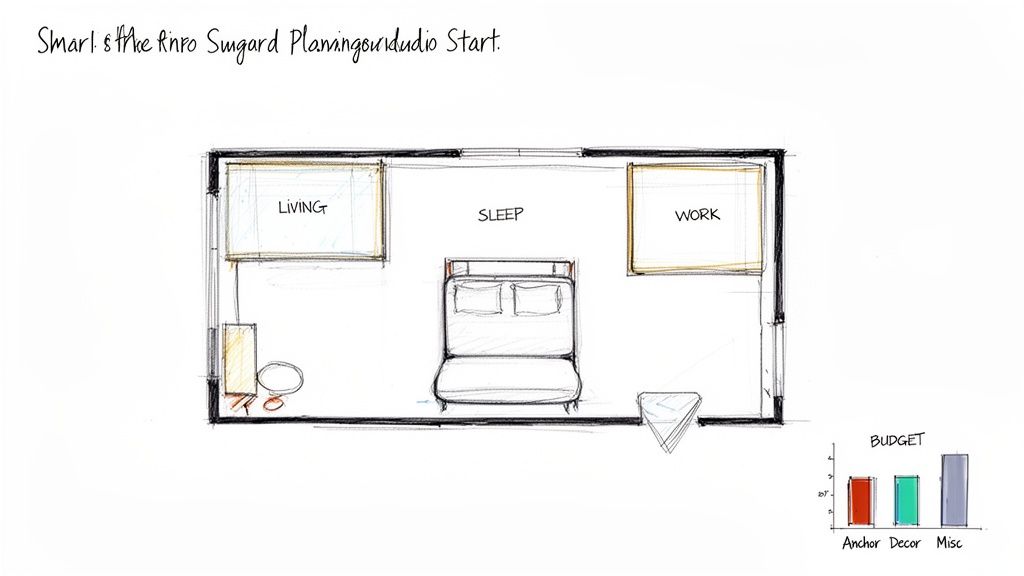
Staring at an empty studio can feel like a huge challenge, especially when you’re working with a tight budget. But it’s completely doable if you go in with a plan. The goal isn’t just to fill the space — it’s to make every square inch work for you, creating a home that feels organized, comfortable, and personal.
This guide focuses on three decisions that make the biggest difference:
- What to buy first (so you don’t waste money on the wrong scale).
- What to spend on vs. save on (so you invest where it matters).
- How to source affordably (without ending up with junk that falls apart).
Set a Realistic Budget from Day One
Before browsing furniture sites, define your total spend and split it into categories. A simple budget prevents impulse buys and makes it easier to spot where you can save (like decor and side tables) and where you should invest (like your main sleep and seating piece).
Here’s a sample breakdown to guide your priorities. Adjust it based on what you already own and how you live.
Sample Budget for a Studio Apartment
| Furniture Category | Budget Percentage | What It Covers | Key Pieces to Consider |
|---|---|---|---|
| Sleeping & Seating | 40–50% | Your daily comfort essentials | Futon, sleeper sofa, Murphy bed cabinet, convertible chair |
| Storage & Surfaces | 20–25% | Keeping clutter under control | Shelving, dresser, storage ottoman, coffee table |
| Work/Dining | 10–15% | A functional place to eat/work | Drop-leaf table, folding chairs, compact desk |
| Lighting & Decor | 10–15% | Making the space feel finished | Floor lamp, rug, curtains, wall art, plants |
| Miscellaneous/Flex | 5–10% | The stuff people forget | Delivery/assembly, tools, small upgrades |
Your budget is your roadmap. It tells you where to invest, where to save, and prevents you from buying pieces that don’t fit your space or your routine.
Know What to Buy New vs. Used
The best “budget studios” aren’t fully secondhand or fully new — they’re a smart mix. Use this rule:
- Buy new: your main sleep surface (mattress/futon mattress), your primary seating/sleeper, and bedding basics.
- Buy used: side tables, lamps, mirrors, bookcases, dining chairs, wall art, and decor.
This approach lets you spend on comfort and durability while saving on everything that’s easy to clean, repaint, or swap later.
Plan Your Layout Before You Spend a Dime
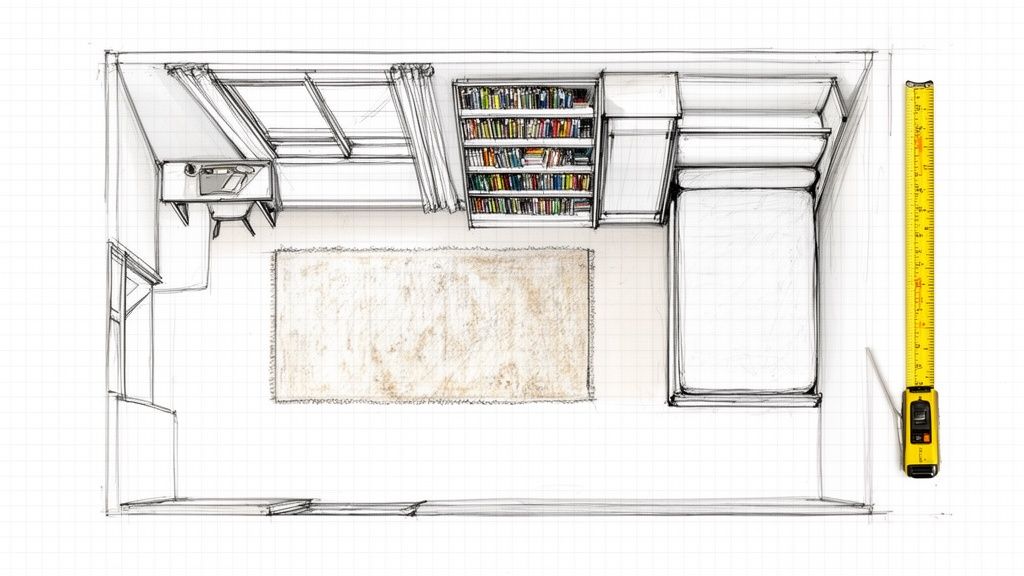
The fastest way to blow a studio budget is buying furniture that doesn’t fit or blocks how you actually move through the room. Before you order anything big, measure:
- Room length and width (and any alcoves)
- Window/door placements
- Radiators, outlets, and awkward corners
- Doorway widths and hallway turns (for delivery)
Create Zones for Living
Zoning is how you make one room feel like a “home.” You don’t need walls — you need visual boundaries:
- Rug zoning: define the living area by putting seating and a table on a rug.
- Open shelving as a divider: a tall, open-back shelf creates separation without blocking light.
- Furniture orientation: placing the sofa “back” toward the bed area creates a natural divide.
Always account for traffic flow. A clear pathway makes even a small studio feel calmer and easier to live in.
Measure for Convertible Pieces
For futons and sleeper sofas, you must plan for two sizes:
- Closed size (everyday sofa mode)
- Open size (bed mode, including “open depth”)
Use painter’s tape to mark both footprints on the floor. This prevents the classic mistake: a sleeper that technically fits — but becomes unusable when opened.
If you need help visualizing dimensions, start with furniture sizing charts.
Anchor Your Space with Multi-Functional Furniture
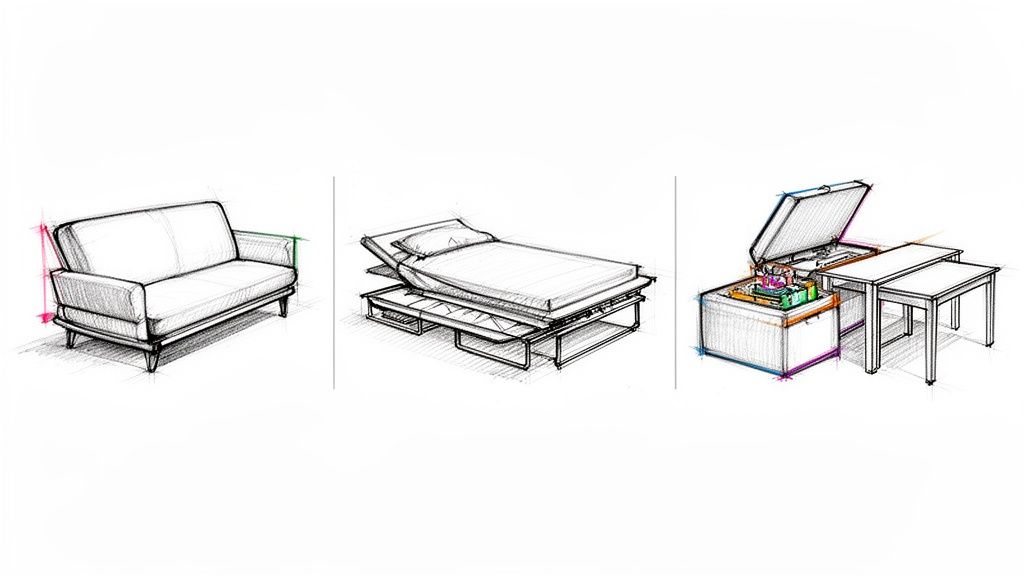
Your “anchor” piece is the one item you’ll use every day — and it sets the scale for everything else. In a studio, your anchor is usually a sleeper:
- Futon sofa bed: fast conversion and efficient footprint.
- Sleeper sofa: a more traditional sofa look with a hidden bed.
- Storage sectional: seating + bed + a place to stash bedding.
- Murphy cabinet bed: a bed that “disappears” so the room works harder during the day.
Choosing the Right “Hero Piece” for Your Routine
| Furniture Type | Best For | Why It Works in a Studio |
|---|---|---|
| Classic Futon Sofa Bed | Daily conversion, simpler setup | One piece does two jobs with minimal hassle |
| Modern Sleeper Sofa | A “real sofa” look | Blends into living space while staying guest-ready |
| Storage Sectional | Clutter control | Bedding storage solves a big studio pain point |
| Murphy Cabinet Bed | Max daytime floor space | Turns the studio into a flexible multi-use room |
If you want to browse flexible options that work well in tight layouts, start here: convertible sofa beds.
Beyond the Bed: Small Pieces That Do Double Duty
After your anchor, everything else should “earn” its place:
- Storage ottoman: coffee table + extra seat + hidden storage. (See: ottomans)
- Nesting tables: compact daily use, expandable when you host.
- Drop-leaf table: dining and work surface that folds down when you’re done.
- Bedside ledge or slim nightstand: gives function without eating floor space.
Your Bedding Starter Pack
Once you’ve picked out your mattress and frame, it’s time to dress the bed for maximum comfort. Never underestimate the power of good bedding. Aim to have these basics ready to go from day one.
Non-Negotiable Bedding Checklist:
- Two Sets of Sheets: Trust me, having a backup set is a lifesaver on laundry day. Look for breathable materials like cotton or linen.
- A Quality Comforter or Duvet: Pick a weight that makes sense for your local climate and whether you tend to sleep hot or cold.
- Pillows (That Actually Suit You): Just like mattresses, pillows are incredibly personal. Choose them based on your main sleeping position to get the right neck support.
- A Mattress Protector: This is a non-negotiable. It’s a small investment that protects your big investment from spills, allergens, and everyday wear and tear.
With these essentials in hand, your bedroom will be a genuinely restful and functional retreat from the moment you move in.
Source Affordable Pieces Like a Pro
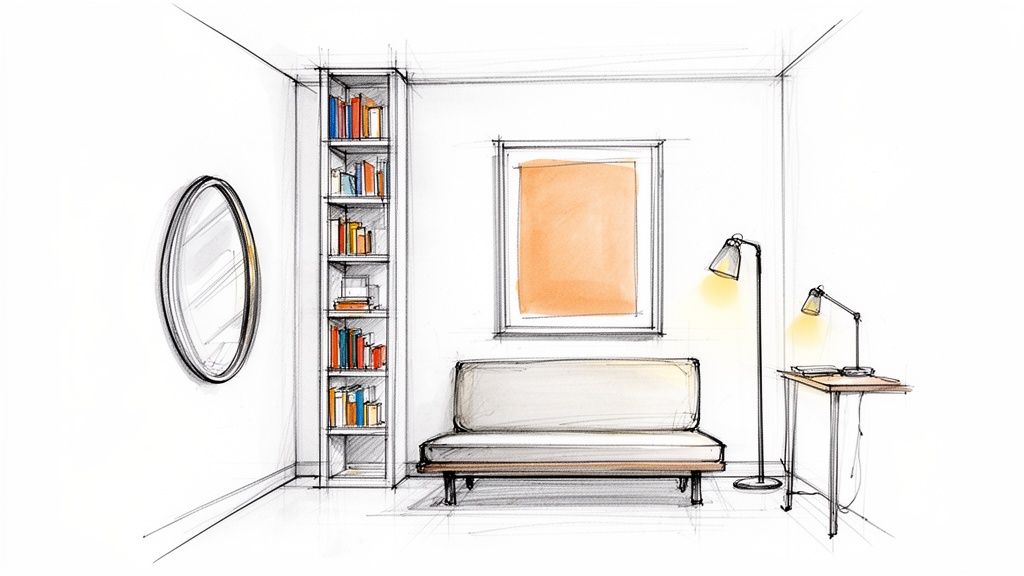
This is where budgets are won or lost. The goal isn’t “buy cheap.” The goal is buy smart — spend less on the pieces that don’t affect daily comfort.
Where to Find the Best Used Deals
- Local marketplaces: best for shelves, tables, mirrors, chairs.
- Thrift stores: lamps, frames, decor, smaller furniture.
- Estate sales: strong for solid wood pieces (dressers, sideboards).
- Moving sales: people want it gone fast, which means negotiation is easy.
Look for “good bones.” Solid construction matters more than cosmetic wear. Scratches can be fixed; unstable frames and water damage usually aren’t worth it.
Three Easy DIY Upgrades That Make Cheap Finds Look Expensive
- Hardware swap: new knobs/pulls can change a piece instantly.
- Paint or stain refresh: especially on nightstands and shelves.
- Lighting upgrade: a better lampshade or warm bulbs improves the whole room.
Make Your Studio Feel Bigger Without Buying More Stuff
Once the core furniture is in place, small design choices make the studio feel calmer, brighter, and more “finished.”
Use Vertical Space
Go tall with storage: shelving and wall-mounted hooks keep the floor open and reduce the cramped feeling.
Add One Large Mirror
A single oversized mirror can brighten a studio and add depth. Placing it near a window helps bounce light around the room.
Layer Your Lighting
Studios feel better with multiple light sources:
- Ambient: overhead fixture
- Task: desk lamp or reading light
- Accent: floor lamp or small table lamp
Stocking Your First Kitchen for Success
Getting your first kitchen set up is your secret weapon for saving money and really making a new apartment feel like home. This room often needs the most stuff, which can feel pretty overwhelming at first. The trick is to focus on what you need to cook simple, healthy meals right away. This will help you sidestep the budget-killing trap of ordering takeout for the first few weeks.
By sticking to versatile basics, you can build a kitchen that actually works without cramming your limited cabinet space with single-use gadgets you’ll never touch. It’s all about being equipped from day one.
The Must-Haves for Cooking and Prep
Before you even think about that fancy spiralizer, let’s cover the tools that handle most basic cooking tasks. A decent set of pots and pans is non-negotiable. Look for a small starter kit that includes a small saucepan, a larger stockpot, and a versatile skillet. That’s really all you need to get going.
Next up: your prep tools. A good, sharp chef’s knife will be your best friend in the kitchen. Seriously, one good knife is better than a whole block of dull, cheap ones. Pair it with a sturdy cutting board (wood or plastic is fine), a set of mixing bowls, and measuring cups and spoons.
- Pots and Pans: A small, versatile set is all you need to start.
- Knives and Cutting Board: Invest in one good chef’s knife; it’s safer and more effective.
- Mixing and Measuring: Essential for everything from scrambling eggs to tossing a salad.
Essentials for Eating and Drinking
Once you can cook a meal, you’ll need something to eat it on. Start with a simple dishware set for four—this usually includes dinner plates, smaller plates, and bowls. You don’t need a huge 12-piece set right away; four place settings are perfect for you and a few friends.
The same logic applies to silverware and glasses. A basic set of forks, knives, and spoons, along with a few durable drinking glasses and coffee mugs, will cover all your bases without hogging precious drawer space.
Don’t overbuy! It’s so easy to get carried away with specialty glassware or that cool serving platter. Stick to the daily essentials first and add unique pieces later as you figure out what you truly need.
To give you a clearer picture, here’s a quick-start checklist to guide your shopping.
Kitchen Essentials Starter Checklist
| Category | Essential Items | Why It’s a Priority |
|---|---|---|
| Cookware | Skillet, Saucepan, Stockpot | Handles frying, boiling, and simmering—the foundation of most simple meals. |
| Prep Tools | Chef’s Knife, Cutting Board, Mixing Bowls | A good knife makes prep faster and safer. Bowls are for mixing, storing, and serving. |
| Utensils | Spatula, Large Spoon, Whisk, Can Opener | These are your workhorses for stirring, flipping, and opening canned goods. |
| Dishware | Plates, Bowls, Mugs (4 of each) | Covers daily meals for yourself and a few guests without creating clutter. |
| Flatware | Forks, Spoons, Knives (4 sets) | A basic set is all you need to start eating the meals you cook. |
| Small Appliances | Microwave, Coffee Maker/Kettle | For quick reheating and your daily caffeine fix, these are often non-negotiable. |
This list will get you through your first few weeks without feeling like you’re “camping” in your own apartment.
And finally, don’t forget the small but mighty items: a can opener, a spatula, a large spoon for stirring, and a colander for draining pasta. With these basics in place, you’ll be ready to cook your first real meal in your new home. If you need to furnish a small dining nook, check out our selection of kitchen and dining room furniture that fits perfectly in tight spaces.
Your Move-In Day Survival Kit
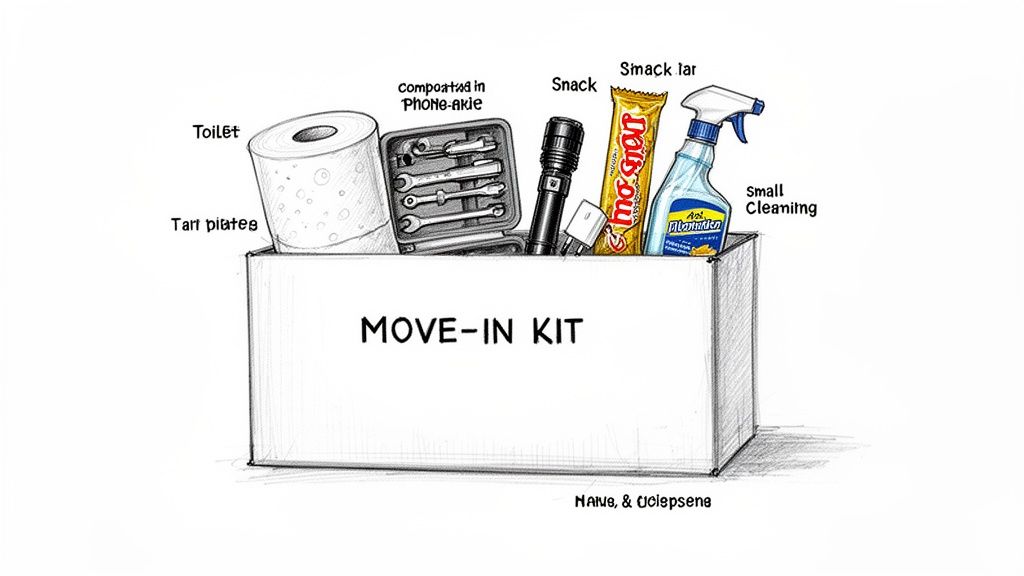
The first 24 hours in a new apartment are always a special kind of chaos. It’s exciting, sure, but it’s also exhausting. To keep things from getting overwhelming, the single smartest thing you can do is pack a dedicated survival kit.
This isn’t just another box. This is the one box you keep separate from everything else. It rides with you in the car, not in the back of the moving truck. Trust me, it’s a lifeline that prevents you from frantically digging through a mountain of cardboard just to find toilet paper or a phone charger. It’s a small step that makes a huge difference.
What Goes Inside Your Lifeline Box
Think about what you’ll need the minute you walk through the door. The goal here is to cover immediate needs: basic cleaning, simple assembly, hygiene, and your own comfort. There’s nothing worse than needing a box cutter and knowing it’s buried in one of twenty identical-looking boxes.
Here’s a practical list of what I always recommend packing:
- Cleaning Basics: At a minimum, you’ll want paper towels, an all-purpose cleaning spray, and a few trash bags for that first wipe-down.
- A Simple Toolkit: A box cutter is non-negotiable. Add a multi-bit screwdriver, a hammer, and maybe some pliers. You’ll need these for opening boxes and starting any simple furniture assembly.
- Bathroom Must-Haves: Don’t get caught without a roll of toilet paper, a bar of soap, a hand towel, and your toothbrush/toothpaste.
- Tech and Power: Your phone is your connection to everything. Pack your phone charger, a portable power bank, and a small power strip.
- Personal Items: A fresh change of clothes, any essential medications, bottled water, and some easy snacks will keep you going when you’re too tired to think about food.
Your move-in day survival kit is the ultimate act of self-care during a hectic time. It acknowledges that you’ll be tired and overwhelmed, and it provides immediate solutions for your most basic needs without any added stress.
The First Week Essentials
While the survival kit gets you through day one, there are a few other items you should keep easily accessible for the first week. Before you get lost in the sea of unpacking, make sure you know exactly where to find a shower curtain and liner, a bath towel, and a set of bed sheets.
Having these basics handy bridges the gap between just moving in and actually feeling settled. Putting together a complete moving day survival kit ahead of time lets you focus on the bigger tasks, knowing your immediate comfort is already handled.
A Simple 30-Day Furnishing Timeline
If you want to avoid overspending, furnish in phases:
- Week 1: layout plan + anchor piece (sleep/seating)
- Week 2: storage essentials + work/dining solution
- Week 3: lighting + rug (zoning)
- Week 4: decor, art, and upgrades (only after living in the space)
A Few Final Questions on Furnishing Your Studio
What’s the First Thing I Should Buy?
Your anchor piece: futon, sleeper sofa, or a Murphy cabinet bed. Everything else should be sized around it.
Should I Buy Everything at Once?
No. Buy essentials first, then live in the space. You’ll make better decisions and avoid impulse purchases that don’t fit.
Is a Rug Worth It in a Studio?
Yes. It’s one of the easiest ways to define zones and make the room feel intentional instead of temporary.
Ready to find the right anchor piece? Futonland has been helping people maximize small spaces since 1995 with futons, sleeper sofas, and space-saving beds designed for modern city living.
Explore space-saving furniture at Futonland.com
How Can I Save Money on Apartment Essentials?
The single best trick is to think multifunctional. Choose furniture that pulls double or even triple duty. A quality sofa bed, for example, is your couch and your guest bed, instantly saving you the cost of buying two separate, bulky pieces of furniture.
Also, don’t fall into the trap of thinking you need to buy everything at once. Get the must-haves squared away, then slowly add the less critical items as your budget allows. It’s a marathon, not a sprint. Many retailers also offer financing, which can be a huge help for spreading out the cost of bigger investments without having to settle for lower quality.
Smart spending is all about prioritizing function. One piece that serves two or three purposes is a much better investment for a small apartment than three separate items that each do only one thing. You’ll save money and precious floor space.
What Are the Most Commonly Forgotten Apartment Essentials?
It’s always the little things, isn’t it? While you’re focused on the big furniture, it’s easy to forget the small stuff that makes a place livable. A simple toolkit with a hammer, screwdriver, and measuring tape is non-negotiable for hanging pictures and assembling… well, everything. And trust us, a plunger is one of those things you don’t want to need and not have.
Extension cords and power strips are another classic “oops” item, especially in older buildings where outlets are mysteriously scarce. And finally, get a basic first-aid kit. It’s a must-have for any home, giving you peace of mind for those inevitable minor scrapes and bumps.