
Clean Polyester Furniture: Quick Tips For A Fresh, Spot-Free Sofa
Before we dive into the cleaning methods, it’s worth taking a moment to appreciate why you probably chose polyester in the first place. Knowing its strengths helps you understand how to care for it.
Why Polyester Furniture Is a Smart Choice for Modern Homes
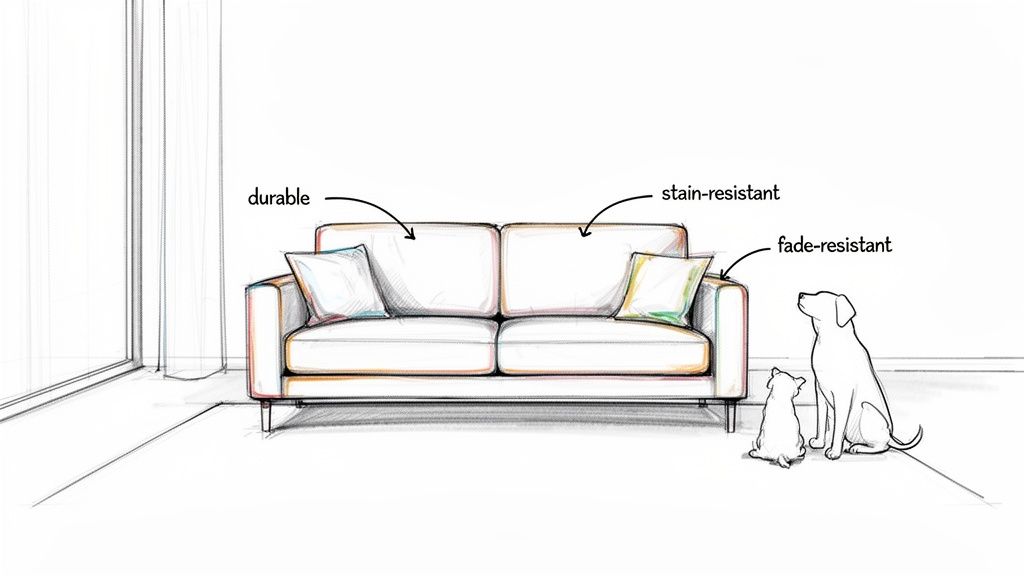
If you have a busy home filled with kids, pets, or just life in general, you know the struggle of keeping furniture looking good. Polyester upholstery didn’t just become popular by accident; it’s a practical, high-performance fabric designed for the realities of daily living. It’s the go-to choice for households that need furniture to be more than just pretty.
The Practical Benefits of Polyester
At its core, polyester is a synthetic fiber, and that’s what gives it a serious edge over natural fabrics like cotton or linen. These aren’t just selling points; they’re real-world benefits that mean less stress and easier upkeep for you.
- Stain Resistance: Polyester fibers are naturally hydrophobic, which is a fancy way of saying they repel water. When spills happen, the liquid tends to bead up on the surface instead of soaking in immediately. This gives you a crucial window to grab a cloth and blot it away before a real stain can form.
- Durability and Longevity: The fibers themselves are incredibly strong, which means they hold up against stretching, shrinking, and general wear and tear. This is why you see polyester used so often on high-traffic pieces like family sectionals and futons that get used every single day.
- Fade and Wrinkle Resistance: Polyester holds onto dye extremely well, so it’s much less likely to fade in the sun compared to natural materials. It also naturally resists wrinkling, keeping your furniture looking crisp and neat without much effort.
Durability is exactly why so many fantastic fabric sofa sets are made with polyester or polyester blends.
Key Takeaway: Choosing polyester is really about choosing peace of mind. You get stylish, comfortable furniture without the constant worry about spills and wear. This guide is all about giving you the simple, effective cleaning techniques to keep it that way.
How to Read Your Furniture’s Care Tag Correctly
Before you even think about tackling a stain on your polyester furniture, your first mission is to find the care tag. This little label is the single most important cleaning tool you have—it’s the manufacturer’s official instruction manual. Ignoring it is the quickest way to end up with a disaster like water rings, faded color, or even shrunken fabric.
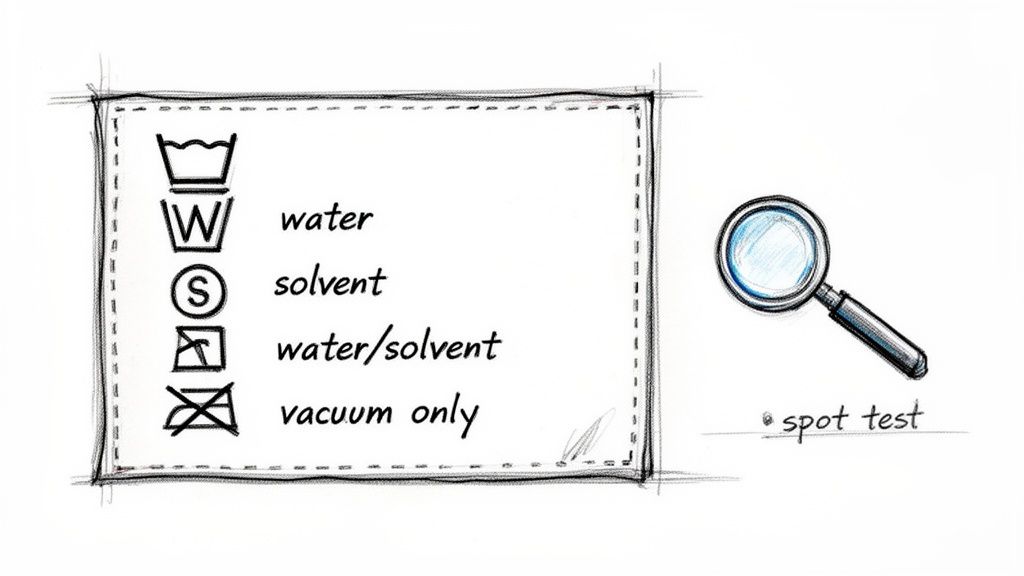
These tags use a simple letter-based code to tell you exactly which cleaning agents are safe for that specific fabric. Understanding them takes all the guesswork out of the process, letting you clean with confidence and protect your furniture for the long haul.
Decoding the Fabric Cleaning Symbols
Think of these letters as your personal roadmap to a spotless sofa. Each one points you to a specific cleaning method, making sure you use the right solution for your particular polyester blend. It’s a simple system, but knowing what each code means is critical.
Here’s a quick reference guide to help you decipher your furniture’s cleaning tag and pick the right tools for the job.
Understanding Your Polyester Furniture Cleaning Codes
| Code | What It Means | Safe Cleaning Agents | Best For |
|---|---|---|---|
| W | Water-Based Cleaner | Mild soap, upholstery shampoo, water | Easy-to-clean fabrics; great for common spills like juice or coffee. |
| S | Solvent-Based Cleaner Only | Dry cleaning solvents (water-free) | More delicate polyester blends that could be damaged or discolored by water. |
| W/S | Water or Solvent | Both water-based and solvent cleaners are safe | The most versatile fabrics, giving you options for both oily and water-soluble stains. |
| X | Vacuum or Brush Only | No liquids whatsoever | Fabrics that must be kept dry. Using any liquid will likely cause permanent damage. |
Once you know your code, you’re halfway there. A ‘W’ code is the most common and user-friendly, while an ‘S’ code requires a bit more care. The ‘W/S’ code gives you the most flexibility, and an ‘X’ code is a clear warning to stick to dry methods only.
Crucial First Step: Always perform a spot test before cleaning. Apply a tiny amount of your chosen cleaner to an inconspicuous area—like the underside of a cushion or a hidden seam—and let it dry completely. This quick check ensures there’s no discoloration or negative reaction with your fabric.
If you’re ever unsure about a fabric’s durability or want to explore different textures, looking at futon covers and fabric sample swatches can give you a better feel for various polyester types and what their care might entail. After you’ve confirmed the code and done a successful spot test, you’re ready to get to work.
Assembling Your Go-To Polyester Cleaning Toolkit
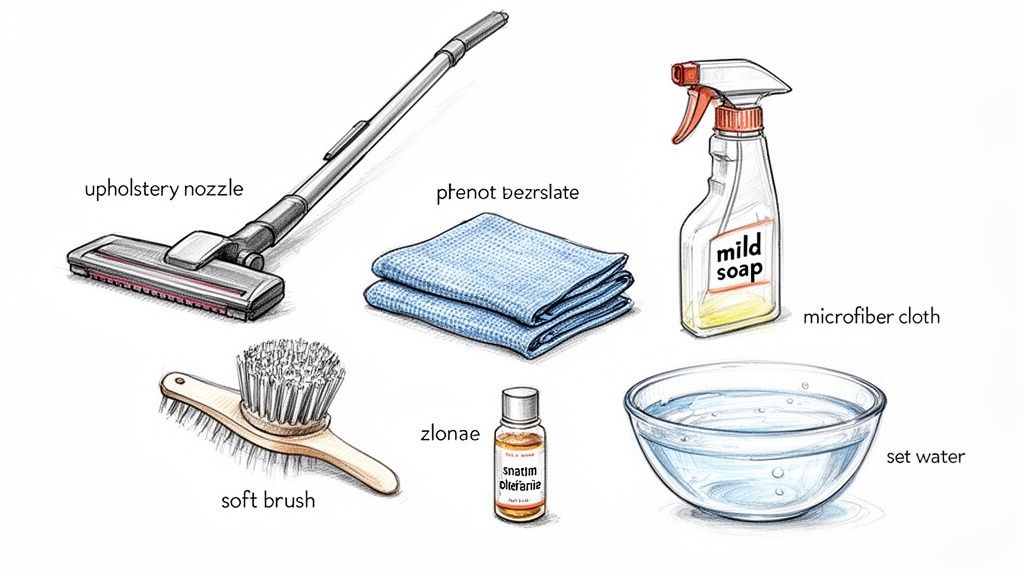
Before you can tackle any mess on your polyester furniture, you need the right tools at the ready. Having a well-stocked cleaning kit means you can act fast when spills happen and keep up with routine maintenance without having to think twice. The best part? You don’t need any fancy, expensive gear; most of what you’ll need is probably already under your sink.
The whole point is to be ready for anything, from daily dust to that dreaded red wine spill. It’s always better to be proactive—it’s what stops a small mess from becoming a permanent stain.
Essentials For Everyday Upkeep
Think of this as your first line of defense. Light, regular cleaning is what prevents the buildup of dust, pet hair, and crumbs. Those little particles might seem harmless, but they’re actually abrasive and can wear down polyester fibers over time. Sticking to a routine makes the deep cleans less frequent and a whole lot easier.
For this job, your vacuum cleaner is your best friend.
- Vacuum with Upholstery Attachment: This is a must-have. That soft brush attachment is perfect for lifting debris from the fabric’s weave without causing any pilling or snagging. Try to give your furniture a quick vacuum once a week to keep it looking fresh.
This simple step is more important than it sounds. It gets rid of all the surface-level grime before it has a chance to work its way deeper into the upholstery, where it becomes a real pain to remove.
Your Deep Cleaning Arsenal
For those bigger messes or just a good seasonal refresh, you’ll need to grab a few more supplies. Whether you’re a fan of DIY solutions or prefer a store-bought cleaner, the process is pretty much the same: apply gently, clean effectively, and dry properly. Your furniture’s care tag is your ultimate guide, but this list covers just about every situation.
DIY Cleaning Solution Supplies:
- Mild Dish Soap: A clear, dye-free liquid soap works best. You just need a couple of drops.
- Warm Water: This is just to create your sudsy cleaning solution.
- Spray Bottle: A spray bottle lets you apply the cleaner lightly and evenly, so you don’t soak the fabric.
- Multiple Microfiber Cloths: You’ll want at least two—one for cleaning and another for blotting and drying. Their soft texture is perfect for polyester.
This simple soap-and-water mix is often all you need for general grime and most water-based spills, especially if your furniture has a ‘W’ or ‘W/S’ code.
Pro Tip: When you’re making your DIY cleaner, whip up some suds in a bowl and only apply the foam to the furniture with your cloth. This trick cleans really well while using minimal moisture, which is the secret to avoiding water stains.
The fact that polyester is so durable and easy to clean is a huge reason it’s so popular for high-traffic furniture like futons and convertible sofa beds. Its fibers are naturally hydrophobic, which gives you a crucial window of time to clean up spills before they set.
If you decide to go with a commercial cleaner, just make sure it’s specifically made for upholstery and matches your furniture’s cleaning code. And always, always test it on a hidden spot first to make sure it doesn’t cause any discoloration. With these tools in your kit, you’re ready for pretty much anything.
Routine Maintenance for a Fresh Sofa
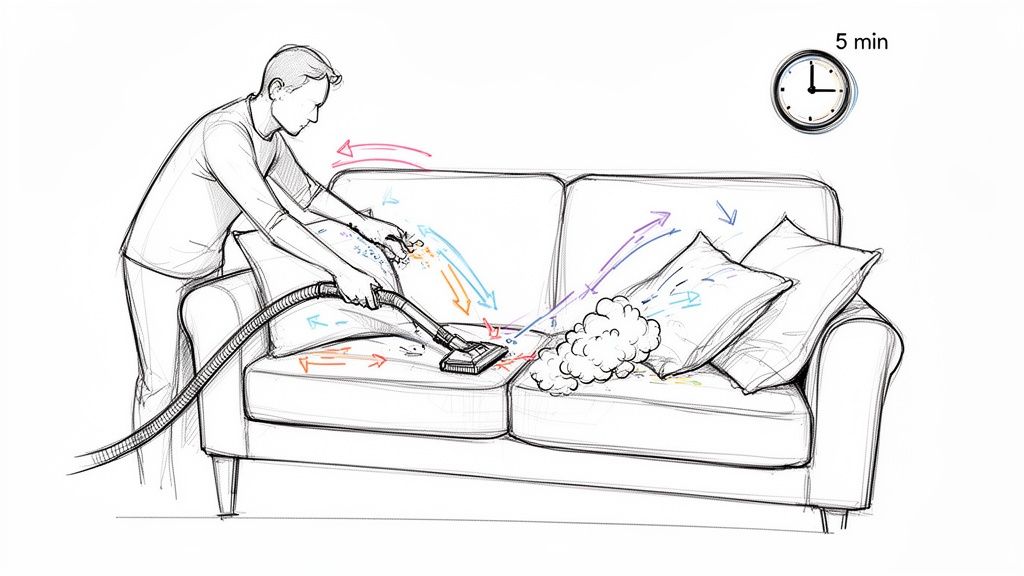
The secret to a perpetually clean polyester sofa isn’t some marathon deep-cleaning session—it’s the small, consistent habits you build. Think of it like brushing your teeth; you do it daily to prevent bigger problems down the road.
A simple five-minute weekly routine is your best defense against the gradual buildup of dust, crumbs, and pet dander. It’s this everyday grime that makes fabric look dull and worn out long before its time. Catching dirt before it settles deep into the fibers makes future spot treatments far more effective.
Your Weekly Upkeep Checklist
Making this a quick, effortless part of your weekly cleaning schedule is the goal. It shouldn’t feel like a major chore, but more like a simple reset for your living space. This is about more than just a quick pass with the vacuum; it’s about being methodical to get the best results.
Here’s a simple yet powerful routine:
- Systematic Vacuuming: Start with the right tool—an upholstery brush attachment. Use it to gently vacuum all the main surfaces, including the back and arms. The soft bristles are designed to lift debris without being abrasive.
- Crevice and Seam Duty: Switch to the crevice tool. This slender nozzle is perfect for getting into those tight spaces where crumbs, hair, and dust love to hide—between cushions, along seams, and in decorative tufts.
- Cushion Rotation and Fluffing: If your cushions are removable, take them off for a good fluff or shake. When you put them back, rotate and flip them. This simple step ensures they wear evenly and helps them keep their shape for much longer.
Polyester’s natural stain resistance really shines when you back it up with regular upkeep. A quick weekly vacuum pulls a large share of dust and allergens right out of the fabric.
For households with pets and kids, this simple act prevents the buildup that can trigger allergies and keeps your sofa looking its best.
If you’re dealing with pet fur, you know it’s a constant battle. Another smart move is to explore different futon covers; they can provide an extra layer of protection that makes cleaning even easier.
A Practical Guide to Removing Common Stains
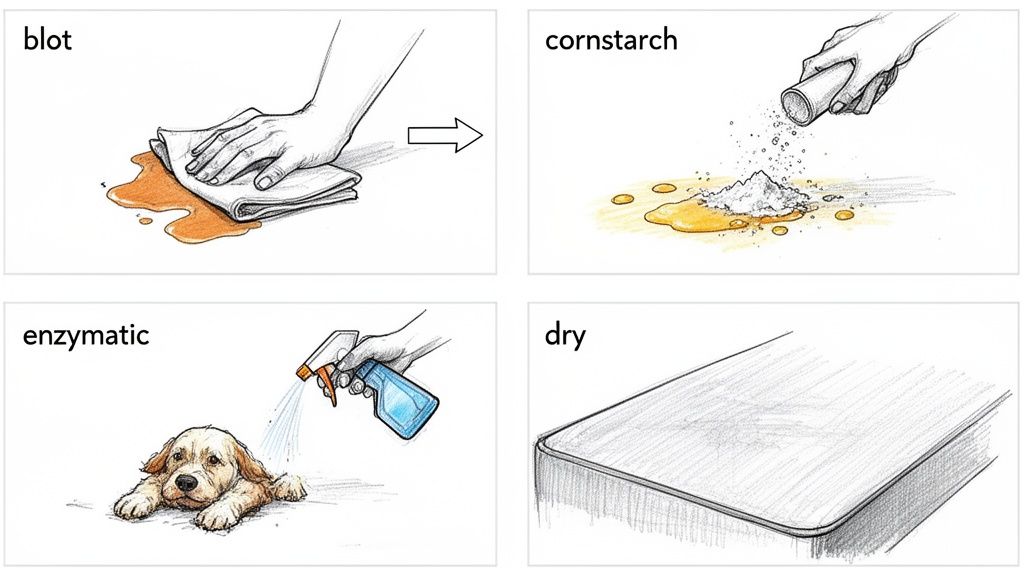
Life happens. Spills are just an inevitable part of owning and living with your furniture. The good news is that polyester’s durable, stain-resistant nature makes it a formidable opponent against most common messes. The real secret to success isn’t complicated; it’s all about acting quickly and using the right technique for the specific type of stain you’re facing.
Your first instinct should always be to blot, not rub. Seriously. Rubbing a fresh spill just grinds the mess deeper into the fabric fibers, setting the stain and making it much harder to remove. Always start from the outside edge of the stain and blot inward to keep it from spreading.
Tackling Food and Drink Spills
Coffee, juice, and wine—these are some of the most frequent offenders when it comes to furniture stains. Since most of these are water-based, they’re often the easiest to handle if you catch them right away.
First, gently blot the spill with a clean, dry cloth to soak up as much liquid as you can. Next, assuming your furniture’s tag is ‘W’ or ‘W/S’, mix a few drops of a mild, clear dish soap with warm water. Lightly dampen a fresh microfiber cloth with the solution—don’t soak it—and continue blotting the stain until it lifts.
Banishing Oil and Grease Stains
Oil-based stains from things like salad dressing, pizza grease, or lotions need a totally different approach because, as we know, water and oil don’t mix. Your first step here is all about absorption.
Quickly cover the oily spot with a generous layer of an absorbent powder. You have a few great options that are probably already in your kitchen:
- Cornstarch: An inexpensive and surprisingly effective choice.
- Baking Soda: Works wonders to absorb the oil while also helping to neutralize any potential odors.
- Salt: A good alternative if it’s all you have on hand for an immediate spill.
Let the powder sit for at least 15-20 minutes to draw the grease out of the fibers. After it’s had time to work its magic, vacuum it all up using a brush attachment. If a faint spot remains and your care tag is ‘S’ or ‘W/S’, you can then treat it with a small amount of a dry cleaning solvent on a cloth.
Remember, the faster you can get an absorbent powder on a grease stain, the better your chances of removing it completely. The powder acts like a tiny sponge, pulling the oil out of the polyester before it can set permanently.
Erasing Ink Marks
An accidental pen mark on your beautiful polyester furniture can feel like a disaster, but it’s usually fixable. The trick is to use a solvent that can break down the ink without damaging the fabric itself. Rubbing alcohol or even an alcohol-based hairspray can work wonders here.
Just apply a small amount of the alcohol to a cotton ball or the tip of a clean cloth. Dab gently at the ink mark, being very careful not to spread it. You should see the ink begin to transfer from the upholstery to the cloth. Keep dabbing with a clean section of the cloth until the ink is gone, then blot the area with a water-dampened cloth to rinse away any leftover alcohol, and let it air dry.
Dealing with Pet Accidents
When it comes to pet stains, you’re fighting two battles at once: the visible spot and the invisible odor. Regular cleaners just won’t cut it. For this job, you absolutely need an enzymatic cleaner.
These specialized cleaners contain enzymes that physically break down the organic proteins in urine, feces, and vomit. This process completely eliminates the source of both the stain and the smell. For particularly challenging biological stains, acting quickly is key. To prevent these accidents from reaching the mattress beneath your upholstery in the future, we highly recommend using protective bed and mattress protectors.
Start by blotting up as much of the mess as possible. Then, saturate the area with the enzymatic cleaner, letting it work for the time specified on the product label. Blot it dry with a clean cloth, and the stain and odor should be neutralized. A huge bonus is that using an enzymatic cleaner also helps prevent your pet from returning to the same spot.
For pieces like futons that see a lot of use, having stylish and easily washable futon covers can be a real lifesaver. They provide a protective barrier that simplifies cleaning up after pets and kids.
Cleaning Tips for Futons and Convertible Sleepers
Convertible furniture like futons and sleeper sofas are the workhorses of any home. They pull double duty, serving as the go-to couch for daily lounging and instantly transforming into a guest bed when needed. But this dual function means they face a whole different set of cleaning challenges—think hidden crumbs in the folding mechanisms, or figuring out how to handle a non-removable cover. You can’t just treat them like a standard sofa.
These hardworking pieces need their own playbook. With the right approach, you can keep them fresh, comfortable, and ready for action, whether it’s movie night or an overnight guest.
Cleaning Removable Futon Covers
If your futon has a removable cover, you’re in luck. This is by far the easiest way to get that deep-clean feeling. But before you just toss it in the wash, always check the care tag. Some polyester blends are picky and might need cold water, a gentle cycle, or even a trip to the dry cleaner to avoid shrinking or damage.
For covers that are machine-washable:
- Stick to a gentle cycle with cold water and a mild detergent that’s free of dyes.
- Tumble dry on the lowest heat setting possible. Even better, let it air dry. High heat is polyester’s worst enemy and can cause permanent damage to the fibers.
This is a great chance to appreciate just how far modern futons have come. Many are now designed with easy-care covers, making them a perfect fit for busy households.
Expert Tip: Don’t rush to put the cover back on. Make absolutely sure both the cover and the mattress are 100% dry. Trapping even a tiny bit of moisture can lead to mildew and that musty smell nobody wants, especially in a piece of furniture that folds up.
Maintaining Non-Removable Upholstery and Frames
When the cover is fixed, your cleaning strategy shifts to spot treatment and getting into all those nooks and crannies. Grab your vacuum’s crevice tool and go to town along the seams, tufts, and around the frame—all the places where dust, crumbs, and pet hair love to collect.
Don’t forget about the frame itself. A quick wipe-down with a damp cloth on any visible wood or metal parts removes dust and keeps the whole piece looking sharp. This is more important than ever for convertible furniture, where built-up dust in mechanisms can cause friction over time.
For the upholstery, use the right cleaning solution for your fabric’s code, applying it sparingly with a clean microfiber cloth. Pay special attention to high-traffic spots like the armrests and the front edge of the seat. Finally, and this is crucial, always let the piece dry completely in its flat, open position before folding it back up. This prevents moisture from getting trapped and keeps your sleeper sofa fresh and guest-ready.
Lingering Smells and When to Call a Professional
You’ve successfully banished the stain, but sometimes an unwelcome odor decides to stick around. Smells from pets, spilled food, or just that general musty scent can really dig into polyester fibers, but they don’t have to be a permanent fixture in your living room. Before you reach for a heavy-duty chemical spray, a few simple, fabric-safe tricks can bring back that fresh-sofa feeling.
Good old-fashioned baking soda is almost always the best place to start. It’s a natural powerhouse for absorbing odors and is completely safe for your polyester sofa. Just sprinkle a generous, even layer over the entire surface—don’t forget the cushions, arms, and back.
Let the baking soda sit for at least an hour. If you’re dealing with a more stubborn smell, leaving it on overnight is even better. It works by neutralizing the very molecules that cause bad odors. Once it’s had time to work its magic, just vacuum it all up with your upholstery attachment. Simple as that.
Tackling Tougher Organic Odors
Sometimes, baking soda just isn’t enough, especially for organic smells like pet urine or spilled milk. These odors are caused by bacteria, and you need something that can break them down on a molecular level. This is where an enzyme cleaner becomes your best friend.
Enzyme cleaners are biological formulas that literally “eat” the organic matter creating the smell, completely getting rid of it instead of just covering it up. When you’re dealing with a pet accident, this is really the only method that will solve the problem for good.
- Find the right product: Look for a cleaner specifically made for upholstery to avoid any mishaps.
- Test it first: Like any cleaner, always test it on a hidden spot to make sure it doesn’t mess with the fabric’s color.
- Follow the instructions: Apply it as directed on the bottle, lightly saturating the area, and let it air dry completely. The enzymes need time to do their job, so be patient.
Don’t underestimate the power of good air circulation. It’s a simple but critical step. Open a few windows or point a fan at the sofa to help moisture evaporate quickly. This is your best defense against mildew and that dreaded damp, musty smell.
Knowing When to Call a Professional
There are times when even the most determined DIY effort isn’t going to cut it. Trying to tackle a massive, set-in stain or a deeply embedded odor without the right equipment can sometimes make things worse. Knowing your limits is key to protecting your furniture.
Home cleaning handles most common stains, but professional-grade formulas are what you need for the deep-set odors that home remedies just can’t touch.
Think about calling in a pro if you’re facing:
- Widespread staining or saturation: If a big part of the sofa is soaked, especially with a liquid.
- An ‘S’ or ‘X’ cleaning code: These require special solvents or techniques best left to the experts.
- Delicate or vintage fabrics: Older polyester blends can be more fragile and need a gentle touch.
- A stubborn odor that just won’t go away: Professionals have powerful extraction equipment to pull odors from deep within the cushions.
For many homeowners, choosing durable and easy-to-clean furniture from the get-go is a game-changer. You might be interested in exploring a wide selection of high-quality sofas designed for the realities of modern living.
Common Questions About Cleaning Polyester Furniture
Even with the best game plan, cleaning polyester can throw you a curveball. You’re trying to protect your furniture, so it’s only natural to have a few questions when you run into a weird spot or a stubborn smell. Let’s walk through some of the most common situations you’re likely to face.
Can I Use a Steam Cleaner on My Polyester Sofa?
Tempting as it is to blast away dirt with a steam cleaner, this is a risky move with polyester. High heat is the enemy of synthetic fibers—it can cause them to shrink, warp, or even melt, which permanently ruins the fabric’s texture. You have to be extremely careful here.
If your furniture’s care tag says ‘W’ or ‘W/S’, you might be able to use a steamer, but only if you follow these rules to the letter:
- Always use the lowest possible heat setting. No exceptions.
- You absolutely need an upholstery-specific attachment.
- Test it on a hidden spot first. I can’t stress this enough.
Honestly, for most people, it’s just not worth the risk. Sticking with manual methods—a simple water-based cleaner and a microfiber cloth—is by far the safest way to go.
How Do I Get Rid of Lingering Odors?
There’s nothing worse than a funky smell that just won’t quit. Whether it’s from pets, old food spills, or just daily life, odors can get trapped deep in the fabric. Good news: you probably have the best tool for the job in your kitchen pantry right now.
It’s baking soda. Just sprinkle a generous amount all over the surface of your sofa or futon. Let it sit for a few hours—or even overnight if you’re dealing with a really tough smell—and it will slowly absorb the odor. Once it’s worked its magic, vacuum it all up with your brush attachment.
For really persistent smells, especially from pet accidents, you’ll need to bring in the big guns: an enzymatic cleaner. These cleaners don’t just mask the smell; they release enzymes that literally break down and destroy the organic compounds causing it.
Key Insight: The power of an enzymatic cleaner lies in its ability to biologically destroy odor-causing proteins. This is why it’s far more effective on pet stains than standard soap or detergents, which often leave the underlying source of the smell behind.
What Should I Do About Water Stains After Cleaning?
It’s one of the most frustrating things that can happen: you clean a spot, only to be left with a big, ugly water ring. This usually happens when you use too much water on one spot, or when minerals in your tap water get left behind as the fabric dries.
The trick is to re-wet the area, but in a much more controlled way. This time, use distilled water, which is free of the minerals that cause those pesky rings.
Grab a spray bottle and lightly mist the entire cushion or section, from seam to seam. You want the fabric to be evenly damp, but not soaking wet. Then, use a clean, white cloth to gently blend the moisture across the surface.
Next, get your hairdryer and put it on a low heat, low speed setting. Dry the area quickly, working from the outside edge of the damp spot inward. This helps prevent a new ring from forming. If you’re dealing with exceptionally tough stains or heavy wear on older models, considering a replacement futon cover might just be the easiest way to give your room a brand-new look.
What’s the Best Way to Remove Pet Hair?
Polyester’s tight weave is great for durability, but it can feel like a magnet for pet hair. Don’t worry, getting it off is easier than you think. A good vacuum with a pet hair attachment is your first move and will get most of it.
For that stubborn, woven-in fur, here’s a trick I swear by:
- Slip on a pair of rubber cleaning gloves and dampen them slightly.
- Wipe your hands across the sofa, always moving in one direction.
- You’ll be amazed at how the friction makes the hair clump up into little balls you can just pick off.
A simple window squeegee dragged across the fabric works just as well. Finish up with a sticky lint roller to catch any last stray hairs, and your sofa will look pristine.
A Quick Tip: The best defense is a good offense. Brushing your pets regularly means less fur ends up on the furniture in the first place.
Do Polyester Sofas Pill or Fade?
This is a big concern for a lot of people. The good news is that high-quality polyester is incredibly resistant to both pilling and fading. Pilling—those annoying little fuzzballs—is usually only an issue with lower-quality blends. You can keep it at bay by vacuuming regularly to get rid of abrasive dirt and by blotting spills instead of scrubbing them.
If some pills do eventually show up, don’t panic. A fabric shaver or a de-pilling comb will whisk them away in seconds, leaving the surface smooth again.
As for fading, that’s almost always caused by one thing: direct sunlight. Those UV rays are tough on any fabric over time. The simplest solution is to use your blinds or curtains to shield the sofa during the sunniest hours of the day. It’s a small step that makes a huge difference in preserving the color.
At Futonland, we believe that functional furniture should be easy to care for. Explore our collection of durable and stylish space-saving solutions designed for real life at https://futonland.com.