
Space Saving Furniture Ideas: Small Space Solutions
The best space-saving furniture does more than one job. A sofa that becomes a bed, a bed that folds into the wall, a coffee table that hides storage, or a desk that folds flat when the workday ends each lets one room do the work of two. Combine multifunctional pieces with vertical storage and a clear plan, and a small apartment can feel open, organized, and fully furnished.
The Best Space-Saving Furniture for Small Spaces
These are the pieces that deliver the most function per square foot:
| Furniture | What It Replaces | Best For |
|---|---|---|
| Futon | Sofa + guest bed | Studios, home offices, guest rooms |
| Convertible sofa bed | Sofa + guest bed | Living rooms where the sofa is the focal point |
| Sectional sleeper with storage | Sectional + guest bed + storage chest | Family living rooms |
| Wall bed (Murphy bed) | A bed’s full footprint during the day | Studios, office/guest rooms |
| Daybed with trundle | Sofa + two single beds | Kids’ rooms, guest rooms, sunrooms |
| Loft or bunk bed | A bed’s floor space, or a second bed | Kids’ rooms, shared rooms, studios |
| Storage bed | Dresser or under-bed bins | Small bedrooms |
| Lift-top coffee table | Desk or dining surface + storage | Living rooms, studios |
| Wall-mounted desk | A full-size desk | Hybrid workers without an office |
| Extendable dining table | A full-size dining table | Small kitchens and dining nooks |
For scale: a full bed takes up about 28 square feet of floor and a queen about 33. Every piece that removes a bed from the floor during the day, or replaces a second piece of furniture, gives that space back.
Convertible Furniture for Sleeping and Seating
Futons
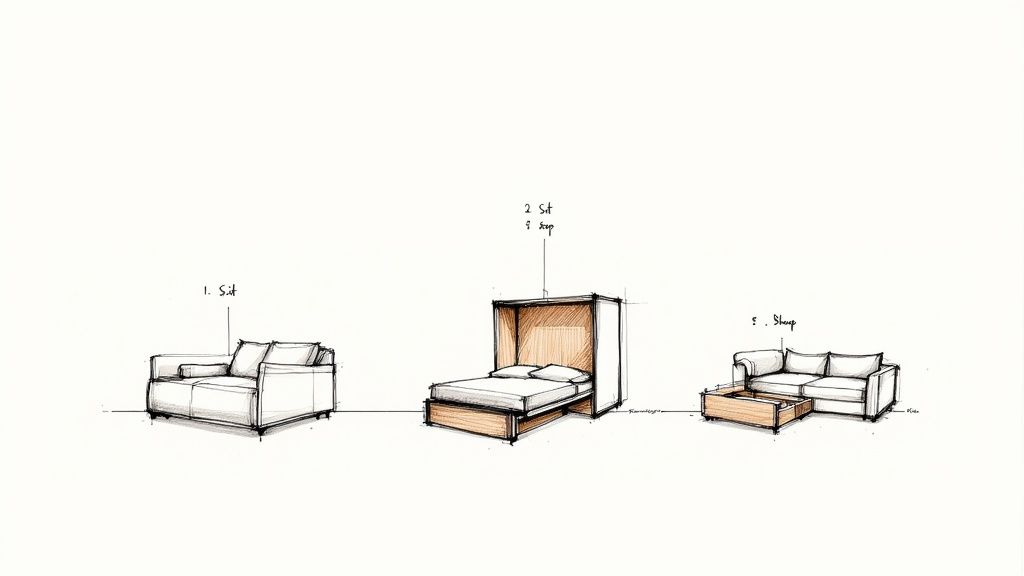
Modern futons are a long way from dorm-room frames. A good futon is a real sofa during the day and converts to a bed in seconds, and futon sizes range from single-seat loungers to queen beds. Many frames also accept under-frame storage drawers for bedding and pillows. Futons are usually the most affordable way to get seating and a bed in one piece. Compare futon sets, or see our picks for the best futons for small spaces.
Convertible Sofa Beds
Convertible sofa beds look like standard sofas and fold out into a bed using click-clack, pull-out, or fold-down mechanisms. They’re the right choice when the living room sofa needs to look like a sofa first. Compact loveseat sleepers work in rooms too small for a full sofa. See our guide to sleeper sofas for small spaces.
Sectional Sleepers with Storage
A sleeper sectional combines generous seating, a pull-out bed, and often a storage compartment under the chaise. For a family in a compact home, it puts seating, a guest bed, and a storage chest in one footprint. Browse sectional sofas to compare configurations.
Wall Beds (Murphy Beds)
Nothing reclaims more floor space than a wall bed. It folds up into a cabinet during the day and comes down as a full-size bed with a real mattress at night, turning an office, living room, or studio into a bedroom in seconds. Many include desks, shelving, or sofas built into the cabinet. Learn more in What Is a Murphy Bed? If you can’t mount to a wall, freestanding Murphy cabinet beds fold a mattress into a dresser-style cabinet.
Daybeds and Trundle Beds
A daybed works as a sofa against the wall and a twin bed at night. Add a trundle and you get a second bed that rolls out from underneath, which is ideal for sleepovers and guest rooms. See the best daybeds for small spaces.
Loft and Bunk Beds
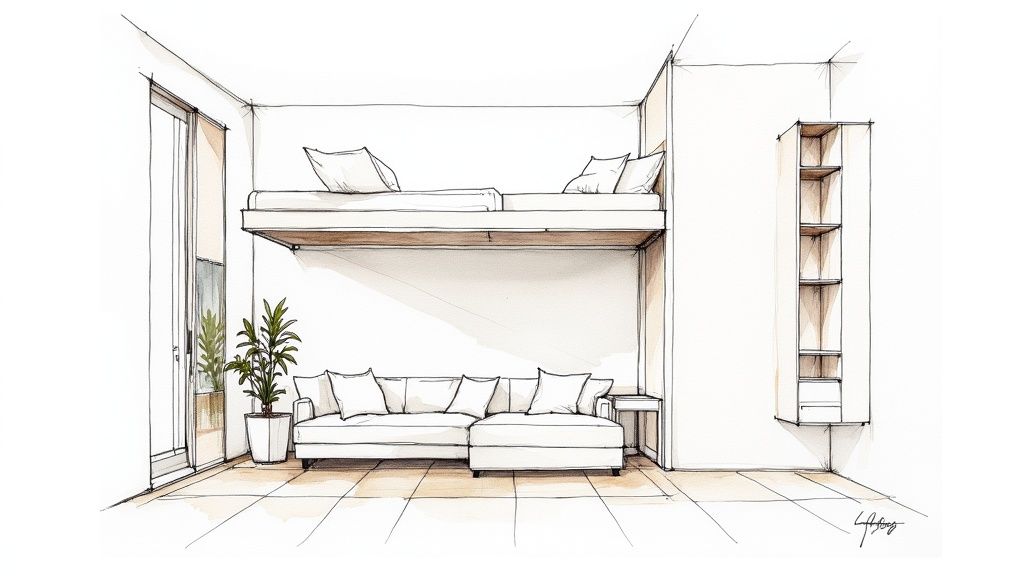
Bunk and loft beds use vertical space. Bunks put two beds in one footprint, and a loft bed frees the floor underneath for a desk, a sofa, play space, or storage.
Furniture with Hidden Storage
Storage Beds
A storage bed with built-in drawers or a lift-up platform turns the space under the mattress into a closet. In a small bedroom, it can replace a dresser entirely. Browse beds with storage options.
Lift-Top Coffee Tables
A lift-top coffee table hides remotes, blankets, and chargers inside, and the top rises to a comfortable height for eating or working on a laptop. In a studio without a dining table or desk, it covers both. See coffee and end tables.
Storage Ottomans and Benches
Storage ottomans and benches provide extra seating, a footrest, and a place to store blankets, games, or shoes. A bench at the foot of the bed or in an entryway does the same.
Foldable and Extendable Furniture
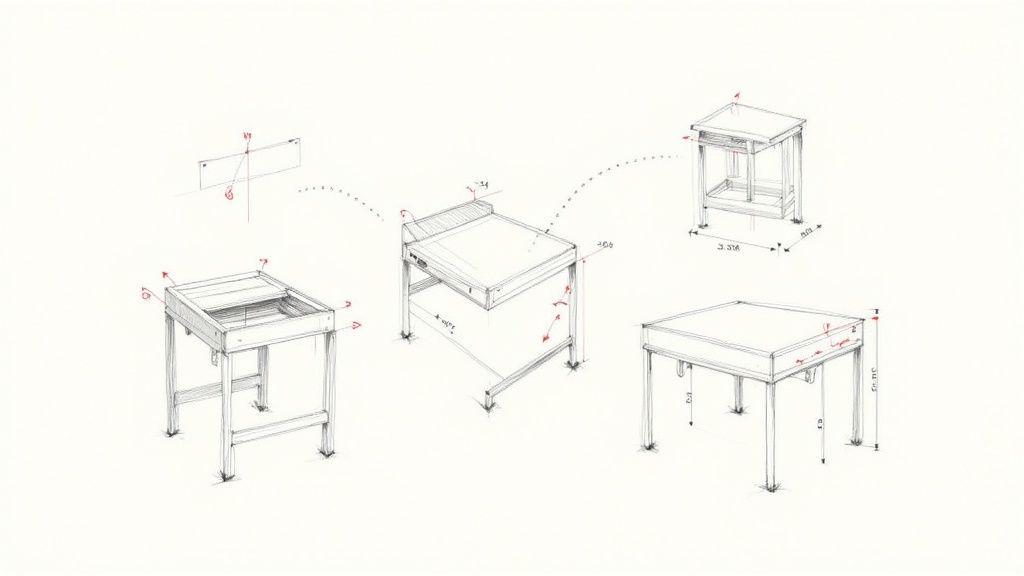
Some furniture saves space by being there only when you need it.
Wall-Mounted and Space-Saving Desks
A fold-down wall-mounted desk sits flat against the wall like a cabinet and opens into a work surface when you need it. Compact computer workstations and ladder desks give you a dedicated workspace in a corner or alcove without taking over the room.
Extendable Dining Tables
Drop-leaf, gateleg, and extension-leaf dining tables stay small for everyday meals and expand for guests. Your dining area only needs to be as large as the occasion.
Nesting Tables and Folding Beds
Nesting tables stack into one footprint and spread out when guests arrive. Folding beds store in a closet until someone needs to sleep over.
With any furniture that moves, hardware quality determines how long it lasts. Test hinges, slides, and mechanisms before you buy.
Think Vertically to Maximize Every Inch
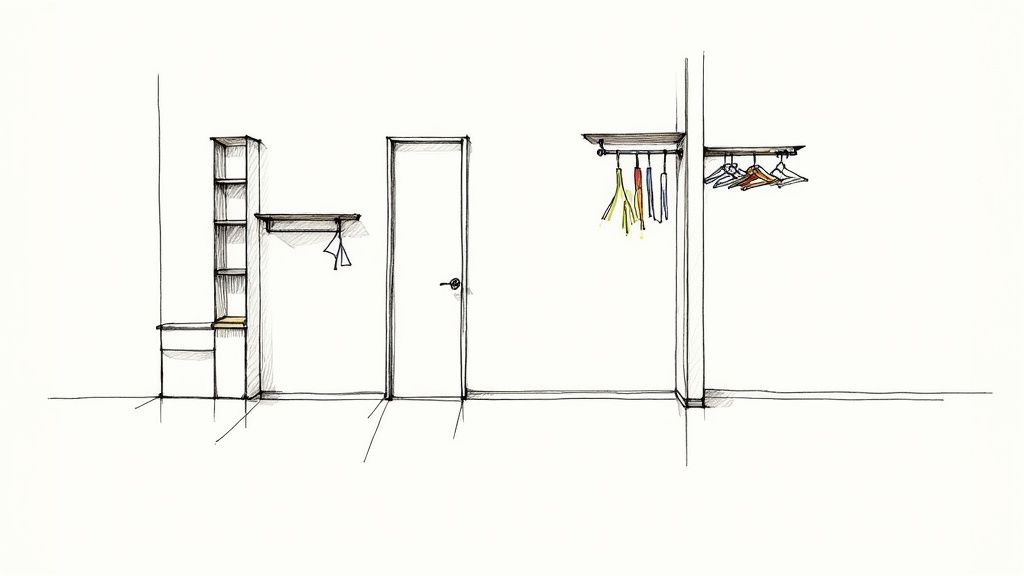
When the floor is full, go up. Vertical storage keeps items off the floor and draws the eye upward, which makes a room feel taller and more open.
- Floating shelves above a sofa, desk, or bed give you display and storage space without a floor footprint.
- Tall, narrow bookshelves fit awkward corners and hold a lot while using very little floor space.
- Closet upgrades: a second hanging rod, slim uniform hangers, and stackable drawers or a shoe rack on the closet floor can significantly increase what a closet holds.
- Over-the-door organizers turn the back of a bathroom, pantry, or office door into storage with no installation.
Safety note: anchor every tall bookcase, shelving unit, and dresser to the wall with an anti-tip kit, especially in homes with children or pets. Use a stud finder to locate a secure mounting point.
Space-Saving Ideas Room by Room
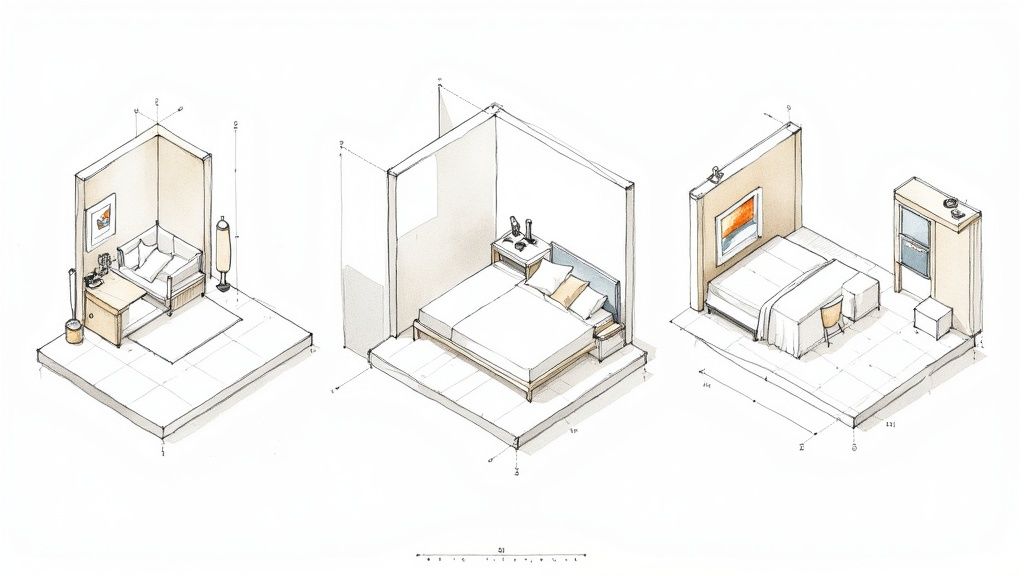
Space-Saving Living Room Furniture
Pair a sleeper sofa or sectional sleeper with a lift-top coffee table. The sofa covers seating and guest sleeping, and the table covers storage, dining, and laptop work. Add nesting tables instead of fixed end tables, and choose furniture on exposed legs so the room feels lighter.
Space-Saving Bedroom Furniture
Start with a storage bed to replace the dresser. Use wall-mounted nightstands or floating shelves instead of bulky bedside tables, and add a storage bench at the foot of the bed. In kids’ rooms and shared rooms, bunk and loft beds free the most floor space.
Studio Apartments and Home Offices
A wall bed with a built-in desk, or a wall bed paired with a fold-down desk, turns one room into a bedroom at night and an open office or living space by day. A room divider or open bookcase can separate sleeping, living, and working zones without building walls.
Small Kitchens and Dining Nooks
Use a drop-leaf or extendable table with stackable or backless stools that tuck underneath. A bench along a wall seats more people than chairs in the same space.
Declutter Before You Buy
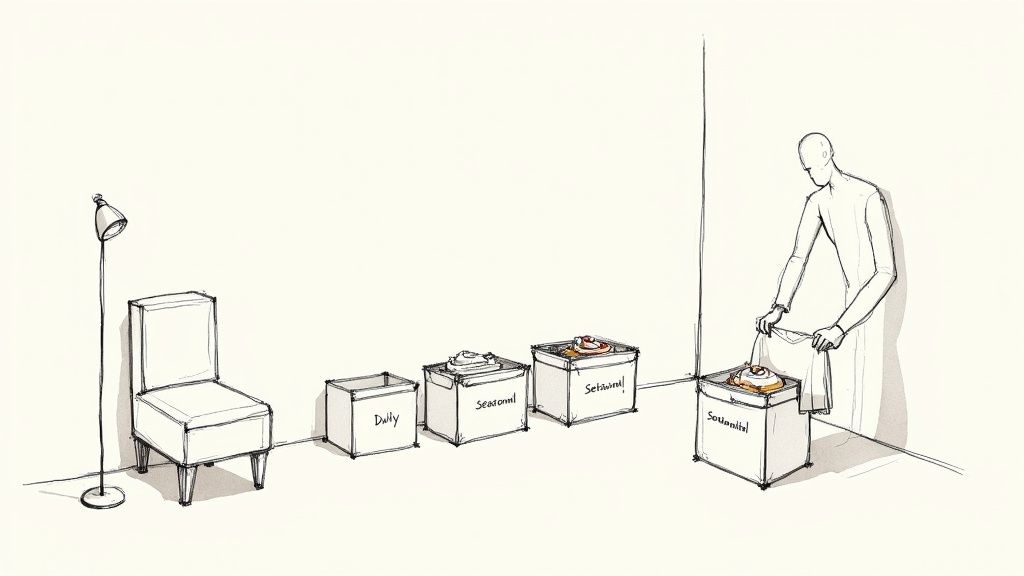
Organized clutter is still clutter. Before buying storage furniture, sort what you own by how often you use it:
- Daily essentials: keep these in the most accessible spots.
- Weekly use: workout gear, hobby supplies, favorite cookware.
- Seasonal and occasional: winter coats, holiday décor, guest bedding. These go under the bed, on high shelves, or in storage furniture.
- Sentimental: keep these, but store them compactly (vacuum bags work well) rather than in prime space.
Anything you haven’t used in a year is a candidate to let go. What’s left tells you how much storage you actually need.
Plan and Measure Before You Purchase
- Room dimensions: length, width, and ceiling height. Ceiling height matters for wall beds and loft beds.
- Open and closed sizes: for anything that converts, check both. Mark the open footprint on the floor with painter’s tape to see how it affects walking space.
- The delivery path: measure every doorway, hallway, stairwell, and elevator the furniture has to pass through.
- Obstructions: windows, radiators, outlets, and doors that need to swing open.
Futonland’s sizing charts list standard futon and mattress dimensions.
Make a Small Room Feel Bigger
Light wood finishes such as birch and maple, glass and reflective surfaces, mirrors, and furniture raised on exposed legs let light and sightlines travel through the room. Keep the largest pieces against the walls and leave clear paths through the middle.
How to Choose Space-Saving Furniture That Lasts
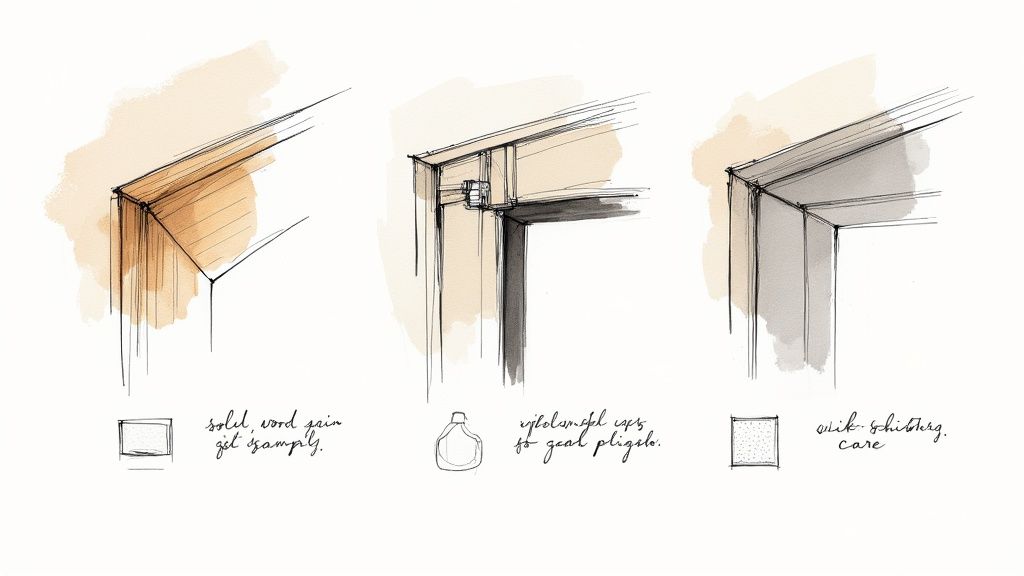
Convertible furniture moves every day, so frames and mechanisms take far more stress than stationary furniture.
Frame Materials
- Solid hardwood (oak, maple, walnut, and similar kiln-dried woods) is the strongest and longest-lasting option for load-bearing frames. See hardwood futon frames.
- Metal frames are strong and modern-looking. Check the welds and look for rust-resistant finishes.
- Quality plywood is stable and crack-resistant, and a solid alternative to solid wood.
- Particleboard and MDF cost less but are less durable and vulnerable to moisture. They’re fine for decorative or low-stress parts, but avoid them for the structure of furniture you convert daily.
Mechanisms
Operate the mechanism several times before buying. It should feel balanced and smooth, never jerky or strenuous. Wobbling, creaking, or catching on a floor model is a red flag.
Upholstery
Microfiber and performance fabrics resist stains and clean easily. Leather wipes down and wears well. Tightly woven canvas handles friction in high-traffic pieces. Order fabric swatches to see colors in your own light before you commit.
Delivery and Setup
Large and convertible pieces are the hardest to get home and assemble correctly. Futonland delivers nationwide, and white glove delivery brings furniture to the room of your choice, assembles it, and removes the packaging. See all delivery options. To match a futon or sofa to your décor, the cut and sew service makes custom covers.
Space-Saving Furniture FAQ
What is the best space-saving furniture for a small apartment?
Start with whatever takes up the most floor space. For most small apartments that’s the bed, so a wall bed, futon, or sofa bed has the biggest impact. After that, a storage bed or lift-top coffee table and a wall-mounted desk cover storage and workspace.
What is the best bed for a small room?
A wall bed frees the most floor space. A storage bed replaces a dresser. A loft bed frees the floor underneath. A daybed with a trundle gives you seating plus two sleeping spots.
Is space-saving furniture flimsy?
Not when it’s well made. Quality convertible furniture is built for repeated daily use, with solid wood or metal frames and heavy-duty mechanisms. Construction quality, not the category, determines durability.
Can multifunctional furniture be comfortable?
Yes. Many sleeper sofas and futons use high-density foam, memory foam, or innerspring mattresses, and wall beds hold a standard mattress. Check the mattress type and thickness on any piece that doubles as a bed.
How do I make sure furniture fits before I buy?
Measure the room, the delivery path, and the furniture’s open and closed dimensions. Then tape the open footprint on the floor to check clearance.
The Bottom Line
Small-space living works when every piece earns its footprint. Start with the bed, then add hidden storage, fold-away surfaces, and vertical shelving, and measure everything before you buy. Explore futons, sofa beds, and wall beds to find the pieces that fit your space.