
Your Complete Guide to Queen Size Futon Couch Beds

A queen size futon couch bed is a true masterclass in smart, multifunctional design. It beautifully combines the roomy sleeping space of a standard queen bed with the everyday practicality of a stylish sofa. Think of it as the ultimate two-in-one solution for anyone looking to get the most out of their living space without giving up an inch of comfort or style. This guide is your complete roadmap to finding the perfect one.

Why a Queen Futon Is Your Perfect Furniture Solution

The queen size futon couch bed has officially shed its old dorm-room reputation. It’s evolved into a sophisticated, essential piece for modern living. It’s no longer just a temporary fix but a smart, intentional choice for guest rooms, home offices, and especially smaller apartments where every single square foot is precious.

Picture this: by day, it’s a comfy, inviting sofa, perfect for lounging with a book or catching up with friends. By night, it unfolds into a spacious bed that offers a real, legitimate night’s sleep—miles better than an air mattress or a cramped loveseat. This dual personality is where its real power lies.

Before we dive deeper, here’s a quick look at what you can expect from a queen futon couch bed.

Queen Futon Couch Bed At a Glance

This table gives you a bird’s-eye view of the key specs and benefits, helping you see why this furniture piece is such a popular choice.

Feature Typical Specification Key Benefit
Sleeping Area 60″ x 80″ (Standard Queen) Ample space for two adults to sleep comfortably.
Sofa Dimensions Varies; approx. 82″ – 88″ wide Fits well in living rooms, guest rooms, or studios.
Mechanism Bi-fold or Tri-fold Easy, quick conversion from sofa to bed and back.
Mattress Type Foam, Innerspring, Organic Customizable comfort for sitting and sleeping.
Frame Material Wood or Metal Durable and stylish options to match any decor.
Primary Use Dual-purpose sofa and bed Maximizes space in smaller living areas.

Essentially, you get the function of two major furniture pieces in one sleek package.

The Rise of Multifunctional Furniture

The demand for furniture that does more than one job has skyrocketed. The global market for sofa beds, which includes the ever-popular queen futon, really tells the story. Valued at roughly USD 17.15 billion in 2025, it’s projected to hit USD 28.73 billion by 2034.

What’s driving this? A massive consumer demand for versatility, with over 52% of buyers choosing them specifically for their space-saving magic in urban homes. This shift proves that homeowners are getting smarter, prioritizing pieces that deliver both great looks and practical function. A queen futon is the perfect example of this philosophy in action.

More Than Just a Guest Bed

While they’re absolutely brilliant for hosting overnight visitors, the perks of a queen futon go way beyond that. It can instantly turn a home office into a dual-purpose guest suite or make a studio apartment feel dramatically larger by merging your living and sleeping furniture into one.

For a closer look at what’s possible, you might be interested in our complete queen size futon sets and packages, which perfectly pair frames and mattresses for a seamless, ready-to-go look.

Ultimately, choosing a queen futon is about reclaiming your space. It’s an investment in flexibility, style, and comfort that pays you back every single day.

Measuring Your Space for a Perfect Fit

We’ve all heard the horror stories—or lived them. You spend weeks picking out the perfect piece of furniture, only for it to arrive and not fit through the front door. It’s one of the most frustrating (and completely avoidable) mistakes you can make. Getting your measurements right from the very start will save you time, a massive headache, and the disappointment of sending your dream futon back.

First things first, let’s talk numbers. A standard queen futon mattress is 60 inches wide by 80 inches long when it’s laid flat in bed mode. But that’s just the mattress. The number you really need to focus on is the total footprint of the frame, which will always be bigger.

Think of it this way: the mattress is the dance floor, but the frame is the entire stage, including the supports and backstage area. You need to account for the whole structure to make sure it works in your room.

Hand-drawn sketch of a rectangle with dimensions 60x90 inches, 41x10 inches, and 60 feet.

From Doorway to Final Placement

Before you even think about clicking “add to cart,” you need to plan the futon’s entire journey from the delivery truck to its final spot. A futon that fits perfectly in your living room is useless if it gets stuck in a tight hallway corner.

Here’s how to make sure delivery day is a breeze:

  1. Measure Your Entry Points: Grab a tape measure and get the width and height of every doorway, hallway, and staircase on the delivery path. Don’t forget to account for things that stick out, like doorknobs, light fixtures, or hand railings that could shrink your clearance.
  2. Map Out the Room: Measure the room where the futon will live. Then, use painter’s tape to mark out the futon’s dimensions on the floor—once for its sofa position, and again for its bed position. This gives you a real-world visual of how much space it will actually occupy.
  3. Check Vertical Space: As a bed, a futon is low-profile. But as a sofa, the back height comes into play. Make sure it will sit comfortably under any windowsills, shelves, or wall art.

A pro tip we always share: don’t forget to measure for walking-around room! Once the futon is opened into a bed, you’ll want at least 24-30 inches of clear space around it so you aren’t bumping into things in the middle of the night.

Understanding Bi-Fold and Tri-Fold Footprints

The way a futon opens and closes has a huge impact on the floor space it needs. The two main styles are bi-fold and tri-fold, and knowing the difference is key to picking the right one for your layout.

  • Bi-Fold Frames: These are the most popular style for a queen size futon couch bed. Just like a book, the frame folds once right down the middle. When you open it, the length of the mattress (80 inches) extends straight out from the wall.
  • Tri-Fold Frames: This design has two folds. It usually sits with its longest side against the wall and folds out forward into the room. While less common in queen sizes, they can be a great solution for long, narrow rooms where depth is limited.

Most of our bi-fold futon frames are available in both full and queen sizes, so you’ll have plenty of styles to choose from. To be absolutely sure about dimensions, you can always check our comprehensive https://futonland.com/sizing-charts to find the perfect fit.

And once your frame is picked out, remember that the details matter. Finding the perfect duvet size for a queen bed will complete the look. Taking the time to measure everything—from the frame to the room to the bedding—guarantees your new futon will feel right at home.

Finding the Right Mattress for Comfort and Use

The frame of your queen size futon couch bed provides the structure, but the mattress is where comfort truly lives. It’s the heart of the experience, defining how it feels to relax on the couch by day and how well you sleep on the bed at night.

Making the right choice is about more than just picking a material; it’s about matching the mattress’s personality to your lifestyle. Think of it like choosing shoes: you wouldn’t wear stiff running shoes to lounge around the house. Similarly, a mattress built purely for sleep might not be ideal for daily sitting. The goal is to find that perfect balance for how you’ll use it most.

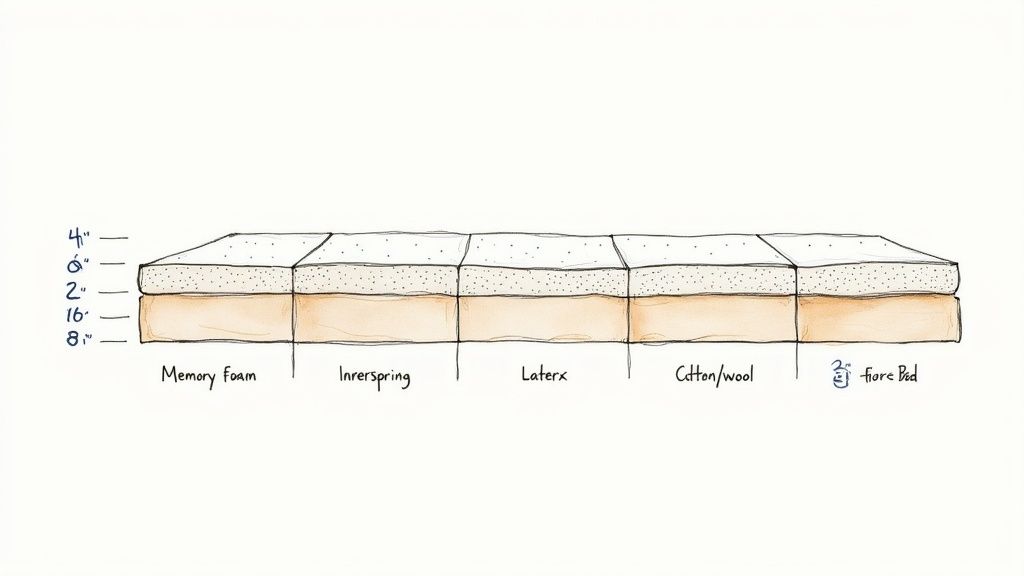
Diagram showing mattress layers: memory foam, innerspring, latex, cotton/wool, with various thickness dimensions.

A Deep Dive Into Mattress Materials

Every mattress type has its own distinct feel and set of benefits. Getting familiar with these differences is the first step toward finding your ideal match for both comfort and long-term durability.

  • Memory Foam: Famous for its body-hugging support, memory foam excels at relieving pressure points when you’re sleeping. It creates that cradled feeling many people love. The trade-off? Some memory foam can feel a bit too firm for sitting or slow to spring back, and it sometimes traps heat.
  • Innerspring: This is that traditional, bouncy mattress feel most of us grew up with. The coils provide a responsive surface that’s great for sitting and makes getting up easy. However, innerspring mattresses are often heavier and can develop pressure points over time if the coils aren’t top-notch.
  • Latex: Often seen as a premium choice, latex gives you a unique mix of responsive bounce and contouring support. It’s naturally hypoallergenic and sleeps cooler than memory foam. It’s incredibly durable and works great for both sitting and sleeping, but it usually comes with a higher price tag.
  • Cotton and Wool Blends: For a firmer, more traditional futon feel, these natural fiber mattresses are a great option. They are breathable and supportive, but they do require more maintenance. Regular flipping and rotating are a must to keep them from compressing and hardening over time.

This focus on mattress quality isn’t just a small detail; it’s part of a much bigger picture. Within the global sleeper sofa market, queen size models make up about 30% of the high-end segment, with roughly 6 million units sold worldwide each year. Shoppers today are putting comfort and solid construction first, leaving behind the old idea that convertible furniture has to be a compromise.

Futon Mattress Type Comparison

To help you visualize the trade-offs, here’s a quick comparison of the most common mattress types.

Mattress Type Best For Sitting Best For Sleeping Durability Price Point
Memory Foam Good Excellent Good Mid to High
Innerspring Excellent Good Good Mid-Range
Latex Excellent Excellent Excellent High
Cotton/Wool Good Fair to Good Fair Low to Mid

Ultimately, the right material comes down to how you plan to use your futon most often.

How Thickness Impacts Feel and Function

Besides the material inside, the thickness of your futon mattress plays a huge role in how it performs. It’s not just about adding more cushion; thickness directly affects support, durability, and even how easily you can convert your futon from a couch to a bed.

A thicker mattress, usually 8 to 10 inches, will feel much more like a conventional bed. It offers more layers of support and is the best choice if the futon will be a frequent sleeper. The extra padding absorbs movement and just feels more luxurious.

On the other hand, a thinner mattress around 6 inches is often lighter and more flexible. This makes it easier to fold into the couch position—a big plus for bi-fold frames. The downside is that it may offer less cushioning for sleeping and is probably better suited for the occasional guest rather than nightly use.

The sweet spot for many people is an 8-inch mattress. It strikes a fantastic balance, offering plush comfort for sleeping while still being flexible enough to fold easily without putting too much strain on the frame.

Matching Your Mattress to Your Needs

To bring it all together, just think about who will be using the futon and how often. Is it for the kids in a playroom? For an occasional overnight guest? Or will it be your main bed in a studio apartment? Answering that one question will point you straight to the right material and thickness.

For a complete overview, browsing a wide selection of futon mattresses can give you a much clearer picture of what’s out there, from high-density foams to organic cotton blends. At the end of the day, the best mattress is one that gives your guests (or you!) a restful night’s sleep and provides comfortable seating for everyone, day in and day out.

Choosing Your Futon Frame and Mechanism

The frame is the backbone of your queen size futon couch bed. It really defines its entire personality—from the visual style to how it actually functions day-to-day. It’s way more than just a support structure for the mattress; it’s the engine that powers its transformation from a chic sofa into a comfortable bed. Getting to know the different mechanisms and materials is the key to picking a model that works for you.

Think of the frame’s mechanism like the operating system on your phone. It determines how you interact with it and how smoothly it performs its main job. The two most common systems you’ll run into are bi-fold and tri-fold, and each one has a totally different way of converting.

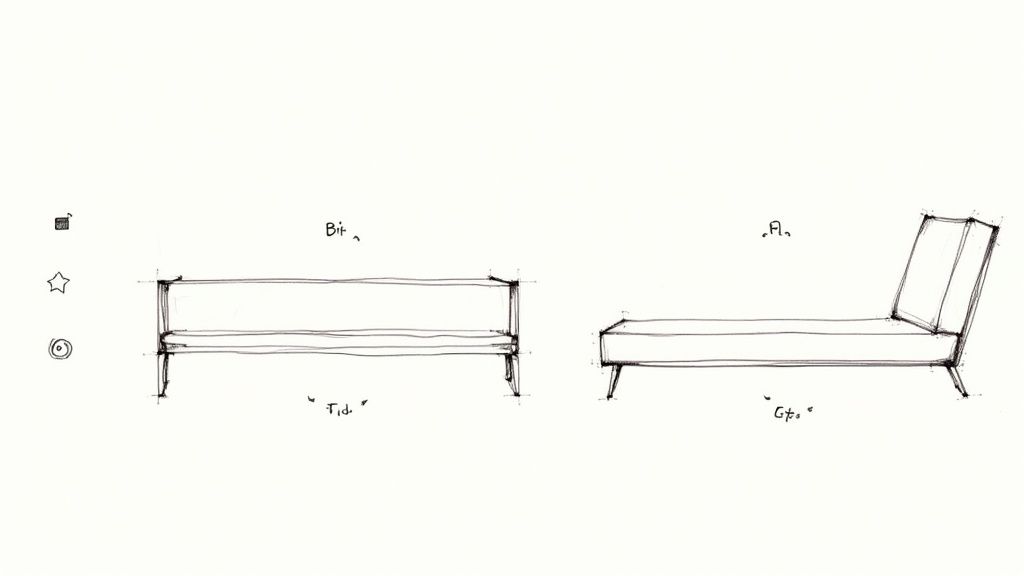
Hand-drawn sketches of two different modern futon couch and chaise lounge designs.

Comparing Bi-Fold and Tri-Fold Mechanisms

The most popular style for a queen size futon couch bed is easily the bi-fold frame. Just like the name suggests, it folds only once, right down the middle, like closing a book. This simple, intuitive design creates a classic sofa look with a clean, deep seat. When you’re ready to switch to bed mode, the frame extends straight out from the wall. This straightforward operation is a huge reason for its popularity, and most of our bi-fold futon frames are available in both full and queen sizes, giving you a massive selection of styles to match your decor.

A tri-fold frame, on the other hand, has two hinges, folding the mattress into three sections. This design is usually used for creating more compact loungers or chairs, as it typically sits with its shorter side against the wall and unfolds forward into the room. While it’s less common for queen sizes, it can be a smart solution for very specific, tight layouts.

The core difference really comes down to their footprint. A bi-fold needs more depth from the wall when opened up, while a tri-fold needs more clearance in front of it. For most standard room layouts, the bi-fold is the go-to choice for a queen futon.

Selecting the Right Frame Material

Once you’ve landed on a mechanism, the next decision is the material. This choice affects the frame’s durability, weight, and overall aesthetic, tying the whole piece into your home’s design language. Each material offers its own unique blend of form and function.

The three main options you’ll see are:

  • Hardwood: Materials like oak, maple, and cherry are loved for their incredible strength and timeless beauty. A hardwood frame is an investment in longevity, offering a super sturdy, reliable base that can handle years of use. They are perfect for rustic, traditional, or farmhouse-inspired homes.
  • Metal: Metal frames bring a sleek, modern, and often industrial vibe to a room. They’re typically lighter than hardwood, which makes them easier to move around, and their slim profiles can help a space feel more open. Just look for high-quality welds and a durable finish to make sure it stays looking great.
  • Pine and Softer Woods: These offer a more budget-friendly option while still giving you that warm, natural look of wood. Pine frames are often lighter and easier to assemble, making them a practical choice. While not as dense as hardwood, a well-built pine frame offers solid value and style.

Final Assembly and Setup Considerations

After you’ve picked out the perfect frame, it’s time to think about putting it all together. Futon frames are designed for you to assemble at home, but the process can range from simple to a bit more complex.

If you’d rather skip the hassle, you might consider professional furniture assembly services to guarantee a perfect and stress-free setup. And for a comprehensive look at all the different styles and materials available, explore our full collection of durable and stylish futon frames to find the one that best fits your space and aesthetic.

How to Style Your Futon Like a Designer

A queen size futon couch bed is a champion of function, but that’s just the beginning. With a little creativity, it can easily become the stylish anchor of your room. The trick is to stop thinking of it as just a spare bed and start treating it as a canvas for your personal style.

Your first move—and the one with the most impact—is choosing the right futon cover. This single piece of fabric sets the entire mood. Don’t just settle for a basic solid color; think about textures and patterns that bring some life to the space. A rich velvet cover can add a touch of luxury, while a relaxed linen or cotton blend gives off a more casual, inviting vibe.

This is your chance to play with color. A bold geometric print can instantly energize a neutral room, while a softer floral pattern might be the perfect touch for a cozy, more traditional space. The goal is to find a cover that not only fits your futon but also ties into your existing decor, turning it from a piece of utility furniture into a real design statement.

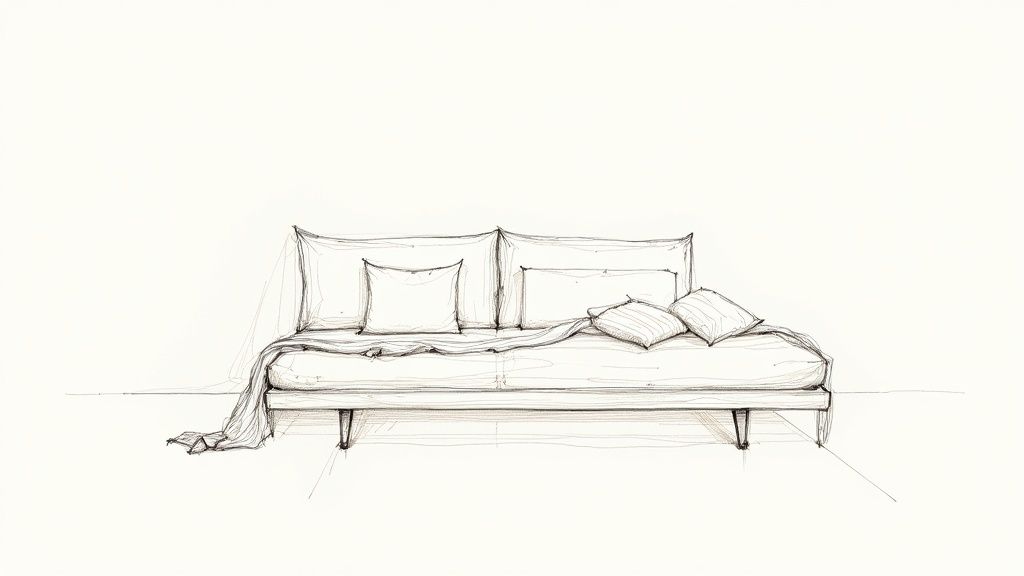
Minimalist black and white sketch of a modern futon or couch bed with pillows and a draped blanket.

Layering with Textiles for Personality

Once you’ve got your cover sorted, the real fun begins. Layering pillows and throws is where you get to inject your personality and create a look that feels thoughtful and complete. It’s also the easiest way to experiment without a huge commitment.

Think about mixing up textures, sizes, and colors. A well-styled sofa almost never has matching pillows lined up in a row.

  • Vary Pillow Sizes: Start with two larger square pillows at each end, then layer in a couple of smaller ones in front. A single rectangular lumbar pillow right in the middle can pull the whole arrangement together.
  • Mix Textures: Combine different materials for visual and tactile interest. Try pairing a smooth cotton pillow with a chunky knit throw, or maybe add a faux fur cushion for a bit of glam. That contrast makes the futon look—and feel—so much more inviting.
  • Play with Palettes: Pull colors from other things in your room, like a piece of art or a favorite rug, to create a cohesive feel. You can stick to a simple monochromatic scheme with different shades or go bold with an accent color that really pops.

The key is to create an arrangement that looks effortlessly chic, not rigidly staged.

Creating Zones in Small Spaces

In a studio apartment or any small living area, a queen size futon can do more than just provide a place to sit and sleep—it can help define your entire layout. It all comes down to placement. By positioning your futon with its back facing your kitchen or dining area, you create a subtle but clear visual separation, carving out a dedicated living room zone.

A well-placed area rug is a designer’s best friend for zoning. Placing the front legs of your futon on a stylish rug instantly anchors the seating area and makes the space feel more organized and intentional.

This simple trick grounds the furniture and establishes a cozy, designated spot for relaxing and socializing. It makes the whole room feel more purposeful.

Ultimately, the details are what sell the look. We know from sales data that texture and aesthetics are huge deciding factors for customers, with things like corduroy fabric convertible sofas consistently being top sellers. One popular Amazon Basics Futon Sofa Bed, for example, sold 278 units at an average price of around $231.55—proof that an appealing look and feel are just as important as the futon’s function. You can learn more about what’s driving futon sales trends on accio.com. By focusing on these styling elements, you can make sure your futon looks every bit as good as it is practical.

Keeping Your Futon in Tip-Top Shape for Years to Come

You’ve just made a smart investment in a queen size futon couch bed, and you want to keep it feeling comfortable and looking great for as long as possible. The good news is, it doesn’t take much. A few simple, consistent habits are all you need to protect the frame and preserve the mattress.

Think of it like caring for a good pair of leather boots. You don’t wait for them to crack and fall apart before you clean and condition them. A little proactive maintenance will keep your futon looking and feeling its best, extending its life far beyond what you’d expect.

Delivery and Assembly: Starting Off Right

Your futon’s long-term health really starts the moment it arrives. When the delivery shows up, give the boxes a quick once-over for any obvious damage before you sign off on them. Once you’re ready to get building, find a nice clear space and lay out all the parts. It’s always best to make sure everything’s there before you begin.

Putting the frame together is usually pretty straightforward, but it’s worth taking your time and following the instructions closely. Make sure you tighten all the bolts and screws so they’re snug and secure. You’re aiming for a firm fit, but be careful not to overtighten—that can strip the threads or even damage the wood.

A Simple Mattress Care Routine

The mattress is where all the comfort happens, so keeping it in great shape is priority number one. A little regular attention is the best way to prevent the sagging and compression that make an old futon feel, well, old.

Here’s a simple schedule that works wonders:

  • Weekly: Let it breathe. Whenever you change the sheets, give the mattress an hour or so uncovered. This allows it to air out and release any moisture that might be trapped inside.
  • Monthly: Flip and rotate it. This is the single most important thing you can do. Just like a traditional mattress, flipping it over and spinning it end-to-end every month distributes the wear evenly. No single spot will take all the pressure, which keeps it from developing dips.
  • Spot Cleaning: Accidents happen. When a spill occurs, act fast. Gently dab the stain with a clean cloth and a solution of mild soap and water. Never rub, as that just pushes the spill deeper into the fibers. Always double-check the manufacturer’s care tag first for any specific instructions.

Want to give it a deeper clean? Grab your vacuum’s upholstery attachment every couple of months and go over the whole mattress. It’s a fantastic way to pull out dust, allergens, and anything else that’s settled in, keeping it fresh and hygienic.

Keeping the Frame Strong and Stable

Your futon frame is a workhorse, constantly converting from sofa to bed and back again. A quick check-up a few times a year ensures the mechanism keeps running smoothly and the whole structure stays solid.

Yearly Frame Maintenance Checklist:

  1. Check All Hardware: Go around and check every single bolt, screw, and nut. If you find anything loose, just tighten it up. Daily use can cause things to loosen slightly over time.
  2. Inspect Moving Parts: Take a look at the hinges, rollers, and any other parts that move when you convert the futon. Make sure they’re clear of any gunk or debris so they can operate without sticking.
  3. Clean the Frame: A quick wipe-down with a soft, damp cloth is all it takes to get rid of dust. If you have a wood frame, a little bit of quality furniture polish will help protect the finish and keep it looking new.

Following these simple steps isn’t just about cleaning; it’s about actively protecting your investment. This small effort ensures your queen size futon couch bed will remain a comfortable, reliable, and inviting centerpiece in your home for many years to come.

Got Questions About Queen Futons? We’ve Got Answers

Stepping into the world of futons can bring up a few last-minute questions. To make sure you feel totally confident in your choice, we’ve pulled together some straightforward answers to the questions we hear most often about buying and living with a queen size futon.

How Comfortable Is a Queen Futon for Everyday Sleeping?

This is the big one, and the answer is simple: a futon is only as comfortable as its mattress. If you’re planning to sleep on it every night, you’ll want to invest in a high-quality, thicker mattress—think 8 inches or more. Materials like memory foam or latex are fantastic because they offer the kind of support and pressure relief that rivals a traditional bed.

While some futons are definitely better for the occasional guest, plenty are built tough enough for the primary bedroom. The real secret is to skip the thin, cotton-only mattresses and go for something substantial that will give your body the support it needs for a great night’s sleep, every single night.

Can I Customize My Queen Size Futon?

You bet. Customization is one of the best things about getting a futon. Most of our bi-fold futon frames are available in both full and queen sizes, so you have a huge selection of wood finishes and metal styles to kick things off.

From there, you can put your personal touch on just about everything:

  • The Mattress: Pick the material and firmness level that feels just right for you.
  • The Cover: We have hundreds of fabrics, colors, and patterns so you can perfectly match your room’s vibe.
  • Pillows: Add some coordinating or contrasting pillows to really complete the look.

This kind of flexibility means your queen futon couch bed will be a genuine reflection of your personal style.

What Is White Glove Delivery and Do I Need It?

White Glove delivery is our premium, hands-off service designed for total convenience. Instead of our team just dropping boxes at your curb, they’ll bring the futon right into your home, put it together in the room you want it in, and haul away all the packaging when they’re done.

Whether you need it really comes down to personal preference. If you’d rather not deal with the hassle of assembly or can’t lift heavy furniture, our White Glove service guarantees a perfect, stress-free setup from start to finish.

How Do I Make Sure a Queen Futon Will Fit?

Success here is all about planning ahead. Before you even think about ordering, get out that tape measure. You need to measure not just the spot where the futon will live, but every single doorway, hallway, and tight corner it has to pass through on its way there. A queen futon frame is a big piece of furniture, even when it’s still in the box.

By mapping out the entire delivery path and checking those numbers against the futon’s packaged dimensions, you can ensure a smooth, surprise-free delivery day.


Ready to find that perfect blend of style, comfort, and smart design for your home? Explore the huge collection at Futonland and discover a queen size futon couch bed that fits your space and your life. Shop our full collection today!

Similar Posts