
A Guide to Convertible Furniture for Small Spaces
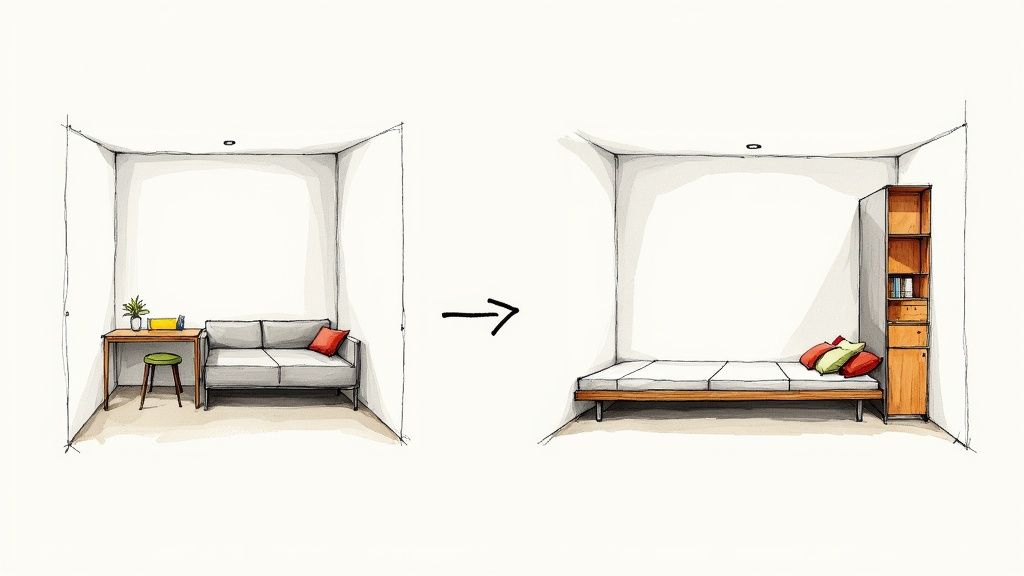
Convertible furniture, also called transforming or transformable furniture, changes shape to do more than one job: a sofa that becomes a bed, a bed that folds into a wall, or a coffee table that rises to dining height. In a small space, the right convertible pieces let one room work as a living room, guest room, office, and dining area without permanently giving floor space to any of them.
Why Convertible Furniture Works in Small Spaces
Traditional furniture does one job and takes up its space all the time. A guest bed sits unused most nights, and a dining table takes up floor space between meals. Convertible furniture lets a room perform a function only when you need it:
- Host overnight guests on a real bed instead of an air mattress.
- Work from home at a surface that folds or lifts away when the workday ends.
- Reduce clutter with built-in storage for bedding, blankets, and everyday items.
For broader small-space strategies, see our space-saving furniture ideas.
Types of Convertible Furniture
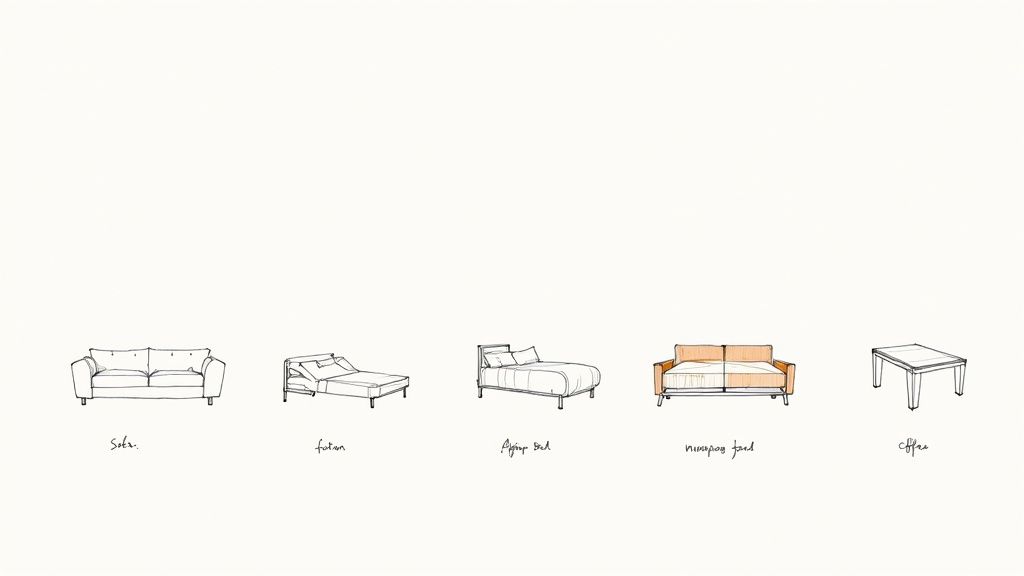
| Type | Converts From → To | Best For | Key Advantage | Consider |
|---|---|---|---|---|
| Sofa bed | Sofa → bed | Living rooms, guest rooms | Looks like a standard sofa | Mechanism and mattress quality vary widely |
| Sleeper sectional | Sectional → bed (+ storage) | Larger living rooms | Maximum seating, often chaise storage | Needs more floor space |
| Futon | Sofa → bed | Studios, multi-use rooms | Simple, durable; mattress and cover are replaceable | Comfort depends on the mattress |
| Wall bed | Cabinet → bed | Studios, home offices | Frees the entire bed footprint | Wall anchoring required |
| Cabinet bed | Cabinet → bed | Rooms without wall-mount options | Freestanding, portable | Not a seating piece |
| Daybed with trundle | Sofa → one or two beds | Kids’ rooms, guest rooms | Sleeps two in one footprint | Twin-size sleeping only |
| Chair bed | Chair → single bed | The smallest rooms | Guest bed in a chair’s footprint | Sleeps one |
| Lift-top coffee table | Coffee table → desk or dining height | Living rooms, studios | Replaces a desk or dining table; hides storage | Surface area is modest |
| Storage ottoman | Footrest → seat → storage | Any room | Three functions in a small footprint | Not for sleeping |
Sofa Beds and Sleeper Sectionals
Modern convertible sofa beds look like standard sofas and convert with click-clack, fold-out, or pull-out mechanisms, many with foam or memory foam sleeping surfaces. Loveseat sleepers fit rooms too small for a full sofa. A sleeper sectional adds more seating, a bed, and often a lift-up chaise with storage for bedding. In open layouts, a sectional also helps define the living zone. See sleeper sofas for small spaces.
Futons
A futon has two parts: a frame that folds from sofa to bed, and a mattress flexible enough to fold with it. That simplicity makes futons reliable for daily conversion, and because the mattress and cover are sold separately, you can upgrade comfort or change the look without replacing the whole piece. Frames range from minimalist metal to solid hardwood. See the best futons for small spaces, or compare the two in futon or sofa bed for a studio apartment.
Wall Beds and Cabinet Beds
A wall bed (Murphy bed) folds up into a wall-mounted cabinet, freeing the entire bed footprint during the day while using a standard mattress at night. Many include desks, shelving, or sofas. Learn more in What Is a Murphy Bed?
A cabinet bed is freestanding and looks like a credenza or chest. It opens to unfold a folding mattress, needs no wall installation, and moves with you, which makes it a good fit for renters. The top also works as a surface for a lamp or TV.
Daybeds, Trundles, and Folding Beds
A daybed works as a sofa against the wall and a twin bed at night. Add a trundle and it sleeps two. Folding beds store in a closet between visits.
Chair Beds, Ottomans, and Tables
- Chair beds unfold into a single bed, making them a guest solution for rooms with no space for a sofa.
- Storage ottomans serve as a footrest, extra seat, and hidden storage.
- Lift-top coffee tables rise to a comfortable height for eating or working from the sofa.
Convertible Furniture Mechanisms Explained
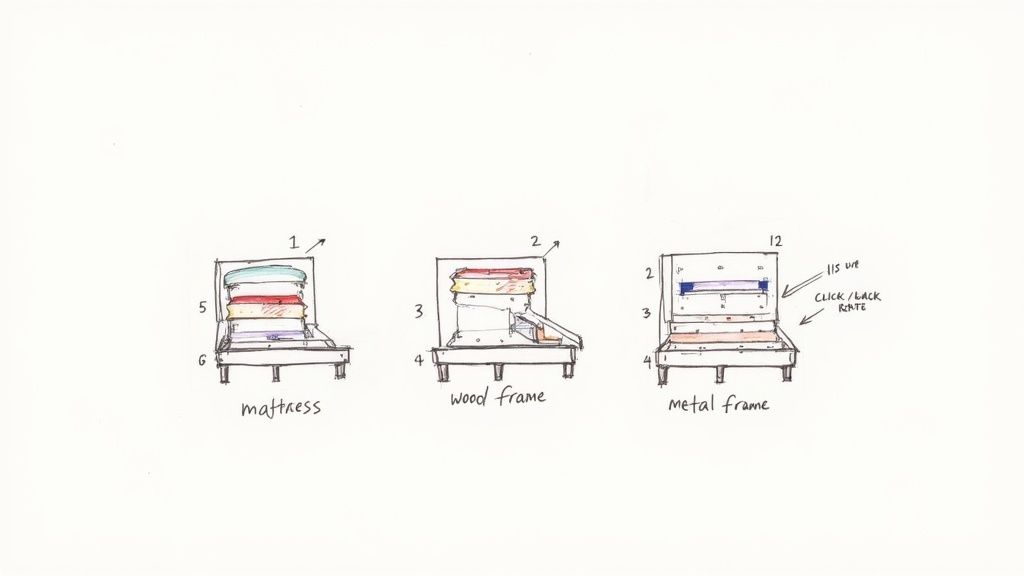
The mechanism decides how easy a piece is to use every day.
- Click-clack: common on modern sofa beds. The back clicks down through upright, reclined, and flat positions. Few moving parts and fast conversion. Sleeps on the seat and back cushions.
- Fold-out: the seat pulls forward and a folded section unfolds to form the sleeping surface, often with a separate mattress layer.
- Pull-out: the traditional sleeper. The cushions come off and a folded metal frame and mattress pull out from the base. It needs the most forward clearance.
- Bifold and trifold futon frames: the frame slides or folds the mattress flat in one motion. Bifold frames fold once and take thicker mattresses; trifold frames fold twice.
- Wall bed counterbalance: springs or gas pistons offset the weight of the bed so it lifts and lowers smoothly.
- Lift-top hinges: spring-assisted hinges raise a tabletop up and toward you.
What Smooth Engineering Feels Like
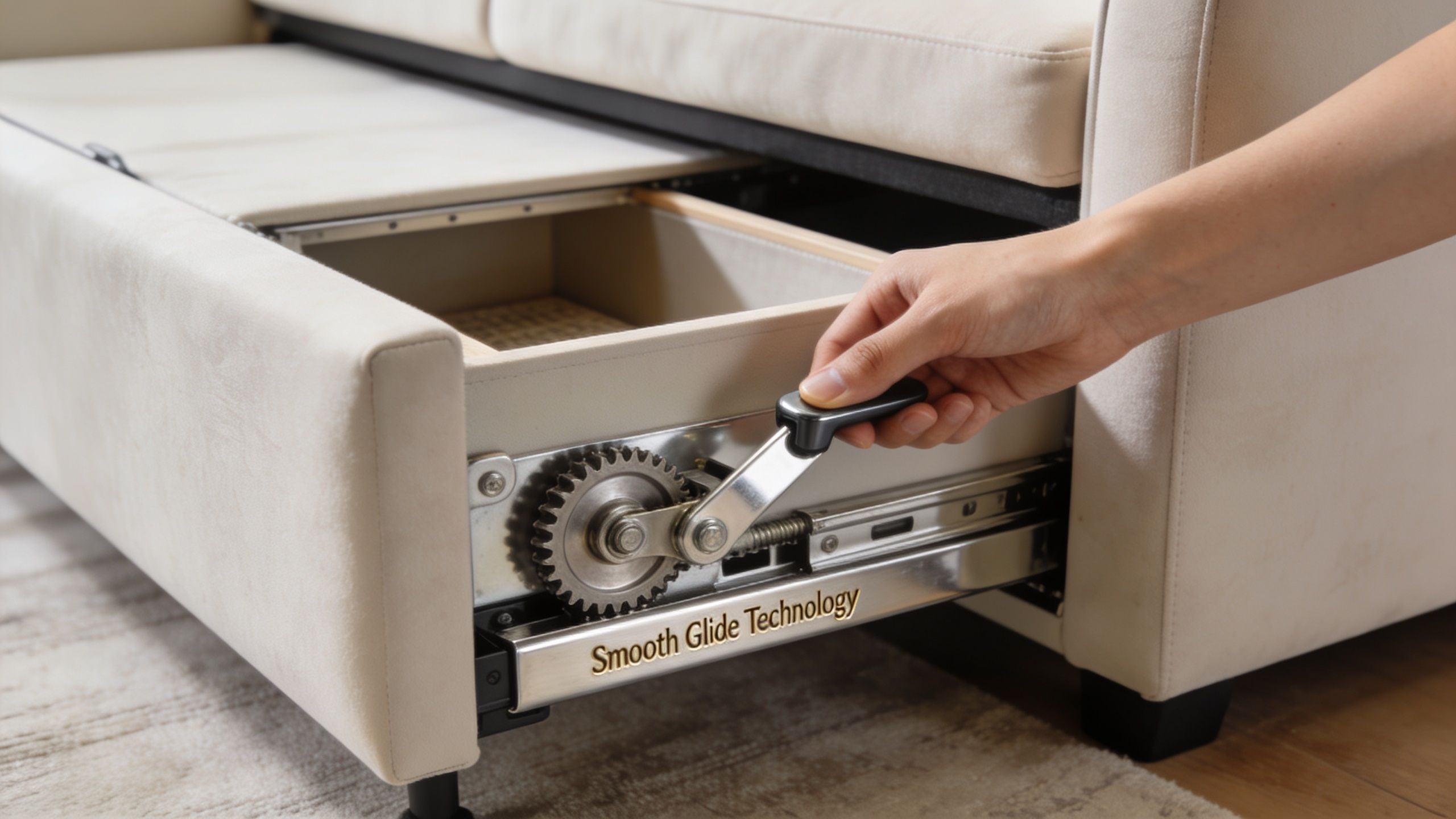
In a studio, you convert the same piece constantly, so quality shows quickly. A good mechanism:
- Moves with steady, balanced resistance, never a dead lift or a sudden drop.
- Returns cushions and panels cleanly into alignment.
- Lets you reach storage easily and close it again quickly.
- Doesn’t require awkward body mechanics, like twisting, yanking, or bracing the frame with your knee.
Test every mechanism in a showroom if you can. If a piece takes wrestling to convert, it will end up never being converted.
Frames, Fabrics, and Mattresses
Frames
Convertible furniture carries weight in motion as well as at rest. Kiln-dried hardwood and heavy-gauge steel frames hold up best to daily conversion. Particleboard frames may be fine for rare guest use but won’t last under daily folding. Browse hardwood futon frames.
Fabrics
Performance fabrics and microfiber resist stains and wear. Tightly woven fabrics handle friction on pieces that are sat on and slept on daily. On futons, a removable futon cover can be cleaned or replaced.
Mattresses
- Memory foam: contours and relieves pressure. It’s a common upgrade in quality sofa beds.
- Latex: responsive, breathable, and durable.
- Innerspring: bed-like bounce, but thin coil mattresses in pull-out sleepers can let you feel the frame.
- Hybrid: coils with foam or latex comfort layers.
For futons used as a regular bed, a mattress around 8 inches or thicker gives real sleeping comfort. See The Futon Mattress Buying Guide. A mattress topper is an easy upgrade for any sleeper.
Built-In Storage and Features Worth Having
The best convertible pieces replace other furniture, not just switch modes.
- Under-seat storage keeps sheets and pillows next to the sleep area.
- Lift-up chaise compartments substitute for closet space.
- Cabinet shelving on wall beds replaces side tables and bookcases.
- Integrated surfaces can stand in for a nightstand.
- Futon storage drawers add storage beneath the frame without widening the footprint.
Skip features that only add bulk, like oversized arm consoles or built-in cupholders. In a small room, a feature is worth having only if it saves a separate piece of furniture or shortens the nightly setup.
How to Plan Before You Buy
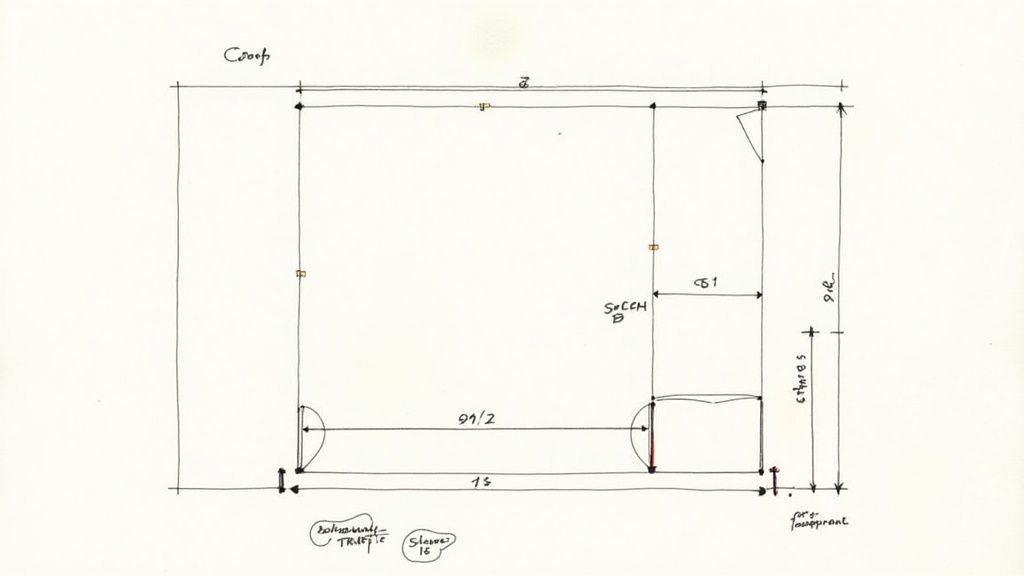
The most common mistake with convertible furniture is measuring only the closed size. Plan for both modes.
Measure Day Mode and Night Mode
- Room and wall: length, width, windowsill heights, and the locations of outlets, switches, radiators, and thermostats.
- Transformation space: how much clearance the mechanism needs to open. Pull-out sleepers need the most room in front.
- Walkways: a clear path of about 30 inches around the open bed.
- Nearby furniture and doors: make sure the open bed doesn’t block a closet, bathroom door, or dresser drawers.
Outline both the closed and open footprints on the floor with painter’s tape and live with them for a day or two. Standard dimensions are on Futonland’s sizing charts.
Sketch a Simple Floor Plan
- Draw the room on graph paper (one square = one foot), marking doors, windows, and radiators.
- Add your existing furniture to scale.
- Draw the new piece in both its closed and open positions.
Run a Studio Zoning Test
With the sleeper open, check that each zone still works:
- Entry: you can step in, take off your shoes, and close the door.
- Sleep: bedding opens without scraping other furniture.
- Daily: there’s still a surface for a phone, water glass, or lamp.
- Work: you know whether the desk stays in place during conversion.
The best layouts don’t force a nightly furniture shuffle. For more, see studio apartment layout ideas.
Styling Convertible Furniture
- Use textiles to soften it. Throws and layered pillows make a sleeper read as a sofa.
- Anchor it with a rug. A rug under the sofa and coffee table defines the living zone by day and grounds the bed at night.
- Coordinate colors between the pillows, curtains, rug, and art.
- Plan the lighting. A floor lamp beside a chair bed or sofa bed doubles as a reading lamp and a bedside light.
Maintaining Convertible Furniture
Follow the manufacturer’s care instructions, and build in a quick monthly routine:
- Cycle the mechanism fully open and closed, listening for squeaks or strain.
- Lubricate moving metal parts with a silicone-based lubricant if the manufacturer allows it.
- Tighten visible hardware that has loosened with use.
- Flip and rotate cushions and mattresses so they wear evenly.
Vacuum upholstery with a brush attachment. For stains, see how to clean a fabric couch at home.
Convertible Furniture FAQ
Is convertible furniture durable enough for everyday use?
Yes, if it’s built for it. Look for kiln-dried hardwood or steel frames and heavy-duty mechanisms that move smoothly. Particleboard pieces suit occasional guest use, not daily conversion.
Are sofa beds and futons comfortable to sleep on?
They can be. Comfort depends on the mattress. Quality sofa beds use foam or memory foam sleeping surfaces, and futons used as a primary bed should have a mattress of about 8 inches or more. A topper improves any sleeper.
What’s the best convertible furniture for a studio apartment?
Start with the bed. A wall bed frees the most floor space, while a futon or sofa bed combines seating and sleeping in one piece. Add a lift-top coffee table and storage ottomans to cover dining, work, and storage.
Is convertible furniture hard to assemble?
It varies. Ottomans and many futons are simple. Sleeper sectionals take more work, and wall beds must be anchored to the wall according to the manufacturer’s instructions, where professional installation is recommended. White glove delivery handles delivery, assembly, and packaging removal.
Can convertible furniture look modern?
Yes. Convertible pieces now come in Scandinavian, mid-century, and contemporary designs that look the same as single-purpose furniture. Judge them the way you would any furniture: by the fabric, the proportions, and the details.
The Bottom Line
Convertible furniture lets a small space do more without feeling crowded. Choose pieces by how you actually use the room, test the mechanism, measure both the open and closed footprints, and prioritize solid frames and good mattresses. Explore sofa beds, futons, and wall beds to find the right fit.