
How to Arrange Furniture in a Studio Apartment
To arrange furniture in a studio apartment, work in this order: measure the room and the delivery path, sketch a floor plan, divide the space into zones for sleeping, living, eating, and working, then choose multifunctional furniture that fits those zones while keeping clear walkways. Get the plan right first, and a single room can feel like a complete, organized home.
Studio Apartment Layout at a Glance
- Measure everything, including ceiling height, windows, doors, outlets, radiators, and the path from the building entrance.
- Plan on paper first so every piece has a place before you buy it.
- Create zones with rugs, furniture placement, open shelving, and lighting.
- Put the bed away from the entry, or choose a bed that folds away during the day.
- Keep main walkways 30 to 36 inches wide and leave the sightline from the door to the window open.
Step 1: Measure Your Studio
Buying furniture that’s too big for the room is the most common studio mistake, and accurate measurements prevent it. Record these before you sketch anything:
| What to Measure | Details | Why It Matters |
|---|---|---|
| Room length and width | Measure at floor level, including baseboards. | That’s the space furniture actually occupies. |
| Ceiling height | Floor to ceiling, noting any beams or soffits. | Determines tall bookcases, wardrobes, loft beds, and wall beds. |
| Windows | Width, height, sill height, and how they open. | Avoid blocking light, operation, or window AC units. |
| Doors | Width, height, and swing clearance. | Keep about 3 feet clear at the main entry. |
| Alcoves and pillars | Size and location. | Architectural quirks make natural zone anchors. |
| Radiators and HVAC | Location and size. | Leave clearance for airflow and heat; don’t push upholstery against them. |
| Outlets and switches | Exact positions, including cable and internet jacks. | Keeps the bed, desk, and TV near power and prevents blocked switches. |
Step 2: Measure the Delivery Path
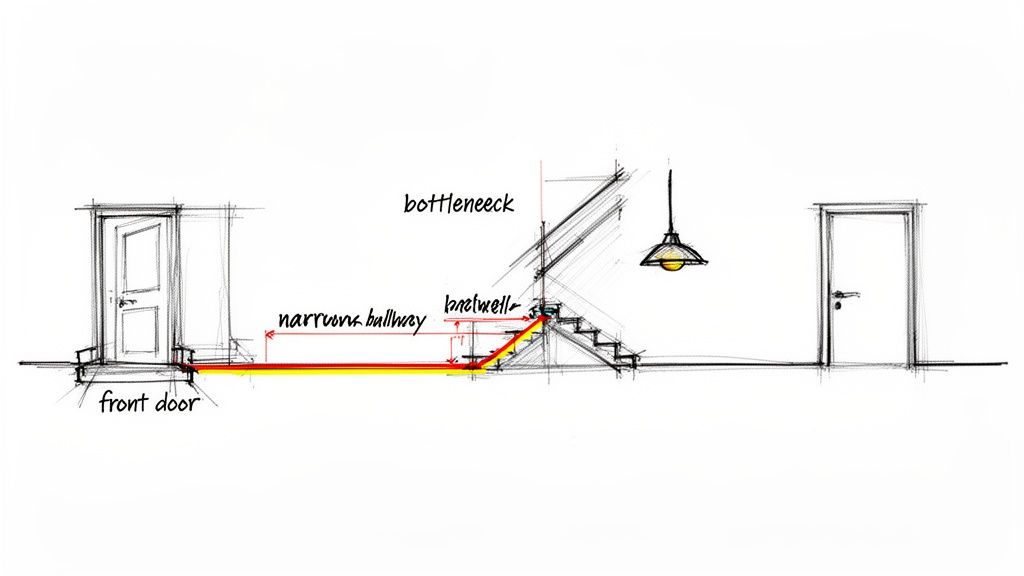
A sofa that fits the room is useless if it can’t get through the hallway. Walk the route from the building entrance to the studio with a tape measure and record:
- Every doorway: width and height of the open doorway. If the door can’t open fully or be removed, measure the narrowest point.
- Doorway diagonal: from one bottom corner to the opposite top corner. Large pieces are often tilted through doors.
- Hallways: the narrowest width, including radiators, shelves, or trim that sticks out.
- Stairs: width between wall and handrail, headroom at the lowest point, and the width and depth of any landing where the furniture has to turn.
- Elevator: interior height, width, and depth, plus the door opening, which is often smaller than the cab.
The smallest width and lowest height on that list are your maximum delivery dimensions. If a piece is larger, choose a different model or one that ships in sections. For NYC buildings with walk-ups, elevator reservations, or COI requirements, see our guide to white glove delivery.
Step 3: Sketch a Floor Plan
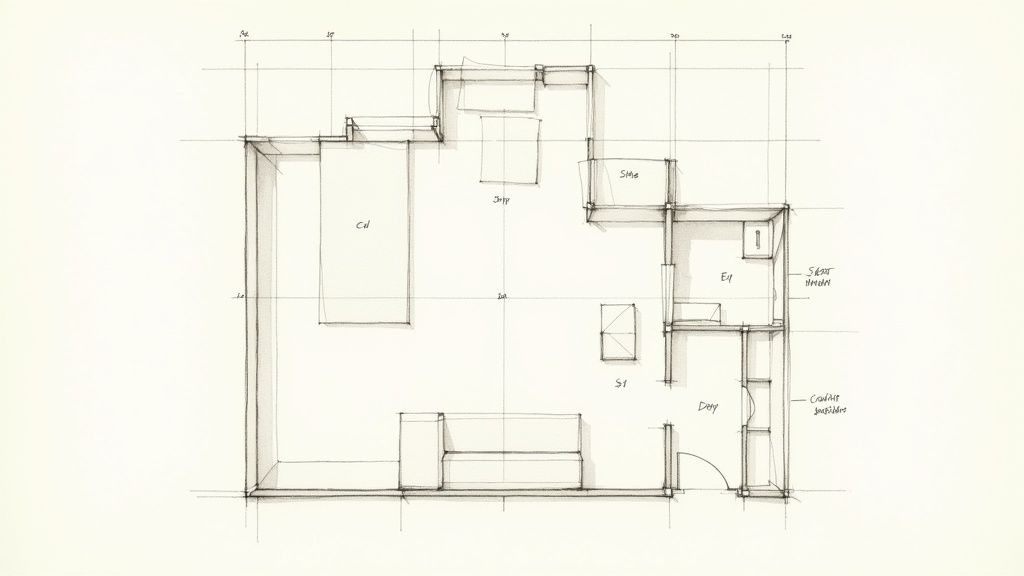
Draw the room to scale on graph paper (one square can equal 6 inches) or use a free online room planner. Mark windows, doors, door swings, outlets, radiators, and alcoves. Then add furniture shapes at their real dimensions, including the open size of anything that converts.
Before buying, outline each piece on the floor with painter’s tape and live with it for a day or two. Walk around the outline, open doors and closets, and check that you can reach windows and outlets. Standard futon and mattress dimensions are on Futonland’s sizing charts.
Step 4: Divide the Studio into Zones
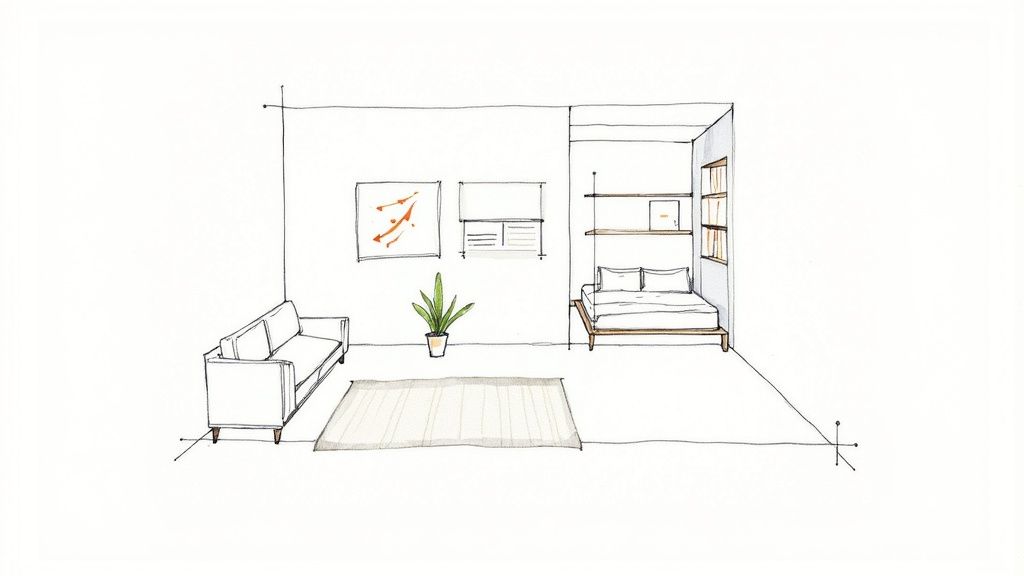
Think of the studio as several small rooms that share four walls: a sleeping zone, a living zone, an eating zone, and possibly a work zone. Give the best spot to the zone you use most:
- Remote workers: put the desk near a window for natural light, away from the bed.
- Frequent hosts: give the living area the most space and seating.
- Homebodies: prioritize a separated, restful sleeping nook.
Skip zones you don’t need. If you rarely sit at a dining table, a lift-top coffee table or a counter with stools can replace one.
Studio Apartment Divider Ideas
You can separate zones without building walls:
- Area rugs: a rug under the sofa, coffee table, and chair defines the living room. Choose one large enough that at least the front legs of each seating piece sit on it. A rug that’s too small makes the zone feel disconnected.
- The back of the sofa: float the sofa with its back to the bed to draw a clear line between living and sleeping.
- Open bookcases: a double-sided, open-back bookshelf divides the room while letting light through and adding storage.
- Curtains: a ceiling-mounted curtain track around the bed gives privacy that disappears when it’s pulled back.
- Folding screens: freestanding room dividers separate a zone and fold away when you don’t need them.
- Lighting: a pendant over the dining spot and a floor lamp by the sofa make each zone read as its own space.
Studio Apartment Layout Ideas by Room Shape
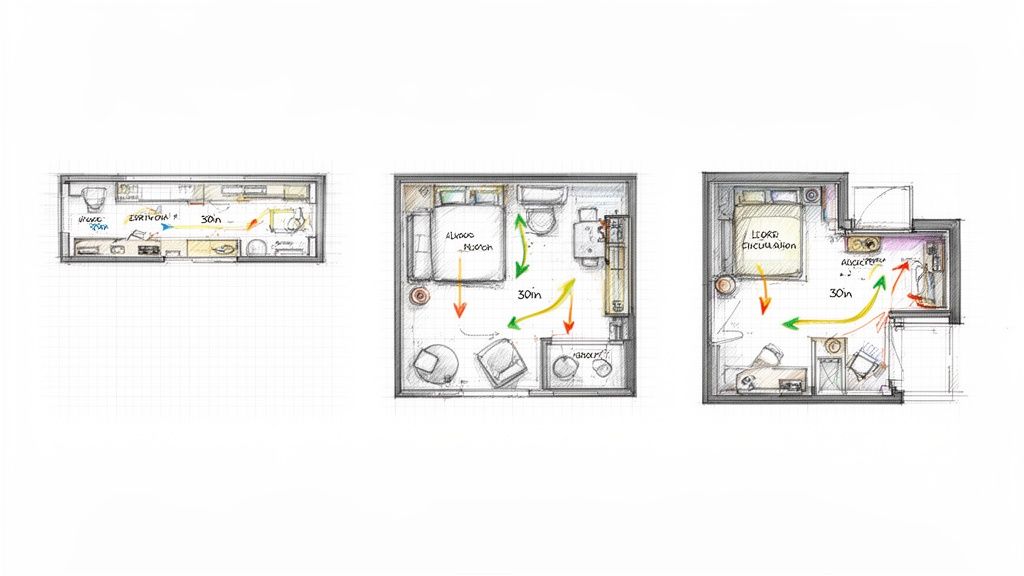
Long, Narrow Studio
Avoid lining everything up along one wall, which makes the room feel like a hallway. Instead, zone it in sequence:
- Put the bed at the far end, away from the door, for privacy.
- Add an open bookcase or screen beside the bed as a partial wall.
- Float the sofa across the room in the middle, with its back to the bed, to create the living zone.
- Place the dining or work area near the entry and kitchen.
Keep a continuous path of at least 30 inches from the entry to the far window.
Square Studio
Pushing everything against the walls leaves a dead zone in the middle. Instead, tuck the bed into one corner, ideally the one farthest from the door. That leaves an L-shaped area for living and dining. Anchor the living zone with a rug in the open floor space.
In a square studio of about 400 square feet (around 20 × 20 feet), a common layout is a full or queen bed in the back corner, a sofa facing away from it on a rug, a small dining table or counter near the kitchen, and a narrow desk along the window wall.
L-Shaped Studio
An L-shaped studio has a built-in zone: the alcove. Use it as a sleeping nook, with a curtain across the opening for privacy, or as a home office that keeps work separate from living space. The main rectangle stays open for the living and dining areas.
Wall Bed or Futon Layout
If the bed folds away during the day, you don’t need to give up floor space for it. A wall bed with a built-in desk or sofa, or a futon that becomes a bed at night, turns the whole studio into a living room during the day. Leave the open-bed footprint clear of permanent furniture, and use a lightweight coffee table that’s easy to move.
Loft Bed Layout
With a high enough ceiling, a loft bed lifts the sleeping zone off the floor and frees the space underneath for a desk, sofa, or storage. It’s one of the most space-efficient studio layouts available.
Where to Put the Bed in a Studio Apartment
The bed is the largest piece in most studios, so place it first.
- Farthest corner from the entry: the most private option, with a natural separation from the living area.
- Along a long wall: balances a narrow studio. Add a divider or bookcase at the foot or side.
- Floating: a low console or bench behind the headboard creates a subtle divider without blocking sightlines.
- In an alcove: the easiest way to create a separate sleeping nook.
- Folded away: a wall bed, cabinet bed, futon, or daybed gives the floor back during the day.
Keep the bed near an outlet, away from radiators, and out of the main path from the door. Compare options in our guide to the best beds for studio apartments.
Multifunctional Furniture for Studios
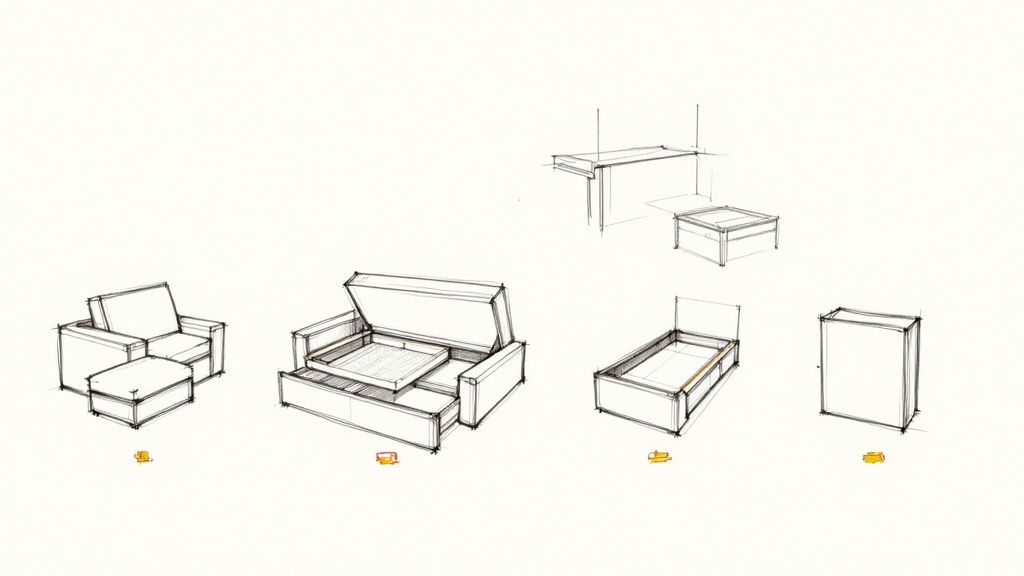
In a studio, most pieces should do at least two jobs:
- Convertible sofa beds and futons: daytime seating and a bed at night. Not sure which suits you? See futon or sofa bed for a studio apartment.
- Wall beds and cabinet beds: the biggest space gain of any studio furniture. Cabinet beds are freestanding, which makes them renter-friendly.
- Lift-top coffee tables: a coffee table that rises to dining or desk height.
- Storage ottomans: extra seating, a footrest, and hidden storage.
- Nesting tables: several surfaces that tuck into one footprint.
Test every conversion mechanism before you buy. A sofa bed that’s hard to open will end up staying a sofa. For more ideas, see space-saving furniture ideas and how to furnish a studio apartment on a budget.
Sizing Convertible Furniture for Your Layout
Futons and Sofa Beds
Measure both the closed and open positions. A sleeper can nearly double its depth when opened, and a queen sleeper mattress alone is 60 inches wide before the frame. Tape out the open footprint and confirm you can still walk around it and open the closet, bathroom door, and dresser drawers.
Sectionals and Sleeper Sectionals
Tape out the full L: the back length, the chaise length, and the depth. Then check:
- Pull-out sleeper: the space the open bed needs.
- Storage chaise: clearance for the lid to open fully.
- Recliners: clearance behind reclining seats.
Even when the numbers work, an oversized sectional can overwhelm a studio visually. The tape outline shows you before you commit.
Wall Beds and Cabinet Beds
For a wall bed, check the cabinet height against your ceiling and mark the projection, meaning how far the open bed extends into the room. Make sure it clears nightstands, a ceiling fan, and other furniture. Keep the mounting wall free of switches, outlets, and thermostats. Cabinet beds are freestanding, but check that they won’t block an outlet you need. Learn more in What Is a Murphy Bed?
Traffic Flow and Clearances

Good layouts let you move through the room without turning sideways. Use these common designer guidelines:
| Space | Recommended Clearance |
|---|---|
| Main walkways (entry to living area, kitchen, bathroom) | 30–36 inches |
| Main entry | About 36 inches |
| Sofa to coffee table | About 18 inches |
| Sides of the bed you get in and out on | About 24 inches |
| Behind dining chairs | About 30 inches to pull out and sit |
Test the layout by walking through your routines: from the bed to the kitchen, from the door to a place for keys and bags, from the sofa to the bathroom. If you bump into corners, adjust.
How to Make a Studio Apartment Feel Bigger
- Protect the main sightline. Keep the view from the entry to the farthest window clear. Put tall furniture against walls and keep pieces in the middle of the room low.
- Use mirrors. A large mirror opposite or beside a window bounces light and adds visual depth.
- Layer the lighting. Combine ambient light (ceiling fixture or lamps), task light (desk lamp, reading lamp), and accent light (on art or shelves) instead of relying on one overhead fixture. Browse floor and table lamps.
- Choose leggy, light furniture. Exposed legs, light woods, and glass let light pass under and through.
- Keep a consistent palette. Two or three main colors repeated in the curtains, pillows, bedding, and rug tie the zones together.
Studio Apartment Layout FAQ
Where should the bed go in a studio apartment?
Usually in the corner or alcove farthest from the entry, which gives it the most privacy. In a narrow studio, place it along a long wall with a divider. If floor space is tight, a wall bed or futon frees the space during the day.
How do you divide a studio apartment?
Use area rugs, the back of the sofa, open bookcases, ceiling-mounted curtains, folding room dividers, and zone-specific lighting. These separate spaces without blocking light.
How can I create a dining area without a table?
Use a lift-top coffee table, a narrow console behind the sofa with stools, a fold-down wall-mounted table, or a rolling kitchen island that doubles as a breakfast bar.
Where should the TV go in a studio?
Wall-mount it to save floor space. A gallery wall around it helps it blend in, and a swivel mount lets you angle it toward the sofa or the kitchen. If you use a TV stand, choose one with closed storage to hide cords and clutter.
What size furniture fits in a studio apartment?
It depends on the room and the delivery path. Measure both, then tape out each piece at full size, including the open size of convertible furniture, before buying.
The Bottom Line
A great studio layout starts with measurements and a plan, not furniture. Measure the room and the path in, define your zones, place the bed first, keep walkways clear, and choose pieces that do more than one job. Explore sofa beds, futons, and wall beds to find furniture that fits your floor plan.