
Comfortable Futon Sofa Bed Guide – Mattress, Frame & Setup Tips
A comfortable futon sofa bed comes down to three things: a mattress thick and supportive enough to sleep on (usually 8 inches or more), a sturdy frame with closely spaced slats, and a size and style that fit your room. Get those right and a futon can be as comfortable as a regular sofa by day and a real bed at night. This guide covers what makes the most comfortable futons different, from mattress materials and thickness to frames, sizes, and setup.
What Makes a Futon Comfortable?
| Feature | What to Look For | Why It Matters |
|---|---|---|
| Mattress material | Foam-core blends, memory foam, innerspring, latex, or cotton and wool | Determines support, pressure relief, and breathability |
| Mattress thickness | 8″ or more for regular sleeping | Keeps you from feeling the frame |
| Frame | Solid hardwood or heavy-gauge steel | A stable base that doesn’t flex or wobble |
| Support deck | Slats no more than 2.5″–3″ apart, or a tight metal grid | Stops the mattress from sinking into gaps |
| Fold style | Bifold for thicker, bed-like mattresses | Allows a more comfortable mattress |
| Firmness | Matched to how you sit and sleep | Keeps the spine aligned |
Browse futons or ready-matched futon sets to compare.
The Mattress: Where Comfort Starts
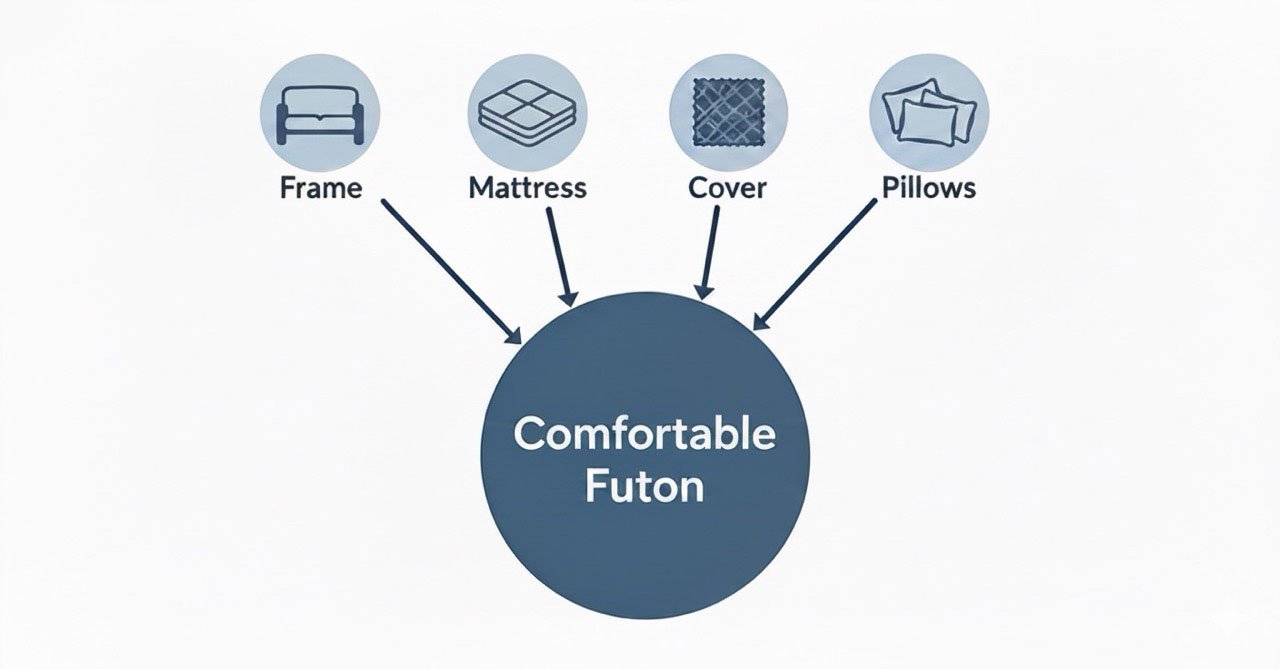
The futon mattress is the single biggest factor in comfort. A good one feels like a sofa cushion when folded and a real mattress when flat. A thin one lets you feel every slat.
Futon Mattress Materials Compared
| Material | Feel | Best For | Durability | Price |
|---|---|---|---|---|
| Innerspring | Bouncy, supportive, good airflow | Traditional mattress feel, hot sleepers, daily use | High; resists flattening | $$–$$$ |
| Memory foam | Contouring, pressure-relieving | Side sleepers, couples | High with dense foam | $$–$$$ |
| Latex | Responsive, buoyant | A bouncy feel without springs; natural materials | Very high | $$$–$$$$ |
| Foam and cotton | Medium-firm, traditional | Everyday dual use | Medium to high | $–$$ |
| All-cotton | Very firm, dense | Firm-surface lovers, occasional use | Lower; compresses over time | $ |
For the most comfortable futon for sleeping, memory foam, latex, and innerspring builds feel closest to a regular bed. For a balance of comfort, foldability, and price, foam-and-cotton blends are the most versatile. Prefer natural materials? See our organic futon mattress guide.
Mattress Thickness
- 4″–6″: fine for lounging and very occasional guests, but too thin for regular sleeping.
- 8″: the sweet spot, supportive enough for sleeping and still easy to fold. The most popular choice for everyday futons.
- 10″ and up: the most bed-like option. Check that your frame can fold a mattress that thick.
The Mattress Cover
The ticking and the removable futon cover are what you actually touch. Cotton twill is durable and breathable. Microfiber and microsuede are soft and stain-resistant, which is good for kids and pets. Performance fabrics resist fading, pilling, and wear. A removable, washable cover is one of the most practical features you can choose.
For a full walkthrough, see The Futon Mattress Buying Guide.
The Frame: Your Foundation for Comfort
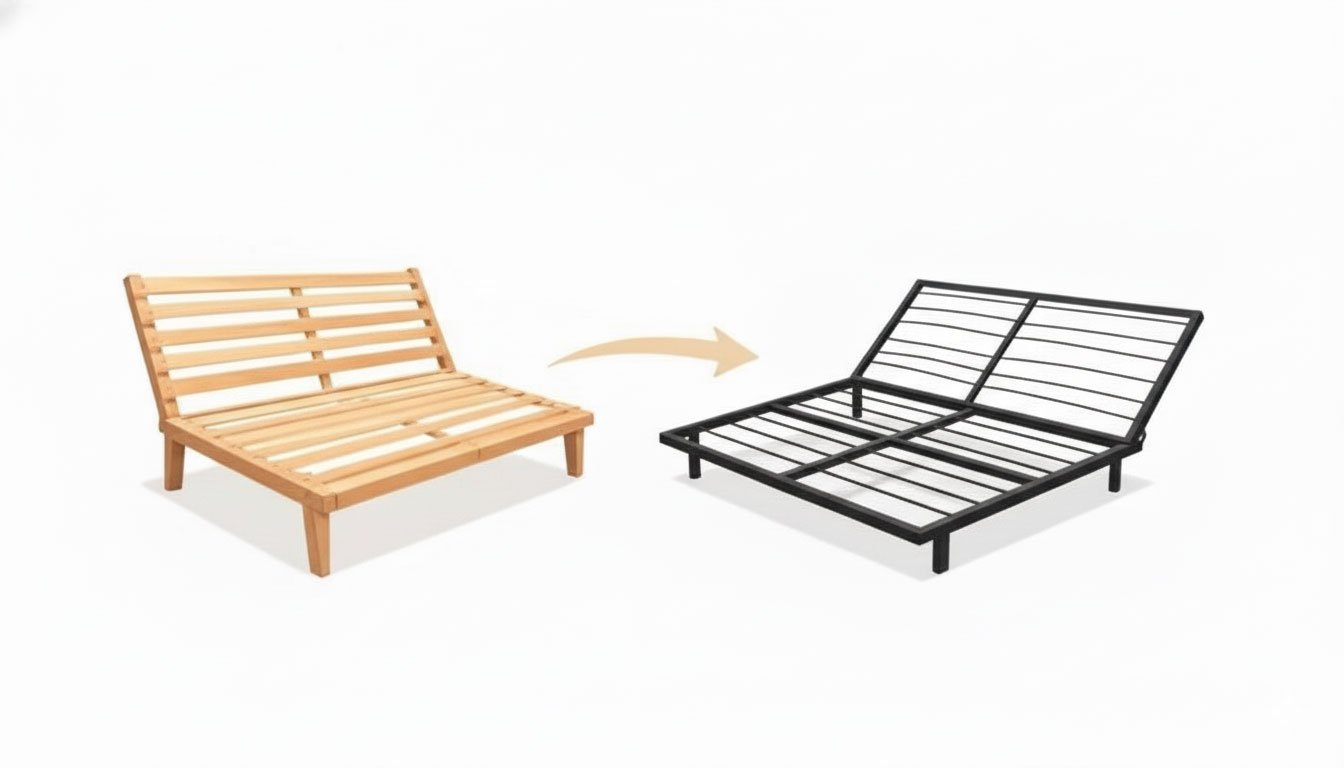
A great mattress on a weak frame still feels bad. The frame keeps the mattress flat and evenly supported, which prevents dips and extends its life.
Bifold vs. Trifold
- Bifold frames fold the mattress once, into a seat and a back. They’re sturdier, accept thicker and more comfortable mattresses, and sit most like a conventional sofa. For the most comfortable futon sofa bed, choose bifold.
- Trifold frames fold the mattress into thirds. They need thinner, more flexible mattresses and suit loungers and tight spaces better than nightly sleeping.
Wood vs. Metal
Solid hardwood frames (oak, maple, rubberwood, and similar) are the most durable and stable, especially for daily conversion. Browse hardwood futon frames. Softer woods like pine cost less and work for lighter use. Metal frames are slim, modern, and lighter to move. Look for heavy-gauge steel with solid welds, since thin metal is the most common cause of squeaks and wobble.
The Support Deck
Wood slats should be no more than 2.5–3 inches apart. Wider gaps let the mattress sink between them, creating lumps and shortening its life. On metal frames, choose a tight grid over widely spaced bars.
See all futon frames.
Modern Futons: Style Without Sacrificing Comfort
“Modern” futons generally fall into two styles.
- Frame-and-mattress futons: a wood or metal frame holding a separate futon mattress and cover. The look is honest and casual, and you can change the mattress and cover independently.
- Upholstered futon sofas: the frame and cushions are fully upholstered, usually converting with a click-clack mechanism. They look like a finished sofa, with tighter tailoring, slim arms, and exposed legs.
Modern designs share a few markers: a low profile that keeps sightlines open, lighter visual weight from thin arms and raised legs, and a conversion that happens in one smooth motion with little visible hardware. A smooth mechanism matters for comfort too. If converting is a struggle, the bed function stops getting used.
| Upholstered Futon Sofa | Frame-and-Mattress Futon | |
|---|---|---|
| Look | Integrated, furniture-first | Visible frame and mattress, more casual |
| Room presence | Low, clean, light | More visible structure |
| Customization | Upholstery choice at purchase | Swap mattress and cover anytime |
| Sleeping comfort | Depends on cushion construction | Choose any mattress thickness and material |
| Best for | Contemporary living rooms, studios, offices | Guest rooms, nightly sleepers, custom comfort |
Futon vs. Sofa Bed
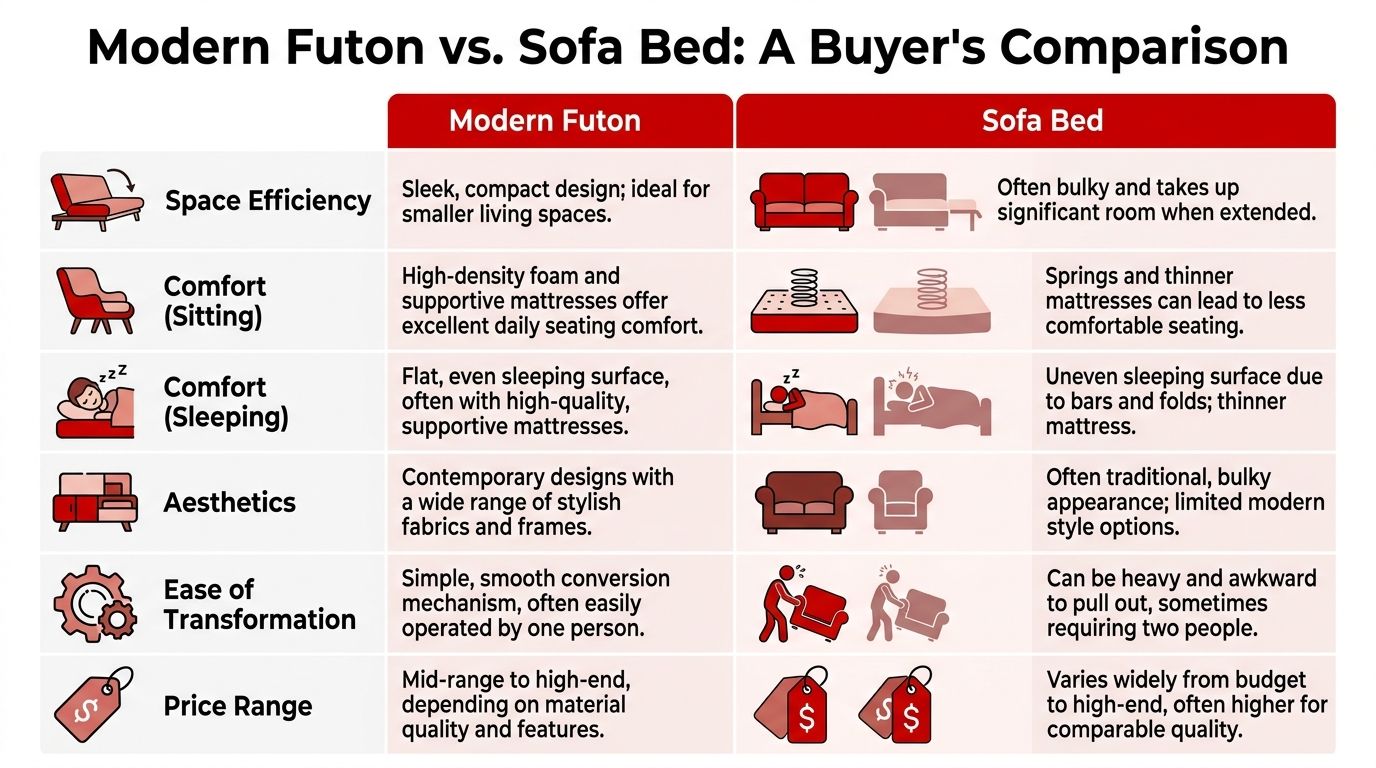
| Futon | Pull-Out Sofa Bed | |
|---|---|---|
| Conversion | One motion; frame folds flat | Remove cushions, pull out a folded frame |
| Mattress | One full-thickness mattress for sitting and sleeping; your choice of type | Separate, thinner mattress folded inside |
| Visual bulk | Lower, lighter | Heavier base to house the mechanism |
| Small-room fit | Better for studios and offices | Needs more forward clearance to open |
| Sofa feel | Firmer, even seat | Conventional sofa cushions |
Choose a futon if you live small, convert often, or want to choose your own mattress. Choose a traditional sofa bed if you want a conventional sofa feel and the bed is used only occasionally. Convertible sofa beds sit in between. For more on sleep comfort, see are futons comfortable to sleep on?
Finding the Right Size for Your Room

- Twin (39″ × 75″): one sleeper; a chair-and-a-half as a sofa. Good for offices and kids’ rooms.
- Full (54″ × 75″): the most popular size, seating two to three and sleeping one comfortably or two snugly.
- Queen (60″ × 80″): sleeps two comfortably and makes the best primary bed. It needs a larger room. See our queen size futon guide.
Get the dimensions in both the sofa and bed positions, then tape both footprints on the floor. Leave walking room around the open bed, and check whether the frame needs clearance behind it to recline. Standard sizes are on Futonland’s sizing charts.
Small-Space Features
- Armless frames save several inches of width.
- Under-frame storage drawers hold bedding and pillows.
- Wall-hugger frames convert without being pulled away from the wall.
More ideas: best futons for small spaces.
Upgrades That Make Any Futon More Comfortable
- Mattress topper: a 2″–3″ memory foam or latex topper is the fastest way to soften a firm mattress for sleeping.
- Non-slip grip pad: stops the mattress from sliding down the frame.
- Tighter slats: if your frame’s slats are more than about 3 inches apart, the mattress isn’t fully supported.
- A quality cover: protects the mattress and changes the feel of the seat.
For step-by-step fixes, see how to make a futon more comfortable.
Keeping a Futon Comfortable Long-Term
- Flip and rotate the mattress every one to three months, alternating a flip with a head-to-foot rotation, so it compresses evenly.
- Air it out off the frame a couple of times a year.
- Vacuum the mattress and frame with an upholstery attachment about monthly.
- Tighten frame hardware whenever you notice squeaks or wobble.
- Clean spills promptly. See how to clean a fabric couch at home.
Where and How to Buy
Try It in a Showroom
Nothing beats testing a futon in person. At Futonland’s showrooms on the Upper West Side, in Greenpoint, and in Newark:
- Convert it from sofa to bed and back. It should move smoothly.
- Sit for a few minutes to check seat depth and support.
- Lie down in your usual sleep position. You should never feel the slats or bars.
Buying Online
Read reviews from long-term owners and look for patterns such as squeaky frames or mattresses that flatten quickly. Before you order, check the return policy (window, restocking fees, return shipping), what the warranty covers for the frame and mattress, and delivery options.
Delivery and Assembly
Futonland offers delivery levels from curbside to white glove delivery, where the crew brings the futon to your room, assembles it, and removes the packaging. See all delivery options.
Comfortable Futon FAQ
What is the most comfortable type of futon?
A bifold hardwood frame with an 8″ to 10″ memory foam, latex, or innerspring futon mattress. That combination feels closest to a regular sofa and bed. For everyday sitting with occasional sleeping, a foam-and-cotton mattress is the most versatile choice.
Can a futon be used for everyday sleeping?
Yes. Choose a mattress at least 8 inches thick made from high-density foam, latex, or innerspring, on a sturdy frame with closely spaced slats. See the best futons for everyday sleeping.
How can I make my current futon more comfortable?
Add a 2″–3″ topper, check the slat spacing, use a non-slip grip pad, and flip and rotate the mattress regularly. If the mattress has flattened, replacing just the mattress is often the biggest improvement.
What firmness is best for a futon mattress?
For mostly sofa use, medium-firm holds its shape and supports sitting. For sleeping, side sleepers do best with softer, contouring layers, while back and stomach sleepers need firmer support.
How long does a futon last?
Solid hardwood and heavy-gauge steel frames last many years. The mattress wears out sooner, and how soon depends on its materials and how often it’s slept on. All-cotton mattresses used nightly compress fastest. Regular flipping and rotating extends any mattress’s life.
The Bottom Line
The most comfortable futon pairs an 8″ or thicker mattress in the right material with a sturdy bifold frame and closely spaced slats, sized to your room in both positions. Test it in person if you can, add a topper if you want more softness, and keep the mattress flipped and rotated. Explore Futonland’s futons and futon sets to find yours.