
Futon Bunk Bed with Mattress – Safety, Sizing & Buying Guide
A futon bunk bed with mattress combines a top bunk and a lower futon sofa bed, giving you seating by day and multiple sleeping spaces at night. This dual-function design works as a comfy couch for hanging out during the day and transforms into a practical sleeping setup at night. It’s the perfect answer for small apartments, dorm rooms, and guest spaces where you need to make every square foot count.
In this guide, you’ll learn how to choose the right futon mattress, measure your room and ceiling height, check safety features, and compare options so you can pick a bunk that fits your family and your space.
The Smart Solution for Modern Spaces
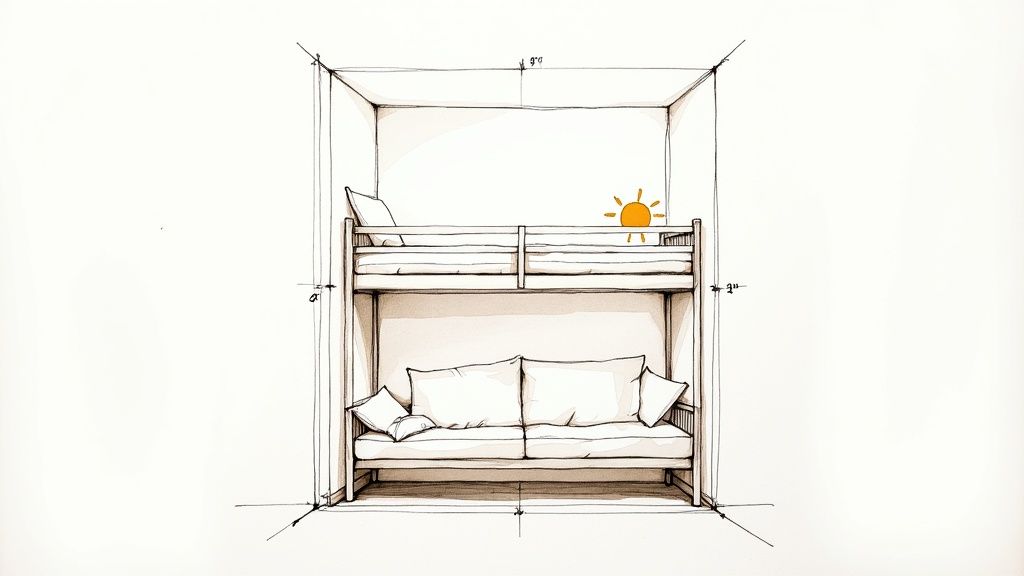
Think of the futon bunk bed as the Swiss Army knife of furniture. It’s more than just a place to sleep; it’s a clever response to the modern challenge of limited living space. The real genius is its ability to switch identities, seamlessly shifting from a social seating area to a bed that can sleep multiple people.
This transformative power is exactly why they’re becoming so popular. As our homes and apartments get more compact, we need furniture that works harder for us. The global bunk beds market, which includes these smart configurations, was valued at USD 4.9 billion in 2025 and is expected to hit USD 8.8 billion by 2035. That’s a clear sign that multifunctional living is here to stay.
To give you a quick snapshot, here’s a simple breakdown of what makes a futon bunk bed so valuable.
Futon Bunk Bed at a Glance
| Feature | Primary Benefit | Best For |
|---|---|---|
| Dual-Function Design | Serves as both a sofa and a bed, adapting to your needs throughout the day. | Small apartments, dorms, and guest rooms where versatility is key. |
| Vertical Space Use | Stacks sleeping areas, freeing up valuable floor space for other activities. | Maximizing room layout in children’s rooms or studio apartments. |
| Cost Efficiency | Combines two essential furniture pieces into one affordable purchase. | Budget-conscious buyers, first-time homeowners, and students. |
| Guest-Ready | Instantly provides extra sleeping space for overnight visitors without a dedicated guest room. | Anyone who frequently hosts friends or family. |
This table really highlights how a single piece of furniture can solve multiple problems, making it a strategic choice for efficient, modern living.
Core Components and Key Benefits
At its heart, a futon bunk bed with a mattress is made of two main parts: the sturdy frame and the flexible mattresses. The top bunk holds a standard twin or full mattress, while the bottom level has a special futon mattress designed to fold and unfold easily.
This unique setup delivers some serious advantages:
- Space Maximization: It takes up the floor space of a single sofa but sleeps two or more people.
- Functional Versatility: It’s a living room couch, a guest bed, and a primary sleeping spot all in one.
- Cost-Effectiveness: You’re essentially getting two pieces of furniture—a bed and a sofa—for the price and footprint of one.
The true value of a futon bunk bed is its ability to adapt to your life. It’s a study spot, a movie night lounge, and a welcoming bed for visitors, all without forcing you to sacrifice precious floor space.
This adaptability makes it a cornerstone of smart interior design. When you choose furniture that serves multiple purposes, you create a more open, uncluttered, and functional home. This idea is the driving force behind the entire category of versatile home furnishings. Ultimately, this piece is more than just a bed; it’s an investment in a more flexible and comfortable home.
How to Select the Perfect Futon Mattress
The mattress is the true heart of your futon bunk bed with mattress, making all the difference between a piece of furniture you love and one you just tolerate. A futon mattress has a tough job—it has to be comfortable for sitting, supportive for sleeping, and flexible enough to fold and unfold every single day without getting lumpy.
Think of it like an acrobat. A standard mattress is built to lie flat, stiff and supportive. But a futon mattress needs to bend, fold, and contort into a sofa shape, then snap back into a perfectly flat bed without missing a beat. This dual role means the materials and construction are everything.
Exploring Common Mattress Types
The world of futon mattresses has plenty of options, and the right one for you really depends on how you’ll use it. Is this a daily couch and occasional guest bed? Or will it be a primary sleeping spot?
Let’s break down the most popular materials you’ll find:
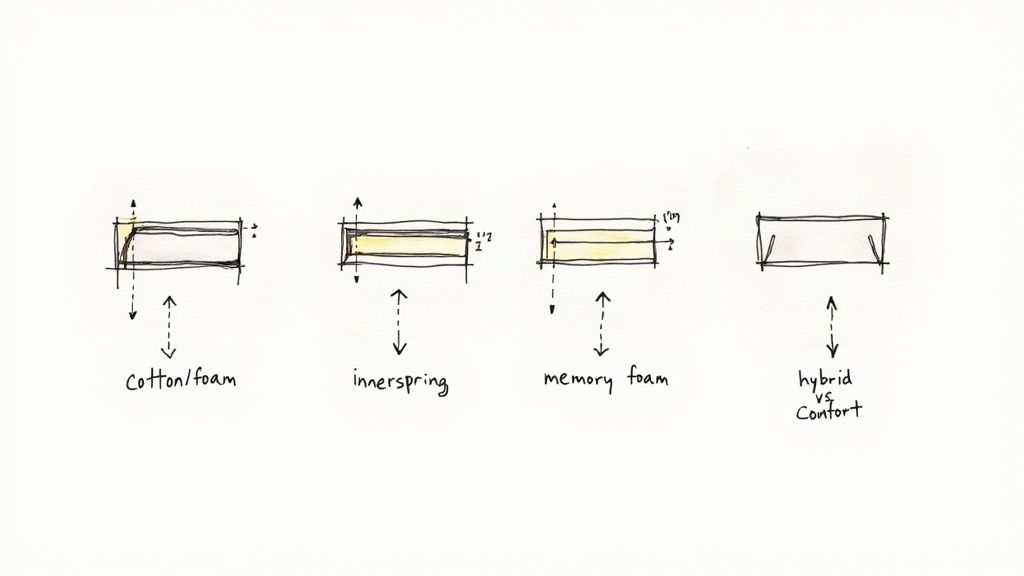
- Cotton and Foam Blends: This is the classic workhorse of the futon world. Layers of soft cotton batting are wrapped around a high-density foam core. The foam gives it the resilience to prevent the cotton from packing down, striking a great balance for both sitting and sleeping.
- Innerspring: Just like a traditional bed, these mattresses have a core of steel coils. The big difference? They’re engineered to be far more flexible. You get that familiar bouncy, responsive feel that’s great for air circulation and firm support, making them a popular choice for sleeping.
- Memory Foam: If you want that contouring, pressure-relieving feel, memory foam is a fantastic choice. It molds to your body’s shape for top-tier sleeping comfort. Just make sure it’s a memory foam mattress specifically designed for a futon, so it has the flexibility to fold without getting damaged.
The key takeaway here is resilience. Your mattress needs to spend hours folded up as a sofa and still return to a comfortable, flat sleeping surface. A standard, rigid mattress would be ruined in weeks.
Why Thickness Is a Critical Factor
When you’re looking at specs, mattress thickness is one of the most important numbers to watch. It’s a balancing act between comfort and function. Go too thin, and you’ll feel the frame underneath you, whether you’re sitting or sleeping—not exactly cozy.
On the other hand, a mattress that’s too thick—usually anything over 8 inches—can cause a whole other set of problems. It can be too stiff to easily fold into the sofa position, putting a lot of strain on the frame’s mechanism and the mattress itself.
The sweet spot for most futon mattresses is between six and eight inches. This range gives you plenty of cushioning without giving up the flexibility you need for smooth conversions.
Finding that perfect mattress is what makes your futon bunk bed a truly versatile piece of furniture. To see a great variety of materials and thicknesses, you can browse a curated selection of futon mattresses designed for durability and comfort. It’s the best way to find a match for your lifestyle and ensure your new bunk bed is a cozy spot for years to come.
Measuring Your Room for a Perfect Fit

We’ve all heard the stories—and maybe even lived them. The thrill of new furniture arriving, only to discover it completely swallows the room. A futon bunk bed is a brilliant space-saver, but underestimating its true footprint is a classic misstep. Trust us, adopting a “measure twice, buy once” mindset will save you a world of headaches.
Start with the obvious: the length and width of your room. But don’t just stop there. A futon bunk bed with a mattress has a vertical presence, and that third dimension—height—is where many people get tripped up.
Beyond Length and Width
Ceiling height is the single most overlooked—and most critical—measurement you’ll take. You absolutely must have enough clearance for someone to sit up on the top bunk without knocking their head. It’s not just about comfort; it’s about safety.
A good rule of thumb is to leave at least 30 inches of space between the very top of the mattress and the ceiling. This means measuring from floor to ceiling, then subtracting the total height of the bunk bed you’re eyeing. If you’re left with less than 30 inches, the top bunk will feel dangerously cramped. Don’t forget to account for any low-hanging light fixtures or ceiling fans, too!
Pro Tip: Before you click “buy,” grab some painter’s tape and mark the bed’s exact footprint on your floor. This simple trick is a game-changer. It lets you physically walk around the outline, check for clearance with closet doors and entryways, and get a real feel for how the bed will live in your space.
Sizing and Room Clearance Guide
To give you a clearer picture, we’ve put together this quick guide. It outlines the typical dimensions for common bunk bed sizes and the room specs you’ll need. Keep in mind, these are general estimates—always, always double-check the exact dimensions of the specific model you love before making a final decision.
| Bed Size (Top/Bottom) | Typical Frame Dimensions (L x W x H) | Recommended Ceiling Height | Minimum Floor Footprint |
|---|---|---|---|
| Twin over Full | 78″ L x 42″ W x 65″ H | 8 feet (96 inches) or more | 6’6″ x 3’6″ |
| Full over Full | 78″ L x 56″ W x 65″ H | 8 feet (96 inches) or more | 6’6″ x 4’8″ |
| Twin XL over Queen | 83″ L x 63″ W x 70″ H | 9 feet (108 inches) or more | 6’11” x 5’3″ |
One last thing: don’t forget to account for the futon when it’s folded down into a bed. It will extend much further into the room, so make sure you have enough open floor space for that easy transformation from sofa to sleeper.
A little planning goes a long way. Once you have your measurements in hand, you can confidently explore different styles. Feel free to browse our wide selection of bunk and loft beds to find a model that perfectly matches your room’s dimensions and your family’s needs. This careful prep work ensures your new bed is a perfect fit in every single way.
Understanding Essential Safety Features
When you’re choosing a futon bunk bed frame, safety isn’t just another feature on a list—it’s everything. Think of the frame as the skeleton of the bed. It has to be solid enough to handle kids climbing, adults sitting, and everything in between. That’s why a rock-solid structure is completely non-negotiable for any elevated bed.
You’ll want to look for frames built from solid hardwoods like oak or maple, or heavy-gauge steel. These materials give you the kind of durability and stability that prevents wobbling and keeps the bed secure for years. Always, always check the manufacturer’s weight limits for both the top bunk and the futon below, and make sure you stick to them.
But it’s not just about the raw strength of the frame. The design of the safety components is just as critical. These are the active guardians that prevent accidents before they happen.
Your Core Safety Checklist
As you start comparing different models, keep this checklist handy. It covers the absolute must-haves for safety. A bed that ticks all these boxes is one that was built with your peace of mind as the top priority.
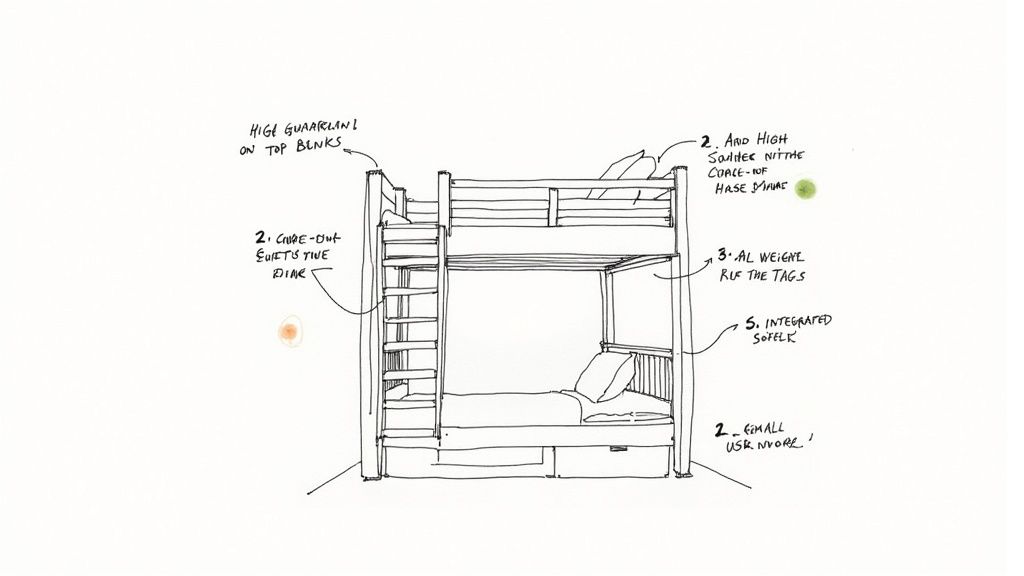
- High, Secure Guardrails: The guardrails on the top bunk absolutely must extend at least five inches above the mattress. This is what stops someone from accidentally rolling off. Make sure they are bolted securely to the frame on all four sides.
- A Well-Designed Ladder: Give the ladder a good shake. It should be firmly attached to the frame with zero wobble. Look for ladders with wide, flat rungs—they’re much safer and more comfortable on bare feet than those skinny, round dowels.
- Slat Spacing: The slats that hold up the mattresses should be no more than 3 to 4 inches apart. This spacing is key to preventing the mattress from sagging through and, more importantly, stopping a child from accidentally slipping between them.
A critical safety detail that’s easy to overlook is the mattress itself. A futon mattress that slides around on the frame can be a real hazard, especially when you’re converting it from a sofa back into a bed.
This is especially true for the lower futon, which gets moved and folded all the time. To keep everything locked in place, a simple accessory can make all the difference. You can find specialized futon non-slip strips and grip pads that create just enough friction between the frame and the mattress to ensure it stays put.
Modern Features That Enhance Safety
Design innovation has also made today’s futon bunk beds safer and more practical than ever. Manufacturers are constantly adding smart features that blend security with everyday convenience. It’s no surprise that the global bunk bed frame market was valued at roughly USD 3.2 billion in 2024 and is expected to grow to USD 4.7 billion by 2033, partly because of these thoughtful design improvements.
These modern touches might include built-in storage shelves that add extra weight and stability to the base, or even integrated USB ports that get rid of the need for risky extension cords snaking up to the top bunk. By focusing on both the fundamental strength and these smart design details, you can pick a futon bunk bed that is as safe as it is stylish.
Assembly and Long-Term Care
Bringing home a new futon bunk bed is always exciting, but the real magic happens when you get it set up and ready for years of use. A little bit of planning from the moment the boxes arrive can make the entire process, from assembly to upkeep, a total breeze.
Your first move, before you even think about grabbing a screwdriver, is to do a quick inventory. Open up the boxes, lay out all the pieces, and check them against the parts list in the instruction manual. Trust me, spending five minutes on this now will save you a massive headache later if you discover a bolt is missing halfway through the build.
Assembling Your Futon Bunk Bed
Once you’ve confirmed everything’s there, you’ve got two main choices: DIY assembly or calling in the pros. If you’re handy with tools and have a friend to help, tackling it yourself is completely doable.
Here’s a golden rule I’ve learned over the years: never fully tighten the screws until the very end. Get all the pieces connected loosely first. This gives you the wiggle room you need to make sure everything lines up perfectly, which prevents stress on the joints and leads to a much sturdier bed.
On the other hand, if the idea of wrestling with diagrams and heavy frames sounds more like a chore than a fun project, professional assembly is a fantastic, stress-free option. Services like Futonland’s White-Glove Assembly take care of everything—carrying the boxes inside, building the bed right where you want it, and even hauling away all the packaging. It’s the fastest way to know your bed is put together correctly and safely from day one.
Keeping Your Bed in Top Condition
Long-term care isn’t complicated; it’s all about simple, consistent habits. Think of it as a quick health check-up for your furniture.
- Routine Cleaning: For the frame itself, a quick wipe-down with a damp cloth is all you need. Steer clear of harsh chemical cleaners, as they can easily damage the finish on both wood and metal frames.
- Mattress Care: To keep the futon mattress feeling fresh and prevent it from wearing unevenly, give it a flip and a rotation every month or two. This is a must, especially for a mattress that gets used for both sitting and sleeping every day.
- Hardware Checks: About twice a year, grab an Allen key and do a quick tour of every bolt and screw. Daily use and even changes in temperature can cause things to loosen up over time. A quick tightening session keeps the entire structure solid and wobble-free.
This isn’t just about keeping your futon bunk bed looking great. It’s a critical safety step that preserves the bed’s structural integrity, giving you peace of mind for years to come.
Your Smart Futon Bunk Bed Buying Checklist
Alright, let’s put it all together. This isn’t just a list; it’s your game plan for getting this purchase right the first time. I’ve broken down everything we’ve covered into a simple, three-stage checklist to guide you from start to finish.
Think of this as your personal roadmap. Follow it, and you’ll shop with the confidence of knowing exactly what to look for, ensuring the futon bunk bed you bring home is the perfect one.
Stage 1: Before You Shop
This is your homework phase. Getting these details sorted out before you even start looking at models will save you a ton of headaches and make the whole process feel less overwhelming.
- Measure Your Space: Grab a tape measure. Get your room’s length, width, and—this is the big one—your ceiling height. You absolutely need at least 30 inches of breathing room between the top bunk mattress and the ceiling.
- Define Your Needs: Get honest about how this will be used. Is it a daily-driver sofa for the kids? A primary bed? Or is it just for when guests crash over? The answer directly impacts the kind of mattress you should get.
- Set a Realistic Budget: Figure out your number, but don’t forget to account for the extras. Will you need delivery? Professional assembly? Factor those in now so there are no surprises later.
Stage 2: While You Compare
Okay, now for the fun part—looking at actual bunk beds. As you browse, use these checkpoints to separate the great from the not-so-great.
- Verify Safety Features: This is non-negotiable. Look for high guardrails (they should extend at least 5 inches above the mattress), a ladder that feels solid and is securely bolted on, and a sturdy frame made from wood or steel.
- Assess the Mattresses: Double-check that the bottom mattress is a true, flexible futon mattress—something in the 6-8 inch range is usually the sweet spot. Then, think about the material. Is foam, innerspring, or a hybrid blend better for your comfort needs?
- Check the Weight Limits: Always, always find the manufacturer’s official weight capacity for both the top bunk and the lower futon. This ensures everyone who uses it will be safe.
Stage 3: Making the Purchase
You’ve found the one! You’re almost there. This final stage is all about making sure the logistics go as smoothly as the selection process.
- Understand the Warranty: Ask what the warranty covers and for how long. It’s always good to know what’s protected.
- Confirm Delivery and Assembly: Find out what to expect when it arrives. Do they just drop it at the curb, or will they bring it inside? Decide if you want to spring for a white-glove assembly service to save yourself the hassle.
- Explore Customization: Don’t forget you can often personalize the look. Many of our models offer different frame finishes and a wide array of mattress covers. Check out our complete futon sets and packages to get a feel for all the possibilities.
Got Questions? We’ve Got Answers
When you’re looking at a piece of furniture as unique as a futon bunk bed with a mattress, a few questions are bound to pop up. It’s smart to get all the details before you buy. Think of this as your quick-fire round to clear up any final thoughts and help you make your decision with total confidence.
The Practical Stuff
Here are the top things our customers ask when they’re figuring out if a futon bunk bed is the right fit. We’ve broken down the answers to give you the essential info you need.
- What’s the weight limit on these things? This is a big one. While it varies a bit between models, a good general rule is that the top bunk can safely hold between 150 to 250 pounds. The bottom futon, being closer to the ground and built for seating, can typically handle 400 pounds or more. Always, always double-check the specific product’s details to be sure.
- Can I just throw a regular twin mattress on the futon part? We really don’t recommend this. A standard mattress is built to be rigid and flat. Trying to fold it up into a couch will wreck the mattress, strain the frame, and frankly, it just won’t work. You’ll need a proper, flexible futon mattress designed for the job.
- How much ceiling height do I actually need? You’ll want to leave at least 30 inches of breathing room between the top of the upper mattress and your ceiling. This is the magic number that lets whoever is sleeping up top sit up comfortably without bumping their head.
Comfort and Day-to-Day Use
Beyond the numbers and specs, people want to know how these beds actually feel to use, especially for grown-ups.
Are futon bunk beds comfortable enough for adults? Absolutely. The secret is all in the mattress. A cheap, thin futon pad won’t cut it, but a high-quality, supportive futon mattress can make the bottom bunk just as comfortable as a regular bed or sofa. It’s a fantastic solution for guest rooms, studios, or anyone looking to maximize their space without sacrificing comfort.
Ready to find the perfect space-saving solution for your home? At Futonland, we live and breathe this stuff. We have a huge range of high-quality, durable futon bunk beds that can fit any style and budget. Take a look at our collection and find the ideal blend of comfort and function. Shop our full selection of versatile furniture today at Futonland.com.