

Finding the Best Futon for Small Spaces
The best futon for a small space isn’t a single model. It’s the right combination of a space-conscious frame, such as a trifold, a wall-hugger bifold, or an armless click-clack, and a mattress that suits the frame and how you’ll use it. Get that combination right and a small futon turns a tight corner into seating by day and a real guest bed at night.
Best Futons for Small Spaces: Quick Picks
- Studio apartments: a full-size wall-hugger futon that converts without pulling away from the wall, with an 8″ mattress if it’s also your bed.
- Home office or small guest room: a chair-size or twin trifold futon with a flexible 6″ mattress, which keeps the room an office most of the time.
- Narrow rooms: an armless click-clack futon sofa, which has a slim profile and needs little wall clearance.
- Maximum storage: a futon frame with under-frame storage drawers for bedding and pillows.
- Everyday sleeping: a sturdy hardwood bifold frame with an 8″–10″ mattress built for nightly use.
Compare ready-matched futon sets or build your own from frames and mattresses.
Why a Futon Works in a Small Space
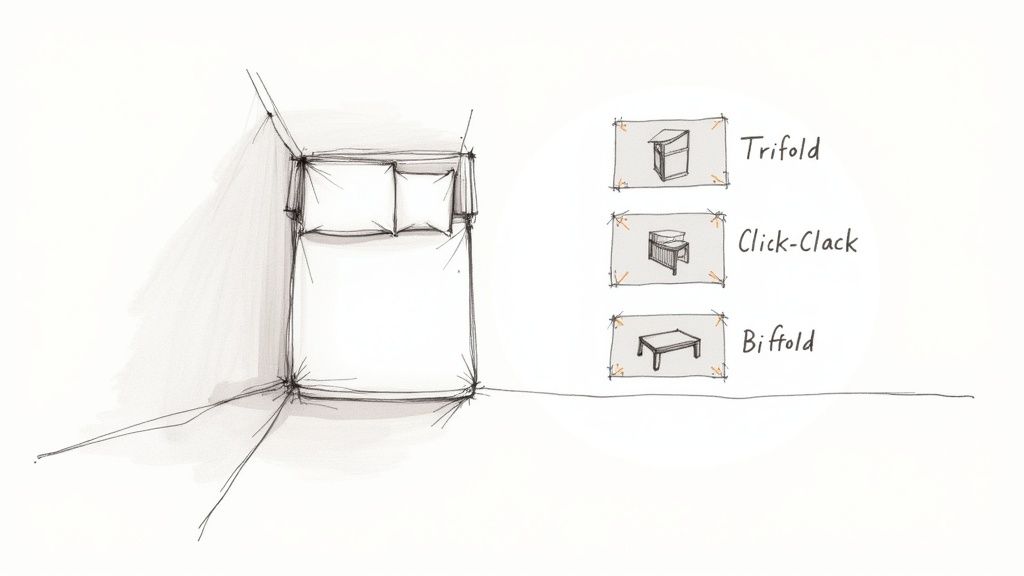
A space-saving futon is a sofa by day, a bed by night, and, with drawers, a storage unit, all in one footprint. Because the frame and mattress are separate, you can also choose the exact size, fold style, and comfort level for your room, which is harder with an all-in-one sleeper sofa.
Futon Types for Small Spaces
| Type | How It Converts | Best For | Space Notes |
|---|---|---|---|
| Bifold | The mattress folds once along its length into a seat and back | Everyday sofa use; takes thicker mattresses | Standard frames pull away from the wall to open; wall-hugger versions don’t |
| Trifold | The mattress folds into thirds; often a lounger or chair | The tightest spaces, offices, dorms | Narrow as a sofa, but the bed extends its full length out from the wall |
| Click-clack | The back clicks down to recline and lies flat | Quick daily conversion, modern style | Little or no wall clearance needed |
| Armless | A bifold or click-clack without arms | Narrow rooms | Saves several inches of width; visually lighter |
Measure Both Footprints
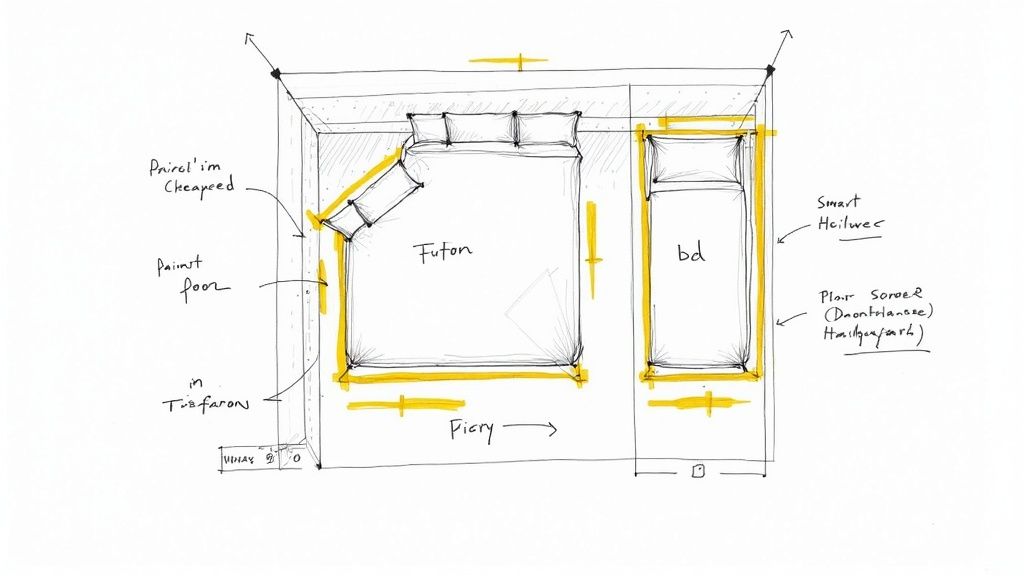
Every futon has two footprints: the sofa footprint you live with every day, and the bed footprint it needs when opened. In small rooms, width gets the attention, but depth in sofa mode and clearance when converting are more often the deciding measurements. A futon can fit the wall and still fail the room if the open bed hits the coffee table or the opposite wall.
- Get both sets of dimensions from the product listing, plus any wall clearance the frame needs to convert.
- Tape both footprints on the floor with painter’s tape, then walk around them and open nearby closet doors and drawers.
- Leave walking room: at least about 24 inches along the side of the open bed you’ll use.
- Measure the delivery path: doorway widths and heights, the narrowest point of each hallway, stairwell width and landing turns, and elevator dimensions including the door opening.
Standard dimensions are on Futonland’s futon sizing charts.
Choosing the Right Size
| Size | Mattress | Sleeps | Best For |
|---|---|---|---|
| Chair / lounger | Single-width; varies by frame | One | Home offices, nursery corners, the smallest rooms |
| Twin | 39″ × 75″ | One | Offices and small guest rooms |
| Full | 54″ × 75″ | One comfortably, two snugly | Studios and small living rooms; the best all-round size |
| Queen | 60″ × 80″ | Two | Larger living rooms and wider studios |
Chair-Size and Twin for the Smallest Rooms
When a room’s main job is still “office,” start with the smallest sleeper that works for an adult guest: a chair-size futon or twin. It fits alongside a desk and storage, doesn’t dominate the wall, and fits through tight doorways and stairwells.
Full-Size Is the Sweet Spot
For most apartments, a full-size futon balances function and footprint. It sleeps far better than a chair-size unit without taking over the room, and it’s often a better choice than a loveseat sleeper.
When a Queen Works
Choose a queen only if the room can still breathe in sofa mode and convert cleanly in bed mode. Picking queen for sleep comfort first and room function second is a common mistake. If the room is tight, a better full-size futon is more livable. See our queen size futon guide for dimensions.
Choosing a Futon Frame for a Small Space

Bifold Frames
A bifold frame folds the mattress once and feels the most like a conventional sofa, which makes it the best choice when the futon is your main couch. It also takes thicker, more bed-like mattresses. Standard bifolds need to be pulled several inches away from the wall to lay flat. Wall-hugger bifolds slide forward as they recline, so they can sit close to the wall.
Trifold Frames
A trifold folds the mattress into three sections, typically seat, back, and a section that tucks under or extends as an ottoman. As a sofa, it’s as narrow as the mattress is wide, which makes it one of the most compact futons for offices, dorms, and micro-apartments. When opened, the bed unfolds straight out from the wall, so plan for the full length in front. Trifolds need a flexible mattress, usually 6 inches or less. Learn more about tri-fold futons.
Click-Clack Futon Sofas
Click-clack futon sofas are upholstered pieces whose back clicks through upright, reclined, and flat positions in seconds, with little or no wall clearance needed. Many are armless or slim-armed, which suits narrow rooms and modern interiors. Browse convertible sofa beds for click-clack styles.
Frame Materials
Hardwood frames are the most durable choice for daily conversion and nightly sleeping. Metal frames are lighter and slimmer, which makes them a good lightweight futon option for moving or dorms. Look for solid welds.
Choosing a Futon Mattress for a Small Space
Thickness
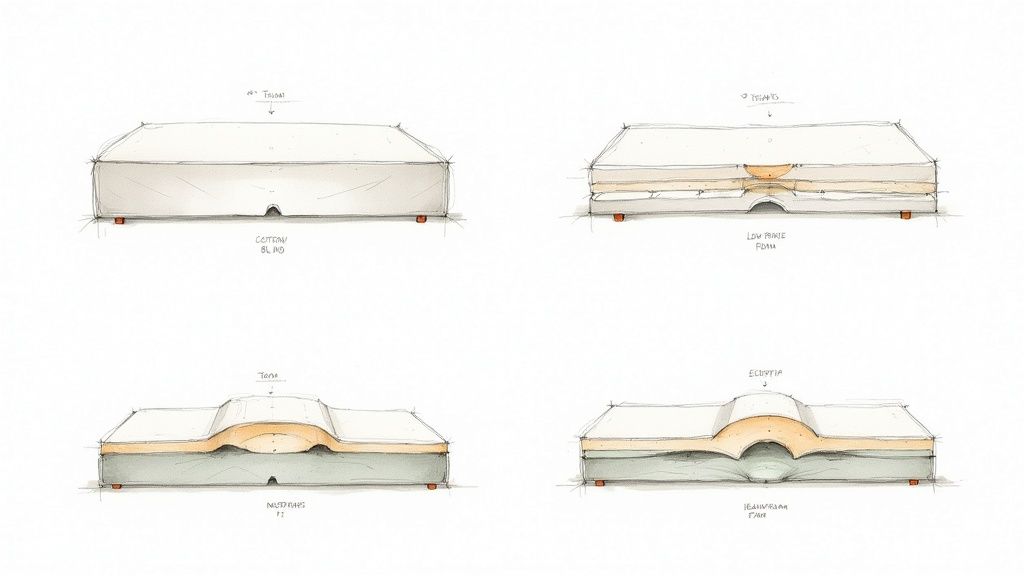
- About 6″: flexible and light. It works on trifold frames and suits guest rooms, offices, and sofa-first use.
- 8″–10″: closer to a real bed, usually with innerspring or dense foam. It’s the right choice when the futon is your primary sleeper, and pairs best with bifold frames.
Materials
- Foam and cotton blends: the classic futon feel, supportive and breathable.
- Innerspring: bouncy, even support that resists sagging under daily use.
- Memory foam: pressure relief for side sleepers and daily sleepers.
- Latex and wool: natural, responsive, and temperature-regulating premium options.
For a full comparison, read The Futon Mattress Buying Guide.
Features That Save Space
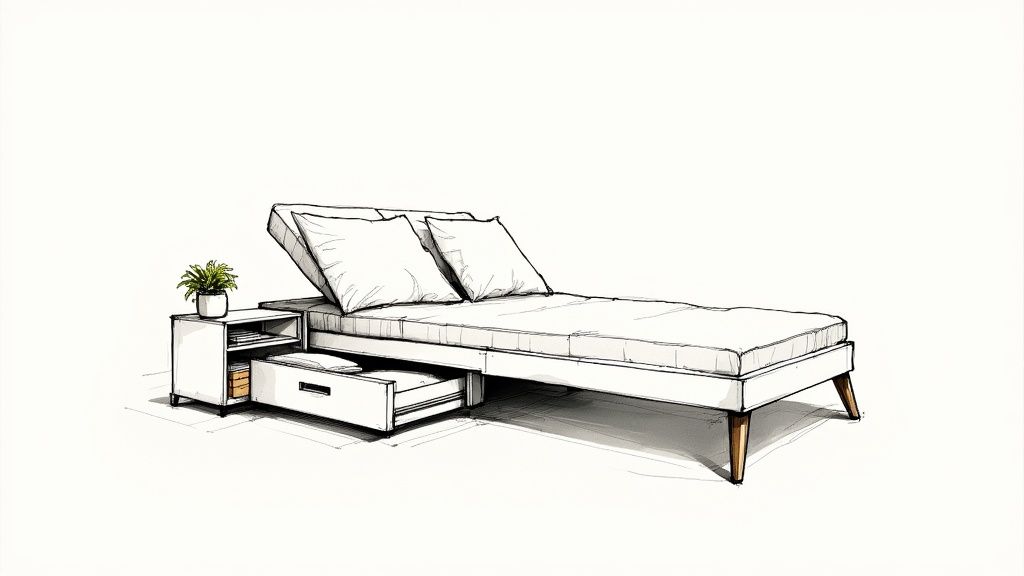
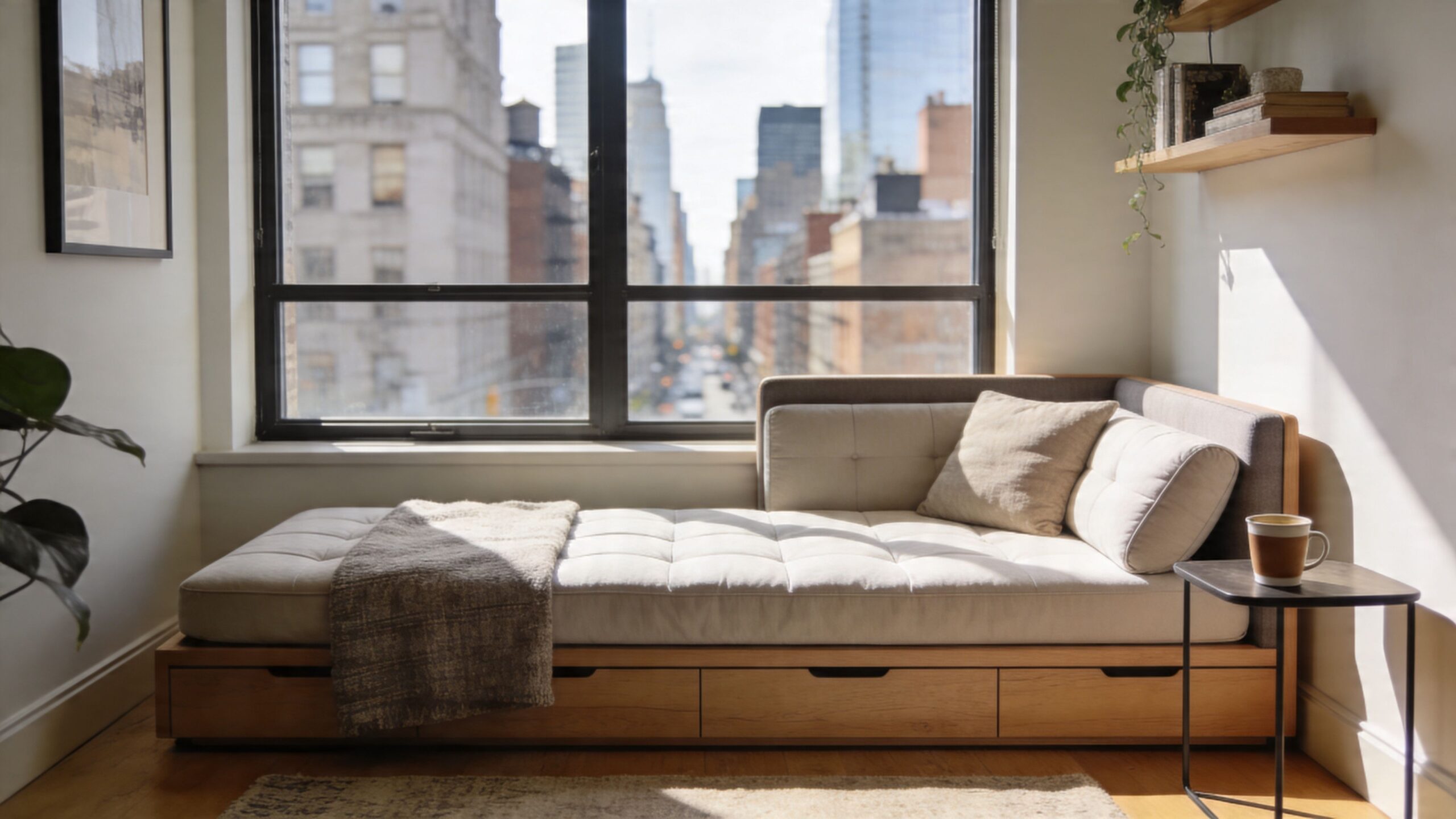
- Storage drawers: add-on drawers slide under many futon frames and keep guest bedding next to the bed, freeing closet space.
- Wall-hugger mechanisms: convert without moving the frame away from the wall.
- Armless designs: maximize seating and sleeping width in a narrow footprint.
- Built-in extras on some models: side tables, charging ports, or adjustable arms that replace separate end tables.
Small-Space Futons by Room
A Studio Where the Futon Is Also the Bed
A full-size wall-hugger futon usually works best. It stays against the wall, converts easily every night, and isn’t so deep in sofa mode that it takes over the middle of the room. Many buyers overreach on a queen and then regret the daily footprint. See studio apartment layout ideas.
A Home Office That Hosts Guests a Few Times a Year
A small office futon, meaning a chair-size or twin sleeper, keeps the room an office Monday through Friday and ready for guests when needed, with room left for a desk, storage, and a walking path.
A Family Living Room
Here durability comes first: a sturdy frame, easy-clean upholstery, and a mattress that holds up to constant sitting. Choose function first and style second.
Setting Realistic Guest Comfort
A compact futon won’t feel identical to a dedicated guest bed. For an occasional futon for a guest room, a mattress topper can close much of the gap. For a primary nightly bed, start with a better mattress rather than a topper fix. In a warm apartment, choose breathable materials over deep, all-foam builds.
Delivery, Assembly, and Care
Delivery Options
- Curbside delivery: the lowest-cost option. You bring the futon in and assemble it.
- White glove delivery: the crew brings it to your room, assembles it, and removes the packaging. See what white glove delivery includes and Futonland’s delivery options.
Care
- Flip and rotate the mattress every few months so it wears evenly.
- Use a removable futon cover and blot spills immediately. Never rub.
- Dust wood frames and wipe metal ones, and tighten bolts about once a year to prevent squeaks.
Small Futon FAQ
What is the best futon for a small space?
For most small apartments, a full-size wall-hugger or bifold futon with an 8″ mattress. For the tightest rooms and offices, a chair-size or twin trifold with a 6″ mattress. For narrow rooms, an armless click-clack futon sofa.
How much should I spend on a futon?
Entry-level futons, usually with simple metal frames and basic mattresses, are fine for occasional guests. Mid-range options add hardwood frames and thicker foam or innerspring mattresses for regular use. Premium futons pair solid hardwood with memory foam, latex, or natural mattresses and extras like storage drawers. Buy for how often it will be slept on.
Can a small futon be comfortable enough for daily sleeping?
Yes, if the mattress is right: 8″–10″ of memory foam, dense foam, latex, or innerspring on a sturdy hardwood frame. See the best futons for everyday sleeping and our comfortable futon guide.
What is the easiest futon to convert?
A click-clack futon sofa converts in seconds with almost no effort. Wall-hugger bifold frames are the easiest traditional futons because they don’t need to be pulled away from the wall.
Are there small futons that look like real sofas?
Yes. Upholstered click-clack styles, hardwood frames with refined arms, and tailored futon covers with tufting or piping all look like conventional sofas. Minimalist, armless designs suit modern rooms.
The Bottom Line
The best small futon matches the frame to your room and the mattress to how often it’s slept on. Measure both footprints, choose full-size unless the room demands smaller, pick a wall-hugger, trifold, or armless design for tight layouts, and add storage drawers if you’re short on closet space. Explore Futonland’s futons and futon sets, or see more space-saving furniture ideas.