

Your Essential Guide to Buying an Organic Futon Mattress
An organic futon mattress is made from certified organic natural materials, typically organic cotton, wool, and natural latex, instead of the polyurethane foam and polyester used in conventional futons. The best ones meet federal fire-safety rules with a natural wool barrier rather than chemical flame retardants, and they carry third-party certifications such as GOTS and GOLS that verify the materials from farm to finished mattress. This guide explains what’s inside, what the labels mean, and how to choose the right organic futon mattress.
What Is an Organic Futon Mattress?
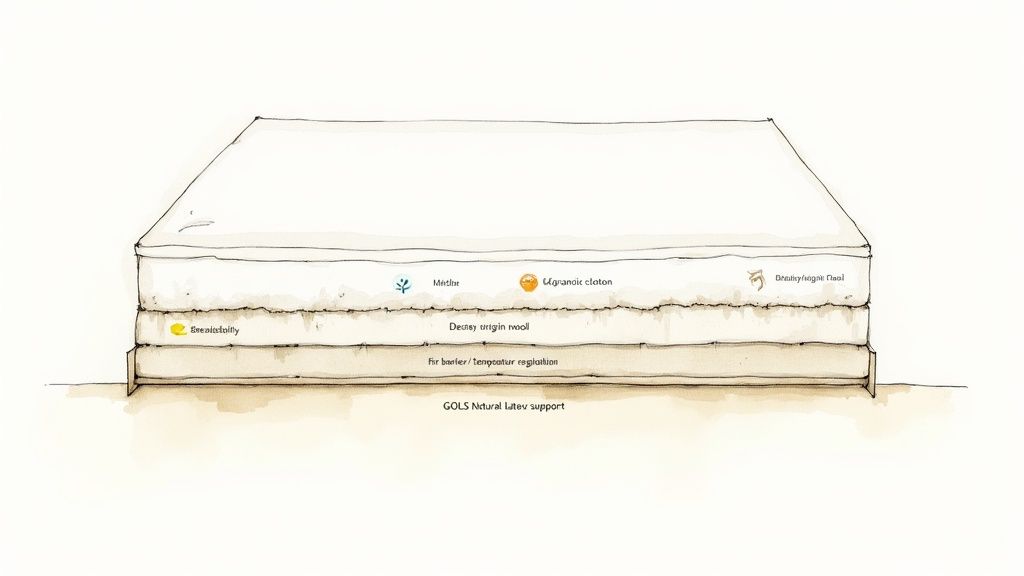
An organic futon mattress is defined by what’s inside it and how those materials were grown and processed. A typical build has:
- A core of organic cotton batting for firm, breathable support.
- Wool layers for temperature regulation, resilience, and natural fire resistance.
- Natural latex (in some models) for bounce and pressure relief.
- An organic cotton cover (the ticking).
Conventional futon mattresses usually rely on polyurethane foam, polyester batting, and synthetic fabrics, which are petroleum-based materials that can release volatile organic compounds (VOCs), especially when new.
Organic vs. Natural vs. Conventional Futon Mattresses
These labels are often used interchangeably, but they mean different things:
- Conventional: synthetic foams and fibers, often with adhesives and chemical flame retardants.
- Natural: made mostly from materials like cotton, wool, and latex, but not necessarily certified organic. The cotton may be conventionally grown, and processing standards vary. Browse natural mattresses.
- Organic: made from certified organic materials, grown without synthetic pesticides or fertilizers and processed under standards that restrict harmful chemicals. Browse organic mattresses.
| Feature | Organic | Natural | Conventional |
|---|---|---|---|
| Materials | Certified organic cotton, wool, and latex | Cotton, wool, latex; not necessarily certified | Polyurethane foam, polyester, synthetic blends |
| Fire safety | Usually wool barrier | Varies | Often chemical flame retardants |
| Certifications | GOTS (textiles), GOLS (latex) | Sometimes OEKO-TEX or GREENGUARD | Rarely beyond required flammability standards |
| Off-gassing | Low | Low | Higher, especially when new |
| Price | Highest | Mid to high | Lowest |
A mattress with polyurethane foam of any kind, including memory foam, gel foam, or “plant-based” foam blends, can’t be certified as an organic mattress under GOTS.
Materials Inside an Organic Futon Mattress
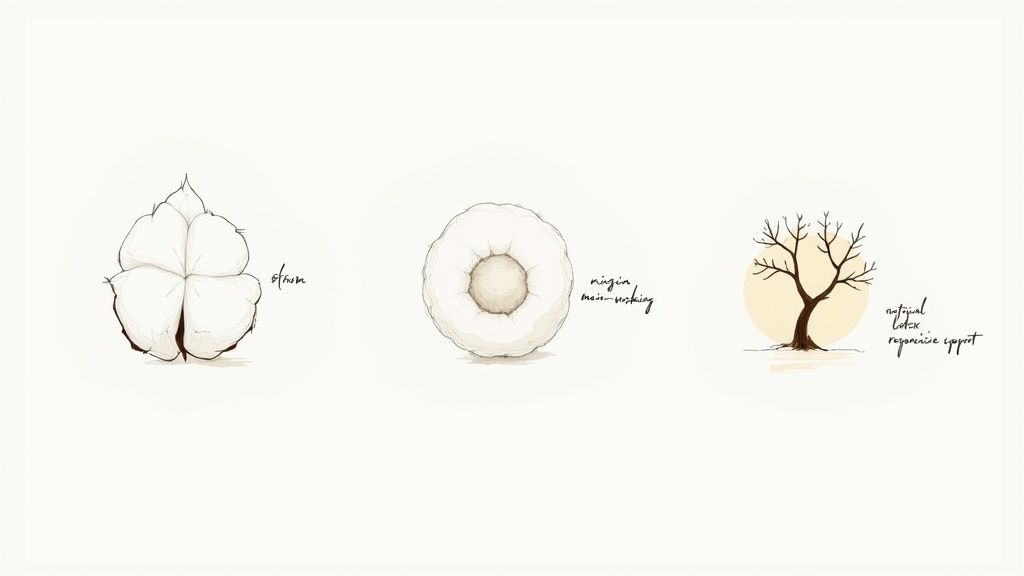
Organic Cotton
Organic cotton batting is the traditional futon core. It’s grown without synthetic pesticides or fertilizers, and it’s breathable, soft, and firm. All-cotton futons give the classic dense, supportive futon feel. Cotton compresses over time, so it needs regular flipping and rotating. It’s the lowest-cost organic option and a good fit for back and stomach sleepers who like a firm surface.
Wool
Wool is one of the most useful materials in a natural mattress. It absorbs a significant amount of moisture without feeling damp and releases it again, which keeps the sleep surface drier and helps regulate temperature: warm in winter and comfortable in summer. Its crimped fibers add loft and springiness, and wool is naturally flame-resistant, so a dense wool layer can serve as the mattress’s fire barrier.
Natural Latex
Natural latex is made from the sap of rubber trees. It’s buoyant and responsive, contouring to the shoulders and hips without the sinking feel of memory foam. It’s also durable, resists body impressions, and has an open-cell structure that breathes well. Latex adds the most pressure relief of any organic material, which makes it the best choice for side sleepers and nightly use. Look for GOLS certification, and avoid latex if anyone in the household has a latex allergy.
| Material | Main Benefit | Feel | Best For |
|---|---|---|---|
| Organic cotton | Breathable, firm support | Firm and dense | Traditional futon feel, back and stomach sleepers |
| Wool | Temperature and moisture control, natural fire barrier | Springy and resilient | Hot or cold sleepers |
| Natural latex | Pressure relief, durability | Buoyant and responsive | Side sleepers, everyday sleeping |
Fire Safety Without Chemical Flame Retardants
All mattresses sold in the U.S., including futon mattresses, must meet federal flammability standards. Many conventional mattresses meet them with chemical flame retardants. Organic mattresses usually meet them with a dense layer of wool, which chars rather than igniting easily and slows the spread of flame.
Some cotton futons are treated with boric acid to pass flammability testing, so ask what a specific mattress uses. Futons made with no fire barrier at all can be sold only with a physician’s prescription. See Futonland’s selection of mattresses with no fire retardant chemicals.
Organic Futon Mattress Certifications Explained

Third-party certifications are the most reliable way to confirm a mattress is what it claims to be.
GOTS (Global Organic Textile Standard)
GOTS certifies organic textiles, such as cotton and wool, across the whole supply chain, from the farm through processing and manufacturing. A product labeled “organic” under GOTS must contain at least 95% certified organic fibers (“made with organic” requires at least 70%), and the standard restricts harmful chemicals such as formaldehyde and toxic dyes during processing. Check whether the certification covers the finished mattress or only one component.
GOLS (Global Organic Latex Standard)
GOLS is the latex equivalent. It requires at least 95% certified organic raw material in the latex. If a futon includes latex, GOLS confirms it’s genuine organic natural latex rather than a synthetic or blended foam.
OEKO-TEX Standard 100
OEKO-TEX Standard 100 doesn’t certify organic origin. It certifies that textile components were tested for a long list of harmful substances and fall within safety limits. It’s a useful safety check alongside GOTS or GOLS.
GREENGUARD Gold
UL’s GREENGUARD Gold certification tests finished products for chemical emissions, including VOCs, against strict limits. It verifies low emissions and indoor air quality rather than organic content.
Watch for Compromised “Organic” Claims
Some lower-priced mattresses marketed as organic or natural use soy-based polyurethane foam, recycled innerspring units, or polyester casings with only a small amount of organic content. Read the full materials list and check which components are actually certified.
Comfort Pure futon mattresses take the simpler route: organic cotton batting and wool layers, sometimes with natural outer fabrics, and no petroleum-based foam inside. They’re firm and supportive, closer to traditional Japanese bedding, and work well on a platform frame or tatami bed frame for a low-profile setup.
Benefits of an Organic Futon Mattress

- Lower indoor emissions: without synthetic foams, adhesives, and chemical flame retardants, organic mattresses emit fewer VOCs. That matters for anyone sensitive to odors or chemicals, and for a mattress you’ll spend hours on every night.
- Breathability: cotton, wool, and latex allow airflow and manage moisture better than dense synthetic foams.
- Durability: wool and natural latex are resilient, and a well-made organic futon holds up well with regular care.
- Renewable materials: cotton, wool, and natural rubber come from renewable sources, and organic farming avoids synthetic pesticides and fertilizers.
- Versatility: like any futon, it works as a sofa by day and a bed at night, which is ideal for studios and guest rooms.
How to Choose an Organic Futon Mattress
1. Decide How It Will Be Used
Nightly sleeping calls for a thicker mattress, usually with wool or latex layers. A futon used mainly as a sofa, or for occasional guests, can be thinner and firmer. For a broader framework, see The Futon Mattress Buying Guide.
2. Choose the Feel
- All organic cotton: firm and traditional, for back and stomach sleepers who like a flat, stable surface.
- Cotton and wool: firm with more resilience and better temperature regulation.
- Latex, cotton, and wool: the most cushioned and responsive, with pressure relief for side sleepers.
3. Pick the Thickness
- 4″–6″: firmer and easier to fold. Best for occasional use, trifold frames, and floor sleeping (shikibuton-style).
- 8″: the most versatile, comfortable for regular sleep and still easy to fold.
- 10″ and up: the most bed-like, usually with multiple latex or wool layers. Heavier and harder to convert daily, so check that your frame can handle it.
4. Match the Size to Your Frame
Futon mattresses come in standard twin (39″ × 75″), full (54″ × 75″), and queen (60″ × 80″) sizes, while chair and loveseat sizes vary by frame. A mattress that’s too small slides; one that’s too large bunches and wears unevenly. Check Futonland’s sizing charts, and see our queen size futon guide for larger setups.
5. Check the Frame
Heavier cotton and latex mattresses need a sturdy frame with closely spaced slats, ideally no more than about 3 inches apart, so the mattress doesn’t sink into the gaps. Bifold frames handle thicker organic mattresses better than trifold frames. Browse hardwood futon frames.
6. Verify the Certifications
Look for GOTS for cotton and wool, GOLS for latex, and GREENGUARD Gold for emissions. Confirm whether each certification applies to the whole mattress or to a single component.
Caring for an Organic Futon Mattress
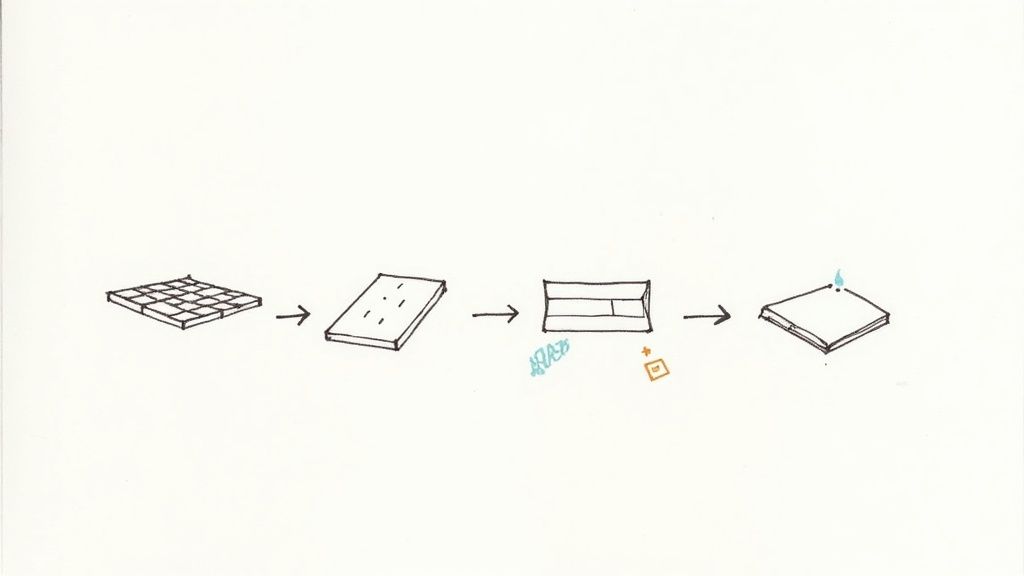
Natural fibers settle and compress with use. That’s normal, and routine care keeps the mattress even and supportive.
- Flip and rotate often at first. During the first couple of months, flip and rotate the mattress a couple of times a week while the fibers settle. After that, every week or two is usually enough. All-cotton mattresses need it most.
- Air it out. Leave it uncovered in a ventilated room for a few hours from time to time so absorbed moisture can evaporate.
- Use a cover and protector. A washable futon cover and a breathable mattress protector keep out spills, sweat, and dust.
- Spot-clean carefully. Blot spills right away (don’t rub), dab with a little mild soap in cool water, blot with a cloth dampened in plain water, and let the area dry completely before covering it. Never soak the mattress.
Buying from a Futon Specialist
Materials, firmness, thickness, and certifications all interact, and it helps to test mattresses in person. Visit Futonland’s showrooms on the Upper West Side, in Greenpoint, and in Newark for personalized advice. Futonland ships nationwide, and white glove delivery can bring your futon to the room you choose, set it up, and remove the packaging. See all delivery options.
Organic Futon Mattress FAQ
How long does an organic futon mattress last?
It depends on the materials and the care. Natural latex and wool are the most resilient and resist body impressions. All-cotton mattresses compress faster but last well with regular flipping and rotating.
Are organic futons comfortable for sleeping every night?
Yes, with the right build. A thicker organic futon with wool or natural latex layers gives the support and pressure relief needed for nightly sleep. Thin all-cotton models are firmer and better suited to occasional use or to people who like a very firm surface.
Is an organic futon mattress non-toxic?
Certified organic futon mattresses avoid synthetic foams and chemical flame retardants and are processed under standards that restrict harmful substances. For verified low emissions, look for GREENGUARD Gold in addition to GOTS or GOLS.
What’s the difference between an organic and a natural futon mattress?
Both use natural materials. An organic mattress uses materials certified as organically grown and processed, while “natural” has no certification requirement.
Can an organic futon mattress be used on the floor?
Thinner cotton and wool futons, including shikibuton-style mattresses, are designed for floor or tatami use. Air them out and flip them often to prevent moisture buildup underneath.
How do I clean an organic futon mattress?
Keep it covered with a washable cover, spot-clean spills by blotting with mild soap and water, let it dry fully, and air it out regularly. Don’t machine-wash or soak it.
The Bottom Line
A true organic futon mattress uses certified organic cotton, wool, and natural latex, relies on wool rather than chemicals for fire safety, and backs its claims with GOTS and GOLS certification. Choose the feel and thickness for how you’ll use it, match it to a sturdy frame, and care for it regularly. Explore Futonland’s organic mattresses and natural mattresses to compare options.