How to Furnish a Studio Apartment on a Budget
Furnishing a studio apartment without breaking the bank is all about making smart, strategic choices. It’s a game of prioritizing versatility and injecting your own personal style. The trick is to plan your layout first, invest in a few hard-working multi-functional anchor pieces (like a great futon or storage sofa), and then get creative with sourcing affordable decor. This way, you build a functional, beautiful home you love, not just a room filled with stuff.
Your Smart Start to Furnishing a Studio Affordably
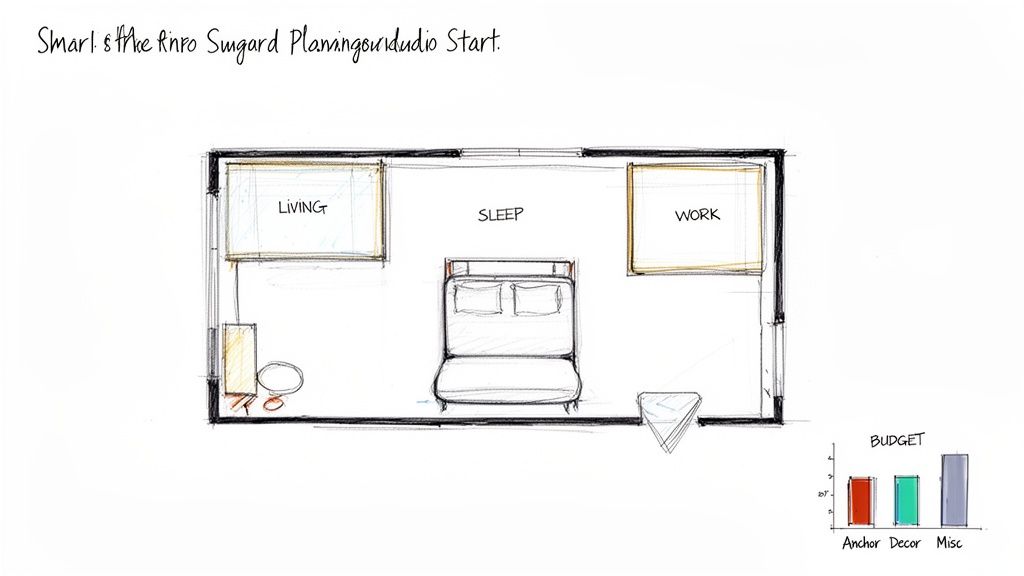
Staring at an empty studio can feel like a huge challenge, especially when you’re working with a tight budget. But it’s completely doable if you go in with a plan. The goal isn’t just to fill the space — it’s to make every square inch work for you, creating a home that feels organized, comfortable, and personal.
This guide focuses on three decisions that make the biggest difference:
- What to buy first (so you don’t waste money on the wrong scale).
- What to spend on vs. save on (so you invest where it matters).
- How to source affordably (without ending up with junk that falls apart).
Set a Realistic Budget from Day One
Before browsing furniture sites, define your total spend and split it into categories. A simple budget prevents impulse buys and makes it easier to spot where you can save (like decor and side tables) and where you should invest (like your main sleep and seating piece).
Here’s a sample breakdown to guide your priorities. Adjust it based on what you already own and how you live.
Sample Budget for a Studio Apartment
| Furniture Category | Budget Percentage | What It Covers | Key Pieces to Consider |
|---|---|---|---|
| Sleeping & Seating | 40–50% | Your daily comfort essentials | Futon, sleeper sofa, Murphy bed cabinet, convertible chair |
| Storage & Surfaces | 20–25% | Keeping clutter under control | Shelving, dresser, storage ottoman, coffee table |
| Work/Dining | 10–15% | A functional place to eat/work | Drop-leaf table, folding chairs, compact desk |
| Lighting & Decor | 10–15% | Making the space feel finished | Floor lamp, rug, curtains, wall art, plants |
| Miscellaneous/Flex | 5–10% | The stuff people forget | Delivery/assembly, tools, small upgrades |
Your budget is your roadmap. It tells you where to invest, where to save, and prevents you from buying pieces that don’t fit your space or your routine.
Know What to Buy New vs. Used
The best “budget studios” aren’t fully secondhand or fully new — they’re a smart mix. Use this rule:
- Buy new: your main sleep surface (mattress/futon mattress), your primary seating/sleeper, and bedding basics.
- Buy used: side tables, lamps, mirrors, bookcases, dining chairs, wall art, and decor.
This approach lets you spend on comfort and durability while saving on everything that’s easy to clean, repaint, or swap later.
Plan Your Layout Before You Spend a Dime
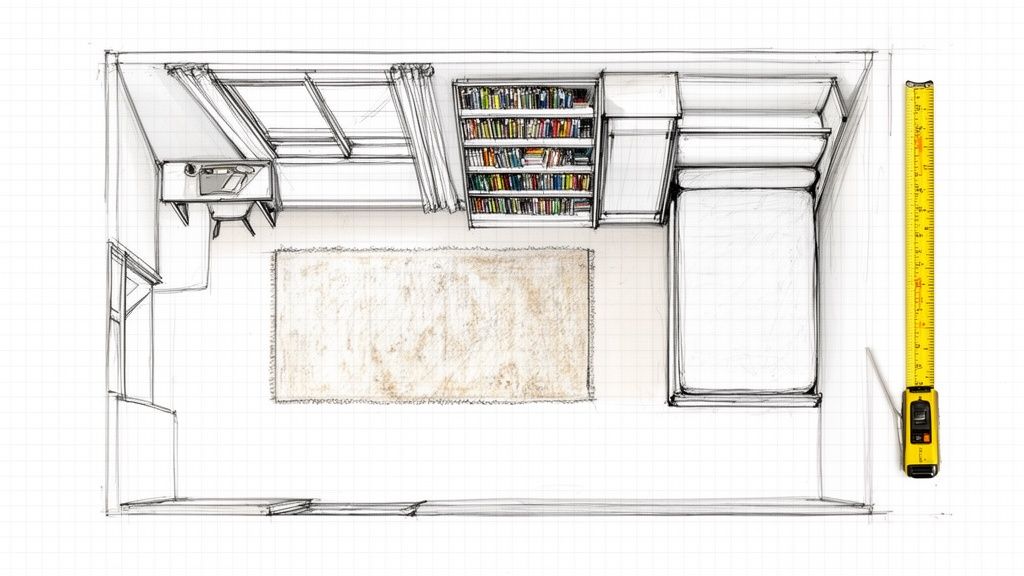
The fastest way to blow a studio budget is buying furniture that doesn’t fit or blocks how you actually move through the room. Before you order anything big, measure:
- Room length and width (and any alcoves)
- Window/door placements
- Radiators, outlets, and awkward corners
- Doorway widths and hallway turns (for delivery)
Create Zones for Living
Zoning is how you make one room feel like a “home.” You don’t need walls — you need visual boundaries:
- Rug zoning: define the living area by putting seating and a table on a rug.
- Open shelving as a divider: a tall, open-back shelf creates separation without blocking light.
- Furniture orientation: placing the sofa “back” toward the bed area creates a natural divide.
Always account for traffic flow. A clear pathway makes even a small studio feel calmer and easier to live in.
Measure for Convertible Pieces
For futons and sleeper sofas, you must plan for two sizes:
- Closed size (everyday sofa mode)
- Open size (bed mode, including “open depth”)
Use painter’s tape to mark both footprints on the floor. This prevents the classic mistake: a sleeper that technically fits — but becomes unusable when opened.
If you need help visualizing dimensions, start with furniture sizing charts.
Anchor Your Space with Multi-Functional Furniture
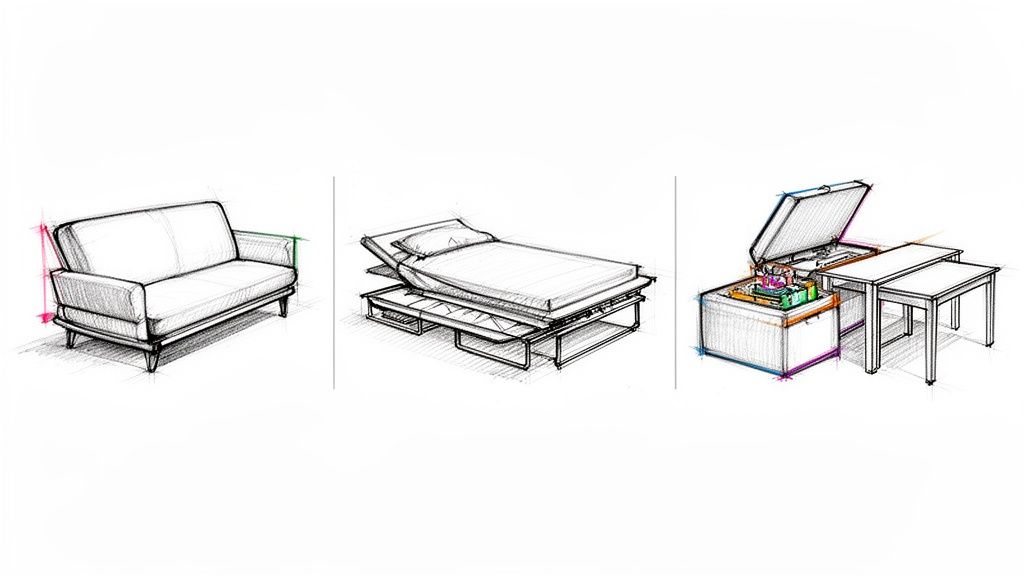
Your “anchor” piece is the one item you’ll use every day — and it sets the scale for everything else. In a studio, your anchor is usually a sleeper:
- Futon sofa bed: fast conversion and efficient footprint.
- Sleeper sofa: a more traditional sofa look with a hidden bed.
- Storage sectional: seating + bed + a place to stash bedding.
- Murphy cabinet bed: a bed that “disappears” so the room works harder during the day.
Choosing the Right “Hero Piece” for Your Routine
| Furniture Type | Best For | Why It Works in a Studio |
|---|---|---|
| Classic Futon Sofa Bed | Daily conversion, simpler setup | One piece does two jobs with minimal hassle |
| Modern Sleeper Sofa | A “real sofa” look | Blends into living space while staying guest-ready |
| Storage Sectional | Clutter control | Bedding storage solves a big studio pain point |
| Murphy Cabinet Bed | Max daytime floor space | Turns the studio into a flexible multi-use room |
If you want to browse flexible options that work well in tight layouts, start here: convertible sofa beds.
Beyond the Bed: Small Pieces That Do Double Duty
After your anchor, everything else should “earn” its place:
- Storage ottoman: coffee table + extra seat + hidden storage. (See: ottomans)
- Nesting tables: compact daily use, expandable when you host.
- Drop-leaf table: dining and work surface that folds down when you’re done.
- Bedside ledge or slim nightstand: gives function without eating floor space.
Source Affordable Pieces Like a Pro
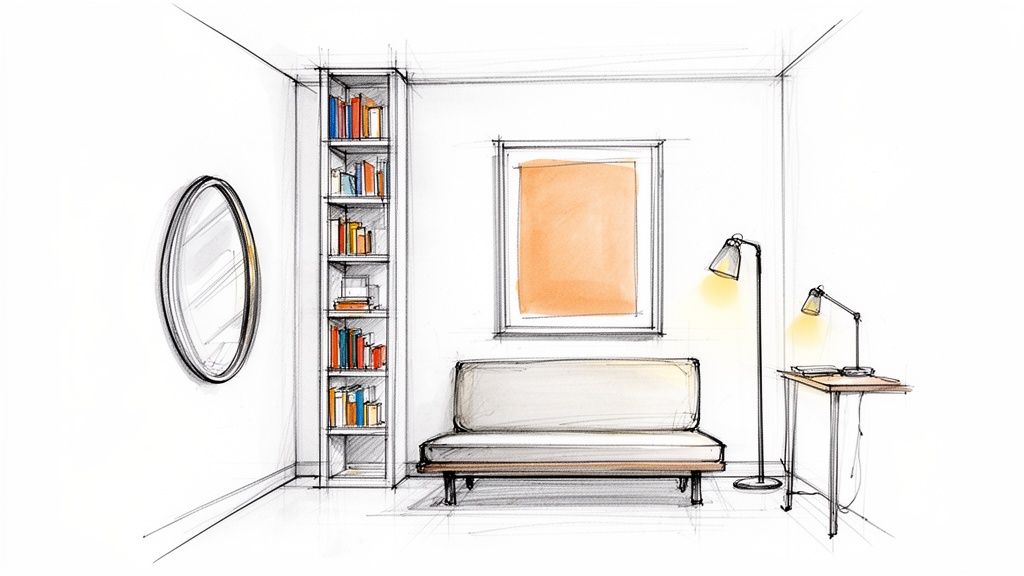
This is where budgets are won or lost. The goal isn’t “buy cheap.” The goal is buy smart — spend less on the pieces that don’t affect daily comfort.
Where to Find the Best Used Deals
- Local marketplaces: best for shelves, tables, mirrors, chairs.
- Thrift stores: lamps, frames, decor, smaller furniture.
- Estate sales: strong for solid wood pieces (dressers, sideboards).
- Moving sales: people want it gone fast, which means negotiation is easy.
Look for “good bones.” Solid construction matters more than cosmetic wear. Scratches can be fixed; unstable frames and water damage usually aren’t worth it.
Three Easy DIY Upgrades That Make Cheap Finds Look Expensive
- Hardware swap: new knobs/pulls can change a piece instantly.
- Paint or stain refresh: especially on nightstands and shelves.
- Lighting upgrade: a better lampshade or warm bulbs improves the whole room.
Make Your Studio Feel Bigger Without Buying More Stuff
Once the core furniture is in place, small design choices make the studio feel calmer, brighter, and more “finished.”
Use Vertical Space
Go tall with storage: shelving and wall-mounted hooks keep the floor open and reduce the cramped feeling.
Add One Large Mirror
A single oversized mirror can brighten a studio and add depth. Placing it near a window helps bounce light around the room.
Layer Your Lighting
Studios feel better with multiple light sources:
- Ambient: overhead fixture
- Task: desk lamp or reading light
- Accent: floor lamp or small table lamp
A Simple 30-Day Furnishing Timeline
If you want to avoid overspending, furnish in phases:
- Week 1: layout plan + anchor piece (sleep/seating)
- Week 2: storage essentials + work/dining solution
- Week 3: lighting + rug (zoning)
- Week 4: decor, art, and upgrades (only after living in the space)
A Few Final Questions on Furnishing Your Studio
What’s the first thing I should buy?
Your anchor piece: futon, sleeper sofa, or a Murphy cabinet bed. Everything else should be sized around it.
Should I buy everything at once?
No. Buy essentials first, then live in the space. You’ll make better decisions and avoid impulse purchases that don’t fit.
Is a rug worth it in a studio?
Yes. It’s one of the easiest ways to define zones and make the room feel intentional instead of temporary.
Ready to find the right anchor piece? Futonland has been helping people maximize small spaces since 1995 with futons, sleeper sofas, and space-saving beds designed for modern city living.