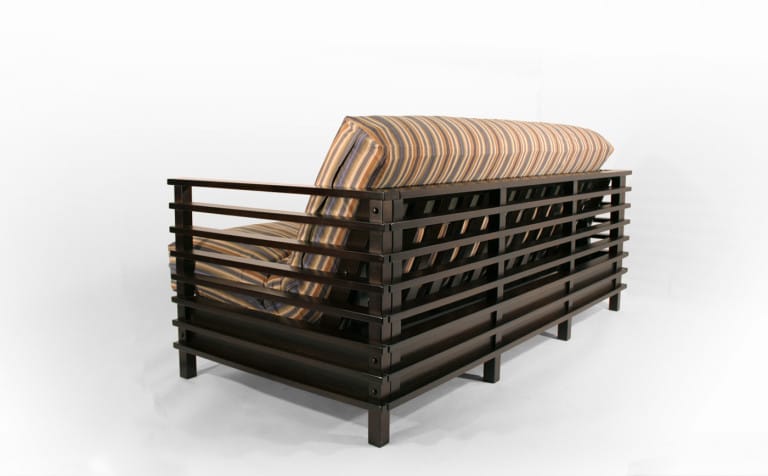

The Ultimate Guide to Finding Your Perfect Full Futon Mattress Cover
A full futon mattress cover is one of the easiest upgrades you can make: it protects your futon from everyday wear, keeps things cleaner, and lets you refresh the look of your room without replacing the mattress. Think of it as a durable, washable “outer layer” that helps your futon last longer and look better.
Why a Futon Cover Is More Than Just Decoration
A futon works harder than most furniture. It’s seating, a lounger, a guest bed, and often the centerpiece of a studio or living room. That constant use adds up fast — especially if the mattress is exposed.
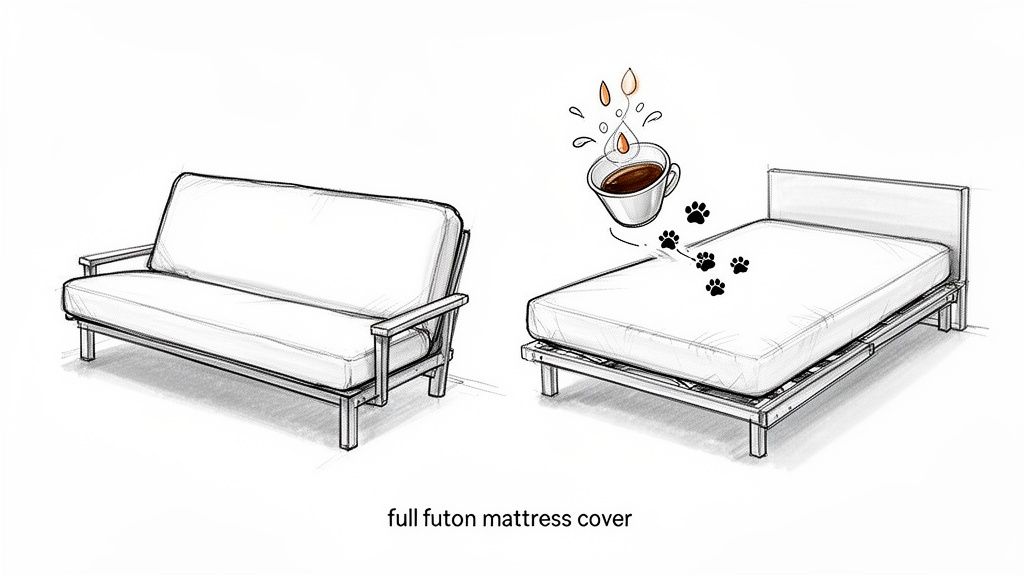
Protection that actually matters
Spills, snacks, pet hair, makeup, and daily friction can all shorten the life of a futon mattress. A quality cover creates a barrier that helps prevent stains from soaking into the mattress fibers and reduces surface wear from constant sitting and sleeping.
A big win for hygiene
Even if your futon looks clean, soft surfaces collect dust, skin oils, and allergens over time. A removable cover makes maintenance simple: unzip, wash (if machine-washable), and your main seating/sleeping spot feels fresh again.
If your futon is used as both sofa and bed, a washable cover is one of the simplest ways to keep the space feeling cleaner and more comfortable day to day.
An instant style refresh
Futon covers also let you change the look of your room without buying new furniture. You can switch colors, add texture, or go from casual to more polished in minutes.
- Match your decor: Choose a tone that ties in with rugs, curtains, and accent pieces.
- Swap seasonally: Lighter fabrics feel airy in warmer months; richer textures feel cozy in cooler months.
- Update your style: A new cover can make an older futon feel completely new again.
If you’re updating a whole room, you can pair your new cover with items from our decor and home accents collection.
How to Measure Your Futon for a Flawless Fit
A cover only looks “tailored” if it fits correctly. Don’t rely on the label alone — futon mattresses can vary slightly, and thickness (loft) makes a major difference.
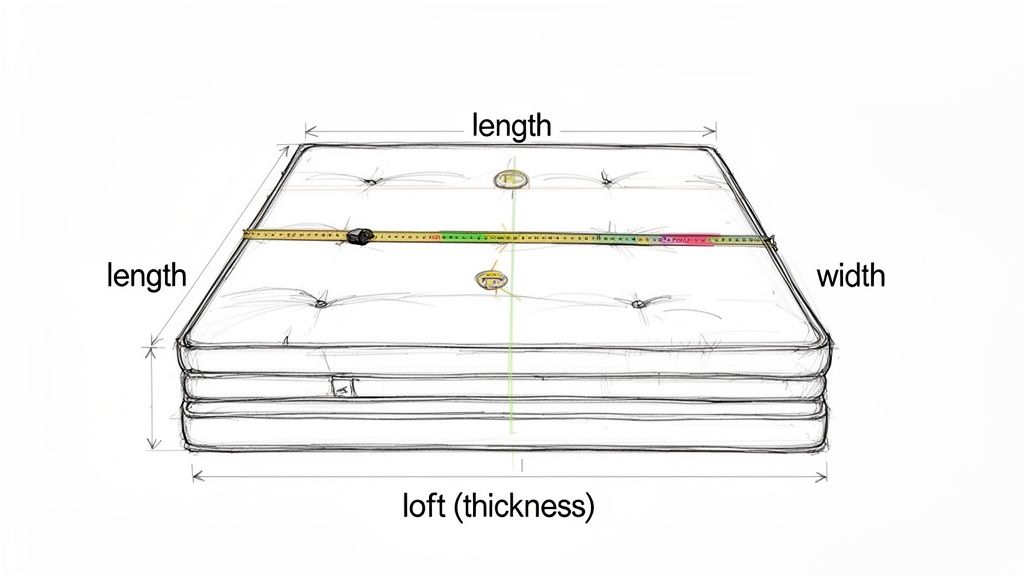
What you’ll need
Use a flexible tape measure if you have one. Strip off any sheets, pads, or toppers first so your numbers reflect the mattress itself.
The three measurements that matter
- Length: head-to-foot, edge-to-edge.
- Width: side-to-side, edge-to-edge.
- Thickness (Loft): measure from the floor to the top surface while the mattress is lying flat.
Tip: Measure length and width in a few spots (center and near both ends). Use the largest measurement so the cover isn’t too tight.
Why thickness (loft) is the make-or-break detail
Many full futon mattresses are in the 6–8 inch range, but you’ll also see slimmer or thicker models. If your loft is outside the typical range, a standard cover may fit poorly (too tight to zip, or baggy and loose). Loft is especially important if you’re considering a custom cover.
For a quick reference while you shop, our sizing charts can help you compare common dimensions.
Futon Mattress Size Reference Chart
| Futon Size | Typical Width (Inches) | Typical Length (Inches) | Common Thickness/Loft (Inches) |
|---|---|---|---|
| Full | 54 | 75 | 6–8 |
| Twin | 39 | 75 | 6–8 |
| Queen | 60 | 80 | 6–8 |
Choosing the Right Fabric for Your Lifestyle
The best full futon mattress cover depends on how the futon is used. A low-traffic guest room can handle a more delicate fabric. A daily-use living room futon usually needs something tougher and easier to clean.
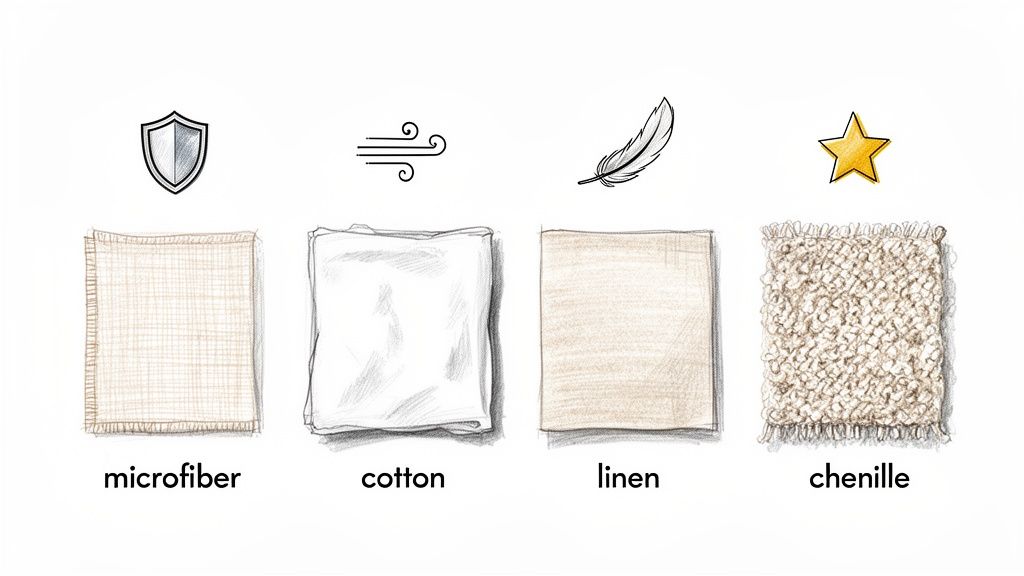
Best picks for kids, pets, and daily use
- Microfiber: Soft, resilient, and easy to spot clean. Pet hair typically lifts off more easily than with looser weaves.
- Twill: A sturdy weave that handles frequent use well and usually washes nicely (great for “real life” homes).
Comfort-focused options for lounging and sleeping
- Cotton and cotton blends: Breathable, comfortable, and available in many colors. A strong all-around choice if you want a natural feel.
- Linen-look weaves: Great texture and a more relaxed style, but make sure the weave is durable enough for daily use.
More polished, sofa-like looks
- Chenille: Plush and cozy with a richer feel, but often needs more careful care depending on the fabric.
- Faux suede or faux leather: A sleek look that wipes clean easily, especially helpful in small apartments.
If you want to feel fabrics before committing, request futon cover fabric sample swatches. It’s the simplest way to confirm texture and color in your actual lighting.
Construction Details That Make a Cover Better
Fabric matters, but so does how the cover is built. Small design choices make a big difference in daily use.
- Three-sided zipper: Easier to install, easier to remove for washing, and typically creates a smoother fit.
- Reinforced seams: Helps the cover hold up when the futon is folded, unfolded, and sat on daily.
- Quality zipper hardware: Especially important for thicker mattresses where there’s more tension at the corners.
Installing Your New Cover Without the Struggle
Futon mattresses can be heavy and floppy, so the trick is using their flexibility to your advantage. A three-sided zipper makes this much easier.
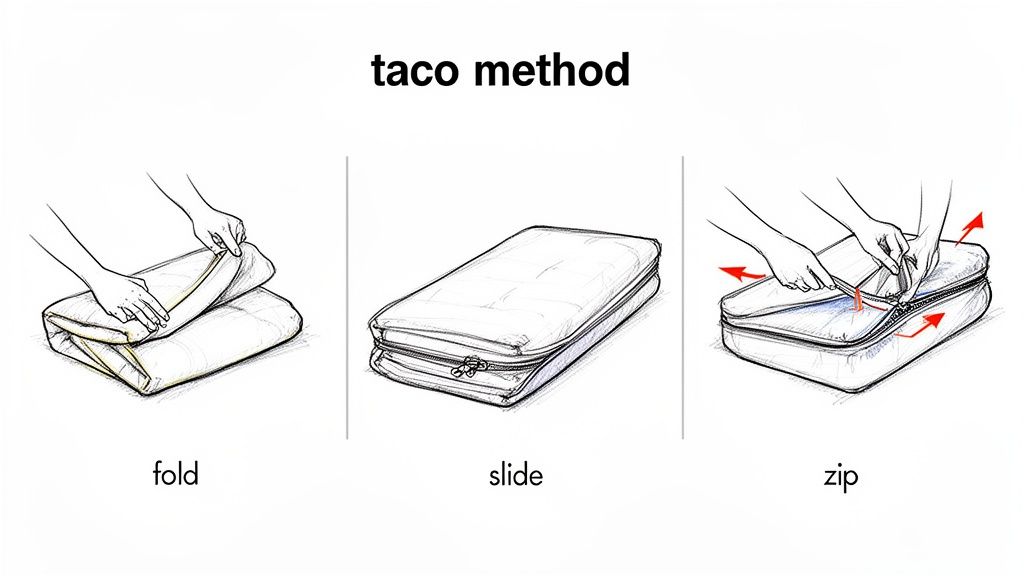
The “taco method”
- Lay the cover flat on the floor, fully unzipped, inside facing up.
- Fold the mattress lengthwise (like a taco) and place it onto one half of the cover.
- Unfold it inside the cover, pull the remaining fabric over, then zip closed.
Before you fully zip, pull the mattress corners into place so the cover seams line up neatly with the mattress edges.
How to Keep Your Futon Cover Looking New
Most covers last longer when you do two simple things: keep surface dust from building up and follow the care tag for washing.
- Weekly: quick vacuum with a brush attachment to remove dust, crumbs, and pet hair.
- Spot clean fast: blot spills instead of rubbing, so stains don’t spread or sink deeper.
- Wash correctly: for machine-washable fabrics, cold water and gentle cycles help reduce shrinkage and fading.
If you want extra protection (especially for kids/pets), consider using a barrier layer under your decorative cover. You can explore options in our bed and mattress protectors collection.
Common Questions About Full Futon Mattress Covers
Can I use a fitted sheet instead of a futon cover?
A fitted sheet can work short-term, but it’s not a true replacement. Sheets are thinner and aren’t designed for the friction and folding that futons go through. A futon cover is made with heavier fabric and a zipper construction that stays put and holds up better.
What if my “full” futon isn’t 54 x 75?
That’s common. If your measurements don’t match standard sizing (or your mattress is unusually thick), a custom fit is the best way to avoid tight corners, stressed seams, and zipper issues.
How often should I wash my cover?
- Daily-use futon: every 2–3 months (plus spot cleaning as needed).
- Guest-room futon: once or twice a year, or after extended guest stays.
Best fabric if I have pets?
Microfiber and durable twill-style weaves are usually the most forgiving: easier hair removal, strong abrasion resistance, and simpler spot cleaning.
Ready to find the right fit and fabric? Futonland offers a wide selection of full-size futon mattress covers, including options designed for everyday durability and easy care. Browse covers and request swatches at https://futonland.com.