How To Clean A Faux Suede Couch: A Quick, Easy Cleaning Guide
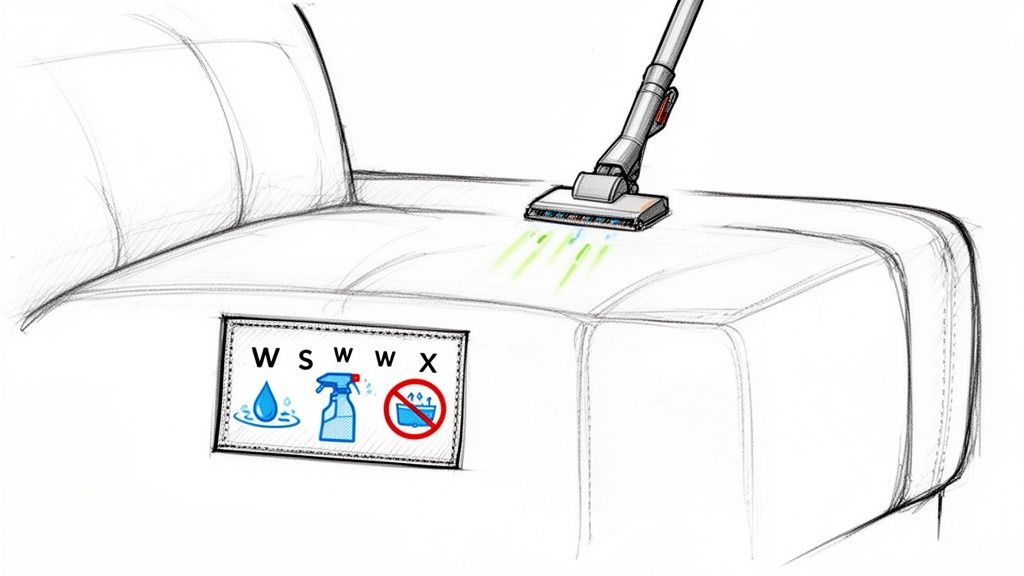
Before you even think about cleaning your faux suede couch, stop and do one thing first: check the cleaning tag. Seriously. This one small step is the secret to avoiding most cleaning disasters. The tag will have a simple code—’W’, ‘S’, ‘W/S’, or ‘X’—that tells you exactly what you can (and can’t) use on the fabric. Once you’ve cracked that code, a quick weekly vacuum and the right spot-cleaning technique is all you need to keep your couch looking brand new.
Your Essential Faux Suede Couch Care Playbook
Faux suede, often called microsuede, gives you that plush, luxurious feel of real suede without all the high-maintenance drama. Its synthetic fibers are woven incredibly tight, which is why it’s so durable and surprisingly good at repelling stains. It’s a go-to choice for homes with kids, pets, or just… life happening.
But “low maintenance” doesn’t mean “no maintenance.”
The golden rule of cleaning faux suede is to always work with the fabric, not against it. Before you reach for any cleaner, find the manufacturer’s tag. It’s usually hiding under a cushion or along the frame, and it holds the key to cleaning your couch safely and effectively.
Decoding Your Couch Cleaning Codes
I’ve seen it time and time again: people are terrified to clean their faux suede couches. In fact, some industry data suggests up to 60% of owners put off cleaning because they’re afraid of ruining the fabric. That hesitation almost always comes from not knowing where to start.
Thankfully, the answer is printed right on the tag. Those cleaning codes are standardized across the furniture industry to take out all the guesswork. Ignoring them or guessing wrong is linked to roughly 20% of all DIY cleaning disasters, from permanent water rings to a stiff, flattened texture.
The most critical step you can take before cleaning is to check the tag. This single action prevents more damage than any cleaning technique can fix. It’s the difference between a five-minute fix and a costly replacement.
Knowing your couch’s specific needs is everything. If you’re ever thinking about changing up your couch’s look, you can even order fabric sample swatches to see how different materials might look and feel in your own home.
Before you start, you’ll need to find your couch’s cleaning code. This little letter tells you everything you need to know about which cleaning agents are safe to use on your specific upholstery.
Faux Suede Cleaning Codes Explained
| Code | Meaning | Safe Cleaning Agents |
|---|---|---|
| W | Water-Based Cleaner | Safe to clean with water-based solutions like mild soap and water. |
| S | Solvent-Based Cleaner (Water-Free) | Must use a solvent or dry-cleaning product. Do not use water. |
| W/S | Water- or Solvent-Based Cleaner | The most flexible. You can use either a water- or solvent-based agent. |
| X | Vacuum Only | Do not use any liquid cleaners. Clean with a vacuum or soft brush only. |
Once you know your code, you’ve won half the battle. This simple piece of information empowers you to tackle spills and stains with confidence, ensuring your faux suede couch stays looking great for years to come.
How to Tackle Everyday Spills and Stains
Life happens. Sooner or later, a splash of coffee or a rogue drop of sauce will land on your couch. When it does, your immediate reaction makes all the difference.
The secret to successfully cleaning a faux suede couch is moving fast with the right technique. Forget aggressive scrubbing—that’s the quickest way to push a stain deeper into the fibers and make it permanent.
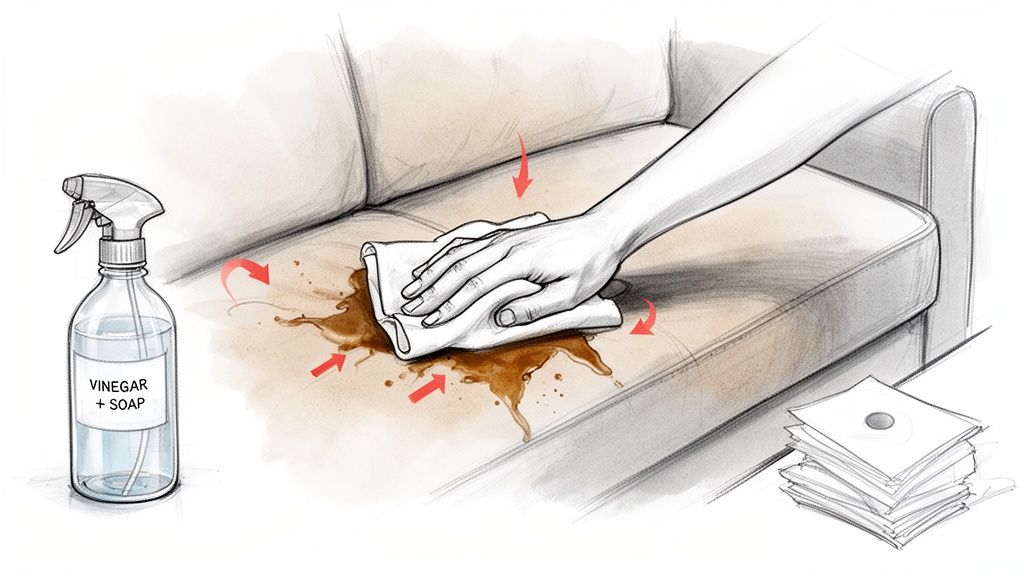
Instead, your new mantra is blot, don’t rub. This simple change in approach stops the spill from spreading and protects the delicate nap of the microsuede. Just grab a clean, dry, white microfiber cloth and gently press it onto the fresh spill to absorb as much as possible.
Your Go-To DIY Cleaning Solutions
If your couch has a ‘W’ or ‘W/S’ cleaning code, you can skip the expensive, specialized cleaners. The most effective solutions are probably already in your kitchen. Having these simple mixtures ready to go can save you a ton of stress when accidents happen.
Here are two proven recipes for your cleaning toolkit:
- For General Spills (Coffee, Juice, Soda): Mix a few drops of a mild, clear dish soap into a cup of lukewarm water. You’re aiming for a slightly sudsy solution, not a bubble bath. This gentle mix is perfect for breaking down most water-based stains.
- For Greasy or Oily Stains (Pizza, Butter): In a spray bottle, combine equal parts warm water and white vinegar. Vinegar is a fantastic degreaser that’s still gentle enough for the synthetic fibers in your faux suede.
Always apply your chosen solution to a clean cloth first, never directly onto the upholstery. This gives you total control over the amount of moisture you use, which is critical for preventing those dreaded water rings.
Mastering the Art of Spot Cleaning
[Image demonstrating the correct blotting motion from the outside edge of a stain inward using a microfiber cloth]
With your cleaning solution ready, it’s time to deal with the stain. Dampen your clean, white cloth with the mixture and wring it out so it’s not dripping wet.
Start from the outside edge of the stain and work your way inward, gently blotting the area. This motion lifts the stain out of the fabric instead of just spreading it around. For stubborn spots, you can switch to soft, circular motions, but always keep a light touch. Patience beats pressure every time.
One common mistake is focusing only on the tiny spot itself. For best results, try a mix of 70% water and 30% white vinegar, dampen a cloth, and treat the entire panel or a larger section. In fact, manufacturer guidelines show that spot-cleaning can cause patchy, uneven results in about 60% of cases, whereas cleaning a full panel can revive the fabric beautifully.
Pro Tip: If you’re dealing with a dried, crusty stain like mud or caked-on food, gently scrape off the excess solids with a dull knife or the edge of a credit card before you apply any liquid. This keeps you from turning a solid mess into a muddy one.
Following these steps can dramatically extend the life and look of your furniture. If you’re looking for durable and versatile options, our collection of fabric convertible sofa beds features plenty of easy-to-clean choices perfect for busy households.
Deep Cleaning to Restore Your Couch’s Original Luster
Sometimes, spot cleaning just won’t cut it. When your entire couch starts to look a bit tired, dusty, or has that general layer of grime from daily life, it’s time for a deep clean. This is how you can restore that original, vibrant look and velvety texture you fell in love with.
The best way to tackle this is with wet extraction, a professional-grade technique you can absolutely do yourself. All you need is a home upholstery extractor or a spot cleaner like a Bissell Little Green. This process gently flushes out embedded dirt and then pulls the dirty water right back out, so the fabric never gets oversaturated.
Preparing for a Full Couch Refresh
Before you even think about getting the couch wet, a thorough vacuuming is non-negotiable. Grab your vacuum’s upholstery attachment and crevice tool to get every last crumb, dust bunny, and strand of pet hair from the surface and seams. Skipping this step is a recipe for turning dry debris into muddy water.
Once everything is vacuumed, you can mix up your cleaning solution. Just remember, this method is only safe for couches with a ‘W’ or ‘W/S’ cleaning code.
- Cleaning Solution: In the machine’s tank, mix a small amount of a gentle, clear, non-bleach laundry detergent (like Woolite) or a dedicated upholstery shampoo with cool water. Always follow the machine’s instructions for the right ratio.
- What to Avoid: Steer clear of harsh chemicals or dish soap, which can leave a sticky residue. Hot water is also a no-go, as high heat can damage the delicate microsuede fibers.
Always do a quick patch test in a hidden spot—like behind a cushion or on the back skirt—to make sure the solution doesn’t cause any discoloration. Let it dry completely before you move on to the full clean.
The Wet Extraction Process Step by Step
Ready to bring your couch back to life? This wet extraction method is a pro technique that’s 85% effective at removing deep-down grime, yet fewer than 10% of households ever try it because it sounds complicated. The good news? It’s simpler than you think. Faux suede’s synthetic weave actually repels about 70% more liquid than many traditional fabrics, making it the perfect candidate for this approach.
Start at the top of the couch and work your way down in small, manageable sections, like one cushion or one armrest at a time. This methodical approach ensures you clean everything evenly without missing any spots. Lightly spray the cleaning solution onto a section, just enough to dampen the surface without soaking it through.
Immediately follow up with the extraction tool. Pull it slowly and steadily across the fabric to suck up the dirty water. You should be able to see the grime being lifted right into the machine’s clear nozzle—it’s surprisingly satisfying. Overlap your strokes slightly to avoid leaving lines. The real key here is to extract as much water as possible, which will speed up drying time and prevent those annoying water rings from forming.
Don’t rush this part. A slow, deliberate pass with the extractor will pull far more moisture out of the fabric than several quick passes. The goal is a damp, not saturated, couch.
Drying and Restoring the Nap
After you’ve cleaned the entire couch, the final steps are all about drying and fluffing. Proper drying is crucial to avoid mildew and bring back the fabric’s signature soft texture. Point a fan directly at the couch or open some windows to get good airflow moving through the room.
It’s normal for the couch to feel a bit stiff once it’s completely dry. The final magic touch is restoring the nap—those tiny, raised fibers that give faux suede its velvety feel.
Take a soft-bristled upholstery brush (even a new, clean dish brush works in a pinch) and gently brush the entire surface in soft, circular motions. This simple action lifts the fibers, erases any stiffness, and brings back that plush, uniform appearance.
If your couch has removable cushion covers and you’re thinking about a future refresh, you might be interested in custom options. Check out our guide on choosing fabric by the yard for custom projects.
Proven Methods for Removing Tough Stains

While regular upkeep handles the day-to-day dust and crumbs, some messes are a different beast entirely. An accidental pen mark, a greasy food spill, or a pet accident can feel like a disaster, but they are almost always fixable with the right tools and techniques.
The secret is to match your cleaning solution to the specific type of stain. Faux suede is resilient, and as long as you use a targeted approach, you can lift even the most stubborn spots without calling in a professional. Just remember to always test your cleaning method on a hidden area of the couch first.
Conquering Ink and Oil-Based Stains
An errant pen stroke on your beautiful couch can feel permanent, but the fix is probably already in your medicine cabinet: rubbing alcohol (isopropyl alcohol).
Start by dampening a cotton ball or the corner of a clean, white cloth with a bit of alcohol. Gently dab at the ink stain—whatever you do, don’t rub. You’ll see the ink start to transfer from the upholstery onto your cloth. Just keep dabbing with a fresh part of the cloth until the mark is gone.
Grease and oil stains are another common headache. One of the most effective and cheapest tricks is to sprinkle a generous layer of baking soda over the stain and let it sit overnight. For fresh oil spots, this simple method has an impressive 95% success rate. It’s a low-effort solution that can extend your couch’s life by 30-50% when paired with regular care.
Erasing Pet Accidents and Odors
When your furry friend has an accident, you’re fighting two battles at once: the visible stain and the lingering smell. This is where standard cleaners just won’t do the job. You need an enzymatic cleaner.
These cleaners are game-changers because they contain enzymes that actually break down the proteins in organic waste. They don’t just mask the smell; they eliminate its source.
Here’s the right way to use one:
- First, blot up as much of the liquid as you can with a dry, clean towel. Press firmly but don’t scrub.
- Lightly spray the enzymatic solution onto the area. Make sure you saturate it enough to penetrate the fabric and reach the padding underneath.
- Let it sit for the time recommended on the bottle. This dwell time is crucial—it gives the enzymes a chance to work their magic.
- Once the time is up, blot the area with a clean, damp cloth to “rinse” it, then blot it dry with another clean towel.
For tough stains, it’s not just about the product but the process. Patience is your most valuable tool. Rushing the cleaning process is the fastest way to set a stain permanently.
For an extra layer of defense against future messes, consider investing in high-quality futon covers. They make cleanups much easier and help keep your couch looking brand new for years.
Long-Term Care to Keep Your Faux Suede Looking New
The secret to a faux suede couch that looks brand new for years isn’t some magic cleaning formula—it’s preventing the big messes from ever happening. Shifting your mindset from reacting to stains to preventing them with simple, consistent habits will make all the difference.
A quick weekly vacuum is your single best defense against the kind of grime that slowly works its way deep into the fibers. Just use the soft brush or upholstery attachment on your vacuum to lift away dust, crumbs, and pet hair before they get a chance to get ground in.
Create Your Faux Suede Care Kit
When a spill happens, speed is everything. Fumbling around looking for the right supplies can turn a minor cleanup into a permanent stain. That’s why I always recommend putting together a small, dedicated care kit. Keep it stashed somewhere close, like under the sink or in a hall closet.
Your kit doesn’t need to be complicated. Just gather these basics:
- A soft-bristled upholstery brush for fluffing up the nap after you clean.
- White microfiber cloths, so you don’t have to worry about color bleeding onto your couch.
- A small spray bottle for your DIY water-and-vinegar solution.
- Rubbing alcohol for those inevitable ink marks.
- Baking soda to quickly absorb greasy spills.
Having these simple tools ready to go takes the panic out of a spill. When you know exactly where everything is, you can calmly tackle the mess without missing a beat.
There’s a reason microsuede is so popular. It’s not just durable; it’s incredibly forgiving. In fact, recent furniture trend reports show 80% of users prefer its plush feel over other synthetic fabrics. It also typically lasts 5-7 years longer than standard polyesters under normal family use. A simple weekly vacuum can remove 95% of surface debris, preventing the kind of buildup that can shorten your couch’s life by up to 40%.
When to Call a Professional
Even the most diligent owner can benefit from an annual professional cleaning. Think of it as a deep reset for your couch. The pros have powerful hot water extraction equipment that pulls out the deep-down dirt, dust mites, and allergens that home machines just can’t reach.
You should definitely consider calling in an expert if you’re facing a massive, set-in stain that won’t budge. It’s also a smart move if your couch has a tricky ‘S’ or ‘X’ cleaning code you’re nervous about, or if the whole thing just looks uniformly dingy no matter what you do. For those of us with furry family members, opting for a durable piece from our sofas collection or adding a protective cover is a must for keeping things fresh between those professional deep cleans.
Have More Questions About Faux Suede?
Even with the best game plan, a few questions always pop up when it comes to cleaning faux suede. Let’s tackle some of the most common ones so you can care for your couch with total confidence.
Can I Use a Steam Cleaner on My Faux Suede Couch?
In most cases, yes, but you need to proceed with caution. Steam cleaning is only a safe bet if your couch has a ‘W’ or ‘W/S’ cleaning code. High heat and synthetic fibers don’t always mix well, so it’s critical to use the absolute lowest heat setting on your steamer.
Always snap on the upholstery attachment and keep it moving across the fabric. If you let it sit in one place for too long, you risk concentrating too much heat and moisture. Before you go all-in, test it on a hidden spot, like the back of a cushion. Once you’re done, let the area dry completely and then grab a soft-bristled brush to fluff the nap back to life.
How Do I Get Rid of Water Stains on Faux Suede?
It sounds a bit backward, but the best way to fight a water stain is with… more water. The trick is that those annoying rings are caused by minerals left behind when tap water evaporates. To avoid that, you need to use distilled water, which is completely mineral-free.
Get a clean, white cloth and lightly dampen it with the distilled water—it shouldn’t be dripping. Gently blot the stain, then work your way outward, feathering the moisture to blend it into the rest of the cushion panel, from seam to seam. This helps the entire section dry uniformly, making that original stain disappear.
You can speed things up with a hairdryer on its lowest, coolest setting. Just keep it moving a few inches from the fabric to avoid overheating any one spot.
What Is the Best Way to Remove Pet Hair from a Microsuede Futon?
Microsuede can feel like a total magnet for pet hair, but thankfully, getting it off is pretty simple. One of the most effective tricks is to put on a dry rubber glove (like a dishwashing glove) and just wipe your hand across the couch. The friction makes the hair ball up, so you can easily pick it off.
For a quicker cleanup, a good lint roller or the pet hair attachment on your vacuum works wonders. Finish up with a sticky lint roller to catch any last stray hairs, and your sofa (and any decorative throw pillows) will look pristine.
At Futonland, we believe that beautiful furniture should also be easy to live with. Find the perfect, easy-care sofa bed or futon for your home by exploring our collection at https://futonland.com.