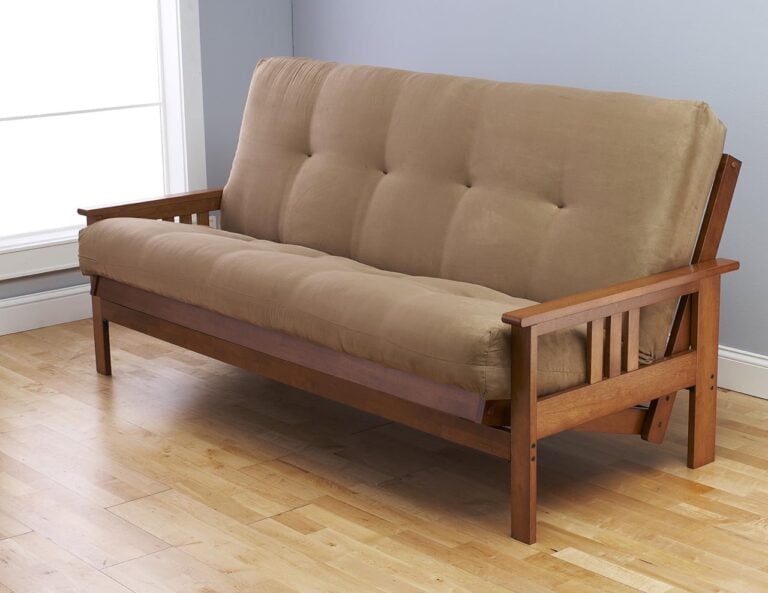

How To Make A Sofa Bed More Comfortable For A Great Night’s Sleep
Let’s be honest, the term “comfortable sofa bed” usually sounds like a contradiction. We’ve all been there—or at least heard the polite but pained morning-after report from an overnight guest.
There’s that dreaded metal bar digging into your back, the sensation of sinking into a lumpy abyss, or the endless tossing and turning on a mattress as thin as a yoga mat. These aren’t just bad luck; they’re common design flaws.
Most sofa beds are built to fold, not to provide genuine sleep support. But that doesn’t mean you’re stuck with a subpar sleeping arrangement.
The Core Comfort Killers
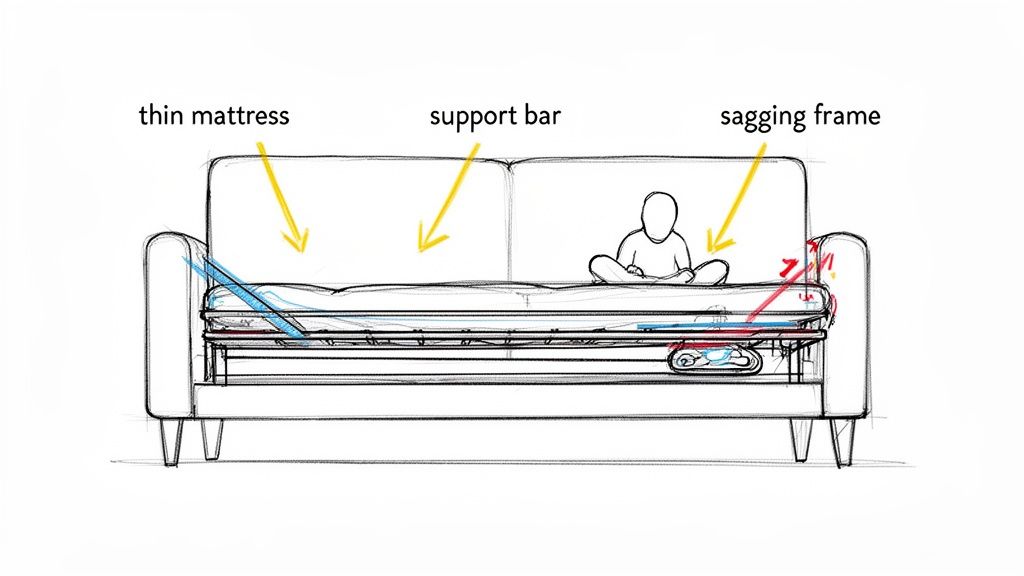
The first step to fixing the problem is knowing exactly what you’re up against. Most sofa bed discomfort boils down to three key culprits:
- The flimsy mattress: Sofa bed mattresses have to be thin to fold up neatly inside the frame. The trade-off is a serious lack of density and support needed to properly cushion your body all night long.
- The support bar: That infamous metal bar running across the middle is a structural necessity for the folding mechanism, but it’s also public enemy number one for a good night’s sleep. It creates a hard, unforgiving ridge right where you need softness and support.
- A sagging frame: Over time, the support system—whether it’s made of slats or a mesh grid—loses its tension. This creates an unpleasant hammock effect, causing you to sink into the middle.
These issues are so common that a staggering 29% of buyers name comfort as their number one concern when shopping for a sofa bed. While the global market for these handy furniture pieces is set to hit USD 28.73 billion by 2034, that core issue of out-of-the-box comfort isn’t going away.
The good news? You don’t need to throw out your entire sofa. Simple, targeted upgrades can make a world of difference, with some solutions boosting user-reported comfort by as much as 75%.
This guide will walk you through real, actionable steps to fix each of these issues. From finding the perfect mattress topper to reinforcing the frame, you’ll learn exactly how to make a sofa bed more comfortable and turn it into a genuinely welcoming spot for you or your guests.
Find the Perfect Mattress Topper for Your Sofa Bed
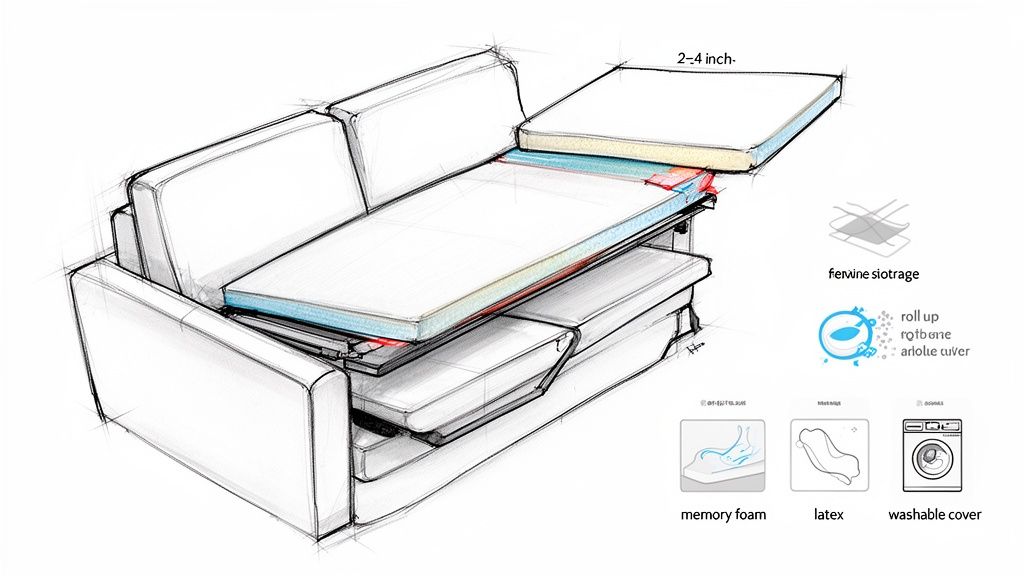
If there’s one single thing you can do to transform your sofa bed, it’s adding a mattress topper. This is the fastest, most effective upgrade you can make. It acts as a buffer between you and that notoriously thin, often lumpy mattress, smoothing out creases and making hard spots disappear.
Think of it as a comfort shield. You’re not just throwing on another layer; you’re strategically choosing a material that neutralizes the exact problems of your sofa bed, whether that’s a punishing support bar digging into your back or a surface that feels more like a board than a bed.
Choosing the Right Topper Material
The material you pick will completely define the sleeping experience. Each one has a distinct feel and its own set of benefits, so matching it to your needs is the first real step toward a comfortable night’s sleep for you or your guests.
-
Memory Foam: This is the go-to for a reason. Memory foam is a champion of pressure relief, contouring to your body’s unique shape. If the main complaint is feeling that metal bar or the springs, a dense memory foam topper will absorb that pressure and create a much more even, supportive surface.
-
Latex: Prefer a more responsive, almost buoyant feel? Latex is a fantastic option. It provides excellent support without that “sinking in” sensation you get from memory foam. Plus, it’s naturally hypoallergenic, incredibly durable, and tends to sleep cooler—a great choice for warmer climates or guests who run hot.
-
Gel-Infused Foam: A common gripe with traditional memory foam is that it can trap heat. Gel-infused toppers are engineered to solve this exact problem by pulling heat away from your body. This helps regulate temperature for a cooler, far more comfortable night.
-
Down or Feather Alternatives: If you’re aiming for that plush, five-star hotel vibe, a featherbed or down-alternative topper adds a luxurious layer of softness. While they offer less support than foam, they are brilliant for adding a cloud-like cushion on top of a mattress that’s just too firm.
Nailing the Practical Details
Beyond the material, a few practical considerations will make sure your topper is a perfect fit for both your sofa bed and your lifestyle.
Thickness and Density
For a sofa bed, the sweet spot for thickness is usually between 2 and 4 inches. Anything less than 2 inches probably won’t be enough to hide that dreaded bar, while anything over 4 inches can get bulky and become a pain to store.
Density is just as critical. It’s measured in pounds per cubic foot (PCF). For memory foam, a density of 3 to 5 PCF strikes a great balance between supportive cushioning and long-term durability, without feeling like a rock.
Pro Tip: Before you click “buy,” pull out a tape measure and get the exact length and width of your sofa bed mattress when it’s fully opened. Sofa bed dimensions can be quirky and sometimes differ from standard bed sizes. A topper that’s too big or small is just going to be another frustration.
Storage and Maintenance
Unlike a regular bed, your sofa bed topper will need to be stored away. Look for one that comes with straps or a bag, making it easy to roll up and tuck into a closet. A washable cover is also a non-negotiable for guest bedding—it ensures you can keep things fresh and clean for every visitor.
You can explore a wide variety of mattress toppers and pads designed for different needs and find one that works for you.
Is It Time to Upgrade Your Sofa Bed Mattress?
While a good mattress topper can work wonders, sometimes it’s just a bandage on a much bigger problem. If you or your guests are still waking up with aches and pains, it might be time to stop tweaking and start thinking about a full mattress replacement.
It’s definitely a bigger investment, but it’s also the most direct way to make a sofa bed genuinely comfortable for the long haul. Think of it this way: a topper adds a layer of cushion, but a brand-new mattress completely rebuilds the sleep surface from the ground up. This is the ultimate fix for turning a temporary sleeping spot into a bed someone actually wants to sleep on.
When to Make the Switch
So, how do you know you’ve reached the point of no return? There are a few dead giveaways that a topper just isn’t going to cut it anymore.
- You can feel the support bars. If that dreaded metal bar is still making its presence known through your topper, the original mattress is way too thin or compressed to offer any real protection.
- There are permanent sags. Take a look at the mattress. Do you see visible dips or body impressions that don’t bounce back? That creates an uneven surface that even the thickest topper can’t fully correct.
- It offers zero support. If lying down feels like you’re sinking into a flimsy hammock, the mattress has lost all its structural integrity. It can no longer support proper spinal alignment, which is a recipe for a sore back.
If any of that sounds painfully familiar, a new mattress isn’t just an upgrade—it’s a necessity for a decent night’s sleep.
A new mattress directly addresses the core issue of poor support, rather than just masking it. It’s the difference between patching a problem and actually solving it.
Choosing the Right Replacement Mattress
Here’s something a lot of people don’t realize: sofa bed mattresses aren’t just smaller versions of regular mattresses. They’re specifically designed to be flexible enough to fold into a sofa frame without getting damaged.
When you start shopping, you’ll mainly run into two popular options.
-
Memory Foam: This is a fantastic choice for pull-out couches. Memory foam offers excellent contouring and pressure relief, which is perfect for cushioning you from the bars and mechanisms underneath. Plus, it folds easily without developing the weird creases and lumps that plague old innerspring models.
-
Flexible Innerspring or Hybrid: Modern sofa bed mattresses have come a long way. Many now use flexible coil systems or a hybrid design combining coils with foam. These tend to provide a bit more bounce and airflow than solid foam, which some people find more comfortable.
If you have more specialized needs, it’s also worth exploring the range of futon mattresses. Since they’re designed for both sitting and sleeping, they offer a great balance of durability and comfort.
Taking Accurate Measurements
Don’t skip this part—it’s the most critical step in the whole process. A mattress that’s too thick or the wrong size simply won’t work, no matter how comfortable it is.
Grab a tape measure and check three things:
- Length and Width: Measure the inside of the metal frame where the mattress actually sits.
- Height (Thickness): This is the big one. Most sofa bed frames can only accommodate a mattress that is 4 to 5 inches thick. If you go any thicker, you risk not being able to close the sofa properly, which can damage the folding mechanism over time. Measure your old mattress to get a good baseline.
Replacing the mattress is a significant step, but it delivers the most dramatic improvement you can make. You’re not just fixing a problem; you’re transforming your sofa bed into a truly comfortable sleeping space.
Strengthen the Frame for Better Sleep Support
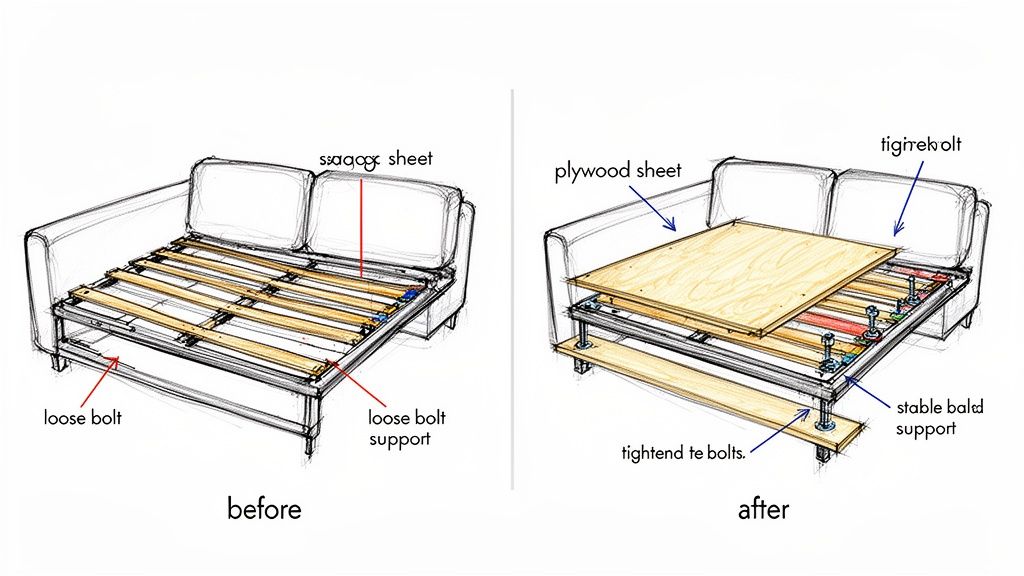
[Image demonstrating how sliding a cut piece of plywood between the mattress and the sofa bed frame prevents sagging]
Even the world’s best mattress can’t save you from a weak, sagging foundation. We often focus on what’s on the sofa bed, but one of the biggest secrets to a comfortable night’s sleep lies underneath it. The frame is the literal bedrock of your bed, and if it’s not solid, you’ll definitely feel it.
A wobbly frame or worn-out support system creates an uneven surface that’s guaranteed to cause problems. It’s what makes you sink into the middle and feel that infamous support bar digging into your back. Before you spend a dime on a new topper, a quick look at the frame can reveal some simple fixes that make a world of difference.
Getting the foundation right can solve comfort issues that a mattress alone just can’t fix, setting you up for a genuinely supportive night’s rest.
Conduct a Quick Frame Inspection
First things first, fully open your sofa bed and give the frame a good, honest look. You don’t need to be a DIY pro for this—you’re just scouting for obvious weak spots. Gently push on different parts of the frame and see if anything feels unusually wobbly or creaks loudly.
Pay close attention to these key areas:
- Loose Connections: Check every single bolt, screw, and hinge you can see. The constant motion of opening and closing the bed can work them loose over time, creating a lot of instability.
- Bent or Damaged Slats: If your sofa bed has wooden or metal slats, run your eyes over each one. Look for any cracks, noticeable bends, or other signs of weakness. Just one bad slat is enough to create a major dip.
- Stretched Support Fabric: Some sofa beds have a trampoline-style canvas or mesh deck. See if it has lost its tension and is sagging in the center like a well-used hammock.
Seriously, just a few minutes with a wrench or screwdriver tightening everything up can make the whole structure feel more secure and stable almost instantly.
The Plywood Solution for Sagging
If the main problem is a general lack of support or that dreaded sagging middle, there’s a brilliantly simple and incredibly effective fix: add a solid base. A sheet of plywood placed right between the frame and the mattress is a total game-changer.
This one move creates a firm, even platform that distributes weight perfectly across the entire bed. It completely gets rid of the “hammock effect” and stops the mattress from sinking down between slats or into a stretched-out support deck.
Adding a ½-inch thick sheet of plywood is one of the most cost-effective ways to dramatically improve sofa bed support. It provides an instant, solid foundation that prevents sagging and stops the dreaded center support bar from digging into your back.
To get this done, just measure the inside of the frame where the mattress sits and have a piece of plywood cut to size at your local hardware store. Slide it into place, put the mattress back on top, and you’ve just built yourself a much firmer and more supportive bed. This simple trick is a cornerstone of learning how to make a sofa bed more comfortable from the ground up.
Of course, if you find the frame is beyond a simple fix, you might want to explore more durable and well-designed futon frames as a potential long-term replacement.
Elevate Comfort with Smart Bedding and Pillows
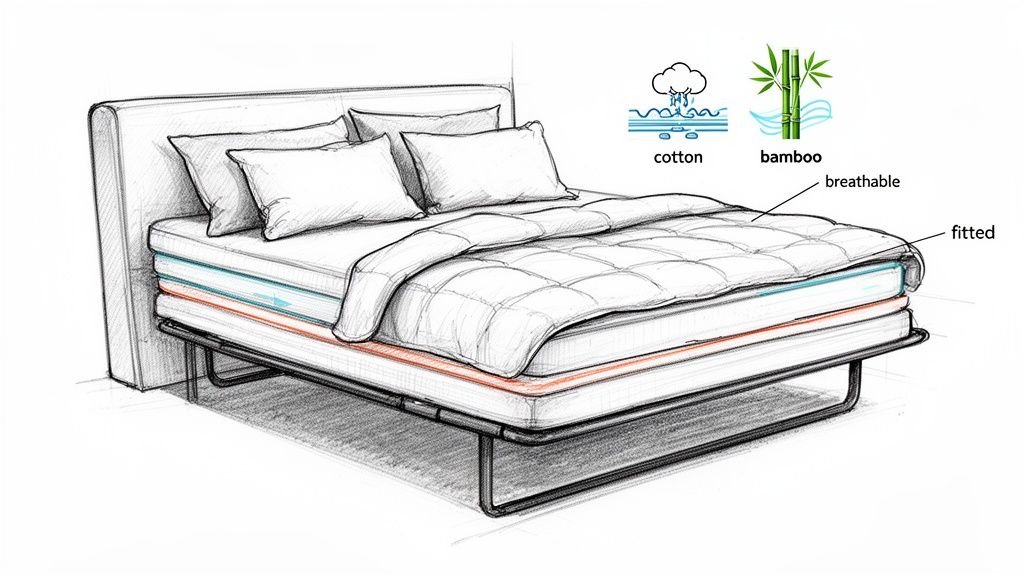
Once you’ve shored up the frame and added a quality mattress or topper, the bedding is where the magic really happens. This is the final touch that transforms a functional sleeper into a cozy retreat. Never underestimate the power of good sheets and pillows; they’re what your guests will feel all night long, and the right choices make all the difference.
Think of it this way: you wouldn’t wear a scratchy shirt with a great suit. The same logic applies here. Just swapping out old, worn-out sheets for something soft and breathable is an instant upgrade anyone will appreciate.
Building an Inviting Sleep Environment
The real secret to a hotel-quality bed is layering. Each layer has a job, from protecting the mattress to adding warmth and a sense of luxury. It’s all about creating a sleep environment that feels intentional, not like a last-minute afterthought.
Here’s how to build up that inviting feel:
- Start with Breathable Sheets: Stick with natural fibers like cotton or bamboo. These materials are fantastic at wicking away moisture and keeping temperatures regulated, which is a lifesaver on foam toppers that can sometimes sleep hot.
- Get the Right Fit: Thin sofa bed mattresses are notorious for making standard fitted sheets bunch up. Look for sheet sets with deep pockets or, even better, elastic corner straps that keep everything snug and secure.
- Add a Plush Comforter: A fluffy duvet or a soft, weighted blanket adds that final layer of warmth and makes the bed look and feel far more inviting than a single thin blanket ever could.
A quality mattress protector is a non-negotiable first layer. It doesn’t just shield your mattress from spills and allergens—it can also add a subtle layer of quilted padding, helping to smooth out any minor lumps or bumps on the surface.
The Crucial Role of Pillows
Pillows are definitely not a one-size-fits-all situation. Tossing a single, limp pillow on the bed is a classic hosting mistake that almost guarantees a stiff neck. The goal should be to provide options that work for different sleeping styles, whether your guest is a side, back, or stomach sleeper.
Having a couple of firm pillows and a couple of softer ones lets guests build their own perfect setup.
Don’t forget about your sofa’s decorative cushions, either. They can be propped against the wall to create a makeshift headboard for reading in bed or used to fill in awkward gaps between the mattress and the sofa frame. If you need to expand your options, you can explore a whole collection of pillows to find the perfect match for your guests’ needs.
Keeping Your Comfy Sofa Bed… Comfy
You’ve put in the work to transform your sofa bed from a medieval torture device into a genuinely cozy spot for guests. Now, let’s make sure it stays that way. A little upkeep goes a long way in preventing those dreaded lumps, sags, and squeaks from making a comeback.
Think of it as protecting your investment. These simple habits will preserve the mattress, topper, and frame, keeping your entire setup guest-ready for years to come.
Your Quick Maintenance Checklist
This isn’t a chore; it’s a quick tune-up you can knock out in a few minutes every couple of months or after a guest checks out. The payoff is huge.
- Rotate, Rotate, Rotate: Just like the mattress on your regular bed, the one on your sofa bed needs a good rotation. Spin it 180 degrees every few months to stop body impressions from setting in and ensure it wears down evenly. If you’re using a topper, give that a flip and a rotate, too.
- Clean Out the Guts: That folding mechanism is a magnet for dust, crumbs, and pet hair. Grab your vacuum’s crevice tool and give it a quick pass to keep everything moving smoothly.
- Attack Spills Immediately: Don’t let that coffee or wine spill become a permanent resident. Tackle it right away with a bit of mild detergent and water to prevent it from setting into the fabric.
Regular maintenance isn’t just about keeping things clean. It’s about preserving the structure and comfort you worked so hard to create. A well-cared-for sofa bed means you won’t have to go through this whole comfort-boosting process again in a year.
Smart Handling and Storage
How you open, close, and store your sofa bed components actually matters. Trying to force a sticky mechanism or folding a mattress topper the wrong way can cause real damage that you’ll definitely feel later.
Always use the handles or straps designed for opening and closing the bed. Use even, steady pressure—don’t try to jerk it open or slam it shut, as this can bend the frame.
And when it’s time to put that memory foam topper away? Roll it up snugly instead of folding it. Folding can create permanent creases and weak spots. Tucking it into a breathable storage bag will protect it from dust and moisture until your next guest arrives. It’s these little things that keep every part of your sofa bed in prime condition.
Got Questions About Sofa Bed Comfort?
Even after trying all the tricks, you might still run into some specific headaches. Let’s tackle some of the most common questions people have when trying to make their sofa bed actually comfortable.
That Awful Center Bar—What Do I Do?
Ah, the infamous “bar-in-the-back” problem. It’s the number one complaint for a reason. While beefing up the frame can help, the best way to deal with it is to create a serious buffer zone.
A dense memory foam topper that’s at least 3 inches thick is your best bet. It’s usually enough to swallow up the bar so you can’t feel it digging into your spine all night. If you’re looking for a quick fix without spending much, grab a spare duvet or a couple of thick blankets. Fold them up and lay them directly over the bar before you put on your topper and sheets. This creates a targeted cushion right where it counts.
What’s the Best Thickness for a Topper?
For sofa beds, the sweet spot for a topper is usually between 2 and 4 inches.
- 2 inches: This is a good choice for newer sofa beds that are already in decent shape but just need a touch more softness.
- 3 inches: This is the go-to for most situations. It provides a fantastic balance of comfort and support, and it’s thick enough to hide that center bar or other minor lumps and bumps.
- 4 inches: Go for this if you’re dealing with an older, seriously uncomfortable sofa bed. Just be warned, a 4-inch topper is bulky, so make sure you have a place to store it.
One thing to keep in mind: anything thicker than 4 inches might stop your sofa bed from folding up correctly. Forcing it closed could damage the mechanism over time, so always check your clearance before you buy.
How Can I Make My Futon More Comfortable?
Futons are a different beast altogether, mostly because the mattress has to pull double duty as both a seat and a bed. The trick here is adding layers you can easily take off. A good mattress topper is your best friend—just unroll it when you’re ready for bed and roll it back up in the morning.
Another game-changer for futons is a futon grip pad. It’s a simple non-slip pad that you place between the frame and the mattress. One of the biggest complaints about futons is how the mattress slides around, and this little accessory stops that completely. A gripper plus a quality topper can make a world of difference.