Outdoor Futon Cover Guide: Fabric, Fit & Porch Care
A futon on a covered porch sounds simple. You add a frame, a decent mattress, a cover that looks good from inside the house, and suddenly the porch becomes a second living room.
Then actual conditions show up. Humid mornings. Wind-blown mist. Afternoon sun that hits one cushion harder than the rest. Pollen, damp air, wet swimsuits, dog paws, and the habit everyone has of assuming “covered” means “protected.”
That’s where people usually learn the difference between an indoor fabric and an outdoor futon cover. The wrong cover may look fine for a short stretch, then start showing the usual failure pattern: musty smell first, dull color next, roughened fabric after that. If the fit is loose, the problems get worse because moisture lingers in folds and seams instead of drying out cleanly.
The Porch Futon Dream and the Mildewy Reality
The common setup goes like this. A full-size futon moves from a spare room to a screened porch or sunroom because the piece is versatile, comfortable, and already owned. For a while, it works. The space feels more useful. Guests sit there with coffee. Kids stretch out with a book. The dog claims the corner cushion.
Then the space behaves less like a living room and more like an outdoor room. Air carries moisture even when rain never lands directly on the futon. Shade slows drying. Fabric that was fine indoors starts holding onto that damp, slightly cool feeling.
Mildew usually doesn’t announce itself with a dramatic stain at first. It starts as odor, a little discoloration in seams, or a cover that never seems fully fresh again after a humid spell.
What makes this use case tricky
A porch futon sits in an in-between category. It isn’t fully exposed patio furniture, but it also isn’t protected like furniture in a conditioned room. That middle ground is exactly where people make the wrong call.
A covered porch protects against direct rainfall. It does not protect against humidity, UV exposure, airborne dirt, or slow-drying fabric.
That’s why an outdoor futon cover isn’t just a style choice. It’s the layer that decides whether the futon stays usable and easy to maintain, or becomes the piece nobody wants to sit on by late summer.
Why Your Indoor Futon Cover Isn’t Suited for Outside
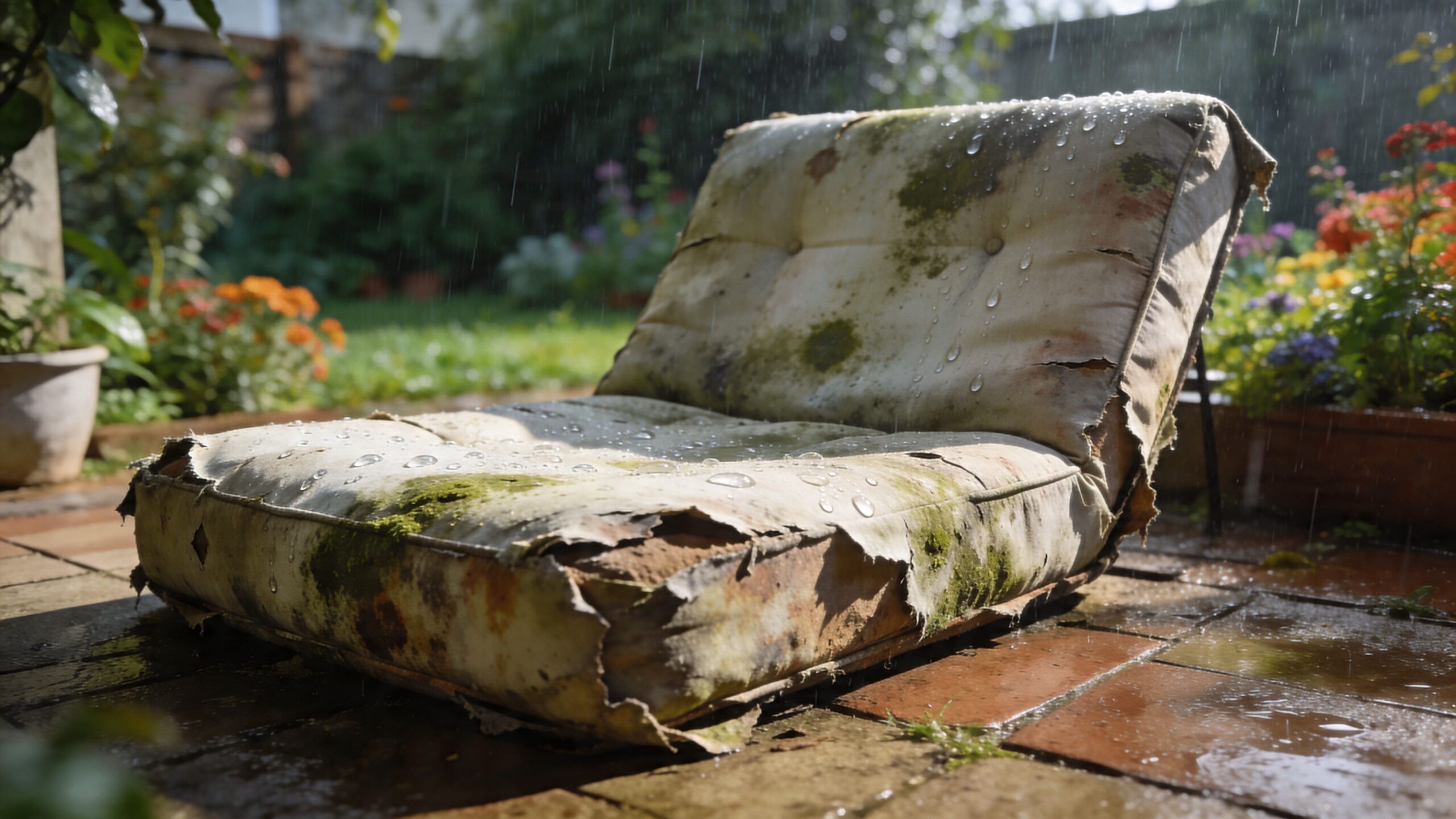
A standard futon cover can survive outside for a little while. That’s what misleads people. The early stage looks acceptable, so the cover gets labeled “good enough.” It usually isn’t.
Indoor covers are chosen mostly for feel, pattern, and price. Outdoor use adds stress those fabrics weren’t built to handle. Browse futon covers for different use cases and separate decorative indoor fabrics from performance-oriented ones before you buy.
Moisture is the first problem
Indoor fabrics often absorb and hold moisture longer than people expect. On a porch, the issue isn’t only a direct splash. It’s repeated exposure to damp air, condensation, and contact with clothing or towels that aren’t fully dry.
When moisture sits in the cover, the fabric can start smelling stale, and the area around seams and zipper lines tends to show trouble first. The bigger mistake is thinking the cover will “air out” on its own every time. In a shaded or humid setup, drying is slower, which gives mildew more opportunity.
Sun damage is the second problem
Many buyers focus on rain and ignore sun. That’s backwards. UV is one of the fastest ways to make a futon cover look tired even when it still feels structurally intact — unprotected fabric can lose noticeable color depth within a single season of regular direct sun exposure. On a porch, direct exposure may only hit part of the futon for a few hours a day, but that’s enough to create uneven color loss across the cushion.
Dirt and abrasion finish the job
Semi-outdoor spaces are dirtier than they look. Dust, pollen, grit, sunscreen, pet traffic, and general rubbing from everyday use all wear on fabric. A cover that looks smooth indoors may start to feel thin, rough, or slack outside.
Here’s what usually goes wrong with a standard indoor cover outdoors:
- It stays damp longer and starts developing odor.
- It fades unevenly where sunlight hits hardest.
- It traps dirt more visibly and becomes harder to clean back to a presentable look.
- It breaks down faster from a combination of moisture, abrasion, and repeated cleaning.
Practical rule: If the futon lives in a sunroom, covered porch, pool-adjacent room, or any space where windows stay open and humidity rises, treat it as an outdoor upholstery project, not an indoor one.
That shift in mindset saves people from replacing a cover they never should’ve used there in the first place.
Decoding Outdoor Fabric Performance
When people hear “outdoor fabric,” they usually think it means waterproof. That’s not the right test. For a futon, the useful questions are narrower. Does the fabric resist water long enough for you to clean up and dry it? Does it hold color in sun? Does it breathe instead of trapping dampness? Can you maintain it without turning care into a project?
Those are the metrics that matter.
UV resistance matters more than most buyers expect
A semi-outdoor futon often fails from sunlight before it fails from rain. That’s why solution-dyed acrylic is the benchmark fabric worth understanding.
The easiest way to think about it: a printed surface fabric carries much of its color near the outside. Solution-dyed acrylic carries color through the fiber itself. That gives UV less opportunity to bleach the visible face of the fabric, which is why solution-dyed acrylic consistently outperforms standard printed polyester for long-term color retention in sun-exposed settings.
Water resistance is not the same as waterproofing
Most outdoor futon covers are water-resistant, not fully waterproof. That distinction matters because people often assume the cover alone will protect the mattress from every spill or wet day.
A water-resistant fabric helps moisture bead up and gives you time to wipe, blot, and dry. It does not mean you should leave the futon wet and expect no consequences. In a semi-outdoor setting, the best-performing cover is one that sheds everyday moisture but still breathes enough to avoid that clammy, trapped feeling.
Breathability prevents the hidden problems
A tightly performing outdoor fabric still needs airflow. If a cover blocks some moisture on the surface but traps dampness inside, comfort drops and mildew risk goes up.
This is why some outdoor-grade fabrics feel better in practice than cheaper “weather-resistant” alternatives. They strike a balance — resisting water without turning the seating surface into a plastic shell.
Easy cleaning is part of performance
A porch futon collects mess differently than an indoor one. You’re not only dealing with crumbs or a coffee spill — you’re dealing with pollen, dirty paws, leaf residue, sunscreen transfer, and the grime that drifts in from outside.
A usable outdoor futon cover should let you brush debris off quickly, spot clean without damaging the face of the fabric, and wash the cover if the specific construction allows it.
Seeing the weave and hand in person helps more than reading fabric names alone — a set of futon cover fabric sample swatches makes it easier to judge which materials feel porch-appropriate versus strictly indoor.
Outdoor Fabric Material Comparison
| Material | UV/Fade Resistance | Water Resistance | Mildew Resistance | Ease of Cleaning |
|---|---|---|---|---|
| Solution-dyed acrylic | Excellent for sunny spaces | Strong surface resistance | Strong for humid settings when dried properly | Usually very practical |
| Performance polyester | Moderate to good, depends on grade | Good for light weather exposure | Fair to good, depends on weave and care | Generally easy |
| Chemically treated outdoor blend | Good for mixed-use spaces | Good surface repellency | Designed to resist soiling, rot, and mildew | Good for routine cleaning |
| Basic indoor upholstery fabric | Poor for semi-outdoor exposure | Limited | Limited in damp conditions | Often harder to restore after outdoor use |
If your porch gets bright afternoon sun, prioritize UV performance first. If it’s shaded but humid, prioritize mildew resistance and drying behavior.
A lot of outdoor futon cover mistakes happen because buyers choose by color first and environment second. The better order is exposure, then fit, then color.
Understanding Different Grades of Outdoor Fabric
Not every semi-outdoor space needs the same cover. A glassed-in sunroom with strong light exposure asks for one kind of fabric. A covered porch with open sides, shifting humidity, and occasional wind-blown rain asks for another.
Light-exposure spaces
In a sunroom, UV tends to be the main enemy. The cover may never get soaked, but it can still lose color and dry out over time if the fabric isn’t built for sunlight. In that setting, a fabric with stronger fade resistance usually matters more than maximum water repellency.
A buyer who chooses purely by softness can end up with a cover that looks washed out long before it looks worn.
Humid and open-air spaces
Covered porches, breezeways, and pool-adjacent seating areas are tougher. Here the cover needs to handle moisture in the air, airborne dirt, and more frequent cleaning. Performance fabrics such as Sunbrella and Outdura are commonly used for this category — chemically treated synthetic fibers, including polyester, acrylic, and cotton blends, engineered to repel water and resist soiling, rot, and mildew, making them well suited to patios, sunrooms, and other high-traffic semi-outdoor areas.
What fabric grade looks like in practice
A practical way to think about grade is to match it to exposure:
- Sunroom grade works when the biggest issue is light through windows and occasional household mess.
- Covered porch grade makes more sense when damp air and wind-driven dirt are regular problems.
- Heavy-use outdoor grade fits spaces where kids, pets, and repeated cleanup put extra stress on the cover.
Fabric weight and weave help you read this without getting lost in marketing language. Tighter weaves usually feel more substantial and often resist surface moisture better. Lighter decorative fabrics may still look appealing, but they won’t always hold shape or shed mess as well in a porch environment.
The wrong move isn’t always under-buying. Sometimes people over-buy for a mild sunroom when what they really needed was a breathable, easy-clean fabric with strong fade resistance.
Good selection is about matching the fabric to the room’s behavior, not choosing the most rugged label by default.
Measuring for the Perfect Fit
Fit matters more outdoors than people think. A loose cover doesn’t just look sloppy — it creates low spots, wrinkles, and pockets where moisture can settle instead of drying quickly.
For a standard full futon mattress, outdoor covers commonly fit around 54 by 75 inches and up to 8 inches thick, often using a three-sided concealed zipper cut slightly snug against the mattress to hold tension and reduce slippage. Confirm your exact mattress dimensions against the specific cover’s listed sizing before ordering, since these figures vary by manufacturer.
Measure the mattress, not the frame
Width
Measure straight across the mattress from side to side.Length
Measure from end to end at the longest points.Thickness
Measure the loft from the top surface to the bottom surface while the mattress is at rest.
Compare what you measured against common futon dimensions using a futon sizing chart.
Why snug fit performs better
A proper fit keeps the surface flatter and the zipper under less stress during normal use. It also helps the cover stay in place when the futon shifts between seating and sleeping use.
Watch for these fit mistakes:
- Too loose means bunching, sliding, and moisture settling in folds.
- Too tight stresses seams and makes installation frustrating.
- Measured from the frame instead of the mattress leads to ordering the wrong size.
- Ignoring thickness creates the worst fit problems, especially on thicker futon mattresses.
A clean, taut fit not only looks better but also performs better in damp air and daily use.
Solving Fit Issues with Custom Services
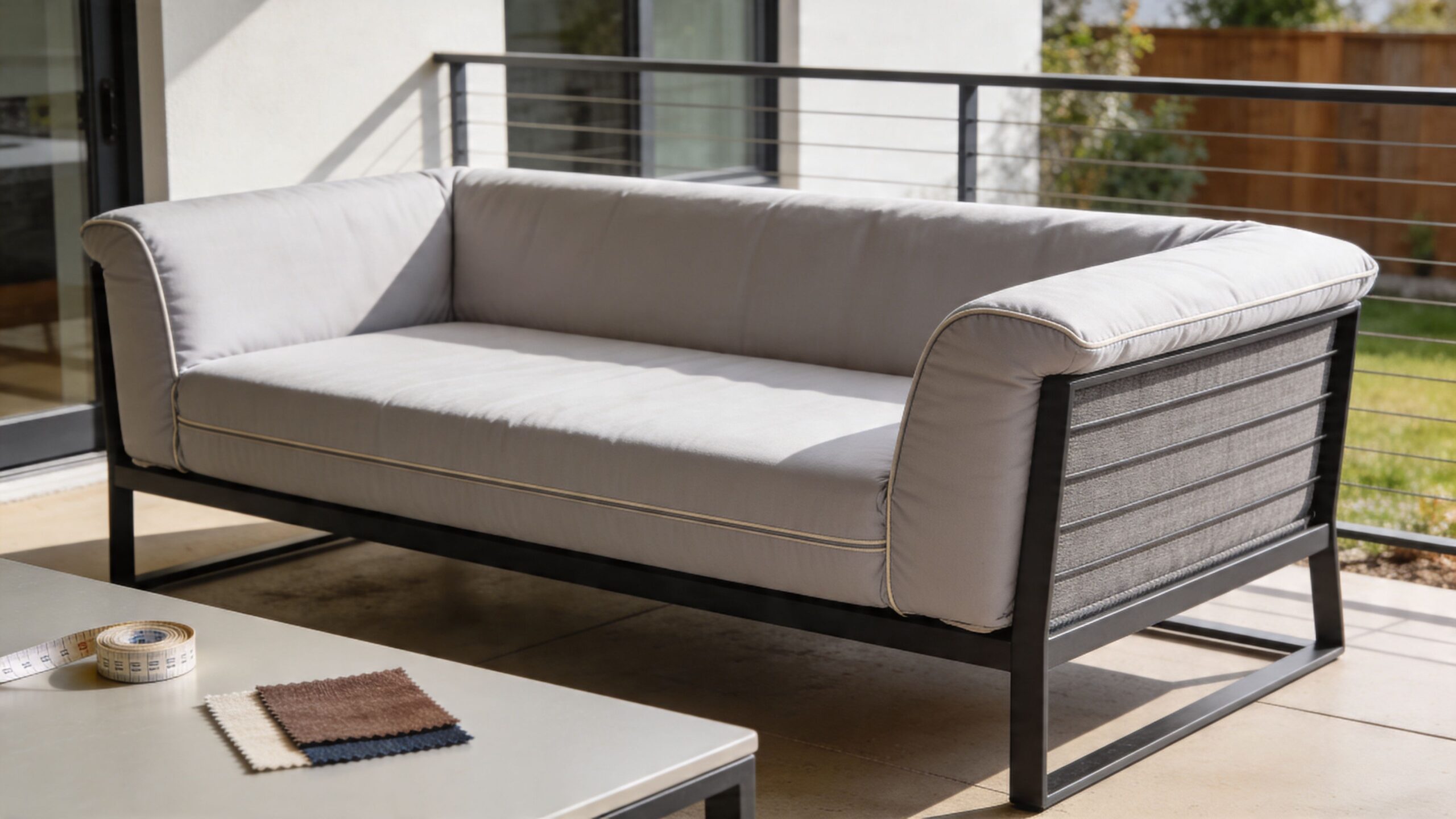
Standard sizing works only when your futon is standard. A lot of porch and sunroom setups aren’t. Older bi-fold frames, compact apartment futons, loveseat conversions, and mattresses with unusual loft can all fall outside the easy-size category — and an ill-fitting cover on a semi-outdoor futon causes more than a cosmetic problem, since gaps and slack fabric are exactly where water pools and dries slowly.
When custom sizing makes sense
If your cover shifts constantly, leaves exposed corners, or hangs with excess fabric at the seating deck, custom sizing is usually the smarter move. The same applies when the futon is going into a semi-outdoor space, because poor fit affects drainage, drying, and day-to-day wear, not just appearance.
A custom cut-and-sew approach is useful for:
- Odd mattress dimensions that don’t align with standard full or queen sizing
- Thicker or thinner lofts that throw off zipper closure and seam placement
- Older frames where the sofa position changes how the mattress sits
- Special layouts such as chairs, loveseats, or compact guest pieces
Why this matters in outdoor use
A porch cover has to do two jobs at once. It has to look polished enough to sit in a visible living area, and it has to avoid the loose areas that hold dirt or moisture.
For non-standard dimensions, Futonland’s custom cut-and-sew service is a practical option because it allows a cover to be made for the actual mattress size and shape rather than forcing a near match. In a semi-outdoor setup, that custom fit solves a real performance problem, not just a cosmetic one.
A custom cover is often cheaper than replacing an almost-right cover that never sits correctly and never dries the way it should.
Installation and Long-Term Care
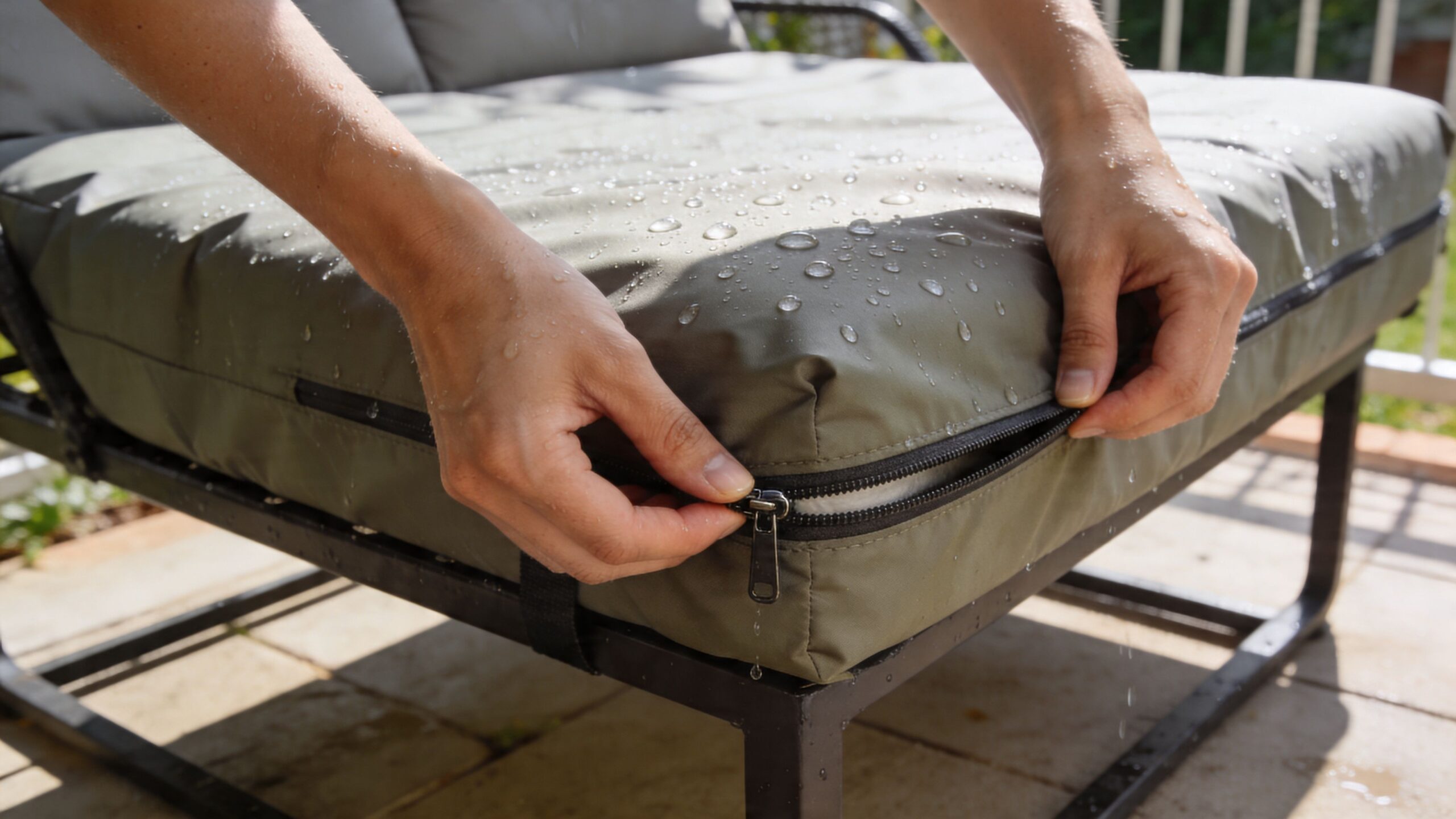
A good outdoor futon cover lasts longer when it’s installed tightly and maintained consistently. Most problems people blame on the fabric are really care issues — the cover was left damp, dirt sat too long, or the zipper was forced over a mattress that wasn’t positioned correctly.
Install it the careful way
Start with the mattress clean and fully dry. Line up the corners before you pull the zipper around. If the cover uses a three-sided concealed zipper, feed the mattress in gradually instead of forcing one corner all the way first.
If the futon tends to creep forward in sofa position, adding futon non-slip strips and grip pads can help stabilize the mattress and keep the cover sitting flatter.
A maintenance routine that works
- Brush off debris regularly so dirt doesn’t grind into the weave.
- Blot spills quickly instead of rubbing them deeper into the fabric.
- Wash only if the fabric allows it and follow the care instructions for that specific cover.
- Let the cover dry completely before putting the futon back into regular use.
- Reapply a fabric protection spray when appropriate before rainy periods or stronger UV exposure, if the fabric maker recommends it.
- Store or cover the futon during harsher stretches if the porch sees prolonged damp weather.
Some performance fabric options are machine washable and built for outdoor exposure while still not being fully waterproof — check the specific fabric’s care label rather than assuming “outdoor-ready” means “maintenance-free.”
What not to do
Don’t leave wet cushions compressed under throws or pillows. Don’t zip a damp cover over a damp mattress. Don’t assume a covered porch removes the need for periodic cleaning.
Those are the habits that shorten the life of an otherwise solid outdoor futon cover.
Choosing the Right Cover for Years of Outdoor Comfort
The right outdoor futon cover comes down to three decisions. Choose a fabric that matches the actual exposure. Get the fit right, whether standard or custom. Maintain it before small problems turn into odor, fading, or fabric breakdown.
For a futon in a porch, sunroom, or other semi-outdoor space, those basics matter more than trend, pattern, or price alone. Visit a Futonland showroom in the Upper West Side, Greenpoint, or Newark for fabric guidance in person, or compare outdoor-ready cover options and swatches online before ordering.