Dry Clean Upholstery: DIY Tips for a Fresh Look in 2026
A coffee spill on a favorite futon or sofa-bed creates a very short window for a good decision. The instinct is to grab water and scrub, but that can turn a small mark into a ring, a distorted pile, or damaged backing when the upholstery carries an S cleaning code. The safer response is to blot first, read the label, and choose a solvent method that matches the fabric. This guide covers fabric codes, preparation, solvent-based spot cleaning, stain-specific tactics, drying expectations, and maintenance for furniture that needs to look good and return to service quickly. For broader household guidance, compare these residential upholstery cleaning advice, and review fabric options when shopping for fabric sofa sets.
Introduction to Dry Clean Upholstery
A fresh coffee spill on a futon in a compact apartment is more than an eyesore. The piece may need to become a bed that evening, and there may be little room to move it, ventilate it, or leave it unused. Pouring water over the mark can spread the coffee and create moisture damage if the fabric is marked S, which means solvent-only care.
Start by lifting the liquid with clean towels. Don't rub, and don't reach for steam until you've confirmed the code. A dry clean upholstery approach uses controlled solvent application, light agitation, careful towel blotting, pile grooming, and airflow. That process is different from dropping removable clothes at a dry cleaner, and it doesn't mean soaking a cushion cover or stripping the sofa apart.
The right method also depends on whether you're treating one spot or restoring an entire seating surface. A small, stable stain may be manageable with the correct product and a hidden-area test. Large, delicate, faded, or repeatedly treated upholstery deserves a technician who can assess the fiber, backing, dye stability, and construction before applying anything.
Identifying Fabric Codes and Preclean Preparation
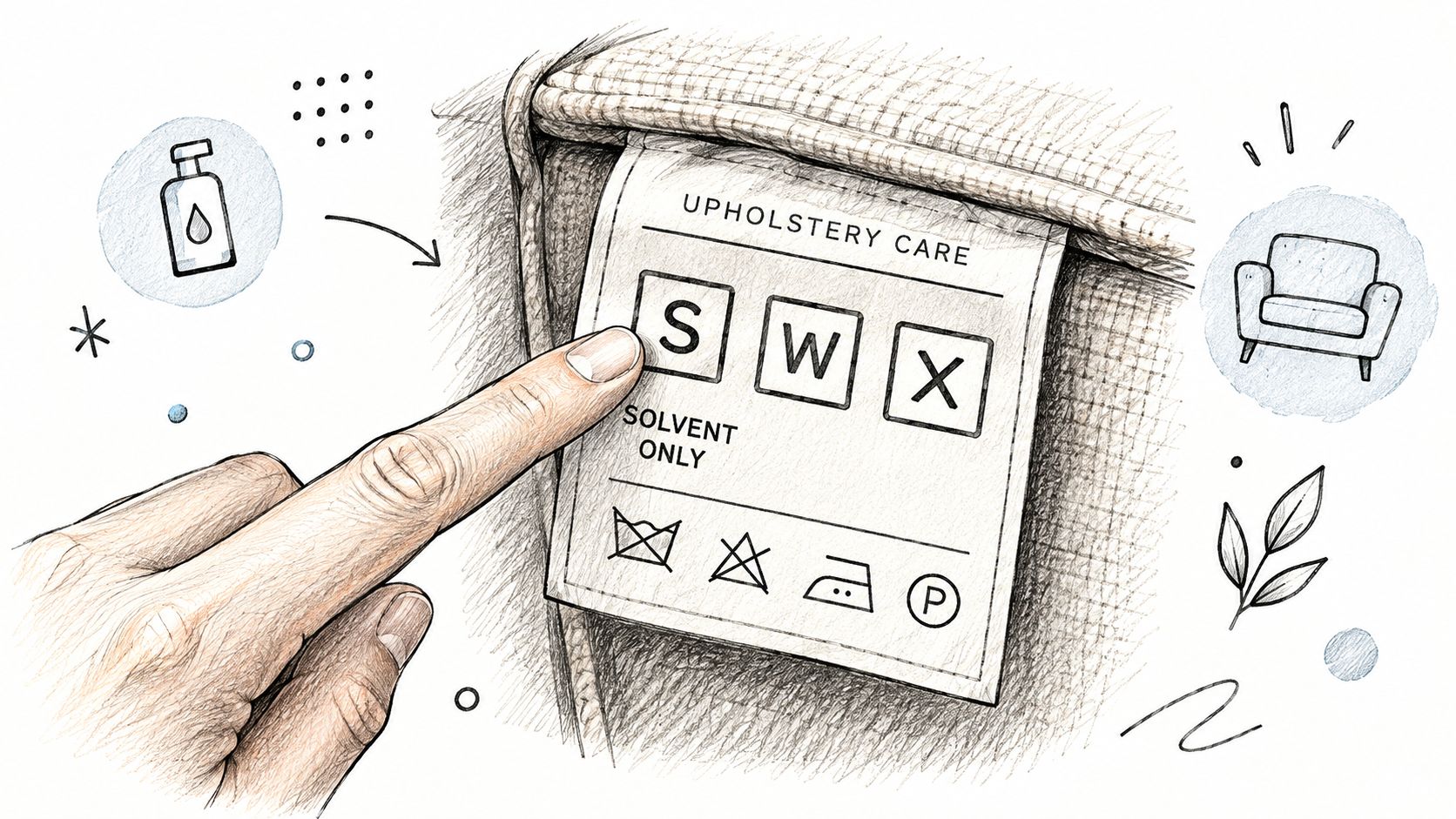
A sofa-bed needed that evening leaves little room for trial and error. Check the care information before opening a cleaning product. Look beneath seat cushions, along the platform, under the sofa frame, or in the original paperwork. The code may appear on a sewn label, hangtag, or specification sheet rather than on the visible upholstery. If the label is missing, compare the fabric with Futonland's fabric sample swatches and contact the maker before treating it.
The common codes indicate different limits:
- W permits water-based cleaning when the fabric and construction support it.
- S permits solvent-based cleaning only. Keep water off the face fabric and avoid saturation. Excessive moisture can damage backing or stitching and distort the pile, according to upholstery cleaning instructions.
- WS allows either water-based or solvent-based cleaning, though over-wetting can still push moisture into the backing and cushion.
- X generally limits care to vacuuming or light brushing unless the mill gives written approval for another process.
Prepare the fabric before solvent
Preparation prevents problems often blamed on the solvent. Remove loose cushions only when the furniture maker designed them to come off. Inspect seams, piping, fasteners, and any area where the fabric feels loose. A zipper does not automatically make a fitted cushion cover suitable for separate dry cleaning. The cover may change size or appearance during processing.
Vacuum the surface, seams, crevices, and underside of removable cushions with a HEPA vacuum with an upholstery attachment. Grit trapped in the pile can become muddy debris after product is applied, while loose dust can disrupt even blotting. Have a soft brush, approved volatile dry solvent, clean terry or microfiber towels, and strong airflow ready before starting. For a futon or sofa-bed that must return to service quickly, this preparation reduces avoidable rework and supports faster drying.
Test before treating the visible mark
Use an inconspicuous area, such as the rear skirt or underside of a cushion. Apply a small amount of the intended product, blot with a white towel, and let the area settle long enough to check for dye transfer, texture change, or a visible ring. The test shows whether the fabric tolerates the product and whether the backing reacts poorly.
Stop if the towel picks up color, the pile changes direction permanently, or a halo appears. A professional can select a less aggressive procedure or explain when cleaning carries too much risk.
Solvent Based Spot Cleaning Techniques
Dry solvent cleaning works through controlled contact, not force. The aim is to dissolve or loosen the soil while keeping the product from migrating into foam, backing, seams, or adjacent sections.
Use a solvent labeled for upholstery and compatible with the fabric code. Don't substitute household water-based upholstery foam, steam, diluted detergent, or an improvised chemical mixture on S-code fabric. Product instructions matter because solvent strength, evaporation, and residue behavior vary.
Work in small sections
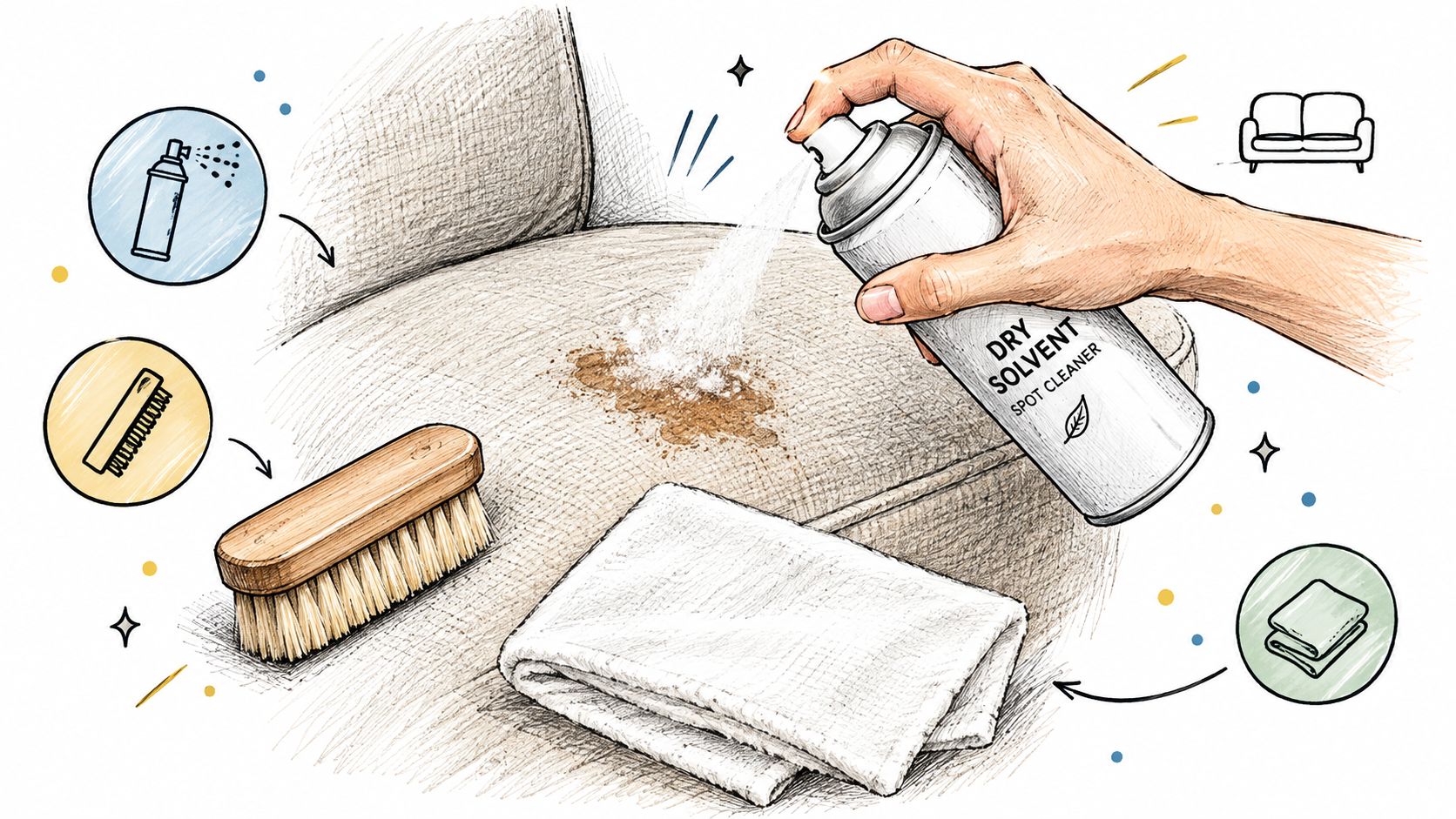
A reliable sequence for solvent-only upholstery is:
- Identify the fiber and construction. Look for the care code, fiber information, pile direction, backing, and any signs of previous treatment.
- Test dye stability. Use the hidden-area test described above every time, even if you've cleaned the same furniture before.
- Vacuum thoroughly. Use the HEPA attachment to remove dry soil before introducing solvent.
- Apply minimal product. Dampen a towel or apply a controlled amount to a small section. Avoid pouring directly onto the fabric.
- Agitate gently. Use a soft brush or folded towel with short, light movements. Work with the pile rather than against it.
- Blot and extract. Press clean terry or microfiber towels into the area. Lift the towel straight up instead of rubbing across the face.
- Groom the pile. Restore the nap direction while the section is still workable.
- Move air across the surface. Use ventilation to help the solvent evaporate and to reduce lingering odor.
Professional guidance describes this workflow as a low-moisture process using about 10% moisture, which helps preserve shape and supports rapid reuse in the Prochem technical upholstery guide.
Two light passes beat one heavy application
A heavy application often creates the very problems the method is meant to avoid. It can push soil deeper, leave a pronounced edge, prolong evaporation, and disturb the backing. Two restrained passes let you evaluate the first result before adding more product.
Treat the spot after the surrounding section has been cleaned, not before. Otherwise, the technician or homeowner may clean around a concentrated mark and leave a visible contrast. Keep towels clean as you work. A saturated or dirty towel can redeposit soil instead of lifting it.
Practical rule: If the fabric starts feeling wet rather than lightly treated, stop adding solvent. Towel off, groom the pile, and let the section release product before deciding whether another pass is necessary.
Never use a flame, heater, or other ignition source to accelerate evaporation. Solvent work also requires sensible ventilation and adherence to the product's safety instructions. If the odor becomes strong, the fabric bleeds, or the stain spreads beyond the working area, discontinue the DIY attempt.
Choosing DIY or Professional Dry Clean Services
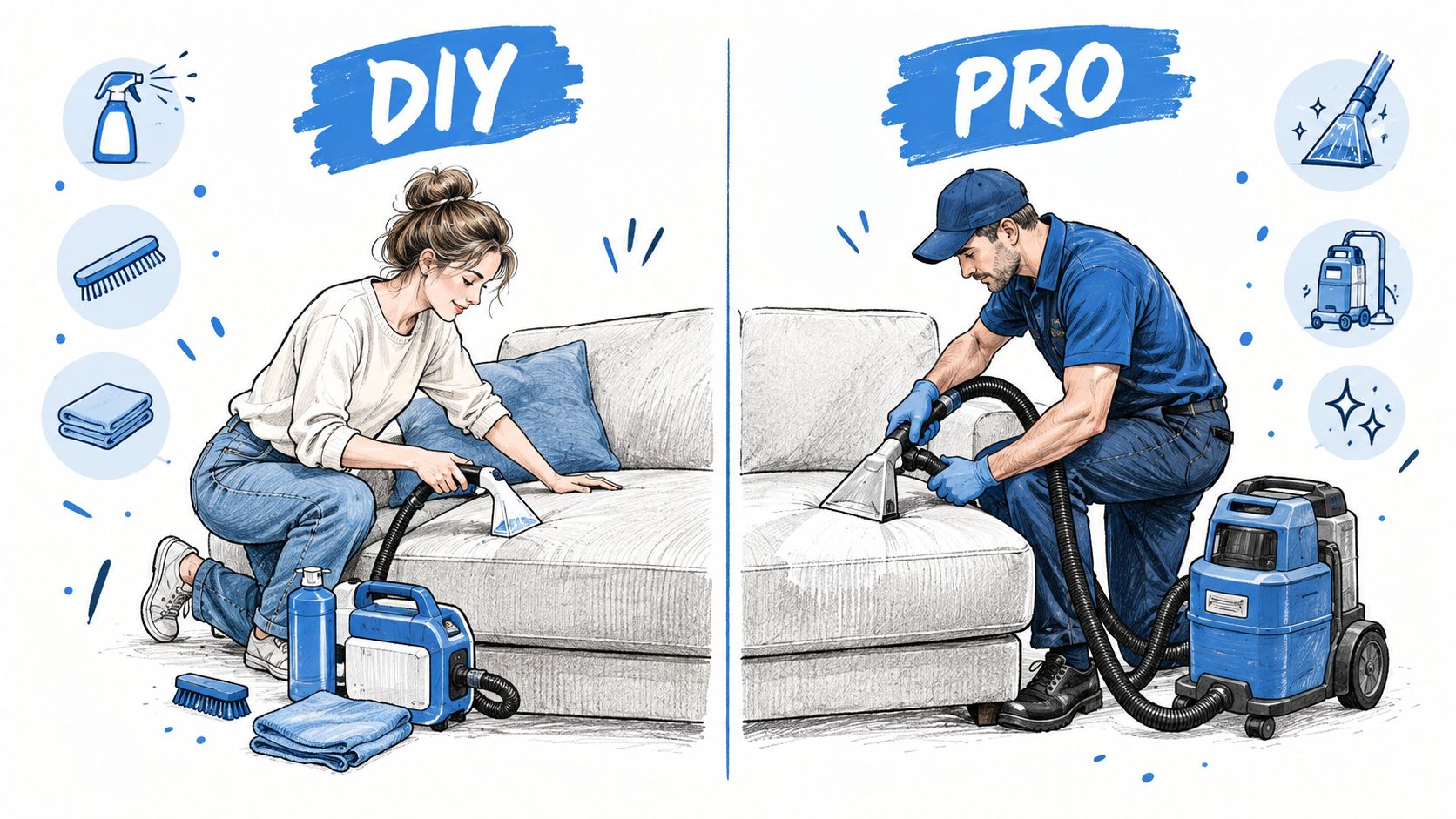
DIY makes sense for a limited spot on upholstery that has a clearly identified S code, passes a dye test, and isn't showing structural wear. The work is more controlled when you can treat a small section, use little product, and watch the fabric as it responds. A kit can be convenient, but convenience doesn't remove the risk of dye bleed, rings, delamination, or a changed pile.
Professional service becomes the more sensible choice when the whole sofa needs cleaning, the fabric is velvet or another delicate pile, several stains overlap, or the piece has sentimental or replacement value. A technician can inspect the construction, test multiple areas, manage solvent recovery, and clean sections consistently rather than leaving isolated bright spots.
Compare the real downtime
“Dry clean” doesn't automatically mean instant use. Independent service guidance places standard upholstery drying at around 4 to 8 hours, thicker fabrics at up to 12 hours, and low-moisture methods at 1 to 3 hours in its upholstery cleaning FAQ. Actual recovery depends on fabric thickness, ventilation, product quantity, cushion density, and how much soil the technician must remove.
For a futon or sofa-bed, ask practical questions before booking:
| Decision point | DIY spot treatment | Professional cleaning |
|---|---|---|
| Area | One small, stable mark | Full seating surface or multiple cushions |
| Risk | You carry the color and texture risk | A trained operator assesses compatibility |
| Turnaround | Potentially quick for a tiny spot | Schedule and drying time vary |
| Sofa-bed use | Suitable only if the treated area is fully dry | Ask specifically about return-to-use timing |
| Warranty | Product choice may conflict with care terms | Request documented methods and products |
If you need local furniture support or want to discuss a replacement before booking cleaning, use Futonland store locations as one starting point for product and service questions. Don't choose solely on price. The cheapest treatment can become expensive if it leaves a permanent ring on a difficult-to-replace cover.
Stain Specific Cleaning Methods
Stain chemistry matters, but the fabric code comes first. A coffee mark on S-code chenille isn't a license to use a water-based coffee remover, even though coffee is commonly treated with water on compatible fabrics. On solvent-only upholstery, use an approved dry solvent, controlled application, and repeated blotting rather than a wet treatment.
Coffee and wine
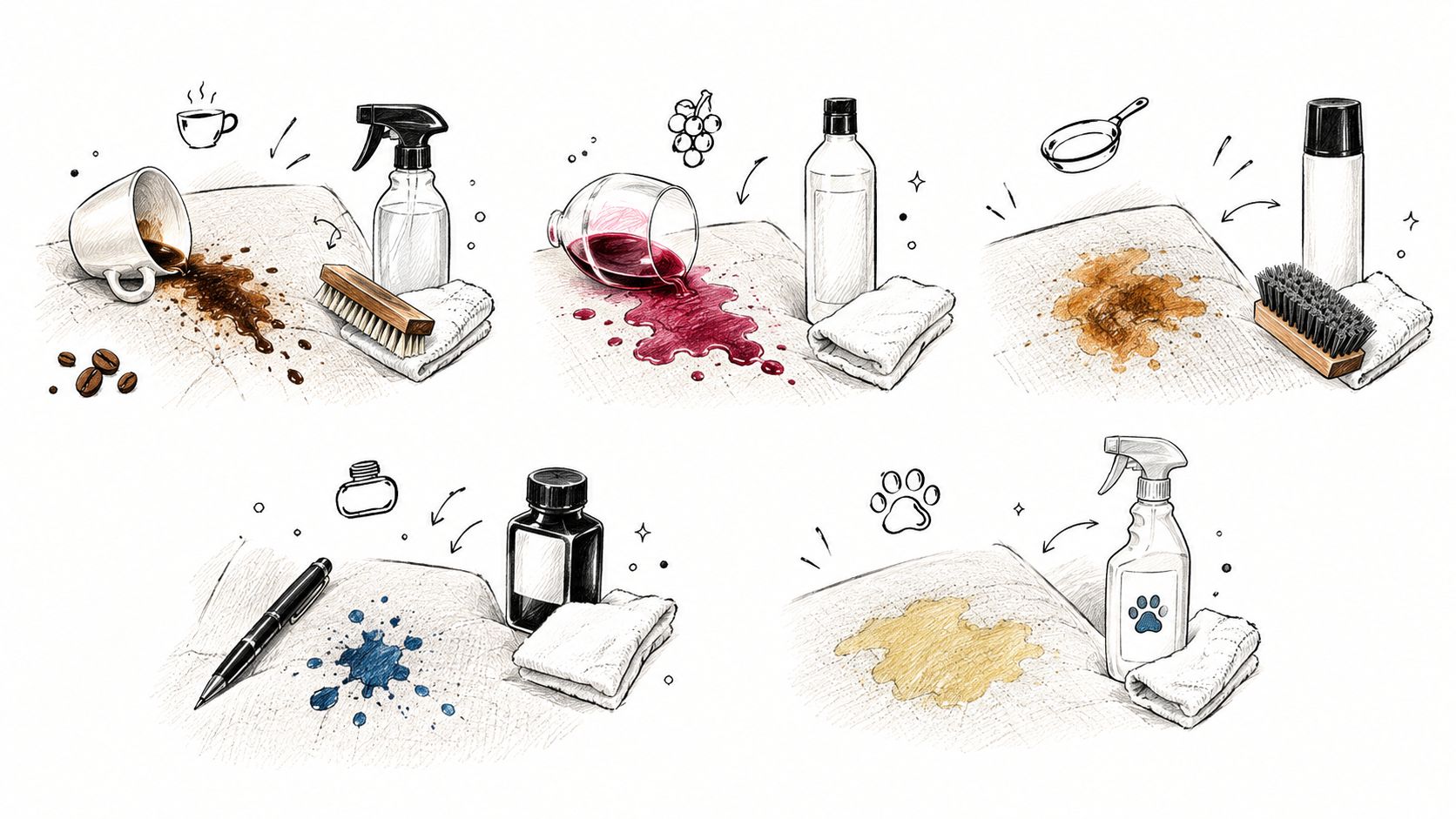
Blot fresh liquid immediately with white microfiber or terry cloth. Press from the outside of the mark toward the center so you don't enlarge the edge, and rotate to a dry towel face as liquid transfers.
After the surface is blotted, test the approved solvent on a hidden area. Apply a small amount to a towel, touch the stain lightly, and allow brief contact rather than leaving the fabric soaked. Use a soft brush only if the pile tolerates it, then blot until the towel stops lifting soil. If a brown or colored edge remains, don't chase it with repeated wet applications. That halo may reflect fabric construction, previous soil, or dye instability, and a professional assessment is safer.
Greasy food and oil-based makeup
Oil needs a solvent that can dissolve it, but aggressive rubbing can spread grease along the fibers. Remove any solid residue with the edge of a spoon, then place a clean towel beneath or behind the working area when construction allows.
Apply the approved solvent sparingly to a towel rather than flooding the cushion. Touch and lift repeatedly, changing towel sections as the oil transfers. A useful example is oil-based makeup on chenille. The technician should respect the directional pile, use very light agitation, and complete a second restrained pass only after the first has been blotted and evaluated. A broad scrub can flatten chenille and create a larger dull patch than the original makeup mark.
Ink and dye transfer
Ink and transferred dye are high-risk stains because the colorant may move quickly. Don't spread the mark by wiping sideways, and don't introduce a general-purpose cleaner unless the manufacturer approves it for the code.
Test first, then use a small solvent-dampened towel with a lift-and-release motion. Work from the outer boundary inward, replacing the towel frequently. If the transferred color keeps moving or the fabric itself begins releasing dye, stop immediately. A professional cleaner may be able to isolate the problem, but no method guarantees that a dye-transfer stain can be removed without changing the base color.
Pet accidents
Blot urine or other liquid contamination as soon as possible, then ventilate the area. Solvent treatment can address some surface soil on S-code upholstery, but it isn't a universal answer for odor or contamination that has reached foam and backing.
Avoid saturating the cushion in an attempt to flush it. That can drive the problem deeper and lengthen drying. If odor returns after the face fabric dries, the issue may be inside the cushion, where extraction, component treatment, or replacement becomes a more appropriate conversation.
Drying Ventilation and Maintenance Tips
Solvent cleaning protects water-sensitive upholstery by reducing the risks of shrinkage and water rings, but evaporation still needs management. Some solvents take longer to release than low-moisture water-based methods, and trapped odor can linger when a sofa sits against a wall or a sofa-bed remains folded.
Create a clear airflow path. Open windows where conditions allow, position a fan to move air across the upholstery rather than blasting one wet-looking spot, and use cross-ventilation when possible. Keep treated cushions separated so air can reach seams and sides. Don't cover the furniture, fold a futon, or convert a sofa-bed until the fabric feels dry and the product odor has dissipated.
Safety matters because solvent vapors can affect indoor air quality. If you want background on the terminology and household implications, review this explanation of Volatile Organic Compounds. Follow the product label, keep children and pets away during treatment, and maintain ventilation throughout the process.
Build maintenance around how the furniture works
A convertible piece needs more frequent attention at contact points because people sit, sleep, fold, and unfold on the same surfaces. Use a simple routine:
- Weekly: Vacuum the seat, back, seams, and hinge-adjacent areas with an upholstery attachment.
- After spills: Blot immediately, record the fabric code, and avoid rubbing.
- During inspections: Check piping, loose stitching, flattened pile, and areas where the cover shifts during conversion.
- With removable cushions: Rotate or reverse them only when the design permits it.
- For daily sleepers: Keep a compatible protector or washable layer between the upholstery and bedding, without trapping moisture beneath it.
A clean surface stays cleaner when dry soil doesn't accumulate in the pile. Regular vacuuming also lets you catch wear before a cleaning session turns a weak seam or damaged backing into a larger repair.
Conclusion and Replacement Guidance
The safest dry clean upholstery decision starts with the care code, not the stain. S means solvent only, and even an approved solvent must be tested, applied lightly, blotted carefully, and followed by airflow. Water, steam, heavy scrubbing, and improvised mixtures can create more damage than the original spill.
DIY is reasonable for a small, stable mark on fabric that passes testing. Call a professional when the upholstery is delicate, heavily soiled, broadly stained, structurally loose, or too valuable to risk. Also consider the furniture's schedule. A sofa-bed that must convert every day may justify a low-disruption cleaning plan, while a rarely used guest futon can tolerate a longer professional process.
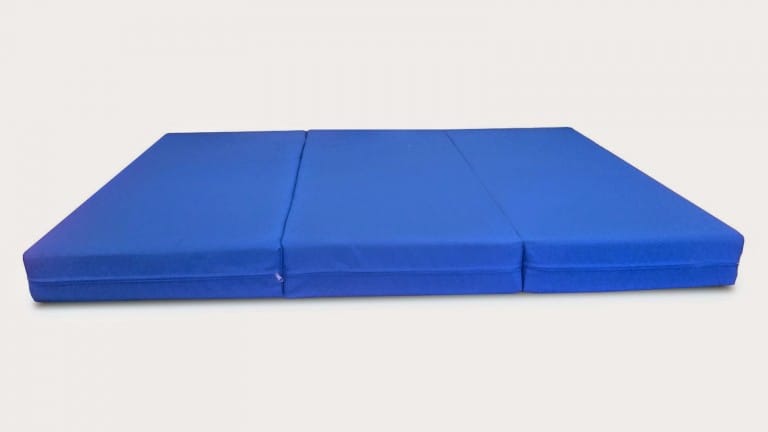
Replacement becomes practical when repeated spot treatments leave halos, the pile stays flattened, odors return from inside the cushion, or the cover no longer suits daily use. Don't assume a zipped cushion cover is safe to remove and dry clean. Some covers should remain on the furniture, so custom futon covers can offer a cleaner long-term solution when the frame and mattress remain sound.
Before your next treatment, photograph the label, test the intended product, and decide whether you need a spot repair or a full restoration. If the fabric keeps failing your household's routine, choose a compatible replacement cover or upholstery service instead of repeating a risky clean.
Check the code today, blot the next spill instead of scrubbing, and arrange a qualified upholstery assessment if the fabric is S-coded, delicate, or attached to a sofa-bed you need back in service quickly.