How to Choose a Mattress for Back Pain and Wake Up Rested
Waking up with a stiff, aching back that eases up once you start moving is a common pattern. Sometimes it’s stress, sometimes it’s your daily routine — but very often, it’s your mattress. A bed that’s too old, too soft, or too firm can quietly force your body into awkward positions for hours at a time.
The goal is straightforward: find a sleep surface that supports your spine’s natural curve. You’ll hear this called neutral spine alignment. In plain English, it means your back isn’t sagging like a hammock and it isn’t being pushed into an unnatural arch.
Your Mattress Is the Key to a Better Morning

Picture a gentle “S” curve from your neck to your lower back. A supportive mattress helps keep that curve steady by holding up heavier areas (especially hips and pelvis) while still cushioning lighter areas (like shoulders and knees). When that balance is right, your muscles finally get a chance to relax instead of bracing all night.
Why the Wrong Mattress Makes Back Pain Worse
A worn-out mattress with dips and soft spots usually pulls your spine out of alignment. But even a brand-new mattress can be “wrong” if it doesn’t match your body and sleep position:
- Too soft: hips sink, spine curves, lower back works overtime.
- Too firm: pressure builds at shoulders/hips, and your lower back may hover without support.
Your mattress should support your body in a neutral position. If you wake up feeling twisted, compressed, or sore in the same spots every morning, your sleep surface may be part of the problem.
Start With Your Sleep Position
How you sleep changes everything:
- Side sleepers usually need more cushioning at shoulders and hips to keep the spine straight.
- Back sleepers typically do best with steady lumbar support — not a dip, not a board.
- Stomach sleepers often need firmer support to stop the midsection from sinking and arching the back.
Below is a starting-point guide. It’s not a medical diagnosis — just a practical way to narrow your options.
Quick Guide to Mattress Firmness and Sleep Position
| Sleeping Position | Body Weight | Recommended Firmness (1-10 Scale) | Why It Helps |
|---|---|---|---|
| Side Sleepers | Lighter (Under 130 lbs) | 3-5 (Soft to Medium-Soft) | Reduces pressure at shoulders/hips while keeping the spine straighter. |
| Average (130-230 lbs) | 5-6 (Medium) | Balances contouring with support to prevent “hip drop.” | |
| Heavier (Over 230 lbs) | 6-7 (Medium-Firm) | Prevents sinking too deeply while still cushioning joints. | |
| Back Sleepers | Lighter (Under 130 lbs) | 4-6 (Medium-Soft to Medium) | Supports lumbar curve without letting hips sink too far. |
| Average (130-230 lbs) | 6-7 (Medium-Firm) | Steady lumbar support to keep the spine neutral. | |
| Heavier (Over 230 lbs) | 7-8 (Firm) | Keeps hips elevated and aligned with shoulders. | |
| Stomach Sleepers | Lighter (Under 130 lbs) | 5-6 (Medium) | Helps prevent hip sink that arches the lower back. |
| Average (130-230 lbs) | 6-7 (Medium-Firm) | Reduces midsection sag, a common cause of strain. | |
| Heavier (Over 230 lbs) | 7-9 (Firm to Extra-Firm) | Max support to keep the spine flatter and more neutral. |
Decoding Mattress Types for Better Back Support
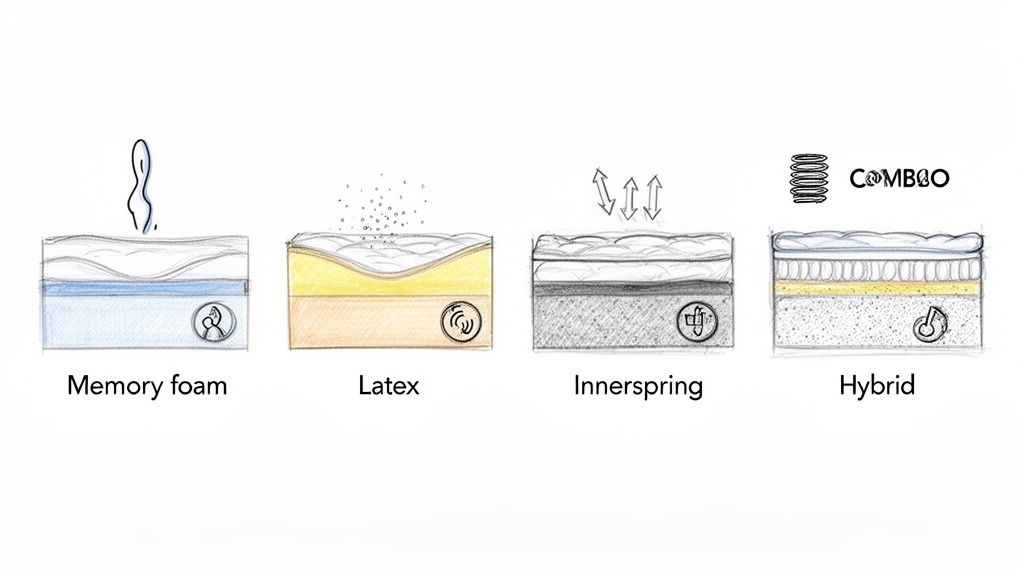
Mattress shopping gets noisy fast. Ignore the buzzwords and focus on one question: Does this material help me stay aligned without pressure building up?
Memory Foam
Memory foam is known for contouring. It molds to your shape, which can feel great if your pain is tied to pressure points (especially for side sleepers). The trade-off is responsiveness: some foams feel slow-moving, which can make changing positions feel harder.
If you tend to sleep hot, look for newer cooling designs (often built with airflow channels or cooling infusions). Just remember: “cooling” varies by person, sheets, and room temperature.
Latex
Latex has a more buoyant feel — less “sink,” more “lift.” Many people with back discomfort like latex because it supports alignment while still cushioning. It’s also naturally responsive, so combination sleepers often find it easier to move around.
Innerspring
Innersprings use coils for support and airflow. They can work well for back and stomach sleepers who want a sturdy foundation. The comfort layer on top matters a lot here — a thin top can feel harsh, while a thicker top can add pressure relief.
Hybrid
Hybrids combine a coil support core with foam or latex layers on top. For many shoppers, this is the “best of both worlds” category: supportive base, plus cushioning where you need it. If you’re unsure what feel you prefer, hybrids are often a good place to start.
Supportive Futon and Conventional Mattresses
If you’re in a smaller space or you want flexibility, don’t overlook modern futon and conventional mattress options. A well-built futon mattress can be supportive and comfortable — very different from the thin dorm-style futons people remember.
To compare options, browse our selection of conventional mattresses and see which constructions align with how you sleep.
Finding the Right Firmness for Your Body
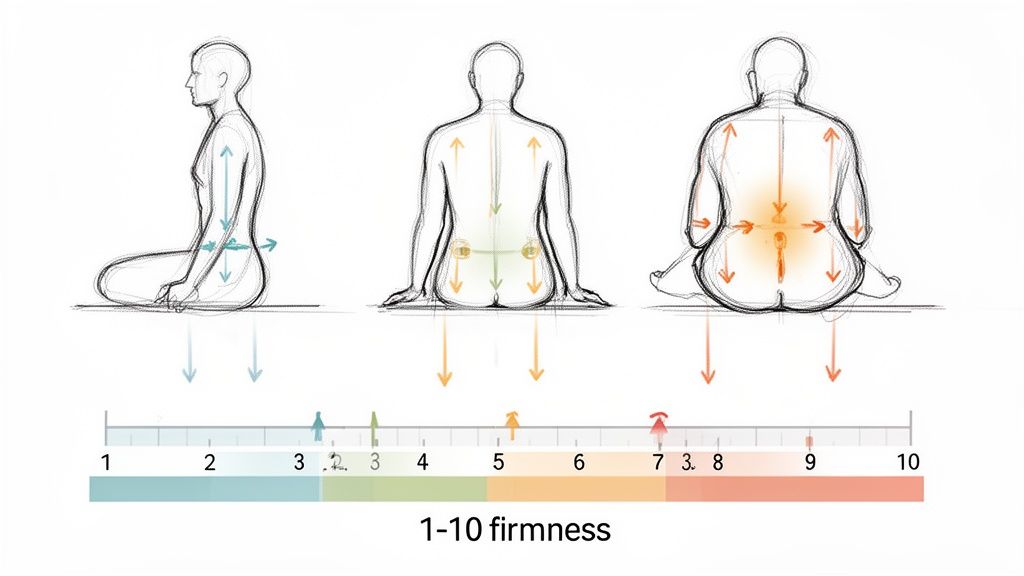
One of the biggest myths: “Firm fixes everything.” Not true. Support is what matters — and support is not the same thing as feeling hard.
A mattress can feel plush on top and still support your spine underneath. Or it can feel firm and still fail you if it doesn’t fill the natural gaps (like the lower back for many back sleepers).
Body Weight Changes How Firm a Mattress Feels
- Under 130 lbs: firmer beds may not compress enough, leading to pressure points and gaps. You often need more cushioning.
- 130–230 lbs: the widest “sweet spot” range — many people do well around medium to medium-firm.
- Over 230 lbs: you’ll usually need stronger support to prevent deep sinking at the hips and midsection.
Couples With Different Preferences
If one of you wants “soft” and the other wants “firm,” you’re not stuck. Two practical solutions:
- Choose a supportive medium-firm base and adjust comfort with bedding and toppers.
- Use a topper to soften one side (or the full surface) without replacing the whole mattress.
If you want to fine-tune comfort, explore mattress toppers and pads.
How to Properly Test a New Mattress
You can learn a lot in-store — but a five-minute test won’t tell you how your back will feel after eight hours. If you can, try a two-step approach: narrow down in person, then rely on an at-home trial to make the real decision.
How to Test in a Showroom
If you’re near one of our locations, it can help to try different materials side-by-side. You can visit us at one of our store locations to compare feels and firmness levels.
- Lie down for at least 10–15 minutes in your real sleep position.
- Switch positions the way you normally do at night.
- Check edge support by sitting on the edge — it matters for getting in/out and usable sleep space.
The Real Test: Sleeping on It at Home
Give your body time. If you’re coming from a sagging mattress, it can take a few weeks for your muscles to stop “guarding” and adjust to proper support.
A good trial period is your safety net. Keep simple notes for the first few weeks: where you feel sore, how often you wake up, and whether pain improves or worsens. If you’re still waking up stiff after a fair adjustment window, that’s useful information — and it’s exactly why trials and reasonable return policies matter.
Build a Full Sleep System for Back Support
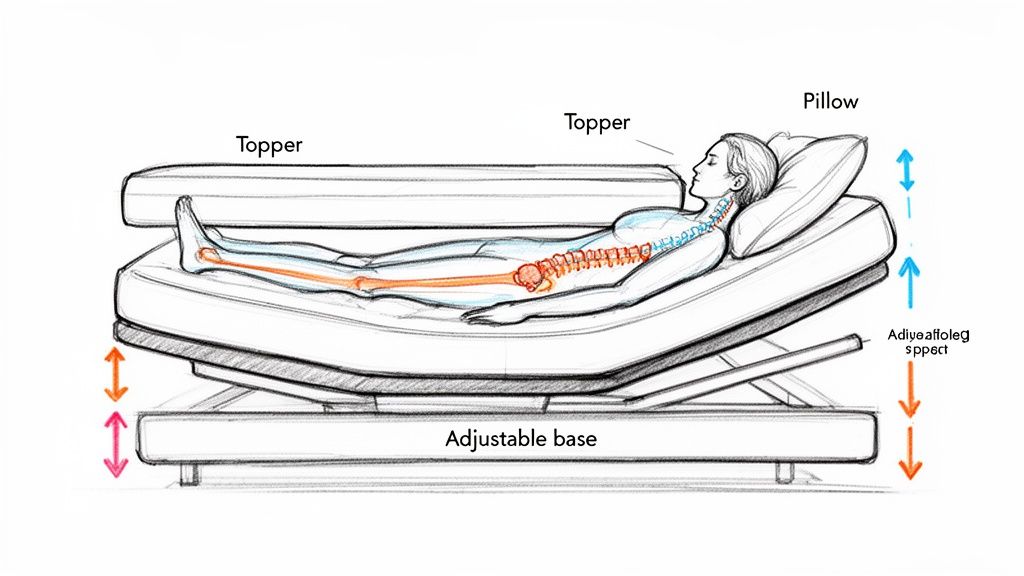
A mattress is the foundation, but your comfort (and alignment) also depends on the rest of your setup.
Pillows Matter More Than Most People Think
If your pillow pushes your head too high or lets it drop too low, it can pull your neck and upper back out of alignment — even on a great mattress.
- Back sleepers: usually do well with a thinner, supportive pillow.
- Side sleepers: often need a thicker pillow to fill the shoulder-to-neck gap.
- Stomach sleepers: typically need a very thin pillow or none at all.
Browse options in our pillow collection to match your sleep style.
Use a Topper to Fine-Tune the Feel
If your mattress supports you well but feels a bit too firm at pressure points, a topper can help without changing the underlying support. If you’re adjusting comfort for two different sleepers, toppers can also be a practical compromise.
See options in mattress toppers and pads.
Consider an Adjustable Base if Your Pain Is Persistent
For some people, changing the angle of sleep helps — especially when flat sleeping increases discomfort. Elevating legs slightly can reduce tension in the lower back, and raising the head may help with reflux or snoring. If your back pain is severe, ongoing, or worsening, it’s smart to talk with a healthcare professional alongside upgrading your sleep setup.
Your Final Checklist Before You Buy
- Confirm support first: does the mattress keep you aligned in your sleep position?
- Don’t chase “firm” — chase “supported”: pressure relief and alignment should work together.
- Check the warranty details: understand sagging thresholds and what voids coverage.
- Plan delivery realistically: tight hallways, stairs, elevators, and setup matter.
- Make it yours: if you’re choosing a futon or a custom setup, covers and sizing can help it fit your space and your style.
A good mattress purchase isn’t just about the product. It’s about choosing a setup that supports your body, fits your home, and gives you room to adjust if your first pick isn’t perfect.
At Futonland, we’re here to make the process easier — from comparing supportive mattress types to finding the right accessories to complete your setup.
Explore our collection and start building your perfect sleep system today.