

Home Office Guest Bedroom Combo: Murphy Bed vs Sofa Bed vs Daybed
You rented the extra bedroom for your desk. Then your parents want to visit. Or your friend from Boston needs a place for the weekend. Or you live in a studio and your “office” is really the same zone as everything else.
That’s the home office guest bedroom combo problem. One room has to work hard every day and still feel decent when someone sleeps in it.
Most people get this wrong one of two ways: they build a proper office and force guests onto an uncomfortable backup bed, or they keep a permanent bed that eats the room and wonder why working there feels cramped. The fix isn’t more decorating — it’s choosing the right convertible furniture for how the room actually gets used.
One Room, Two Jobs
A spare room rarely stays “spare.” It becomes the Zoom room, the file cabinet, the charging station, the overflow closet — then guests arrive and it has to become calm and sleep-ready with no notice.
The conflict is straightforward:
- Work needs permanence: monitor space, desk depth, cable control, a real chair.
- Guests need comfort: real sleep support, some privacy, a place to put a bag.
- Small rooms punish bad choices: one oversized piece wrecks circulation for both.
A common failure pattern: someone buys a regular bed because it feels safest, then six months later is taking calls from the edge of the mattress or squeezing a tiny desk into a corner. Or someone buys the cheapest click-clack futon available — guests survive one night on it, but nobody wants to stay twice.
Match the setup to how the room is actually used
If you work from home most weekdays, the office function should lead. If guests stay often, sleep comfort should lead. If the room is genuinely tiny, floor clearance leads whether you like it or not.
The best setup isn’t the one that looks best in a staged photo. It’s the one you can convert quickly without moving half the room.
Your Space-Saving Blueprint: Work vs. Guest vs. Floor Space
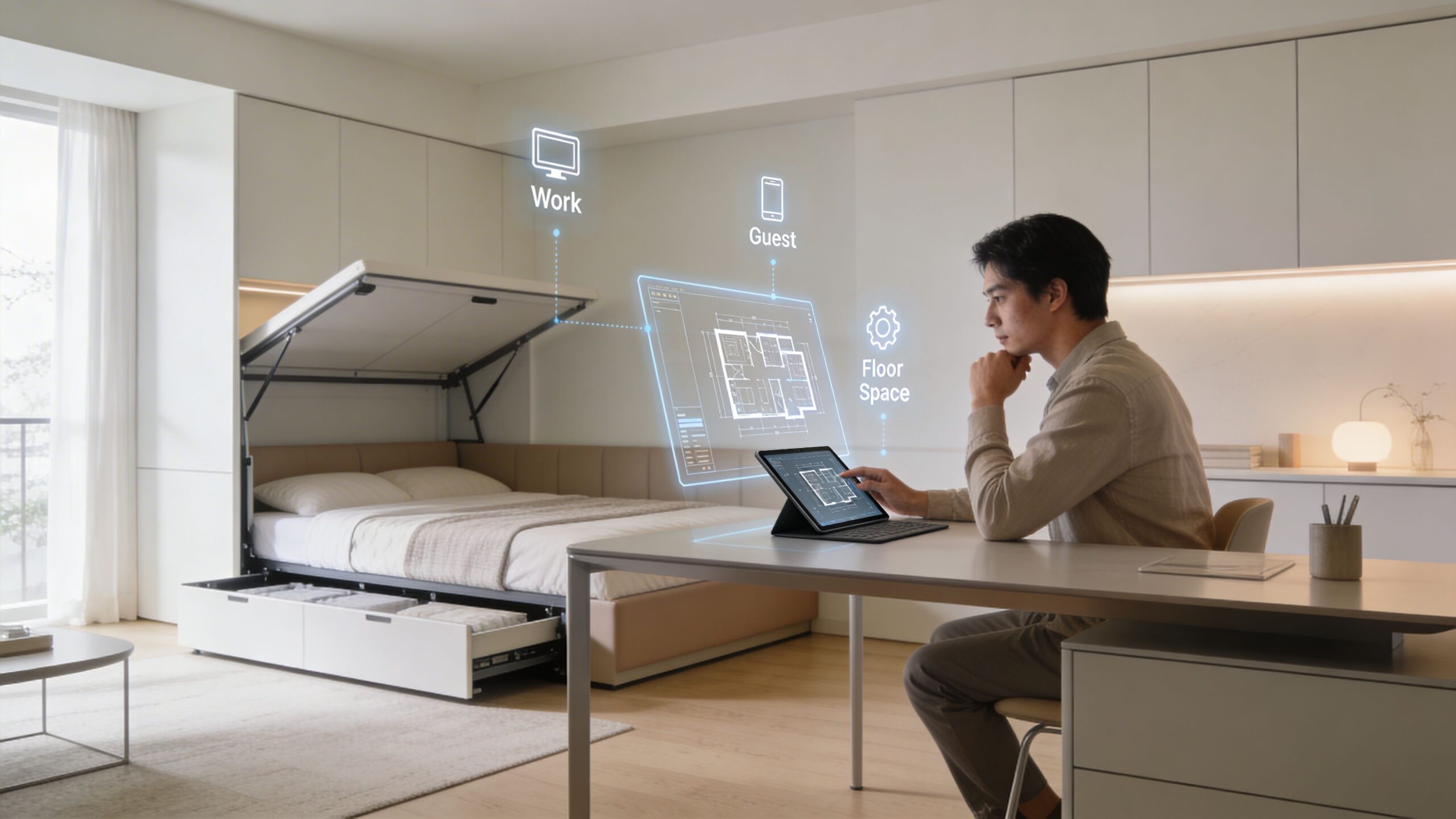
Three questions decide the right combo: how often you work there, how often people sleep there, and how much usable floor space remains once the door swings, the closet opens, and the radiator gets respected.
- If you work there daily, build a real office first and hide the bed.
- If guests stay often, keep sleeping access simple and reduce office bulk.
- If the room is tight, avoid furniture that needs a full reshuffle to open.
Measure the room the way it will actually be used
Don’t measure just wall to wall — measure the room in motion.
- Door swing: a bed or desk that blocks entry will annoy you every day.
- Closet access: if guests can’t open the closet, that storage doesn’t count.
- Chair pullback: desks need room behind the chair, not just desk width.
- Conversion path: a sleeper that hits a rug, desk, or side table is a bad fit.
A simple decision matrix
| Your reality | Best direction |
|---|---|
| Work from home most days, guests occasional | Murphy bed or wall bed with desk |
| Work part-time from home, guests now and then | Sofa bed or futon with a proper desk |
| Want a lounge feel, usually host one person | Daybed |
| Need privacy inside a studio or open room | Add zoning with room dividers |
That last row matters more than it looks. Sometimes the problem isn’t fitting the furniture — it’s making the room feel like two separate modes. A divider, shelving screen, or even a visual break between desk and sleep zone makes the setup feel intentional instead of improvised.
If you can’t convert the room in one short sequence, the setup is wrong — you’ll stop doing it properly.
Murphy Bed vs. Sofa Bed vs. Daybed
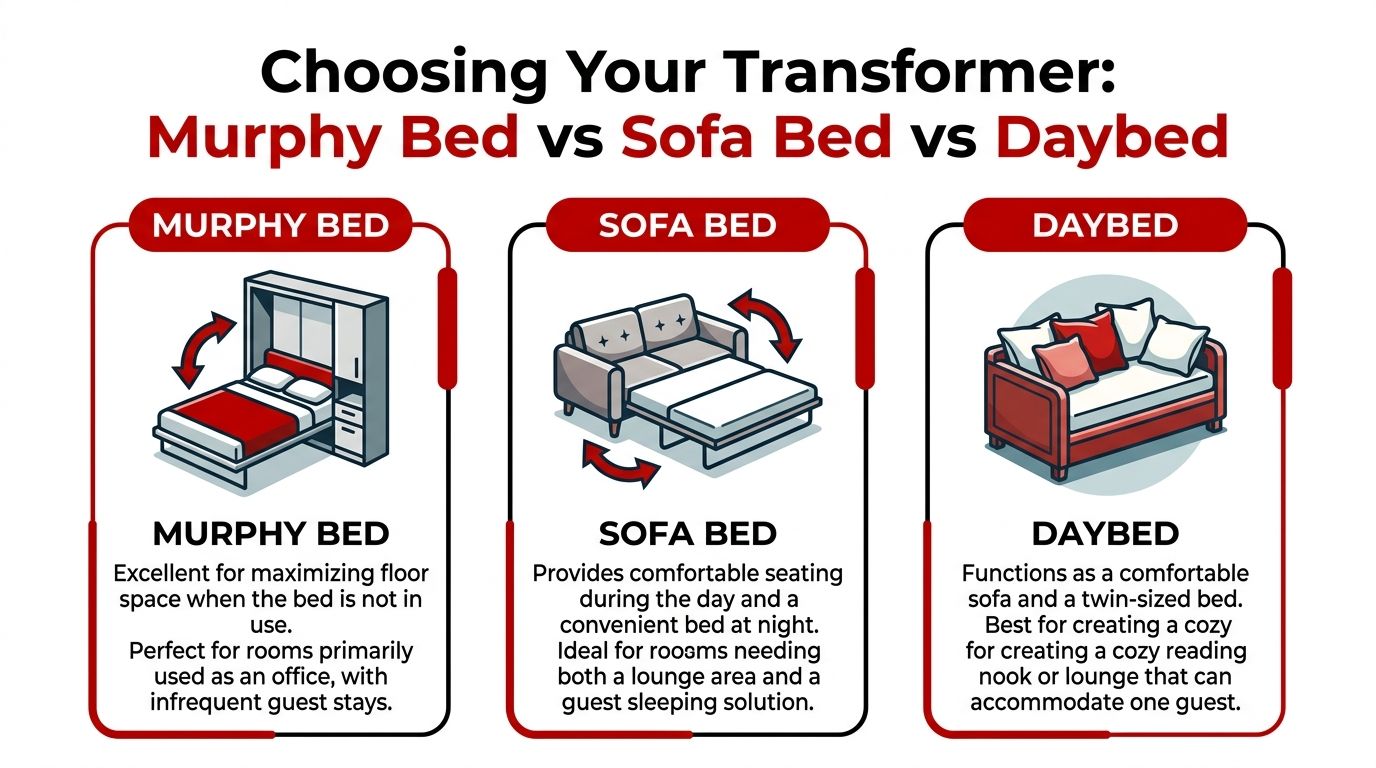
This is the primary buying decision — not “what looks nice online” but what you can live with for the next few years.
Murphy bed: the serious work-from-home setup
If office function comes first, this is the strongest answer. A Murphy bed gives the room back to you during the day, which matters when the second bedroom is doing real work duty or a studio needs open floor area. When comparing models, check the manufacturer’s specs directly for weight capacity, conversion time, and the walkway clearance needed once the bed is open — these vary enough between models that a general figure isn’t useful for planning your specific room.
Best for: daily remote workers, smaller rooms where floor area matters, occasional hosts who still want a real guest bed, buyers willing to pay more upfront for the cleanest solution.
Trade-offs: higher cost than a futon or basic sofa bed, installation requirements, wall and room dimensions need to cooperate.
If hours of calls happen in this room every week, a permanent bed isn’t as harmless as it feels — it steals visual space, floor space, and mental separation. Browse wall beds to compare options.
Sofa bed or futon: flexibility and budget control
This is the better answer when the room needs to stay social, casual, or affordable. A good sofa bed gives daytime seating and nighttime sleeping without the room feeling like a permanent bedroom — especially useful when the “office” is just a laptop, a compact desk, and a chair that pulls double duty.
Quality varies enormously in this category. What matters most:
- Mechanism smoothness
- Mattress thickness
- Seat comfort in daily use
- How much space the bed needs when open
A futon or sofa bed wins on value and versatility. It loses if you expect it to feel invisible as seating and as comfortable as a full bedroom mattress every night — some models do a genuinely good job at both, but cheap ones compromise on one or the other. Buy up in quality here rather than down; a bad sleeper is where guest comfort goes to die.
Best for: part-time remote workers, rooms that need to feel like a den first, budget-conscious shoppers, renters who may move and want less installation commitment.
Daybed: the middle ground
The daybed works when you want an always-available lounge piece that can also host a guest without a full conversion ritual — a sofa, reading bench, or nap spot by day, a bed at night. It’s the least visually disruptive option and works well for hosting one person more often than couples.
Best for: one frequent overnight guest, rooms that need seating but not a full pull-out, buyers who dislike conversion mechanisms, narrow rooms where a twin profile makes sense.
Trade-offs: better for solo sleepers than couples, doesn’t clear floor space the way a Murphy bed does, can read as juvenile if styled poorly — proper bolster and back pillows keep it reading as seating rather than a bed shoved against a wall.
Which solution fits your space
| Solution | Primary Use | Footprint Day/Night | Typical Budget | Best For |
|---|---|---|---|---|
| Murphy bed with desk | Office first | Small by day, larger only when open | Premium | Daily WFH, tiny second bedrooms, clean look |
| Sofa bed or futon | Flexible mixed use | Medium by day, expands at night | Budget to mid-range | Renters, part-time WFH, occasional guests |
| Daybed | Lounge plus single sleep | Consistent footprint | Mid-range | One guest, reading-room feel, simpler setup |
Working from home constantly, guests a few times a year → Murphy bed. Need to sit, work a little, and host a friend now and then → sofa bed or futon. Want the room to feel calm and always usable, hosting one person at a time → daybed. Match the mechanism to how the room is actually used, not an idealized version of it.
Arranging the Room for Flow and Function
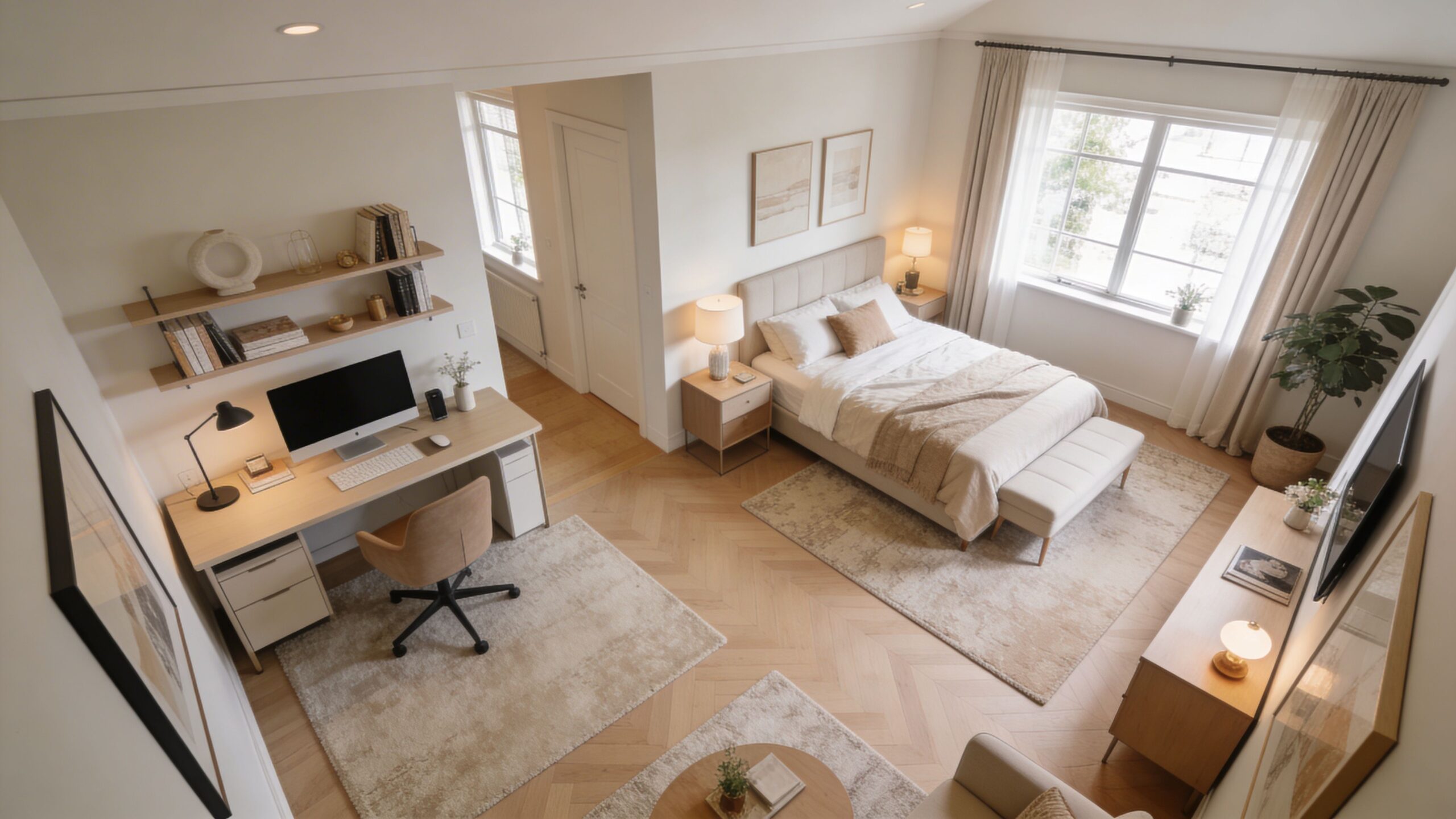
A good layout makes the room feel disciplined. A bad one makes every conversion annoying. The better question isn’t whether the furniture fits — it’s whether the room still works once the furniture changes shape.
Put the biggest moving piece on the easiest wall
The convertible bed gets placed first, always — somewhere it can open without fighting the desk, chair, or door. Place the desk second, where light helps rather than glares, and don’t force it into whatever’s left if that spot blocks conversion.
- Keep the center clearer than feels necessary. Open middle space makes the room read larger.
- Use the longest uninterrupted wall for the transformer. It gives the mechanism room to work.
- Push storage vertical. Shelving beats extra case goods in a tight room.
- Limit small furniture pieces. Too many little tables create clutter fast.
Build zones without pretending you have extra rooms
You don’t need to fake a full office and a full guest suite — just enough separation that each mode feels intentional: a desk lamp and task chair on one side, bedding and a soft throw on the other, a rug under the desk, a floor lamp near the sleep zone, concealed bins for chargers and paperwork.
The room shouldn’t look like an office with a bed problem. It should look like a room with two deliberate settings.
Test the room in both modes before committing
Dimensions can look right on paper and feel wrong in person — arm height that reads as bulky, a mechanism that feels awkward, a mattress thinner than expected. This is worth testing in person, especially where every inch counts.
Sit on it. Open it. Walk around it. Lie down on it. If you can’t test the scale and the conversion in real life, you’re guessing.
A compact chair, a narrow bookcase, and properly sized office furniture can save the layout as much as the sleeper itself.
Prioritizing Ergonomics Without the Bulk
One of the biggest mistakes I see people make is sacrificing ergonomics to save space. You might think that stylish dining chair will do the job, but after a few eight-hour days, your back and shoulders will tell you a different story.
The good news? You don’t need a massive, corporate-style chair to get proper support.
Focus on finding a chair that offers key adjustments without a huge footprint. Look for essentials like adjustable height, lumbar support, and armrests that can flip up and out of the way. This allows the chair to tuck neatly under the desk when you’re done, instantly freeing up precious floor space. Many modern ergonomic chairs also feature breathable mesh backs, which provide excellent support while having a lighter visual profile, making a small room feel less crowded.
To explore a range of options that strike the right balance, you can check out this guide on office furniture, including desks and chairs, to find a solution that fits your specific needs and space.
From Office Hours to Guest-Ready in Under 10 Minutes
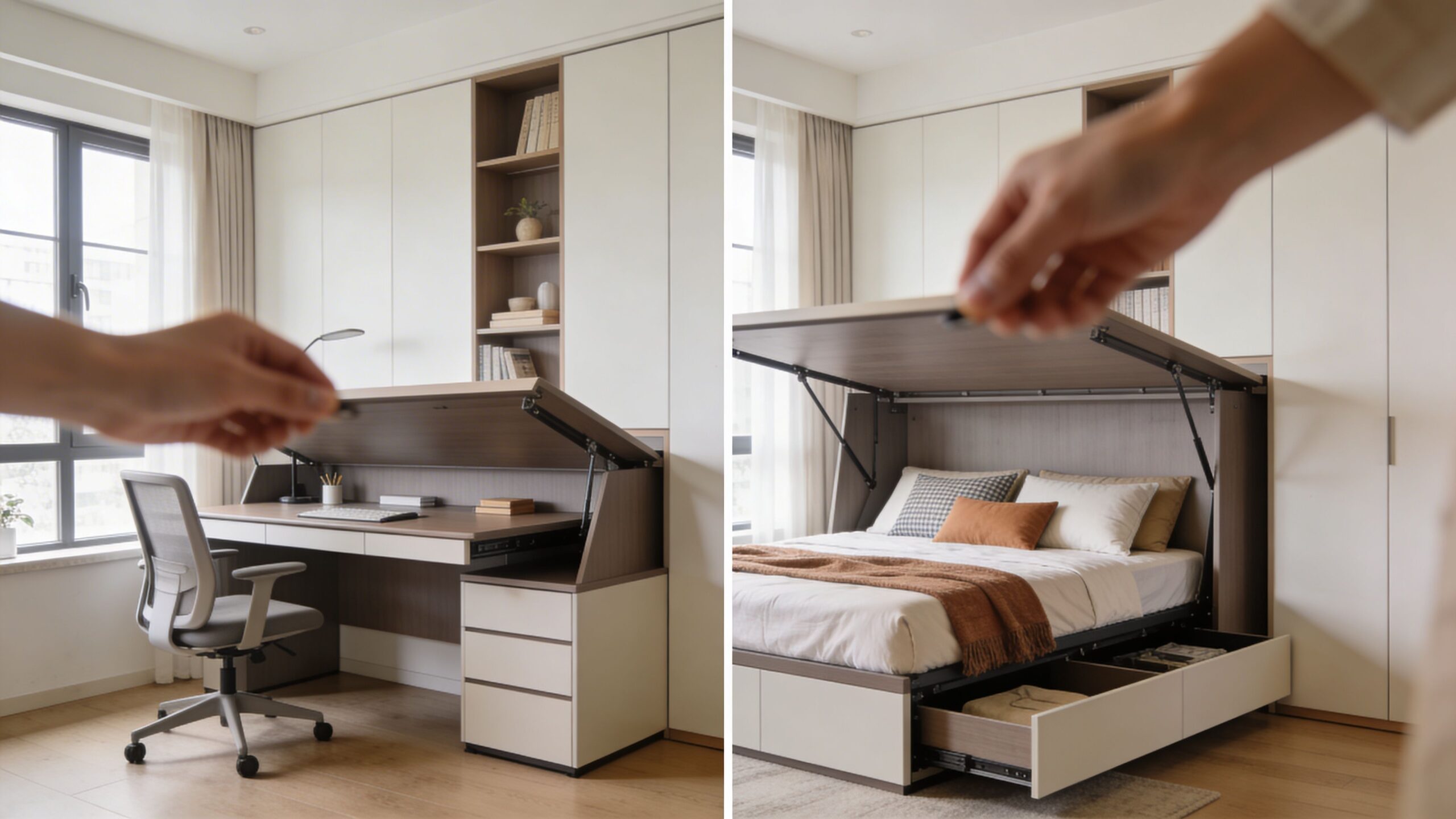
A home office guest bedroom combo fails when conversion feels like a chore. What it needs is a repeatable routine, not a burst of effort every time someone texts “we’re nearby, can we stay over?”
Keep a guest-ready kit
Store one bin, basket, or lidded ottoman with the basics: clean sheets sized to the actual sleep surface, a blanket and extra pillow within easy reach, a towel set so guests don’t have to ask, a charging cable, and a small toiletries pouch. This is about speed, not hospitality theater — if everything’s in one place, the room changes fast.
A workday teardown routine
- Shut down tech: laptop, dock, chargers.
- Hide paper clutter: drawer, cabinet, or storage box.
- Move the chair: off the conversion path.
- Open the bed or make the daybed: no improvising.
- Set one landing spot for the guest: a cleared shelf, bench, or tabletop.
Decor that survives both modes
Choose pieces that look right in office mode and guest mode alike: neutral bedding, one or two throws, a lamp with warm light, a mirror, simple blackout window treatment, storage that hides work gear. Avoid overtly office-looking accessories if the room hosts often — a giant whiteboard and exposed cable nest tell a guest they’re sleeping in your work spillover zone.
For the sleep side, mattress quality is where comfort upgrades matter most. Compare convertible sofa beds for better everyday seating and stronger guest comfort than entry-level models.
The fastest room conversions happen when every item has a home before the guest arrives. You shouldn’t be inventing storage at the last minute.
Keeping the Work Zone Organized
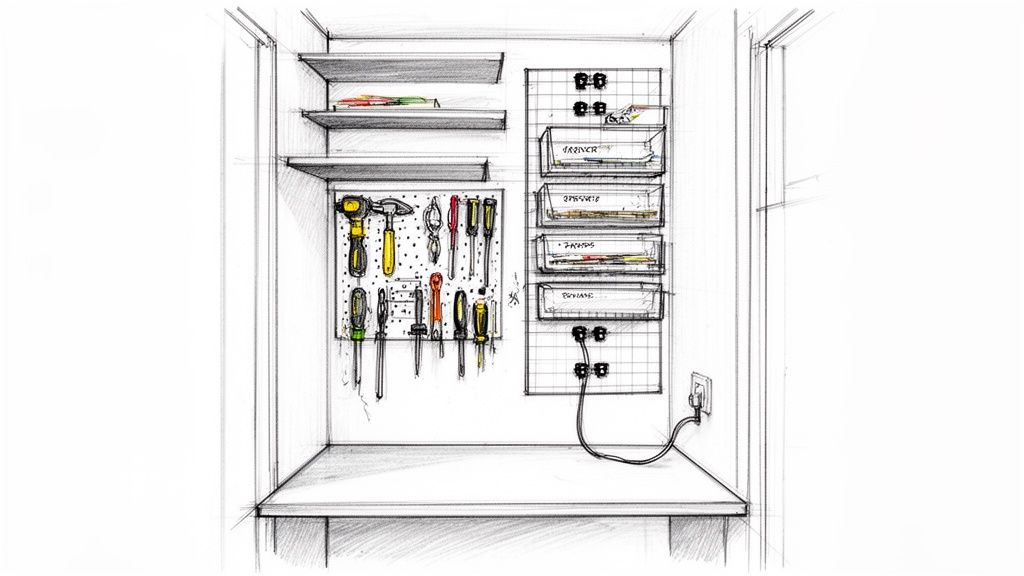
When your floor plan is tight, the golden rule is simple: if you can’t build out, you have to build up. Learning to master vertical storage is probably the single most effective trick for any home office in a small space. By shifting your organization from the floor to the walls, you reclaim that precious desk surface and create a workspace that finally feels open and ready for deep focus.
Think of your walls as a blank canvas just waiting to become a high-efficiency storage system. This whole approach is about keeping your essential tools—from pens to paperwork—within arm’s reach but off your primary work area. The result? A clean, clutter-free desk that helps you minimize distractions and actually get things done.
Going Vertical with Smart Shelving and Grids
The secret to great vertical storage is picking solutions that fit your workflow and your style. Long gone are the days when a clunky, oversized bookshelf was your only option. Today’s solutions are sleek, modular, and incredibly versatile.
Consider these powerful options to get your supplies off the desk and onto the walls:
- Floating Shelves: These minimalist shelves are a total game-changer. They give you a clean look without the visual clutter of brackets, making them perfect for displaying a few inspiring items alongside necessary supplies in small bins or magazine files.
- Wall-Mounted Grids & Pegboards: For the ultimate in customizable storage, you really can’t beat a wall grid or a classic pegboard. You can endlessly rearrange small shelves, cups, and hooks to hold everything from scissors and charging cables to notebooks and headphones.
- Ladder Bookcases: Leaning, ladder-style shelves provide tons of vertical storage without needing to be permanently mounted. They offer a stylish, less bulky alternative to traditional bookcases, and you can explore a variety of functional book shelves to find one that fits your space perfectly.
The real goal here is to create a system where everything has a designated home. When your stapler, sticky notes, and important files each have their own spot on the wall, you’ll spend less time searching and more time working. This simple shift can make a tiny office feel surprisingly spacious and streamlined.
Taming the Cable Spaghetti Monster
Nothing makes a small space feel more chaotic and cluttered than a tangled mess of wires. A jumble of charging cables, monitor cords, and power strips—what many of us call ‘cable spaghetti’—can instantly ruin even the most organized desk setup. Getting those cables under control is a non-negotiable step for a clean, professional-feeling workspace.
Fortunately, managing them is easier than it sounds. You can start with a high-quality power strip that has both standard outlets and USB ports to consolidate your charging station. From there, a few simple, DIY-friendly solutions can hide the rest.
- Adhesive Cable Clips: These small, peel-and-stick clips are perfect for routing individual cords along the back of your desk or down a table leg.
- Fabric Cable Sleeves: A zippered neoprene sleeve can bundle multiple cords running from your computer into a single, neat tube.
- Under-Desk Cable Trays: A small metal basket or tray mounted to the underside of your desk is a fantastic way to hold your power strip and all the excess cable length completely out of sight.
The rise of hybrid work has made these clever solutions more important than ever, especially in big cities.
Lighting a Dual-Purpose Room
A great home office in a small space is so much more than a desk and chair—it’s an environment that actually helps you focus and think clearly. Two of the most overlooked elements are lighting and ambiance. These are the invisible forces that can either drain your energy or supercharge your productivity.
Getting them right is what turns a cramped corner into a place you genuinely want to work. The goal is to make the space feel intentional and motivating, not like a temporary setup you just squeezed in somewhere.
Harnessing the Power of Light
Good lighting is a non-negotiable for productivity. It can completely change your mood and energy levels. So many people make the mistake of relying on a single, harsh overhead light, which is a fast track to eye strain and headaches after a few hours at the computer.
The secret is to think in layers. A layered lighting strategy combines three different types of light that work together to create a comfortable, functional space. If you lack natural lighting overhead, integrating floor and table lamps is a great way to build these layers:
- Ambient Light: This is your room’s overall illumination, usually from a ceiling fixture or natural light from a window. It sets the baseline brightness.
- Task Light: This is direct, focused light right where you need it. A slim, adjustable LED desk lamp is perfect for lighting up your keyboard and notes without creating glare on your screen.
- Accent Light: While not strictly essential in a tiny office, accent lighting can add a lot of personality. Use it to highlight a piece of art or a plant to give the space some depth.
Working with Natural Light
If you can, set up your desk to take advantage of natural light. Getting some daylight during the workday can help your focus and may even help you sleep better at night. The sweet spot is placing your desk so the window is to your side.
Why not right in front of it? Facing a window directly creates a strong backlight, making your screen hard to see and straining your eyes. If the window is directly behind you, you’ll get a distracting glare on your monitor. A side-on position gives you all the benefits without the drawbacks.
Pro Tip: If your layout is fixed and you can’t avoid screen glare, don’t worry. A good anti-glare screen filter combined with some light-filtering blinds gives you total control, keeping your workspace comfortable all day long.
Crafting an Inspiring Ambiance
The look and feel of your office have a massive impact on your mindset. A cluttered, bland space feels draining, but a well-curated one can spark creativity and keep you motivated. This is where you get to play with color, texture, and personal touches.
Even if you can’t paint, you can bring in colors that help you focus. Blues are known to have a calming effect, while greens are great for creativity. You don’t need much—a new mousepad, a pen holder, or a small print for the wall can do the trick.
Adding a bit of greenery also makes a huge difference. A small snake plant or a succulent is low-maintenance, thrives in various light conditions, and brings a welcome touch of nature to your desk alongside your other home decor and accents.
Finally, make the space yours. A few personal items—a favorite mug, a photo of your family, an inspiring quote—can transform a sterile corner into your personal productivity haven. Just be selective. A couple of meaningful items are great; too many just create visual clutter that competes for your attention.
Common Questions About Combining a Home Office and Guest Room
How Can I Create a Boundary Between Work and Life in a Studio Apartment?
When your living room is also your office, creating separation is all about strong visual and physical cues. You’re essentially training your brain to recognize when it’s time to work and—more importantly—when it’s time to unplug.
A physical partition is one of the most effective tricks in the book. A stylish, lightweight folding screen can instantly hide your desk from view, while a tall, open-backed bookshelf divides the room without killing your natural light. This creates a real boundary that helps you mentally clock out.
Another powerful technique is to “zone” your area with specific decor.
- Use an area rug: Just placing a small rug under your desk and chair visually defines the space as a dedicated work zone.
- Implement task lighting: A dedicated desk lamp that you only switch on during work hours acts as a powerful psychological trigger. When the lamp goes off, the “office” is officially closed.
The ultimate solution for a studio is often transformable furniture. A wall bed that conceals a full desk or a sleek cabinet that hides your entire setup allows your space to completely transition back into a calming home environment at the end of the day.
My Apartment Has Terrible Lighting. How Can I Brighten My Small Office?
Working in a poorly lit space is a huge productivity killer. It leads to eye strain, fatigue, and just a general lack of motivation. The good news is you don’t need a major electrical overhaul to fix it. A few strategic moves can make a dark corner feel bright and energizing.
First, make the most of whatever natural light you have. Hang a large mirror on the wall opposite your main window. This simple trick bounces light all around the room, instantly making the whole space feel bigger and more open.
Second, think in layers instead of relying on a single overhead fixture.
- Start with ambient light: This is your room’s main light source.
- Add focused task light: An adjustable LED desk lamp is non-negotiable for lighting up your work surface without causing glare.
- Consider accent light: A slim floor lamp tucked into a corner can add a warm glow and get rid of dark shadows.
When you’re buying light bulbs, pay attention to the color temperature. Look for bulbs that mimic natural daylight, which is typically around 5000K. This crisp, cool light is known to boost focus and reduce eye fatigue. Finally, stick to a light color palette on the walls and in your decor. Whites, soft grays, and light pastels will reflect light rather than absorb it, making your small office feel much bigger and brighter.
Choosing Your Hybrid Setup
A good home office guest bedroom combo comes down to one clear decision: does the room serve work or guests more often, then match the furniture to that reality. Murphy bed if work dominates. Sofa bed or futon if flexibility and budget matter most. Daybed for a steady middle ground.
Setup quality matters as much as the furniture choice — a well-built piece installed poorly, or a mattress that doesn’t match how often the room converts, undermines the whole plan regardless of the frame’s features.
This is furniture worth testing before buying. Visit a Futonland showroom in the Upper West Side, Greenpoint, or Newark to open a wall bed, sit on a sofa bed, check mattress feel, and see how a daybed’s scale works in person — the fastest way to stop guessing and find the piece that fits your room and your routine.