
The Ultimate Guide to Tri Fold Futons
Tri-fold futons are one of the most versatile and space-savvy pieces of furniture you can own, making them perfect for apartments, guest rooms, and any multi-use area. Unlike a traditional sofa or even a bi-fold futon, their unique three-part design lets them act as a compact loveseat, a relaxing lounger, and a comfortable bed. It’s a smart choice for modern, flexible living.
Why Tri-Fold Futons Are the Smart Choice for Modern Living
In today’s world, our living spaces have to work harder than ever. A room might be an office by day, a living room by evening, and a guest room on the weekends. This is where tri-fold futons really shine. They offer a practical and stylish answer to the challenges of smaller, more adaptable homes, engineered to maximize every square inch without sacrificing comfort.
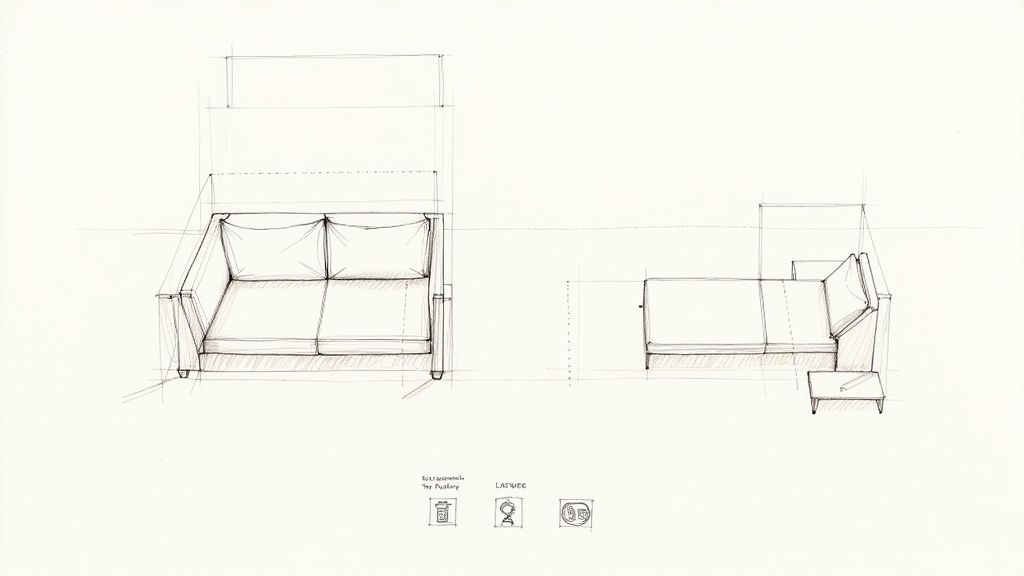
It’s no surprise that the demand for this kind of furniture is growing. As more people move to cities and need multi-functional items, the global folding furniture market—which includes futons—is booming. It’s currently valued at around USD 10.76 billion and is expected to hit USD 19.63 billion by 2032. This trend makes one thing clear: people are looking for smarter, space-saving solutions.
The Ingenious Three-Part Design
So, what really sets a tri-fold futon apart from its bi-fold cousin? It’s all in the fold. A bi-fold futon simply folds in half, like a book. A tri-fold design, on the other hand, folds into three sections—think of it like folding a letter to fit into an envelope.
This distinction is the key to its incredible versatility. Those three sections allow it to transform from an upright, compact loveseat into a partially extended lounger (perfect for movie night) and finally into a fully flat bed. This clever engineering gives you more function in a smaller footprint, a huge advantage for anyone with limited space. It’s an essential piece to consider when planning your living room furniture layout.
The core benefit of the tri-fold system is its ability to offer three distinct uses—seating, lounging, and sleeping—in one compact piece of furniture. It’s a complete system designed for efficiency.
Tri-Fold Futon At a Glance
To see their value in a nutshell, here’s a quick breakdown of what makes tri-fold futons such a great choice for so many homes.
| Feature | Primary Benefit |
|---|---|
| Space Efficiency | Its compact, loveseat-style sofa form takes up minimal floor space, perfect for small apartments, dorms, or home offices. |
| Versatility | The ability to convert into three positions (sofa, lounger, bed) makes it incredibly adaptable for all kinds of daily activities. |
| Real Comfort | Unlike many pull-out couches with flimsy mattresses, it uses a real futon mattress, offering consistent support for sitting and sleeping. |
At the end of the day, a tri-fold futon is more than just another piece of convertible furniture. It’s a strategic solution for anyone looking to get the most out of their living area without compromise. It offers a practical, comfortable, and stylish way to make your home work for you, no matter what you need.
How a Tri-Fold Futon Actually Works
At first glance, a tri-fold futon looks like a stylish, compact loveseat, but its real magic is in the clever engineering. Figuring out how it transforms is surprisingly simple. Think of it like folding a letter into thirds to slip into an envelope—it’s just a process of creating three distinct sections that can lock into different positions. This is what lets it be a sofa, a lounger, and a bed, all in one.
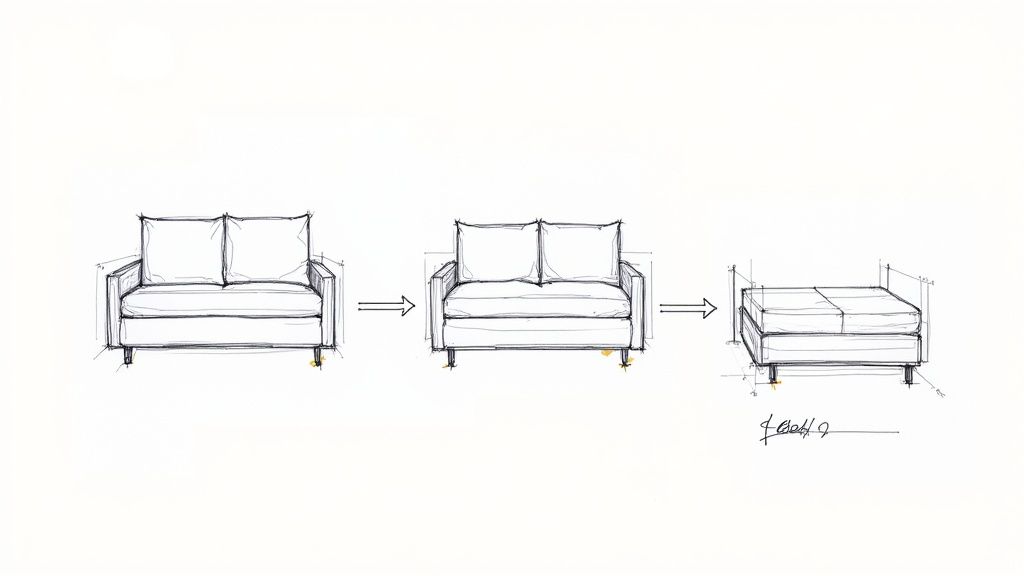
This whole transformation is powered by the futon frame, a system of moving parts, hinges, and secure locking mechanisms. When you’re ready to change its shape, you just disengage the locks, shift the sections, and click everything back into place. These locks are critical; they provide the stability needed to make sure the futon is safe and sturdy, whether you’re sitting up or lying flat.
From Sofa to Lounger: The First Fold
The first step in transforming your tri-fold is going from sofa to lounger. This initial move is usually just a simple pull or lift on the front of the seat deck. The mechanism allows the seat section to slide forward and angle down, creating a reclined position that’s perfect for reading or watching a movie.
This “lounger” mode is a unique feature that really sets tri-folds apart from other convertible furniture. The backrest stays upright, but the seat extends to support your legs. It’s that comfortable sweet spot between a sofa and a bed, giving you more room to relax without taking up the full space of a bed.
From Lounger to Bed: The Second Fold
To complete the transformation into a bed, you just make the second fold. From the lounger position, simply lower the backrest section until it’s completely flat, lining up with the other two parts of the futon. This action creates a single, continuous surface for sleeping.
The frame’s engineering ensures that each section lines up perfectly, supported by legs that lock securely into place. This is where the quality of the hardware really shows—a well-made frame will operate smoothly and lock firmly, giving you a stable and comfortable bed for a good night’s sleep.
A key advantage of a tri-fold’s design is how it unfolds. Instead of extending backward toward the wall like a traditional bi-fold futon, it opens forward into the room. This makes it an excellent choice for placing against a wall with windows, shelves, or artwork.
Two Core Designs: The A-Frame and Loveseat Extender
While the basic mechanics are similar, tri-fold futons generally come in two main styles that affect how they look and function in a room.
- The Classic “A-Frame” Style: This design features visible wooden or metal arms that form a triangular “A” shape on the sides. The frame itself is often a prominent design feature, contributing to a classic, sturdy aesthetic. Models like the Tokyo and Osaka Tri-Fold Futon Frames are great examples of this timeless style.
- The Loveseat Extender Style: This modern design hides most of the mechanism beneath the mattress and often features upholstered arms, looking more like a conventional loveseat. The transformation is just as simple, but the focus is on a sleeker, more contemporary appearance.
Understanding these mechanics not only builds confidence in using the furniture but also helps you appreciate the thoughtful design that makes tri-fold futons so incredibly practical. The variety of available styles means you can explore different futon frames to find the perfect mechanical and aesthetic match for your home.
Choosing the Best Tri Fold Futon Frame
The frame is the backbone of your tri-fold futon. Think of it like the foundation of a house—it doesn’t just define the look, but also its strength and how long it’ll last. Getting this part right is crucial, because the material, build quality, and design all play a huge role in how your futon holds up day-to-day.
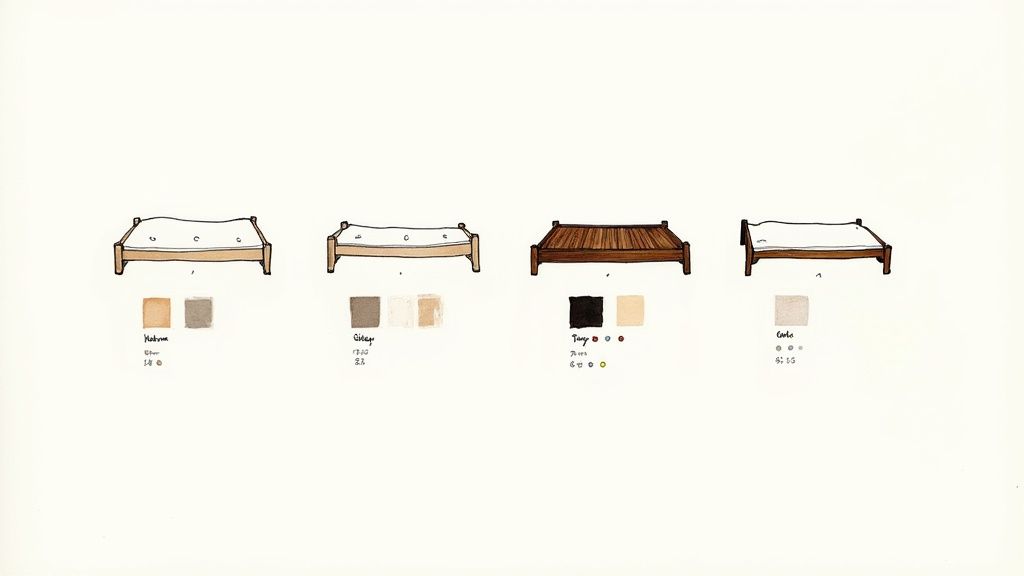
When it comes to materials for tri fold futons, you really can’t go wrong with solid hardwood. It’s the gold standard for a reason, offering that perfect sweet spot of durability and timeless style. Woods like beechwood and mahogany are especially popular, and for good reason—each brings something unique to the table.
Premium Materials for Lasting Durability
If top-tier quality and strength are your priorities, premium quality beechwood is an exceptional choice. It’s known for being incredibly hard, with a straight grain and fine texture that resists wear and tear like a champ. This makes it perfect for furniture that gets used every single day. A beechwood frame is an investment that will stay stable and reliable for years.
A perfect example is the Hakone Twin Tri-Fold Futon Frame, which really shows off the elegance and sheer toughness of premium beechwood. It’s built to handle the constant conversion from sofa to bed without weakening over time.
On the other hand, Mahogany hardwood strikes a wonderful balance between affordability and classic beauty. It’s a durable hardwood with that rich, warm color that adds a touch of sophistication to any room. While it’s a bit less dense than beechwood, it still provides excellent stability and is a fantastic option for a high-quality frame that won’t break the bank. The Suki Studio Futon Tri-Fold Frame is a great model that uses affordable mahogany hardwood to deliver a sturdy, attractive, and budget-friendly solution.
Construction and Design Details Matter
Beyond the wood itself, the actual construction is vital. Pay attention to the hardware—the nuts, bolts, and locking mechanisms are what allow for smooth and secure transitions from couch to bed. A quality frame will have strong joints and a smooth, even finish that protects the wood and prevents it from snagging your mattress or bedding.
The design also makes a big difference in how the futon works. Frames like the Tokyo and Osaka Tri-Fold Futon Frames are popular for their classic A-frame style, which is both good-looking and structurally sound. Their straightforward design makes them easy to operate. The tri-fold mechanism itself is a clever bit of engineering, converting between sofa and bed in three segments to balance comfort and space efficiency, a trend also noted by market research from firms like Data Insights Market. This makes them a hit in urban apartments and multi-purpose rooms.
A well-constructed frame is about more than just good looks; it’s about the safety and ease of use you’ll experience every day. A solid frame with quality hardware operates smoothly and locks securely, giving you peace of mind.
Most tri-fold frames are designed to fit a standard twin-size futon mattress, usually between 6 to 8 inches thick. This thickness is key to allowing the mattress to fold easily without getting damaged. However, some models are available in wider styles, such as full and queen, giving you more options for larger spaces or if you just need more room to sleep.
Comparing Tri Fold Futon Frame Materials
Choosing a frame material can feel overwhelming, so we’ve put together a quick comparison to help you see how these popular options stack up against each other. This table breaks down the key benefits of each wood, what situations they’re best for, and points you to a real-world example.
| Material | Key Benefits | Best For | Example Model |
|---|---|---|---|
| Beechwood | Extremely hard and durable; resists scratches and wear; has a fine, elegant grain. | High-traffic areas, daily use as a primary bed, or anyone prioritizing maximum longevity. | Hakone Frame |
| Mahogany | Strong and attractive; offers a classic, rich appearance at a more accessible price point. | Guest rooms, home offices, or anyone looking for a great balance of quality and value. | Suki Studio Frame |
| Other Hardwoods | Provides a variety of styles and finishes to match different decor preferences. | Those seeking specific design aesthetics, like the classic look of the Tokyo or Osaka frames. | Tokyo & Osaka |
Ultimately, picking the best frame comes down to matching the material and build quality to your budget, your style, and how you plan to use it. Whether you go for the premium durability of beechwood or the classic affordability of mahogany, a solid hardwood frame is a smart choice that will serve you well for years to come.
Finding The Perfect Mattress For Your Futon
If the frame is the futon’s backbone, the mattress is its heart. A great mattress is what turns this clever piece of furniture from a simple sofa into a genuinely comfortable bed, ensuring you or your guests get a fantastic night’s sleep. Picking the right one means finding the perfect balance of material, thickness, and firmness that works with the frame’s folding action and your personal comfort.
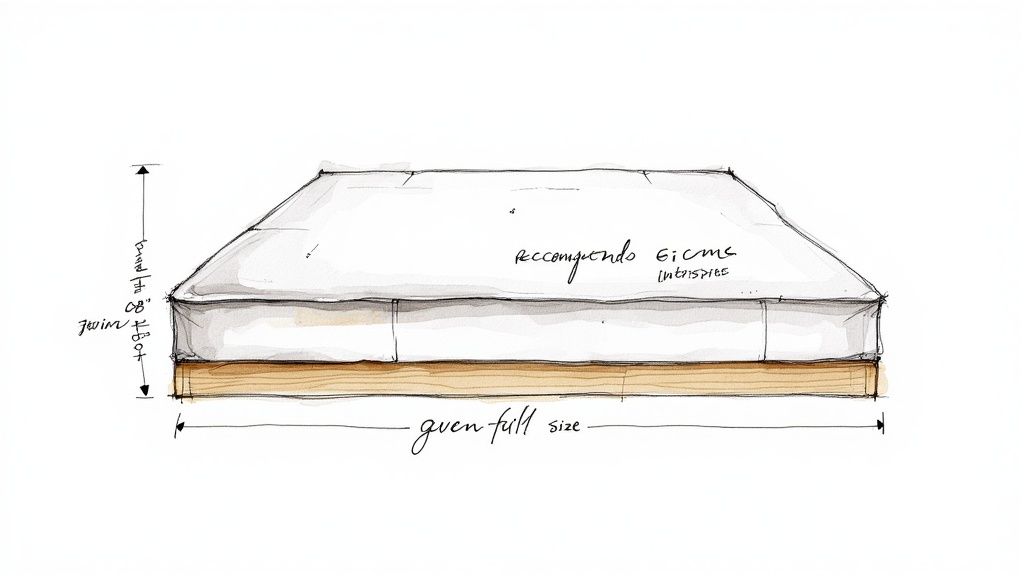
Unlike a regular bed mattress that stays flat, a futon mattress is built for flexibility. It has to bend and fold over and over without losing its shape or support. This single requirement is a huge factor in deciding what kind of mattress will work for a tri fold futon.
The Sweet Spot for Thickness
For any tri-fold futon, the magic number for mattress thickness is between 6 to 8 inches. This range gives you plenty of cushion for a comfy sleep, but it’s still flexible enough to fold properly without putting a strain on the mattress or the frame.
Anything under 6 inches, and you’ll likely feel the frame’s slats underneath you—not exactly a recipe for restful sleep. On the flip side, a mattress over 8 inches thick is often too bulky. It will fight you when you try to fold it, which can damage both the mattress and the frame over time.
Sticking to the 6-8 inch thickness recommendation is crucial for keeping your tri-fold futon working smoothly for years. It ensures an easy switch from sofa to bed and protects your investment.
Exploring Mattress Materials And Fillings
What’s inside your futon mattress determines everything—from how firm it feels to how well it breathes. Modern futon mattresses have come a long way from just cotton batting; now you’ve got options, each offering a different experience.
- Cotton and Foam Blends: This is the classic, reliable choice that gives you a medium-firm feel. The cotton keeps things breathable, and the foam layers add that spring-back support that helps the mattress keep its shape.
- Memory Foam: If you love a mattress that molds to your body, memory foam is a fantastic option. It’s a champ at relieving pressure points, making it incredibly comfortable for both sitting and sleeping.
- Innerspring: Just like a traditional mattress, these have a core of steel coils packed in with layers of foam and fiber. They offer that familiar bouncy feel and provide really solid support, which makes them great for a futon that gets used every day.
It really helps to understand the different materials. Your final choice really boils down to how you’ll use it. If it’s for occasional guests, a foam blend might be perfect. If it’s your primary bed, you’ll want the durable support of an innerspring or a high-density foam. For a wider selection, you can explore the various futon mattresses we offer to find the perfect match.
Matching Mattress Size To Your Frame
The last piece of the puzzle is getting the size right. The vast majority of tri-fold frames—including popular models like the Hakone, Suki Studio, Tokyo, and Osaka—are built for a standard twin size mattress. It’s this compact footprint that makes them such incredible space-savers.
But of course, there are always exceptions. Some frames come in wider styles, opening up full and queen size options. The golden rule is to always double-check your frame’s specific dimensions before you buy a mattress. A perfect fit means the mattress will sit snugly on the frame with no overhang, giving you a stable and secure surface whether you’re sitting or sleeping.
Tri Fold Futons Versus Other Convertible Furniture
Choosing the right convertible furniture can feel like a puzzle, especially when every square foot in your home counts. To really get it right, it helps to see how tri-fold futons stack up against other popular options, like their bi-fold cousins and traditional sofa beds.
Each has its own strengths, but the tri-fold design brings a unique combination of features to the table that often makes it the smartest choice for modern living.
The need for this kind of versatility is obvious. As living spaces get smaller, multifunctional pieces aren’t just a nice-to-have; they’re essential. This trend is driving huge growth in the folding furniture market, which is projected to see a 19.4% growth rate in North America between 2025 and 2032. It’s all fueled by a lifestyle that demands flexible, practical solutions.
Tri-Fold vs. Bi-Fold Futons
The most direct comparison is with the bi-fold futon. The core difference is simple: a bi-fold futon folds in half, like a book, while a tri-fold bends into three sections. That might not sound like a big deal, but it has major implications for your space.
- Space Efficiency: A bi-fold futon sits deeper, looking and feeling much like a full-size sofa. A tri-fold, on the other hand, sits upright as a compact loveseat, taking up way less floor space when you’re not using it as a bed.
- Conversion: Bi-folds usually extend backward, so you have to pull the whole frame away from the wall to open it up. Tri-folds are designed to extend forward into the room, meaning you can place them flush against a wall and never have to move them.
- Versatility: This is where the tri-fold really shines. Its three-part design unlocks an intermediate “lounger” position—a comfortable recline that bi-folds just can’t do.
Tri-Fold Futons vs. Traditional Sofa Beds
When you put a tri-fold futon next to a standard sofa bed or pull-out couch, the biggest difference is what you sleep on. A traditional sofa bed hides a thin, often flimsy mattress on a clunky metal frame deep inside its base. We’ve all felt that dreaded metal bar in our backs.
A tri-fold futon is a much simpler, smarter system. The mattress you sit on is the exact same one you sleep on. This means you get a real, high-quality futon mattress that delivers consistent comfort and support, whether you’re sitting or sleeping. There’s no flimsy, hidden mattress and definitely no uncomfortable metal bar digging into you all night. When you’re looking for a versatile piece of furniture, you can get more great tips from articles on choosing the perfect fold-out couch bed.
The biggest win for a tri-fold futon over a sofa bed is the sleeping experience. You get the comfort of a real mattress, not a thin, compromised substitute hidden inside a sofa.
Ultimately, while all these options save space, the tri-fold futon often comes out on top for anyone who prioritizes true versatility and a genuine mattress experience. It’s the superior system for anyone needing a compact loveseat, a relaxing lounger, and a genuinely comfortable bed all in one piece of furniture.
For a broader look at different styles, you might be interested in our full range of convertible sofa beds.
Still Have Questions About Tri-Fold Futons?
Even after covering all the details, you might have a few lingering questions about bringing a tri-fold futon into your home. We get it. This is the final rundown of the most common things people ask, so you can feel completely confident in your choice.
Let’s dive into the practical stuff—daily care, mattress rules, and how long you can expect your new futon to last.
How Do I Clean and Maintain My Tri-Fold Futon?
Good news: proper care is simple and makes a huge difference. For the frame itself, a quick dusting with a soft, dry cloth is usually all it needs. If you have a beautiful wooden frame like the premium beechwood Hakone or the hardwood Suki Studio, an occasional wipe-down with a wood-safe polish will keep it looking its best.
When it comes to the mattress, your best defense is a removable, washable cover. It’s a lifesaver against spills, dust, and everyday wear.
To keep the mattress itself in great shape:
- Rotate and Flip It: Every so often, rotate the mattress from head to toe and flip it over. This simple step prevents uneven wear and keeps it from getting compressed in one spot.
- Spot Clean Spills: Accidents happen. If you spill something, blot the area right away with a clean cloth and a bit of mild detergent. Just be sure not to soak the mattress.
- Air It Out: From time to time, take the cover off and let the mattress breathe for a few hours. This helps keep it fresh.
Can I Use Any Mattress On a Tri-Fold Futon Frame?
This is a really important one: no, you absolutely cannot use a standard bed mattress on a tri-fold frame. A regular mattress is just too stiff and thick. It wasn’t built to handle the sharp bends of a three-part folding mechanism. Trying to force it will wreck both the mattress and the frame.
You have to use a mattress specifically designed for futons, which are engineered for flexibility.
Always stick to a futon mattress with a recommended thickness between 6 and 8 inches. This is the sweet spot that ensures it can fold easily without putting extra stress on the moving parts of classic models like the Tokyo and Osaka.
Are Tri-Fold Futons Comfortable Enough for Everyday Sleeping?
Absolutely! The comfort of a tri-fold futon as your main bed comes down almost entirely to the quality of the mattress you pick. A high-quality innerspring or dense foam futon mattress can give you the same fantastic support and comfort you’d expect from a traditional bed.
The trick is to choose a mattress that’s built for primary use, not just for the occasional guest. These models are made with more robust support systems and premium materials that stand up to nightly use without losing their shape or comfort.
What Is The Typical Lifespan of a Tri-Fold Futon?
Think of your futon’s lifespan as a story of two parts: the frame and the mattress. A well-built, solid hardwood frame is a true long-term investment. With just basic care, it can easily last for a decade or more. The inherent strength of materials like beechwood ensures the structure stays solid through thousands of folds and unfolds.
The mattress, on the other hand, behaves more like a traditional mattress. You can typically expect a lifespan of 5 to 10 years, depending on its quality and how often it’s used. By following the maintenance tips we covered, you can push it toward the longer end of that range and enjoy years of comfort.
At Futonland, we’re here to help you find the perfect space-saving furniture to fit your life. Explore our complete collection of functional and stylish solutions for every room in your home.