
Your Guide To Finding The Best Waterproof Futon Covers
Think of a waterproof futon cover as the best insurance policy you can get for your most versatile piece of furniture. It’s a specially designed shield meant to protect your futon mattress from all of life’s little accidents—spills, stains, you name it—making sure it stays clean and lasts for years.
The Essential Investment for Modern Futon Living
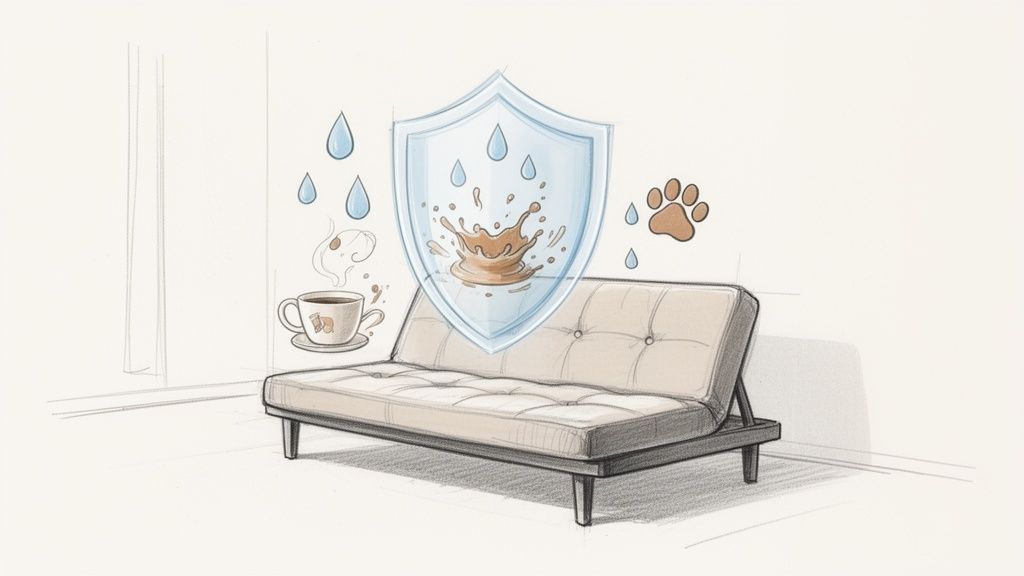
A futon isn’t just another piece of furniture; it’s the hardworking centerpiece of so many homes. It’s the sofa for movie nights, the bed for overnight guests, and the go-to spot for just lounging around. With that much daily action, spills and messes aren’t a matter of if, but when.
This is exactly where a waterproof futon cover becomes a must-have. A standard decorative slipcover might change up the look, but a waterproof cover adds a crucial, invisible barrier. It’s what stops that spilled coffee, juice, or a pet accident from sinking deep into the mattress fibers and causing permanent stains and odors.
Why Every Futon Owner Needs One
Honestly, investing in a quality waterproof cover is one of the smartest moves you can make for your furniture. It’s about more than just cleanliness; it’s about saving yourself time, money, and a whole lot of frustration down the road.
- Extends Mattress Lifespan: By blocking moisture, you’re stopping mold and mildew in their tracks. Those are the culprits that break down mattress materials and lead to musty smells.
- Keeps Things Hygienic: A clean, dry mattress is a big deal for a healthy home, especially if you have guests or family members with allergies.
- Makes Cleaning a Breeze: Instead of trying to deep-clean a bulky futon mattress (an impossible task), you just zip off the cover and toss it in the wash. Simple.
- Preserves Resale Value: Keeping your futon mattress in pristine condition means it will hold its value if you ever decide to sell or upgrade.
A waterproof cover transforms your futon from a delicate piece of furniture into a durable, life-proof asset. It’s the key to worry-free living, whether you’ve got kids, pets, or just enjoy a cup of coffee on the couch.
A Smart Choice for Modern Homes
Waterproof futon covers have really become a game-changer, especially for families and anyone living in a smaller space. Protective bedding is booming right now, and you can see it in the thousands of reviews praising custom waterproof options that save furniture from kids and pets. They slash laundry costs and are a true lifesaver when it comes to liquid stains.
Ultimately, adding one of these protective layers makes sure your furniture can handle the demands of a busy, modern home. By safeguarding your investment, you get to keep enjoying the versatility and comfort that make futons such a popular choice for any living space.
Understanding Waterproof Futon Cover Materials
Not all waterproof futon covers are created equal, and the material is what really separates the good from the bad. Think of it like a high-performance rain jacket—the best ones stop water from getting in but still let air circulate so you don’t feel clammy. That same principle applies to modern waterproof fabrics for furniture.
The goal is to find that perfect balance between tough-as-nails protection and everyday comfort. Some materials offer an impenetrable shield but might feel stiff or make a crinkling sound. Others give you a softer, quieter experience that you’ll barely notice is there. Knowing the difference is the key to picking a cover you’ll actually love using.
The Technology Behind The Protection
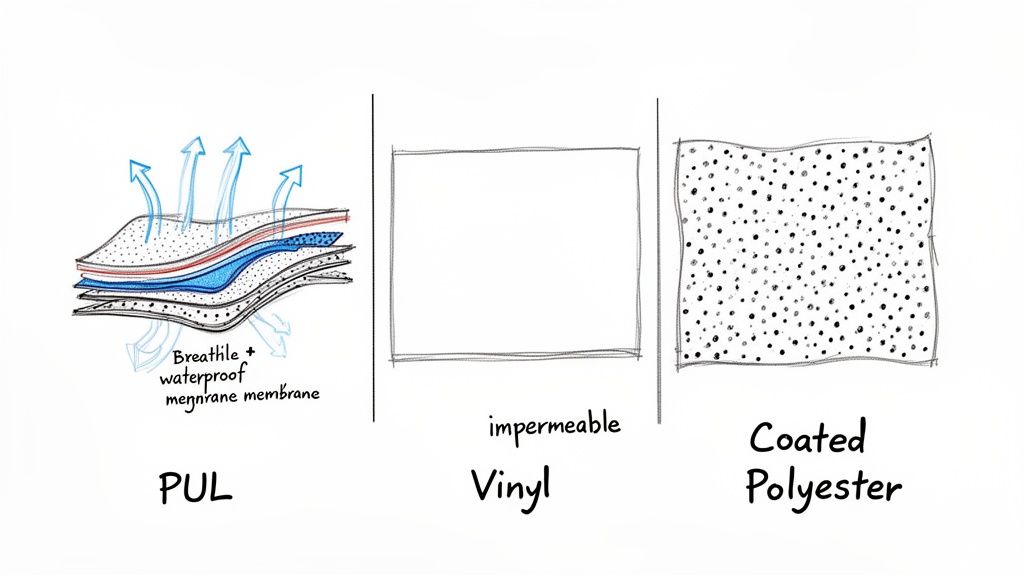
So, what’s the “waterproof” magic? It usually comes from a specialized layer or coating bonded to the fabric. This barrier is designed to be microporous, meaning it’s filled with tiny holes. These holes are just large enough to let water vapor (like body heat) escape, but way too small for liquid water molecules to sneak through.
This tech is what makes modern covers so much better than the old-school plastic sheets of the past. It keeps your futon dry without creating a hot, sweaty, or noisy surface to sit or sleep on. The result is protection that works behind the scenes without sacrificing comfort.
Common Materials And How They Compare
Let’s break down the most common materials you’ll find in waterproof futon covers. Each one brings something different to the table, making it a good fit for different needs and priorities.
Here’s a side-by-side look at the most common waterproof materials to help you choose based on breathability, durability, and feel.
Comparing Waterproof Futon Cover Materials
| Material Type | Waterproof Method | Key Benefits | Potential Downsides |
|---|---|---|---|
| PUL (Polyurethane Laminate) | A thin polyurethane film bonded to a base fabric (like polyester or cotton). | Soft, flexible, quiet, and breathable. Feels the most like regular fabric. | Can be less durable than thicker options against heavy abrasion. |
| Vinyl (PVC) | A solid, non-porous plastic layer. | 100% waterproof, extremely durable, and very easy to wipe clean. | Not breathable at all; can feel hot and plastic-like. May crinkle. |
| Coated Polyester | Polyester fabric treated with a waterproof chemical coating. | Cost-effective and durable. Performance can vary. | Breathability and feel depend heavily on the quality of the coating. |
Ultimately, the best material depends on how you plan to use your futon. For a guest room futon that only needs occasional protection, a durable coated polyester might be perfect. But for a futon that’s part of your daily life, the soft and breathable feel of PUL fabric is often the way to go.
The market for functional furniture protection is booming. Demand for effective futon covers, especially waterproof ones, is surging, with the US market tracking over 528 different products. Many top-performers use polyurethane-coated polyester to deliver a strong defense against stains while staying quiet and machine-washable.
Feeling Is Believing: Get Fabric Samples
Reading about materials is one thing, but feeling them is another. The texture, weight, and flexibility of a fabric can completely change how your futon looks and feels. A stiff, heavy material might not drape nicely, while a whisper-quiet, soft one will blend in seamlessly.
Before you commit, it’s always a great idea to see the options for yourself. You can explore a variety of textures and colors by ordering futon cover fabric sample swatches to make sure you find the perfect match for your home. It’s a simple step that helps you choose with complete confidence.
Finding the Perfect Fit and Style for Your Futon
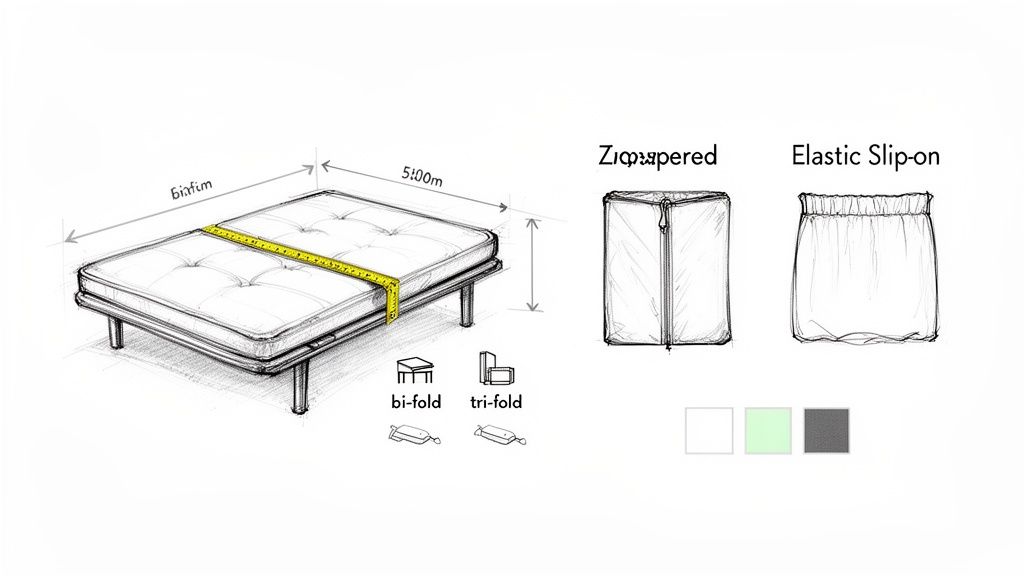
[Image demonstrating how to measure the length, width, and thickness of a bi-fold futon mattress]
A great waterproof futon cover does more than just protect your mattress—it should fit like it was made for it and tie your room together. Think of it like a perfectly tailored suit; if it’s sloppy and ill-fitting, it cheapens the look of your furniture. But when it fits just right, it elevates the entire space. Nailing that seamless look all comes down to one simple, but absolutely critical, first step: getting accurate measurements.
An improper fit doesn’t just look messy; it actually undermines the cover’s whole purpose. A cover that’s too loose will bunch up, creating an uncomfortable surface and letting spills pool in weird creases. If it’s too tight, you’re putting constant stress on the seams and zipper, which is a fast track to rips and a shorter lifespan.
How to Measure Your Futon Mattress Correctly
Before you even think about colors or fabrics, grab a tape measure. Getting the dimensions right is the single most important thing you can do to avoid the headache of a return.
First, strip off any existing covers or bedding to get a true measurement of the bare mattress. You’re looking for three key numbers: length, width, and thickness (sometimes called depth or height).
For a standard bi-fold futon, which folds once down the middle like a taco, the process is pretty simple. Just lay the mattress flat and measure from end to end for the length, and from side to side for the width. To get the thickness, just measure the side profile of the mattress from its top surface to the bottom.
A tri-fold futon needs a slightly different approach since it has two creases and folds into three sections. You’ll want to measure the length and width of each of the three sections separately, then add them up to get the total dimensions. This makes sure your cover can handle the unique folds without pulling awkwardly or bunching up.
Don’t just guess or assume based on standard bed sizes like “Full” or “Queen.” Futon mattresses often have their own unique dimensions, especially when it comes to thickness. Physically measuring your specific mattress is the only way to guarantee a perfect fit.
If you need a little more guidance, detailed diagrams and charts can make getting the right dimensions a breeze. Take a look at these comprehensive futon sizing charts to see how your measurements stack up against standard sizes.
Choosing Between Zippered and Elasticized Styles
Once you have your measurements, you can decide which style of cover fits your life best. The two main options—zippered and elasticized—each offer their own blend of protection and convenience.
A zippered encasement is like a fortress for your futon. It completely wraps around the entire mattress and zips shut, giving you true 360-degree protection. This style is the undisputed champion for households with pets, toddlers, or anyone prone to accidents, as it leaves zero part of the mattress exposed.
On the other hand, an elasticized slip-on cover works a lot like a fitted sheet on a regular bed. It stretches over the top and sides of the mattress and is held snug by a strong elastic band. The biggest win here is convenience. These covers are incredibly easy to pull off and put on, which is a lifesaver for frequent washing. They are an awesome choice for guest rooms or any situation where a quick change-out is key.
Matching Your Cover to Your Home Decor
Just because your futon cover is practical doesn’t mean it has to look that way. It can be a stylish piece that blends right in with your interior design. The right color or pattern can turn a purely functional item into a genuine decorative accent that ties the whole room together.
Here are a few ideas for matching your cover to some popular aesthetics:
- For a Minimalist or Scandinavian Look: Stick with solid, neutral colors. Think charcoal gray, soft beige, or a clean, crisp white. The goal is to keep things uncluttered and calm.
- For a Mid-Century Modern Vibe: Lean into earthy tones like olive green, burnt orange, or a rich mustard yellow. A subtle geometric pattern can also add that perfect touch of retro style.
- For a Bohemian or Eclectic Style: This is your chance to go bold. Don’t shy away from vibrant floral prints, intricate patterns, or deep jewel tones to create a space that feels cozy and full of personality.
By taking a little time to think about measurement, style, and aesthetics, you can find a waterproof futon cover that not only protects your investment but also makes your home more beautiful and comfortable. It’s the perfect blend of form and function.
How to Install and Care for Your Futon Cover
You’ve picked out the perfect waterproof futon cover—now what? Getting the most out of it comes down to two things: proper installation and smart maintenance. A perfect fit doesn’t just look better; it prevents bunching where spills could pool and cause trouble.
Likewise, cleaning it the right way is what keeps that waterproof membrane intact, making sure it protects your futon for years to come. With just a few simple tips, you can make sure your cover works exactly as it should.
Struggle-Free Installation Tips
Whether you have a zippered or elasticated cover, a smooth installation starts with getting your futon mattress ready. Trust me on this one—it’s always best to have a second person help. Futon mattresses can be floppy and awkward to handle alone.
For Zippered Encasements:
- Stand It Up: The easiest way to get the cover on is to stand the futon mattress on its long edge. Trying to wrestle it on while the mattress is lying flat is a recipe for frustration.
- Start at the Top: Unzip the cover completely and slide it over one end of the mattress, almost like you’re putting on a giant sock.
- Work Your Way Down: Gently and evenly pull the cover down over the rest of the mattress. Make sure the corners line up perfectly, and whatever you do, avoid yanking. That’s how zippers get stressed.
- Zip with Care: Once the cover is all the way on, slowly close the zipper. Keep an eye out for any fabric that might get caught in the teeth.
For Elasticated Covers:
This is a lot like putting a fitted sheet on a bed. Start by hooking one corner of the cover over a corner of the mattress. Next, stretch it to the diagonally opposite corner and secure it. Finally, pull the last two corners into place.
If you find your cover still shifts a bit, you can get some extra stability with simple accessories like futon non-slip strips or grip pads.
A common mistake is forcing a cover on too quickly. People get impatient, and that’s when you end up with torn seams or a broken zipper. Take your time and adjust as you go for a snug, secure fit.
Cleaning Your Waterproof Futon Cover
Proper cleaning is the secret to making a waterproof cover last. The number one rule is simple: avoid high heat. High temperatures can damage or even melt the delicate waterproof membrane, which makes the cover useless. Always check the manufacturer’s care label first, but these guidelines apply to most modern covers.
For small spills, spot cleaning is your best friend. Just blot the spill immediately with a clean, dry cloth to soak up as much as you can. Then, use a damp cloth with a tiny bit of mild detergent to gently dab the spot. Rinse with another damp cloth and let it air dry completely.
When it’s time for a deeper clean, machine washing is usually safe as long as you follow the rules. This is exactly why bed and mattress protectors are so much easier to manage than trying to clean an entire mattress.
Your Waterproof Cover Care Cheat Sheet
Here’s a quick reference guide to keep your waterproof cover in top shape. Following these simple do’s and don’ts will make all the difference.
| Action | Do | Don’t |
|---|---|---|
| Washing | Wash in cold water on a gentle cycle. Use a mild, bleach-free detergent. | Never use hot water. Avoid fabric softeners, as they can degrade the waterproof lining. |
| Drying | Tumble dry on low heat or, even better, hang it to air dry. | Never use high heat settings. Do not iron the cover, as direct heat will destroy the waterproof layer. |
| Frequency | Wash every 1-2 months for regular use, or immediately after a major spill. | Avoid washing too frequently if not needed to prolong the life of the waterproof membrane. |
By sticking to these guidelines, you’re not just cleaning your cover—you’re preserving its ability to protect your futon from whatever life throws at it.
Real-World Scenarios Where Waterproof Covers Shine
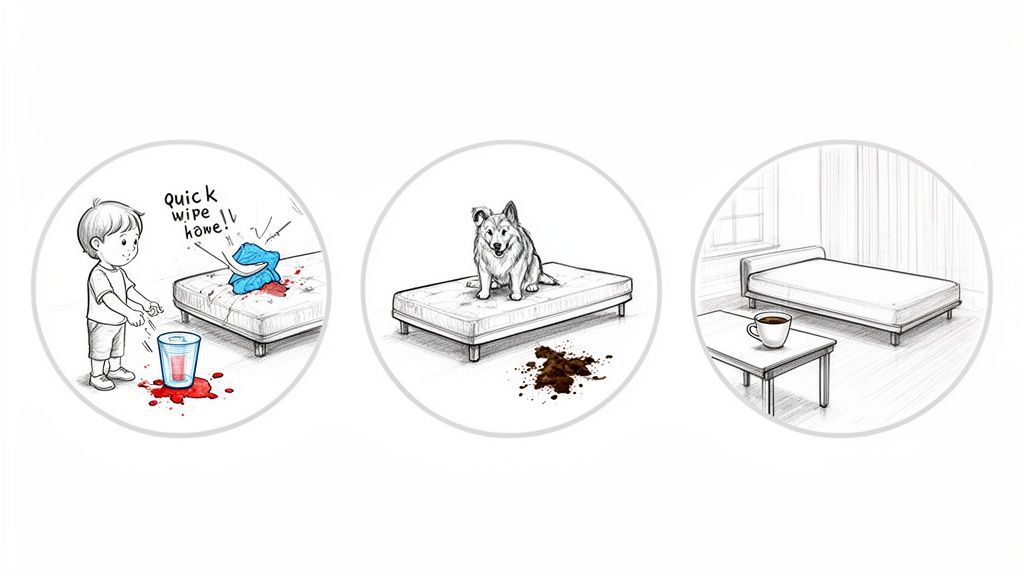
It’s easy to think of a waterproof futon cover as just another accessory, something you might buy “just in case.” But its real value isn’t in hypotheticals; it’s in the messy, unpredictable, and totally normal moments of everyday life. This simple layer of protection is a true problem-solver that offers peace of mind in more situations than you can count.
Instead of seeing it as just a piece of fabric, think of it as your futon’s personal bodyguard. It’s always on duty, ready to step in when accidents inevitably happen. From a busy family living room to a compact city apartment, its only job is to make your life a little less stressful.
The Family Living Room Protector
For any family with kids, the futon is the center of the universe. One minute it’s a fort, the next it’s a movie theater, a snack bar, and maybe even a trampoline. In a high-traffic zone like this, spills aren’t just a possibility—they’re a certainty. A single tipped cup of juice can seep deep into the mattress, leaving a permanent stain and a sticky odor that never quite goes away.
A waterproof futon cover acts as an impenetrable shield. When that glass of juice topples over, the liquid beads up on the surface instead of soaking through. This gives you precious time to grab a cloth and wipe it clean without any drama or lasting damage. A potential furniture-ruining disaster becomes a minor, two-minute cleanup.
And it’s not just about drinks. Think of all the other common family messes a waterproof cover handles with ease:
- Crayon and Marker Mishaps: Those waxy or inky marks stay on the surface of the cover, so you don’t have to worry about them permanently dyeing the mattress fabric.
- Muddy Paws and Footprints: After a rainy day, kids and pets can track in dirt. The cover can be wiped down in seconds or just tossed in the wash.
- Snack-Time Crumbs and Spills: From crushed crackers to melted chocolate, the cover catches it all, keeping the actual mattress fresh and clean.
The Pet Owner’s Best Friend
Pet owners know that unconditional love often comes with the occasional mess. Whether you have a puppy in the middle of potty training or an older pet prone to accidents, protecting your furniture is a huge priority. Pet urine is especially damaging, as its odor is notoriously difficult to remove once it soaks into mattress foam and fibers.
A fully encased, zippered waterproof cover offers complete, 360-degree protection, guaranteeing no liquid can reach the futon mattress. This is crucial because even a tiny accident can lead to lingering smells that attract your pet back to the same spot. By blocking moisture entirely, the cover not only saves your mattress but also helps break the cycle of repeated accidents.
For pet owners, a waterproof cover isn’t a luxury—it’s an essential tool for maintaining a clean and hygienic home. It lets your furry friends be part of the family without you having to stress about costly cleanups or permanent furniture damage.
The Smart Solution for Small Spaces
In studio apartments, dorm rooms, or any home where space is tight, a futon is often the hardest-working piece of furniture you own. It pulls double duty as both a sofa and a bed, which means it’s in use almost 24/7. This constant use naturally increases the risk of spills from late-night snacks, morning coffee, or just living life in a compact area.
Protecting this essential investment is just plain smart. A waterproof cover ensures your primary seating and sleeping surface stays clean, fresh, and ready for anything. It’s a low-cost way to safeguard one of the most important pieces of furniture in your home.
The Guest Room Guarantee
When you have friends or family stay over, you want them to feel comfortable in a clean space. A waterproof futon cover is the key to guaranteeing a fresh, hygienic mattress for every single visitor. Accidents can happen to anyone—a guest might spill a glass of water in bed or a cup of tea while reading. A protective cover makes sure these minor incidents don’t become a major headache for you.
This is especially important for keeping a guest room truly guest-ready. After they leave, you can just strip the cover, throw it in the wash, and have the futon pristine for the next arrival, knowing the mattress underneath is perfect. It’s a small touch that shows you care, all while protecting your furniture for the long haul.
Your Questions About Waterproof Futon Covers, Answered
When you’re shopping for something to protect your futon, you want clear answers, not more questions. Let’s clear up some of the most common worries people have about waterproof futon covers so you can feel good about your choice.
The biggest concern we hear is about comfort. Will a waterproof cover feel hot, stiff, or crinkly like those old plastic sheets from childhood? Thankfully, modern materials have completely changed the game. Today’s high-quality covers use breathable technology that lets air and body heat escape while still blocking liquids. They stay cool, soft, and totally quiet. You get full-on protection without giving up a comfortable seat or a good night’s sleep.
Can I Still Use My Decorative Cover?
Absolutely. In fact, that’s exactly how they’re designed to be used. A waterproof futon cover is a slim, discreet layer of protection, not the final decorative piece. Think of it as an invisible insurance policy for your mattress.
You can easily slip your favorite decorative cover right over the top. The waterproof protector fits snugly against the mattress, so it won’t add any awkward bulk or change how your stylish outer cover fits. This setup gives you the best of both worlds: serious defense against spills and the exact look you want for your room.
How Well Do They Really Handle Major Spills?
This is where these covers truly shine. They are built to handle big accidents, whether it’s a full glass of red wine, a pet having an accident, or a kid’s juice spill. The waterproof barrier stops any liquid dead in its tracks, preventing it from ever reaching your futon mattress.
The liquid simply beads up on the surface, giving you plenty of time to grab a towel and wipe it clean. Nothing soaks through. That means no permanent stains, no lingering smells, and zero damage to the futon itself.
It’s this reliable, hardcore protection that gives you real peace of mind. What could have been a furniture-ruining disaster becomes a minor, stress-free cleanup.
At Futonland, we believe in solutions that blend right into your life, offering both protection and style. Take a look through our collection to find the perfect cover that fits your futon and your lifestyle.