

Your Ultimate Guide To A Sectional Sleeper With Storage
Think of the sectional sleeper with storage as the ultimate triple-threat for your living space. It rolls a spacious sofa, a pop-up guest bed, and a secret storage compartment all into one incredibly smart design. It’s the go-to solution for anyone looking to squeeze every last drop of function out of a living room, home office, or small apartment without giving up an inch of style.
The Perfect Solution for Modern Living Spaces
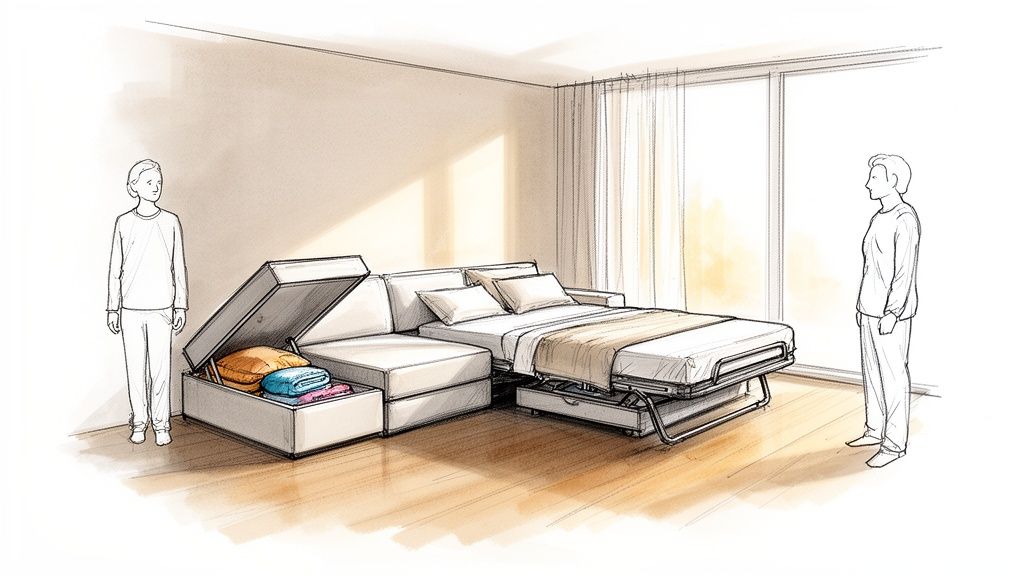
Picture this: your friends decide to stay the night. Instead of wrestling with a leaky air mattress or kicking someone off the couch, you just lift the chaise cushion, pull out fresh linens, and convert the sofa into a comfy bed. The next morning, it all tucks away, and your living room is back to normal. That seamless transition is exactly what makes these pieces so brilliant.
This isn’t just another piece of furniture; it’s a strategic answer to the modern problem of limited space. It elegantly solves three common household headaches in one clean, stylish package.
The Power of Three in One
A sectional sleeper with storage is a true workhorse, designed to handle multiple jobs without eating up extra floor space. This makes it an unbelievably efficient choice, especially for city living.
- Comfortable Seating: First and foremost, it’s a big, inviting sofa perfect for daily lounging, movie nights, and having people over.
- Instant Guest Room: With a simple pull, it transforms into a bed, giving you a ready-made sleeping space without needing a dedicated guest room.
- Hidden Decluttering: The storage compartment, usually tucked under the chaise, is the perfect spot for stashing blankets, decorative throw pillows, board games, or anything else you want out of sight.
This multi-functionality has made these sofas a total game-changer. It’s no surprise that in major US markets, where apartments average just 800 square feet, the demand for furniture this smart is through the roof. The U.S. sleeper sofa market hit a value of USD 2,844.22 million in 2024, and sectional sleepers grabbed a huge 25% of that pie.
More Than Just a Sofa Bed
While a regular sofa bed solves the sleeping problem, adding a sectional shape and built-in storage takes the whole concept to another level. The L-shape provides more seating and creates a natural, cozy corner in your room, while the storage is a constant ally in the battle against clutter.
A sectional sleeper with storage is like having a secret weapon for home organization and hospitality. It works behind the scenes, ensuring you’re always prepared for guests and can quickly tidy up, making it an indispensable tool for effortless modern living.
Ultimately, choosing a sectional sleeper with storage is an investment in convenience and peace of mind. As we dig deeper, you’ll see how different sectional sofas are built to fit different needs, from tiny apartments to sprawling family rooms. This guide will walk you through everything you need to find the perfect multi-functional centerpiece for your home.
Finding Your Ideal Configuration and Storage Style
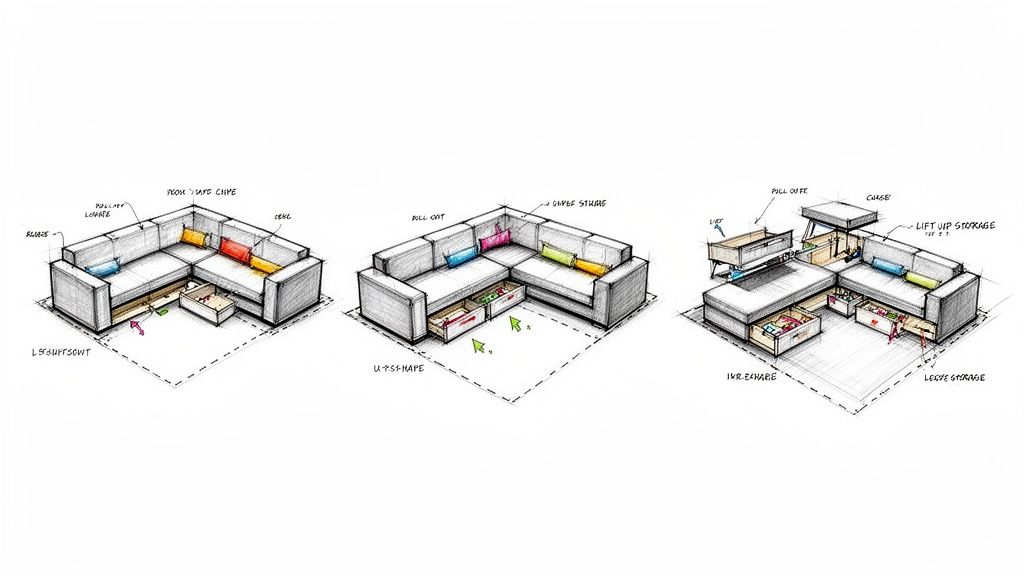
Choosing a sectional sleeper with storage is less like picking out a sofa and more like designing a custom solution for your living space. The right configuration doesn’t just maximize seating; it completely transforms the room’s flow and function. Before you fall in love with a particular style, take a minute to think about how you really live in your space.
Do you host big get-togethers, or is it mostly about cozy movie nights? Is your living room a wide-open loft or a snug, defined corner? Answering these questions is the first step toward finding the perfect shape for your home.
L-Shape vs. U-Shape Sectionals
The two most common layouts you’ll run into are the classic L-shape and the more sprawling U-shape. Each one serves a distinct purpose and is built for different types of rooms.
- L-Shape Sectionals: This is the undisputed champion of versatility. An L-shape is basically a main sofa with a chaise lounge tacked onto one end. It’s perfect for anchoring a corner, creating a soft barrier in an open-concept space, or just fitting neatly against a wall. Many models even come with a reversible chaise, letting you swap its position from left to right if you ever rearrange your room.
- U-Shape Sectionals: Think of the U-shape as the ultimate conversation pit. With two chaises or corner pieces flanking a central sofa, it creates an enclosed, inviting environment that’s a dream for large families and frequent entertainers. This setup definitely demands more floor space, but the payoff is an incredible amount of seating.
To get the most out of your furniture, it helps to think like a designer. Thinking strategically about your room’s layout can help you see your sectional not just as a piece of furniture, but as a core part of your home’s entire organizational system. Complementing it with functional decor and home accents ensures everything has its place.
Unlocking Hidden Storage Types
Once you’ve nailed down the shape, it’s time for the fun part: exploring the clever storage mechanisms that make these sectionals so incredibly practical. The storage isn’t just an afterthought; it’s an integrated feature designed to be seamless and spacious.
The demand for this kind of smart furniture is skyrocketing, especially as the global urbanization rate is projected to hit 57% by 2025. In the U.S. market, which leads the sleeper sofa industry at USD 2.21 billion in 2024, that clever functionality is a huge selling point. Pop-up ottomans can reveal bins holding up to 20 cubic feet of bedding, which is a major draw for the 34.7% of sales coming from specialty retailers.
The best storage solutions are the ones you don’t have to think about. They should be intuitive, accessible, and seamlessly integrated into the furniture’s design, making organization feel effortless rather than like a chore.
Let’s break down the most common types of storage you’ll find.
Lift-Up Chaise Storage
This is the most popular style, and for good reason. The entire seat and cushion of the chaise lounge lift up, usually with the help of a smooth hydraulic mechanism, revealing a massive, hidden compartment. It’s like having a secret trunk in your living room.
- Best For: Bulky items like comforters, extra pillows, and seasonal blankets that you don’t need every single day.
- How It Works: A gentle tug on a fabric tab is usually all it takes. Better models have hydraulic lifts that hold the top open for you, leaving both hands free to dig around. Cheaper versions might make you hold it open yourself.
Pull-Out Drawer Storage
While a bit less common, pull-out drawers are incredibly convenient. Instead of lifting a cushion, you simply slide a drawer out from the base of the sectional.
- Best For: Things you grab all the time, like remote controls, magazines, kids’ toys, or gaming controllers.
- How It Works: They glide out on metal tracks, just like a dresser drawer. The biggest advantage here is that you can get to your stuff without asking anyone to get up from their comfy spot.
Comparing Sectional Storage Types
Use this quick comparison to find the storage type that best matches your lifestyle and space requirements.
| Storage Type | Best For | Pros | Cons |
|---|---|---|---|
| Lift-Up Chaise | Bulky, less-used items (e.g., guest bedding, winter blankets) | Maximum capacity, hides clutter completely, easy to operate. | Requires clearing the chaise to open, not ideal for daily access. |
| Pull-Out Drawer | Frequently used items (e.g., remotes, toys, magazines) | Easy access without disturbing sitters, great for small items. | Less storage volume, can be visible from the side. |
Choosing the right combination of configuration and storage will transform your sectional from a simple piece of furniture into the hardworking centerpiece of your home. By matching the sectional’s layout to your room and its storage to your daily needs, you create a space that’s not just comfortable, but also remarkably organized.
How to Measure Your Space Like a Pro
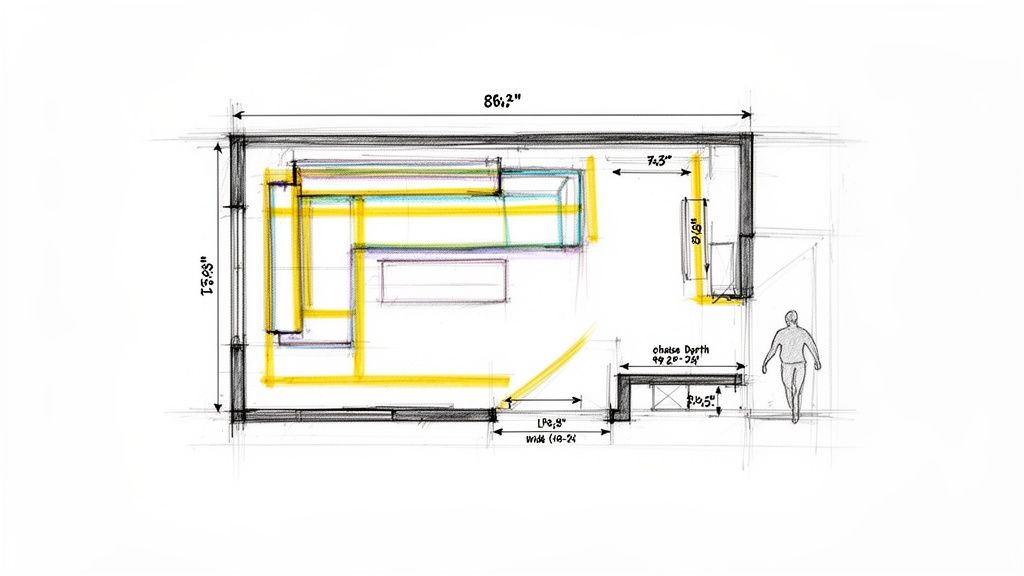
The single biggest mistake people make when buying furniture isn’t picking the wrong color—it’s getting the size wrong. That sectional sleeper that looks just right online can quickly turn into a logistical nightmare if it swallows your room whole or, even worse, can’t make it through the front door.
To sidestep this common headache, you just need a solid game plan and a trusty tape measure. Think of it as creating a blueprint for your room. By measuring everything precisely—not just the room, but the entire delivery path—you take all the guesswork out of the equation and set yourself up for a smooth, stress-free delivery day.
Mapping Your Room’s Dimensions
First things first, let’s figure out the space where your new sectional will live. Grab that tape measure and get the core dimensions of the room. This is your foundation.
- Measure Wall-to-Wall: Jot down the length and width of the room. Pay extra attention to the wall where the longest part of the sectional will go.
- Account for Obstacles: Make a note of where everything is—windows, doors, radiators, outlets, and light switches. You definitely don’t want your new sofa blocking the only usable outlet on that wall.
Once you have the raw numbers, it’s time to visualize. This is where a simple roll of painter’s tape becomes your best friend.
Pro Tip: Use painter’s tape to mark the exact footprint of the sectional on your floor. This little trick is a game-changer. It lets you “see” how the furniture will sit in the space, so you can check traffic flow and make sure it plays nicely with your coffee table and other pieces.
Critical Sectional Measurements to Check
With your room mapped out, you can start shopping for a sectional sleeper with storage with real confidence. As you browse, zero in on three key dimensions that will make or break the fit. For a detailed guide on different sofa sizes, our sizing charts are a great resource.
- Overall Width and Depth: This is the total real estate the sectional takes up from arm to arm (width) and from the back cushion to the front of the seat (depth). Compare these numbers directly to your painter’s tape outline.
- Chaise Depth: Measure the chaise from the back of the sofa all the way to the end. This is often the longest part of the sectional and a crucial measurement to ensure it doesn’t stick out awkwardly into a walkway.
- Bed-Extended Length: This is the one everyone forgets. Find out the total length of the sectional when the sleeper is fully pulled out. You have to leave enough room for someone to actually walk around the foot of the bed without stubbing their toes.
Navigating the Delivery Path
Finally, you need to make absolutely sure the sectional can get into the room. A gorgeous sofa stuck in a hallway is a truly heartbreaking sight. Walk the entire route from your front door to the sectional’s final destination, measuring every potential bottleneck along the way.
Key Checkpoints to Measure:
- All exterior and interior doorway widths and heights.
- The width of every hallway, especially around tight corners.
- Ceiling height in stairwells—don’t forget about low-hanging light fixtures.
- Elevator dimensions, including the height, width, and diagonal depth.
By being methodical about measuring your space, the delivery path, and the sectional itself, you’ll have the confidence to make the right call. This careful planning is the secret to a seamless experience, from the moment you click “buy” to that first time you relax on your perfectly placed new furniture.
Choosing Materials for Durability and Style
A sectional sleeper with storage is a serious investment. It needs to do more than just look good on day one—it has to stand up to real life, day in and day out. The materials you choose for the upholstery, frame, and cushions are the building blocks of its comfort, longevity, and overall style.
Think of it this way: the frame is the skeleton, the cushions are the muscle, and the upholstery is the skin. Each part is critical to how the sofa performs over time. Picking the right ones is a balancing act between your lifestyle, your aesthetic, and your budget. A home with kids and pets has completely different needs than a quiet, formal living room. This section will help you cut through the jargon and find a combination that’s built to last and perfect for your space.
Upholstery: The First Line of Defense
The fabric or leather you choose is the most visible part of your sectional and the one that takes the most direct abuse. It dictates the sofa’s feel, color, and how well it stands up to spills, stains, and fading.
- Performance Fabrics: These are the superheroes of the upholstery world. Made from tough materials like polyester, acrylic, or olefin, they’re specifically engineered to resist stains, moisture, and fading. They’re a fantastic choice for busy family rooms where spills are just a matter of time.
- Natural Fibers: Materials like cotton, linen, and wool have a wonderfully soft, breathable feel but are generally more prone to staining and wrinkling. They work best in lower-traffic areas unless they’ve been treated with a good stain-resistant finish.
- Leather: Timeless and tough, leather develops a beautiful character over time. It’s naturally resistant to spills and a breeze to wipe clean, which makes it another great option for families. Just be mindful that it can be prone to scratches from pets.
If durability and a huge variety of styles are your top priorities, browsing different fabric sectional sofas is a great way to see just how many textures and colors are available in modern performance materials.
The Frame: The Unseen Foundation
What’s under the hood is just as important as what’s on the outside. The frame is the structural heart of your sectional sleeper, and its quality directly impacts how long your sofa will last. A weak frame is a recipe for sagging, creaking, and a much shorter lifespan.
There are two main types of wood used for sofa frames:
- Solid Hardwood: Kiln-dried hardwoods like oak, maple, or ash are the gold standard. The kiln-drying process removes moisture to prevent the wood from warping or cracking over time, creating an incredibly strong and durable foundation.
- Engineered Wood: This category includes materials like plywood and particleboard. High-quality, multi-layered plywood can be very strong and stable, often hitting a sweet spot between durability and cost. Lower-quality particleboard, on the other hand, is far less durable and much more susceptible to damage.
When you’re shopping, keep an eye out for descriptions like “kiln-dried solid wood” or “high-grade engineered wood” to ensure you’re getting a quality piece.
A well-built frame provides the essential stability for both the seating and the sleeper mechanism. Investing in a quality frame ensures your sectional sleeper with storage remains a reliable centerpiece in your home for years, not just seasons.
Cushion Fillings: The Heart of Comfort
The final piece of the material puzzle is what’s inside the cushions. This determines everything about how your sectional feels, from firm and supportive to soft and sink-in. Just remember, the seating on a sectional sleeper is often firmer by design to properly support the mechanisms hidden underneath.
- High-Density Foam: This is the most common and reliable cushion filling. It provides a supportive, firm seat that holds its shape well over time. For the best quality and longevity, look for foam with a density rating of 1.8 pounds per cubic foot or higher.
- Down and Feathers: If you want a luxurious, sink-in feel, down-blend cushions are a popular choice. They are incredibly soft but do require regular fluffing to maintain their shape and keep them from clumping.
- Polyester Fiberfill: Often called “poly-fill,” this is a budget-friendly option that offers a soft initial feel. However, it tends to compress and flatten more quickly than foam or down, making it less ideal for a primary, everyday sofa.
Ultimately, the best material choices are the ones that align with your real-world needs. By understanding how the upholstery, frame, and cushion fill all work together, you can confidently pick a sectional sleeper with storage that isn’t just stylish, but truly engineered to endure.
What to Expect from the Sleeper Experience
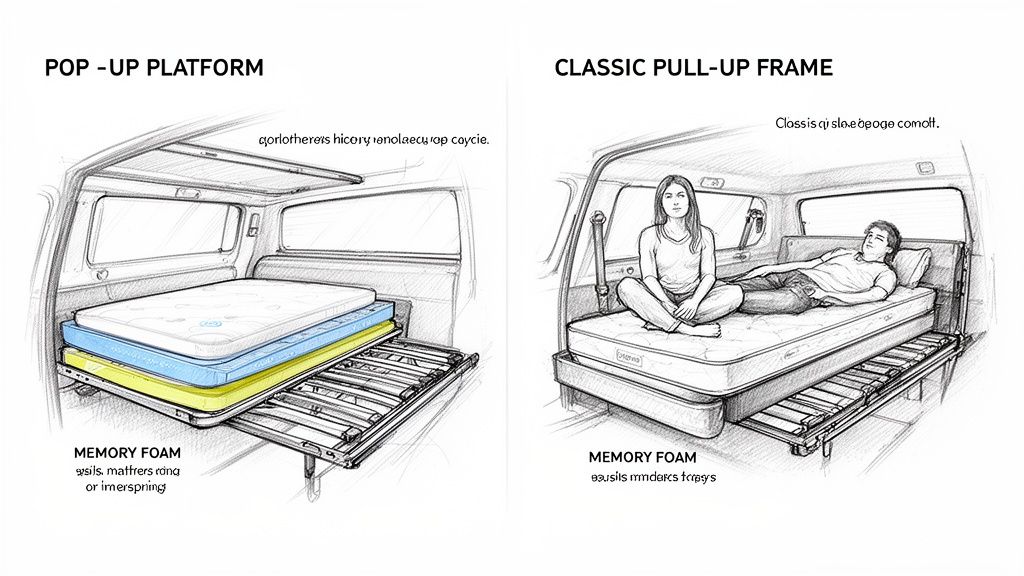
A sectional sleeper wears two hats: it has to be a great sofa and a great bed. While you’ll be judging its seating comfort every single day, the real moment of truth arrives when you convert it into a bed for the first time. The goal isn’t just to give your guests a place to crash—it’s to offer them a genuinely restful night, not a lumpy, makeshift compromise.
This all comes down to the mechanics hidden inside. How easily does it transform? What kind of mattress are you unfolding? Nailing these details is the secret to choosing a model that delivers a five-star guest experience, whether they’re staying for one night or a whole week.
Decoding Conversion Mechanisms
Gone are the days of wrestling with a clunky, spring-loaded bar that feels like a workout. Modern sectional sleepers use clever, user-friendly mechanisms designed for a quick and painless transition from sofa to bed. Think of these systems as the engine of your sleeper; the right one makes all the difference.
Here are the most common types you’ll run into:
- Classic Pull-Out Frame: This is the traditional design most of us picture. You pop off the seat cushions and pull a handle to unfold a metal frame with a thin mattress on top. They’re familiar, but they often demand a bit more muscle and floor space.
- Pop-Up Platform: This increasingly popular mechanism is refreshingly simple. A section under the sofa pulls out and pops up, sitting perfectly flush with the chaise to create a solid, uniform sleeping surface. It’s incredibly fast and easy for one person to handle.
- Click-Clack or Futon-Style: Often found in more minimalist designs, this system lets the back of the sofa click down to lay flat with the seat. While wonderfully simple, it usually creates a firmer sleeping surface with a seam running down the middle.
The best conversion mechanism is one you can operate without a second thought or a second person. A smooth, intuitive design ensures your sectional sleeper is always ready for impromptu guests, making hospitality feel effortless rather than like a chore.
Mattress Matters: The Core of Comfort
Once the bed is open, the mattress takes center stage. This is where quality really counts. A flimsy, paper-thin mattress is the number one reason guests wake up with aches and pains. Luckily, today’s sleeper mattresses are light-years ahead of their predecessors, offering real comfort and support.
Keep in mind that sleeper mattresses are typically thinner than a standard bed mattress—usually between four to six inches—so they can fold away neatly. However, high-quality materials can more than make up for the reduced thickness.
Memory Foam vs. Innerspring Mattresses
The two main players you’ll find in a sectional sleeper with storage are memory foam and innerspring. Each offers a completely different feel and set of perks for your overnight guests.
| Feature | Memory Foam | Innerspring |
|---|---|---|
| Feel | Contouring and pressure-relieving; it literally molds to the body. | Bouncy and supportive; gives you that traditional bed feel. |
| Motion Transfer | Amazing at isolating movement, which is a huge plus for couples. | You’ll feel more movement; older springs can sometimes be felt. |
| Durability | High-density foam holds its shape and resists sagging very well. | Springs can lose tension over time, leading to dips and discomfort. |
| Best For | Guests who like a firm, supportive surface that kills motion transfer. | Guests who are used to a classic mattress with a bit more bounce. |
Ultimately, you’re looking for balance. A well-designed sectional sleeper is a joy to sit on and provides a surprisingly fantastic night’s sleep. To get a real sense of what’s possible, exploring a wide range of convertible sofa beds shows just how sophisticated modern sleeper technology has become. By focusing on a smooth mechanism and a quality mattress, you can be sure your multifunctional furniture excels at both of its jobs.
Getting It Home: Delivery, Assembly, and Long-Term Care
Clicking “buy” on your new sectional sleeper is just the beginning. The final, and arguably most important, part of the journey is getting it safely into your home and set up for years of use. A little planning for delivery day can be the difference between a smooth, exciting arrival and a logistical nightmare.
Think of it this way: you wouldn’t want your brand-new prize to get scratched or dented right at the finish line. Planning for its arrival protects your investment from the moment it leaves the truck until it’s perfectly placed in your living room.
Navigating Delivery Options
Most furniture retailers have a few delivery tiers, and knowing what you’re signing up for is key. Each one comes with a different price tag and a different level of hands-on work for you.
- Curbside Delivery: This is the most basic, no-frills option. The delivery team will drop the boxed sectional on the curb or at your front door, and from there, it’s all on you—getting it inside, unboxing it, and putting it all together.
- Threshold Delivery: A small step up from curbside, this service brings the boxes just inside your entryway. You still have to do the heavy lifting to get the pieces into the right room and handle the full assembly.
- White-Glove Service: This is the premium, totally hands-off experience. A dedicated team will bring the sectional into your home, carry it to the exact room you want, assemble it completely, and even haul away all the cardboard and plastic.
For a big, multi-piece item like a sectional sleeper, white-glove service is almost always worth the extra cost. It takes the risk out of damaging your walls or the furniture itself and saves you the massive headache of assembly.
Assembly: What to Really Expect
Putting together a sectional sleeper isn’t just about screwing on a few legs. You’re dealing with moving parts, sleeper mechanisms, and heavy components that need to connect just right. Most sectionals will show up in at least two huge boxes, one for the sofa and another for the chaise.
If you decide to assemble it yourself, do not attempt it alone. You’ll need a partner to help you maneuver the awkward, heavy pieces. While the process is usually straightforward, expect it to take about an hour. Pay close attention to the instructions to make sure the sleeper mechanism and storage hinge work correctly from day one.
A solid assembly is the foundation for a long-lasting sectional. Whether you build it yourself or let the pros handle it, getting every bolt tight and every piece aligned prevents future squeaks, wobbles, and mechanical headaches down the road.
Simple Care for Lasting Comfort
Once your sectional is in its new home, a little routine upkeep will keep it looking and feeling brand new. This isn’t about major repairs; it’s about simple, consistent care.
Upholstery Care:
- Vacuum Regularly: Use a soft brush attachment to get dust and crumbs out of the fabric and tight corners.
- Blot Spills—Don’t Rub: If a spill happens, grab a clean, dry cloth and blot it immediately to stop it from setting into the fabric.
- Rotate Your Cushions: If the cushions are detachable, flip and rotate them every few months. This simple step ensures they wear evenly.
Mechanism Care:
- Be Gentle: Open and close the sleeper and storage parts smoothly. Avoid yanking or forcing them, which can strain the hardware.
- Check the Connections: Every so often, check that the bolts connecting the sectional pieces are tight. They can loosen a tiny bit over time with regular use.
By planning ahead for delivery and committing to a little light maintenance, you can make sure your sectional sleeper with storage stays comfortable, functional, and beautiful for years to come.
Got Questions? We’ve Got Answers
Even after you’ve narrowed down your choices, a few questions always pop up. Think of this as your final checklist—a chance to clear up any last-minute uncertainties before you commit. We hear these questions all the time, so let’s tackle them head-on.
This is all about making sure you feel completely confident in your decision. You’re not just buying a piece of furniture; you’re investing in a long-term solution that brings comfort and smarts to your home.
Are These Sectionals Actually Comfortable for Daily Sitting?
Absolutely. It’s a common myth that you have to trade everyday comfort for a pull-out bed. That’s old-school thinking. Today’s high-quality models are built for real life, using materials like high-density foam and sturdy, supportive frames.
This means your sectional is just as comfortable for a weekend movie marathon as it is for an overnight guest. The sleeper and storage parts are integrated so well you won’t even know they’re there. The seat might feel a touch firmer than a regular sofa to support the mechanism inside, but modern designs make sure the sitting experience is top-notch.
How Hard Is It to Turn into a Bed?
Surprisingly easy. The days of wrestling with a heavy, clunky sleeper sofa are over. Many of the best sectionals now use lightweight pop-up platforms or slick, European-style click-clack systems. One person can handle the conversion in seconds.
The whole point of a modern sectional sleeper is to make having guests over completely effortless. You should be able to get the bed ready in under a minute without breaking a sweat.
Even the more traditional pull-out frames have gotten a major upgrade with smoother gliding systems. Pro tip: always watch a product video online before you buy to see exactly how the mechanism works.
Can I Customize the Fabric or Layout?
Yes, and this is where it gets fun. Most brands offer a ton of customization options so you can get the perfect match for your space. You can usually pick from a huge range of fabrics, performance grades, colors, and even different leg styles.
One of the best features to look for is a reversible chaise. This is a game-changer for anyone who likes to rearrange their furniture. It lets you switch the chaise from the left side to the right, giving you total freedom to change your room’s layout whenever the mood strikes.
Is the Storage Big Enough for All the Bedding?
It sure is. The storage compartments, especially the ones tucked inside a chaise lounge, are designed with bulky bedding in mind. You can typically fit a queen-size comforter, two standard pillows, and a set of sheets without a problem.
This keeps everything your guests need in one convenient spot, freeing up precious space in your linen closet for other things. It’s one of those small details that makes a huge difference.
Ready to find the perfect multi-functional centerpiece for your home? Explore the incredible selection of space-saving solutions at Futonland, where style, comfort, and clever design come together. Discover your ideal sectional sleeper with storage and transform your living space today at https://futonland.com.