Modern European Minimalist Sleeper Sofas: Buying Guide
Your sofa is often the largest object in the room. In a city apartment, that means it either helps the space work or it slowly ruins the flow.
A lot of people start with the same complaint. The sofa looks oversized, the arms are too thick, the bed function feels like an afterthought, and once it opens, the whole room stops working. That problem gets worse in studios, one-bedrooms, home offices, and guest rooms where every inch has to do more than one job.
That’s why modern european minimalist sleeper sofas have become such a practical answer for urban living. They’re built around a different idea. The piece shouldn’t look heavy. It shouldn’t need a wrestling match to open. And it shouldn’t force you to choose between a clean room and a usable bed.
The strongest examples coming out of Europe, especially the sleek models many shoppers associate with Ukrainian manufacturing and design influence, fit the 2026 Japandi mood almost perfectly. They keep the lines quiet, the profile lighter, and the functionality honest. You get a sofa that reads as furniture first, not as a disguised spare bed with bulky cushions.
The End of Bulky Furniture
Most cramped living rooms don’t have a bad layout problem. They have a bad furniture problem.
A traditional oversized sleeper can eat the room twice. First when it sits there every day with thick rolled arms and a deep, blocky body. Then again when someone tries to open it and suddenly has to drag the coffee table into the hallway. That setup may work in a large suburban den. In a city apartment, it usually feels clumsy fast.
European minimalist sleepers solve that by starting with proportion. The frame is tighter. The arms are slimmer. The base often sits on visible legs instead of dropping all the way to the floor, which makes the room feel more open because you can see light and floor underneath the piece.
Why city buyers move away from bulk
Ukrainian-made sofa beds stand out here because many of them balance clean styling with real daily-use practicality. They don’t lean on oversized padding to fake comfort. Instead, they rely on smarter internal construction and a more compact silhouette.
That matters when your living room is also your guest room, your movie room, and sometimes your work-from-home zone.
A sleeper sofa for city living should reduce visual weight, not add to it.
The change is noticeable in a few ways:
- The room looks wider: thin arms and raised legs open sightlines.
- The sofa earns its footprint: it seats, sleeps, and often stores bedding without feeling like three products crammed together.
- The shape stays current longer: clean European lines age better than trend-heavy bulk.
What works and what doesn’t
What works is a sofa bed that looks intentional closed and feels straightforward open. That’s where many modern European models win.
What doesn’t work is buying a sleeper based only on mattress size while ignoring the sofa form. Plenty of shoppers focus on “queen” first and only later realize the piece dominates the room every other day of the year.
That trade-off matters because the sofa is what you live with daily. The bed function matters, but the visual footprint matters just as much. A well-designed minimalist sleeper does both without advertising either one too loudly.
Defining the Japandi Aesthetic in Sleeper Sofas
Japandi isn’t just “Scandinavian, but calmer.” It’s a mix of Japanese restraint and Nordic function. In sleeper sofas, that combination shows up in pieces that feel composed rather than decorated.
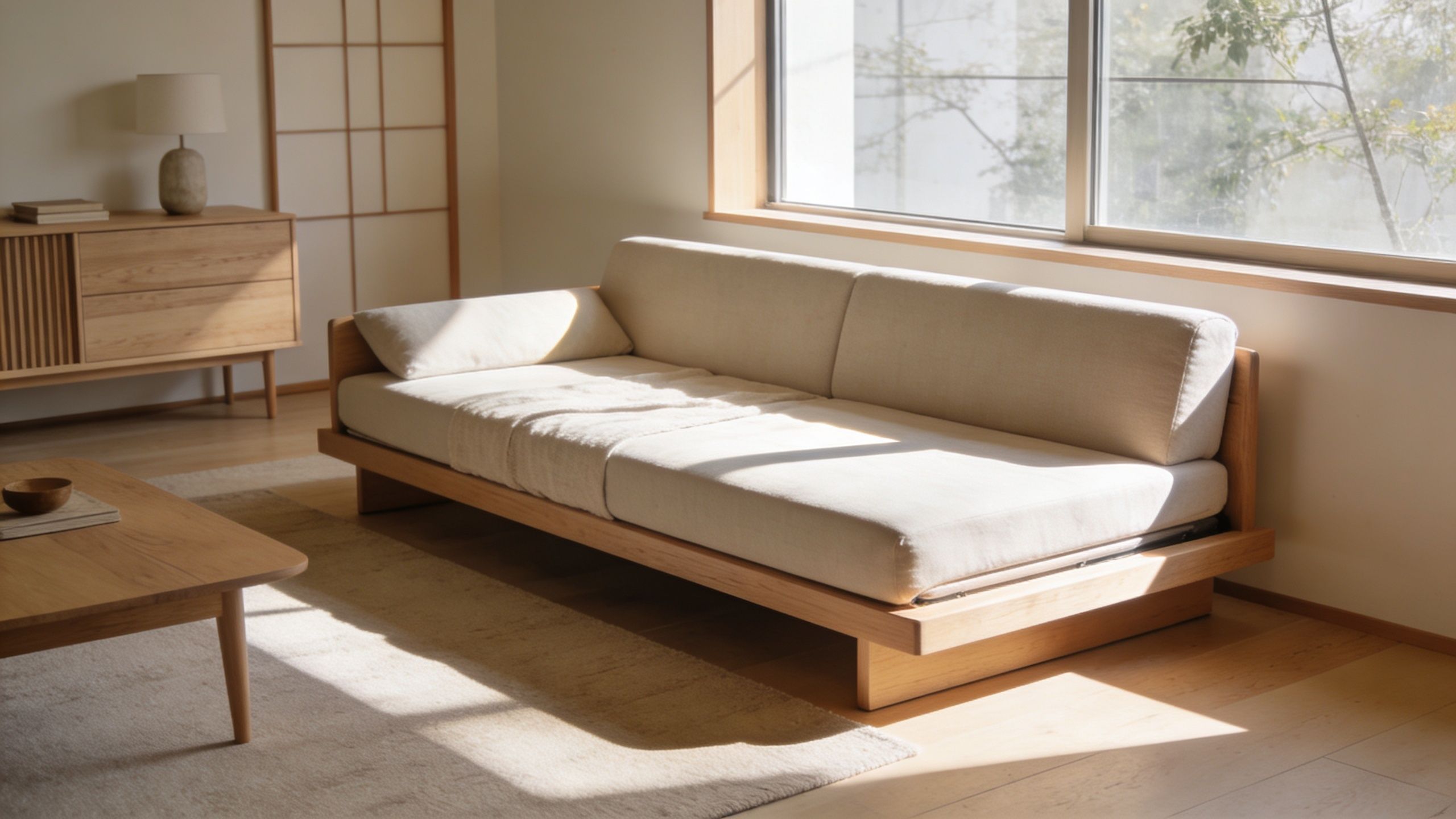
The reason this style keeps gaining ground is practical, not just visual. Demand for space-efficient, multifunctional furniture that fits minimalist and Japandi interiors has grown steadily as more apartment dwellers prioritize pieces that do double duty without dominating the room.
The visual signals that matter
A Japandi sleeper sofa usually avoids anything loud or overworked. You’ll notice a few recurring traits:
- Slimmer arms: these reduce visual mass and leave more usable seat width.
- Visible legs: wood or metal legs help the piece feel lighter.
- Quiet upholstery: cream, sand, warm gray, muted taupe, and textured neutrals fit the style best.
- Simple geometry: straight lines, soft edges, and no unnecessary tufting or trim.
Negative space is part of the look. If a sofa lets the room breathe, it’s moving in the right direction. If it looks like a padded block dropped into the room, it isn’t.
Multifunction without visual noise
The smartest Japandi sleeper sofas hide complexity well. Storage, conversion hardware, and support systems are built in, but they don’t call attention to themselves. That’s one reason many European and Ukrainian-inspired models feel more refined than old-school American pull-outs.
A good test is this: if the bed function disappeared, would you still want the sofa? If the answer is yes, the design is probably doing its job.
Practical rule: Japandi furniture should look calmer than the room around it. If the sofa becomes the loudest thing in the space, it’s usually the wrong one.
How to spot the difference in a showroom
Don’t judge only from the front view. Walk to the side and the back.
A true minimalist sleeper usually looks finished from every angle. The side profile stays lean, the back doesn’t bulge, and the seat proportions stay disciplined. That’s where better European models separate themselves from generic “modern” sleepers that still hide a bulky frame under cleaner fabric.
For city living, the appeal is simple. Japandi style isn’t only about taste. It’s about reducing friction in the room. A sofa bed with a light visual footprint, useful sleep function, and restrained detailing supports that better than almost any bulky alternative.
Smarter Mechanisms for Effortless Conversion
A sleeper sofa shouldn’t punish you for using it.
Many buyers often notice the biggest gap between conventional American pull-outs and modern European engineering. Traditional pull-outs often feel front-heavy, awkward to grip, and hard on flooring. They also tend to separate the sofa experience from the sleep experience. You sit on one structure and then unfold another hidden inside it.
Modern European systems usually integrate those functions more cleanly.
Why newer mechanisms feel better in daily life
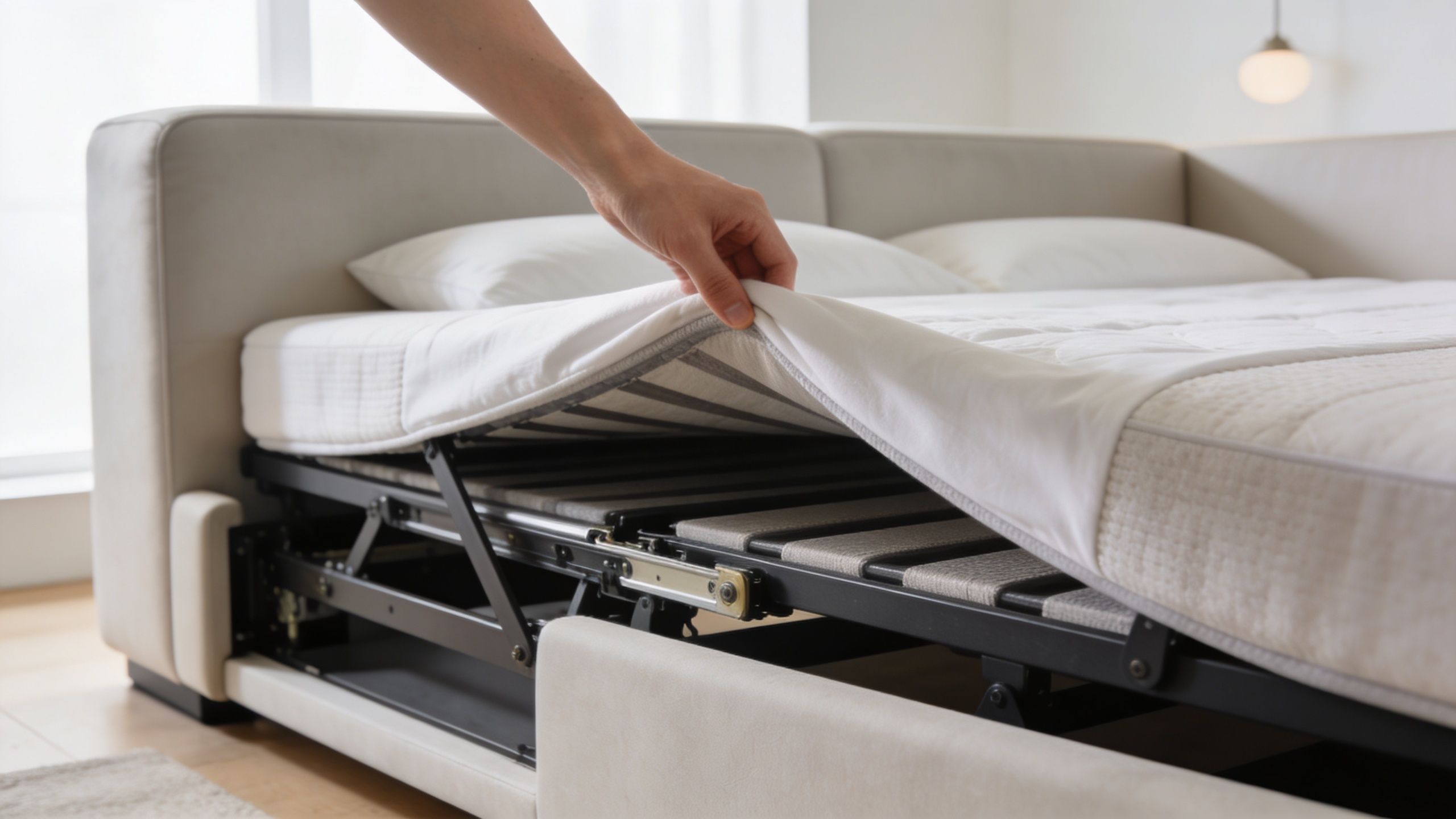
The strongest European designs keep the process simple. You’re not yanking a hidden frame out from under seat cushions and hoping everything lands flat. You’re working with a mechanism designed to unfold as part of the sofa itself.
Well-engineered designs — including the Jupiter-style construction some European brands use — typically combine a wood-metal hybrid frame with a multi-fold mechanism built for fast, low-effort conversion and durability under repeated daily use. Ask for the specific manufacturer’s conversion time and cycle rating for any model you’re seriously considering.
Those details matter because they translate directly into everyday usability.
- Less effort: a quicker mechanism gets used more often.
- Better floor behavior: cleaner movement usually means less dragging and scraping.
- More reliable alignment: hybrid frames tend to keep the sleep surface more stable over time.
Comparing pull-out logic versus integrated conversion
Older pull-outs often create two common frustrations. The first is mechanical resistance. The second is bulk. To hide a fold-out frame and mattress, the sofa body usually gets thicker and heavier.
European sofa beds, including many Ukrainian-made models, often avoid that problem by designing the bed function into the shape from the beginning. That allows a more sofa-first silhouette without sacrificing sleeping utility.
If you like a compact frame but still want an easy-open piece, it’s also worth looking at styles with a simplified front action, including wall-hugger futon frames for tight layouts. They solve a similar problem from a different angle: easier conversion without demanding a huge clearance zone behind the furniture.
The mechanism tells you what the manufacturer values. If opening the bed feels awkward in the showroom, it won’t feel better at midnight.
What to check before you buy
Don’t just ask whether it opens easily. Ask how it opens, where the weight shifts, and what the frame is doing during the motion.
Here’s what to pay attention to in person:
The first lift or pull
If the initial movement is stiff, the mechanism may be working against the user.The mid-conversion balance
The sofa shouldn’t feel like it wants to tip, skid, or drop suddenly.The final sleep surface
Once open, the bed should look deliberate and stable, not improvised.
The best modern european minimalist sleeper sofas feel composed in motion. That’s not a small detail. In compact homes, convenience decides whether the bed function becomes part of your routine or something you avoid using.
Evaluating Comfort and Long-Term Durability
Most shoppers test a sleeper sofa for three minutes and make a long-term decision from a short-term feeling. That’s where mistakes happen.
Comfort in this category comes from what’s happening inside the seat, back, and frame. Minimalist styling can make a sofa look effortless, but if the internal build is weak, you’ll feel it fast. The seat loses shape, the bed surface gets uneven, and the mechanism starts to feel rough because the whole piece is no longer holding itself correctly.
What creates durable comfort
Premium European minimalist sleeper sofas are built more seriously than many people expect — solid wood frames and high-density foam are the standard for models designed to hold up under years of daily conversion and use, and it’s reasonable to ask any manufacturer for their frame material, foam density, and rated weight capacity before buying.
That tells you a lot about what to prioritize:
- Frame integrity: solid wood matters because the mechanism is only as good as the structure holding it.
- Foam quality: high-density foam holds shape better and gives more consistent support.
- Spring support: wavy springs help distribute load more evenly, which reduces the “collapse in the middle” feeling.
The daily-use question buyers actually care about
Families and frequent hosts usually ask a more practical question: will it still feel good after repeated opening, closing, sitting, and sleeping?
That concern is valid, and it’s a fair one to ask directly of any retailer rather than take on faith. The safest approach: buy the frame and support system first, then fine-tune surface comfort second.
If the internal support is strong, you can adjust feel with bedding and toppers. If the support is weak, no soft fabric or plush pillow will save it.
That’s one reason it helps to think beyond upholstery. A well-matched futon mattress and sleeper support option can change how a sleep surface performs, especially if you prefer a firmer or more forgiving feel.
Fabric performance matters more than buyers think
The upholstery isn’t just about color. It affects maintenance, appearance, and how quickly a sofa starts to look tired.
For family spaces, rentals, and high-traffic rooms, technical fabrics are often the safer choice because they resist wear better and clean up more predictably. That doesn’t mean every buyer needs a performance textile. But if the sofa is going to handle kids, guests, snacks, or repeat use, a delicate fabric usually becomes a regret.
A durable sleeper should feel good closed and open. If either mode feels compromised, keep looking. The right model doesn’t have to be soft in the showroom to prove itself. It has to stay supportive after real use, and that’s a different standard.
Space Planning and Sizing Your Sofa
Most sizing mistakes happen before anyone enters the store. Buyers measure the wall and stop there.
That’s not enough for a sleeper. You need the closed footprint, the open footprint, the walkway around it, and the path it takes to get into the room. A sleeper that technically fits the wall can still fail the room once it opens.
How to measure the room properly
- Measure the wall width where the sofa will sit.
- Measure the room depth from the sofa wall to the next obstruction.
- Check door swings, radiators, side tables, and coffee table clearance.
- Mark the open bed footprint on the floor with painter’s tape.
- Walk around that taped outline as if someone were already sleeping there.
That last step catches a lot. If you can’t move comfortably once the bed is open, the sofa is too large for the room even if the listing says it fits.
Queen-size sleepers remain a popular choice for buyers who need one piece to double as guest sleeping and everyday seating, since they balance comfort and versatility better than smaller sizes for most households.
Sleeper Sofa Sizing Guide
| Size | Approx. Sofa Dimensions (W x D) | Approx. Bed Dimensions (W x L) | Ideal For |
|---|---|---|---|
| Loveseat sleeper | Varies by model | Varies by model | Home offices, very tight layouts, single guest use |
| Full sleeper | Varies by model | Varies by model | Studios, guest rooms, occasional overnight stays |
| Queen sleeper | Varies by model | Varies by model | Primary living rooms, couples, frequent hosting |
Because dimensions vary a lot by mechanism and arm style, it’s smart to compare real product specs against a sleeper sizing chart before ordering.
The sizing trade-offs that matter
A queen often wins for guest comfort, but that doesn’t make it the automatic answer. In a narrow city room, a full-size sleeper with slimmer arms can deliver better everyday living because the sofa remains proportional when closed.
A loveseat sleeper can also make sense in a home office or flex room where the seat is used more often than the bed. The right size isn’t the biggest one you can squeeze in. It’s the one that still lets the room function on a Tuesday, not just when guests visit.
Styling Your Minimalist Sleeper Sofa
A good Japandi room doesn’t look empty. It looks edited.
That distinction matters when you style a sleeper sofa. If the piece already has a clean European profile, you don’t need much around it. In fact, too much décor usually fights the whole point. The room should feel settled, textured, and useful.
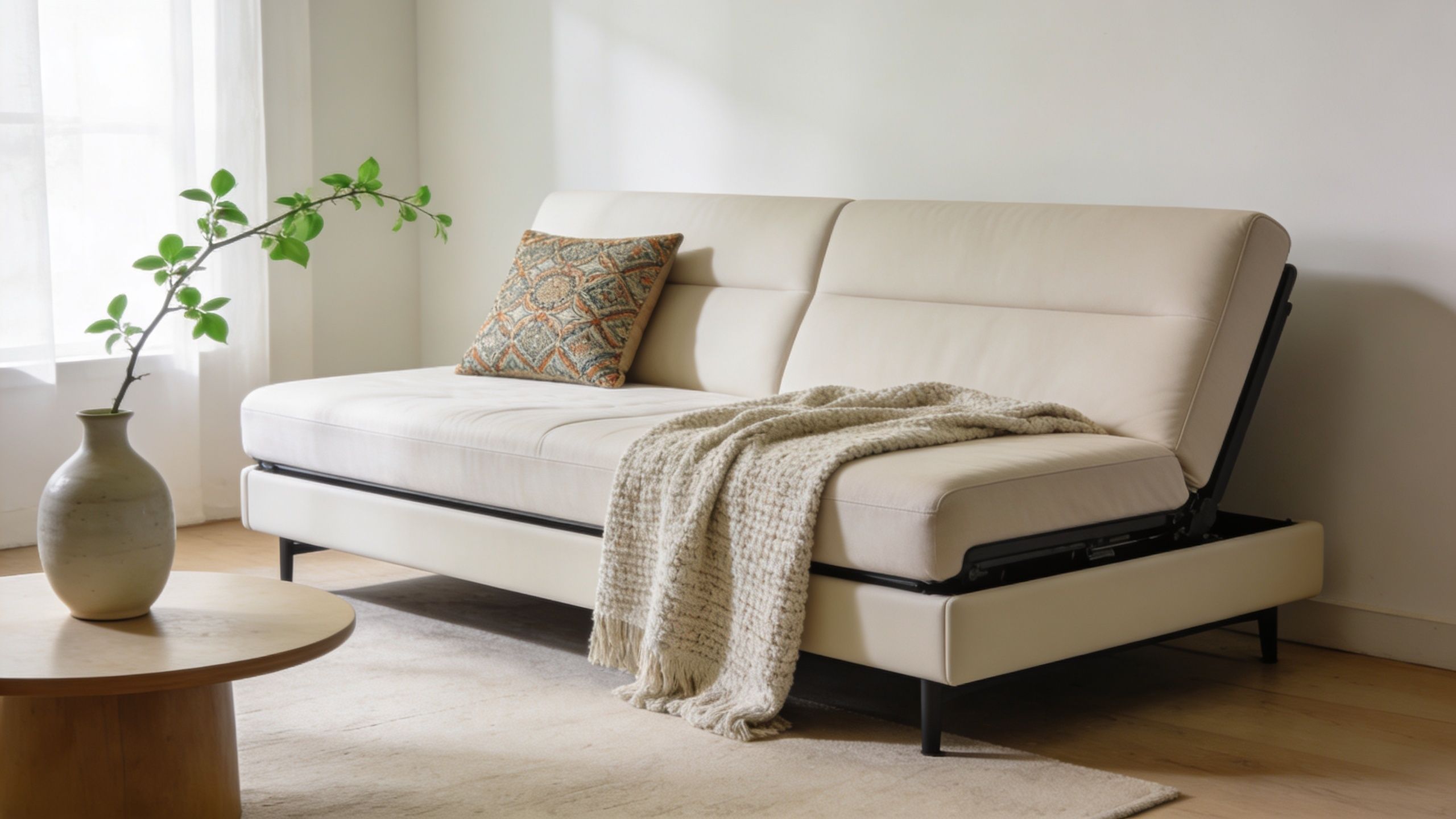
A studio that needs to feel bigger
Take a low-profile cream or soft gray sleeper with visible wood legs. Add a light oak coffee table, one matte ceramic lamp, and a woven rug with a quiet pattern. Keep the palette warm and dry, not glossy.
Then use textiles carefully. One textured pillow in bouclé or linen is enough. A soft throw helps, but choose one with some depth and tactile character rather than a loud print.
A home office that converts for guests
This room works best when the sofa doesn’t look like temporary furniture. A compact Ukrainian-style sleeper in a muted neutral can sit opposite a narrow desk without making the room feel split in half.
What finishes the space is restraint:
- Use one storage basket: it keeps bedding nearby without adding more furniture.
- Choose a leggy side table: air underneath helps the room stay light.
- Limit wall art: one larger piece is calmer than several small ones.
- Swap seasonally with covers: a fresh futon cover in a quieter texture or color can shift the room without changing the furniture.
Less styling usually makes a minimalist sleeper look more expensive.
A guest room that still feels like a room
People often over-theme the space in these instances. They add too many pillows, too much accent furniture, and too many decorative layers. The cleaner approach is better.
Use the sleeper, a small nightstand, a simple reading light, and one natural material that softens the room, such as wood, linen, or wool. Japandi styling works because it keeps the eye relaxed. The sofa should anchor the room, not compete with it.
Your Guide to Buying
Purchasing a sleeper sofa differs from selecting a standard couch because you are evaluating three distinct functions simultaneously. It must complement the room’s aesthetic, provide comfort for daily seating, and transform into a bed you will use. Most generic furniture stores offer limited assistance in this regard because they approach the category as a broad inventory item rather than a specialized design focus.
That gap matters more than people think. Long-term durability in daily-use sleepers is one of the first things families and small-space shoppers want to know about, and it’s worth asking directly rather than assuming.
What a specialist helps you sort out
- Mechanism fit: whether the opening style makes sense for your room and your strength level.
- Comfort target: whether you need a sofa-first sit, a bed-first sleep surface, or a balanced middle ground.
- Material choice: which fabric and support build make sense for kids, guests, pets, or daily use.
That matters with European and Ukrainian-leaning minimalist designs because the details are the product. A sofa can look similar online and still perform very differently in your home depending on frame build, support system, upholstery, and how the bed opens.
Why the buying process should stay practical
This category rewards careful selection, not impulse buying. Ask for real dimensions. Ask what the mechanism feels like in repeated use. Ask what kind of support system sits under the foam. If the answers are vague, move on.
Futonland carries functional sleep-focused furniture including brands such as Innovation Living and Luonto, along with delivery, white-glove assembly, and guidance for small-space layouts. Those services can matter when you’re choosing a piece that has to arrive, fit, and function correctly on day one.
Buy the sleeper sofa for the way you actually live. Not for the fantasy room, not for the once-a-year guest, and not for a showroom angle that hides the bulk.
The right modern european minimalist sleeper sofa should feel easier after you bring it home. The room should move better. The seating should look calmer. The guest setup should stop being a hassle. That’s the standard worth using.
If you’re comparing options, start with your room measurements, your real sleeping frequency, and the mechanism style you’re willing to use regularly. Those three filters usually narrow the field faster than fabric color ever will.