
A Futonland Guide to Maximizing Small Bedroom Space
Before you even think about buying furniture, the most important step in making a small bedroom feel bigger is creating a solid plan. It comes down to three things: measuring your room, sketching a layout, and defining functional zones. This blueprint is what ensures every square foot has a purpose—so the room feels open, organized, and easy to live in.
Blueprint for a Better Bedroom Layout
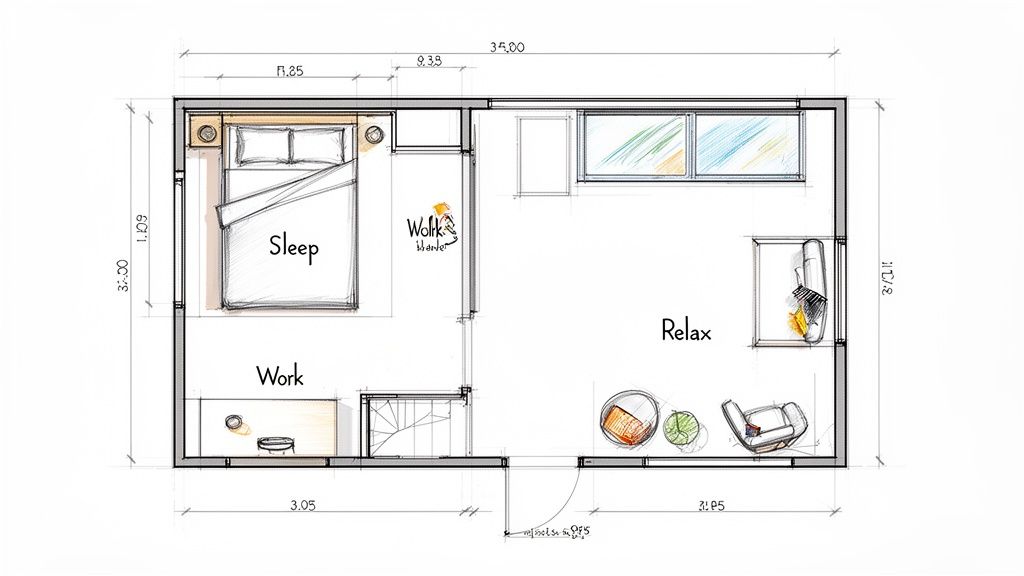
It happens all the time: people fall in love with a bed or a dresser first, then try to force everything to fit afterward. That’s how you end up with tight walkways, drawers that can’t open, and a room that feels smaller than it actually is.
You don’t need special software—just a tape measure, a pencil, and paper.
Start by writing down the room’s core dimensions: length, width, and ceiling height. Then add the things you can’t move: windows, doors (note the swing direction), closets, radiators, vents, and outlet locations. These fixed elements are your boundaries, and they’ll guide where the biggest pieces can realistically go.
Mapping Out Your Functional Zones
Small bedrooms rarely do just one job. Think about what you truly need this room to handle day-to-day. Is it only for sleep? Or does it also need to support remote work, dressing, and downtime?
On your sketch, carve the room into simple zones:
- Sleep Zone: Bed + nightstand (or a floating shelf if space is tight).
- Work/Study Zone: A compact desk or wall-mounted surface near an outlet and light source.
- Dressing Zone: Closet + dresser (with enough clearance for drawers and doors).
- Relaxation Zone: Even a small chair, bench, or reading corner can make the room feel more “complete.”
When a bedroom has clear purpose areas—even tiny ones—it feels calmer and more functional. If you need to separate a multi-use space without building walls, consider using room dividers to create visual zones while keeping the footprint light.
The Importance of Clear Walkways
One of the fastest ways to make a small bedroom feel cramped is blocking natural movement. Plan your walkways the same way you’d plan furniture. Aim for clear, consistent paths between the door, the bed, and the closet.
A simple rule: try to keep about 30 inches for the main traffic route when possible (and prioritize it near doors and closets). If that’s not realistic, focus on keeping the path uninterrupted—even a narrower walkway feels better when nothing is snagging your movement.
A good layout isn’t just about fitting furniture in. It’s about creating ease. If you’re constantly sidestepping around your bed, the room will always feel smaller than it is.
Once your blueprint is done, furniture decisions become much easier—you’ll know what sizes fit, where pieces should go, and which “extra” items won’t actually serve you.
Choosing Smart Furniture That Works Overtime
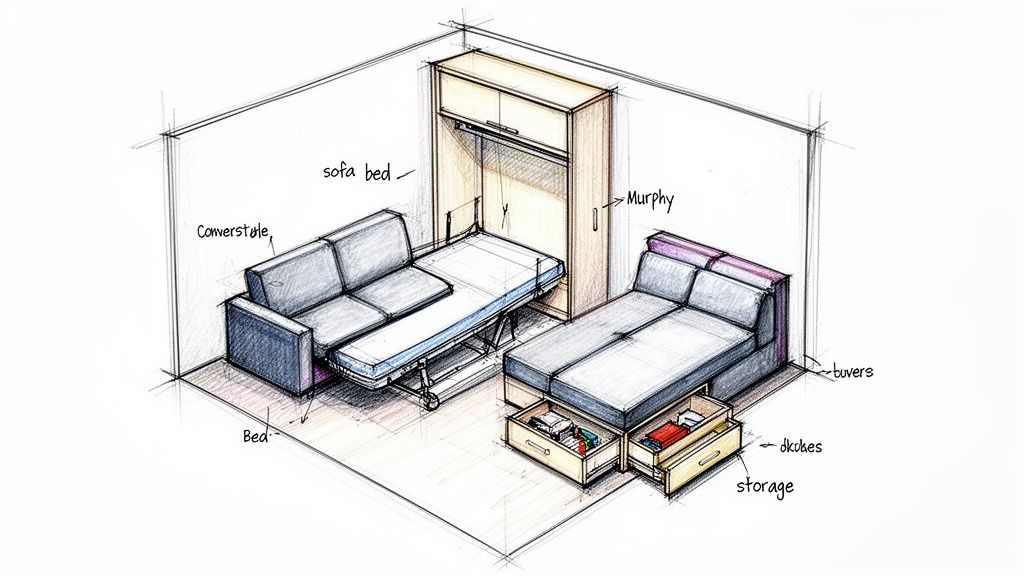
In a compact bedroom, every piece of furniture has to earn its spot. The goal isn’t just “smaller furniture”—it’s fewer pieces that do more. That’s how you open up floor space without giving up comfort or storage.
Think in roles:
- Your bed should also help with storage.
- Your seating should also support guests (or daily sleep in a studio).
- Your storage should ideally be built-in or vertical—not bulky.
The Power of Convertible Beds
The bed is usually the largest item in the room, which is why convertible options can be a game-changer. If your bedroom doubles as an office, studio, or guest room, a convertible setup allows the room to function like a living space during the day and a bedroom at night.
For inspiration, browse convertible sofa beds that offer everyday support—without the “temporary guest bed” feel.
Multi-functional furniture isn’t a compromise. It’s how a small room adapts to your life—sleep at night, open space during the day.
Sectional Sleepers and Hidden Storage
If you’re working with a corner layout, a sleeper sectional can solve multiple problems at once: seating, sleeping, and storage—often in one footprint. Look for designs with storage chaises or lift-up compartments so bedding and extra pillows don’t end up stacked in plain sight.
These pieces work especially well when you want the room to feel “finished” without adding extra furniture.
Murphy Beds and Cabinet Beds: Big Space Savings Without the Remodel
If your main goal is reclaiming floor space, wall beds and cabinet beds are hard to beat.
- Murphy-style wall beds: Ideal when you want the bed to visually disappear and the room to function like an office, gym, or lounge during the day.
- Cabinet beds: Great for renters or anyone who wants a similar benefit without permanent installation. When closed, they function like a compact cabinet or credenza.
If you’re shopping around these styles, start with your routine: do you need the room open most of the day, or do you simply need better sleep comfort in a smaller footprint?
Space-Saving Bed Comparison
| Bed Type | Best For | Space Benefit | Why It Works |
|---|---|---|---|
| Sofa Bed | Studios, guest rooms, multi-use bedrooms | Eliminates the need for a separate sofa | Seating by day, bed at night |
| Sectional Sleeper | Corner layouts, larger “small rooms” | Combines seating + storage | Often includes hidden compartments |
| Murphy-Style Bed | Home offices, maximum open floor space | Reclaims the bed footprint | Bed disappears when not in use |
| Cabinet Bed | Renters, flexible layouts | Reclaims the bed footprint | No wall installation required |
| Storage Bed | Any small bedroom needing organization | Reduces the need for extra dressers | Built-in drawers or lift-up storage |
For more versatile sleep solutions in one place, explore futons and sofa beds.
Unlocking Your Walls with Vertical Storage

When floor space is limited, the best strategy is simple: use your walls. Vertical storage expands capacity without adding bulk, and it draws the eye upward—which helps the room feel taller and less crowded.
Wall-Mounted and Floating Shelves
Floating shelves create storage with almost zero visual weight. The space above a bed, desk, or doorway can hold books, baskets, and everyday items without needing another piece of furniture.
In rooms where nightstands don’t fit, a floating shelf can replace one completely—keeping essentials close while freeing floor space.
Go Tall and Narrow
When you need more substantial storage, choose tall, narrow pieces instead of wide, low furniture. A slim bookcase or vertical shelving unit stores a surprising amount while keeping the footprint tight.
For corner-friendly options, you can browse book shelves that work well in small rooms.
The goal is storage that feels like part of the wall—not an obstacle in the room. Height helps. Bulk hurts.
Over-the-Door and Hidden Organizers
Over-the-door organizers are one of the easiest upgrades you can make. They’re ideal for shoes, accessories, toiletries, and anything that tends to pile up. Hooks behind the door and organizers inside closet doors can also “create” storage where none existed.
Small rooms don’t need more stuff—they need better homes for the stuff you already own.
Using Light and Color to Create an Illusion of Space
Light and color can make a small bedroom feel dramatically larger. Lighter shades reflect light and help walls feel farther apart, while dark colors absorb light and can make a room feel tighter—especially if there’s limited natural light.
Choosing a Space-Friendly Palette
You don’t have to default to bright white. Soft, light-reflecting neutrals often look warmer and still keep the room open:
- Soft whites and off-whites for a clean, inviting base
- Pale grays or greige for a modern, calm backdrop
- Light blue-greens for a relaxed, retreat-like feel
If you want an accent wall, keep it close in tone to the other walls—just a few shades deeper—so you add depth without making the room feel closed-in.
Layer Lighting Instead of Relying on One Fixture
One overhead light tends to cast harsh shadows and make corners feel smaller. Layered lighting gives the room a more open, balanced feel:
- Ambient: Overall room light (ceiling fixture, flush mount)
- Task: Reading or desk light (lamp, sconce)
- Accent: Soft glow for warmth (small lamp, subtle LEDs)
The Mirror Trick That Always Works
Mirrors reflect light and create depth. Placing a mirror across from a window can brighten the whole room and visually “extend” the space.
A large mirror opposite a window can feel like a second window—more light, more depth, less “boxed-in” energy.
If you want something functional that also elevates the room, explore mirrors that work as both decor and space-enhancers.
The Finishing Touches That Make a Big Impact
This is where a room becomes personal. The key in small bedrooms is choosing decor that adds character without adding clutter.
Instead of many small items, choose a few larger, intentional pieces: a clean framed print, one standout plant, or one textured throw that adds warmth without visual noise.
Keep It Simple with an Easy Routine
In a small room, clutter builds quickly—and it changes how the room feels. A simple routine keeps the space consistently calm:
- One-in, one-out: When something new comes in, something old goes.
- Five-minute nightly reset: Clear surfaces, hang items, straighten bedding.
- Weekly quick reset: Put stray items away and clear the “drop zones.”
A small bedroom feels bigger when it stays visually quiet. Organization isn’t a chore—it’s how the room keeps working.
Personalize Your Space-Saving Furniture
Your functional pieces don’t have to look generic. One of the easiest upgrades is changing textiles—especially if you’re using a futon, sofa bed, or sectional sleeper.
Futonland offers options to personalize your setup with covers and fabric choices so your space-saving furniture fits your style as well as your floor plan.
Got Questions About Making the Most of a Small Bedroom?
Small bedrooms can feel limiting—until you approach them like a system: layout first, then multi-functional furniture, then vertical storage, then lighting and finishing touches.
What’s the Single Most Effective Piece of Furniture for a Small Bedroom?
A convertible bed is usually the biggest difference-maker. A sofa bed, cabinet bed, or sleeper with storage can replace multiple pieces at once, freeing the room to function during the day while still giving you real sleep comfort at night.
A convertible bed doesn’t just save space—it changes what the room can be during the day.
How Can I Make a Small Bedroom Stylish, Not Just Functional?
Keep the palette cohesive, choose furniture with clean lines, and add personality through a few intentional items rather than many small ones. Then use vertical display (shelves) and reflective surfaces (mirrors) to create depth without clutter.
Are Futons Comfortable Enough for Everyday Sleeping?
They can be—if you choose a supportive mattress and a sturdy frame. Modern futon mattresses come in comfort options that feel far more bed-like than older dorm-style pads. Prioritize thickness, support, and materials that match how you sleep and how often you’ll convert the frame.
Ready to turn a small bedroom into a space that’s both functional and comfortable? Explore space-saving solutions designed for real life at Futonland.com.