How To Remove Stains From Upholstery Like A Pro
When a spill happens, your first move is everything. The key is to blot the spill with a clean, dry cloth—never rub it. Rubbing just grinds the stain deeper into the fibers. If it’s something solid like mud or ketchup, gently scrape off the excess first. This immediate response in the first few minutes can be the difference between a minor cleanup and a permanent mark.
Your First Five Minutes After a Spill
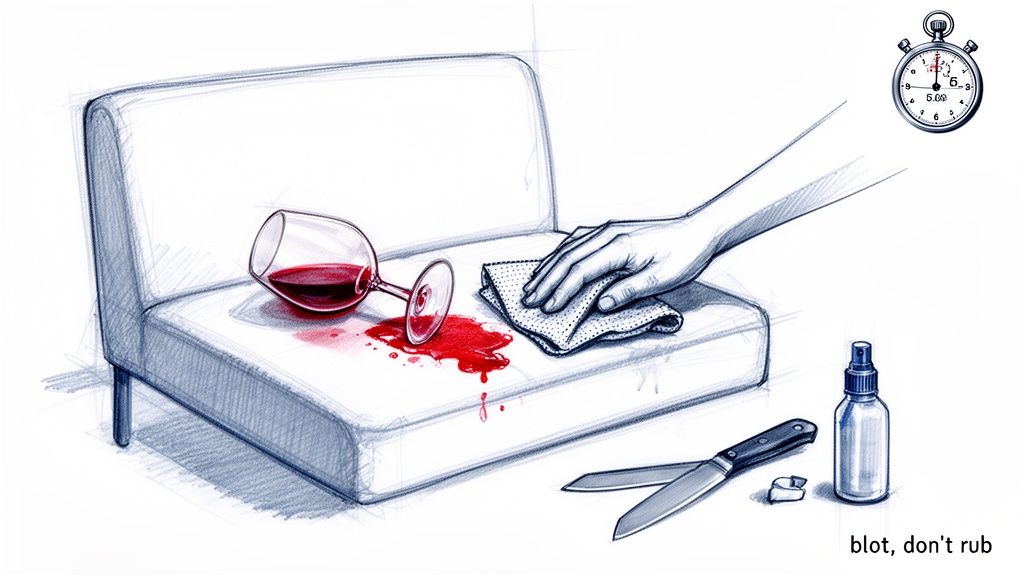
The moment a glass of red wine tips over or a piece of pizza lands face-down on your sofa can feel like a slow-motion catastrophe. It’s natural to panic, but that panic often leads to the single biggest mistake people make: frantic scrubbing. All that aggressive rubbing does is force the stain deeper into the fabric, making it far harder to remove.
Your mission in these critical first moments is damage control. You’re not trying to make the stain vanish instantly; you’re trying to stop it from setting. Acting fast and smart is what counts.
The Golden Rule: Blot, Don’t Rub
Imagine your upholstery fibers are like a bundle of tiny straws. When you rub a liquid into them, you’re pushing it deeper into the core of each fiber and spreading it wider. Blotting does the opposite—it uses gentle pressure to wick the liquid up and out of the fabric and into your cloth.
Here’s how to do it right:
- Grab a clean, dry, absorbent cloth. A white microfiber towel is ideal because it won’t transfer dye onto your furniture.
- Press the cloth firmly onto the spill.
- Lift it, find a clean spot on the cloth, and press down again.
- Keep doing this, working from the outside edge of the stain toward the center so it doesn’t spread.
This simple technique contains the mess and protects the fabric from damage.
Your Immediate Action Toolkit
Being prepared means you won’t waste precious seconds scrambling for supplies. Keep a small upholstery “first-aid kit” in a nearby closet.
- For Liquid Spills: White microfiber cloths or plain white paper towels.
- For Solid or Semi-Solid Messes: A dull knife, a spoon, or the edge of a credit card to gently lift excess before you blot.
Acting within the first minute dramatically improves your chances of removing the stain completely without a trace.
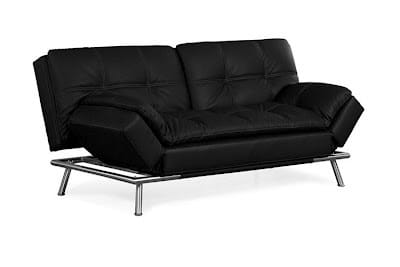
If you’re dealing with a piece that sees daily use—like a sleeper sofa, futon, or sectional—choosing furniture made for real life helps a lot. If you’re shopping for a more family-friendly setup, explore convertible sofa beds and futons designed for everyday living.
Decoding Your Upholstery Cleaning Codes
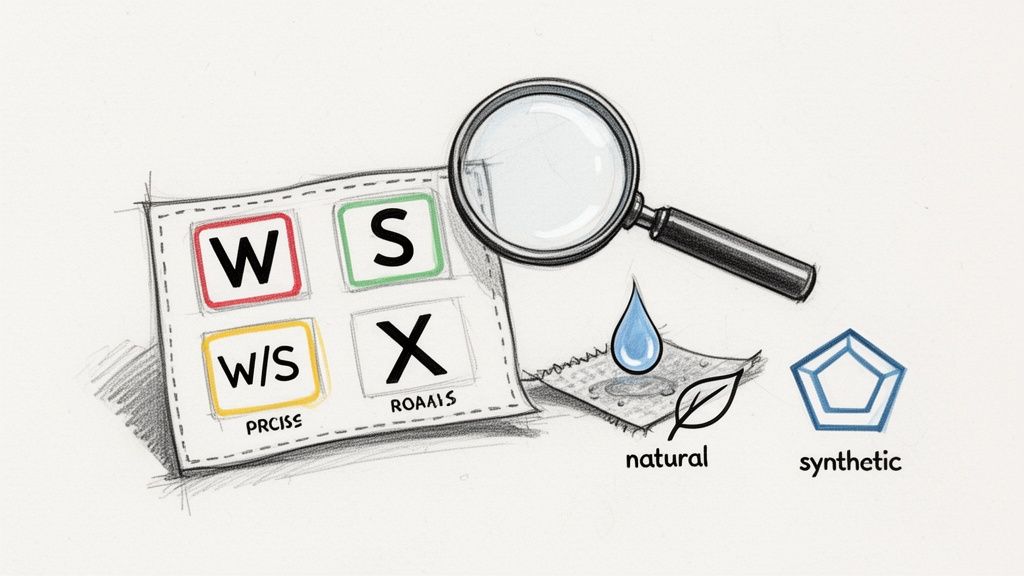
Before you grab a cleaning solution, take a minute to identify your fabric’s cleaning code. Using the wrong product can turn a small, fixable spot into a permanent problem—discoloration, shrinkage, water rings, or a stiff texture.
Check the care tag (usually under a cushion or along the frame). You’ll see a single letter code that tells you exactly what is safe to use.
The Four Main Cleaning Codes Explained
Code W: Water-Based Cleaning Only
Safe for water-based cleaners like mild soap-and-water solutions and many upholstery shampoos.Code S: Solvent-Based Cleaning Only
Do not use water. Use a water-free solvent (often labeled as a dry-cleaning solvent). This is common on fabrics that can develop rings or shrink if wet.Code W/S: Water or Solvent Based
You can use water-based cleaners for water-based stains (coffee, juice) and solvent-based cleaners for oil-based stains (grease, ink).Code X: No Cleaning Agents Allowed
Vacuum or brush only. Liquids and cleaners can damage the fabric. For stains on “X” fabrics, professional cleaning is the safest option.
A Simple Guide to Upholstery Cleaning Codes
| Code | What It Means | Safe Cleaning Agents |
|---|---|---|
| W | Water-safe (“wet” cleanable). | Mild soap and water, upholstery shampoos, water-based fabric cleaners. |
| S | Solvent-safe only. | Water-free dry-cleaning solvents. |
| W/S | Either water or solvent (depending on stain type). | Water-based for water-based stains; solvent for oil-based stains. |
| X | Vacuum/brush only. | No liquids or foam agents. |
Always test any cleaner on a small, hidden spot first.
Key Takeaway: Most upholstery “cleaning disasters” happen when the cleaner doesn’t match the fabric. The tag is your best protection.
What If The Tag Is Missing?
If the tag is gone, don’t guess. Test in a hidden area (under a cushion or along the back edge).
The Water Test: Place one drop of water on the fabric. If it beads up, water-based cleaning may be safe. If it absorbs immediately, treat it like a fabric that may require solvent-only cleaning.
The Solvent Test: Dab a small amount of dry-cleaning solvent onto a white cloth and test the hidden spot. If dye transfers or the texture changes after drying, stop and consider professional cleaning.
If you like the idea of easier maintenance, consider removable covers. You can also preview materials first using fabric samples and swatches before committing to a new cover or upholstered piece.
Choosing Your Stain Fighting Tools
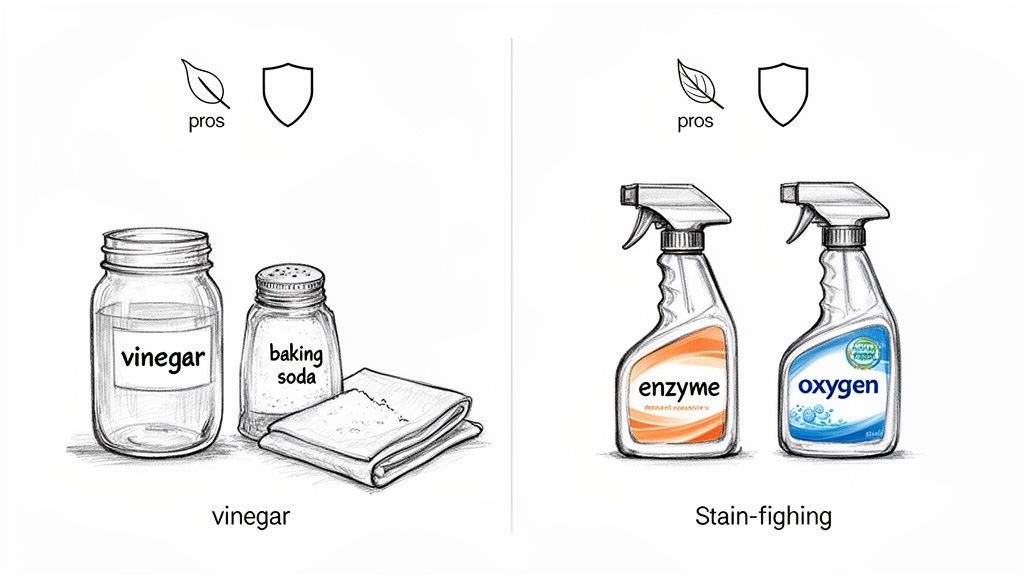
When you’re staring down a stain, you’ve got two paths: a simple DIY solution, or a specialized cleaner. Both work—when they match the fabric and the stain.
The Power of Your Pantry: DIY Cleaners
Homemade cleaners are best as a first line of defense for minor accidents on “W” or “W/S” fabrics.
- White Vinegar and Water: Mix equal parts in a spray bottle. Helpful for many light food and beverage stains, and it can reduce odors.
- Baking Soda Paste: Mix baking soda with a little water. Apply to greasy spots, let sit 15–20 minutes, then gently scrape and vacuum before spot-cleaning any remaining discoloration.
- Clear Dish Soap and Water: A few drops of clear, mild dish soap in warm water works well for many everyday spills like coffee or juice.
DIY methods are great for fresh, simple stains—but tougher messes usually need something designed for the job.
When to Use Commercial Stain Removers
Older, oily, or “biological” stains (like pet accidents) often respond better to targeted products. Look for cleaners that match the type of stain you’re treating.
- Enzyme Cleaners: Best for organic stains (pet urine, vomit, food proteins). They target the source of odors instead of masking them.
- Oxygen-Based Cleaners: Helpful for many dye-based stains (wine, coffee, sauces) without using chlorine bleach.
Pro Tip: Test every cleaner—DIY or store-bought—on a hidden spot first. If the fabric changes color or texture, stop immediately.
For a simple, fresh spill on a durable fabric, start with a gentle DIY mix. For anything old, oily, or odor-heavy, a targeted cleaner is usually worth it.
A Practical Cleaning Guide for Every Fabric
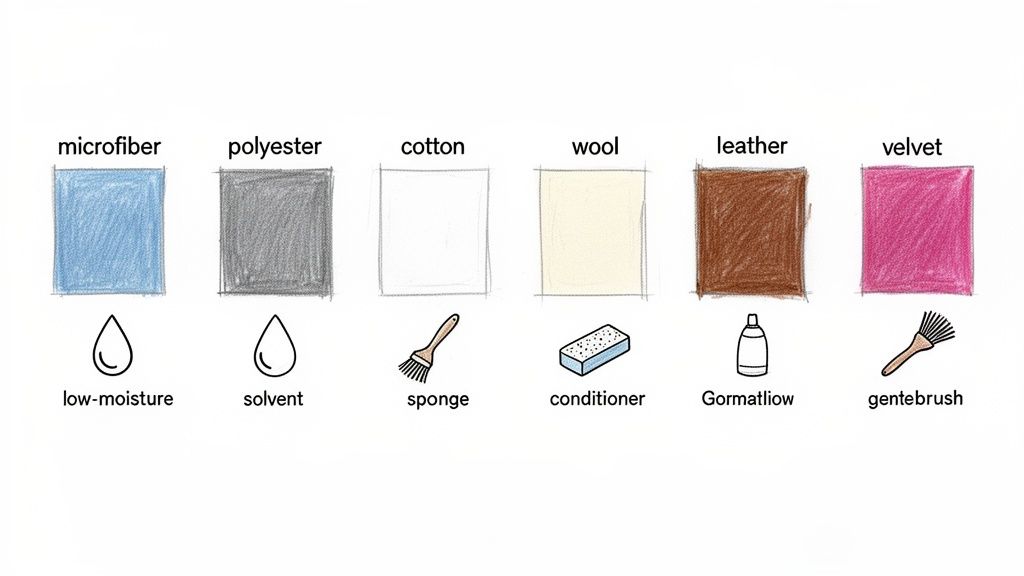
Cleaning codes are step one. Step two is matching the method to the material. What’s safe on polyester can ruin velvet—so use fabric-specific tactics.
Cleaning Durable Microfiber
Microfiber is popular because it’s tough and comfortable, but it can show water spots if you oversaturate it.
- Mix a few drops of clear dish soap with warm water.
- Lightly dampen a white cloth and blot (don’t scrub).
- Use a second cloth lightly dampened with plain water to “rinse.”
- Blot dry with a clean towel and let air dry.
If your microfiber is “S” coded, use rubbing alcohol or a dry-cleaning solvent on a cloth and blot gently. Quick evaporation helps prevent rings.
Tackling Stains on Polyester and Synthetics
Most synthetics are “W” or “W/S,” making them easier to clean. Blot first, then use a mild soap solution. If an oily residue remains and the fabric allows it (“W/S”), a solvent-based cleaner can help.
Avoid high heat. Don’t use a hot blow dryer to speed up drying—synthetic fibers can warp under heat. Air dry is safest.
Gentle Care for Cotton and Natural Blends
Natural fibers can absorb quickly and develop rings or discoloration if over-wet. If the tag indicates “S,” stick to a solvent-based cleaner applied to a cloth (not poured onto the fabric). Work from the outside in and use good ventilation.
If you’re choosing furniture for easier upkeep, many pieces in convertible sofa beds and futons are available in practical, everyday fabrics—and you can pair them with easy-care futon covers for an extra layer of protection.
The Nuances of Cleaning Leather
Leather isn’t woven fabric, so cleaning is a bit different. Avoid harsh chemicals that can dry it out.
- For Minor Spills: Wipe with a soft cloth dampened with mild soap and distilled water, then dry immediately.
- For Grease: Sprinkle cornstarch on the spot, let it sit for a few hours, then brush away.
- For Ink: Dab carefully with a cotton swab lightly moistened with rubbing alcohol, then condition the leather afterward.
The Delicate Touch for Velvet
Velvet can crush or mark easily, so be gentle and keep moisture minimal.
- Synthetic velvet: A tiny amount of soapy water on a cloth, blotting with the nap.
- Natural velvet: Use a solvent-based cleaner if the fabric requires “S” cleaning.
After the spot dries completely, use a soft brush to gently restore the pile.
Keeping Your Furniture Stain-Free for Longer
Cleaning is useful—but preventing stains is easier. A few proactive habits help your furniture look better for longer.
Invest in Fabric Protection
A fabric protector can buy you time by helping spills bead on the surface instead of soaking in immediately. Whether you choose a professional application or a DIY spray, always test in a hidden area first to confirm it doesn’t change color or texture.
The Advantage of Removable Covers
Removable, washable covers are one of the simplest ways to reduce stress. Instead of fighting a stubborn spot, you can unzip the cover and wash it—especially helpful on high-use pieces like futons.
If your setup needs a refresh, washable futon covers can make an older piece feel new again while making cleanup much easier.
Simple Maintenance for Lasting Freshness
- Regular Vacuuming: Weekly vacuuming removes grit that can wear fibers down over time.
- Cushion Rotation: Flip/rotate cushions every week or two for even wear.
- Odor Refresh: Sprinkle baking soda, let sit about an hour, then vacuum thoroughly.
Common Upholstery Cleaning Questions
Even with the right method, a few tricky situations come up again and again. Here are straightforward answers for the most common ones.
How Do I Handle Old Set-In Stains?
Set-in stains take patience. Gently scrape off dried residue first. Then use a targeted cleaner based on the stain type:
- Organic stains: Try an enzyme cleaner.
- Dye-based stains: Try an oxygen-based cleaner.
Follow product directions, allow dwell time, and repeat if needed. If you’re not seeing progress after a couple careful attempts, stop before you overwork the fabric.
Is Steam Cleaning a Safe DIY Option?
Sometimes—but only when the fabric allows it.
Safety Tip: Steam is typically safe only on “W” or “W/S” coded fabrics. Avoid steam on “S” or “X” coded upholstery.
If you proceed, use an upholstery-safe steamer, make light passes, and avoid oversaturating. Let it dry fully with airflow.
What If an Odor Lingers After Cleaning?
Odors can settle into the padding under the fabric. For pet or milk spills, an enzyme cleaner can help neutralize the source. For a general refresh, baking soda is a simple, effective option—apply, let sit a few hours, then vacuum thoroughly.
When Is It Time to Call a Professional?
Call a pro when:
- The fabric is “X” coded (vacuum only).
- The material is delicate (certain velvets, antiques, specialty textiles).
- The stain is large or unknown and you don’t want to risk setting it.
- DIY attempts aren’t working and you’re tempted to scrub or use harsher chemicals.
At Futonland, we know life happens. That’s why we focus on furniture that’s designed for real homes—durable fabrics, practical designs, and easy-care options like removable covers. If you’re upgrading a high-use piece, explore convertible sofa beds, futons, and futon covers that make everyday maintenance simpler.