
Cleaning Polyester Sofa: The Complete Guide To Care And Stain Removal
Before you even think about tackling a spill on your polyester sofa, you need to play detective. The single most important step is finding and decoding its care tag. Every sofa has one, usually tucked away under a cushion or along a seam, and it holds the key to safe cleaning.
These tags use a simple letter code—W, S, W/S, or X—to tell you exactly what you can (and absolutely cannot) use on the fabric. Getting this wrong is a fast track to permanent water rings, discoloration, or a texture change you can’t reverse.
How to Read Your Polyester Sofa Cleaning Codes
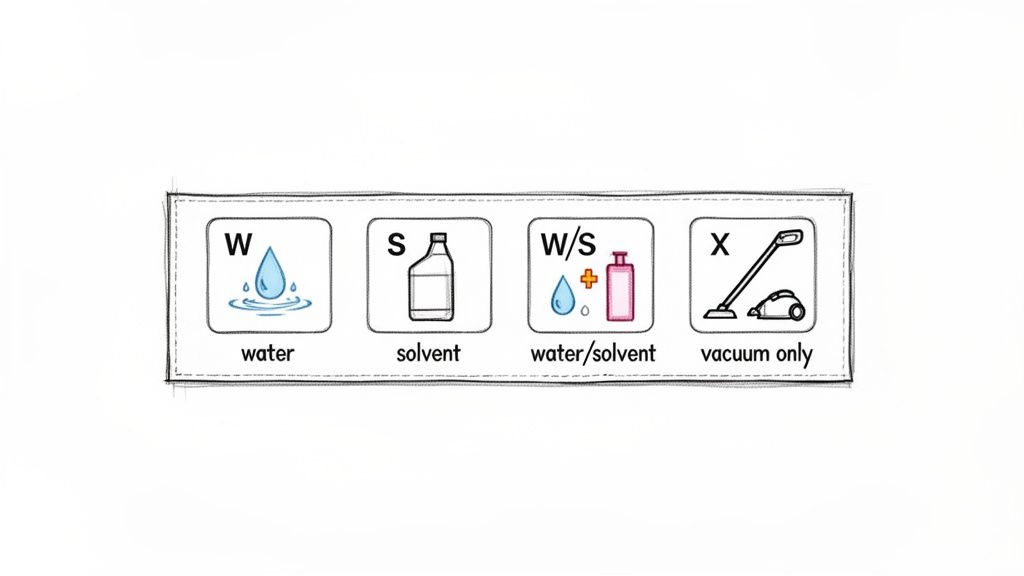
Think of that little tag as your sofa’s non-negotiable instruction manual. Ignoring it is the quickest way to ruin your upholstery for good. These universal symbols are actually pretty straightforward once you know what to look for, guiding you to the right products and away from costly mistakes.
Understanding Each Cleaning Code
Each letter points to a specific type of cleaning agent that’s safe for your sofa’s fabric. For example, if you use a water-based cleaner on a “solvents only” fabric, you’ll likely be left with ugly, prominent water stains that are almost impossible to get out.
Here’s a quick rundown of what each code means for you:
- Code W: This means your sofa is “Water-Cleanable.” You’re in luck! You can safely use water-based shampoos or foam upholstery cleaners. This is the most common and user-friendly code you’ll find on polyester sofas.
- Code S: This stands for “Solvent-Cleanable,” meaning you must use a water-free solvent, sometimes called a dry-cleaning solvent. Whatever you do, do not use water on an S-coded sofa.
- Code W/S: This code gives you the most flexibility. It means you can use either water-based cleaners or solvent-based ones. But even with this green light, you still need to spot-test your chosen cleaner first.
- Code X: This is the most restrictive code. It means “Vacuum Only.” You should not use any kind of liquid cleaner, whether it’s water or a solvent. Cleaning is limited to light brushing and vacuuming.
To make it even simpler, here’s a quick reference table.
Polyester Sofa Cleaning Codes At a Glance
This chart breaks down your sofa’s care tag, helping you quickly identify the right cleaning method and avoid damaging the fabric.
| Cleaning Code | What It Means | Approved Cleaners | Avoid |
|---|---|---|---|
| W | Water-cleanable fabric | Water-based shampoos, foam cleaners, upholstery steam cleaners | Solvents, harsh chemicals |
| S | Solvent-cleanable only (water-free) | Dry-cleaning solvents, water-free solvent-based spot removers | Water, detergents, shampoos |
| W/S | Water- or solvent-cleanable | Both water-based and solvent-based cleaners are safe to use | Bleach, ammonia, strong acids |
| X | Vacuum only | Vacuuming, light brushing with a soft-bristle brush | All liquid cleaners (water and solvents) |
Always double-check your tag against this guide before you start. It’s a simple step that prevents a world of hurt.
Key Takeaway: The cleaning code isn’t a suggestion—it’s a rule. Always, always check the tag before a single drop of liquid touches your sofa. It’s the most critical step in the entire process.
The Non-Negotiable Spot Test
Found the right code? Got the right cleaning solution? Great. You’re still not ready. You must perform a spot test first.
This simple, two-minute precaution is your final safety check. It ensures the cleaner won’t cause any weird discoloration, fading, or texture changes on your specific polyester blend.
Find a hidden spot on the sofa—the underside of a cushion, a seam on the back, or the fabric on the frame that’s usually covered. Apply a tiny amount of your cleaning solution with a clean, white cloth. Gently blot the area, then let it dry completely.
Once it’s dry, take a close look. Is there any change in color or texture? If it looks exactly the same, you’re good to go.
If you’re shopping for new furniture and want to be proactive about care instructions, it helps to know your options. Learning more about different futon covers and fabric sample swatches can help you make an informed choice for your next piece. Understanding these fundamentals is the key to keeping your polyester sofa looking its best without any accidental damage.
The Foundation of a Fresh Sofa: Routine Maintenance
The secret to a perpetually clean polyester sofa isn’t some marathon deep-cleaning session—it’s the small, consistent habits you build. Think of it like brushing your teeth; you do it daily to prevent bigger problems down the road.
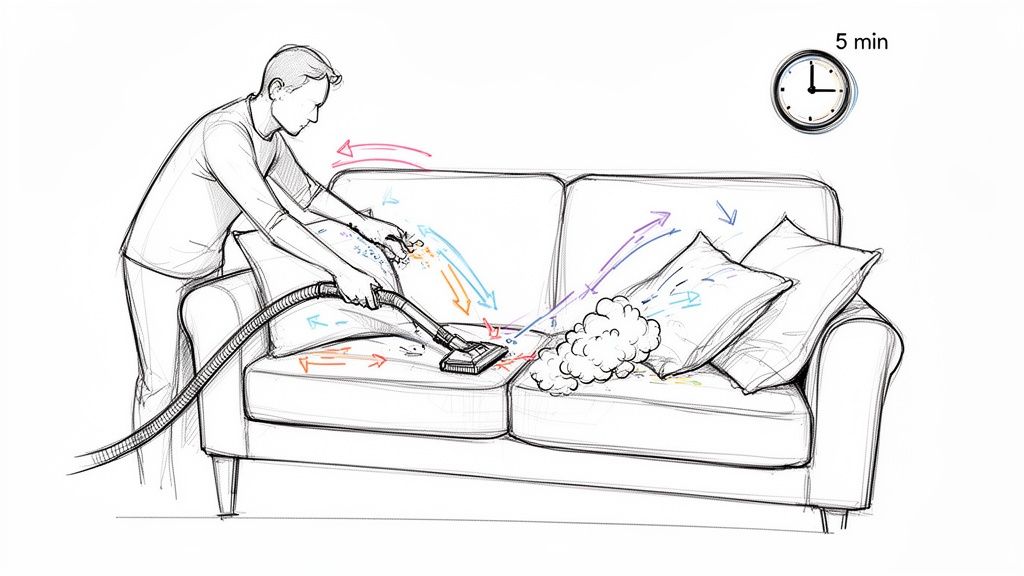
A simple five-minute weekly routine is your best defense against the gradual buildup of dust, crumbs, and pet dander. It’s this everyday grime that makes fabric look dull and worn out long before its time. Catching dirt before it settles deep into the fibers makes future spot treatments far more effective.
Your Weekly Upkeep Checklist
Making this a quick, effortless part of your weekly cleaning schedule is the goal. It shouldn’t feel like a major chore, but more like a simple reset for your living space. This is about more than just a quick pass with the vacuum; it’s about being methodical to get the best results.
Here’s a simple yet powerful routine:
- Systematic Vacuuming: Start with the right tool—an upholstery brush attachment. Use it to gently vacuum all the main surfaces, including the back and arms. The soft bristles are designed to lift debris without being abrasive.
- Crevice and Seam Duty: Switch to the crevice tool. This slender nozzle is perfect for getting into those tight spaces where crumbs, hair, and dust love to hide—between cushions, along seams, and in decorative tufts.
- Cushion Rotation and Fluffing: If your cushions are removable, take them off for a good fluff or shake. When you put them back, rotate and flip them. This simple step ensures they wear evenly and helps them keep their shape for much longer.
Polyester’s natural stain resistance really shines when you back it up with regular upkeep. A quick weekly vacuum can pull up to 80% of dust and allergens right out of the fabric.
For the 60% of households with pets and kids—a key driver in the cleaning market—this simple act prevents the buildup that can trigger allergies and keeps your sofa looking its best.
If you’re dealing with pet fur, you know it’s a constant battle. Another smart move is to explore different futon covers; they can provide an extra layer of protection that makes cleaning even easier.
Your Spot Treatment Playbook for Common Spills
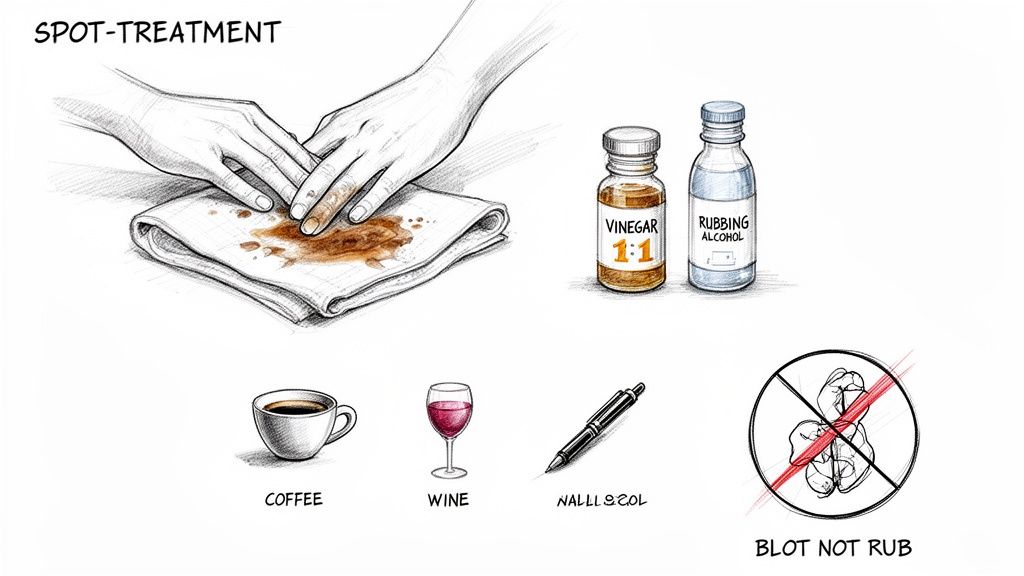
[Image demonstrating the correct technique of blotting a spill on upholstery from the outside edge inward]
Life happens, and spills are an inevitable part of owning furniture. The good news is that polyester’s synthetic nature gives it a fighting chance against stains, but you have to act fast. The moment that glass of wine tips over, your mission is to contain and lift the spill before it works its way deep into the fabric fibers.
The single most important rule to remember? Blot, never rub. Scrubbing a fresh stain only grinds it deeper into the upholstery, making it a nightmare to remove. Grab a clean, white cloth, apply gentle pressure, and always work from the outside of the spill inward to keep it from spreading.
Tackling Food and Drink Stains
From a morning coffee mishap to a dropped slice of pizza, these are the usual suspects. Most are water-based, which means you can handle them with a simple DIY solution—as long as your sofa has a ‘W’ or ‘W/S’ cleaning code.
For everyday spills like juice, soda, or that dreaded red wine:
- Blot immediately. Use a dry, white cloth or a stack of paper towels to soak up as much liquid as you can.
- Mix your solution. A tablespoon of clear dish soap in two cups of lukewarm water is all you need.
- Apply gently. Dip a clean cloth into the soapy water, wring it out well (you want it damp, not dripping), and carefully blot the stain.
- Rinse and dry. Use a second cloth dampened with plain water to “rinse” the spot by blotting away the soap. Finish by blotting with a dry towel to absorb any remaining moisture.
Pro Tip: For a stubborn red wine or coffee stain, add a tablespoon of white vinegar to your soap and water mix. Vinegar’s mild acidity is fantastic at breaking down the tannins in those drinks.
Erasing Greasy and Oily Marks
Greasy stains from things like butter, salad dressing, or lotion need a different strategy because oil and water just don’t play well together. The goal here is to absorb the oil before you treat whatever mark is left behind.
Start by sprinkling a generous amount of cornstarch or baking soda directly onto the oily spot. Let it sit for at least 15-20 minutes. This little trick works wonders by drawing the grease right out of the fabric. Once the time is up, just vacuum the powder away.
If there’s still some discoloration, you’ll likely need a solvent-based cleaner (this is for sofas with ‘S’ or ‘W/S’ codes). A small amount of rubbing alcohol on a clean cloth is often perfect for the job. Dab it on, then blot with a dry cloth until the stain is gone.
Handling Ink and Pet Accidents
An accidental pen mark or a pet-related incident can feel like a catastrophe, but they are almost always manageable if you know what you’re doing.
- For Ink Stains: Isopropyl alcohol (rubbing alcohol) is your absolute best friend here. Lightly dampen a cotton ball with alcohol and gently dab at the ink. You’ll see the ink start to transfer to the cotton. Keep using fresh cotton balls until the mark completely vanishes.
- For Pet Urine: The real challenge here is tackling both the stain and the odor. Mix a solution of equal parts white vinegar and water. Blot the area thoroughly with this mixture to neutralize the ammonia in the urine. Afterward, sprinkle a good amount of baking soda over the damp spot to absorb any lingering odors as it dries, then vacuum it all up.
No matter the stain, remember that patience and a gentle touch are your greatest tools for keeping that polyester sofa looking brand new.
Deep Cleaning Your Sofa Without Calling a Pro
When the routine vacuum and spot clean just aren’t cutting it anymore, it’s time for a deeper clean. The good news is you don’t always need to shell out for professional services. Most polyester sofas are designed to be deep cleaned right at home, whether you have removable covers or fixed upholstery.
The trick is knowing which method to use for your specific sofa. Get this right, and you’ll have furniture that looks and feels brand new without risking any damage.
For Sofas with Removable Covers
If you see zippers on your cushion covers, you’ve hit the jackpot. Machine washing is a fantastic way to get a consistent, even clean across the entire sofa, knocking out all that built-up grime and any lingering odors.
But don’t just throw them in the wash. To keep your covers from shrinking or getting damaged, you need to be precise.
- Always Check the Tag: Before you do anything, make sure the care tag has the ‘W’ code, giving you the green light for machine washing.
- Zip Everything Up: Close every single zipper. This is a small step, but it prevents the metal teeth from snagging the fabric or scratching the inside of your machine.
- Wash Gently: Use a mild detergent that’s free of bleach. Set your machine to a gentle cycle and use only cold water. Hot water is the number one enemy of polyester; it’s the fastest way to shrink your covers.
- Air Dry Is a Must: Never, ever put polyester sofa covers in a machine dryer. The intense heat will almost certainly cause them to shrink or warp, and you’ll never get them back on the cushions. Hang them up to air dry, preferably away from direct sunlight.
Crucial Tip: Here’s a pro move—put the covers back on the cushions while they are still just slightly damp. This allows the fabric to stretch and mold perfectly to the cushion’s shape as it finishes drying, giving you a snug, wrinkle-free finish.
For Sofas with Fixed Upholstery
When your sofa covers are sewn shut, you’ll need a more hands-on cleaning method. The key here is to clean effectively without soaking the fabric, which can lead to mildew, water rings, or damage to the foam underneath.
A simple mix of mild detergent and water usually does the trick. Just stir a small amount of clear dish soap into a bowl of water until you have a slightly sudsy solution. Grab a clean microfiber cloth, dip it, wring it out, and gently work the solution into the fabric. Tackle one small section at a time using a gentle circular motion to lift the dirt without being too aggressive.
If you’re looking for a more powerful clean, think about using an upholstery steam cleaner. These machines use steam heated to 212°F (100°C), which is hot enough to kill 99% of bacteria without damaging polyester fibers. It’s a great way to mimic professional results, removing up to 98% of contaminants—a huge plus for anyone with allergies. The North American carpet cleaner market is valued at $776 million, but a good home unit is a smart, budget-friendly investment that can add years to your sofa’s life.
After you’ve cleaned an area, “rinse” it by wiping it down with a fresh cloth dampened with just plain water. To finish, blot the entire sofa with dry towels to pull out as much moisture as you can. A fan pointed at the sofa will speed up the drying time significantly.
If you’re in the market for a new piece and appreciate durable, easy-to-maintain furniture, exploring a range of fabric sofa sets can give you some great ideas for your next purchase.
What to Do About Lingering Smells and When to Call for Backup
You’ve successfully banished the stain, but sometimes an unwelcome odor decides to stick around. Smells from pets, spilled food, or just that general musty scent can really dig into polyester fibers, but they don’t have to be a permanent fixture in your living room. Before you reach for a heavy-duty chemical spray, a few simple, fabric-safe tricks can bring back that fresh-sofa feeling.
Good old-fashioned baking soda is almost always the best place to start. It’s a natural powerhouse for absorbing odors and is completely safe for your polyester sofa. Just sprinkle a generous, even layer over the entire surface—don’t forget the cushions, arms, and back.
Let the baking soda sit for at least an hour. If you’re dealing with a more stubborn smell, leaving it on overnight is even better. It works by neutralizing the very molecules that cause bad odors. Once it’s had time to work its magic, just vacuum it all up with your upholstery attachment. Simple as that.
Tackling Tougher Organic Odors
Sometimes, baking soda just isn’t enough, especially for organic smells like pet urine or spilled milk. These odors are caused by bacteria, and you need something that can break them down on a molecular level. This is where an enzyme cleaner becomes your best friend.
Enzyme cleaners are biological formulas that literally “eat” the organic matter creating the smell, completely getting rid of it instead of just covering it up. When you’re dealing with a pet accident, this is really the only method that will solve the problem for good.
- Find the right product: Look for a cleaner specifically made for upholstery to avoid any mishaps.
- Test it first: Like any cleaner, always test it on a hidden spot to make sure it doesn’t mess with the fabric’s color.
- Follow the instructions: Apply it as directed on the bottle, lightly saturating the area, and let it air dry completely. The enzymes need time to do their job, so be patient.
Don’t underestimate the power of good air circulation. It’s a simple but critical step. Open a few windows or point a fan at the sofa to help moisture evaporate quickly. This is your best defense against mildew and that dreaded damp, musty smell.
Knowing When to Call a Professional
There are times when even the most determined DIY effort isn’t going to cut it. Trying to tackle a massive, set-in stain or a deeply embedded odor without the right equipment can sometimes make things worse. Knowing your limits is key to protecting your furniture.
The demand for effective cleaning solutions is massive, with the upholstery care chemicals market expected to hit $5.1 billion by 2036. This boom is driven by households—including the 70 million in the US with dogs—that need formulas capable of handling tough jobs and eliminating up to 95% of allergens. While a good home cleaning can remove about 85% of common stains, professional-grade formulas are what you need for the deep-set odors that home remedies just can’t touch.
Think about calling in a pro if you’re facing:
- Widespread staining or saturation: If a big part of the sofa is soaked, especially with a liquid.
- An ‘S’ or ‘X’ cleaning code: These require special solvents or techniques best left to the experts.
- Delicate or vintage fabrics: Older polyester blends can be more fragile and need a gentle touch.
- A stubborn odor that just won’t go away: Professionals have powerful extraction equipment to pull odors from deep within the cushions.
For many homeowners, choosing durable and easy-to-clean furniture from the get-go is a game-changer. You might be interested in exploring a wide selection of high-quality sofas designed for the realities of modern living.
Got Questions About Polyester Sofa Care? We’ve Got Answers
Even with the best game plan, a few questions always pop up when it comes to keeping your polyester sofa in top shape. It’s easy to get tangled in the do’s and don’ts, but a little expert advice goes a long way. Let’s tackle some of the most common queries we hear.
Getting clear, straightforward answers builds confidence. You’ll know exactly what to do—and what to avoid—to keep your furniture looking brand new.
Can You Use a Steam Cleaner Safely?
For most polyester sofas, absolutely. Steam cleaning can be a fantastic way to deep clean without harsh chemicals. But first, you have to check the care tag.
If your tag shows a ‘W’ or ‘W/S’ code, you’re good to go. Steam is brilliant for sanitizing and lifting out deep-seated grime. Just be sure to use a proper upholstery attachment and keep it moving to avoid soaking the fabric. It’s always a smart move to test a small, hidden spot first to make sure there’s no discoloration.
However, if your tag is marked ‘S’ or ‘X’, stop right there. Steam is a definite no-go. The moisture will cause permanent damage, so you’ll have to stick to solvent-based or vacuum-only methods.
What’s the Best Way to Remove Pet Hair?
Polyester’s tight weave is great for durability, but it can feel like a magnet for pet hair. Don’t worry, getting it off is easier than you think. A good vacuum with a pet hair attachment is your first move and will get most of it.
For that stubborn, woven-in fur, here’s a trick I swear by:
- Slip on a pair of rubber cleaning gloves and dampen them slightly.
- Wipe your hands across the sofa, always moving in one direction.
- You’ll be amazed at how the friction makes the hair clump up into little balls you can just pick off.
A simple window squeegee dragged across the fabric works just as well. Finish up with a sticky lint roller to catch any last stray hairs, and your sofa will look pristine.
A Quick Tip: The best defense is a good offense. Brushing your pets regularly means less fur ends up on the furniture in the first place.
Do Polyester Sofas Pill or Fade?
This is a big concern for a lot of people. The good news is that high-quality polyester is incredibly resistant to both pilling and fading. Pilling—those annoying little fuzzballs—is usually only an issue with lower-quality blends. You can keep it at bay by vacuuming regularly to get rid of abrasive dirt and by blotting spills instead of scrubbing them.
If some pills do eventually show up, don’t panic. A fabric shaver or a de-pilling comb will whisk them away in seconds, leaving the surface smooth again.
As for fading, that’s almost always caused by one thing: direct sunlight. Those UV rays are tough on any fabric over time. The simplest solution is to use your blinds or curtains to shield the sofa during the sunniest hours of the day. It’s a small step that makes a huge difference in preserving the color.
At Futonland, we believe that beautiful furniture should be easy to live with. Our curated collection of futons, sofa beds, and sleepers is designed with durability and simple maintenance in mind, so you can spend less time cleaning and more time relaxing. Explore our stylish and functional pieces today at https://futonland.com.