
Your Guide to Finding the Perfect Chemical-Free Sofas
When you hear the term “chemical-free sofa,” what comes to mind? It’s a bit of a misnomer, of course—everything is made of chemicals. But in the world of furniture, it means something very specific. Think of it like choosing organic produce over conventional. You’re not avoiding food; you’re avoiding synthetic pesticides and harmful additives. A “chemical-free” sofa follows the same principle: it’s built from the ground up using materials that won’t off-gas toxic compounds into your living room.
What We’re Really Talking About
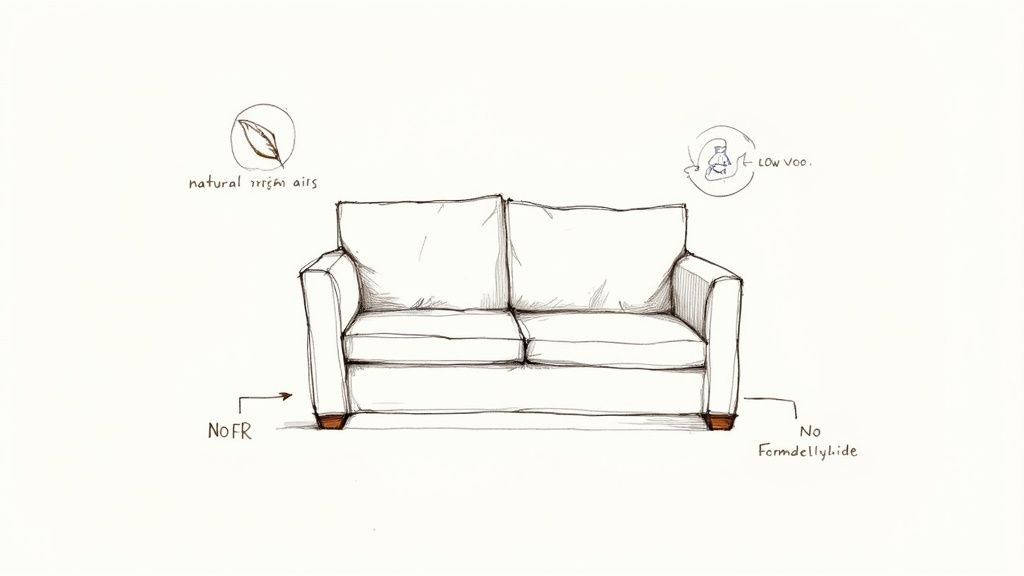
When we say “chemical-free,” we’re focused on eliminating a few key culprits commonly found lurking in standard sofas:
- Formaldehyde: A known carcinogen often used in the glues that hold together plywood and particleboard frames.
- Flame Retardants: Toxic chemicals historically drenched onto foam and fabrics, which have been linked to serious health issues.
- Volatile Organic Compounds (VOCs): A whole family of gases that get released from paints, finishes, and synthetic foams, directly impacting your indoor air quality.
Choosing a sofa made without these additives isn’t just about furniture—it’s a major step toward a healthier home. To make it crystal clear, let’s break down the key differences side-by-side. This table quickly shows what to look for and what to steer clear of when you’re shopping.
Conventional vs Chemical-Free Sofas at a Glance
| Component | Found in Conventional Sofas | Found in Chemical-Free Sofas |
|---|---|---|
| Frame | Plywood or particleboard with formaldehyde-based glues. | Solid, kiln-dried hardwood with no added formaldehyde. |
| Cushions | Polyurethane foam, often treated with flame retardants. | Natural latex, wool, or organic cotton batting. |
| Upholstery | Synthetic fabrics like polyester or nylon with stain-resistant chemical treatments. | Natural, untreated fibers like organic cotton, linen, or hemp. |
| Finishes/Glues | High-VOC paints, stains, and adhesives. | Zero-VOC or low-VOC water-based finishes and glues. |
| Fire Safety | Chemical flame retardants. | Naturally flame-resistant materials like wool. |
Seeing the materials laid out like this really highlights the contrast. You’re essentially swapping a cocktail of synthetic chemicals for materials that are pure, natural, and don’t compromise your indoor air.
The Growing Demand for Healthier Homes
This shift toward non-toxic living isn’t just a fleeting trend; it’s a powerful movement. Consumers are more aware than ever of how their home environment affects their well-being, and the market is responding. A non-toxic sofa is a cornerstone of that healthier living space.
By prioritizing sofas made with solid wood, natural latex, organic textiles, and zero-VOC finishes, you actively reduce your family’s daily exposure to a cocktail of invisible chemicals. This conscious choice contributes directly to cleaner indoor air.
The Building Blocks of a Non-Toxic Sofa
To really get what makes a sofa “non-toxic,” you have to look past the pretty fabric and see what’s going on inside. Think of it like a chef who insists on using fresh, high-quality ingredients for a healthy meal. A furniture maker committed to non-toxic design does the same, choosing specific, natural materials to build a genuinely chemical-free sofa. Let’s peel back the layers and check out the three key building blocks you should always look for.
The Frame: The Foundation of Durability
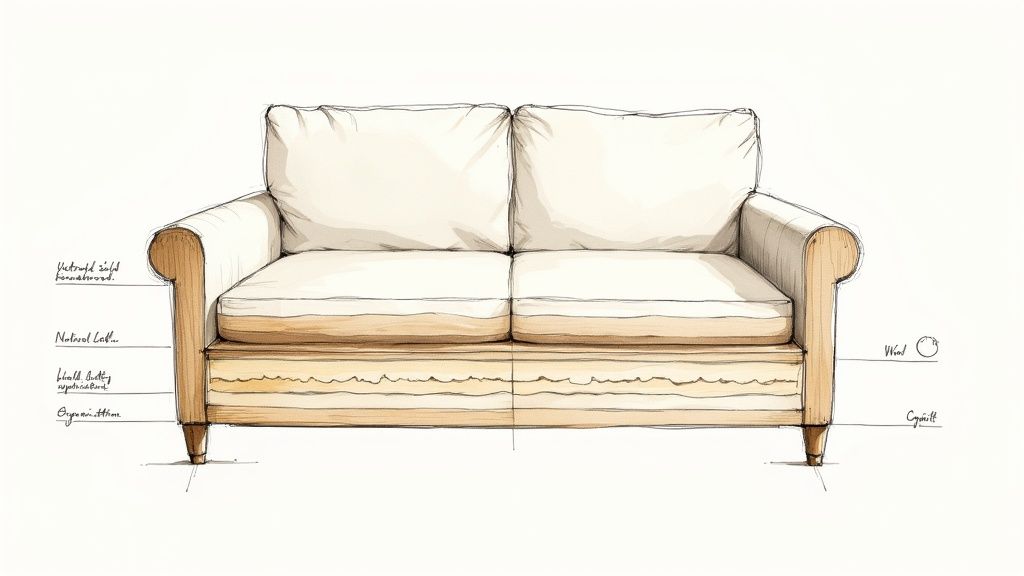
The frame is your sofa’s skeleton, giving it the structure and support it needs to last for years. In most conventional furniture, this is where a lot of hidden toxins lurk. Many frames are built from particleboard or plywood, which are basically just wood scraps and sawdust held together with formaldehyde-based glues. Formaldehyde is a known carcinogen that can “off-gas” into your home, hurting your indoor air quality. For a non-toxic sofa, the gold standard is a frame made of 100% solid hardwood. It’s naturally strong, incredibly durable, and doesn’t rely on the chemical adhesives you find in engineered woods. When you’re shopping, look for frames made from kiln-dried hardwoods like maple, oak, or ash.
The kiln-drying process is a big deal—it pulls moisture from the wood, preventing it from warping or cracking over time. This ensures your sofa stays stable and sturdy for its entire life.
It’s also a great idea to look for frames made with FSC-certified (Forest Stewardship Council) wood. This certification is your guarantee that the wood came from responsibly managed forests, making it a better choice for both your home and the planet. This push for sustainability is making a real difference. A huge part of that growth is driven by people choosing materials like FSC-certified wood.
The Cushioning: The Heart of Comfort
This is where you’ll find the biggest difference between a standard sofa and a chemical-free one. Most sofas on the market use polyurethane foam, a petroleum-based material that often releases VOCs. Historically, this foam was also doused in toxic flame-retardant chemicals linked to a whole host of health problems. A truly non-toxic sofa ditches the synthetic foam for natural, healthier alternatives that are just as comfortable and resilient.
- Natural Latex: Sourced from the sap of rubber trees, GOLS (Global Organic Latex Standard) certified organic latex is a top-tier choice. It’s naturally resistant to mold and dust mites, super durable, and offers supportive, breathable cushioning without any synthetic junk.
- Organic Wool: Wool is an amazing natural fiber. It acts as a natural flame retardant, so there’s no need for harsh chemical treatments. It’s also fantastic at regulating temperature and wicking away moisture, keeping you comfortable in any season.
- Organic Cotton: Often used as a soft, breathable wrap or batting, GOTS (Global Organic Textile Standard) certified organic cotton provides that plush feel. It’s grown without synthetic pesticides or fertilizers, so the final material is pure and gentle.
When you’re looking at different options, it helps to see how these materials work in different furniture types. For example, quality hardwood futon frames provide a solid, non-toxic base for these natural cushioning materials.
The Upholstery: The Final Touch
The fabric covering your sofa is the part you touch, sit on, and live with every day. Many synthetic fabrics like polyester or nylon are treated with chemical stain guards or wrinkle-resisters that can contain PFCs (per- and poly-fluoroalkyl substances) and formaldehyde. These chemicals can be absorbed through the skin or released into the air you breathe. For a truly chemical-free sofa, you’ll want to stick with natural, untreated textiles. These fabrics are breathable, durable, and safe for the whole family. Top Upholstery Choices:
- GOTS Certified Organic Cotton: Soft, breathable, and comes in a huge range of colors and weaves.
- Linen: Known for its durability and timeless style, linen is also naturally resistant to bacteria.
- Hemp: An incredibly strong and sustainable fiber that actually gets softer with use.
Once you know to look for these three core components—a solid hardwood frame, natural cushioning, and organic upholstery—you can confidently pick out a high-quality, chemical-free sofa that’s built for lasting comfort and a healthier home.
Making Sense of Eco-Friendly Certifications
Trying to shop for a chemical-free sofa can feel like learning a new language, filled with acronyms and official-looking seals. But these certifications are your best tool for cutting through the marketing fluff to find out if a product is genuinely non-toxic. Think of them as a promise from an independent expert who has already done the homework for you.

Without these labels, you’re just taking a brand at its word, and that can be a gamble. A real certification means the sofa’s materials have passed strict, verifiable tests for health, safety, and sustainability. Let’s break down the key players you should look for.
The Big Four Certifications for Sofas
Each certification acts like a specialist, focusing on a different part of the sofa—from the wood in the frame to the fabric on the cushions. Knowing what each one means helps you see the whole picture.
- GOTS (Global Organic Textile Standard): This is the gold standard for organic fibers. When you see the GOTS logo on a sofa’s upholstery, it guarantees the fabric (like cotton or linen) was grown without synthetic pesticides and processed without nasty chemicals, from harvest all the way to the finished product. It also ensures fair labor practices.
- GOLS (Global Organic Latex Standard): Specifically for the latex foam in cushions, GOLS is your ticket to purity. It certifies that the latex comes from organically grown rubber trees and is made of at least 95% raw organic material. This is how you avoid the synthetic fillers and VOCs common in conventional foams.
- Greenguard: This certification is all about clean indoor air. Greenguard tests products for thousands of chemical emissions to make sure they won’t pollute your home. For an even higher standard, look for Greenguard Gold, which has stricter limits suitable for schools, healthcare facilities, and anyone with chemical sensitivities.
- FSC (Forest Stewardship Council): The FSC seal is your assurance that the wood used in the sofa’s frame was sourced from responsibly managed forests. It’s not just about trees; this certification covers environmental, social, and economic standards, protecting wildlife and preventing deforestation.
Think of these four certifications as a team of specialists. GOTS covers the fabric, GOLS handles the cushion foam, Greenguard checks the air quality impact, and FSC validates the wood’s origin. Together, they provide a complete picture of a sofa’s non-toxic credentials.
How to Use Certifications While Shopping
When you’re looking at a supposedly chemical-free sofa, don’t settle for vague claims like “eco-friendly.” Ask for the specifics. A trustworthy brand will be happy to show you its certifications and provide documentation. The presence of these labels is a strong sign that you’re making a healthy investment. This same level of scrutiny is just as important for other furniture, too. For instance, when you look into choosing organic mattresses, you’ll see that GOTS and GOLS certifications are the key indicators of quality and safety there as well. It’s also worth noting that a single product can—and often should—have multiple certifications. A truly top-tier non-toxic sofa might boast an FSC-certified frame, GOLS-certified latex cushions, and GOTS-certified upholstery, all while being Greenguard Gold certified for low emissions. This layering of credentials offers the highest level of confidence. If you want to get even more familiar with the different seals and what they mean, you can explore various eco-friendly certifications for a deeper dive. By learning to recognize these labels, you empower yourself to make a smart, confident decision that’s better for your home and your health.
Finding the Right Chemical-Free Sofa for Your Budget
Thinking about going non-toxic with your furniture can feel a little intimidating, especially when you start looking at price tags. But here’s the good news: a healthier home is totally within reach, no matter your budget. Whether you’re ready to invest in a premium piece or need a more accessible option, there are fantastic chemical-free sofas out there. Let’s break down two different ways to get a beautiful, non-toxic sofa into your living room: a top-of-the-line modular system and a more budget-friendly, customizable collection.
Premium Investment: The Rund Modular Sofa
If you’re looking for the absolute best in quality, flexibility, and non-toxic design, the Rund Modular Sofa is a serious contender. This isn’t just another couch; it’s a complete furniture system that grows and changes with you. The magic of a modular sofa is that you can reconfigure it whenever you need to—turning a loveseat into a sprawling sectional without having to buy a whole new piece of furniture. But where the Rund really shines is in its construction. It’s built from the ground up to be completely chemical-free.
- Solid Wood Frame: The foundation is made from certified sustainable solid hardwood, meaning no formaldehyde-laced glues you’d find in cheaper plywood or particleboard.
- Natural Cushioning: Inside, you’ll find comfy natural Talalay latex cushions wrapped in plush wool. This combo gives you that perfect supportive-yet-soft feel without any polyurethane foam or sketchy flame retardants.
- Certified Adhesives: Every bit of glue used is GreenGuard Certified, so you don’t have to worry about it releasing harmful VOCs into your air.
- Organic Upholstery: You can get it covered in a range of pure, organic fabrics like hemp, cotton, and wool for a surface that’s completely safe to relax on.
The Rund is more than furniture; it’s a long-term investment in your home’s health. Thanks to its modular design and top-notch, non-toxic materials, it might just be the last sofa you ever have to buy.
This is the classic “buy once, buy well” philosophy. The initial cost is higher, but its durability and adaptability deliver incredible value over the years. It’s a smart move for anyone who prioritizes both their health and timeless style.
Accessible and Natural: Eco-Friendly Futon Collections
You don’t need a massive budget to create a chemical-free living space. One of the most effective—and affordable—ways to do it is by building your own non-toxic sofa with a natural futon sofa frame. This approach gives you total control and transparency over every single component. Futonland’s collection of eco-friendly furniture offers the perfect building blocks. The process is surprisingly simple:
- Start with a Solid Wood Frame: Pick from a huge selection of futon frames made from unfinished or low-VOC finished solid hardwoods. They’re sturdy, beautiful, and completely free of the nasty chemicals common in engineered wood.
- Pair with a Natural Mattress: Next, choose a futon mattress made from natural and organic materials. You can find options filled with GOTS-certified organic cotton, natural wool (which doubles as a natural flame retardant), and GOLS-certified organic latex.
This mix-and-match strategy lets you design a completely chemical-free sofa that fits your style and your wallet. You get the peace of mind of a solid hardwood base and pure, natural cushions without the hefty price tag of a high-end, fully upholstered sofa. Ultimately, the best path is the one that fits your priorities. The Rund offers a premium, all-in-one solution with endless flexibility, while an eco-friendly futon collection provides a customizable and accessible route to a healthier home. Both prove that a beautiful, comfortable, and chemical-free sofa is closer than you think. Materials and sourcing vary widely within eco-friendly lines, so it is worth reading the details. Handmade Amish futon frames, for example, are built from regionally sourced American lumber; some Scandinavian sofa beds are handmade in Finland with CertiPUR® certified, low-VOC foam; and eco-friendly bedroom furniture is available in solid pine from renewable forests. Across these collections, look for sustainably harvested wood, organic cotton, certified foams, and water-based finishes.
Your Smart Shopper’s Checklist for Buying a Sofa
Navigating the world of furniture shopping can feel overwhelming, but you’re now armed with the right knowledge to make a confident, healthy choice. Let’s turn everything we’ve talked about into a practical tool you can use, whether you’re browsing online or walking through a showroom. Think of it as your personal filter to cut through the marketing noise and find a genuinely chemical-free sofa.

Use this checklist to guide your conversations with salespeople and to double-check product descriptions online. It’s designed to make sure you don’t miss any of the critical details that separate a truly non-toxic piece from one that just looks the part.
Your Essential Sofa Inspection Checklist
Before you even think about swiping your card, run through these key checkpoints. A reputable seller should be able to answer “yes” to these questions and have the paperwork to back it up.
- Frame is 100% Solid Hardwood: Get confirmation that the frame is built entirely from solid, kiln-dried hardwood. Particleboard and plywood are out. For bonus points, ask if the wood is FSC-certified for responsible sourcing.
- Adhesives and Finishes are Low-VOC: Check that any glues are low or zero-VOC. Greenguard certification is a fantastic sign here. The finishes should be water-based or natural oils, not chemical lacquers.
- Cushions Contain Natural Materials: Verify that the cushions are made from GOLS-certified natural latex, organic wool, or GOTS-certified organic cotton. Polyurethane foam is a definite no-go.
- Upholstery is Organic or Natural: Make sure the fabric is a natural fiber like GOTS-certified organic cotton, hemp, or linen. Critically, it should be free from chemical stain-resistant treatments.
- Proof of Certifications is Available: This is the big one. Ask to see the actual documentation for any GOTS, GOLS, FSC, or Greenguard claims. Talk is cheap; proof is everything.
This checklist isn’t about being difficult; it’s about being diligent. A brand that is truly committed to producing chemical-free sofas will welcome these questions and have the answers ready.
Critical Questions to Ask Any Seller
Going beyond the basic checklist, a few direct questions can reveal a lot about a company’s commitment to transparency. Don’t be shy—your family’s health is worth the extra minute of conversation.
- “Can you provide a complete material disclosure for this sofa?” This question cuts right to the chase. You’re asking for a full breakdown of every component, from the frame and glue down to the foam and fabric. Vague answers are a major red flag.
- “Are any chemical flame retardants used in any component of this sofa?” The keyword here is “any.” Sometimes a brand might highlight untreated wool but sneak chemicals in somewhere else. Look for the TB117-2013 label as a starting point for compliance.
- “What are the dimensions and how is it delivered?” Even the healthiest sofa is useless if it doesn’t fit through your door. Ensure the piece will work in your space and that you fully understand the delivery process. To avoid any day-of surprises, it’s always a good idea to consult available resources like these handy sizing charts.
When you’re prepared with this checklist and these questions, you can shop with real confidence. You’ll be able to quickly spot the brands that prioritize health and transparency, ensuring the beautiful new sofa you bring home is as safe as it is stylish.
Why Better-Made Furniture Is the Sustainable Choice
Quality and Longevity
One of the primary reasons to opt for better-made furniture is the superior quality and craftsmanship it offers. Low-cost solutions often compromise on materials and construction to keep prices down, resulting in flimsy furniture that deteriorates quickly. Conversely, well-crafted furniture made from sustainable materials can last for decades, reducing the need for frequent replacements and minimizing waste generation. Choosing furniture that stands the test of time means contributing to a more sustainable lifestyle by reducing overall consumption.
Sustainable Materials
Better-made furniture is often sourced from sustainable materials, such as reclaimed wood, responsibly harvested timber, or eco-friendly materials like bamboo. These renewable materials have a lower environmental impact than cheaper options from non-recyclable or non-biodegradable materials. By supporting sustainable materials, we encourage manufacturers to adopt eco-friendly practices and contribute to preserving our natural resources.
Reduced Carbon Footprint
The manufacturing and transportation of low-cost furniture often involve long supply chains and excessive energy consumption, leading to higher carbon emissions. On the other hand, better-made furniture is frequently produced locally or regionally, reducing transportation distances and associated greenhouse gas emissions. By choosing locally-made, high-quality furniture, you can lower your carbon footprint and contribute to a more sustainable global climate.
Reduced Waste and Landfill Burden
Low-cost furniture often ends up in landfills after a short lifespan, contributing to the growing waste problem. Investing in better-made furniture means fewer replacements, less waste generation, and a reduced landfill burden. By extending the life of your furniture, you actively participate in the circular economy, which is crucial for a sustainable future.
Choosing better-made furniture over low-cost solutions is a sustainable choice that positively impacts our environment, health, and society. By prioritizing quality, sustainable materials, and ethical practices, we can create a more resilient and eco-friendly world. Although the initial investment might be higher, the long-term benefits of durability, reduced waste, and improved well-being make it a worthwhile decision. Let’s embrace a sustainable lifestyle and make conscious choices that will benefit us and the planet in the long run.
How to Care for Your Natural Sofa
You’ve brought home a beautiful, chemical-free sofa. Now, how do you keep it looking great for years to come? The good news is, you don’t need an arsenal of harsh, chemical-based cleaners. A little simple, gentle maintenance is all it takes to preserve its natural beauty and keep your home’s air quality pure. Your first line of defense is a simple one: regular vacuuming. Dust and everyday debris don’t just look messy; they contain tiny abrasive particles that can slowly wear down fabric fibers. Using a vacuum with a HEPA filter is a game-changer here, as it traps those super-fine particles and allergens instead of just kicking them back into the air.
Cleaning Natural Fabrics Gently
When a spill inevitably happens, acting fast is key. But reaching for a conventional spot cleaner can introduce the very VOCs you worked so hard to avoid. Luckily, natural fabrics like organic cotton and linen respond beautifully to simple, DIY solutions. For most common spills, this gentle mixture works wonders:
- Mix a tiny amount of mild, fragrance-free soap (like castile soap) into a bowl of lukewarm water.
- Dampen a clean, white cloth with the soapy water and gently blot the stain, working from the outside in to prevent it from spreading.
- Whatever you do, don’t scrub! That can damage the delicate fibers and push the stain deeper.
- Once the stain is gone, blot the area with a different cloth dampened with plain water to rinse, then pat it dry with a clean towel.
Best Practices for Long-Term Care
Beyond tackling spills, a few easy habits will go a long way in extending the life and beauty of your sofa. Think of these as small investments that protect your bigger investment, keeping your centerpiece looking its best without any harsh chemicals.
Think of your sofa’s care routine like tending to a garden. Consistent, gentle attention—like rotating cushions and avoiding harsh sunlight—yields the best long-term results, preserving its natural beauty and health.
To keep everything looking plump and wearing evenly, make it a habit to rotate and flip your seat and back cushions every few weeks. This simple step helps distribute the wear and tear, maintaining the loft and springiness of the natural latex and wool fill. Finally, try to protect your sofa from constant, direct sunlight. The UV rays can cause the natural dyes in fabrics like organic cotton and linen to fade over time. If your sofa is near a window, using curtains during the sunniest part of the day will help keep its color vibrant for the long haul.
Common Questions About Chemical-Free Sofas
Making the move to a chemical-free sofa is a big decision for creating a healthier home, but it’s natural to have a few questions. Let’s tackle some of the most common concerns to help you feel completely confident in your choice. One of the first things people ask is about durability. Will a sofa made from natural materials really hold up to daily life, especially with kids and pets running around? The answer is a definite yes. High-quality chemical-free sofas are built to last, often using solid hardwood frames and resilient natural latex. They’re exceptionally sturdy—frequently outlasting conventional couches made with particleboard and polyurethane foam.
Are Chemical-Free Sofas More Expensive?
Cost is always a big consideration. While it’s true that the upfront price tag can be higher, it’s better to think of it as a long-term investment. These sofas are crafted with superior, durable materials that won’t need to be replaced every few years. You’re paying for real craftsmanship, healthier components, and furniture that’s built to stay in your family for years, which often saves money in the long run. Demand for healthier homes is pushing manufacturers to innovate with healthier materials like plant-based foams and certified natural latex, making chemical-free options more accessible than ever.
Do They Come in Modern Styles?
Absolutely. The old idea that non-toxic furniture is stuck in a rustic or bohemian aesthetic is completely outdated. Today, you can find chemical-free sofas in a huge range of styles, from sleek minimalist designs to cozy, contemporary sectionals. Brands now focus on modern looks right alongside healthy materials, so you never have to sacrifice style for safety.
A common myth is that “natural” means fragile. In reality, materials like solid hardwood, natural latex, and tightly woven organic linen are incredibly robust and designed for longevity. You are investing in furniture that is built to last.
Ultimately, choosing a chemical-free sofa is about investing in your home’s health and your family’s well-being. By asking the right questions and understanding the true value behind the materials, you can find the perfect piece that fits both your style and your principles, creating a safe and beautiful centerpiece for your living space.