The Ultimate Guide to Foam Futon Mattresses
A modern foam futon mattress can turn a futon from a “backup bed” into a comfortable, dependable piece you can use every day. Compared to traditional cotton futons that compress and harden over time, foam is designed to spring back, stay supportive, and feel consistent whether you’re sitting or sleeping.
Why Foam Futon Mattresses Are a Modern Essential
For a long time, “futon mattress” meant thin, lumpy, and short-lived. Foam changed that. Today’s foam futon mattresses are built for real life: small apartments, guest rooms, home offices, and spaces where one piece of furniture needs to do more than one job.
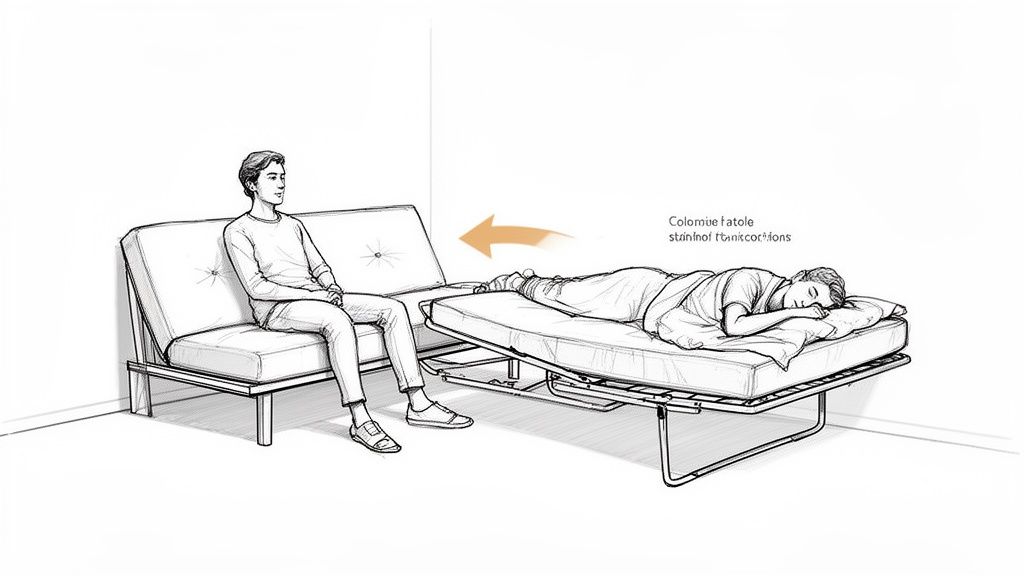
Foam vs. traditional cotton
Think of cotton as a material that “packs down.” Over time, it forms hard spots and uneven areas. Foam behaves differently: it compresses under pressure, then rebounds, helping the surface stay more even and supportive.
- Consistent comfort: Less lumping, less “dip” where you sit most often.
- Stronger long-term support: High-density foam cores hold shape better for both sitting posture and spinal alignment.
- Better durability: Quality foam resists permanent impressions more effectively than basic cotton fill.
The best foam futons feel like a real sofa during the day and a real bed at night — that reliability is what makes them worth it in modern homes.
You can browse different builds and sizes in our main futon mattresses collection.
Decoding the Different Types of Futon Foam
Not all foam feels the same. The best way to shop is to understand what each foam does — and why many of the best futon mattresses combine more than one type.
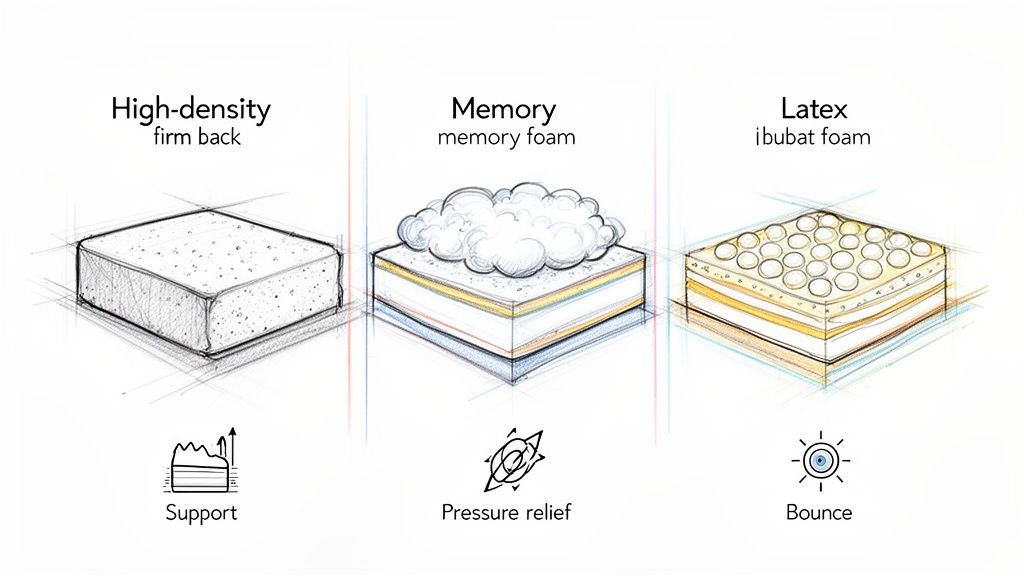
High-density polyurethane foam (poly-foam)
This is the “support core” foam in many futon mattresses. It’s resilient, firm, and designed to hold up under daily sitting.
- Feel: supportive, quick response (less “sink”).
- Best for: primary sofa use, back/stomach sleepers, long-term durability.
- Why it matters: helps prevent bottoming out and early sagging.
Memory foam
Memory foam is the pressure-relief layer. It contours more closely to the body, which can be especially helpful for side sleepers.
- Feel: softer contouring, slower response.
- Best for: pressure relief, couples (motion isolation), side sleepers.
- Watch for: heat retention in older formulas — many modern builds use cooling features.
Memory foam “hugs.” If you like a cradled feeling and reduced pressure on shoulders/hips, it’s a strong option.
Latex foam
Latex has a more buoyant, springy feel. It contours, but it pushes back faster than memory foam and tends to sleep cooler due to its structure.
- Feel: responsive, “sleep on top” support.
- Best for: hot sleepers, combination sleepers, people who dislike the “stuck” feeling.
- Bonus: natural latex is often chosen by eco-minded shoppers.
If you’re comparing sleep styles and materials, you may also like our guide to Japanese Shiki Futon mattresses.
Foam futon mattress type comparison
| Foam Type | Best For | Feel | Key Benefit | Potential Downside |
|---|---|---|---|---|
| High-density poly-foam | Daily sitting, firm support | Firm, quick response | Durable, resists sagging | Less contouring by itself |
| Memory foam | Pressure relief, side sleeping | Soft, contouring | Reduces pressure points | Can feel warm or “slow” |
| Latex | Cooling, responsive comfort | Bouncy, supportive | Sleeps cooler, long-lasting | Usually higher cost, heavier |
In practice, a common “best of both worlds” design is a firm high-density core topped with memory foam or latex for comfort.
Choosing the Right Thickness and Firmness
Thickness and firmness determine whether your futon feels like a real bed, a firm couch, or something in between. It should match how you’ll use the futon most.
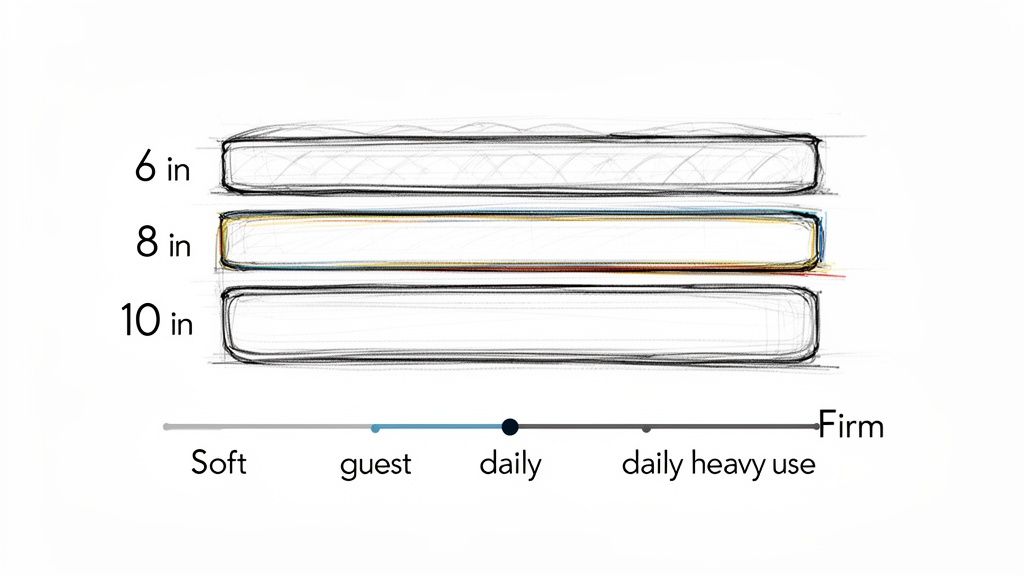
Thickness guide
- 6-inch: best for occasional sleeping and lighter use (guest room, low-frequency sofa).
- 8-inch: the most versatile “daily use” thickness for both sitting and sleeping.
- 10-inch+: best for maximum comfort, frequent sleeping, and a more bed-like feel.
If your futon is your main sofa or gets slept on regularly, an 8-inch or thicker mattress is usually the safest choice for comfort and longevity.
Firmness guide
Futon mattresses have a tricky job: they must support upright sitting posture and still feel comfortable to sleep on.
- Primary sofa use: lean firm to medium-firm so you don’t sink and feel the slats.
- Regular sleeping: choose based on sleep position:
- Back/stomach sleepers: medium-firm to firm helps keep hips from sinking.
- Side sleepers: medium with a comfort layer can reduce shoulder/hip pressure.
- Guest use: medium-firm tends to be the most universally comfortable.
How to Pair a Foam Futon Mattress with the Right Frame
This part matters more than most people realize. A futon mattress needs to bend with the frame — and different frames demand different flexibility.
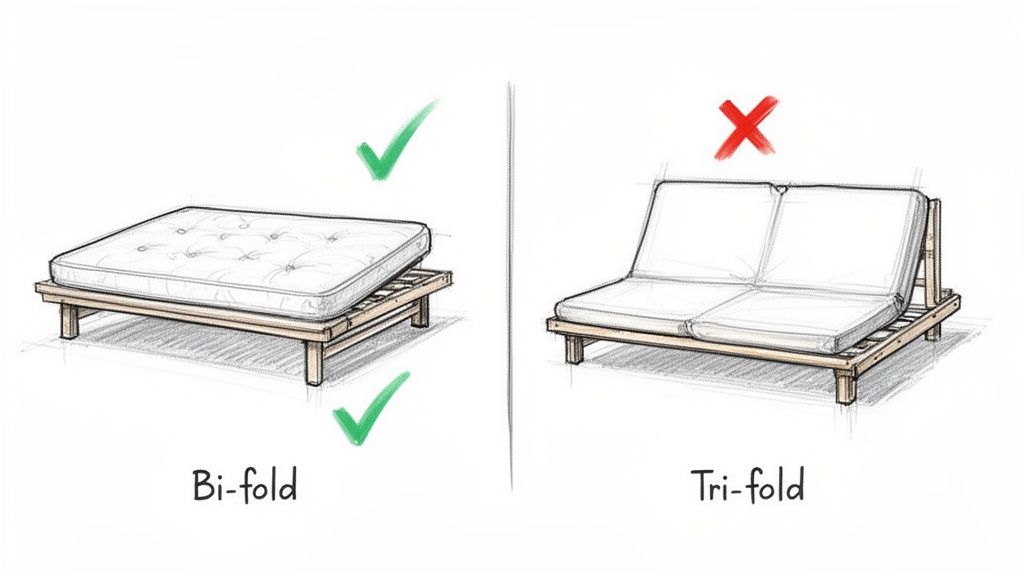
Bi-fold frames (most common)
These fold once (sofa-to-bed). They’re the easiest match for most foam futon mattresses and tend to work best with thicker builds.
- Best match: 8-inch and 10-inch foam futons.
- Why: fewer “tight folds” means less stress on foam layers.
Tri-fold frames (chairs, compact loveseats)
These fold in three sections and require a mattress designed to handle tighter bends.
- Best match: thinner, more flexible futon mattresses (often around 6-inch).
- Avoid: very thick or rigid high-density builds that don’t want to bend.
If you’re shopping for the whole setup, you can see different styles in our futon frames collection.
Care Tips to Maximize Mattress Life
Foam is low-maintenance, but a few habits go a long way.
Rotate (and flip if designed for it)
- Rotate head-to-foot every 2–3 months to help wear stay even.
- Flip only if your mattress is truly two-sided (many foam designs are one-sided).
Use a cover
A durable, removable cover protects the mattress and makes cleaning much easier. You can browse options in our futon covers collection.
Quick cleaning basics
- Blot spills fast (don’t rub).
- Let the mattress air out occasionally to reduce trapped moisture and odors.
Common Questions About Foam Futon Mattresses
Are foam futon mattresses good for everyday sleeping?
Yes — if you choose the right thickness and support. For regular sleeping, an 8-inch or thicker foam futon is typically the better choice, especially with a supportive core.
How long does a foam futon mattress last?
Quality foam futons can last roughly 7–10 years with normal use, depending on foam density, how often it’s used as a sofa, and how well it’s supported by the frame. Regular rotation and a cover help.
Can I put a regular bed mattress on a futon frame?
Not recommended. Most standard mattresses aren’t designed to fold and can be damaged when bent (and warranties typically won’t cover that).
Do foam futons sleep hot?
Some can, especially older memory foams. If you sleep warm, look for cooling features (gel, breathable constructions) or latex, and pair it with a breathable cover.
Will a foam futon sag?
Lower-density foams are more prone to early sagging. A supportive, higher-quality core plus good frame support and rotation will help the mattress keep its shape longer.
At Futonland, we carry foam futon mattresses designed for modern living — from guest-room basics to everyday sleeper upgrades. Explore foam futon mattresses at Futonland.com.