
The Ultimate Guide To Comfortable Sofa Beds For Everyday Use
Yes—you can absolutely find a comfortable sofa bed for everyday use. The key is looking past the upholstery and focusing on what’s inside. Modern designs have come a long way from the old “guest-only” sleepers, turning today’s best sofa beds into reliable, supportive primary beds for daily life in small spaces.
Why Your Everyday Sofa Bed Needs to Be More Than Stylish
Let’s be honest: for years, “sofa bed” was shorthand for thin mattresses, metal bars, and a rough night’s sleep. They were built as occasional backups—fine for guests, but not something you’d want to rely on daily.
That’s not how people live anymore.

A truly comfortable sofa bed isn’t a novelty—it’s a practical solution for studio apartments, home offices that double as guest rooms, and multifunctional living spaces. It has to deliver two experiences: a supportive, good-looking sofa by day and a genuinely restful bed by night. That “two jobs, one footprint” reality is exactly why quality matters more here than it does with a standard couch.
The Modern Evolution of the Sleeper Sofa
Today’s better models are designed specifically for frequent use, with stronger frames, smoother mechanisms, and mattress builds that feel closer to a real bed. The big shift is this: brands are no longer treating sleepers like a compromise piece. The goal is comfort first—then conversion.
The biggest mistake you can make is shopping for a daily-use sofa bed like it’s “just a sofa.” You’re buying a bed that also functions as a couch, so the sleep experience has to lead the decision.
What to Expect from This Guide
This guide breaks down what actually matters—mattress type, support system, frame construction, and the details that make a sofa bed comfortable night after night. If you want to see the range of modern options first, browse convertible sofa beds to get a feel for styles and formats.
The Secret to All-Night Comfort Is the Mattress
The mattress is the deciding factor between a sofa bed you tolerate and one you genuinely enjoy sleeping on. For everyday use, you have to think like a mattress shopper. Comfort, support, and durability matter more than fabric color.
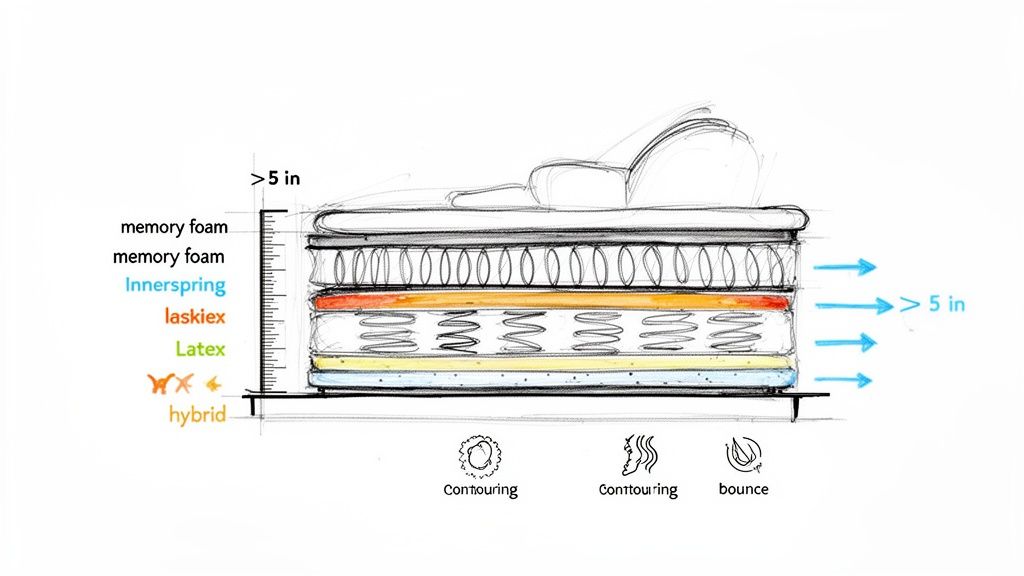
Decoding the Different Mattress Types
-
Memory Foam: Great for pressure relief. It contours to hips and shoulders, which can be especially comfortable for side sleepers.
-
Innerspring: Offers a traditional, bouncy feel and tends to sleep cooler thanks to airflow through the coils. Look for good comfort layers so you don’t feel coil pressure.
-
Latex: Responsive and buoyant—you feel more “on top” of the mattress rather than sunk in. It’s also known for durability and a naturally breathable feel.
-
Hybrid: Combines coil support with foam or latex comfort layers. Many people find hybrids the best all-around choice for everyday sleeping.
To compare build styles and materials, you can also explore mattress options (many construction principles overlap between futons, sleepers, and convertible setups).
Sofa Bed Mattress Type Comparison
| Mattress Type | Best For | Feel & Support | Potential Downsides |
|---|---|---|---|
| Memory Foam | Side sleepers, pressure relief | Contouring “hug” feel | Can sleep warmer; slower response |
| Innerspring | Hot sleepers, classic feel | Bouncy, breathable support | Can feel coils if comfort layers are thin |
| Latex | Combination sleepers, durability | Buoyant, responsive support | Heavier; often pricier |
| Hybrid | All-around comfort seekers | Balanced coil support + comfort layers | May be thicker/heavier depending on design |
Why Thickness and Density Matter
For daily sleeping, two specs matter most: thickness and material quality. Very thin sofa bed mattresses can feel fine for occasional use but become uncomfortable fast when used nightly, especially if you’re sensitive to pressure points.
Thickness impacts immediate comfort, but material quality determines whether that comfort lasts. A thicker mattress made with low-quality foam can still sag quickly.
If the listing includes foam density, higher-density foams generally hold up better over time. When density isn’t disclosed, look for signals of quality—reputable mattress branding, detailed material descriptions, and reviews that mention comfort after months (not days).
Match the Mattress to How You Sleep
- Side sleepers: Look for pressure relief (memory foam comfort layers or a plush hybrid).
- Back sleepers: Prioritize spinal alignment (medium-firm latex or hybrid support).
- Stomach sleepers: Usually do best with firmer support to prevent hip sink.
- Combination sleepers: Prefer responsive surfaces (latex or hybrid) that don’t feel “stuck.”
How to Judge a Sofa Bed by Its Frame and Mechanism
A great mattress won’t save a weak frame. For everyday use, the frame and conversion mechanism determine whether the sofa bed stays stable, quiet, and comfortable—or turns into a squeaky, sagging headache.
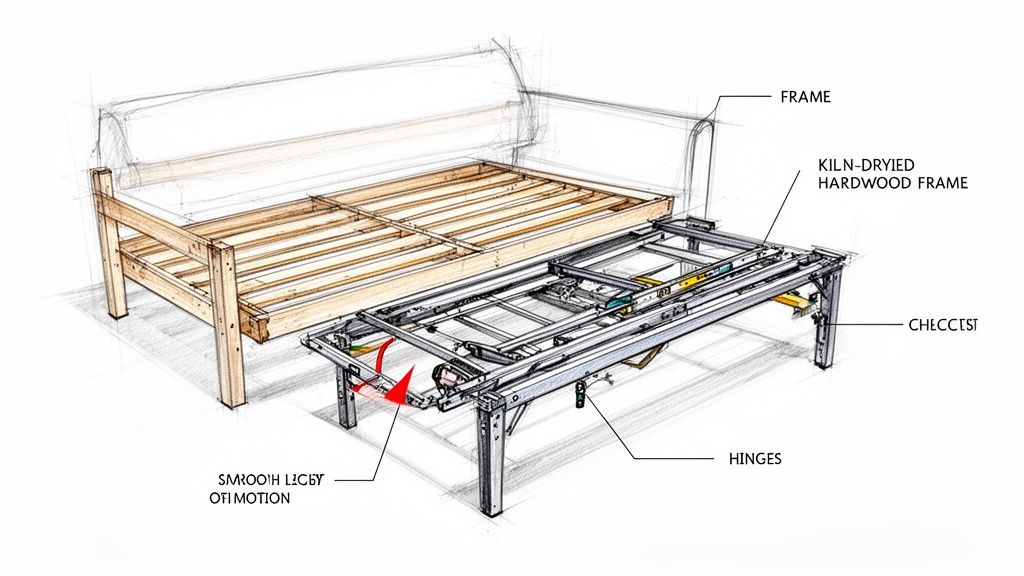
Frame Materials That Hold Up
-
Kiln-dried hardwood: A strong choice for long-term durability. It’s more resistant to warping and structural loosening over time.
-
High-quality plywood: Can be very stable when well-constructed (multi-layer, thick panels, solid joinery).
-
Particleboard/MDF in structural areas: Best avoided for daily-use sleepers. These materials tend to fail earlier under repeated stress.
If you can test it in person, pay attention to “feel.” A sturdy sofa bed feels solid when you sit on the edges and doesn’t rack or wobble when you shift your weight.
If you want a quick reference point, many construction principles overlap with strong futon frames—you’re looking for stability, strong joinery, and dependable support under repeated movement.
What to Look for in the Conversion Mechanism
The mechanism should feel smooth, balanced, and secure in both sofa and bed positions. When a system is well-designed, conversion feels straightforward—not like a wrestling match.
- Heavier-gauge metal components at hinges/joints (avoid flimsy hardware in high-stress points)
- Clean motion without grinding, snagging, or uneven lifting
- Secure locking in both positions so it feels stable
- Support design that avoids obvious pressure points (support decks and slat systems can reduce the “bar” feeling on some builds)
Finding the Perfect Fit for Your Living Space
Comfort isn’t only about what you sleep on—it’s also about how the sofa bed fits into your daily life. The most common mistake is measuring only the “sofa” footprint and forgetting the open-bed dimensions.
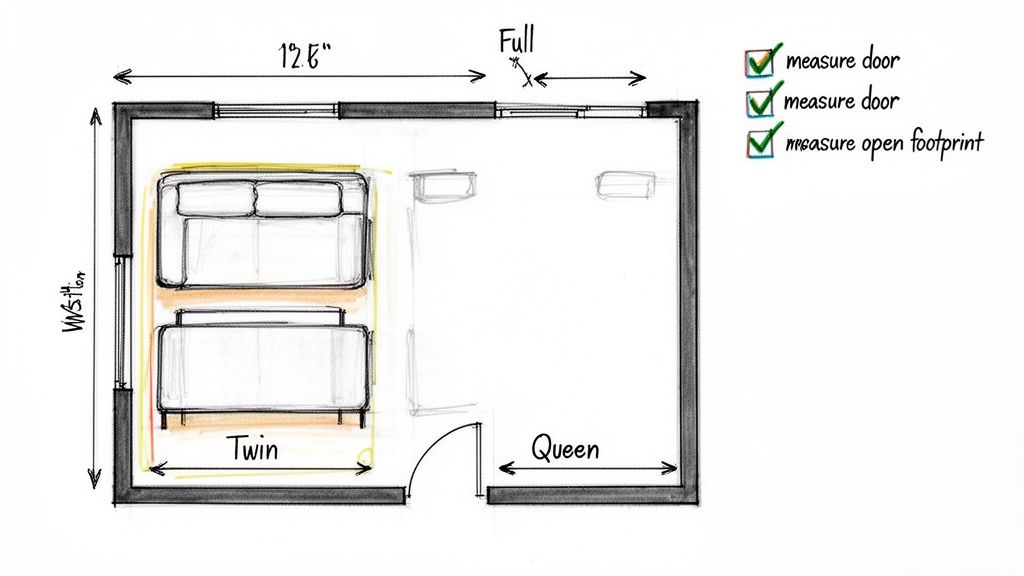
Measure for Day Mode and Night Mode
- The destination: Measure the wall/area where the sofa will sit.
- The open footprint: Use the listed bed dimensions and outline them with painter’s tape. Check walking space, doors, drawers, and closet access.
- The delivery path: Measure doorways, hallways, stairs, and tight turns.
Don’t just confirm it fits in the room—confirm it can get into the room.
Match Mattress Size to Daily Use
- Twin: Best for one sleeper in tight layouts (studio, office/guest room).
- Full: Comfortable for one sleeper who wants more space; two can fit, but nightly use is often better for one.
- Queen: Best for couples or anyone using the sofa bed as their primary bed.
To visualize footprints, refer to sizing charts before you commit.
Watch the Visual Weight
In small rooms, “visual weight” matters. Chunky arms and low, heavy silhouettes can make a space feel tighter. Sleeker profiles, raised legs, and lighter upholstery can keep the room feeling open, even when the footprint is similar.
How to Elevate Your Sleep Experience with Accessories
Once you’ve chosen the right sofa bed, accessories help fine-tune comfort and protect your investment.
Mattress Toppers: The Fastest Upgrade
- Memory foam toppers: Add pressure relief and soften a firm surface.
- Latex toppers: Add plushness while staying responsive and breathable.
Tip: If you fold the sofa bed daily, choose a topper that’s easy to roll, store, and put back on at night.
Sheets That Actually Fit
Sofa bed mattresses can be thinner than standard mattresses, so fitted sheets sometimes slip or bunch. Look for sets designed for slimmer mattresses (or check pocket depth before buying).
Pillows and Protection
Choose pillows that match your sleep position, and consider a removable/washable cover or protector to handle daily life—spills, pets, and routine wear.
Your Pre-Purchase Inspection Checklist
If You Can Test In Person
- Open and close it several times. It should feel smooth, stable, and manageable for one person.
- Lie down for a few minutes. Test your usual sleep position and check for pressure points.
- Sit where you’ll actually sit. Edges, center, and arms—listen for creaks and feel for wobble.
If You’re Shopping Online
- Look for clear construction details: frame materials, support system, mattress type and thickness.
- Read reviews for “after months” feedback: comfort, sagging, squeaks, ease of conversion.
- Check warranty and return terms: especially for the frame and mechanism.
Your Top Questions, Answered
How long should a sofa bed used every day last?
A well-built sofa bed can last many years with daily use, but longevity depends on frame construction, mechanism quality, and mattress materials. Cheaper frames and low-quality foam tend to wear out much faster.
Is a sofa bed or a futon better for nightly sleeping?
It depends on the build, but many sleepers prefer sofa beds because they can use a dedicated mattress system. That said, higher-end futons and convertible sofas can be excellent—especially when paired with a supportive mattress designed for frequent sleep.
Can I replace just the mattress on my sofa bed?
Often, yes. Many pull-out sleepers use replaceable mattresses—but you must match the correct dimensions and thickness so the mechanism can still fold properly.
At Futonland, we specialize in space-saving furniture that’s designed for real life. Explore our collection of durable, comfortable options at https://futonland.com.