Finding the Best Non Toxic Mattresses for Healthy Sleep

If you’re looking for the best non-toxic mattresses, your best bet is to focus on brands that prioritize certified organic and natural materials like cotton, wool, and latex. When it comes to futon mattresses and shikibutons, some standout names are Comfort Pure, White Lotus Home, and TFS—all known for their serious commitment to chemical-free construction. Best non-toxic futon mattresses and shikibutons with a cotton core are available from Comfort Pure, with other well-known names being White Lotus Home and TFSleep. These brands really get what it means to create a genuinely healthy sleep environment.

What Makes a Mattress Truly Non-Toxic

Trying to shop for a new mattress can feel like you’re decoding a secret language. You see words like “eco-friendly” and “natural” thrown around, but what do they actually mean? So, what really makes a mattress non-toxic?

At its core, a truly non-toxic mattress is one built from materials that are free from harmful chemicals. That means no polyurethane foams that release high levels of VOCs (Volatile Organic Compounds) and no sketchy synthetic flame retardants.

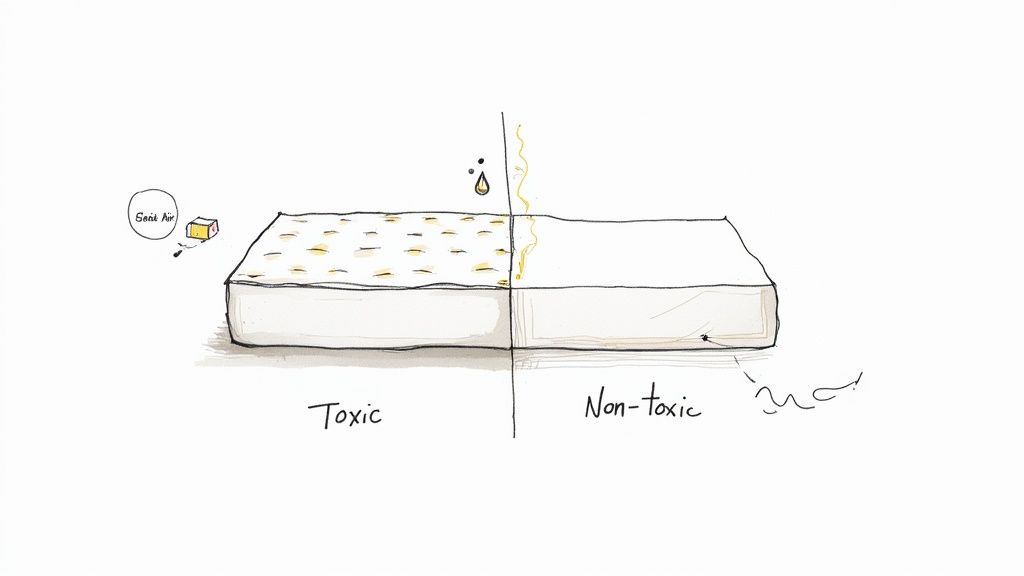
Illustration comparing a mattress split into two halves: one toxic with harmful elements, the other clean and non-toxic.

Think of it like grocery shopping. You can buy an apple that looks fine on the shelf, or you can buy one that’s certified organic, which guarantees it was grown without synthetic pesticides. A genuinely non-toxic mattress offers that same level of assurance, backed by verifiable, third-party certifications. This guide will give you a clear roadmap to tell the difference between clever marketing and a genuinely safe product.

The Foundation of a Healthy Bed

The journey to finding the right non-toxic mattress starts with what’s on the inside. Instead of relying on petroleum-based foams and chemical glues, these mattresses are made with materials straight from nature.

Key components to look for include:

  • Organic Cotton: Prized for its softness and breathability, GOTS-certified organic cotton ensures the fibers were grown without harmful pesticides.
  • Natural Wool: This amazing material is a natural temperature regulator and a flame barrier, which means there’s no need for chemical fire retardants.
  • Natural Latex: Sourced from rubber trees, GOLS-certified organic latex provides durable, pressure-relieving support without any synthetic fillers.

These materials don’t just avoid the bad stuff; they actively contribute to a healthier sleep environment. If you want to dive deeper into the alternatives, you can learn more about mattresses without fire retardant chemicals and how they meet safety standards the natural way.

To help you keep track, here’s a quick rundown of the best materials you’ll find in a non-toxic mattress.

Quick Guide to Non-Toxic Mattress Materials

Material Primary Benefit Best For
Organic Cotton Softness & Breathability Sleepers who value a soft, hypoallergenic surface and natural airflow.
Natural Wool Temperature Regulation & Fire Resistance Those who sleep hot or cold and want a natural flame barrier.
Natural Latex Durable Support & Pressure Relief Anyone needing responsive, long-lasting support without synthetic foams.

Focusing on these core materials is the surest way to build a sleep setup that’s as healthy as it is comfortable.

Why Air Quality Matters

Your mattress is one of the biggest pieces of furniture in your home, and it can have a huge impact on your indoor air quality. Traditional mattresses often “off-gas” VOCs for years—these are chemicals that can contribute to respiratory issues and other health problems.

Choosing a non-toxic mattress made from low-VOC materials is a powerful step toward a cleaner home. It reduces your nightly exposure to airborne chemicals, supporting better respiratory health and overall well-being.

This shift toward healthier home environments is more than just a trend.

Understanding the Healthiest Mattress Materials

To find the best non-toxic mattresses, you have to know what’s inside them. Think of a mattress like a recipe—the final product is only as good as its ingredients. The healthiest mattresses are built from materials that are comfortable and durable, but also fundamentally safe and free from nasty chemicals.

When you peek inside a truly non-toxic mattress, you won’t find polyurethane foams, chemical glues, or synthetic flame retardants. Instead, you’ll discover a thoughtful selection of natural fibers and materials, each chosen for its unique role in creating a healthy sleep environment. Getting to know these materials is the first step toward making a choice you can feel good about.

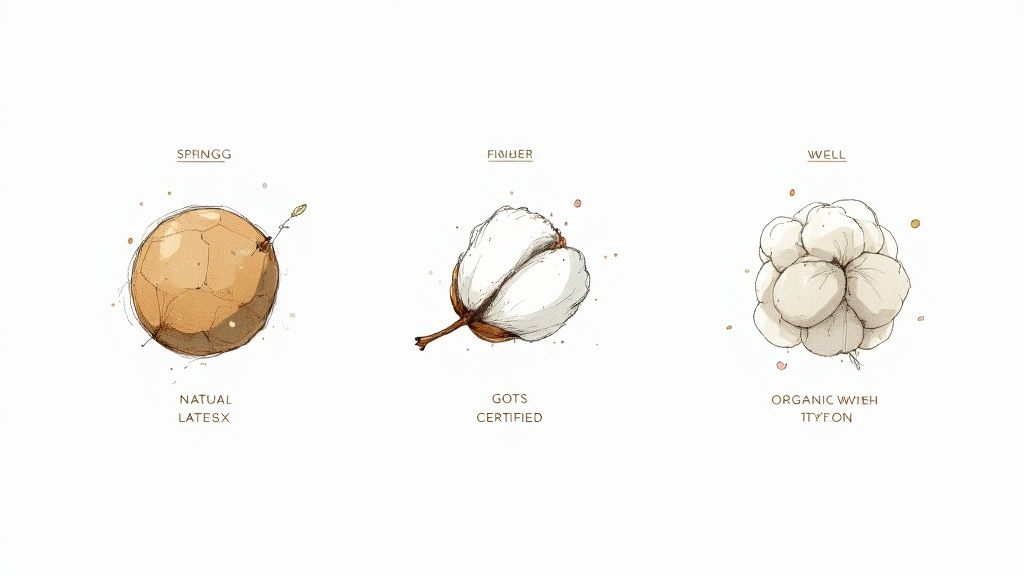
Illustrations of a natural latex sphere, GOTS certified cotton boll, and organic cotton fibers.

The Pillars of Purity: Natural Latex, Cotton, and Wool

Three materials are the undisputed gold standard in non-toxic mattress construction: natural latex, organic cotton, and organic wool. Each brings something special to the table, and together they create a sleep surface that is supportive, breathable, and genuinely safe.

Natural Latex: The Resilient Foundation

Derived from the sap of rubber trees, natural latex foam is both responsive and incredibly durable. It has a buoyant, springy feel that conforms to your body without that “sinking” quicksand feeling you get from memory foam. This resilience is fantastic for maintaining proper spinal alignment and relieving pressure points.

There are two main ways latex is processed:

  • Dunlop: This method creates a slightly denser and firmer foam. It’s known for its robust support and is often used in the core of a mattress.
  • Talalay: A more involved process results in a lighter, bouncier, and more consistent foam. Talalay is often used in the top comfort layers for its plush, airy feel.

Organic Cotton: The Breathable Comfort Layer

GOTS-certified organic cotton is the definition of clean, soft comfort. Unlike its conventional counterpart, it’s grown without synthetic pesticides or fertilizers, so the fiber is pure from the get-go. Its natural breathability is a huge plus, allowing air to circulate freely, wick away moisture, and help regulate your body temperature for a cooler, drier sleep.

Organic Wool: The Natural Insulator and Fire Barrier

Organic wool is a true performance fiber. Think of it as high-tech athletic gear for your bed—it wicks away moisture to keep you cool and dry in the summer while providing cozy insulation in the winter.

Even more importantly, wool is a natural flame barrier. Its high keratin and moisture content means it will char rather than ignite, allowing manufacturers to meet federal flammability standards without dousing their products in toxic chemical flame retardants.

By combining these powerhouse materials, manufacturers can create some of the best organic mattresses on the market. The synergy of latex, cotton, and wool delivers a sleep experience that is not only comfortable but also fundamentally healthier.

Plant-Based Foams: A Step Away From Petroleum

For those who love that classic, body-hugging feel of memory foam, plant-based foams offer a more sustainable alternative. Traditional memory foam is a type of polyurethane foam, which is derived entirely from petroleum.

Plant-based foams are made by replacing a portion of that petroleum with plant-derived oils, like those from soy or castor beans. While they aren’t fully “natural” like latex, these foams reduce the reliance on fossil fuels and typically have lower VOC emissions than their conventional counterparts. A CertiPUR-US® certification is a must-have here, as it ensures the foam is made without the worst offenders and has been tested for low emissions.

By understanding these powerful ingredients, you can better appreciate what makes up the best natural mattresses available today and choose the combination that promises your most restorative sleep.

Materials to Scrutinize and Avoid

Knowing what to look for is only half the battle; you also need to know what to avoid. Many conventional mattresses are loaded with materials that can off-gas harmful chemicals, hurting your indoor air quality and, potentially, your health. Reading product descriptions with a critical eye means watching out for these red flags.

Here are the most common materials to be wary of:

  • Polyurethane Foam and Memory Foam: These petroleum-based foams are a primary source of Volatile Organic Compounds (VOCs). Unless a foam is specifically certified for low VOCs (like CertiPUR-US®), it’s best to steer clear.
  • Chemical Flame Retardants: Chemicals like PBDEs (polybrominated diphenyl ethers) have been linked to serious health issues. While many have been phased out, other questionable retardants are still in use.
  • Vinyl: Sometimes used for waterproof covers, vinyl can contain phthalates, a class of chemicals known to be endocrine disruptors.
  • Synthetic Glues: The adhesives used to bond mattress layers can be another hidden source of VOCs, including formaldehyde.

By prioritizing natural, time-tested materials and knowing which synthetics to avoid, you’ll have the foundational knowledge you need to pick a mattress that truly supports your well-being, night after night.

Dunlop vs Talalay Latex: A Practical Comparison

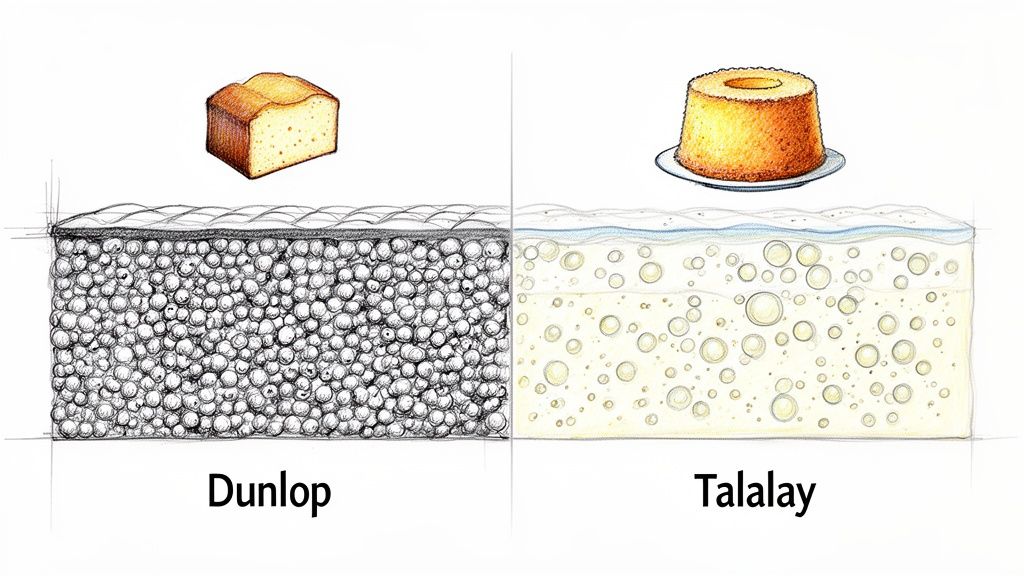
Illustration comparing Dunlop latex with dense, irregular cells (like pound cake) and Talalay latex with uniform, open cells (like angel food cake).

When you start looking at natural latex mattresses, you’ll quickly run into two names: Dunlop and Talalay. Both start as sap from the same rubber tree, but their journey from liquid to foam creates two completely different sleep experiences. Getting this difference isn’t just a technical detail—it’s the key to finding a mattress that actually fits your body and how you sleep.

Here’s a simple way to think about it: Dunlop is like a dense, supportive pound cake, while Talalay is more like a light, airy angel food cake. This little analogy really nails the core feel of each type and why they’re used for different jobs inside a mattress.

The Feel: A Tale of Two Textures

The real story behind Dunlop and Talalay is in how they’re made. Those manufacturing steps directly shape how dense, consistent, and springy the final foam feels.

The Dunlop process is the original method, trusted for nearly a century. Liquid latex is simply poured into a mold and baked in a vulcanization oven. As it bakes, natural sediment settles, which makes the finished foam a little firmer on the bottom than on the top. The result is a dense, highly supportive, and incredibly durable foam.

In contrast, the Talalay process throws in a couple of extra high-tech steps. The mold is only partially filled, then sealed and vacuum-expanded to spread the latex out. After that, it’s flash-frozen before being baked. This creates a much more consistent and open cell structure, yielding a foam that’s lighter, bouncier, and more uniform from top to bottom.

The most practical takeaway is this: Dunlop provides resilient, firm support, making it an ideal core material. Talalay offers buoyant, responsive cushioning, making it a premium choice for comfort layers that relieve pressure points.

Dunlop vs Talalay Latex At a Glance

Attribute Dunlop Latex Talalay Latex
Feel Dense & Supportive Buoyant & Bouncy
Cell Structure Irregular, denser at the bottom Uniform & open
Best Use Support Cores Comfort Layers
Durability Extremely High Very High
Cost More Affordable More Premium
Ideal For Back & Stomach Sleepers Side Sleepers, pressure relief

This table gives you a snapshot, but the best choice really depends on your personal needs.

Matching Latex Type to Your Sleep Position

There’s no single “better” latex—only the one that’s better for you. Your go-to sleeping position is the number one thing to consider when deciding between Dunlop, Talalay, or a mattress that smartly combines them.

For Side Sleepers

Side sleepers put a ton of pressure on their shoulders and hips, so they need a surface that gives way just enough to keep the spine straight.

  • Talalay is often the winner here. Its buoyant, contouring nature cradles those pressure points perfectly without that slow-sinking feeling you get from memory foam. A top layer of soft or medium Talalay is a dream for side sleepers.
  • Dunlop can still work. A softer Dunlop can provide enough pressure relief, but it will feel noticeably firmer and less “cushiony” than Talalay of the same ILD (firmness) rating.

For Back and Stomach Sleepers

These sleepers need the exact opposite: a firm, supportive surface to keep their hips from dipping and throwing their spine out of alignment.

  • Dunlop is the clear favorite. Its dense structure offers the robust, unwavering support needed to maintain a neutral spine. A mattress built on a firm Dunlop core is a fantastic choice for back and stomach sleepers.
  • Talalay can be used in firmer variations. A firm Talalay layer provides support, but its bouncier feel might not seem as stable as Dunlop, especially for stomach sleepers who need absolute stability.

The Power of Layering Both Types

Here’s the thing: many of the best natural latex mattresses don’t make you choose. They strategically layer both Dunlop and Talalay to harness the unique strengths of each material.

A popular and highly effective design uses a thick, firm Dunlop core as the foundational support system. This provides the durability and stability the mattress needs to perform for years. Then, one or more layers of softer Talalay latex are placed on top to deliver that immediate comfort and pressure relief.

This hybrid approach truly gives you the best of both worlds. You get the unyielding support your spine craves from the Dunlop base, combined with the luxurious, cloud-like cushioning that Talalay is famous for. This is why customizable mattresses, like those we offer at Futonland, are so effective—they let you fine-tune your comfort by layering different firmness levels, giving you ultimate control over your sleep.

How to Read Certifications and Avoid Greenwashing

When you’re hunting for a non-toxic mattress, certifications are your best friend. But let’s be honest, the alphabet soup of acronyms—GOTS, GOLS, OEKO-TEX—can feel a little intimidating at first. Think of this section as your decoder ring, helping you tell the genuinely clean products from the phonies.

Certifications are basically a passport for your mattress materials. They’re proof from an unbiased third party that a material is what the brand says it is—verifying its origin, purity, and safety. You don’t have to take a company’s word for it. This is the single most reliable way to shop with confidence.

Hand drawing on white paper with a pen, sketching various certification and sustainability logos.

The Most Important Labels to Know

As you compare different mattresses, a few key certifications will keep showing up. These are the gold standards, each covering a specific type of material. Getting to know them is crucial.

Here are the top three you’ll see everywhere:

  • GOTS (Global Organic Textile Standard): This is the top dog for organic textiles like cotton and wool. A GOTS logo means the entire process, from harvesting the raw fibers to manufacturing the final fabric, is socially and environmentally responsible.
  • GOLS (Global Organic Latex Standard): This one is specifically for latex. GOLS guarantees the foam is made from at least 95% certified organic raw material. It also puts strict limits on harmful substances and requires ethical production standards.
  • CertiPUR-US®: This label applies to polyurethane foams, including memory foam. It certifies that the foam is made without ozone depleters, specific flame retardants (PBDEs), formaldehyde, and heavy metals, and has low VOC emissions for better indoor air quality.

For a truly natural mattress, GOTS and GOLS are what you want to see. If you’re considering a mattress that includes memory foam, CertiPUR-US® is a must-have to ensure it’s on the cleaner side of synthetic foams.

Digging Deeper Into Textile Safety

Beyond the big three, OEKO-TEX is another important label you’ll run into. It focuses specifically on textile safety, making sure every single component—from the thread to the buttons—has been tested for harmful substances. Learning what Oeko-Tex Standard 100 means helps you understand just how thoroughly a product has been screened for chemicals that could be harmful to your health.

These labels aren’t just marketing fluff. They are the bedrock of non-toxic claims and heavily influence what savvy shoppers buy. They also happen to be a pretty good indicator of durability. For example, natural latex mattresses often come with 10–20 year warranties and easily last 8–12+ years—that’s a huge step up from the typical 6–8 year lifespan of many conventional foam mattresses.

Spotting and Avoiding Greenwashing

“Greenwashing” is a sneaky marketing tactic where companies use vague, feel-good language to make their products seem healthier or more sustainable than they really are. Learning to spot the red flags is your best defense.

A common greenwashing tactic is using unregulated terms like ‘eco-friendly,’ ‘plant-based,’ or ‘all-natural’ without any third-party certifications to back them up. A truly non-toxic brand will always be transparent and proud to show off its credentials.

Keep an eye out for these warning signs:

  • Vague Language: Watch out for phrases like “made with natural materials.” That could mean just 1% of the mattress is natural. Look for specifics, like “100% GOLS-certified organic latex.”
  • Proprietary “Eco Foams”: Some brands invent their own names like “bio-foam” or “eco-foam” to make standard polyurethane foam sound natural. It’s still petroleum-based.
  • Lack of Proof: If a company claims its product is organic but doesn’t show GOTS or GOLS certifications on its website, be skeptical. You should always be able to verify their claims on the certifying organization’s public database.

By focusing on verified, third-party certifications, you can confidently choose one of the many excellent natural mattresses out there and sidestep the deceptive marketing tricks.

CertiPUR-US And Greenguard: For Cleaner Air

Two other key players focus specifically on the air you breathe while you sleep. They tackle the issue of off-gassing and VOCs (Volatile Organic Compounds).

  • CertiPUR-US: This certification applies to polyurethane foams, which includes memory foam and many plant-based foams. It verifies that the foam is made without ozone depleters, heavy metals like mercury or lead, formaldehyde, or certain banned flame retardants. Most importantly, it guarantees low VOC emissions for better indoor air quality.
  • GREENGUARD Gold: This is one of the most stringent certifications for low chemical emissions. Products with this seal have been tested in a controlled chamber and are proven to meet extremely low VOC limits. This makes them an excellent choice for sensitive individuals, children, and anyone looking to maintain the purest possible indoor air. If this is a priority, you should definitely explore options that have earned CertiPUR certifications.

Exploring Non-Toxic Futon and Shikibuton Options

When you’re dealing with a smaller living space or just prefer a more minimalist look, the best non-toxic mattress isn’t always a traditional bed. This is where non-toxic futons and shikibutons really shine, offering a versatile and healthy sleep solution that fits perfectly into a clean, modern lifestyle.

These mattresses have deep roots in Japanese tradition, where simplicity and function are everything. Unlike the bulky beds we’re used to in the West, they’re designed to be firm, supportive, and often portable, making them a game-changer for multi-purpose rooms. And since they’re built with natural fibers, they’re an obvious choice for anyone trying to create a chemical-free home.

A simple sketch illustrating two bedding forms: a flat folded mattress labeled 'Folton' and a rolled mattress labeled 'Slurvboten'.

Why Choose a Non-Toxic Futon or Shikibuton

Beyond their space-saving magic, futons and shikibutons offer some real advantages for your well-being. Their minimalist construction usually means fewer glues and a bigger focus on pure, natural fills like cotton.

  • Firm Support for Spinal Alignment: Futons are traditionally firm, which is great for keeping your spine in a neutral position while you sleep. If you’re a back or stomach sleeper, this can make a huge difference, preventing your lower back from sinking and causing strain.
  • Superior Breathability: Because they are filled with natural fibers like cotton and wool, these mattresses have excellent airflow. This helps regulate your temperature and wick away moisture, keeping you cool and comfortable all night.
  • Versatility and Practicality: A futon can turn your living room into a guest room in seconds. A shikibuton can be rolled up and tucked away in a closet, freeing up precious floor space—a lifesaver in a studio apartment.

This back-to-basics approach makes them a practical, healthy choice for anyone looking to declutter their space and simplify their sleep.

Leading Brands in Natural Futon Mattresses

When you start shopping for non-toxic futons, a few brands stand out for their commitment to quality materials and honest craftsmanship. These are the companies that skip the polyurethane foams and chemical flame retardants, choosing instead to rely on the natural benefits of pure fibers. A great starting point is to explore the different types of shikibuton mattresses to get a feel for their unique construction.

One of the most trusted names in this space is Comfort Pure. This brand has perfected the art of creating premium futons and shikibutons built around a supportive cotton core. Their mattresses are known for their dense, durable feel and use of clean, natural materials that give you firm support without any off-gassing. You can see their collection at Comfort Pure.

By choosing a futon made with a simple cotton core, you are getting back to the basics of healthy sleep. You’re investing in a product with fewer variables, fewer synthetic components, and a firm foundation that has been trusted for centuries.

Other top-tier brands that put non-toxic materials first include White Lotus Home and TFSleep.

  • White Lotus Home: This company is all about handcrafting pure, organic bedding. Their futons are made with materials like GOTS-certified organic cotton, wool, and natural latex, giving you a range of firmness levels to choose from. Check out their offerings at White Lotus Home.
  • TFSleep: With decades of experience, TFSleep has a huge variety of futons made from natural and organic materials. They are transparent about their material sourcing and have built their reputation on a chemical-free philosophy. Discover their products at TFSleep.

These brands show how traditional design can meet modern health standards, offering some of the best non-toxic mattresses for people who value purity and practicality.

Practical Tips for Buying and Caring for Your Mattress

You’ve sorted through the materials, decoded the certifications, and maybe even started eyeing a few futon styles. Now, it’s time to get practical. This is where we bridge the gap between all that research and the reality of getting the mattress into your home and making sure it lasts.

Choosing a mattress confidently means knowing the little details—like what firmness really means for your back, how to handle delivery in a tight apartment building, and what the warranty actually covers. We’ll go over everything, from that harmless “new mattress smell” to making sure your investment is protected for years to come.

Handling the Natural “New Mattress Scent”

One of the first things you might notice when you unbox your new non-toxic mattress is a distinct, earthy smell. Don’t worry—this isn’t the harsh chemical odor you get from synthetic foams. This scent is completely harmless and comes straight from the natural materials. A latex mattress might have a faint, almost sweet smell, while wool can give off a subtle lanolin aroma.

This isn’t toxic “off-gassing” from VOCs; it’s just the natural scent of the materials finally breathing after being packaged. It’s a good sign, really! To help it fade faster:

  • Let it breathe: Get the mattress out of its packaging as soon as possible and put it in a well-ventilated room. Open a window if you can.
  • Keep it uncovered: For the first 24 to 48 hours, leave the sheets and bedding off. This gives any trapped scents a clear escape route.
  • Use a fan: A simple fan pointed at the mattress will do wonders to speed up the process by circulating the air.

This initial smell usually vanishes completely within a few days to a week, leaving you with nothing but fresh, clean air.

Choosing the Right Firmness for Your Sleep Style

Firmness isn’t just about what feels good for a few minutes in a showroom; it’s about proper spinal alignment all night long. The best non-toxic mattresses come in a range of firmness levels, and finding the right one is all about your primary sleeping position and body weight.

Think of firmness as the foundation for your posture while you sleep. The goal is to keep your spine in a neutral, straight line. If a mattress is too soft, your hips will sink too low. If it’s too firm, it will create uncomfortable pressure points at your shoulders and hips.

Here’s a quick guide to get you started:

  • Side Sleepers: Generally do best with a medium-soft to medium feel. This allows the mattress to cushion the shoulders and hips, relieving pressure while still supporting the waist.
  • Back Sleepers: A medium-firm to firm surface is usually the sweet spot. It provides enough support to keep the spine properly aligned without leaving a gap under your lower back.
  • Stomach Sleepers: You’ll need a firm mattress. This is critical to prevent your hips and belly from sinking, which can put a painful arch in your spine.
  • Combination Sleepers: A medium-firm mattress is often the safest bet. It offers a great balance of support and pressure relief that can accommodate you as you move around.

Navigating Logistics and Aftercare

Once you’ve picked your mattress, it’s time to think about getting it home. For city dwellers, especially in places like NYC, logistics can be a real headache. Tight stairwells, narrow hallways, and walk-up buildings aren’t exactly mattress-friendly.

This is where services like white-glove delivery are worth their weight in gold. Professionals will do all the heavy lifting, carrying the mattress to your room, unboxing it, and hauling away the packaging. Many companies, including Futonland, also offer old mattress disposal, saving you the major hassle of figuring out what to do with your old one.

With your new mattress in place, the final step is understanding the warranty and return policy. Most reputable brands offer a sleep trial, typically from 100 nights up to a full year, giving you plenty of time to be sure it’s the right fit. A solid warranty, often 10 to 25 years, protects you from manufacturing defects. Just be sure to read the fine print—it’s your ultimate peace of mind.

Got Questions About Non-Toxic Mattresses? We’ve Got Answers.

Jumping into the world of non-toxic mattresses can feel a bit overwhelming. After digging into materials, certifications, and different mattress types, you might still have a few questions buzzing around. This section tackles the most common ones we hear from shoppers, giving you clear, straightforward answers to help you make your final choice with complete confidence.

From figuring out if the price is justified to finding the best fit for your back pain, we’ll cover the last few details you need to go from researcher to the happy, well-rested owner of a fantastic non-toxic mattress.

Are Non-Toxic Mattresses Really Worth the Higher Price Tag?

It’s true, non-toxic mattresses often have a higher upfront cost, but it’s best to think of it as a long-term investment in your health and the mattress’s durability. That price reflects premium, certified organic materials that are simply more expensive to grow and process than their synthetic cousins.

For example, natural latex is tapped from rubber trees, and organic cotton is farmed without pesticides—both are more labor-intensive and costly processes. The payoff? These high-quality materials give the mattress a much longer lifespan. A natural latex mattress can easily last 15-20 years, blowing past the typical 5-8 year life of a conventional foam mattress. When you remember you spend a third of your life in bed, the value of sleeping without chemical exposure makes it a smart investment for many.

When you do the math and spread the cost over the mattress’s full lifespan, a premium non-toxic model is often friendlier on your wallet in the long run than buying and replacing cheaper, less durable mattresses every few years.

What’s the Real Difference Between a “Natural” and an “Organic” Mattress?

These two terms get thrown around a lot, and they’re easy to confuse. But the distinction is a big deal for any shopper who wants to know exactly what they’re buying. Getting this right helps you see past slick marketing and focus on what actually makes for a healthy sleep setup.

  • “Natural” just means the materials came from nature, like latex from a rubber tree or cotton from a plant. The problem is that this term is completely unregulated. It gives you zero guarantees that pesticides weren’t used during farming or that chemicals weren’t added during manufacturing. A “natural” label by itself doesn’t mean it’s free of harmful stuff.
  • “Organic” is a certified, legally regulated term. For a mattress to be labeled organic by an organization like GOTS (Global Organic Textile Standard) or GOLS (Global Organic Latex Standard), its materials have to be grown and processed under incredibly strict rules. These standards ban synthetic pesticides, fertilizers, and a whole list of nasty chemicals, ensuring purity all the way from the farm to your bedroom.

Bottom line: Always look for those third-party certifications like GOTS and GOLS to back up an “organic” claim. They are your definitive proof of safety and purity.

Do Non-Toxic Mattresses Have That “New Mattress Smell”?

Yes, but it’s a completely different kind of smell! Many new non-toxic mattresses have a mild, harmless scent that’s nothing like the chemical “off-gassing” from synthetic foams. In fact, that natural odor is a good sign—it tells you the mattress is made from genuine, plant-based materials.

A natural latex mattress, for instance, might have a faint, slightly sweet or vanilla-like smell. A mattress with wool can have an earthy, lanolin-like scent. These odors are totally natural and non-toxic. They usually fade away within a few days to a couple of weeks as the mattress airs out.

Want to speed things up? Just leave the mattress uncovered in a well-ventilated room for a day or two before you make the bed. Opening a window or aiming a fan at it will help that fresh, natural scent dissipate even faster.

Can I Find a Non-Toxic Mattress That’s Actually Good for Back Pain?

Absolutely. In fact, many of the best non-toxic mattresses are incredible for relieving back pain precisely because of their superior support. Natural materials often run circles around synthetics when it comes to providing both comfort and proper spinal alignment.

Natural latex is a top contender here. It’s uniquely resilient, contouring to your body to relieve pressure points while offering a buoyant lift that keeps your spine in a healthy, neutral position. It supports you perfectly without that “sinking” feeling, which is critical for back health.

Firmer options, like organic cotton and wool futons or shikibutons, are also fantastic choices for people with back pain. They provide a solid, supportive surface that prevents your hips from dipping down, maintaining proper alignment all night long. The trick is to match the mattress’s firmness level to your body weight and how you sleep to get the exact support your back needs.

How Long Do Natural Latex Mattresses Last Compared to Memory Foam?

Natural latex mattresses are the marathon runners of the mattress world. With good care, they can easily provide consistent comfort and support for 15 to 20 years. That’s a huge leap from the typical 7 to 10-year lifespan you’d expect from most memory foam mattresses.

What’s the secret? It’s the natural resilience of rubber. Latex bounces back and resists sagging and body impressions over time, which makes it a much smarter long-term investment. This durability is especially critical for convertible furniture like futons, ensuring your sleep surface stays supportive for more than a decade.

Will a Natural Latex Mattress Sleep Hot?

This is a big concern for many, mostly because people lump latex in with other heat-trapping synthetic foams. The truth is, natural latex is one of the coolest materials you can sleep on. Its secret is an open-cell structure that allows air to flow freely.

This built-in breathability stops body heat from getting trapped, wicking away warmth and moisture all night long. Both Dunlop and Talalay latex are fantastic for temperature regulation, making them a top choice for hot sleepers who need a cool, dry rest.

A common myth is that all foam sleeps hot, but natural latex breaks this rule. Its plant-based, open-cell design actively works to keep you cool, unlike dense, synthetic memory foams that are known for retaining heat.

Are Organic Mattresses Better For Allergy Sufferers?

Absolutely. Materials like GOLS-certified latex and GOTS-certified wool are naturally resistant to the stuff that makes you sneeze and itch. Their inherent properties create an environment where dust mites, mold, and mildew just can’t get comfortable.

For sensitive sleepers, an organic mattress isn’t just a luxury—it’s a practical tool for creating a cleaner, healthier sleep sanctuary. By removing the materials that allergens love, you can significantly reduce nighttime irritation and breathe easier.

This built-in resistance means you get a fresher sleep surface without any chemical treatments or synthetic additives. It’s a game-changer for anyone dealing with allergies or sensitivities.

Similar Posts