
Sleeper Sofa Mattress Guide: Comfort, Types, And Sizing
A great sleeper sofa mattress is what separates a practical piece of furniture from a genuinely comfortable bed. It’s the difference between guests waking up refreshed and waking up with a sore back. This guide walks you through what matters most—comfort, mattress types, sizing, and how to measure so your sofa bed actually closes smoothly.
Transform Your Sofa Bed from Lumpy to Luxurious
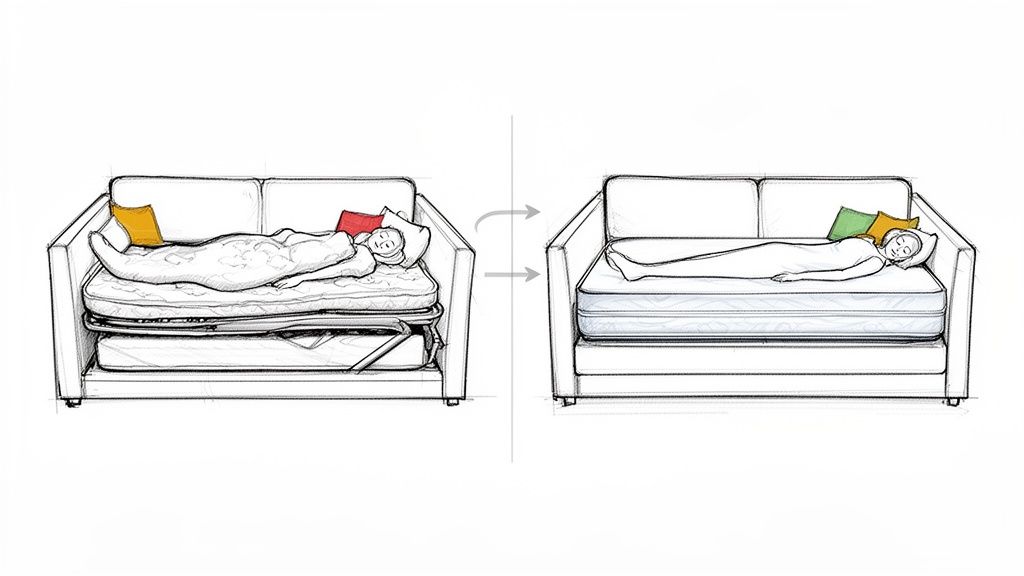
Let’s be honest—“sleeper sofa” has a reputation for thin mattresses, uneven support, and that dreaded bar you can feel through the bed. The fastest way to fix that is to upgrade the mattress itself. A replacement sleeper sofa mattress can turn a pull-out you avoid using into a bed you’re actually proud to offer.
Why a Mattress Upgrade Is Worth It
In a world of smaller rooms and multi-use spaces, comfort matters. A sleeper sofa should be more than “good enough for one night.” With the right mattress, a living room can double as a guest room without the compromise.
- Better support: Helps reduce pressure points and that “stuck on the frame” feeling.
- Better sleep: Your guests get real rest, not a short night of tossing and turning.
- Better usability: The right thickness and flexibility makes opening and closing the sofa smoother.
Don’t Overlook a Topper
If a full mattress replacement isn’t happening yet, a topper can still make a noticeable difference—especially for occasional use. A quality topper can add cushioning, smooth out minor unevenness, and improve pressure relief.
Start here: mattress toppers and pads.
Finding the Right Feel for Your Sleeper Sofa
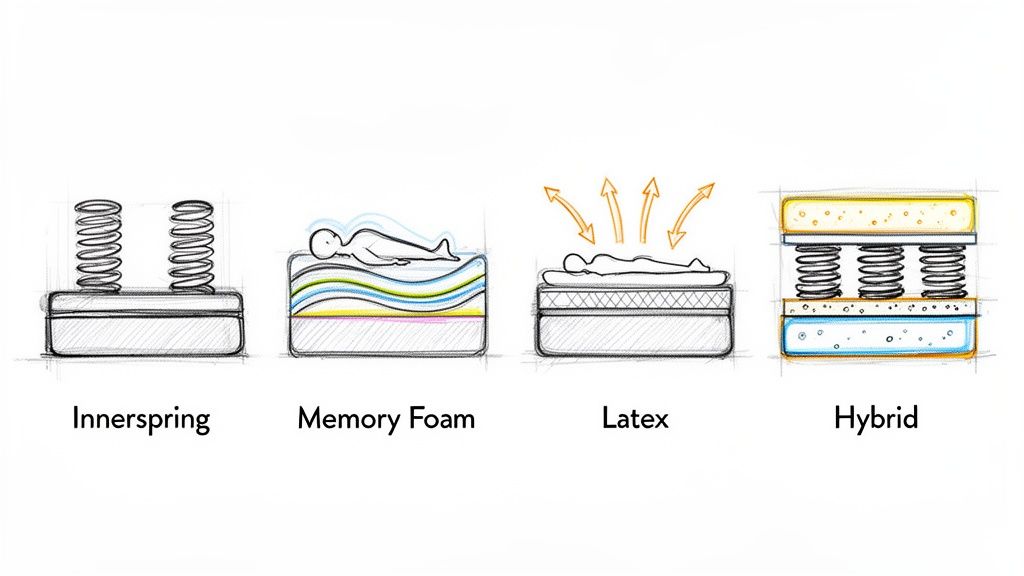
Choosing a sleeper sofa mattress is a little like choosing shoes—the material changes everything. It affects support, comfort, temperature, and how easily the mattress folds into the mechanism.
The Traditional Innerspring Mattress
Innerspring is the classic sleeper sofa option. Coils create a firmer, bouncier feel, and it’s usually budget-friendly. The tradeoff is that older or lower-quality models can start to feel uneven over time, especially if the sleeper is used often.
- Best For: Occasional guest use and sleepers who prefer a firmer feel.
- Keep in Mind: Coil count and padding quality make a big difference in comfort.
The Contouring Comfort of Memory Foam
Memory foam is popular because it contours to the body and helps reduce pressure points. It can also help minimize the “bar” feeling by adding more consistent cushioning across the surface.
- Best For: Side sleepers, pressure relief, and softer comfort.
- Keep in Mind: If you sleep warm, look for foam designed for better airflow.
The Buoyant Lift of Latex
Latex has a springy, responsive feel—more “lift” than “sink.” It’s also known for durability and a more breathable sleep surface than many traditional foams.
- Best For: People who want responsiveness, easy movement, and long-lasting support.
- Keep in Mind: Latex options are often priced higher due to material quality.
The Best of Both Worlds with Hybrid Mattresses
Hybrid sleeper mattresses combine coils with comfort layers on top. The idea is balanced comfort: support from springs plus pressure relief from foam or latex.
- Best For: A “middle ground” feel that works for many sleepers.
- Keep in Mind: Confirm thickness and flexibility so it folds correctly in your frame.
Sleeper Sofa Mattress Comparison
| Mattress Type | Best For | Feel | Durability | Typical Thickness |
|---|---|---|---|---|
| Innerspring | Occasional use, firmer feel | Bouncy, supportive | Moderate | 4"–5" |
| Memory Foam | Pressure relief, softer comfort | Contouring | Good | 4.5"–6" |
| Latex | Responsive support, durability | Buoyant, “on top” feel | Excellent | 4.5"–6" |
| Hybrid | Balanced comfort for most sleepers | Support + cushioning | Very Good | 5"–6" |
How to Measure for a Flawless Fit
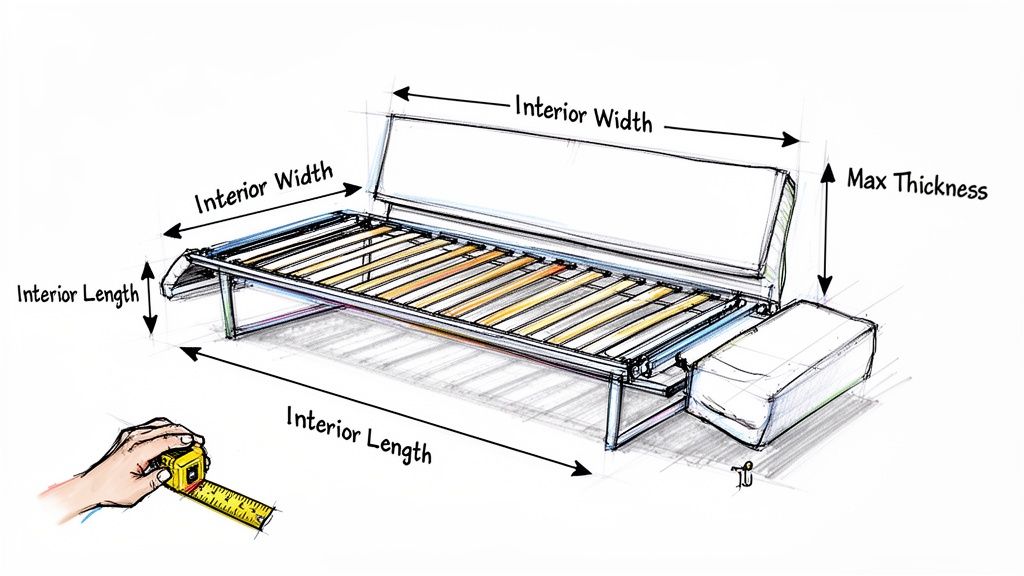
Getting the size wrong is the most common reason a replacement mattress doesn’t work. A mattress that’s too wide won’t fit the frame. A mattress that’s too thick may prevent the sofa from closing and can strain the mechanism.
The Three Essential Measurements
For accuracy, remove the old mattress so you can measure the metal frame itself.
Interior Width: Measure inside edge to inside edge. Check at the head, middle, and foot—use the widest number.
Interior Length: Measure from the inside head bar to the inside foot bar. Double-check along the frame.
Maximum Thickness Clearance: Partially close the mechanism and measure the tightest clearance point. This is your maximum safe mattress thickness (often 4"–6").
Crucial takeaway: Even an extra half-inch of thickness can keep a sleeper sofa from latching shut. Choose a thickness that leaves a little breathing room.
Step-by-Step Measuring Process
Step 1: Remove the old mattress
Open the sleeper fully, then lift the mattress off.Step 2: Measure width and length
Measure the interior frame dimensions and write them down.Step 3: Confirm thickness clearance
Close the mechanism halfway and measure the tightest storage gap.
Common Sleeper Sofa Mattress Sizes
Many sleepers follow standard sizing (Twin, Full, Queen), but “standard” isn’t guaranteed—especially with older frames. Measuring is always the safest approach.
If you want a quick reference point while you measure, use: sizing charts.
Standard Queen vs Sofa Bed Queen: Why Sizes Don’t Match
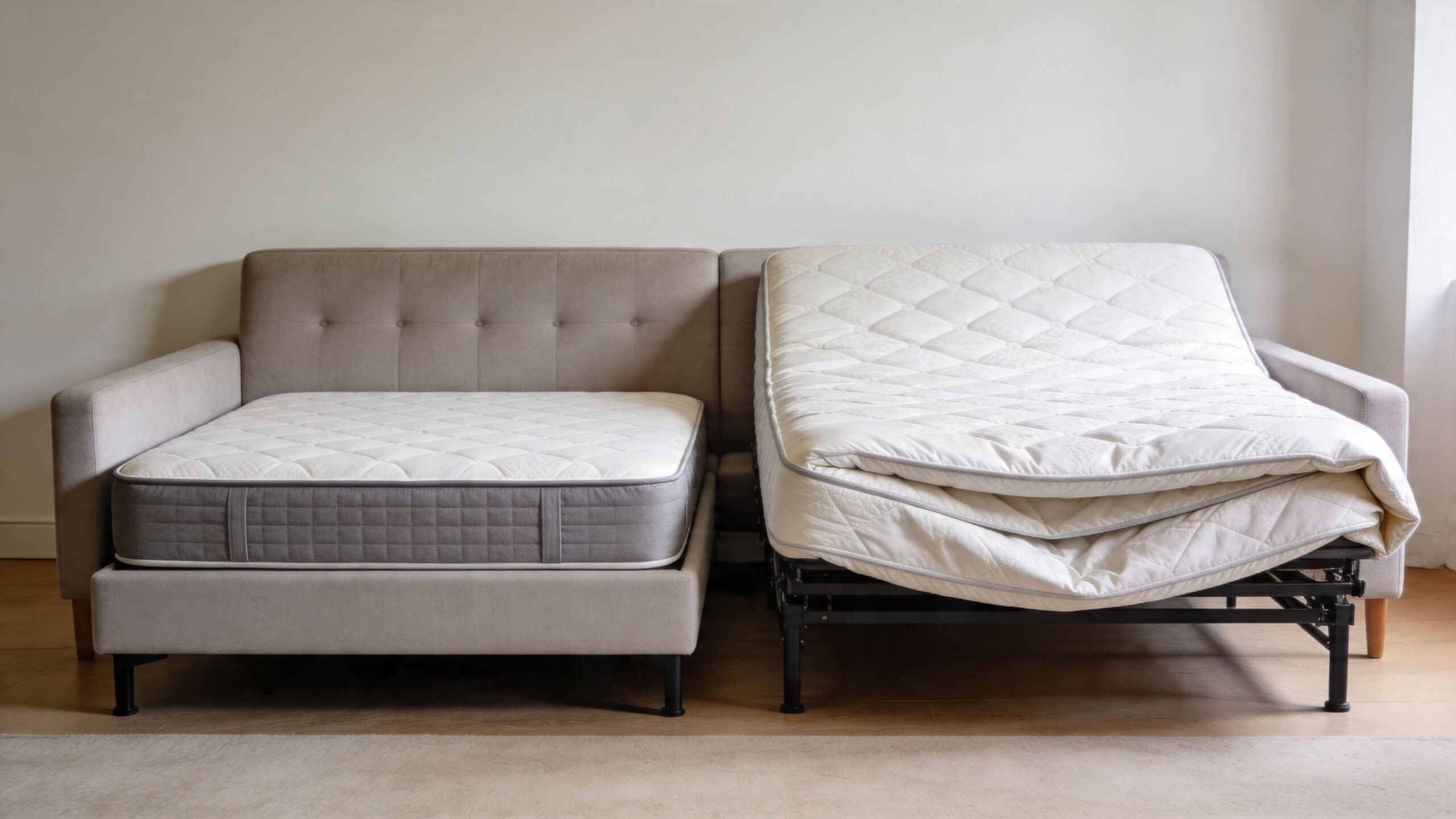
A customer brings home a regular queen mattress, lines it up with the sleeper frame, and the problem shows up fast. The width looks right. The frame still won’t close, the fold points don’t line up, and the mattress fights the mechanism.
That happens because a sofa bed queen is a furniture-specific size, not just a bedroom queen with a different label. In practice, the width is often similar, but the sleeper version is usually shorter and built to bend where the frame bends. That shorter cut gives the mattress room to fold into the cabinet without pushing against the hardware.
Why Regular Queen Mattresses Fail in Sleeper Frames
A standard queen mattress is made to stay flat on a foundation. A sofa bed mattress has a different job — it has to open, fold, and store inside a metal mechanism without binding at the joints or hanging up at the closing line.
The usual failure points are straightforward:
- Length: the mattress can extend past the frame cavity and interfere with closing.
- Thickness: extra bulk can press into the mechanism even before anyone lies on it.
- Flexibility: many regular mattresses don’t bend cleanly at the frame’s hinge sections.
- Weight: a heavier mattress can make the sleeper harder to open and close, and it can add wear to moving parts.
This is a common mistake on replacement orders — matching the name, “queen,” and missing the function. Sleeper frames are less forgiving than bedroom setups. If a mattress has to be pushed, compressed, or forced into place, the fit is already wrong.
Practical rule: Match the mattress to the frame cavity and folding action, not to the bedroom size label.
Shorter Size, Still Usable for Two Adults
The reduced length sounds like a big compromise until you look at how sleeper sofas are used. For guest rooms, apartments, and family rooms, queen sleepers remain popular because they give two adults better width than a full sleeper while still fitting a living room footprint that many homes can handle.
Comfort depends on more than the label on the tag. A correctly sized sofa bed queen usually sleeps better than an oversized regular queen that bunches, rides over support bars, or keeps the mechanism from sitting flat. Fit comes first. Then the materials can do their job.
Check the Frame Before You Order the Mattress
Replacement shopping gets easier once you treat the sofa and mattress as one system. Looking at actual full and queen sofa bed models helps clarify how frame design, cavity size, and sleeper layout work together.
This is also where custom sizing and professional installation solve real problems. Some frames run slightly narrow, some have tighter interior clearance, and older mechanisms can vary enough that a stock replacement is risky. Measuring the frame correctly before ordering saves a return. Having the mattress installed correctly saves wear on the mechanism from day one.
Ordering a Replacement: Standard, Custom, and Upgrades
Once your measurements are set, ordering is usually simple if your frame falls into a common size range. If it doesn’t, don’t improvise. That’s where many pull-out replacements go wrong.
A standard mattress in a non-standard frame may seem close enough on paper, but sleeper mechanisms are unforgiving. Too wide and the mattress bunches at the sides. Too long and the fold points shift out of alignment. Too loose and the mattress slides, drifts, and wears unevenly.
When Standard Sizes Work
Many modern sleepers line up with common twin, full, or queen replacement sizes. If the frame measures cleanly into one of those and your thickness clearance is confirmed, a standard replacement is usually the fastest route.
This is also the stage where cover choices matter more than people think. If the sofa is in a family room, a rental, or a heavily used guest room, a tougher cover is often the smarter choice than a softer one. Spills, pet hair, friction from folding, and repeated handling wear the exterior before the core fully gives out.
When Custom Sizing Is the Only Correct Answer
Older sofa beds are where sizing gets tricky. NYC apartments have plenty of inherited furniture, vintage frames, imported sleepers, and one-off pieces that don’t match current replacement norms. In those cases, “close enough” is usually expensive.
If your frame is unusual, order to the frame you own. Don’t order to the category name. This is one place where custom cut-and-sew options make practical sense, especially when the alternative is forcing a standard mattress into a shape it was never made for.
Small Upgrades That Make a Difference
- A sturdier cover if the sleeper lives in a high-traffic room
- A better edge finish if the mattress tends to rub against metal frame points
- A material upgrade if the sleeper is used more often than you first assumed
- Professional handling when the apartment layout makes delivery and swap-out difficult
Futonland is one specialist retailer that carries replacement sofa bed mattresses, custom sizing, and in-home delivery options suited to tight apartment access.
Installation and Fitment Tips
Installation is usually straightforward, but this is the point where you find out whether your measurements were accurate. A mattress that fits correctly should settle onto the frame evenly and let the mechanism close without a fight.
If the new mattress arrived compressed, give it time to open fully before judging the fit. Foam especially can look undersized or oddly shaped right out of the package.
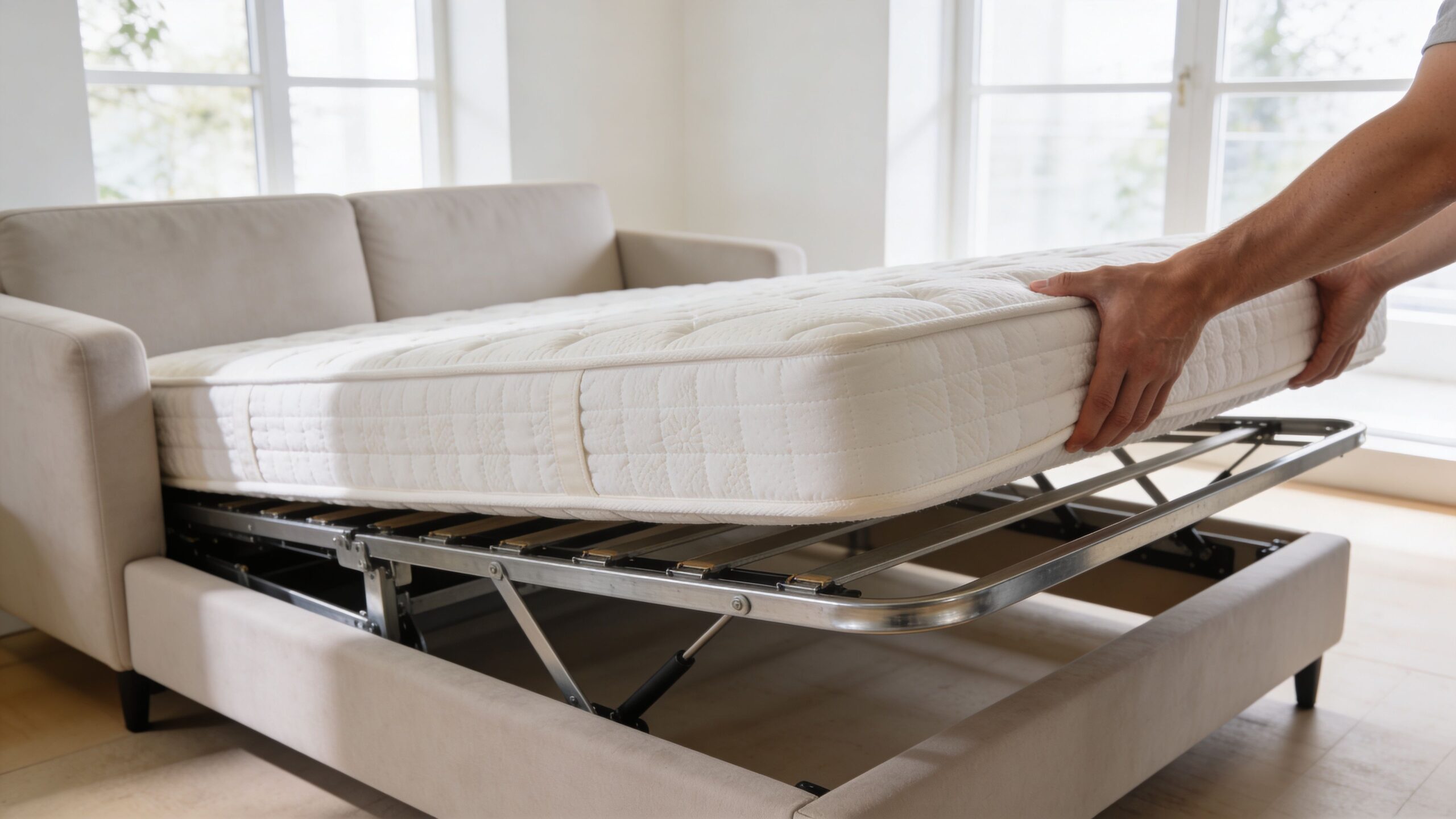
A Clean Installation Sequence
- Open the pull-out completely so the frame is flat and stable.
- Center the mattress carefully on the support surface before attaching or tucking anything.
- Check all edges and corners to make sure nothing is caught on bars, hinges, or brackets.
- Fold the mechanism slowly the first time and pay attention to resistance points.
A little resistance can be normal. Hard resistance isn’t. If the frame feels like it needs extra force, stop and inspect the position of the mattress before trying again.
What Usually Causes a Bad Fit
- The mattress is off-center. Even a small shift can make one side bind while the other side looks fine.
- The cover is catching on hardware. This happens most often near corners and hinge points.
- The thickness is technically wrong for the frame. If everything is centered and the mechanism still strains, the folded profile is likely too bulky.
Close the sofa bed slowly the first few times. The mechanism will tell you very quickly whether the mattress belongs there.
If the mattress tends to slide or creep during use, accessories can help keep it positioned. A set of non-slip grip pads is a simple fix when the mattress shifts against the frame or support surface.
What to Expect for Your Budget
Price usually reflects what’s inside: foam density, coil quality, comfort layers, and overall durability. The best value depends on how often the sleeper gets used.
Entry-Level Options (Typically Under $200)
These are basic foam or innerspring builds intended for occasional use. They’re practical for a guest room that only sees a few nights per year, but they’re not designed to feel “luxury.”
- Best For: Infrequent use
- Expect: Simpler comfort, shorter lifespan
Mid-Range Options (Typically $200–$400)
This is the sweet spot for many homes: better foam density, improved cushioning, and more reliable support. If your sleeper comes out monthly (or more), mid-range upgrades are usually the most noticeable improvement per dollar.
- Best For: Regular guest use, small apartments, multi-use rooms
- Expect: Better support, less “frame feel,” improved durability
Premium Options (Typically $400+)
Premium sleeper mattresses prioritize comfort and longevity—ideal if the sleeper is used frequently or you want the bed to feel closer to a traditional mattress experience.
- Best For: Frequent use, nightly use, “no compromises” comfort
- Expect: Stronger materials, better pressure relief, longer lifespan
If you’re upgrading the entire piece (not just the mattress), browse: convertible sofa beds and full and queen sofa beds.
Simple Care to Make Your Mattress Last

A sleeper mattress lives a double life—couch by day, bed by night—so a little protection goes a long way.
Use a Protector from Day One
A good protector shields against spills, allergens, and everyday wear. It’s especially important for sleeper sofas because they sit in high-traffic rooms.
See options here: bed and mattress protectors.
Clean Spills Fast—and Dry Completely
Blot spills immediately with a clean, dry cloth. Avoid rubbing. If you use a mild cleaner, apply sparingly and keep moisture controlled.
Golden rule: Make sure the mattress is 100% dry before folding it back into the sofa. Trapped moisture can cause odor and mildew.
Rotate for Even Wear
If the design allows, rotate the mattress head-to-foot every few months to help prevent body impressions.
- Always use a protector
- Blot spills quickly
- Never fold away damp
- Rotate every 3–6 months
The Warning Signs Show Up Before the Mattress Fully Fails
- Body impressions that stay visible: the comfort layer isn’t rebounding the way it should.
- Guests notice the frame more than the mattress: cushioning has compressed enough that the mechanism is starting to telegraph through.
- Heat becomes part of the complaint: some foam constructions hold warmth, especially in rooms that already sleep warm.
- Closing the sleeper gets harder: the mattress may be bunching, shifting, or sitting thicker in one section than another.
A mattress doesn’t have to look collapsed to be past its useful life. Many sleeper mattresses fail gradually. Guests stop sleeping well on them first.
Common Questions About Sleeper Sofa Mattresses
Can I Use a Regular Mattress on a Sleeper Sofa?
No. Standard mattresses are typically too thick and not built to fold with the mechanism. Sleeper mattresses are engineered to be thinner and more flexible so the sofa can close properly.
How Often Should I Replace My Sleeper Sofa Mattress?
It depends on use. For occasional guest use, a good mattress can last many years. If it’s used frequently, you’ll typically notice comfort drop sooner. Replace when you feel sagging, uneven support, or the frame/bar becomes noticeable.
What’s Usually the Most Comfortable Type?
For many people, memory foam and latex feel the most “bed-like” on a sleeper because they cushion pressure points and help reduce the feel of the mechanism underneath. Hybrids are also a strong option if you want a balanced feel.
How Can I Make My Current Mattress More Comfortable (Without Replacing It)?
Add a topper. A 2"–3" topper can dramatically improve comfort and help smooth out minor lumps. Just store it separately before folding the sleeper closed.
Shop: mattress toppers and pads.
At Futonland, we specialize in sleep solutions for small spaces—whether you need a replacement mattress, a comfort upgrade, or a new setup designed for daily use.
Explore convertible sofa beds or visit Futonland.com to find the right fit.