A Guide to Zippered Cushion Covers
The Easiest Upgrade for Any Room
Think of zippered cushion covers as a stylish, practical wardrobe for your furniture. Unlike covers that are sewn shut or rely on clumsy envelope-style closures, that little zipper detail makes a world of difference. It means you can get the cover off in seconds, turning a potential spill disaster or a routine cleaning day into a simple, stress-free task. This one feature completely changes how you can approach your home decor. You can swap out covers to match the seasons, play with new color trends, or give your living room a total makeover without the massive cost of brand-new furniture. To get a better sense of how zippered covers stack up against traditional options, here’s a quick comparison.Zippered Covers vs Traditional Covers At a Glance
| Feature | Zippered Cushion Covers | Non-Zippered/Envelope Covers |
|---|---|---|
| Ease of Cleaning | Excellent. Simply unzip, remove, and wash. | Poor. Spot cleaning is often the only option. |
| Secure Fit | Superior. Zippers provide a snug, tailored fit. | Fair. Can sag, slip, or look ill-fitting. |
| Durability | High. Protects the inner cushion from spills and wear. | Low. Prone to stretching and losing shape. |
| Style Changes | Effortless. Swap covers in minutes for a new look. | Difficult. Requires replacing the entire cushion. |
A World of Possibilities for Your Home
The real magic of these covers is the incredible variety you can find. From tough, upholstery-grade fabrics built to handle the chaos of a busy family room to soft, 100% natural cottons perfect for a cozy reading nook, there’s a material out there for every lifestyle. This is especially true when it comes to decorative throw pillows, which can completely transform a room’s vibe with minimal effort. At Futonland, for example, the pillow covers with zippers are made by top-tier brands like Prestige Furnishings, SIS Covers, and CottonBelle. These are far from one-size-fits-all. They come in hundreds of fabrics and sizes, with options that range from rugged upholstery grade textiles to elegant suede-like and linen-like materials, and even 100% natural cotton. You can even get them with optional pillow inserts to get that perfect plumpness and feel. This level of choice is a lot like what you’d find when looking at our wider collection of futon covers, where getting the right fabric and fit is everything.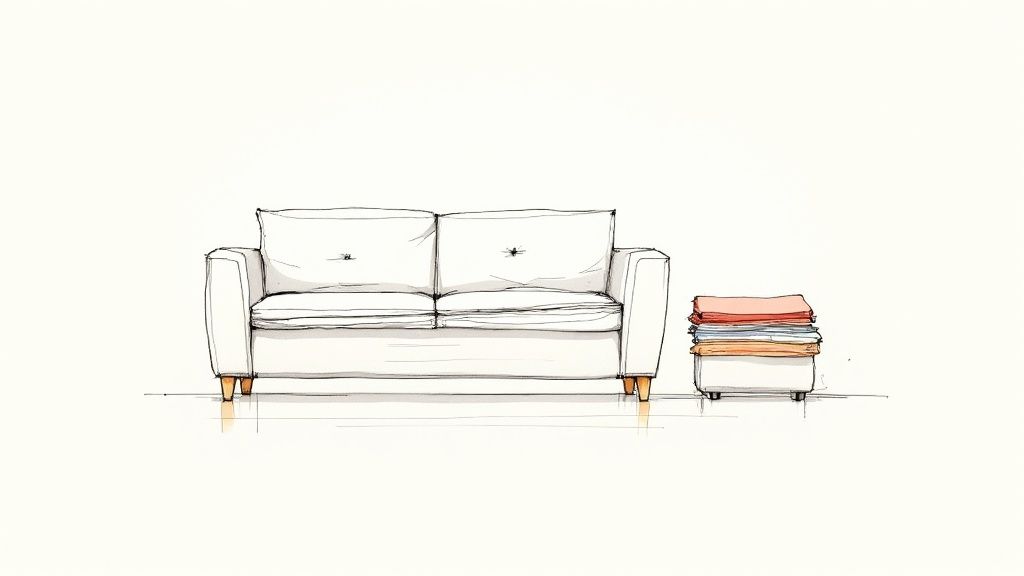
Is a Custom Cushion Cover Right for Your Couch?
Not every furniture problem calls for custom fabrication. Sometimes a generic slipcover is good enough. Sometimes the piece is too far gone and replacement makes more sense. The useful question is whether your issue is mostly about fit, fabric, or structure.
If your couch has standard cushions and you only need a temporary visual fix, a store-bought slipcover may be enough. If the cushions are unusual, the furniture converts into a bed, or you’re trying to match a room rather than just hide wear, custom usually becomes the better choice. If the frame creaks, the mechanism fails, or the comfort is already gone, no new cover will rescue it.
Choosing Your Upholstery Solution
| Factor | Off-the-Shelf Slipcover | Futonland Custom Cover | New Furniture |
|---|---|---|---|
| Fit | Best on common sizes and simple shapes | Best for non-standard cushions, box cushions, and convertible furniture | Comes built for the piece |
| Fabric choice | Limited colors and materials | Broad selection, including fabric-by-the-yard options and swatches | Limited to what’s offered on the model |
| Appearance | Can look loose or temporary | Tailored, cleaner lines | Brand-new look |
| Best use case | Quick budget fix | Keeping a good frame and upgrading worn upholstery | Replacing furniture that’s structurally done |
| Convertible furniture suitability | Often poor | Strong option when measurements account for folding and stress points | Depends on model |
A good way to think about it is this: slipcovers hide; custom covers refit; new furniture resets everything.
When Custom Is Worth the Money
The economics improve when the cushions themselves are also being upgraded. Pairing a custom cover with a high-density foam insert generally holds its shape and comfort far longer than a stock cushion filled with lower-grade foam, which is why the combination tends to pay for itself over several years of daily use rather than being a purely cosmetic expense. That matters most on heavily used seating, especially in apartments where one piece might serve as sofa, guest bed, and lounge spot all week long.
A custom cover makes the most sense when you’re protecting a frame you already trust.
Custom also earns its keep when style matters. If you need a specific texture, a quieter neutral, or a fabric that works with the rest of the room, the broader selection available through Futonland fabric by the yard gives you more control than a generic cover package ever will.
When Custom Is Not the Right Answer
Custom isn’t automatically the best option. Skip it if these problems are the main issue:
- Broken structure. A failing frame, bent sleeper mechanism, or loose arms won’t be fixed by new covers.
- Collapsed comfort. If the support is gone and you don’t want to replace inserts, the result will still feel disappointing.
- Ultra-short-term use. If you’re staging, moving soon, or furnishing a temporary place, a simple slipcover may be enough.
People usually regret custom work only when they ask it to solve the wrong problem. It works best when the furniture is worth keeping and the upholstery is the weak link.
Finding The Perfect Fabric For Your Lifestyle
Picking the right material for your zippered cushion covers is a bit like choosing a good coat. You wouldn’t wear a heavy wool trench on a warm day, and you wouldn’t rely on a light linen jacket in a snowstorm. The fabric you choose defines the look, feel, and toughness of your cushions, and it has a direct impact on how you enjoy your space. It’s a choice that’s equal parts style and pure, simple practicality. The number of choices can feel like a lot, but it really just means there’s a perfect fit for every situation. For a busy family room that sees its fair share of spills and daily action, an upholstery-grade fabric is your best friend. These materials are built for resilience, designed to resist stains and scuffs—think of them as the workwear of the fabric world.Matching Materials To Your Home’s Needs
On the other hand, if you’re creating a cozy, quiet corner of the house, a soft, suede-like texture can instantly make a room feel warmer and more sophisticated. For spaces where you want a more relaxed, breezy vibe, a linen-like fabric brings a casual elegance that just feels timeless. And for homes where allergies are a concern or you just want the easiest cleaning possible, you can’t beat 100% natural cotton. It’s soft, breathable, and usually machine-washable, making it a fantastic, worry-free choice for bedrooms and kids’ playrooms. The image below gives you a sense of the variety, from heavy-duty weaves to softer, more decorative options.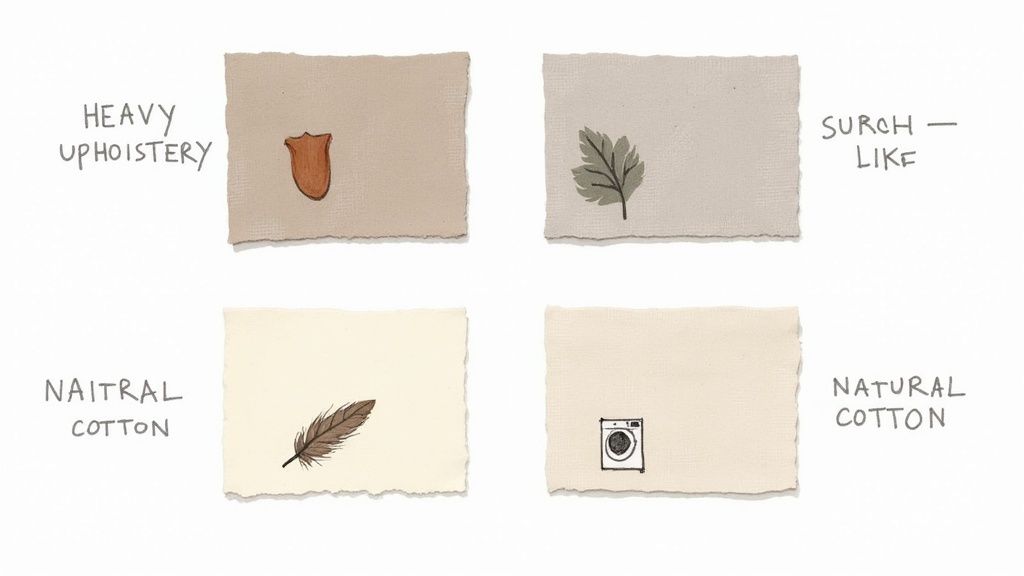
Key Takeaway: The best fabric isn’t just about the color or pattern—it’s about performance. Let your lifestyle, whether it includes pets, kids, or just quiet relaxation, be your main guide. That’s how you pick a material that will look great and hold up for years to come.
Explore Hundreds Of Options
Here at Futonland, we know that getting the right match is everything. That’s why we offer hundreds of fabrics and sizes from leading brands like Prestige Furnishings, SIS Covers, and CottonBelle. This huge selection ensures you can find the perfect zippered cushion covers for any piece of furniture, whether it’s a futon, an armchair, or a window seat. Sometimes you just need to feel the texture and see the color in your own home’s light. To help you choose with confidence, we highly recommend ordering fabric sample swatches to see the materials for yourself before you commit. Ultimately, having this kind of control over your fabric library gives you the power to define your home’s comfort and style down to the last detail.Measuring Your Cushions for a Flawless Fit
Nothing tanks the look of a beautiful new zippered cushion cover faster than a bad fit. When it’s baggy and loose, even the most expensive fabric looks sloppy. But if it’s too tight, you’re putting a ton of stress on the seams and the zipper. The secret to getting that crisp, professional finish is all in the measurements—and thankfully, it’s a simple process you can nail yourself. Think of it like getting a custom suit made for your cushion. Precision is everything. The goal is to capture the true three-dimensional shape of your cushion insert so the new cover hugs it just right.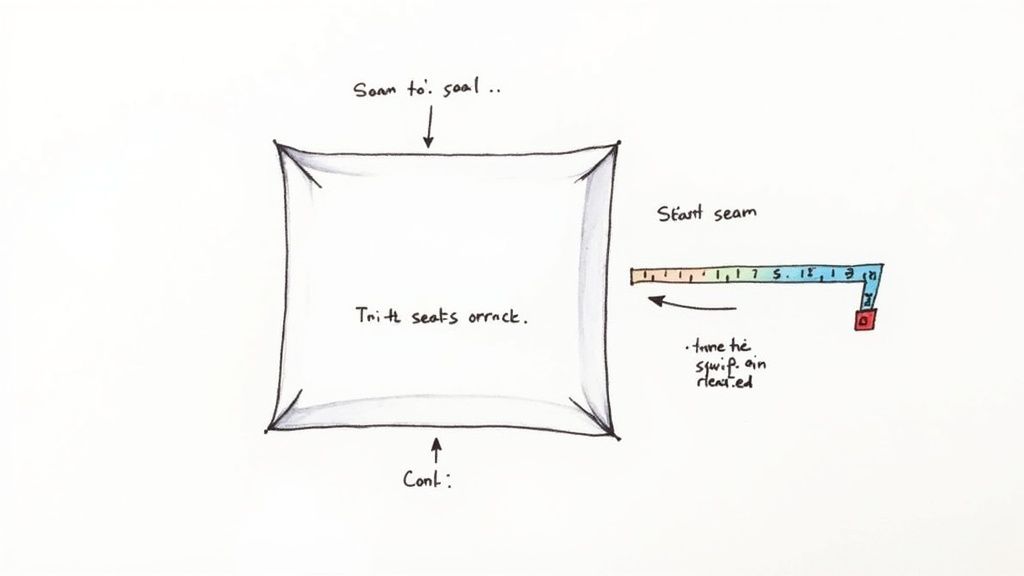
How To Get The Right Measurements
First thing you’ll need is a flexible measuring tape—the kind a tailor would use. The real key here is to measure from seam to seam, not just flat across the surface. This little trick accounts for the cushion’s loft and curves, giving you the most accurate numbers possible. Follow these simple steps for a perfect measurement every time:- Measure the Length: Start at the middle of the back seam and pull the tape taut across to the front seam.
- Measure the Width: Do the exact same thing from side to side, measuring from the seam on the left to the seam on the right.
- Measure the Thickness (or Depth): Finally, measure the height of the cushion by running the tape from the top seam to the bottom seam along the side panel.
Pro Tip: For an extra-snug, high-end look, some designers recommend ordering a cover that’s a half-inch smaller than your insert’s dimensions. This gently compresses the foam, creating sharp, clean edges and getting rid of any potential sagging.This is exactly where a zipper proves its worth. Trying to wrestle a dense foam insert into a tight-fitting, non-zippered cover is a recipe for frustration and torn seams. A zippered cushion cover, on the other hand, opens up wide, letting you easily guide the insert into place without a fight. This is especially critical for firm futon or sofa cushions where a snug fit is essential for both comfort and a polished look.
Ordering Custom Cushion Covers
Once your measurements and fabric direction are clear, ordering gets easier. The custom process works best when the details are specific early. That includes shape, zipper placement, seam style, and whether the furniture sits still or converts.
Convertible pieces deserve extra attention here. Upholstery on a futon or sleeper wears differently than upholstery on a static sofa, since the fold line and conversion points take repeated stress that a stationary cushion never experiences — these orders should be discussed as moving furniture, not static furniture.
What to Bring to a Consultation
In-person help is valuable when the project is unusual. A customer who brings the cushion, old cover, or at least good photos usually gets to a cleaner result faster than someone working from memory.
Helpful items include:
- The old cover, even if it’s damaged. It shows seam placement and zipper orientation.
- The cushion itself when practical. This is ideal for odd shapes or heavily used futons.
- Fabric photos or room photos so color choices fit the space.
- Notes about use such as daily sleeping, pets, kids, or frequent conversion.
For people who want to narrow the fabric field before they commit, Futonland futon cover fabric sample swatches make that decision easier.
Details That Affect the Final Result
Customers often focus on color first, but the construction details matter just as much.
- Zipper placement should be chosen for access and wear resistance. On convertible furniture, a poor zipper location can end up right at a fold or pressure point.
- Piping or welt creates definition, but it also changes the look from casual to structured.
- Seam reinforcement matters more on furniture that gets pulled, folded, or used by guests.
- Fabric direction can affect how the cushion looks when the bed is open versus when the sofa is closed.
If a cover has to survive daily conversion, treat the fold line like a stress point, not an afterthought.
Lead Time and Expectations
Custom cut-and-sew work takes longer than grabbing a ready-made slipcover off a shelf. That’s normal. Fabric availability, complexity of shape, number of cushions, and whether old covers can be used as patterns all affect timing.
The practical mindset is to expect a process, not an impulse purchase. Ask questions early. Confirm what is being duplicated and what is being changed. If you’re refreshing a sleeper sofa or futon, mention that at the first conversation so the project is built around real use, not just appearance.
Why the Right Zipper Makes All the Difference
It’s easy to get caught up in the fabric or pattern of a zippered cushion cover, but the small, often-overlooked zipper is the true hero of the design. This tiny component dictates more than just looks—it determines the cover’s durability and how easy it is to use. A well-chosen zipper will glide smoothly for years, while a cheap one can snag, break, and make the whole cover a frustrating, useless piece of fabric. Think of the zipper as the functional backbone of the cover. The difference between a quality closure and a flimsy one is something you can feel immediately. One secures the cushion with a satisfying, effortless pull; the other catches and strains, feeling like it might fail with every zip.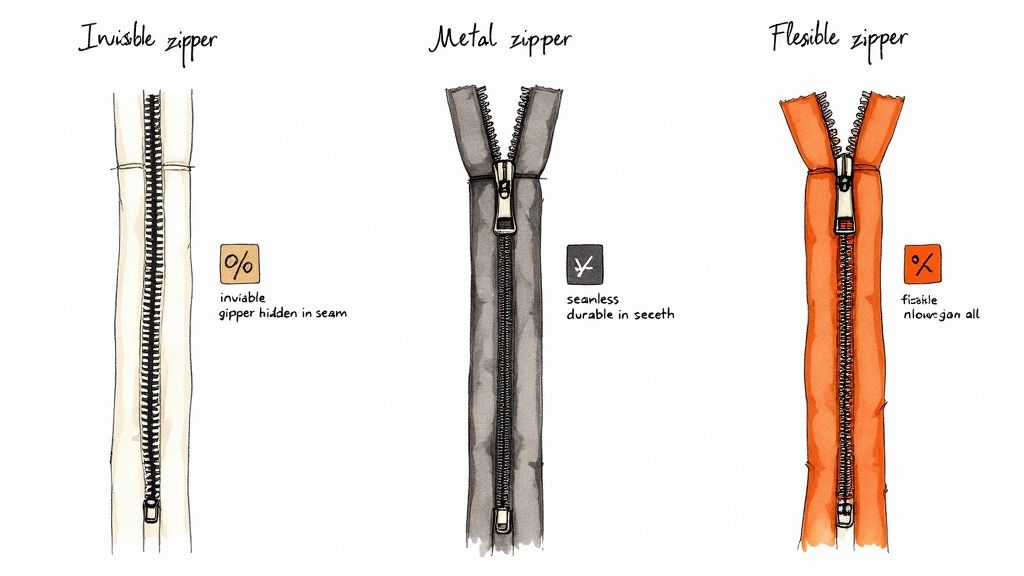
Invisible Zippers for a Seamless Look
For anyone wanting a truly polished, high-end finish, the invisible zipper is the only way to go. When it’s closed, the teeth are completely hidden on the underside, leaving just a subtle seam. This creates a clean, uninterrupted surface that lets the fabric’s pattern and texture really shine. If you’re into DIY, learning to sew invisible zippers like a pro can elevate your projects from looking homemade to professionally tailored.Classic Zippers for Unmatched Durability
On the other end of the spectrum, classic, more robust zippers are built to last. These are the workhorses of the zipper world, often featuring larger teeth and much sturdier construction.- Metal Zippers: Known for their exceptional strength and premium feel, metal zippers can add a touch of industrial chic and will stand up to years of heavy use. They’re a go-to choice for heavy-duty upholstery where durability is everything.
- Nylon Coil Zippers: These are more flexible and lightweight than their metal cousins. Their coiled design makes them resistant to damage from bending and twisting, offering a reliable, smooth operation for everyday cushions.
Key Takeaway: The type of zipper on a cushion cover is a direct clue to its overall quality. A thoughtfully chosen zipper—whether it’s a discreet invisible style or a rugged metal one—prevents frustrating jams, extends the cover’s lifespan, and makes it a worthwhile investment in craftsmanship.
Styling Your Space with Throw Pillow Covers
Zippered covers are far more than just a practical choice—they’re one of the most powerful tools in an interior stylist’s playbook, especially when it comes to decorative throw pillows. They unlock a world of decorating potential, giving you the power to instantly refresh a futon, sofa, or bed without committing to a major overhaul. Think of it as your secret weapon for creating a dynamic and personalized space. This flexibility lets you treat your pillows like a fashion accessory for your room. You can swap them out for a new season, celebrate a holiday with festive colors, or experiment with the latest design trends without the cost and hassle of buying entirely new pillows. It’s an easy, cost-effective way to keep your decor feeling fresh and current.Endless Customization Options
Finding the perfect accent is simple when you have a world of options at your fingertips. Reputable brands like Prestige Furnishings, SIS Covers, and CottonBelle offer zippered pillow covers in hundreds of fabrics and sizes, making true customization totally accessible. Whether you’re hunting for a bold pattern to be a statement piece or a subtle texture to add depth, the possibilities are practically endless. You can explore a huge variety of decorative throw pillows that come with these versatile covers. These collections often feature everything from tough, upholstery-grade materials to soft suede-like, linen-like, and 100% natural cotton options, ensuring you’ll find the perfect match for both your style and your lifestyle.Styling Insight: Think of your throw pillows as the finishing touch that ties a room together. A well-placed pillow with a unique texture or color can bridge the gap between your sofa, rug, and curtains, creating a cohesive and professionally designed look.
A Cheat Sheet for Designer Looks
Creating an artful pillow arrangement is much easier than it looks. By following a few simple principles, you can mix and match your zippered cushion covers to achieve that high-end, curated feel on any piece of furniture. Layering different textures, patterns, and sizes is the key to adding visual interest and making your space feel instantly more comfortable. Ready to start styling? We’ve put together a quick-reference guide to help you create stunning pillow combinations that look like they were pulled straight from a magazine. Throw Pillow Styling Cheat Sheet| Arrangement Goal | Recommended Cover Combination | Pro Tip |
|---|---|---|
| Modern & Minimalist | Solid colors in linen-like or cotton fabrics with one subtle geometric pattern. | Stick to a neutral color palette like gray, beige, and white, using one accent color for a pop. |
| Cozy & Eclectic | A mix of rich textures like faux fur, knit wool, and velvet in various sizes. | Don’t be afraid to mix patterns, but keep them within the same color family to maintain harmony. |
| Bold & Energetic | Brightly colored covers with large-scale floral or abstract prints. | Use a large solid pillow in the back to anchor the arrangement and prevent it from looking too busy. |
Keeping Your Cushion Covers Looking New
One of the best things about a zippered cushion cover is just how simple it makes cleaning. Unlike cushions that are permanently sealed and leave you stuck with spot treatments, a zippered design lets you pull the whole cover off for a proper wash. That single feature is the secret to keeping your furniture looking fresh and vibrant for years, not to mention free from dust and allergens. Of course, the best care starts before you even get to the washing machine. If you have a spill or stain, it’s always best to tackle it right away. Gently blot the spot with a clean cloth—never rub, since that just pushes the stain deeper into the fabric. A little mild detergent mixed with water is usually all you need to lift off fresh marks.The Right Way To Wash Your Covers
When it’s time for a full wash, the first thing to do is check the fabric care label. Different materials have different needs, but a few general rules will help protect your investment.- Go Cold: For most fabrics, especially natural ones like cotton, cold water is your safest bet. It’s the best way to prevent shrinking and keep the colors from fading.
- Keep it Gentle: Always use a delicate or gentle wash cycle. This minimizes the stress on the seams and the zipper itself. It’s also a good idea to zip the cover closed before tossing it in to keep it from snagging on anything.
- Air Dry is Best: High heat from a machine dryer is the number one enemy of a perfect fit—it’s what causes most shrinkage. To keep your cover looking like new, lay it flat or hang it up to air dry. If you’re in a pinch and must use a dryer, stick to the lowest heat setting you can.
Pro Tip: Want that perfectly snug, professional look after washing? You can iron your cover on a low setting while it’s still just a little damp. Just be sure to iron it on the reverse side to protect the fabric’s color and texture.Storing your off-season covers the right way is just as important. Make sure they are completely clean and dry before folding them neatly and putting them away in a breathable storage bag. This keeps them from getting that musty smell and ensures they’re ready to go the moment you need them, keeping your space looking its best.
Install the Cover Without Fighting It
Foam insertion is where most DIY covers go wrong — sizing mismatches and uneven compression during insertion cause more perceived “fit problems” than the cover pattern itself. Compressing the foam gradually rather than forcing it in, and inserting corner-first, makes a real difference.
A good installation routine is simple:
- Open the zipper fully and lay the cover flat.
- Lead with one back corner of the cushion, not the broad face.
- Compress the foam gradually instead of forcing it in all at once.
- Rotate and guide the insert so each corner lands properly.
- Massage the outside of the cover to remove trapped air and bunching.
- Zip slowly while checking that no fabric or batting is caught.
If the cover looks twisted, stop and reopen it. Forcing the last few inches of zipper is how people damage a good cover.
Getting the Tailored Look
A clean install isn’t only about getting the zipper closed. It’s about getting the cushion to sit evenly once it’s on the furniture.
Use these finishing habits:
- Square the corners by hand after insertion.
- Pat and smooth the boxing panels so the side walls don’t roll.
- Let the cushion rest before judging the fit, especially if the insert was heavily compressed.
- Recheck on the frame because some covers settle differently once weight is distributed.
Don’t judge a new cover in the first minute. Most of the wrinkles people notice right away relax once the insert settles and the seams are adjusted by hand.
Answering Your Zippered Cushion Cover Questions
Even after you’ve got a plan, a few questions always seem to pop up when you’re trying to pick the perfect zippered cushion covers. Let’s tackle some of the most common ones we hear so you can feel totally confident in your choice.What Is The Difference Between a Pillow Cover and a Cushion Cover?
Great question. While people often use the terms interchangeably, there’s a small but important distinction. “Pillow cover” usually means the decorative shell for a soft, fluffy throw pillow. Think of the pillows you toss on the sofa for a pop of color. A “cushion cover,” on the other hand, is typically for the more functional seats and backs on a sofa or futon—the ones holding a firmer foam insert. That said, the practical benefits of a zippered design—easy cleaning and quick style changes—are a huge plus for both.How Should I Choose Covers For My Throw Pillows?
When it comes to decorative throw pillows, the world is your oyster. Brands like Prestige Furnishings, SIS Covers, and CottonBelle offer zippered pillow covers in hundreds of fabrics and a massive range of sizes. This gives you an incredible amount of freedom. You could go for a tough, upholstery-grade material for a high-traffic family room or a soft, suede-like fabric to add a touch of luxury. You’ll even find options like linen-look and 100% natural cotton to match any vibe. The trick is to balance style with function. Take a look at the different decorative throw pillows out there to find the perfect texture and color for your space. Many collections even give you the option to add pillow inserts, so you can get that ideal level of plumpness.Key Insight: Think of your throw pillow covers as the finishing touch on your room’s design. They’re a low-commitment way to bring in new colors, patterns, and textures, instantly elevating the look of your futon or sofa.
Should The Cover Fit Tightly Or Have Some Room?
This really comes down to personal taste and the type of cushion you’re covering. If you want that crisp, professional look—especially with firm foam cushions—a snug fit is the way to go. This often means choosing a cover that’s the exact same size or even a half-inch smaller than the insert. The slight compression creates sharp, clean edges. On the other hand, for a softer, more casual look on a sofa or for plush throw pillows, a slightly larger “relaxed” fit can work beautifully. One word of caution, though: a snug fit is almost always better for throw pillows. It helps them look full and inviting, avoiding that sad, saggy, under-stuffed appearance.Ready to find the perfect zippered cushion covers for your home? At Futonland, we have a huge selection of fabrics, sizes, and styles to fit any futon, sofa, or chair. Explore our collection and give your space the easy, beautiful upgrade it deserves. Discover Your Perfect Cushion Covers at Futonland.com