Daybed with Trundle: Pop-Up vs Roll-Out Guide
A daybed with a trundle gives you a sofa by day and two separate beds by night, all in the footprint of one piece of furniture. The main frame looks and functions like a sofa; a second bed frame is stored underneath and pulls out when needed. It’s a strong fit for kids’ rooms, guest rooms, and studio apartments where floor space for a second bed doesn’t exist.
How a Daybed Trundle Works
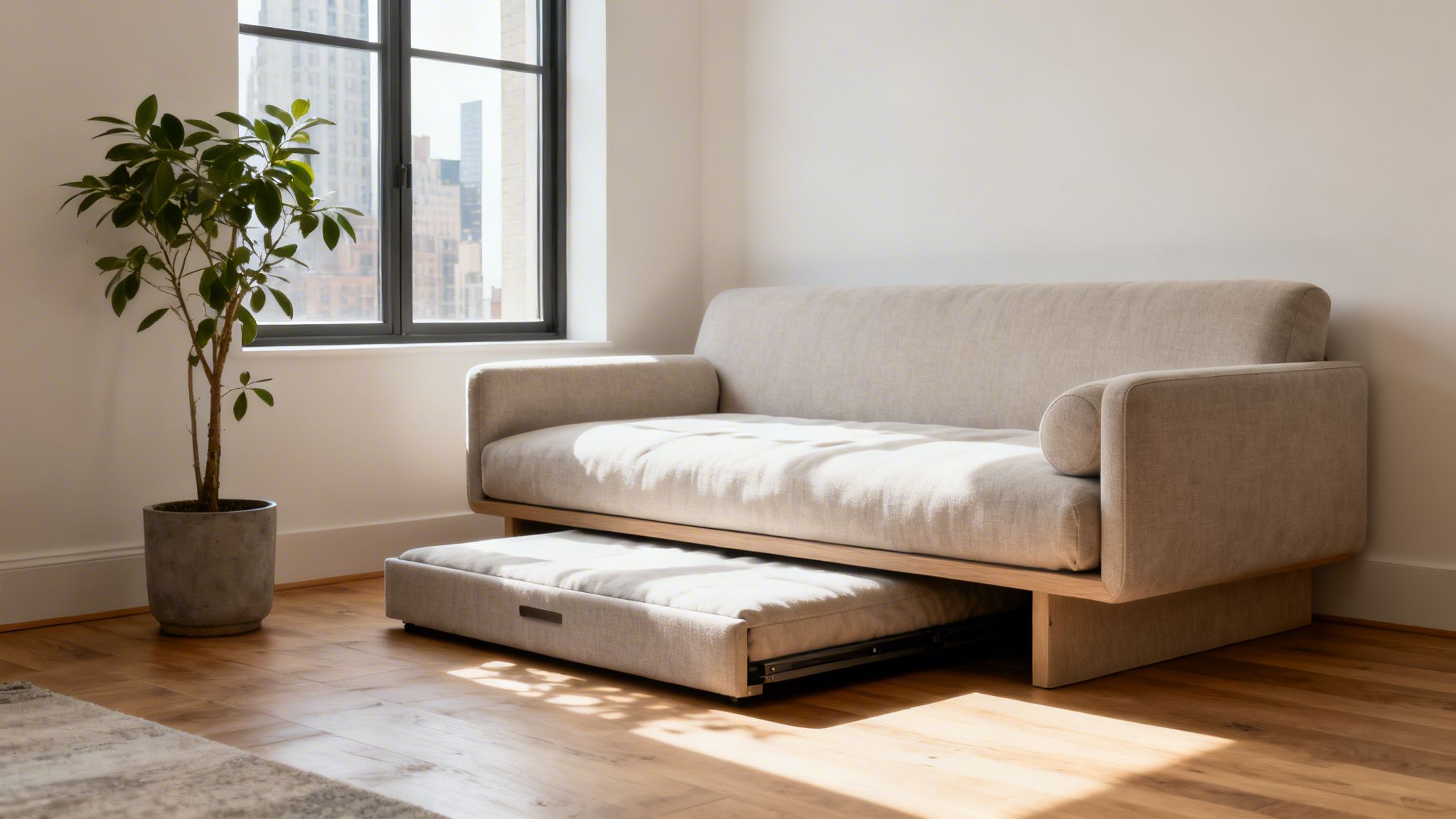
The daybed frame is styled like a sofa, with a mattress that also functions as the seat cushion. A second, separate bed frame and mattress — the trundle — sits stored underneath, low enough to roll or slide out when you need it and disappear when you don’t.
This is a different arrangement from a futon or sleeper sofa, where the seating surface itself converts. A daybed with trundle gives you two independent beds: the daybed stays as-is, and the trundle adds capacity without disturbing it. That matters for hosting two guests at once, or for a kid’s sleepover where one bed needs to stay made.
Daybeds and trundles are sold as matched sets, not mixed and matched — the daybed frame is built with the exact clearance its specific trundle needs to slide in and out. Browse the trundle beds collection for compatible sets.
Pop-Up vs. Roll-Out Trundles
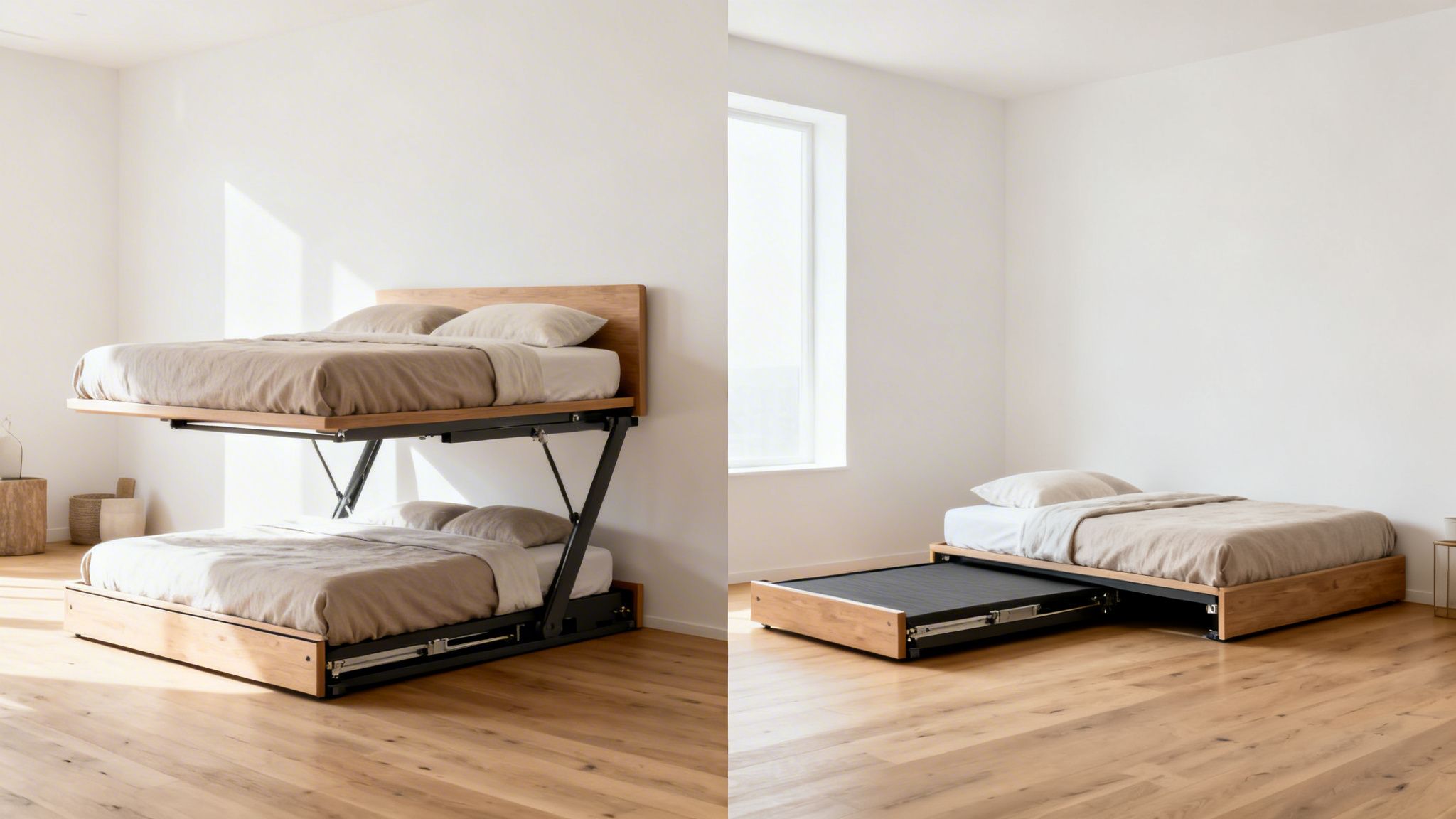
The mechanism determines what the trundle can actually do for you.
| Feature | Pop-Up (High-Riser) | Roll-Out (Drawer) |
|---|---|---|
| Height | Spring-loaded frame lifts to daybed level | Stays low to the floor |
| Configurations | Two separate twins, or push together for a king-size surface | One extra twin bed |
| Best for | Adult guests, couples | Kids’ sleepovers, young children |
| Safety | Care needed when raising the frame; higher final surface | No lifting, no moving parts to manage |
| Mattress | Under 8″ to fit and pop up level | Under 8″ to clear the daybed frame |
Roll-out is the simpler, safer default for a kids’ room — no height, no mechanism to operate. Pop-up is the better fit for a guest room or home office that needs to host adults, since it can form a king-size surface or split into two full-height twins.
Both types cap mattress thickness around 8 inches for clearance under the daybed frame — always confirm the exact maximum against the specific model’s spec sheet before buying a mattress separately.
Daybed with Trundle vs. Bunk Bed
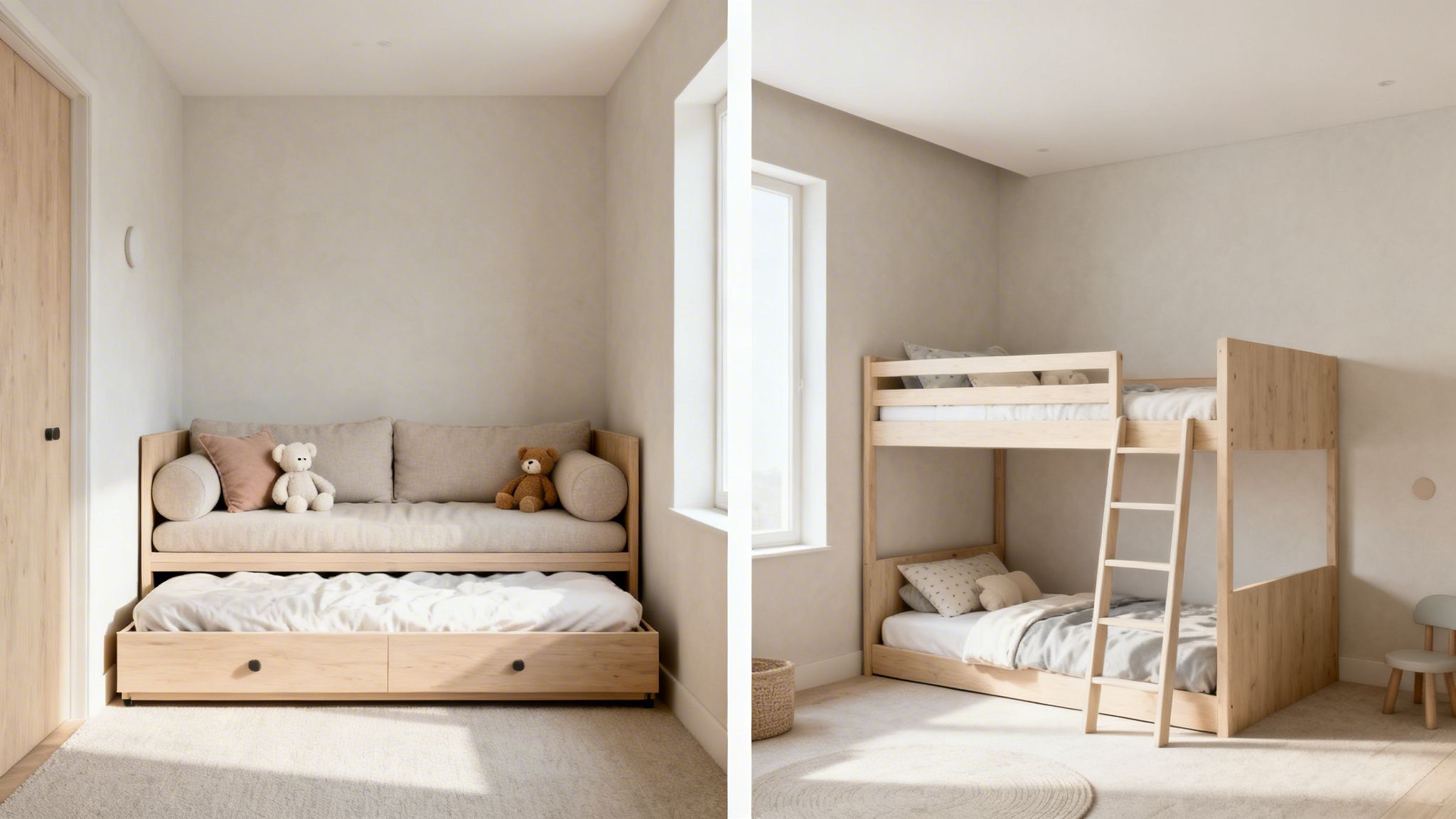
Both solve the same square-footage problem, with different trade-offs.
| Daybed with Trundle | Bunk Bed | |
|---|---|---|
| Safety | Roll-out stays at floor level, no climbing | Top bunk requires a ladder — a fall risk for younger kids |
| Daytime use | Functions as a sofa for reading, hanging out | Bed only — no seating function |
| Ceiling clearance | Low profile, no headroom requirement | Needs enough vertical space for both bunks |
| Longevity | Transitions from kid’s room to teen space to guest room | Tends to read as a kids’-only piece over time |
Bunk beds still make sense where floor space is more constrained than ceiling height, or where two kids need permanent, separate sleeping spots rather than an occasional extra bed. See the bunk and loft beds collection if that fits your layout better.
Choosing Mattresses
Two different mattresses, two different jobs.
Trundle Mattress: Height Is the Constraint
The trundle mattress must be thin enough to clear the daybed frame — 8 inches or less for most units, and this figure varies by model, so check the daybed’s spec sheet before buying. That rules out thick pillow-top mattresses, but slim memory foam and low-profile hybrid mattresses both deliver solid comfort within an 8-inch limit — a reasonable choice even for adult guests on a short stay.
Main Daybed Mattress: Built for Sitting and Sleeping
This mattress does double duty as a couch cushion during the day, so a soft, sleep-only mattress will sag under repeated sitting. A medium-firm to firm mattress holds up to daytime use while still sleeping comfortably at night — memory foam and hybrid constructions both work well here.
Standard Sizing: Twin on Twin
Most daybed-trundle sets use a “twin on twin” configuration — both the daybed and the trundle take a standard twin mattress, roughly 38″ wide by 75″ long. Confirm the exact dimensions in the product listing before ordering a mattress separately, since a fraction of an inch off in either direction can mean a return.
Compare materials and firmness levels across the full mattress collection.
Frequently Asked Questions
Can any twin mattress fit on a trundle?
Length and width are standard twin, but height is the limiting factor. Most trundles need a mattress 8 inches thick or less to slide under the daybed frame — check the specific model’s maximum before buying.
How much weight can a trundle bed hold?
Weight capacity varies by model, but most trundle beds support in the range of 200–250 lbs, which comfortably covers children and most adults. Check the manufacturer’s listed capacity for the specific model you’re considering.
Is a daybed with trundle comfortable for adults?
Yes, with the right mattress. A quality memory foam or hybrid mattress on both the daybed and trundle makes either surface comfortable for adult guests, particularly for short stays — which is what makes this setup work well for a guest room or home office.
Can I use the trundle space for storage instead of a bed?
Yes. If the second bed isn’t needed regularly, the trundle frame doubles as a large under-daybed drawer for extra bedding, pillows, or seasonal items.
Can I add a trundle to a daybed I already own?
Usually not. Daybeds and trundles are built as matched sets, with the daybed frame sized to the exact clearance its trundle needs. A trundle from a different model will typically not fit.
Roll-out for a kids’ room, pop-up for a guest room that needs to seat and sleep adults — the mechanism decision drives everything else. Browse the daybed and trundle collection to compare current options.