What Is a Pouf Chair? Pouf vs. Ottoman vs. Floor Cushion
You notice the problem the minute people come over. The sofa is full, the dining chair gets pulled into the living room, and someone ends up leaning against the wall because there just isn’t room for another proper chair.
That’s where a pouf starts to make sense.
If you’ve been asking what is a pouf chair, the short answer is simple: it’s a low, cushioned, frameless seat that can work as a footrest, extra seating, or a soft accent piece. The confusion starts because poufs, ottomans, footstools, and floor cushions overlap in looks but not always in function.
In a small apartment, that difference matters. Some pieces are decorative first. Some are sturdy enough for adults. Some disappear under a console when you’re not using them. Some can even double as a casual table if the top is firm enough.
The Search for Flexible Seating in Small Spaces
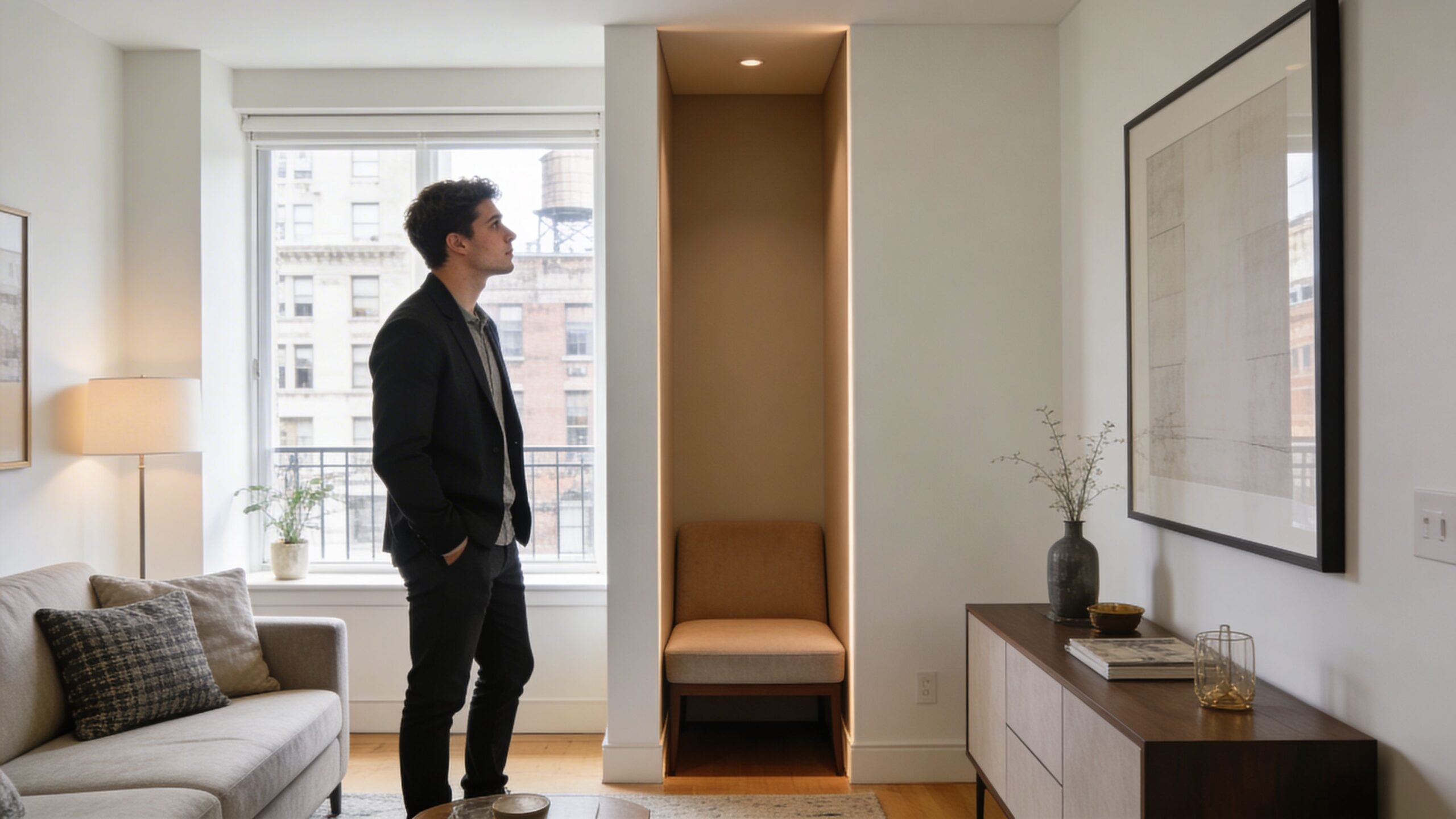
A lot of small apartment rooms have to do too much. The living room is also the guest zone, the work zone, and sometimes the dining zone. You need one more place for someone to sit, but you don’t want a bulky accent chair blocking the walkway every day.
That’s why poufs keep showing up in small homes. They’re easy to move, visually lighter than a framed chair, and useful in more than one spot — a footrest in front of the sofa one day, extra seating for a friend the next, tucked under a desk or into a bedroom corner after that.
Why poufs solve a real apartment problem
- For guests: one more usable seat without committing floor space to a full chair.
- For daily living: sits by the sofa as a footrest and still looks intentional.
- For flexible layouts: moves from living room to bedroom to office without rearranging half the room.
A good small-space piece earns its footprint every day. A pouf can do that when it serves more than one job.
Browse Futonland’s collection of ottomans to see how soft accent seating fits into a room without the bulk of another full chair.
Defining the Pouf: From Its Origins to Today
A pouf is a low, upholstered seat with no visible frame, arms, or back — usually soft-sided, compact, and casual. Some are cube-shaped, some round; some are structured enough to hold their form while others feel more like a dense cushion.
What makes a pouf a pouf
- Frameless build: no exposed wood or metal chair frame.
- Soft body: upholstered and padded rather than rigid.
- Low height: designed closer to the floor than a standard chair.
- Multi-use role: footrest, extra seat, accent, or casual surface.
That frameless construction is why poufs feel less formal than ottomans or accent chairs — in a tight room, that softer silhouette helps.
A quick origin story
The term has an unexpectedly fashion-world backstory: “pouf” first appeared in the 1770s as the name of an elaborate, teased hairstyle popularized in the French court, and the name later carried over to the low, cushioned stools fashionable in the same salons. That history is a fun footnote, but the reason poufs lasted has nothing to do with Versailles — strip away the origin story and you still have a compact, useful piece of furniture that fits modern living extremely well.
Why the design still works
A low, movable, upholstered seat solves common layout problems that haven’t changed much. It softens a room full of straight lines, adds seating without making the room feel crowded, and it’s often the piece apartment dwellers move around most.
Choosing the Right Accent Seating
The easiest way to shop well is to separate three pieces that often get lumped together: pouf, ottoman, and floor cushion. They look similar in photos but behave differently in real rooms.
A pouf is usually the softest and most casual of the three. An ottoman tends to be more structured. A floor cushion sits lowest and reads more lounge-style than chair-like.
Pouf vs. Ottoman vs. Floor Cushion at a Glance
| Feature | Pouf | Ottoman | Floor Cushion |
|---|---|---|---|
| Structure | Usually frameless and padded | Often more structured, sometimes built over a firmer base | Soft cushion with minimal structure |
| Firmness | Medium to soft, depends on fill | Usually firmer and flatter | Softest of the three |
| Typical height | Low profile | Low to medium profile | Lowest, closest to the floor |
| Best use | Footrest, flexible extra seating, accent | Footrest, seating, sometimes tray surface or storage | Casual lounging, kids’ spaces, relaxed seating |
| Storage potential | Usually no internal storage | Often available with hidden storage | No internal storage |
| Works as a table | Only if top is firm and stable | Often yes | Usually no |
| Adult seating | Sometimes, if well-filled | More often, especially structured models | Less ideal for frequent adult use |
When a pouf is the right choice
Choose a pouf for softness, portability, and visual ease — the better pick when the piece needs to float around the apartment and work in different rooms. It also works well when you don’t want the room to feel over-furnished; a soft-sided seat reads lighter than another wood-legged chair.
When an ottoman makes more sense
Pick an ottoman for more structure — useful if you like to set down a tray, need hidden storage, or want something that behaves more like a stable furniture anchor. Comparing chairs alongside ottomans can clarify the trade-off: some rooms need soft flexibility, others need true seated support.
If your main goal is “one more real seat,” don’t buy by shape alone. Buy by construction.
Where floor cushions fit
Floor cushions are the most relaxed option — great in kids’ rooms, reading corners, or casual setups where sitting low feels natural. For everyday adult seating in a living room, they’re usually the least chair-like of the three. That doesn’t make them bad — it just means they solve a different problem.
A Closer Look at Pouf Construction and Materials
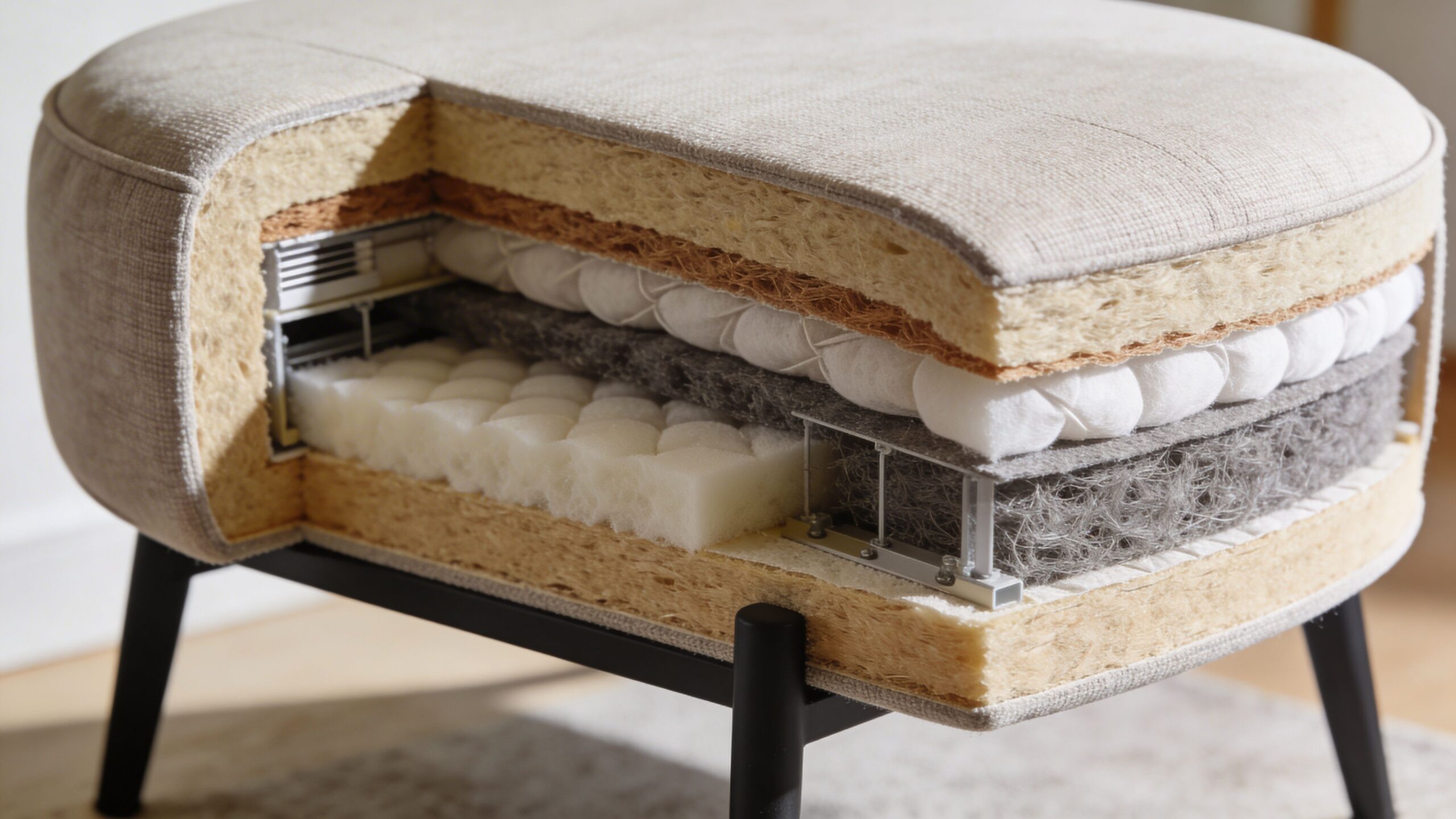
The biggest mistake shoppers make is assuming all poufs can handle adult seating. They can’t. Some are decorative first — soft shells filled to look full on delivery day. If you want a pouf that functions as an actual extra seat, the inside matters more than the shape.
What’s inside matters most
A moderately firm foam core holds shape and resists sagging far better than a soft polyester or bead fill, which tends to shift, settle, and compress with regular use. That’s the real dividing line between a pouf that works for adults and one that only looks good in a styled photo — not the shape or the cover, but what’s actually inside.
What works and what usually disappoints
- Foam-core poufs: best for dependable seating — hold shape better and feel more supportive.
- Bead-filled poufs: fine for casual lounging or kids, but tend to shift and settle.
- Polyfill-heavy poufs: soft and inviting at first, but often too squishy for repeated adult use.
If the pouf will live in a high-traffic living room, a firmer fill is usually the better call — soft isn’t always comfortable once real use starts, and too soft often means unstable.
Practical rule: If you want to sit on it like a chair, look for a reinforced core and a shape that stays upright when no one is using it.
Exterior materials and real-life trade-offs
The cover changes both the look and the maintenance.
Knit
Knit poufs bring texture and warmth, popular in softer, relaxed rooms. The trade-off: textured knit snags more easily and may not be the first choice for homes with pets, shoes on, or constant dragging across the floor.
Leather
Leather looks more defined and wears in a way many people like, and wipes clean more easily than most woven fabrics. The trade-off is feel — some love the polished look, others want something softer underfoot.
Faux leather
Similar visual effect at a different price point, and usually easy to clean — works well in households wanting a cleaner-lined accent piece. The trade-off is long-term wear quality, which varies a lot by product.
Woven fabric
Fabric poufs cover the widest style range — bouclé, velvet-like textures, and flat weaves can all work depending on the room. For custom upholstery or coordinating a pouf with existing furniture, fabric by the yard lets you compare texture, color, and cleanability before committing.
How to Style Poufs in a Small Apartment
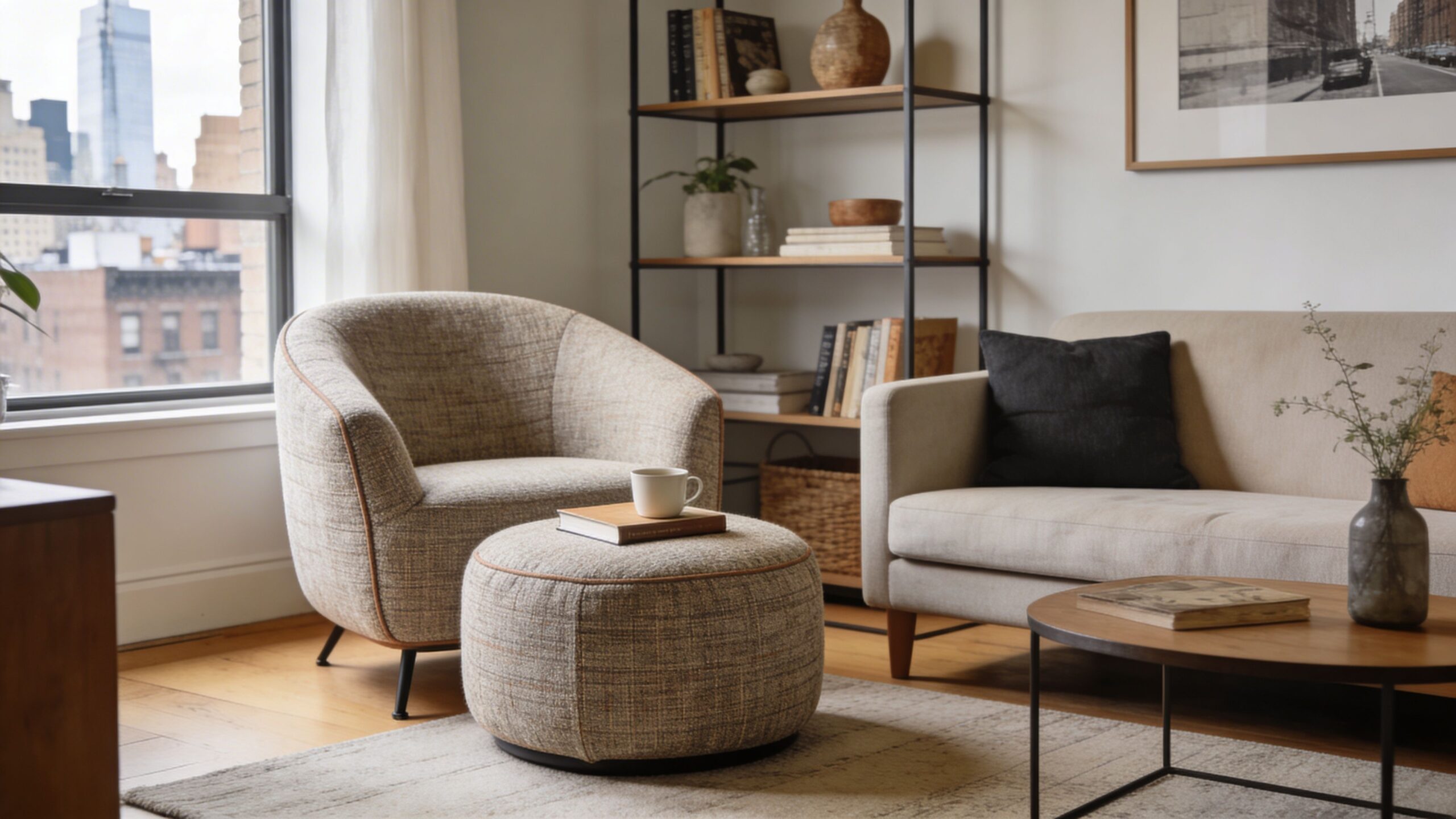
In a compact apartment, the best styling move often hides function in plain sight — poufs are good at that. They don’t need a dedicated zone the way an accent chair does; place one where it looks decorative most of the time, then pull it into action when people come over.
The hidden seating trick
Slide one or two poufs under a console, narrow desk, or window ledge — out of the traffic path but close enough to grab when needed. This works especially well in studio apartments where every item has to disappear a little when it’s off duty.
The flexible coffee table approach
A firmer pouf can stand in for a coffee table topped with a tray, softening the room and removing hard edges — helpful in tight layouts. This only works if the pouf has enough structure; if the top caves in easily, you’ll be annoyed every time you set down a drink.
The kid-friendly corner
A pouf is one of the easier ways to add seating to a kids’ room or reading nook — low, soft, and easy to move. For a pouf that will serve as a family room’s regular extra seat, construction matters more than it looks like it should; a reinforced foam core is worth prioritizing over a decorative bead or polyfill model.
The color-pop accent
In neutral apartments, a pouf carries texture or color without the commitment of a full upholstered chair — a leather pouf warms up a cooler palette, a patterned fabric pouf breaks up a room full of solids. A rug helps anchor a floating pouf so it feels intentional rather than temporary; browsing rugs alongside accent seating can make placement decisions easier, especially in open-plan rooms where pieces need to define a zone.
Choosing Your Perfect Pouf or Ottoman
The best purchase comes down to one honest question: are you buying it for looks, for lounging, or for actual seating? If the answer is “all three,” you’ll need to be stricter about structure, material, and scale.
Before you buy
What’s its main job?
Mostly a footrest — prioritize softness and style. Adults will sit on it regularly — support matters more than shape. Needs to hold a tray — choose something firmer and flatter.How should it fit the room?
A pouf should feel easy to move and easy to place. In a small room, oversized soft seating can look heavy fast. Match the scale to the nearby sofa, chair, or bed, and leave enough walking room around it.How much wear will it take?
A quiet bedroom corner can handle a more decorative pouf. A living room with kids, guests, or everyday use needs a tougher cover and stronger fill.
Buy for the hardest use case, not the best-case styling photo.
Simple care habits that help
- Vacuum gently: keeps dust from settling into seams and textured fabric.
- Spot clean early: fresh spills are easier to handle than set stains.
- Rotate position: if one side gets all the use, the shape wears unevenly.
- Don’t drag it by loose seams: lift from the base when moving it.
Why this category keeps growing
The appeal is practical: one piece, several jobs, less clutter — exactly what small-apartment living rewards. That’s why poufs and ottomans keep showing up as a go-to answer for flexible extra seating in compact rooms.
Futonland carries ottomans and accent pieces, including pouf-style designs, for shoppers solving seating and space problems without adding bulk.
A pouf chair is simple in concept, but the right one can do a lot of work. For soft flexibility, it’s a smart addition. For dependable adult seating, pay close attention to fill and firmness. The good one isn’t just cute — it earns its place.