

Best Furniture For Studio Apartments: Smart, Space-Saving Picks
The right furniture in a studio apartment doesn’t just fill the space—it creates it. Think beyond static couches and beds. We’re talking about clever, multifunctional pieces like convertible sofa beds, wall beds that vanish when you don’t need them, and smart storage that pulls double duty. These are the tools that transform a single room into a space that truly works for you.
Rethinking Your Space for Smarter Studio Living
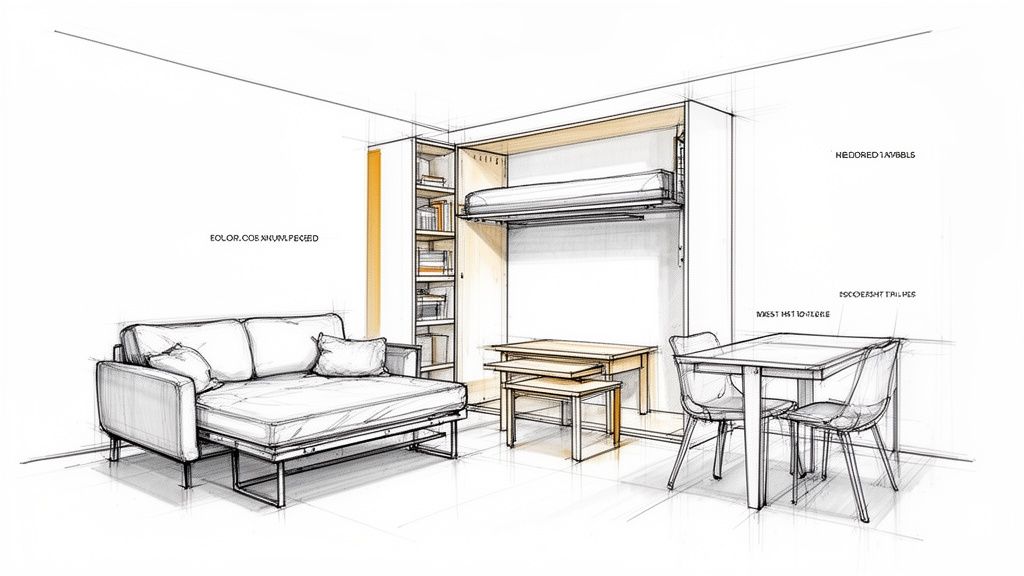
Living in a studio is a unique design puzzle. It’s not just about managing limited square footage; it’s about making one open room function as a bedroom, living room, office, and dining area without feeling chaotic. For anyone living in a city, this is a familiar challenge. But the answer isn’t just to own less stuff.
The real key is to furnish smarter. This means looking past traditional, single-purpose items and investing in adaptable pieces that work as hard as you do. Furniture design has come a long way from the clunky hide-a-beds and basic futons of the past.
The Power of Multifunctional Design
Today’s market is full of sophisticated, stylish options that can anchor a room, not just serve as a temporary fix. Your sofa is no longer just a sofa—it’s your primary bed, a guest room, and maybe even your linen closet. That same philosophy should apply to every piece you bring into your home.
Here’s how this shift in mindset completely changes the game:
- Reclaiming Floor Space: A wall bed (or Murphy bed) can free up 30-50 square feet of floor space during the day. That’s enough to instantly turn your sleeping area back into a living room or a dedicated home office.
- Eliminating Clutter: Furniture with built-in storage—like a sectional with a hidden chaise compartment or an ottoman with a lift-top—is your best friend for keeping the space tidy and organized.
- Adding Flexibility: Nesting tables can be spread out when friends are over and tucked away when you need more room. A lift-top coffee table can seamlessly transition into a comfortable desk or a dining surface.
The goal is to make your furniture adapt to your life, not the other way around. By choosing pieces that serve multiple roles, you create a space that feels larger, more organized, and perfectly suited to your needs without compromise.
As you rethink your layout, remember that managing your belongings is just as crucial. It’s wise to explore different storage solutions that can complement your multifunctional pieces. This guide will walk you through everything you need to know to transform your compact home into a sanctuary that’s both functional and beautiful.
How to Plan Your Studio Apartment Layout
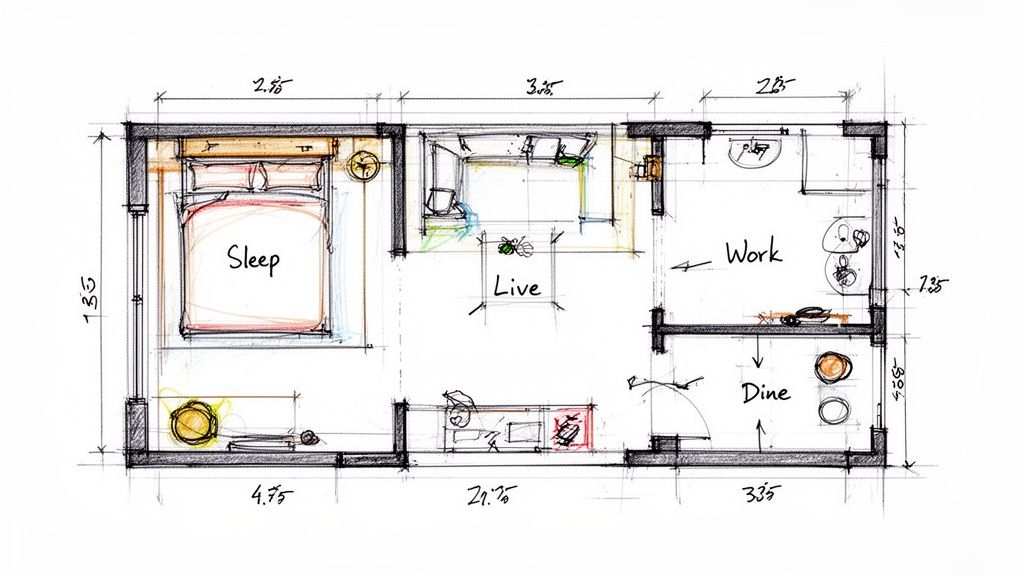
Before you even think about falling in love with a piece of furniture, you need a game plan. A solid layout is the absolute foundation of a studio that feels both functional and beautiful. Think of yourself as an urban planner for your own small space—every “district” needs a clear purpose, whether it’s for sleeping, working, or just kicking back.
Jumping straight to shopping is a classic rookie mistake. It almost always ends with a sofa that eats the entire room or a desk that just doesn’t fit your daily routine. Taking a few minutes to plan will save you a world of frustration (and money) down the line.
This process guarantees every piece you bring in has a home and a job, helping you sidestep that dreaded cluttered, disorganized feeling for good.
Measure Everything Twice
First thing’s first: grab your tape measure. Don’t just guess your square footage; get precise measurements of the entire apartment. And I’m not just talking about wall-to-wall.
You need to map out every little quirk and architectural detail. Note the exact location and dimensions of:
- Windows and Doors: Measure their width, height, and how far they are from the corners. Don’t forget to account for the swing of each door!
- Outlets and Switches: Knowing where your power sources are is crucial. It dictates where lamps, your TV, or your work-from-home setup can actually go.
- Radiators or Vents: These fixtures stick out and can’t be blocked, which definitely impacts where your furniture can live.
- Awkward Nooks or Columns: Document any weird architectural features. You’ll have to work around them, so it’s better to know their exact size from the start.
Once you’ve got your numbers, sketch out a simple, to-scale floor plan. You can use graph paper or a free online tool. This little map is your most powerful weapon. It lets you “test drive” furniture arrangements without breaking your back, helping you find the best furniture for studio apartments that fits your space like a glove.
Define Your Functional Zones
Now, look at your blank floor plan and start creating zones. The whole trick to studio living is creating distinct areas for different activities, making one room feel like many. Your main zones will probably be for sleeping, living, dining, and maybe working.
Think about the natural flow of the space. Where does the sunlight hit? What’s the main path from the front door to the kitchen? Use these clues to guide your placement. For example, the sleep zone usually works best in a corner far from the entrance to create a sense of privacy.
A great way to visually separate these areas is by using area rugs or furniture itself as a border. An open-backed bookcase can create a division between your bed and living area while still allowing light to pass through, maintaining an open feel.
You can also get creative with dedicated dividers. Our guide on room dividers has a bunch of great ideas for creating these separations without closing off your space.
Prioritize Your Lifestyle Needs
Okay, this is the most important part. Your studio has to work for how you actually live, not how you think you should live. Get real about your daily habits.
Do you work from home most of the week? A comfortable, ergonomic workspace is a non-negotiable. Love having friends over for movie night? A high-quality, spacious sleeper sofa should be at the top of your list.
This need for adaptable furniture is a huge trend. The global small space furniture market hit USD 3,442.78 million in 2024 and is expected to climb to USD 4,844.34 million by 2031. Another analysis shows an even bigger jump, from USD 18.7 billion in 2024 to USD 32.4 billion by 2033, all thanks to more and more people living in cities.
Once you know your priorities, you can make smart trade-offs. If you rarely cook big meals, maybe that bulky dining table can be swapped for a sleek lift-top coffee table or a slim console that doubles as a desk. This strategic thinking ensures your space and your budget go toward the things that truly matter to you.
The Best Multifunctional Furniture for Small Spaces
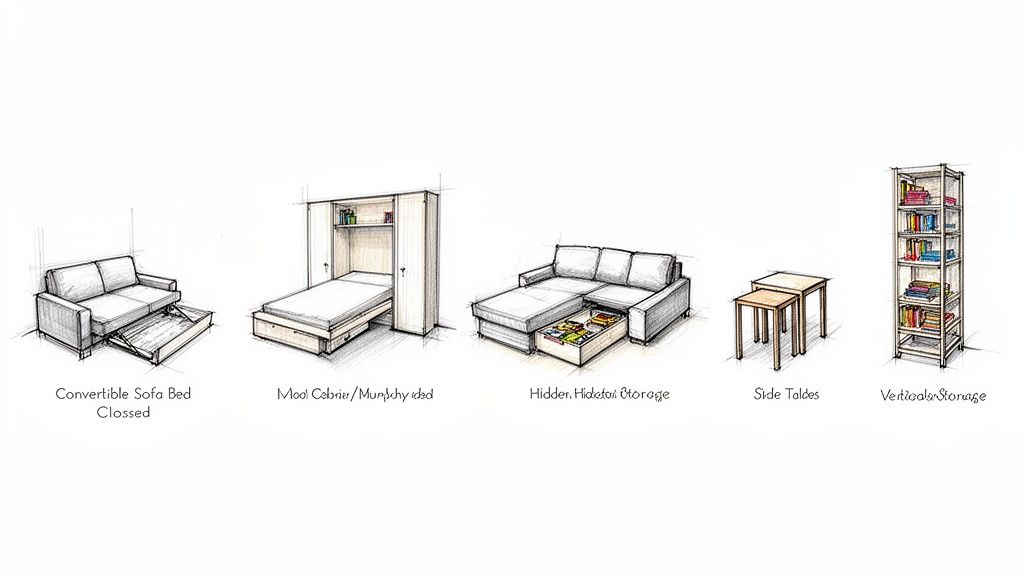
[Image demonstrating the conversion of a Murphy bed into a functional home office desk]
Once your layout is mapped out, it’s time to pick your champions. Multifunctional furniture pieces are the undisputed heroes of studio living, acting like clever transformers that make one room feel like a complete home. These aren’t just items that serve a purpose; they are space-saving powerhouses designed to adapt to your life from morning to night.
Think of these pieces as your ultimate problem-solvers. Instead of dedicating precious square footage to both a bed and a sofa, you pick one brilliant piece that does both jobs beautifully. This strategic approach is the very heart of smart studio design, ensuring every inch of your floor plan is working as hard as you do.
The Evolution of Convertible Sofa Beds
Forget the lumpy, uncomfortable pull-outs of the past. The modern convertible sofa bed is a world away from its ancestors. Today’s designs are sophisticated, stylish, and engineered for daily comfort, whether you’re sitting or sleeping. They’ve truly become the cornerstone of studio apartment furniture, anchoring a living area with style while hiding a restful sleep space in plain sight.
This is because designers now treat form and function as equals. You’ll find sleek Scandinavian designs, plush mid-century modern looks, and minimalist frames that don’t scream “this is also a bed.” The mechanisms have also seen a massive upgrade, with many models converting with a simple click-clack motion or a smooth pull-out system that requires almost no effort.
A high-quality sleeper is an investment in your daily life. Our curated collection of convertible sofa beds shows just how seamlessly these pieces blend function with designs that can elevate any small space. From compact loveseats perfect for tiny nooks to spacious sectionals, the right choice can define your entire studio.
Reclaim Your Floor with Murphy and Cabinet Beds
For the ultimate space reclamation, nothing beats a Murphy bed or its freestanding cousin, the cabinet bed. These pieces are true transformers, allowing you to completely hide your bed during the day and free up a massive amount of floor space. A queen-sized bed eats up about 35 square feet, and getting that back is an absolute game-changer.
Imagine folding your bed away each morning to reveal a spacious living room, a full home office, or a yoga area. This is the power of designing vertically.
- Murphy Beds (Wall Beds): These are secured directly to the wall and often come with integrated shelving or desks, creating a complete “wall unit” system. They are incredibly stable and feel just like a traditional bed.
- Cabinet Beds: As freestanding pieces, they don’t require wall mounting, making them a great option for renters. The mattress folds away into a stylish, low-profile cabinet that can even double as a media console.
Both options use advanced counter-balance mechanisms, making them surprisingly lightweight and easy to lift. They give you the full comfort of a conventional mattress without permanently occupying your valuable floor real estate.
The choice between a sofa bed and a Murphy bed often comes down to lifestyle. If you value having a dedicated, plush sofa at all times, a convertible is your best bet. If maximizing open floor space for daytime activities is your top priority, a Murphy bed is the clear winner.
Deciding between these popular options can be tough. The table below breaks down the key differences to help you figure out what works best for your specific needs and daily routine.
Studio Furniture Comparison
| Furniture Type | Best For | Space-Saving Level | Dual-Functionality |
|---|---|---|---|
| Convertible Sofa Bed | Those who want a dedicated sofa for daily seating and entertaining. | Good | Serves as a full-time sofa and a bed. |
| Murphy/Wall Bed | Maximizing open floor space for work, exercise, or hobbies. | Excellent | Hides the bed completely to create a multi-purpose room. |
| Cabinet Bed | Renters who want the space-saving benefit of a Murphy bed without wall installation. | Excellent | Functions as a media console or credenza when the bed is stored. |
| Storage Sectional | People needing to hide clutter like blankets, pillows, or games. | Moderate | Combines seating with significant hidden storage. |
Each of these pieces tackles the small-space challenge from a different angle. Your daily habits—how often you have guests, whether you work from home, and how much stuff you need to store—will point you toward the right solution.
Smart Storage Sectionals and Beyond
Clutter is the number one enemy of a peaceful studio apartment. That’s why furniture with built-in storage isn’t just a “nice-to-have”—it’s an absolute necessity. These clever pieces hide your belongings in plain sight, keeping your space feeling tidy and serene.
Sectionals with a storage chaise are an incredibly popular choice. The chaise lounge seat simply lifts up to reveal a spacious compartment, perfect for stowing away extra blankets, pillows, or seasonal items. This one piece of furniture can eliminate the need for a separate bulky chest or ugly storage bins.
Beyond the sofa, look for other multitasking storage opportunities:
- Lift-Top Coffee Tables: These tables rise to create a comfortable desk or dining surface while revealing hidden storage for remotes, magazines, or your laptop.
- Storage Ottomans: The classic multitasker. It provides seating, a footrest, a surface for a tray, and a surprising amount of hidden storage.
- Nesting Tables: These give you flexible surface area when you need it. You can spread them out when guests visit and then tuck them away compactly to reclaim your floor space.
Combining multifunctional furniture with smart storage solutions will completely transform your studio’s efficiency. Don’t forget to think vertically! Tall, narrow bookcases or wall shelves draw the eye upward, creating an illusion of height and space while adding storage that doesn’t eat up your footprint. By mixing and matching these smart furniture choices, you can create a studio that feels organized, spacious, and perfectly tailored to your life.
Choosing the Right Mattress for Your Sofa Bed
When your sofa has to pull double duty as your bed, the mattress isn’t just a piece of the puzzle—it’s everything. That single element is the difference between a smart, space-saving investment and a nightly compromise that leaves you sore. A great sofa bed mattress needs to be a true hybrid, offering the firm support you need for sitting and the plush comfort you want for sleeping.
Here’s the real challenge, though: durability. A standard mattress just gets compressed when you lie on it. A sofa bed or futon mattress, on the other hand, gets sat on, folded, and unfolded, day in and day out. This constant stress demands a specialized construction to fight off premature sagging and wear, ensuring it holds up year after year.
Futon Mattresses Versus Conventional Mattresses
A common question we hear is, “Can I just toss a regular mattress on my sofa bed frame?” The answer is almost always a hard no. Conventional mattresses are built to be rigid and thick, designed to lie perfectly flat on a box spring or platform. They simply don’t have the flexibility to fold into a sofa position. Trying to force it will likely damage both the mattress and the frame’s mechanism.
Futon mattresses, however, are engineered for this exact purpose. They’re designed to be both supportive and pliable, bending and flexing without sacrificing their structural integrity. To get a better sense of the options, you can explore a wide variety of futon mattresses built specifically for this dual role. It’s this built-in flexibility that makes them the only real choice for any convertible furniture.
Decoding Mattress Materials
Getting familiar with what’s inside your mattress is the key to striking that perfect balance between comfort and support.
- Memory Foam: This material is famous for contouring to your body, which provides fantastic pressure relief—a huge plus for side sleepers. It’s also great at isolating motion, so you won’t feel your partner tossing and turning.
- Latex: Often made from natural, sustainable materials, latex is responsive, incredibly durable, and tends to sleep cooler than memory foam. It gives you a supportive yet buoyant feel that a lot of people fall in love with.
- Innerspring/Coils: For those who prefer a more traditional, firm feel with a bit of bounce, coils are the way to go. They also promote better airflow, making them a solid pick if you tend to sleep hot.
At the end of the day, it really comes down to what feels best to you. A memory foam or latex blend can offer that modern, cradling comfort, while an innerspring core delivers the classic, firm support many of us grew up with.
Healthy Materials for Small Spaces
In a cozy studio apartment, indoor air quality is a bigger deal than you might think. Many conventional mattresses can release Volatile Organic Compounds (VOCs), which are chemicals that “off-gas” into the air you breathe. Opting for a low-VOC or organic mattress made from materials like natural latex, organic cotton, or wool isn’t just a trend—it’s a healthier choice for your home.
These natural materials aren’t just better for you; they’re often more durable and breathable, too. Given that multi-functional furniture is a market powerhouse with over 45% market dominance in small living spaces, investing in a quality, non-toxic mattress like the ones in our natural mattresses collection is a smart move. The global furniture market is on track to hit US$978.6 billion by 2032, largely driven by people demanding flexible designs that don’t compromise on wellness.
Styling Your Studio to Feel Bigger and Brighter
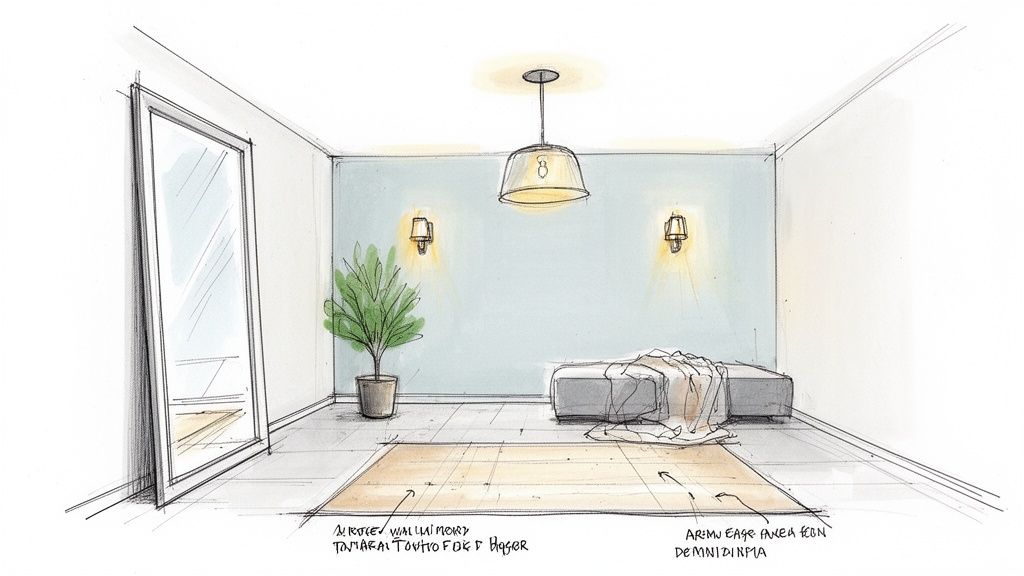
Alright, you’ve picked out the perfect multifunctional furniture—now for the fun part. Strategic styling is what takes your studio from just functional to genuinely inviting. It’s the final touch that can make your compact apartment feel way bigger, brighter, and more pulled-together than you thought possible.
This isn’t about following a bunch of strict design rules. It’s all about using clever visual tricks to play with perception. The right colors, lighting, and textures can create an atmosphere of openness, turning that single room into your own personal sanctuary.
Harnessing Light and Reflection
Light is your secret weapon for faking space. A bright, well-lit room just feels more expansive than a dark, shadowy one—it’s that simple. Start with your walls. Painting them in light, neutral colors like soft whites, pale grays, or warm beiges makes a huge difference. These shades bounce light around instead of soaking it up, which visually pushes the walls outward.
Mirrors are the other half of this magic trick. A well-placed mirror doesn’t just reflect your image; it reflects light and the view, creating a real sense of depth.
Placing a large mirror across from a window is a classic designer move for a reason. It practically doubles the amount of natural light and brings a bit of the outdoors in, making the whole studio feel more open and airy.
Don’t be afraid to treat them like art. A collection of stylish mirrors can be both functional and a beautiful focal point on your wall. They’re a non-negotiable when you’re furnishing a studio.
Defining Zones Without Walls
In a studio, you need to create different “rooms” without actually putting up walls. This is key to keeping the space from feeling like one big, cluttered box. Area rugs are brilliant for this. Think of them as “islands” that anchor each of your functional zones.
- Living Zone: An area rug under your convertible sofa and coffee table clearly marks your main hangout spot.
- Sleeping Zone: A smaller rug just beside your bed creates a soft, designated space that feels cozy and separate.
- Dining/Work Zone: Even a simple runner under a slim console table can carve out a dedicated area for eating or working.
This simple technique grounds your furniture and signals to your brain that each part of the room has its own purpose, bringing a sense of order to your open layout.
Smart Lighting and Decor Choices
One lonely overhead light isn’t going to cut it. Layering your lighting is what adds warmth, dimension, and real functionality to a room.
- Ambient Lighting: This is your main light source, like that central ceiling fixture.
- Task Lighting: These are focused lights for specific activities, like a reading lamp next to your sofa or some under-cabinet lights in the kitchenette.
- Accent Lighting: This is what adds warmth and personality. A floor lamp tucked in a corner or a stylish table lamp creates a cozy glow that makes the space feel intimate and inviting.
To keep your floor clear, look for wall-mounted sconces or slim floor lamps that can be tucked neatly into a corner.
Finally, bring it all together with decor that you love. Custom furniture covers can instantly change the vibe of your sofa to match any style, whether you’re going for minimalist Japandi or a bold mid-century modern look. By combining these styling tricks, you’ll create a studio that’s not only incredibly smart and functional but also a bright, beautiful space that feels completely you.
Making Your Furniture Purchase Simple and Stress-Free
Choosing the right furniture for a studio is a big decision, but getting it into your home shouldn’t be a nightmare. The best retailers don’t just sell you a sofa; they offer a complete solution that turns a potentially overwhelming task into a smooth, seamless experience.
Think about it: professional design help before you even click “buy.” That kind of service is a lifesaver, helping you map out your floor plan so every piece fits perfectly and actually improves the flow of your space. This simple first step helps you dodge the classic mistake of ordering furniture that’s way too big or just plain awkward for the room.
From Our Warehouse to Your Home
Once you’ve found the perfect piece, the next challenge is getting it inside. This is where a reliable, full-service delivery process is absolutely essential—especially for tricky items like wall beds or huge sectionals that were practically designed to get stuck in tight apartment hallways.
A top-tier service should have you covered with:
- Nationwide Delivery: The ability to get your furniture delivered anywhere, whether it’s a city high-rise or a suburban guest room.
- White-Glove Assembly: A professional team that doesn’t just drop boxes at your door. They bring it to the room you want it in, assemble it, and haul away all the cardboard and plastic.
- Mattress and Furniture Disposal: This is a game-changer for city dwellers. They’ll take away your old stuff, so you don’t have to figure out how to do it yourself.
When you invest in multifunctional furniture, you’re buying a system that has to work perfectly from day one. Professional assembly isn’t a luxury—it’s peace of mind. It ensures your new Murphy bed or convertible sofa is safe, secure, and ready to go.
Confidence in Your Investment
A truly stress-free purchase is backed by policies that protect you. Look for customer-friendly options like financing to make the purchase more manageable and a price match policy to ensure you’re getting the best value. These aren’t just perks; they’re signs that a company stands behind its products and cares about your satisfaction.
Ultimately, trust comes from experience. In places like New York, where the average studio is under 500 square feet, the right furniture is the only thing standing between calm and chaos. Our New York Deals section is curated specifically for these kinds of urban challenges. Verified customer reviews tell the real story of a company’s performance, from the product quality to how smoothly the delivery went.
As e-commerce grows, it’s services like white-glove setup that truly make a difference in turning a tiny apartment into a functional, cozy home. Choosing a partner with a proven track record means you’re not just getting furniture—you’re getting a complete, worry-free solution.
Studio Furniture FAQs
Let’s tackle some of the most common questions that come up when furnishing a studio. Getting these answers sorted out will help you move forward with confidence and create a space you truly love.
What’s the Single Most Important Piece of Furniture for a Studio?
Hands down, a high-quality, comfortable convertible sofa bed is almost always the MVP. It pulls double duty, acting as your main seating area by day and your bed by night. This clever setup maximizes your primary living space without you having to cram in two separate, bulky pieces of furniture.
How Can I Create Storage When I Don’t Have Closets?
You have to get creative and make your furniture work harder for you. Look for pieces that have built-in storage solutions. Think platform beds with drawers underneath, a sectional sofa with a hidden storage chaise, or even an ottoman that opens up to store blankets and pillows.
Also, don’t forget to think vertically! Tall, narrow bookcases or wall-mounted shelving draw the eye upward and make use of space that would otherwise be wasted.
Should I Bother with a Room Divider in My Studio?
It really depends on your layout and what you’re trying to achieve. A physical divider can definitely create a nice sense of separation and privacy, but it can also make a small space feel even more cramped.
A great alternative is to use an area rug to visually create different “zones” for living and sleeping. Open-backed bookcases are another fantastic option because they divide the space while still letting light filter through, keeping things feeling bright and airy.
Pro Tip: Using furniture to create zones is often more effective than a solid screen. A well-placed sofa or console table can define the “living room” from the “bedroom” without visually shrinking your apartment.
For those with an eye for style, the clean lines of Scandinavian silhouettes with custom covers can perfectly capture that Japandi vibe. With the rise of e-commerce, it’s easier than ever to find what you need—in fact, 43% of mattress sales happen in the first half of the year, making it a great time to bundle a new frame with a premium, chemical-free mattress. In a world where 60% of urban renters are looking for modularity, futons offer the best value by making every inch count, from a tiny NYC studio to a breezy spot in Hawaii.
Are Murphy Beds Hard to Use and Install?
You’d be surprised! Modern Murphy beds are designed with sophisticated counter-balance systems that make them feel incredibly lightweight and easy to pull down and lift up.
However, the installation is a different story. It’s a precise job that requires securely anchoring the entire unit to the studs in your wall. To ensure it’s safe, stable, and operates smoothly for years to come, we highly recommend professional white-glove assembly.
Ready to find the perfect furniture to transform your studio apartment? Explore the curated collections at Futonland and let our experts help you create a beautiful, functional home you’ll love. Visit us at https://futonland.com today.