
Tufted Sofa Set Guide: Styles, Materials & Durability
You’re probably looking at a tufted sofa set for one of two reasons. Either you already know you like the look, or you need one piece of furniture to do a lot of visual work in a small room. That’s especially common in apartments, where the sofa often becomes the room’s main design statement whether you planned for it or not.
Tufting can absolutely deliver that polished look. It can also create cleaning headaches, feel firmer than expected, and age very differently depending on the upholstery and what’s underneath it. The good news is that once you know what to check, it’s much easier to separate a well-built tufted piece from one that only looks good on a showroom floor.
What Is Tufting and Why It Matters
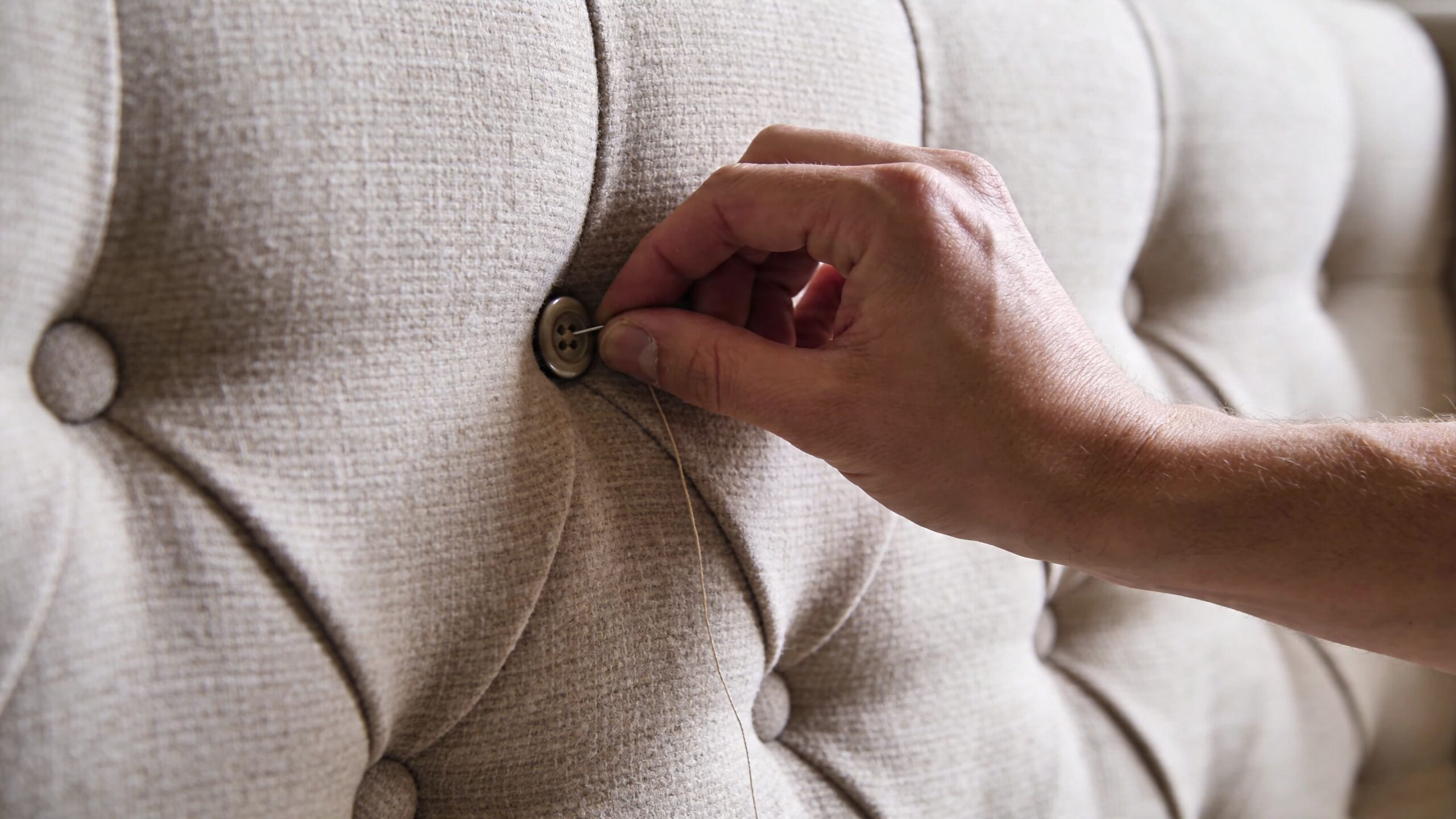
A tufted sofa set uses upholstery that’s pulled inward at regular points and secured with buttons, knots, or internal ties. That tension creates the familiar pattern of dimples, channels, diamonds, or squares across the seat, back, or arms.
The easiest way to think about tufting is quilting for upholstery. It shapes the surface, but it also helps hold padding in place. On a quality piece, that means the fill stays more controlled instead of drifting, bunching, or flattening unevenly.
Tufting started as a practical solution
The most recognizable historical example is the Chesterfield. The Chesterfield sofa is traditionally traced to the 18th century, commissioned for Philip Stanhope, the 4th Earl of Chesterfield, around 1740. The design let gentlemen sit upright without creasing their suits, and by the mid-19th century, coiled springs and mass production helped turn the style into a middle-class staple.
That history matters because it explains why tufting still reads as intentional and precise today. It wasn’t invented as ornament first. It came from upholstery technique and social use.
Practical rule: If a tufted sofa looks sharp but feels loose, lumpy, or uneven when you sit on it, the maker probably focused on the surface pattern more than the structure underneath.
Why buyers still choose it
In a small living room, plain upholstery can disappear. Tufting adds texture without asking for loud prints or oversized shapes. That’s one reason it works so well in apartments where you want the sofa to look finished, even if the rest of the room stays simple.
It also changes how a sofa feels visually. Tufting gives even a compact frame more presence, which can be helpful when one sofa has to serve as seating, style anchor, and guest-room fallback.
Decoding Tufting Styles: From Classic to Contemporary
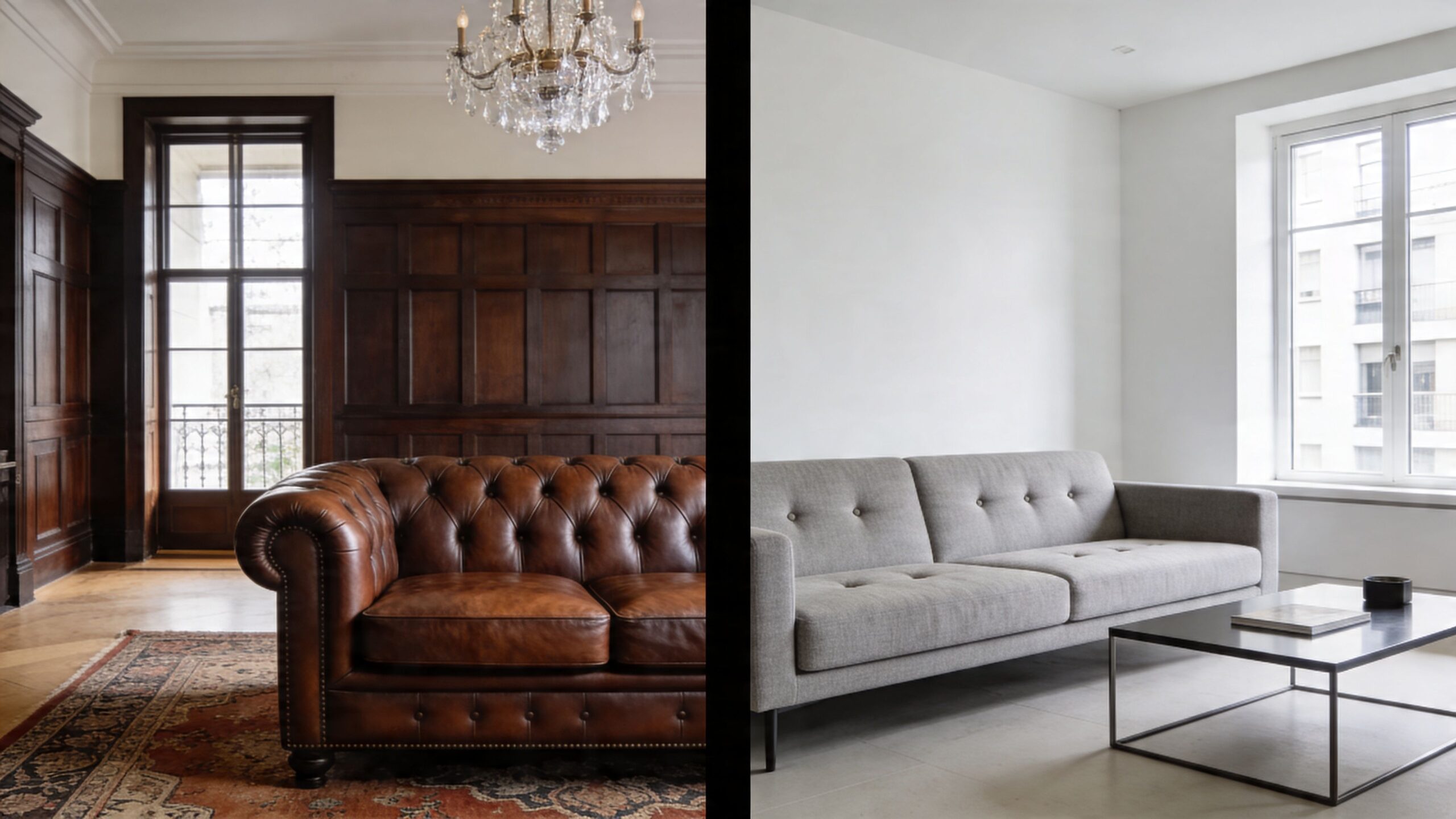
Not all tufting says the same thing. Some styles look formal and architectural. Others feel lighter and more relaxed.
Deep button tufting
This is the classic Chesterfield look. You’ll usually see deep pulls, pronounced buttons, and a strong diamond or grid pattern across the back and sometimes the arms. In leather, it reads traditional, clubby, and a little formal. In velvet or woven fabric, it can lean more decorative and dramatic.
Deep tufting works best when you want the sofa to be the room’s focal point. In a brownstone living room, a den, or a studio with high ceilings, it gives the space instant structure. In a very tight apartment with a lot of visual clutter, it can feel heavy if the color is dark and the arms are bulky.
Lighter contemporary tufting
Modern tufting is usually shallower and more restrained. Sometimes it appears as a few clean pulls on seat cushions. Sometimes it shows up as biscuit tufting or narrow channel effects rather than deep diamonds.
This style is easier to mix into Scandinavian, mid-century, or softer contemporary rooms. It gives you texture without the historical weight of a Chesterfield. If your apartment already has open shelving, mixed finishes, or a lot of daylight, lighter tufting usually keeps the room feeling less crowded.
A good showroom test is simple. Step back, squint slightly, and see whether the sofa reads as shape first or pattern first. If pattern dominates, the piece will carry more visual weight in your room.
How each style reads in a room
- Classic deep tufting works when you want presence, symmetry, and a more dressed-up look.
- Shallow tufting fits rooms that need softness and texture without a formal mood.
- Tufted seats with plain backs often make sense for buyers who want some detail but don’t want every surface collecting lint and shadows.
- Tufted backs with clean seat cushions are often easier for everyday sitting because the seat surface feels less structured.
If you know you want tufting but aren’t sure how much, that last category is often the safest middle ground.
Choosing Your Material: Leather, Fabric, and Faux Leather
Material changes everything about a tufted sofa set. The same frame can feel refined, casual, warm, slick, formal, or forgiving based on the upholstery alone. With tufting, the material choice matters even more because the surface is being pulled, folded, and stressed at fixed points.
What each material does well
| Material | Durability & Aging | Feel & Comfort | Best For |
|---|---|---|---|
| Leather | Develops character over time and usually handles tuft definition cleanly | Smooth, supportive feel with a more tailored look | Classic interiors, statement sofas, buyers who like patina |
| Fabric | Varies widely by weave and finish, with the broadest style range | Softer hand, warmer feel, more color and texture options | Family rooms, softer modern spaces, layered interiors |
| Faux leather | Easier to wipe down and often gives a crisp tufted look | Smoother and more uniform than many fabrics | Budget-conscious buyers, dining-living combos, lower-maintenance setups |
Leather
Leather makes tufting look crisp because it holds the folds and contours so clearly. On a deep-button silhouette, that definition is part of the appeal. Over time, leather tends to develop patina rather than looking identical year after year, which many buyers like.
What doesn’t work as well is treating all leather the same. A tufted leather piece still needs regular care around buttons and folds, where dust and skin oils can gather. It’s also less forgiving if you want a casual, sink-in feel.
Fabric
Fabric opens up far more room for tone and texture. Velvet tufting looks plush. Linen-look weaves feel lighter and more relaxed. Performance fabrics are often the practical choice for people who know the sofa will see snacks, guests, or daily use.
The trade-off is that some fabrics show wear around the tuft points faster than smoother surfaces do. On a low-quality build, those stress points become obvious sooner. On a good build, the fabric and padding work with the tufting instead of fighting it.
Faux leather and health-conscious buying
Faux leather gives you a cleaner wipe-down routine and a polished look at a more accessible price point. If you’re browsing faux leather sofa sets, pay attention to how the material feels at the folds and where the buttons pull the surface inward — that’s where cheap upholstery tends to reveal itself first.
There’s also a separate question many buyers now ask: what’s in the materials, and how will that affect indoor air? Interest in lower-VOC, more transparent-material furniture has grown broadly across the industry, and tufted designs are worth extra attention here specifically because the folds and crevices can hold onto off-gassing odors longer than flat upholstery.
If you’re sensitive to smells, furnishing a nursery-adjacent space, or setting up a guest room with limited ventilation, material chemistry deserves as much attention as color and style.
Durability and Construction: What to Look for Under the Upholstery
A tufted sofa either ages gracefully or falls apart in very visible ways. There’s not much middle ground. The reason is simple: tufting creates fixed stress points, so weak construction shows up faster than it does on flat upholstery.
Start with the frame and foam
Professional-grade tufted sofas use solid hardwood frames with reinforced joinery and high-density foam that meets recognized flammability standards. Ask specifically about frame material and foam density when comparing models — these details separate a sofa built to hold shape for years from one that will sag within a couple of seasons, and they’re not always listed on the tag.
What the tufting is actually doing
On a quality sofa, tufting isn’t just decoration. It acts as an anchor system that helps prevent foam migration and reduces the kind of sagging you often see in loose, unsupported cushions. That doesn’t mean every tufted sofa is durable. It means the tufting can help only if the frame, foam, and backing are doing their jobs too.
Here’s what to check when you sit down:
- Seat recovery: stand up and watch how quickly the cushion surface settles back into shape.
- Even tension: look at the buttons or pulled points. They should look intentional, not strained or crooked.
- Arm rigidity: grab the arm and gently test for movement. Excess flex is a warning sign.
- Surface consistency: press around the tufts and between them. You shouldn’t feel hollow pockets or abrupt dead spots.
Questions worth asking before you buy
Some buyers feel awkward asking construction questions. Don’t. On tufted furniture, those questions save money.
- What is the frame made of? Solid hardwood is the benchmark to look for.
- What kind of foam is inside? High-density foam usually holds shape better.
- How is the joinery reinforced? Gluing, stapling, and screwing together is stronger than relying on minimal fastening.
- Is the tufting on fixed upholstery or removable cushions? That affects both maintenance and long-term repair options.
Cheap tufting often looks fine at first because the pattern distracts your eye. A few months of real use tells the truth.
Sizing and Styling a Tufted Sofa in Your Space

A tufted sofa set can look perfect online and still fail the apartment test. In a small apartment, the usual problem isn’t taste — it’s width, depth, doorway clearance, or the way one bulky silhouette shuts down circulation in a room that already works hard.
The size check that matters first
Buyers often focus on sofa width and forget the diagonal measurement, which is what actually determines whether the piece can get through a building entrance, hallway turn, or apartment door. Measure the diagonal of the sofa (front-bottom corner to back-top corner) and compare it against your narrowest doorway or hallway turn before ordering — this catches problems width alone won’t reveal.
A quick measuring routine helps:
- Measure the wall first. Don’t guess from photos.
- Mark the sofa footprint on the floor with painter’s tape so you can see the depth in real terms.
- Measure doors, hallways, and turns, then compare them against the product dimensions and the diagonal.
- Check circulation paths to the bedroom, kitchen, and windows, not just the area directly in front of the sofa.
Use these sofa and mattress sizing charts for sanity-checking dimensions before you commit.
Styling in a small apartment
Tufting adds visual texture, so the rest of the room usually benefits from restraint. That doesn’t mean boring. It means deliberate.
- Scandinavian rooms: pair a lightly tufted sofa with pale wood, matte finishes, and open floor area.
- Mid-century spaces: a tufted back works well with tapered legs, geometric rugs, and warmer wood tones.
- Japandi interiors: choose softer neutral upholstery and let the tufting provide the texture instead of adding lots of pattern elsewhere.
A common styling mistake
Many apartment dwellers choose a dark, heavily tufted sofa with thick rolled arms because it feels luxurious in isolation. Then it lands in a narrow room and eats the whole layout. In compact spaces, a cleaner frame with lighter tufting usually gives you the design hit you want without shrinking the room visually.
Care and Maintenance: Keeping Your Tufted Sofa Pristine
Tufting’s distinctive aesthetic comes with a practical consideration. The same folds and pulled details that give the sofa its refined look also collect dust, crumbs, lint, and pet hair more easily than a flat cushion does.
What makes tufting harder to clean
Tufted upholstery crevices are trickier to maintain, especially in small-space living where dust builds up quickly and the sofa often sits close to windows, radiators, kitchen zones, or entry traffic. The sewn-in nature of tufting also makes removable, washable covers impractical on many models, and the repeated tension at each tuft point puts more localized stress on the foam underneath than a flat cushion experiences, which is part of why tufted seating can show wear sooner in heavy daily use.
That doesn’t make tufting a bad choice. It means you should buy it with open eyes.
What actually works at home
- Use the soft brush attachment first: a hard plastic edge can snag threads or scrape delicate fabric around buttons.
- Vacuum the creases regularly: light, frequent cleaning is better than letting debris compact deep into the folds.
- Blot, don’t scrub: around tuft points, scrubbing can distort the surface and raise the nap on some fabrics.
- Keep pet routines realistic: tufting catches fur. If you have a shedding pet, expect more maintenance than you would with a flatter cushion.
For buyers who want washability above all else, flat cushions or separate covers are often the simpler path. Options like replacement and protective futon covers make more sense when easy removal is the top priority.
Tufting rewards regular light maintenance. It punishes neglect.
When to call a professional
If the sofa is stained deep around buttons or the fabric has started to look dingy in the folds, professional upholstery cleaning is usually safer than aggressive DIY scrubbing — a trained cleaner knows how to treat delicate seams and padded surfaces without distorting the tuft pattern or driving moisture into the foam.
Find Your Perfect Tufted Sofa Set
A good tufted sofa set isn’t just about whether you like the pattern. It’s about whether the scale fits your room, the upholstery fits your routine, and the construction matches how you’ll use it.
That’s why seeing tufting in person helps. In a showroom, you can run your hand across the folds, check how far the surface is pulled, sit in the corners, and see whether the material looks crisp or strained around the buttons. Those details are hard to judge from product photos alone.
If you’re comparing styles, it also helps to look at more than one category side by side. A buyer who starts out convinced they want a dramatic Chesterfield sometimes ends up preferring a cleaner silhouette with lighter tufting once they think about doorway access, guest use, and cleaning. Others want the stronger statement and are happy to accept the extra upkeep.
For browsing different silhouettes and upholstery directions, Futonland’s sofa set collection is one place to compare tufted and non-tufted options, including fabric and faux leather looks. The practical advantage is being able to weigh style against sleeper needs, apartment scale, and maintenance rather than treating those as separate decisions.
Your Tufted Sofa Questions Answered
Are tufted sofas good for homes with pets?
They can work, but they aren’t the easiest option. Tufts and buttons catch hair more readily than flat upholstery, and claws can be rough on some fabrics. If pets are part of daily life, smoother weaves or easier-clean surfaces usually make ownership simpler.
Is a tufted sofa a good everyday sleeper?
Sometimes, but it depends on the design. A lightly tufted back or seat can be fine for occasional sleep use. Very deep tufting can create a more broken surface, which isn’t always what people want for frequent overnight comfort.
Does tufting always mean better quality?
No. Tufting is a technique, not a guarantee. A well-built tufted sofa can hold shape beautifully. A cheap one can sag, loosen, or wear unevenly.
What should a warranty discussion include?
Ask specifically about seams, buttons, foam compression, frame coverage, and what counts as normal wear. Tufted upholstery has more stress points than flat upholstery, so vague warranty language isn’t enough.
If you’re choosing between a dramatic statement piece and a more practical everyday sofa, start with your room, your cleaning habits, and how often the piece needs to handle guests. That usually leads you to the right tufted sofa set faster than shopping by looks alone.