

The Ultimate Guide To Twin Futon Mattress Size
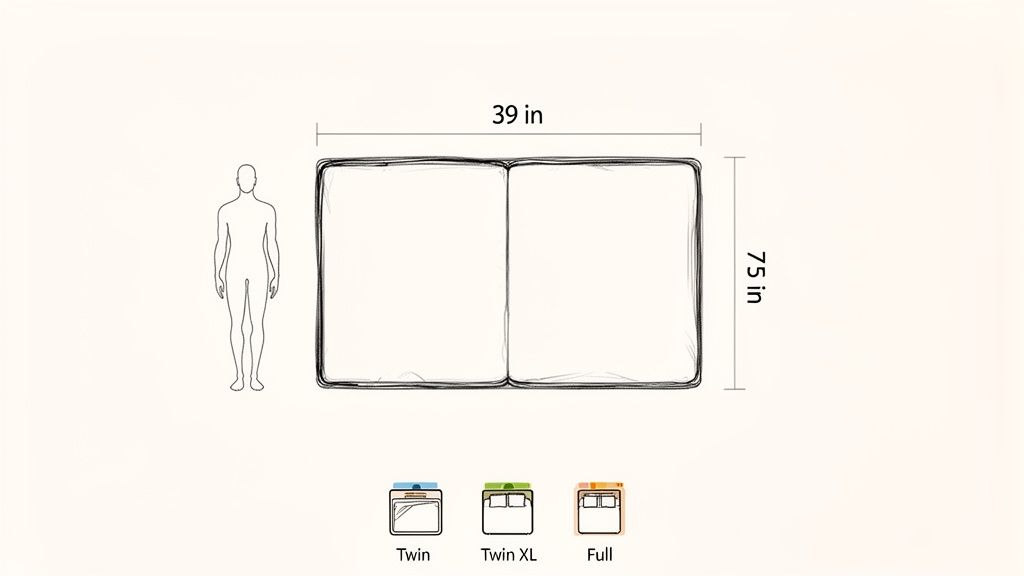
When you’re working with a small space, every inch counts. A standard twin futon mattress measures 39 inches wide by 75 inches long, making it one of the most versatile options for compact rooms and multi-use spaces.
Decoding the Standard Twin Futon Mattress Size
A twin futon mattress is a go-to problem-solver when you need one piece of furniture to do more than one job. It can serve as comfortable seating during the day and a practical bed at night—without taking over the room.
Because the dimensions match a standard twin mattress, it’s also an easy size to shop for when it comes to fitted sheets, protectors, and accessories.
This compact size is especially useful for:
- Studio apartments where the living room is also the bedroom
- Home offices that need a guest-ready setup on weekends
- College dorms where floor space is limited
- Kids’ rooms that need space for both sleep and play
Futon Mattress Dimensions at a Glance
To see how a twin compares to the other most common futon sizes, here’s a quick reference chart.
| Futon Size | Dimensions (Width x Length) | Best For |
|---|---|---|
| Twin | 39″ x 75″ | Single sleepers, kids’ rooms, small guest areas |
| Full | 54″ x 75″ | Single adults who want more space, guest rooms, smaller apartments |
| Queen | 60″ x 80″ | Couples, primary guest beds, larger rooms |
For a complete breakdown of sizes (including specialty options), see our futon sizing charts.
Why Twin Futon Dimensions Work for Small Spaces
It’s easy to look at the numbers—39″ x 75″—and see “small.” But in compact homes, that footprint can be the difference between a room that feels crowded and one that feels functional and open.
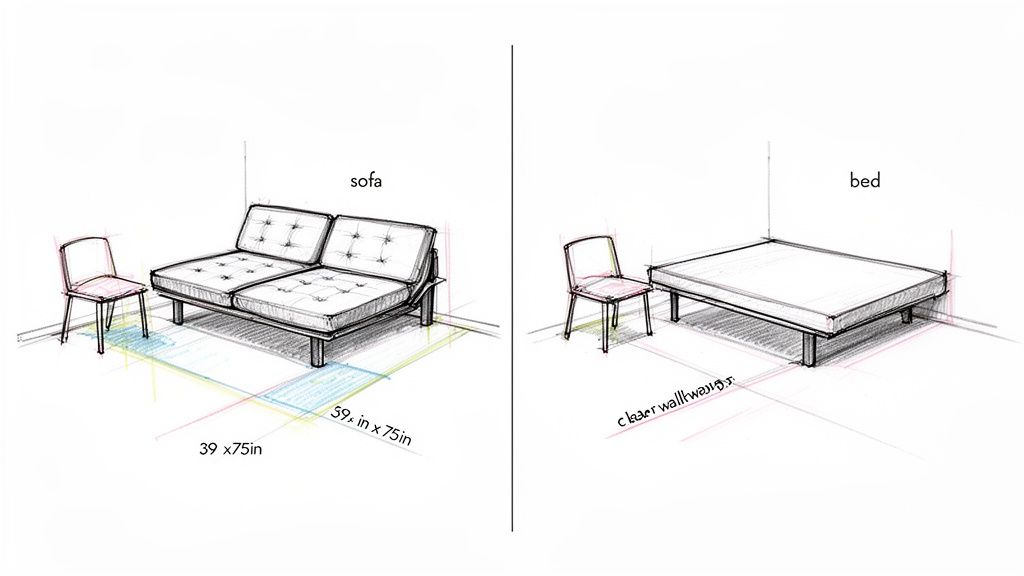
In a studio apartment or dorm, fitting a separate sofa and bed usually means sacrificing walkways, a desk, or storage. A twin futon combines both functions into one piece—giving you seating when you’re awake and a bed when you’re not.
The Power of Multi-Functionality
The real advantage of a twin futon is how easily it helps one room serve multiple roles. A home office becomes guest-ready. A playroom becomes a sleepover space. A narrow room stays usable instead of feeling like wall-to-wall furniture.
The twin futon’s biggest benefit is simple: it keeps your room flexible. Instead of locking you into one layout, it lets you adapt your space to your day-to-day life.
Practical Scenarios Where a Twin Futon Shines
- The Studio Apartment: Use it as the main sofa along a wall to preserve floor space for a table, storage, or a desk.
- The Home Office / Guest Room: Keep professional seating during the week and a ready-to-go bed for overnight visitors.
- The Narrow Room: A slimmer footprint helps maintain a clean walkway. For tight layouts, some wall-hugger futon sets are designed to convert with less clearance behind the frame.
Choosing the Right Mattress Thickness and Material
Once you’ve confirmed that 39″ x 75″ is the right size, the next step is choosing a build that matches how you’ll actually use the futon. Thickness and materials affect comfort, support, and how smoothly the frame converts.
How Thickness Impacts Your Futon Frame
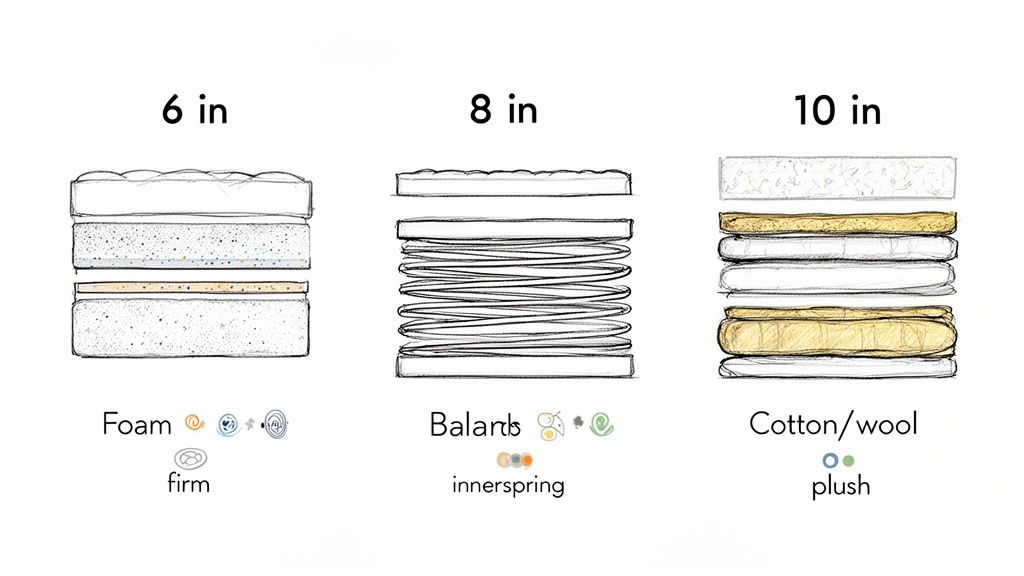
Thickness isn’t just about comfort—it’s also about function. If a mattress is too thick for a specific frame, it can resist folding, strain the mechanism, and wear unevenly over time.
Rule of thumb: If your futon is mainly a sofa, a 6–8 inch mattress is usually the sweet spot. If it’s used for frequent sleeping, an 8–10 inch mattress generally provides a more bed-like feel.
Always check your frame’s recommendations before you buy. Some designs (especially multi-position or tri-fold styles) may need a thinner, more flexible mattress to operate smoothly.
Common Futon Mattress Materials
The fill material plays a big role in how the mattress feels and how it holds up. Here’s a practical comparison.
Futon Mattress Material Comparison
| Mattress Type | Best For | Feel & Firmness | Durability |
|---|---|---|---|
| Foam & Memory Foam | Frequent sleeping and everyday use | Firm to medium; memory foam contours more | High-density foam resists sagging best |
| Innerspring | A more traditional “mattress feel” | Typically medium-firm with bounce | Strong long-term support when well-built |
| Cotton & Wool | Occasional guest use, firmer feel | Dense, supportive, breathable | May compress; benefits from flipping/airing |
| Organic / Natural Builds | Eco-conscious homes, allergy-sensitive sleepers | Often supportive and breathable | Varies by build; quality materials can last well |
You can browse options here: futon mattresses.
How to Measure Your Frame for a Perfect Fit
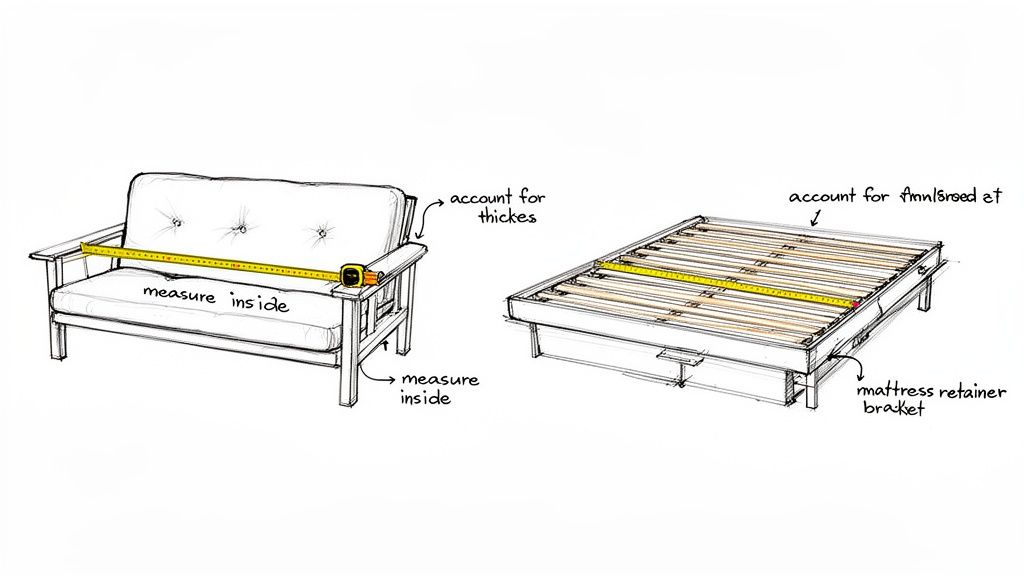
Even though twin sizing is standardized, measuring your frame is still important—especially if it’s older, non-standard, or has retainer brackets that reduce usable width.
Step-by-Step Measuring Guide
- Lay the frame flat in the bed position.
- Measure interior length (head to foot) where the mattress sits.
- Measure interior width between the side rails (not the outside of the arms).
- Check retainer brackets and measure the space between them.
A standard twin fit should land close to 39″ x 75″. If you’re off by more than about an inch, you may need a specialty size or a custom build.
Don’t Ignore Thickness Requirements
If the mattress is too thick for your frame style, you may run into:
- Difficulty converting the frame
- Extra strain on hinges and hardware
- Uneven compression and early wear
When in doubt, review your frame type and intended use. You can also browse styles in our futon frames collection to compare designs and mechanisms.
Twin Futon Variations and Custom Options
Standard twin works for most setups, but it’s not the only option. If you need more length, consider a Twin XL at 39″ x 80″. Those extra five inches can make a noticeable difference for taller sleepers.
When Twin XL Makes Sense
- You’re taller: Better comfort without feet hanging off the edge.
- Dorm standards: Many dorms use Twin XL frames.
- Your frame is already Twin XL: Matching the size prevents gaps and shifting.
If you’re working with an unusual footprint (RVs, boats, built-ins, or older custom furniture), a custom-sized mattress can be the cleanest solution. It lets you fit the mattress to your space instead of forcing your space to fit the mattress.
Your Essential Twin Futon Buying Checklist
- Did I measure the frame’s interior dimensions? Don’t rely on the old mattress—measure the frame.
- Is the futon mainly for sitting or sleeping? This decides the ideal thickness and build.
- Does my frame have thickness limits? Especially important for multi-position designs.
- Did I choose a material that fits my lifestyle? High-use setups need stronger, more resilient builds.
A futon used mostly for sitting typically benefits from a firmer, resilient mattress (often 6–8 inches). For frequent sleeping, a thicker, more supportive build (often 8–10 inches) can feel significantly more bed-like.
Got Questions About Twin Futon Sizing? We Have Answers.
Can I use a regular twin mattress on a futon frame?
The dimensions may match, but most standard bed mattresses aren’t designed to flex and fold repeatedly. A mattress built specifically for futon use is typically the safer, better-performing choice for convertible frames.
How long will a twin futon mattress last?
It depends on materials and how often it’s used. A higher-quality build used daily will generally hold up longer than a basic guest-only mattress. Rotating and flipping (when applicable) and using a cover can help extend lifespan.
What’s best for daily sitting?
Look for a firmer feel with resilient materials that hold shape. In many setups, 6–8 inches hits a strong balance between comfort and easy conversion.
At Futonland, we specialize in space-saving furniture that makes small rooms easier to live in. Explore our selection of twin options and find the right fit for your space.


