
Size Futon Mattress: Tips for the Perfect Fit
Unlocking the Mystery of Futon Mattress Dimensions
Choosing the right size futon mattress is less complicated than it seems. It comes down to three essentials: matching your mattress to the futon frame, making sure the footprint works in your room, and choosing a size that fits how you’ll actually use the futon (daily lounging, occasional guests, or nightly sleeping).
The best part is that most futon mattresses use the same familiar sizes as standard bed mattresses. That makes it easier to shop for covers, sheets, and accessories without guesswork.
Standard Futon Mattress Dimensions at a Glance
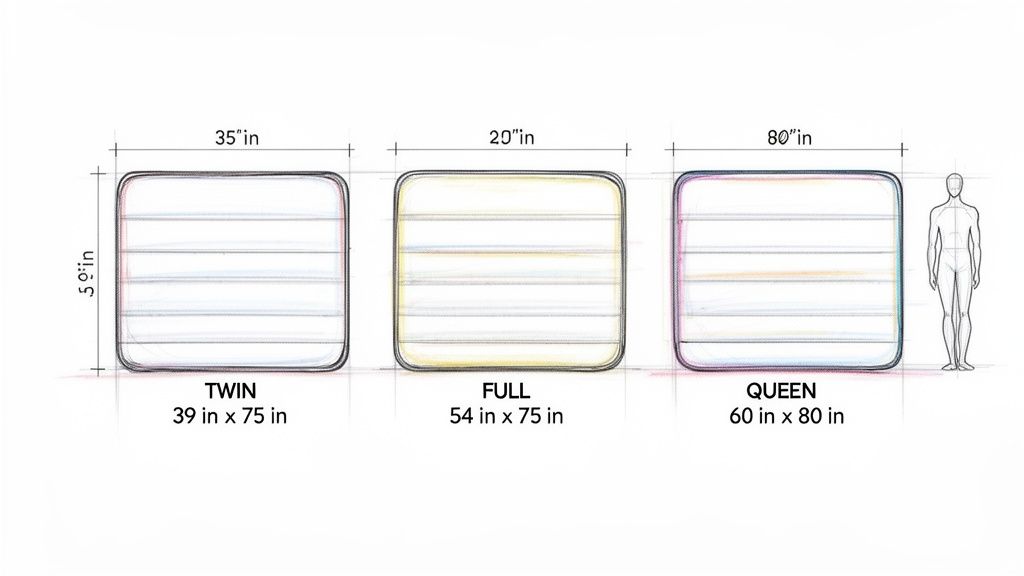
Start with the basics. These are the most common futon mattress sizes, along with who they work best for.
| Size | Dimensions (Inches) | Best For |
|---|---|---|
| Twin | 39″ x 75″ | Single sleepers, kids’ rooms, small nooks, chair-sized setups |
| Full | 54″ x 75″ | Most common choice; guest rooms, studios, and everyday seating + sleeping |
| Queen | 60″ x 80″ | Couples, taller sleepers, and larger rooms that can handle a bigger footprint |
Once you’ve narrowed down the size, confirm the exact fit using the futon sizing charts. This is especially helpful if your frame has unique arms, a thicker deck, or a non-standard design.
Why Futon Thickness Matters More Than You Think
Length and width get all the attention, but thickness is what determines how your futon feels and how well it functions. A futon mattress has to serve as both a sofa cushion and a bed, so thickness affects two big things:
- Comfort: How supportive it feels for sleeping and sitting.
- Foldability: How easily it converts from sofa to bed without fighting the frame.
Finding Your Ideal Thickness Level
The right thickness depends on how you use the futon most.
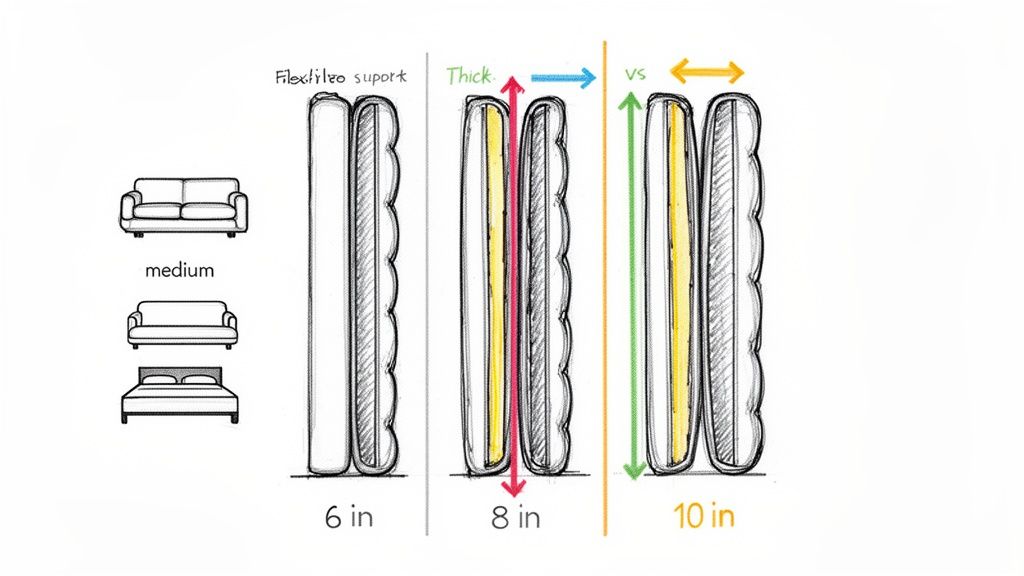
- 6-inch futon mattresses: Light, flexible, and easy to fold. Best for daily sofa use and occasional sleeping.
- 8-inch futon mattresses: The most popular “best of both” choice. Comfortable enough for frequent sleep, still manageable for regular folding.
- 10-inch and thicker futon mattresses: More bed-like support (often with denser foam or coil systems). Great for guest rooms or nightly sleeping, but heavier and less cooperative for frequent conversions.
Key takeaway: More thickness usually means more comfort, but it can also mean more weight and a tougher fold. Match the thickness to your routine, not just your comfort wish list.
How Materials Influence “Real” Comfort
Thickness alone doesn’t tell the full story. Materials matter. A well-built 8-inch mattress can feel more supportive than a lower-quality 10-inch mattress, especially if it uses higher-density foam or a sturdier core.
If you’re comparing options, it helps to look at the mattress type and how it’s built to flex. You can also browse futon mattresses by style to see which constructions are designed for daily use.
Decoding Full vs. Queen: The Two Most Popular Futon Sizes
Full and Queen sizes are the most common for a reason: they work well for modern apartments, guest rooms, and multi-use spaces. The decision is usually a simple trade-off between space and sleep comfort.
The Full Size Futon Mattress: The Smart Space Saver
A Full futon mattress measures 54″ x 75″. It’s the go-to option for studios, small apartments, and flexible rooms where the futon needs to be comfortable without dominating the layout.
As a sofa, it typically seats two to three people comfortably. As a bed, it’s a practical sleep surface for two adults (especially for guests).
If you’re shopping this size, see options here: full size futon sets and packages.
The Queen Size Futon Mattress: The Comfort Upgrade
A Queen futon mattress measures 60″ x 80″. That extra width and length make a noticeable difference for couples and taller sleepers. If your futon doubles as a primary guest bed (or your everyday bed), Queen is often worth the added footprint.
A Queen futon is less “backup bed” and more “real bed that also happens to be a sofa.” Choose it when comfort is the priority and the room can support the size when fully opened.
Explore options here: queen size futon sets and packages.
How to Measure Your Frame and Room for a Perfect Fit
Don’t guess. Futon sizing only works when the mattress fits the frame correctly and the open-bed footprint fits the room.
Step 1: Identify Your Frame Type
Most futon frames are either:
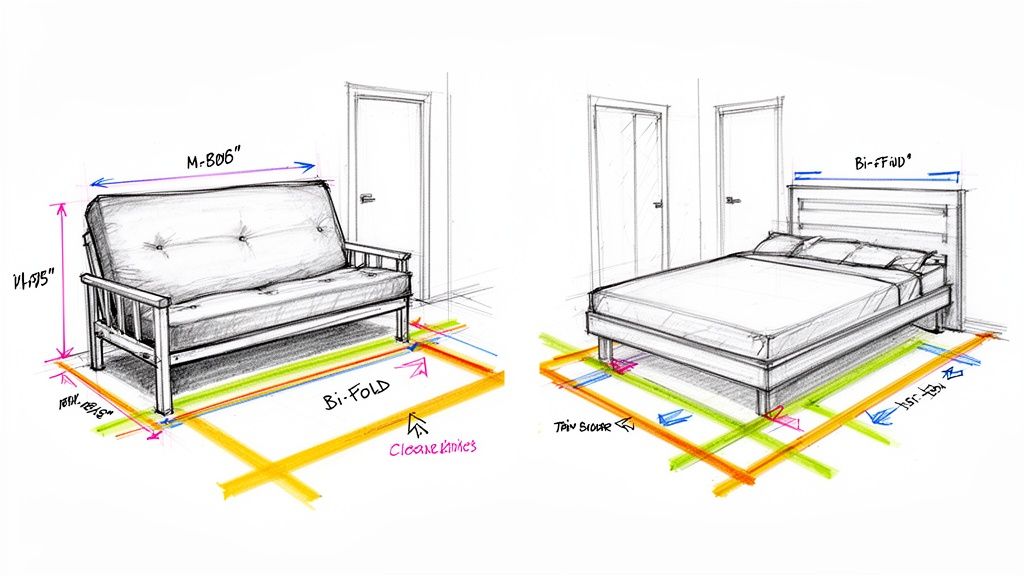
- Bi-fold: Folds once (classic sofa-to-bed conversion).
- Tri-fold: Folds twice (often includes an ottoman section and more compact “chair/lounger” options).
Step 2: Measure the Frame (Not the Old Mattress)
Lay the frame flat like a bed and measure the inside deck area where the mattress sits:
- Width: Side to side across the deck
- Length: Head to foot across the deck
Pro tip: Measure the frame itself. Old mattresses compress over time and can be misleading.
Step 3: Confirm the “Bed Mode” Footprint in Your Room
Futons need clearance to open. Once you know the mattress size, make sure the open-bed dimensions won’t block:
- Closet doors
- Drawers
- Main walkways
- Heat sources (radiators/baseboards)
An easy visualization trick: outline the open-bed footprint on the floor with painter’s tape. You’ll instantly see whether Full or Queen makes more sense.
Beyond Full and Queen: Twin, Twin XL, King, and Custom Sizes
Twin and Twin XL Futon Mattresses
Twin (39″ x 75″) is a great solution for tight spaces, kids’ rooms, dorms, and chair-like frames. Twin XL (39″ x 80″) keeps the same width with extra length for taller sleepers.
King and Custom Futon Mattresses
King futon sizes are less common, but they can work in large, open rooms or special designs that are meant to be oversized lounge sleepers.
Custom sizing is the real problem-solver for unusual spaces — RVs, boats, built-in nooks, odd-length frames, or antique furniture. If you’re working with a non-standard setup, custom sizing lets you get the fit right down to the inch.
Chair and Loveseat Futons
Two smaller formats are easy to overlook. A chair-size futon works as a single seat and unfolds into a cot-size sleeping surface, fine for a child or a temporary spot for an adult. A loveseat futon seats two and typically unfolds into a twin or full bed depending on the design; some come with a matching ottoman that extends the sleeping area when the futon is flat.
How to Pick the Size
Start with how the futon will be used. For occasional guests, a full is usually enough; for nightly sleeping, especially for two adults, a queen gives far more room. Then check the room in bed mode, not just sofa mode, so the futon can open without moving other furniture. Finally, think about who is sleeping on it: a single adult or child, or a couple.
Choosing the Right Accessories for Your Futon Mattress
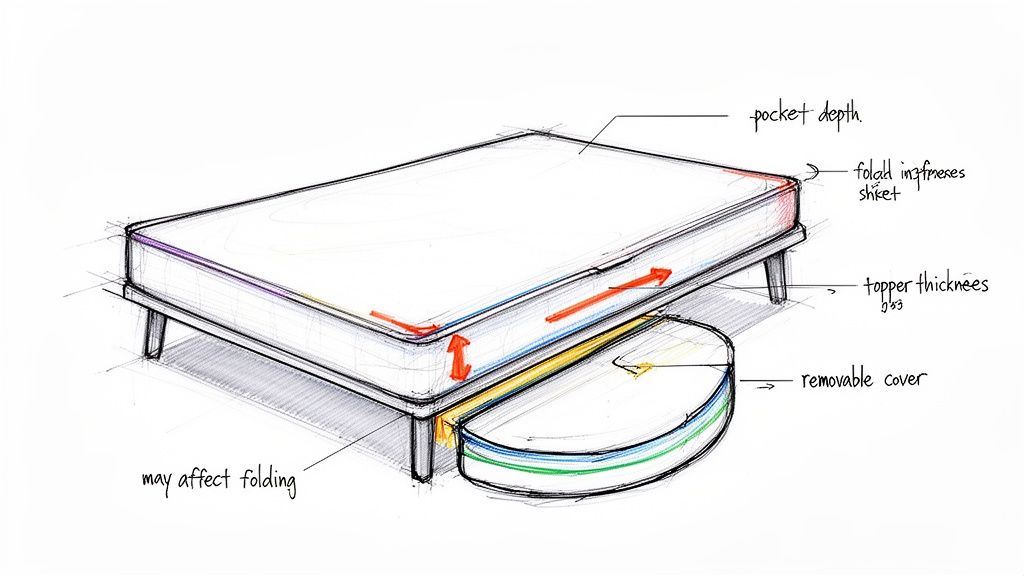
Sheets: Pay Attention to Pocket Depth
Standard sheets can work, but the fitted sheet has to match your mattress thickness. A shallow pocket will pop off constantly on thicker futon mattresses — especially after converting from bed back to sofa.
Toppers: Comfort Boost, But Think About Folding
Toppers can be a great comfort upgrade, but they add height and can make daily folding more awkward. If your futon stays in bed mode most of the time, a topper is easy. If you fold it every day, you may prefer a mattress that’s comfortable on its own.
If you want to add comfort without guessing, start here: mattress toppers and pads.
Covers: The Easiest Way to Protect (and Style) Your Futon
A well-fitted cover keeps the futon looking sharp, helps protect against spills and wear, and can completely change the look of your space. Shop by size to avoid bunching or loose corners.
See options here: futon covers.
Your Futon Mattress Size Questions Answered
Can I Use a Regular Mattress on a Futon Frame?
Usually, no. Most traditional mattresses aren’t built to fold repeatedly, and forcing one onto a futon frame can damage the mattress and strain the frame’s mechanism. Futon mattresses are designed to flex and convert.
How Do I Know If My Futon Is Bi-Fold or Tri-Fold?
Look at the sofa position. Bi-fold has one fold (two sections). Tri-fold has two folds (three sections) and often includes an ottoman-like portion.
Does Thickness Make It Harder to Fold?
Yes. Thicker mattresses are heavier and less flexible. If you convert daily, 6″ to 8″ is typically the easiest range. If comfort and bed-like feel matter more than frequent folding, 10″ can make sense.
Need help choosing the right fit? Start with the futon sizing charts, then browse futon mattresses by size and comfort level to find the best match for your frame and your space.