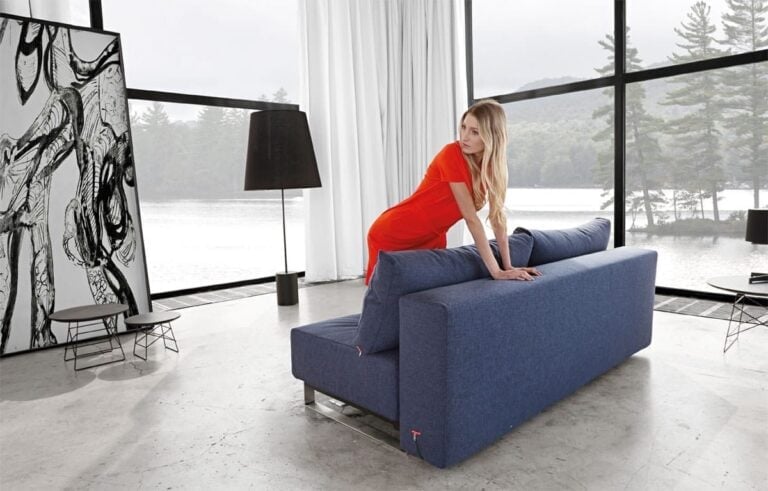
Space-Saving Furniture for Small Apartments: Clever Ideas to Maximize Space
When you’re dealing with a small apartment, every square foot feels precious. The right furniture doesn’t just fill a space; it transforms it, making your home feel more open, functional, and honestly, a lot more comfortable. The secret isn’t about owning less—it’s about choosing smarter, multifunctional pieces that work as hard as you do.
Rethinking Your Space with Smart Furniture
Living in a small apartment doesn’t mean you have to sacrifice comfort or style. It’s all about shifting your perspective. Instead of seeing limited square footage as a problem, look at it as a fun design challenge. This is where space-saving furniture becomes your best friend.
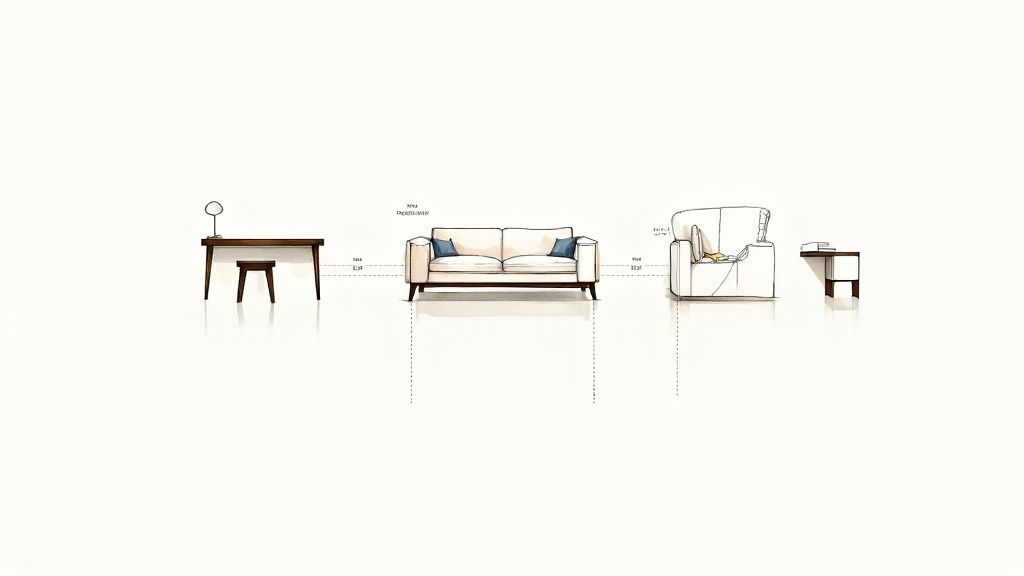
Think of these pieces as the Swiss Army knives of the furniture world. A single item can do the job of two or three, adapting to whatever you need throughout the day. Your living room sofa can become a guest bed at night, or your coffee table can reveal hidden storage. This isn’t just a passing trend; it’s a new standard for city living where every inch counts.
The Power of Multifunctionality
At its core, smart furnishing is all about multifunctionality. By picking items that pull double-duty, you instantly create a more organized, less cluttered home. The benefits are pretty clear:
- You get your floor back. When one piece does the job of two, you free up valuable walking-around room.
- Your space becomes more versatile. That living room can easily transform into a guest bedroom, and your dining nook can become a home office in minutes.
- Clutter disappears. So many of these pieces come with built-in storage, giving you a designated spot for everything from extra blankets to board games.
It’s no surprise that the demand for this kind of furniture is exploding. The global market for small-space furniture was valued at around USD 23.4 billion in 2023 and is expected to hit nearly USD 41.2 billion by 2032. This huge jump shows just how essential these clever designs have become.
“The best apartment storage ideas aren’t about squeezing more in—they’re about creating a home that feels open, functional, and stylish. By combining smart furniture, light colors, clever storage, and intentional decluttering, you’ll transform even the smallest apartment into a spacious retreat.”
To help you get started, here’s a quick rundown of the main types of space-saving furniture and what they do best.
Quick Guide to Space-Saving Furniture Categories
| Furniture Category | Primary Function | Ideal For |
|---|---|---|
| Convertible Sofas | Serves as seating and converts into a bed. | Studio apartments or living rooms that double as guest rooms. |
| Murphy/Wall Beds | Folds up into a wall or cabinet when not in use. | Bedrooms or multi-use rooms where floor space is critical. |
| Nesting Furniture | Pieces fit inside one another to save space. | Small living areas needing flexible table or seating options. |
| Multi-Use Ottomans | Acts as a footrest, extra seating, and storage. | Anyone needing hidden storage for blankets, remotes, or toys. |
| Foldable/Drop-Leaf Tables | Expands for dining or work, folds down when not needed. | Compact kitchens or dining nooks. |
This table is just a starting point. As you’ll see, the innovation in this space is incredible, with new designs popping up all the time.
Adopting a Smarter Mindset
The first step to furnishing a small apartment isn’t shopping—it’s thinking. Before you buy a single thing, take a hard look at how you actually use your space. Are you constantly working from the couch? Do friends and family stay over often? Your real-life habits are the best guide for choosing furniture that will truly make a difference.
This guide will walk you through the most popular types of space-saving furniture, from futons and sofa beds to clever tables and ottomans. By focusing on pieces that are both stylish and strategic, you’ll create a home that feels bigger and works better for your life.
Mastering Multifunction: The Key Furniture Types
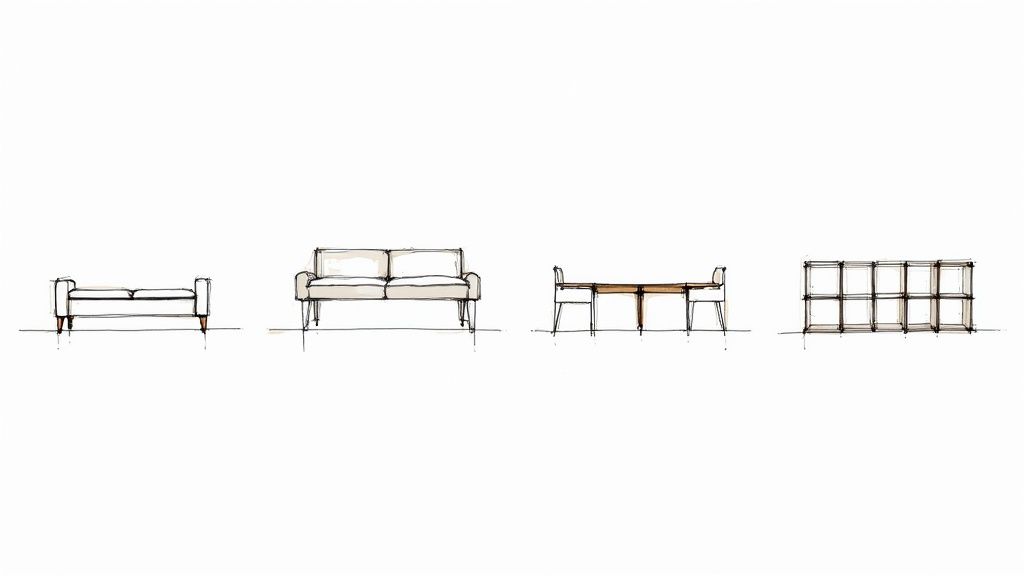
Once you’ve embraced the mindset of smart, compact living, the next step is picking your tools. The world of space-saving furniture for small apartments is full of ingenious designs, with each one offering a unique solution to the puzzle of a tiny floor plan. Let’s go beyond the obvious and dive into the heavy hitters that can genuinely redefine how you use your space.
These aren’t just scaled-down versions of standard furniture. They are cleverly engineered pieces built to adapt, transform, and pull double duty. Understanding what they do best is the first step toward unlocking your apartment’s true potential.
Convertible Sofas: The Ultimate Transformer
The convertible sofa is probably the most iconic piece of multifunctional furniture, and for good reason. It’s the workhorse of countless studio apartments and guest-ready living rooms, serving as a comfortable couch by day and a proper bed by night. But let’s be clear: not all sofa beds are created equal.
Modern designs are a world away from the lumpy, back-breaking futons you might remember. Today’s models have sophisticated mechanisms, from simple click-clack systems to buttery-smooth pull-out frames that make the switch almost effortless. Many even come with high-quality mattresses that give traditional beds a run for their money. You can explore the huge variety of designs in our guide on convertible sofa beds.
Their popularity isn’t just anecdotal. Market research consistently shows that convertible sofas dominate the small-space furniture sector. One analysis found that multifunctional sofas made up roughly 68% of the product mix, proving just how essential they are for anyone living in a compact home.
Murphy Beds: The Disappearing Act
If maximizing daytime floor space is your top priority, the Murphy bed is an absolute game-changer. Also known as a wall bed, this piece cleverly folds up into a cabinet or wall unit, making the entire footprint of a bed vanish. It’s the perfect way to create a true dual-purpose room, like a home office that seamlessly converts into a comfortable bedroom.
The genius of the Murphy bed is its ability to completely reclaim a room’s function. It allows a single space to serve distinct, separate purposes without compromise, turning a bedroom into a living area or workspace in seconds.
Today’s Murphy beds are incredibly safe and easy to operate, often using piston or spring lift systems that make lowering and raising them a breeze. Many new designs also integrate surrounding cabinetry for built-in storage, shelving, or even a fold-down desk, making the whole unit a seamless part of the room when the bed is tucked away.
Expandable and Foldable Tables
Dining tables can be notorious space hogs, especially if you only need a large surface when you have company. Expandable and foldable tables are the perfect compromise, giving you all the flexibility you need without the permanent footprint.
- Drop-Leaf Tables: These have hinged sections that fold down to shrink the table’s size. You can often push them against a wall to use as a console table or small desk when they aren’t fully extended.
- Butterfly Leaf Tables: This clever design stores the extra leaf right inside the table. Just pull the two ends apart, unfold the “butterfly” leaf from the middle, and you’ve got a larger, seamless surface.
- Wall-Mounted Tables: Perfect for the tiniest of spaces, these tables are hinged to the wall and fold down completely flat when you don’t need them. They work great as a dining spot for two or a compact workstation.
With one of these, you can host a dinner party or spread out for a big project without sacrificing your living space every other day of the year.
Nesting Pieces and Modular Storage
Beyond the big transformers, smaller, adaptable pieces add another layer of functionality. Nesting furniture, like a set of tables where smaller ones tuck neatly under a larger one, gives you extra surfaces on demand without creating clutter.
Modular storage works like a set of building blocks for your home. Think of it like a LEGO system—you can stack, rearrange, and reconfigure cube shelves or interlocking units to fit perfectly into any nook or cranny. This adaptability is a lifesaver for renters or anyone whose storage needs might change over time.
- Nesting Tables: Use them as a spread-out coffee table, individual side tables when guests visit, or stack them neatly to save space.
- Modular Shelving: Build a custom entertainment center, a stylish room divider, or a floor-to-ceiling library that you can easily modify later.
- Storage Ottomans: These are the unsung heroes of the living room. They work as a footrest, extra seating, and a hidden spot for blankets, magazines, or remote controls.
Choosing the right combination of these pieces lets you create a home that feels fluid and responsive to your life. To help you decide, the table below breaks down how these key types stack up against each other.
Comparing Multifunctional Furniture Options
Here’s a detailed comparison to help you weigh the pros and cons of different multifunctional pieces based on your space, budget, and lifestyle requirements.
| Furniture Type | Space Footprint | Primary Use | Conversion Effort | Typical Cost Range |
|---|---|---|---|---|
| Convertible Sofa | Medium to Large | Seating & Sleeping | Low to Medium | $500 – $3,000+ |
| Murphy Bed | Large (when down) | Sleeping | Low (with assist) | $1,500 – $5,000+ |
| Expandable Table | Small to Medium | Dining & Work | Low | $200 – $1,200 |
| Nesting Furniture | Small | Surfaces & Seating | None | $100 – $400 |
| Modular Storage | Variable | Organization | Low (assembly) | $50 – $600+ |
By understanding these core types of space-saving furniture for small apartments, you can start putting together a collection that makes your home feel not just bigger, but smarter and perfectly in tune with your needs.
Planning Your Layout for Maximum Flow
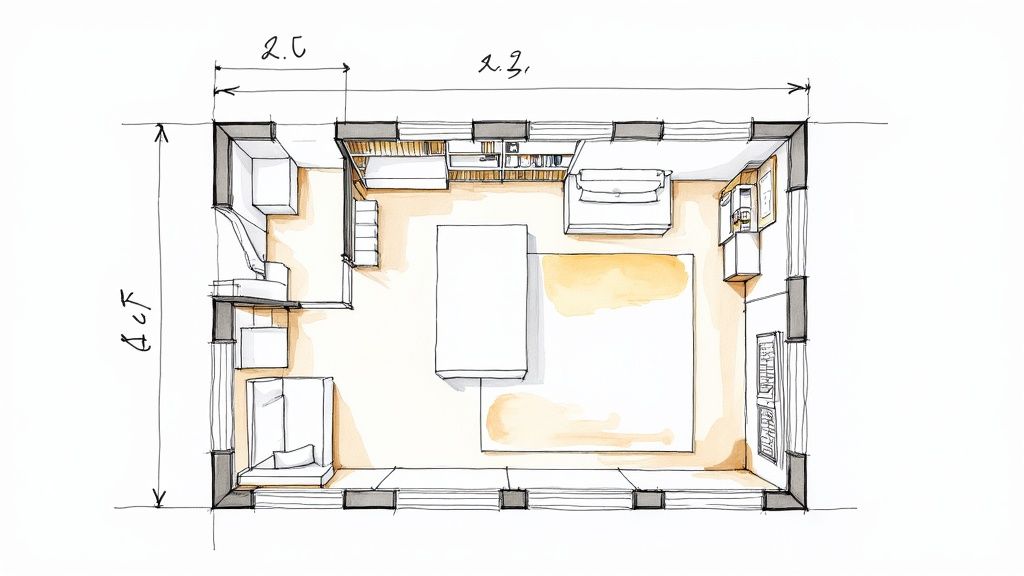
Choosing the right space-saving furniture for small apartments is a huge step, but it’s really only half the battle. The real magic happens when you arrange those pieces to create a layout that feels open, intuitive, and just plain easy to live in. A smart floor plan can make a tiny room feel surprisingly spacious, while a bad one can make even the sleekest furniture feel clumsy and oversized.
The goal is to create maximum flow—clear, natural pathways that let you move around without bumping into corners or squeezing past a chair. Think of it like directing traffic. You need main “roads” for walking through a room and smaller “side streets” for accessing specific areas. This keeps things from feeling bottlenecked and makes your daily routine effortless.
Before you even think about moving anything, grab a tape measure. Get the dimensions of your room, noting where every door, window, and outlet is. Then, measure each piece of furniture you plan to bring in. Having these numbers is the foundation for creating a space that actually works.
Start with a Simple Floor Plan
You don’t need to be an architect to map things out. A quick sketch on paper or a free online tool helps you visualize different arrangements without all the heavy lifting. Start by drawing the room’s outline and marking those permanent fixtures.
Next, make little cutouts for your furniture, scaled to size. This turns your floor plan into a puzzle you can actually solve. Play around with different setups and see how each one affects your walkways.
A well-planned layout isn’t just about where furniture sits—it’s about the empty space around it. This negative space is what lets a room breathe, creating a sense of openness and preventing that cramped, cluttered feeling.
Remember to leave enough functional clearance. You’ll want about 30-36 inches for major pathways and at least 18 inches between your sofa and coffee table. Also, double-check that you can fully open drawers, cabinet doors, and the mechanism of a sofa bed without hitting anything.
The Art of Zoning Your Space
In a studio or a single open-concept room, creating distinct “zones” is an absolute game-changer. Zoning uses furniture, rugs, and even lighting to visually separate your living, sleeping, and working areas, even if you don’t have walls. It’s a simple trick that brings order and purpose to a multi-use space.
A large area rug is one of the easiest and most effective ways to do this. Plop one down under your sofa and coffee table, and you’ve instantly defined the living area. A different, smaller rug can then anchor a reading nook or a workspace in another corner.
Another powerful strategy is using furniture as a natural divider. A tall, open-backed bookcase can separate your bed from your living space while still letting light filter through, creating a sense of separation without totally closing things off. For more ways to carve out different areas, check out these excellent examples of room dividers that are both functional and stylish.
Designer Tricks for an Open Feel
Beyond just placing furniture, a few design principles can create the illusion of more space. These are the subtle but powerful techniques that interior designers use to make small rooms feel larger and more inviting.
One of the most effective strategies is to leverage vertical space. Your walls offer a ton of unused real estate. By drawing the eye upward, you make the ceiling feel higher and the whole room feel grander.
- Go Tall with Shelving: Choose tall, narrow bookcases instead of wide, short ones. They offer plenty of storage without eating up precious floor space.
- Use Furniture with Legs: Sofas, chairs, and tables raised on visible legs create an airy feeling because you can see the floor underneath. This visual trick makes the room feel way less crowded.
- Embrace Mirrors: A large mirror can be your best friend in a small apartment. Place it opposite a window, and it will bounce natural light all over the room, creating an illusion of depth that makes your space feel brighter and bigger.
By combining accurate measurements, thoughtful zoning, and these tried-and-true design tricks, you can create a layout that not only fits your space-saving furniture for small apartments but truly enhances your daily life. The result is a home that’s functional, comfortable, and feels much larger than it really is.
Choosing Furniture That Is Built to Last
Space-saving furniture isn’t just about clever design; it’s about endurance. These pieces are the true workhorses of your home—a sofa that becomes a bed every night, a dining table that expands for weekly dinners, or a Murphy bed that glides up and down daily.
This constant transformation puts frames and moving parts under far more stress than stationary furniture ever experiences. Investing in quality from the start means you’re buying a long-term solution, not just a temporary fix that will need replacing in a year or two.
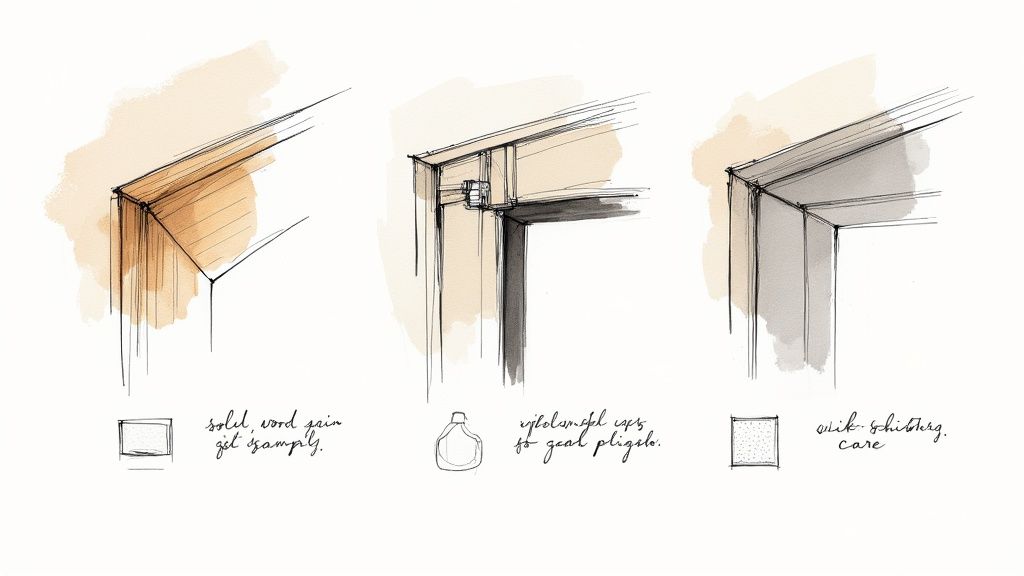
Think of it like choosing a car—you wouldn’t buy one without checking what’s under the hood. The mechanisms that allow these pieces to transform are their engines. High-quality hinges, springs, and sliders ensure smooth, reliable operation for years. Flimsy ones just lead to frustration and premature failure.
Decoding Frame and Material Quality
The foundation of any great piece of furniture is its frame. The material used here is what really dictates its lifespan, stability, and how well it performs day-to-day. It’s important to know that not all materials are created equal.
Solid wood, for instance, has always been the gold standard for strength and longevity. Kiln-dried hardwoods like oak, maple, and walnut are exceptionally durable and resist warping, making them perfect for pieces that have to bear a lot of weight. To see what a sturdy foundation looks like, our overview of hardwood futon frames is a great resource.
On the flip side, materials like particleboard or MDF (medium-density fiberboard) are easier on the wallet but just aren’t as resilient. They’re fine for lighter-use items but can get damaged by moisture and probably won’t withstand the daily rigors of a convertible sofa.
Here’s a quick rundown of common materials:
- Solid Hardwood: The toughest and most long-lasting option, but it comes with a higher price tag. It offers unmatched strength for load-bearing frames.
- Metal: Steel and aluminum frames give you excellent strength with a sleek, modern aesthetic. Always check for solid welds and rust-resistant finishes.
- Plywood: High-quality, multi-layered plywood can be a surprisingly strong and stable alternative to solid wood, offering good resistance to cracking.
- Particleboard/MDF: Best saved for decorative elements or low-stress components. We’d avoid these for the main structural parts of any furniture you plan on using frequently.
Inspecting the Conversion Mechanisms
The true test of any multifunctional piece is how well its moving parts work. A smooth, effortless conversion is the hallmark of quality engineering. When you’re shopping, don’t be shy—operate the mechanism several times to get a real feel for it.
A well-designed mechanism should feel balanced and intuitive, never jerky or strenuous. The best systems, like the piston lifts in modern Murphy beds, do most of the work for you, ensuring safety and ease of use over the long haul.
Pay close attention to the small but critical components. High-quality hinges, screws, and brackets are non-negotiable. If a floor model already seems wobbly or makes creaking noises, that’s a major red flag that it won’t hold up to repeated use in your home.
Choosing Smart and Durable Upholstery
The fabric on your furniture is its first line of defense against spills, pets, and everyday life. In a small apartment where your sofa might also be your dining bench or workspace, choosing a resilient fabric is essential.
Consider these practical and stylish options:
- Microfiber: A synthetic fabric known for its incredible stain resistance and durability. It’s soft to the touch and a breeze to clean, making it a fantastic choice for families.
- Leather: A classic for good reason. Leather is incredibly durable, wipes down easily, and develops a beautiful, unique patina over time.
- Canvas: This tightly woven fabric is tough and can handle a lot of friction, making it a solid pick for high-traffic pieces.
- Performance Fabrics: Many brands now offer specially treated fabrics that actively repel liquids and resist stains, giving you peace of mind without sacrificing style.
Before you make a final decision, always ask for a fabric swatch you can take home. See how it looks in your light and how it feels to the touch. A little hands-on research goes a long way in ensuring your new furniture will not only fit your space but also stand up to your lifestyle.
Navigating Delivery and Assembly with Confidence
The excitement of finding the perfect space-saving furniture can fizzle out fast if you forget one critical step: actually getting it into your apartment. A gorgeous new convertible sofa does you no good if it’s wedged in your building’s hallway. A little planning here makes all the difference, ensuring a smooth ride from “checkout” to a perfectly furnished room.
Before you even think about clicking “buy,” grab a tape measure. This is non-negotiable. You need to measure every single point of entry the furniture has to pass through—the main building door, elevators, stairwells, and your own apartment door. Don’t forget to look out for tricky spots like tight corners or low-hanging light fixtures.
Think of it like a puzzle. The boxed furniture is one piece, and your home’s entryways are the others. They have to fit. Jot down the height, width, and diagonal depth of every opening, then compare those numbers to the furniture’s dimensions on the product page. Always look for the packaged dimensions, as the box will naturally be bigger than the item itself.
Understanding Your Delivery Options
Once you’re sure the piece will fit through the door, it’s time to decide how it will get there. Most retailers offer a few different levels of service, each with its own price tag and convenience factor. Knowing what you’re getting helps you pick the right option for your budget and how much work you’re willing to do.
- Standard Drop-Off: This is the most basic, no-frills option. The delivery crew will leave the boxed furniture at your doorstep or in the building’s mailroom. After that, it’s all on you to get it inside, unbox it, and put it together.
- Threshold Delivery: A small step up, this service gets the furniture just inside the front door of your apartment. You’ll still be on the hook for unboxing, assembly, and getting it into the right room.
- White-Glove Delivery: This is the full-service, hands-off experience. The delivery team brings the item right into your room of choice, unpacks it, assembles it from start to finish, and even hauls away all the cardboard and plastic.
Many companies are making this part of the process easier by offering great deals. For instance, it’s pretty common to find free shipping on futon sets and packages, which can shave a significant amount off your total cost.
Tackling Assembly and Handling Issues
If you decide to skip the white-glove service, you’ll be the one doing the building. While many pieces come with decent instructions, more complex items can feel like a real headache. After you’ve picked your furniture, think about whether you want to hire professional furniture assembly services. It can save you a ton of time and frustration, and you’ll know it’s put together correctly and safely.
If you’re going the DIY route, lay out all the parts and hardware before you start to make sure nothing is missing or damaged. It is absolutely crucial to inspect your furniture immediately when it arrives—if you can, do it before you even sign off with the delivery team.
Always document any issues right away. Take clear photos of damaged boxes or furniture components. This evidence is essential when you contact customer service to report a problem and discuss a replacement or repair.
Most reputable companies have a straightforward process for handling damaged items and offer a warranty covering manufacturing defects. Get familiar with the return policy and warranty details before you buy. Knowing these terms protects your investment and gives you peace of mind, guaranteeing a stress-free end to your furniture-buying journey.
Common Questions About Small Space Living
Even with a solid plan, jumping into the world of space-saving furniture for small apartments can bring up a lot of questions. From making a room feel bigger to deciding which piece offers the most bang for your buck, a little guidance goes a long way. This section tackles some of the most common questions people have when furnishing a compact home, with clear answers to help you move forward.
Think of this as your quick-reference guide for those last-minute doubts. Wondering if a Murphy bed is actually comfortable enough for everyday sleep? Or how to create a sense of space without buying all new furniture? We’ve got you.
Can I Make My Small Apartment Look Bigger Without Replacing Everything?
Absolutely. While multifunctional furniture is a game-changer, you can make a huge impact with smart design tricks that work with what you already have. The goal is to create an illusion of openness by playing with light and drawing the eye in specific directions. It’s less about the furniture itself and more about how you arrange the space around it.
A few proven techniques can make any room feel more expansive:
- Harness the Power of Mirrors: This is a classic trick for a reason. A large mirror placed opposite a window literally doubles the amount of natural light in a room, making it feel brighter and deeper. It’s like adding another window.
- Draw the Eye Upward: Don’t let your walls go to waste. Installing tall, narrow bookcases or floating shelves encourages people to look up, which creates the impression of higher ceilings and a grander space.
- Stick to a Light Color Palette: Dark colors can make a room feel like it’s closing in. Light and neutral tones—like whites, creams, and soft grays—reflect light and create an airy, open atmosphere.
- Show Some Leg: Furniture that sits flat on the floor can feel heavy and bulky. Instead, look for pieces with visible legs, like a mid-century modern sofa or console table. Seeing the floor underneath makes the room feel less cluttered and more spacious.
By combining these strategies, you can completely change the perception of your space without a massive investment.
Are Murphy Beds Comfortable Enough for Everyday Use?
Yes, modern Murphy beds are absolutely built for daily use and can be just as comfortable as a traditional bed. The days of thin, flimsy mattresses on awkward spring-loaded frames are long gone. Today’s wall beds are engineered for real comfort and durability, making them a perfectly viable primary bed.
The key is that high-quality Murphy beds accommodate standard mattress sizes, so you don’t have to compromise. You can pick a mattress that fits your exact comfort preferences—whether that’s memory foam, latex, or a hybrid—as long as it meets the depth and weight requirements of the bed’s mechanism.
Today’s wall beds feature sophisticated piston or spring lift systems that ensure smooth, effortless, and safe operation. Their integrated frames provide robust support comparable to a standard platform bed, eliminating any worries about stability or comfort.
When you’re shopping, just be sure to check the sturdiness of the frame and the maximum mattress depth it can support. With the right setup, you’ll get a great night’s sleep and enjoy a massive amount of open floor space during the day.
What Is the Single Most Versatile Piece for a Studio Apartment?
For a studio apartment where one room has to do it all, a high-quality convertible sofa or a storage sectional is arguably the most impactful piece you can own. It solves the biggest challenge of single-room living: separating your sleeping and living areas without actual walls.
A convertible sofa instantly frees up a huge amount of floor space by eliminating the need for a separate bed and a separate couch. This one piece anchors your living area during the day and transforms into your bedroom at night, defining the function of the space by the time of day.
Likewise, a storage sectional offers both generous seating for guests and a ton of hidden storage. Those deep chaise compartments are perfect for stowing away bedding, extra pillows, and blankets, keeping clutter out of sight and maintaining a clean, organized look. Both options serve as a functional hub for your home, making them the ultimate investment for studio living.
At Futonland, we specialize in finding the perfect furniture to solve these exact challenges. Our curated collection of convertible sofas, Murphy beds, and smart storage solutions is designed to help you live comfortably and stylishly, no matter the size of your space. Explore our full range of space-saving furniture at https://futonland.com and start creating a home that works for you.