Finding The Best Small Space Sleeper Sofa
Living in a small apartment, guest room, or home office often feels like a game of Tetris. Finding furniture that’s both stylish and genuinely useful can seem impossible when every square foot counts. That’s where the best small space sleeper sofa becomes your secret weapon, pulling double duty as comfy seating by day and a welcoming bed by night.
Why a Sleeper Sofa Is Your Secret Weapon
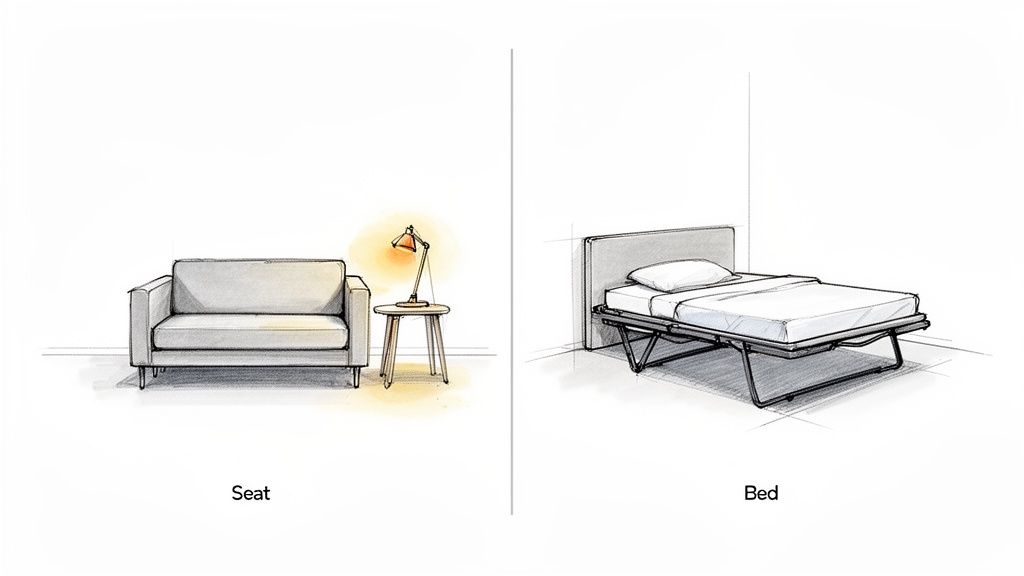
Think of this guide as your roadmap to turning any tight corner into a versatile, multi-purpose haven. We’re here to demystify the world of convertible sofas and help you pick the perfect piece that fits your life without dominating your floor plan. This isn’t just about finding a spot for guests to crash; it’s about reclaiming your space and making it work harder for you.
A great small-space sleeper does three things well:
- It sits comfortably every day (because that’s the primary job).
- It opens easily (because you’ll avoid using it if it’s a hassle).
- It sleeps better than you expect (so guests don’t “mysteriously” book a hotel next time).
A great sleeper sofa doesn’t just save space — it multiplies the potential of a room. It transforms a home office into a guest suite or a studio apartment into a functional living and sleeping area with a simple conversion.
For extremely tight dimensions, it’s worth starting your search with truly compact models like these convertible sofa beds under 39 inches. But even if you have a little more room, the same principles apply: measure smart, pick the right mechanism, and prioritize sleep comfort where it matters.
Decoding the Different Sleeper Sofa Types
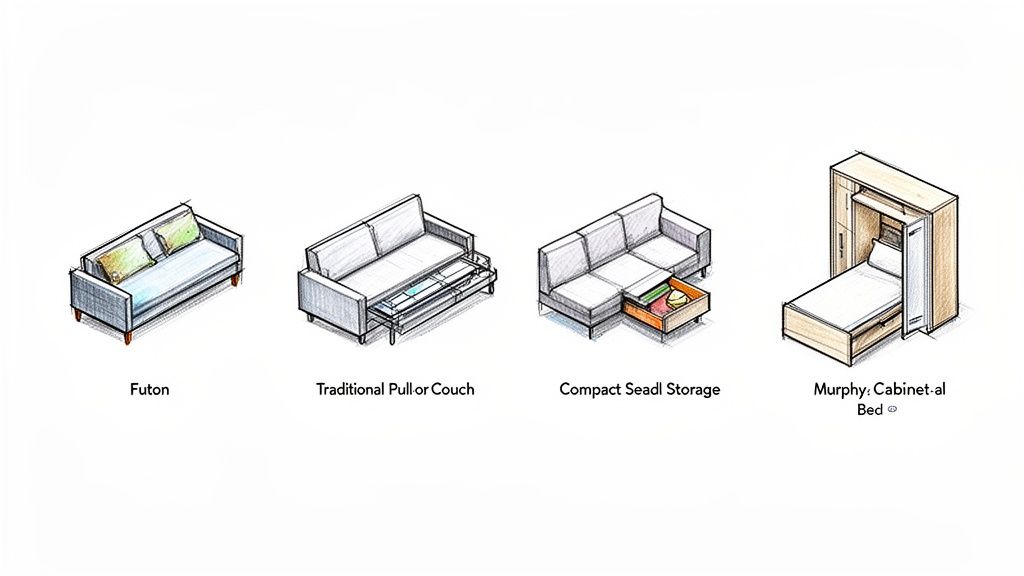
Not all sleeper sofas are created equal, especially when you’re trying to find the best small space sleeper sofa. The way a couch transforms into a bed is what really sets each type apart, and that mechanism directly impacts its footprint, how easy it is to use, and how comfortable it is for sleeping. Getting a handle on these key differences is the first step to finding the perfect match for your home.
The Classic Pull-Out Sofa
The traditional pull-out sofa has a folded mattress and a metal frame tucked away right under the seat cushions. You remove the cushions and unfold the mechanism outward into the room.
- Best for: guest rooms and living rooms where you want a classic sofa look.
- Pros: separate mattress; often available in larger sizes.
- Cons: needs front clearance; can feel heavier or more “mechanical” to operate.
The Streamlined Futon
A futon uses one sleeping surface that doubles as the seat and folds flat. Modern versions can be surprisingly comfortable if the mattress is built for it (especially foam or hybrid constructions).
- Best for: studios, first apartments, home offices, daily convert use.
- Pros: fast conversion; typically lighter; simple design.
- Cons: firmness can feel different from a traditional bed depending on build.
Browse styles here: convertible sofa beds.
The Multifunctional Sleeper Sectional
A sleeper sectional is a powerhouse when you need maximum seating and a bed — and many include hidden storage in the chaise. For small apartments, the storage benefit is a big deal because it helps you store bedding without sacrificing closet space.
- Best for: small apartments that still need “real” seating; family rooms.
- Pros: more seating; storage; great for hosting.
- Cons: large footprint; needs thoughtful placement.
The Ultra-Compact Murphy Bed Cabinet
A Murphy bed cabinet looks like a cabinet by day and folds down into a bed at night. It’s ideal when a sofa doesn’t make sense in the room (home office, craft room) but you still want a serious guest bed.
- Best for: rooms where you want a bed without dedicating space to a sofa.
- Pros: bed-like comfort; visually compact.
- Cons: less “loungy” than a sofa for daily use.
Sleeper Sofa Type Comparison
| Sleeper Type | Best For | Space Requirement | Ease of Use |
|---|---|---|---|
| Pull-Out Sofa | Guest rooms, traditional living rooms | Higher (needs front clearance) | Moderate |
| Futon | Studios, offices, daily conversion | Lower | Very easy |
| Sleeper Sectional | Small apartments needing seating + storage | Higher (L-shape) | Easy to moderate |
| Murphy Cabinet Bed | Offices, dens, anywhere without sofa space | Lower visual footprint | Easy |
Convertible “Zero-Wall” Designs
These are built for apartments. The seat slides forward first, then the back folds down — which means the sofa can sit close to the wall and still convert cleanly.
If you’re short on room, “zero-wall” or slide-forward designs are usually the most forgiving. You’re not dragging the whole sofa forward every time someone stays over.
A strong example is the Twist Loveseat Sleeper. Its compact width and conversion style make it a practical option for tight layouts, and it’s part of our broader lineup of convertible sofa beds.
Sleeper Sofas Under 59 Inches
When you’re working with a truly tight spot — micro-apartment, narrow studio, or a small office — width becomes the dealbreaker. Sleepers under 59 inches wide are designed to solve that exact problem. These aren’t just “smaller sofas.” They’re usually built with space-saving decisions baked in: armless profiles, slim arms, and conversion systems that don’t demand a big footprint.
Case Study: The Twist Loveseat Sleeper
The Twist Loveseat Sleeper is a standout in this category. At 55 inches wide, it fits into spots where a standard loveseat won’t. The armless design also helps visually — it doesn’t “block” the room the way chunky arms can.
Its conversion style is built to be practical in tight layouts. Instead of needing a long runway, it’s designed to transform without forcing you to redesign the room every time it becomes a bed.
In small rooms, the best sleeper is the one you’ll actually use. A compact width and an easy conversion style matter more than almost any other spec.
Exploring Other Ultra-Compact Options
For more choices in the same footprint range, browse convertible sleepers under 59 inches wide. You’ll notice a few patterns that make these models work so well:
- Armless or slender arm designs: The quickest way to save inches.
- Integrated storage (on select models): Helpful if you need a place for bedding in a studio.
- Supportive foam sleep surfaces: Less bulk than an innerspring pull-out, with more consistent comfort.
Choosing a Mattress for Real Comfort
Let’s be honest: a sleeper sofa’s real worth is measured by how well you can actually sleep on it. The frame and mechanism matter, but the mattress is the comfort engine.
Mattress Types That Actually Work in Small Sleepers
- High-Density Foam: a reliable choice for small sleepers because it supports evenly and folds well.
- Memory Foam: great pressure relief; especially helpful for side sleepers.
- Hybrid: a balanced feel (support + comfort), often closer to a real bed experience.
- Innerspring: a traditional feel, but quality matters more here — especially in thinner sleeper builds.
The best small-space sleepers don’t “hide” comfort. They’re built around a mattress that supports the body, not just a mechanism that folds.
Thickness: What’s Realistic for Small Space Sleepers?
Most sleeper sofa mattresses fall in the 4–6 inch range because they must fold. For occasional guests, 4 inches can work. If you host more often, try to stay in the 5–6 inch zone whenever the design allows — and consider a topper for a noticeable comfort jump.
If you want the easiest upgrade with the biggest impact, add a topper: mattress toppers or pads.
Firmness: The Most Guest-Friendly Choice
When multiple people will use the sleeper, aim for medium-firm. It tends to work for the broadest range of body types and sleeping positions. If it feels slightly firm, a topper solves it. If it feels too soft, you can’t really “firm it up” without replacing the mattress.
How to Measure Your Space for a Perfect Fit
Finding the best small space sleeper sofa isn’t just about the sofa — it’s about making sure it can get into your home and actually function once it’s there.
Step 1: Measure the Delivery Path
Measure every choke point on the way in:
- All doorways (width + height)
- Hallways (narrowest width)
- Stairs (width, turning clearance, ceiling height at landings)
- Elevator interior + door opening (if applicable)
One underrated measurement is the sofa’s diagonal depth. That’s often the deciding factor for whether a piece can pivot through a doorway.
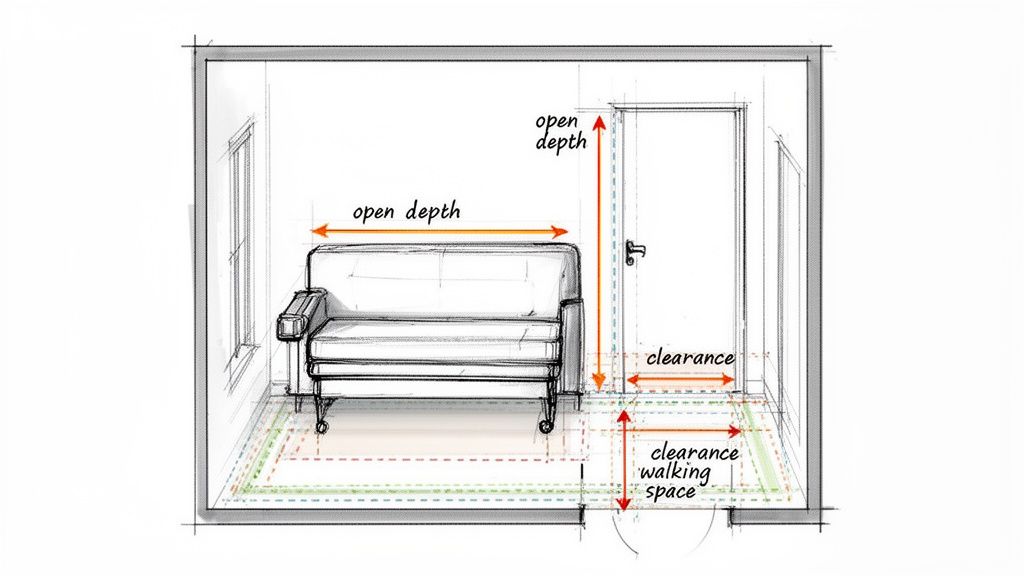
Step 2: Measure the Sofa Footprint and the Bed Footprint
Small-space sleepers have two footprints:
- Closed footprint (everyday sofa mode)
- Open footprint (bed mode, including the “open depth”)
Mark both with painter’s tape and don’t forget walking paths. Aim for 24–30 inches of clearance where possible so guests can actually get in and out of bed.
Need a quick reference for typical dimensions? Use sleeper sofa sizing charts before you buy.
Small Room Layout Tips That Actually Help
- Studios: put the sleeper along the longest wall to create a clean “zone.”
- Office/guest rooms: place the sleeper opposite the desk so the room has two functions without feeling jammed.
- Narrow rooms: prioritize loveseats and slimmer arm profiles to reduce visual bulk.
Sofa Bed Dimensions at a Glance
| Size | Typical Sofa Dimensions (Width x Depth) | Typical Bed Dimensions (Width x Length) |
|---|---|---|
| Chair / Twin | ~52″ x 36″ | ~39″ x 75″ |
| Loveseat / Full | ~72″ x 36″ | ~54″ x 75″ |
| Sofa / Queen | ~84″ x 36″ | ~60″ x 80″ |
These are just general guidelines, of course. Always, always check the specific dimensions of the model you’re interested in before making a final decision.
Selecting Fabrics for Durability and Style
A sleeper sofa works harder than most furniture. It gets sat on daily, opened occasionally (or often), and it has to survive real life. Fabric choice matters more than people think.
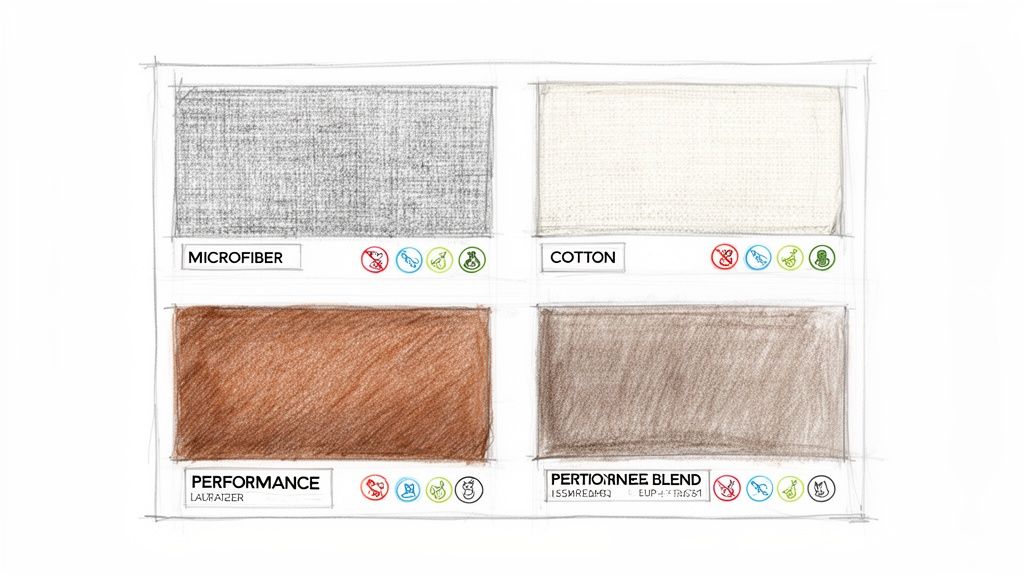
Best Fabric Picks for Small-Space Reality
- Performance fabrics / microfiber: easiest day-to-day, best for pets and spills.
- Blends: better durability than pure natural fibers while still looking “soft” and elevated.
- Leather: easy wipe-down and long life, but higher upfront cost.
Quick Cleaning Code Cheat Sheet
- W: water-based cleaners
- S: solvent-based cleaners only
- W/S: either
- X: vacuum only
For most homes, a W or W/S fabric is the least stressful choice.
Why a Strong Frame Is Non-Negotiable
While the fabric is what you see and feel, the frame is what gives your sofa bed its strength and backbone. A weak frame leads to creaking, sagging, and a disappointingly short lifespan—a frustrating outcome for such an important purchase. Investing in a solid frame is the single best thing you can do to make sure your sofa bed lasts.
A sofa bed’s frame is its foundation. Just as you wouldn’t build a house on shaky ground, you shouldn’t invest in a sofa bed with a flimsy frame, especially when it needs to support both sitting and sleeping day in and day out.
Here’s what to look for under the surface:
-
Solid Hardwood: Kiln-dried hardwood—like oak, maple, or ash—is the gold standard for furniture frames. The kiln-drying process removes moisture, which prevents the wood from warping or cracking over the years. This creates an incredibly sturdy and long-lasting foundation.
-
Engineered Wood: Also known as plywood or particleboard, this is a more budget-friendly option. High-quality, multi-layered plywood can be surprisingly strong and durable. Just be cautious of low-density particleboard, which can be susceptible to damage and may not hold up well to heavy use or a future move.
-
Metal Frames: Metal offers excellent strength with a slim profile, which can be a huge advantage in a small apartment. These frames are resistant to warping and provide consistent, reliable support for the mattress and mechanism, ensuring everything operates smoothly for years to come.
Logistics and What to Know Before You Buy
Once you’ve found the right model, the last step is preventing delivery-day chaos.
Delivery Options That Matter in Apartments
- Curbside delivery: dropped outside — you handle the rest.
- White-glove delivery: brought in, placed, assembled, packaging removed.
For heavy sleepers and tight buildings, white-glove service is often the difference between “smooth” and “nightmare.”
Accessories That Make a Sleeper Feel Like a Bed
- Topper: comfort boost + protects the mattress (shop toppers and pads)
- Mattress protector: saves the mattress from spills
- Sleeper sheets: better fit on thinner mattresses
Styling a Sleeper Sofa in a Small Room
A sleeper sofa for small spaces is a functional anchor — but with the right styling, it won’t look like you designed the room “around a bed.” A few layout decisions can make the whole space feel larger and more intentional.
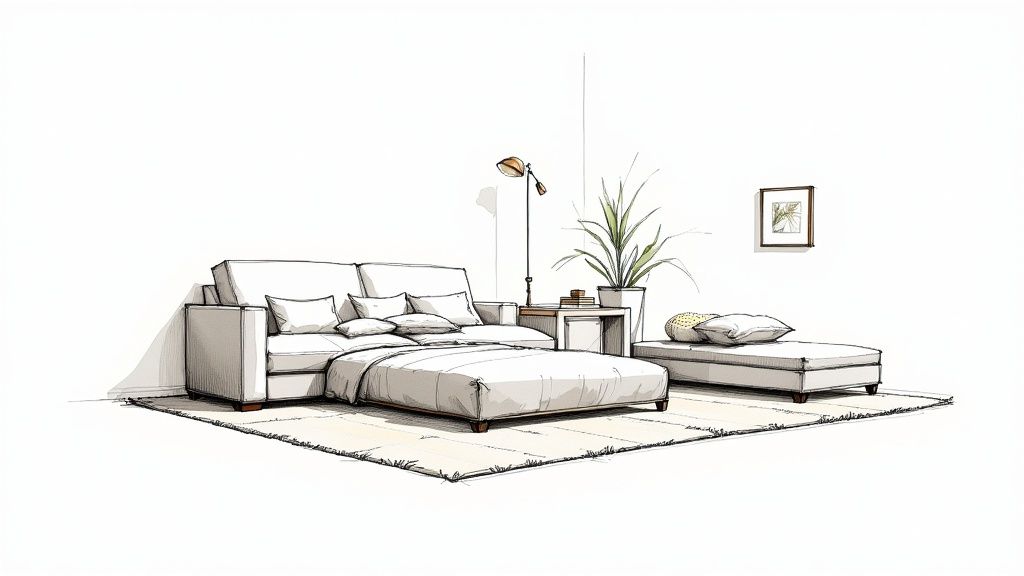
Create Distinct Zones in a Studio
- Anchor with an area rug: Even a small rug under the front legs of the sofa helps define a “living zone.”
- Use lighting to signal function: A floor lamp by the sofa reads as a lounge area; a separate lamp near where the bed opens keeps the room from feeling one-note.
- Float the sofa when possible: If the layout allows, floating a sleeper can create a natural division and a better walkway — especially useful in long, narrow rooms.
Pair with Multi-Functional Companions
In small spaces, the best setups are the ones where every supporting piece earns its footprint.
Storage ottomans and slim C-tables are two of the easiest wins. An ottoman can hold bedding and double as a coffee table. A C-table can slide over a cushion for laptop time, then tuck away when guests arrive.
Make It Look Like a Sofa (Not a Bed in Disguise)
- Throw pillows: Mix sizes and textures to make the sofa look finished and intentional.
- A single good throw: Adds warmth and makes the space feel lived-in without clutter.
- Fast-stow bedding: Choose bedding that folds small enough to store neatly — either in a closet or in storage furniture nearby.
Common Questions About Sleeper Sofas
Can a Sleeper Sofa Be Used Every Night?
Yes — but pick a model designed for comfort, and prioritize a better mattress (ideally 5–6 inches where possible) plus a topper if needed.
How Can I Be Sure It Will Fit Through My Door?
Measure doorways and compare them to the product’s “minimum doorway width” and the sofa’s diagonal depth. If it’s close, look for models with removable legs/arms or modular delivery.
What’s the Difference Between a Futon and a Pull-Out Sofa?
A futon uses the same surface for sitting and sleeping and folds flat. A pull-out hides a separate mattress inside a mechanical frame. Futons are often simpler and faster to convert; pull-outs can feel more “bed-like” depending on mattress quality.
Can I Find a Sleeper Sofa with Storage?
Yes — sleeper sectionals with chaise storage are a top pick for small apartments because they store bedding without taking up closet space.
At Futonland, we specialize in helping people maximize small spaces with furniture that’s built to perform. If you need ultra-compact sizing, start with convertible sofa beds under 39 inches, or explore the broader selection of convertible sofa beds to find the right match for your room and your routine.
How Do I Protect My Floor From a Heavy Sofa Bed?
This is a smart question, especially for renters who have a security deposit on the line. The good news is that preventing scratches and scuffs is incredibly simple.
First, take a look at the sofa bed’s legs—many modern designs already have plastic or felt glides built right in. If not, a quick trip to the hardware store for some self-adhesive felt pads is a cheap and effective fix.
For really delicate floors like soft hardwood or luxury vinyl, an area rug is the perfect two-for-one solution. It adds a serious layer of protection while also helping to visually anchor the sofa and define your living area.
And don’t forget, professional delivery services are trained for this. A good white-glove assembly team knows how to handle heavy furniture and will take every precaution to set up your new piece without leaving a single mark behind.
Can I Find a Stylish Sleeper That Doesn’t Look Like a Sleeper?
Yes. Many modern sleepers are designed to look like stationary sofas first — clean lines, better upholstery, hidden mechanisms. The bed function should feel like a bonus, not the whole personality of the piece.
For a compact example, the Twist Loveseat Sleeper keeps a clean profile while staying extremely small-space friendly. You can also explore similar footprints in our under 59-inch sleepers collection.
Ready to find a sleeper that fits your layout and your day-to-day routine? Explore our convertible sofa beds — including compact sleepers designed specifically for small rooms and apartments.