

Blue Leather Sofa Buying Guide: Styles, Care, and Sizing
You sit down on a navy leather sofa in a showroom, and the decision feels finished before you’ve checked the price. The seat is comfortable, the color looks expensive, and you can already see it facing the television at home. On the drive back, three practical questions arrive: Which blue will work with the rug and walls? Which leather will keep its color through daily use? Will the sofa fit without choking the walkway?
Those questions matter more than the showroom moment. A blue leather sofa is a color-managed purchase first and a furniture purchase second. Window exposure, undertones, traffic, leather finish, and room proportions determine whether the piece looks polished or awkward after delivery.
Leather furniture sits inside a substantial, well-established furnishing category. A blue sofa belongs to a durable, premium upholstery segment rather than a passing novelty, and it’s worth shopping it with the same construction scrutiny you’d apply to any leather sofa purchase.
Why a Blue Leather Sofa Deserves a Closer Look
At the showroom, the shopper usually falls for the color before testing the construction. Navy looks calm under warm display lighting. Teal feels more individual. Cobalt catches the eye from across the room. All three can work, but they behave very differently once they meet a gray rug, yellow oak floor, cream wall, or afternoon sun.
The drive home is where the buying process starts. The first question is shade. A blue with green undertones can flatter walnut and brass, while a blue with gray undertones sits more beside oak and off-white textiles. If the room already has a strong rug, saturated blue may compete with it. If the room is pale and plain, a deeper tone can provide the necessary anchor.
The second question is leather. A cheap blue finish can look flat at first and then reveal uneven wear on the seat fronts and arms. A well-made pigmented or semi-aniline hide gives the color a more controlled appearance, while a full-grain aniline finish offers richer variation but exposes spills and marks more readily.
Practical rule: Choose the blue under the lighting it will actually live in, not only under bright showroom lights.
The third question is physical. A sofa that fits on paper may still block a door swing, narrow a passage, or collide with a radiator. Measure the wall, the walking route, the elevator, and the tightest doorway before you fall in love with a silhouette.
That caution is justified by how central upholstered seating is to furniture retail generally â stationary upholstery is consistently one of the strongest-selling furniture categories, which is exactly why the market supports so many quality tiers and finish options to choose carefully among. The blue leather sofa isn’t an odd specialty purchase. It’s a distinctive choice within a well-developed category.
Understanding Leather Types and Why They Matter
Leather labels tell you how the hide was made, while finish labels tell you how the surface will behave. You need both before judging a blue sofa.
Full-grain leather keeps the hide’s natural surface. It develops visible character and usually gives blue dye depth, especially in aniline finishes. The trade-off is exposure. Scratches, oil, and spills remain part of the story.
Top-grain leather has had the surface lightly corrected or refined. It can still look natural, but the appearance is more consistent. In blue, top-grain semi-aniline leather often delivers a good balance between color richness and daily practicality.
Corrected-grain leather has been mechanically smoothed and embossed to create a more uniform surface. With a pigmented coating, it hides variation and handles family use well. It won’t have the same organic visual movement as full-grain leather, but it’s often the smarter choice for a busy apartment.
Split leather comes from the lower part of the hide. It can be finished to look attractive, but it generally lacks the surface strength and depth of better grain selections.
Bonded leather uses leather fibers combined with a surface coating. It can offer a lower entry price, but blue finishes may look more uniform and synthetic. Once the coating wears, repairs are harder to disguise.
Finish determines the blue you see
Aniline leather has transparent dye with little surface protection. Navy and teal can look especially dimensional because the hide’s natural markings remain visible, but this is the least forgiving finish around drinks, pets, and careless cleaning.
Semi-aniline leather adds a light protective layer over dyed leather. The blue still has variation and depth, but the surface is better prepared for ordinary living.
Pigmented leather uses a polymer coating to create a more uniform color layer and a more sealed surface. It’s generally considered the most durable and stain-resistant finish for family and commercial seating. Routine care usually means vacuuming with a brush attachment, followed by a microfiber cloth dampened with non-detergent soap and water, then complete drying.
| Leather Type | Blue Dye Behavior | Wear Resistance | Best For |
|---|---|---|---|
| Full-grain | Deep, varied, natural-looking | Moderate in aniline, better with protection | Design-led rooms and careful owners |
| Top-grain | Rich but more even | Good, especially semi-aniline | Quality everyday seating |
| Corrected-grain | Consistent, controlled color | Strong with pigmented finish | Families, pets, and heavy traffic |
| Split | Can appear flatter after coating | Variable | Value-focused occasional seating |
| Bonded | Uniform and more synthetic-looking | Limited at the surface | Tight budgets and light use |
If blue is the priority, choose semi-aniline or quality pigmented leather over cheap bonded leather. Full-grain aniline is the color-rich choice, not the carefree choice.
Sizing, Frame Construction, and Comfort Basics
Length tells you how many people can sit down. Depth determines whether they can sit comfortably. A long sofa with a badly chosen seat depth will frustrate a short user faster than a smaller sofa with supportive proportions.
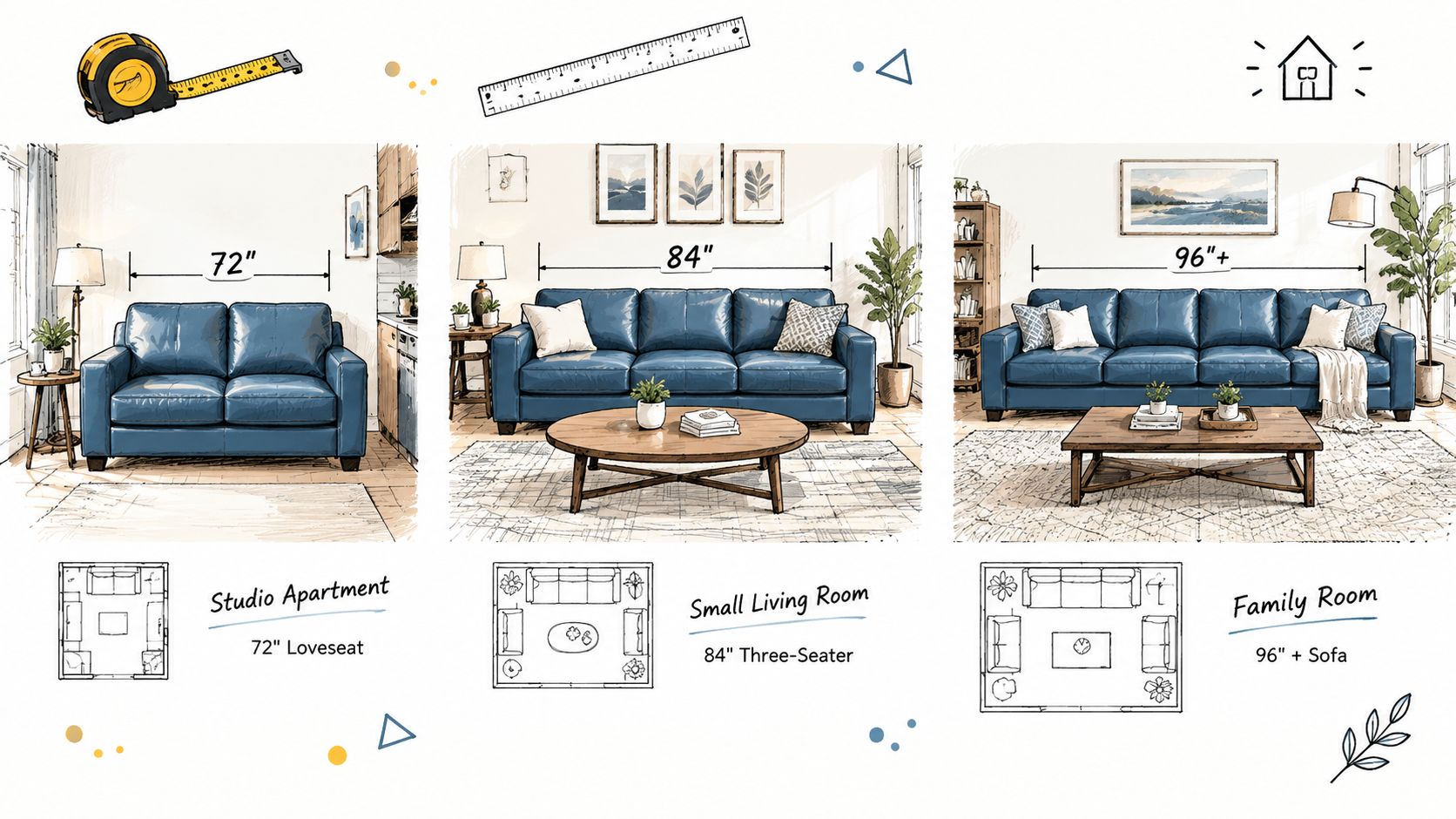
For a studio, a 72-inch loveseat keeps the footprint manageable and leaves room for a desk or dining surface. An 84-inch three-seater suits a small living room when the sofa is the main seat. A 96-inch or larger profile belongs in a family room where you can preserve circulation around both ends.
Measure more than the wall. Mark the sofa’s full depth with painter’s tape, then walk around it carrying a laundry basket or chair. Check the route from the building entrance to the room, including elevator doors, stair turns, and narrow hallways. For more furniture measurement references, use these sofa and futon sizing charts.
Choose depth for your body
A 21-inch seat depth supports upright sitting and suits shorter users who want their feet planted. A 24-inch or deeper seat encourages lounging, curling up, and napping, but it can leave shorter legs unsupported. If two people share the sofa and have different builds, choose a moderate depth with firm back cushions rather than an oversized lounge profile.
Frame construction comes next, roughly in order of what to prioritize:
- Kiln-dried hardwood is the preferred structure because it resists movement better than softwood and weak engineered boards.
- Sinuous springs offer reliable everyday support when the frame and installation are sound.
- Eight-way hand-tied suspension can provide excellent distributed support, but workmanship matters more than the label.
- Webbing can work in lighter designs, though it’s not the best default choice for a heavily used sleeper.
For cushions, high-resilience foam wrapped in down gives structure with a softer surface. All-foam cushions feel firmer and need less reshaping. Feather-only cushions deliver the deepest sink-in effect, but they demand regular fluffing and can feel less disciplined.
Matching the Blue to Your Interior Style
Pick the shade before the silhouette. A beautiful Chesterfield in the wrong blue still looks wrong, while a simple track-arm sofa in the right blue can make an entire room feel deliberate.
| Interior Style | Recommended Blue | Pair It With |
|---|---|---|
| Scandi | Soft slate blue | Oak, boucle, off-white linen |
| Mid-century | Teal-leaning navy | Walnut, brass, warm wood |
| Architectural modern | Saturated cobalt | Concrete, black steel, monochrome art |
| Japandi | Desaturated indigo or dusty petrol | Pale wood, ceramics, quiet textures |
| Coastal | Robin’s-egg or pale denim | White, rattan, light oak |
| Classic transitional | Balanced medium navy | Traditional rugs, tailored cushions, aged metals |
For tone-on-tone rooms, select a desaturated blue. It layers more easily with a blue rug, painted wall, or patterned pillow without turning the room into one loud block of color. For a jewel-box room with dark walls and strong contrast, a saturated blue can hold its ground.
A mid-tone blue is the safest answer for children and pets because surface marks don’t announce themselves as sharply as they do on very pale or very dark leather. That isn’t a substitute for a durable finish, but it makes ordinary wear less visually aggressive.
Let accessories adjust the temperature
Warm the sofa with cognac, rust, camel, or brass if the blue feels cold. Use gray, cream, black, and pale oak when you want a cleaner, quieter composition. Decorative cushions should repeat the sofa’s undertone rather than introduce an unrelated blue. A useful selection of decorative throw pillows can add pattern without forcing you to match the leather exactly.
Care and Maintenance That Actually Work
Most blue sofas sold today use pigmented, finished leather. That surface rewards a boring routine. Boring is good. It preserves the coating instead of forcing you to repair damage caused by aggressive cleaning.
The weekly and seasonal routine
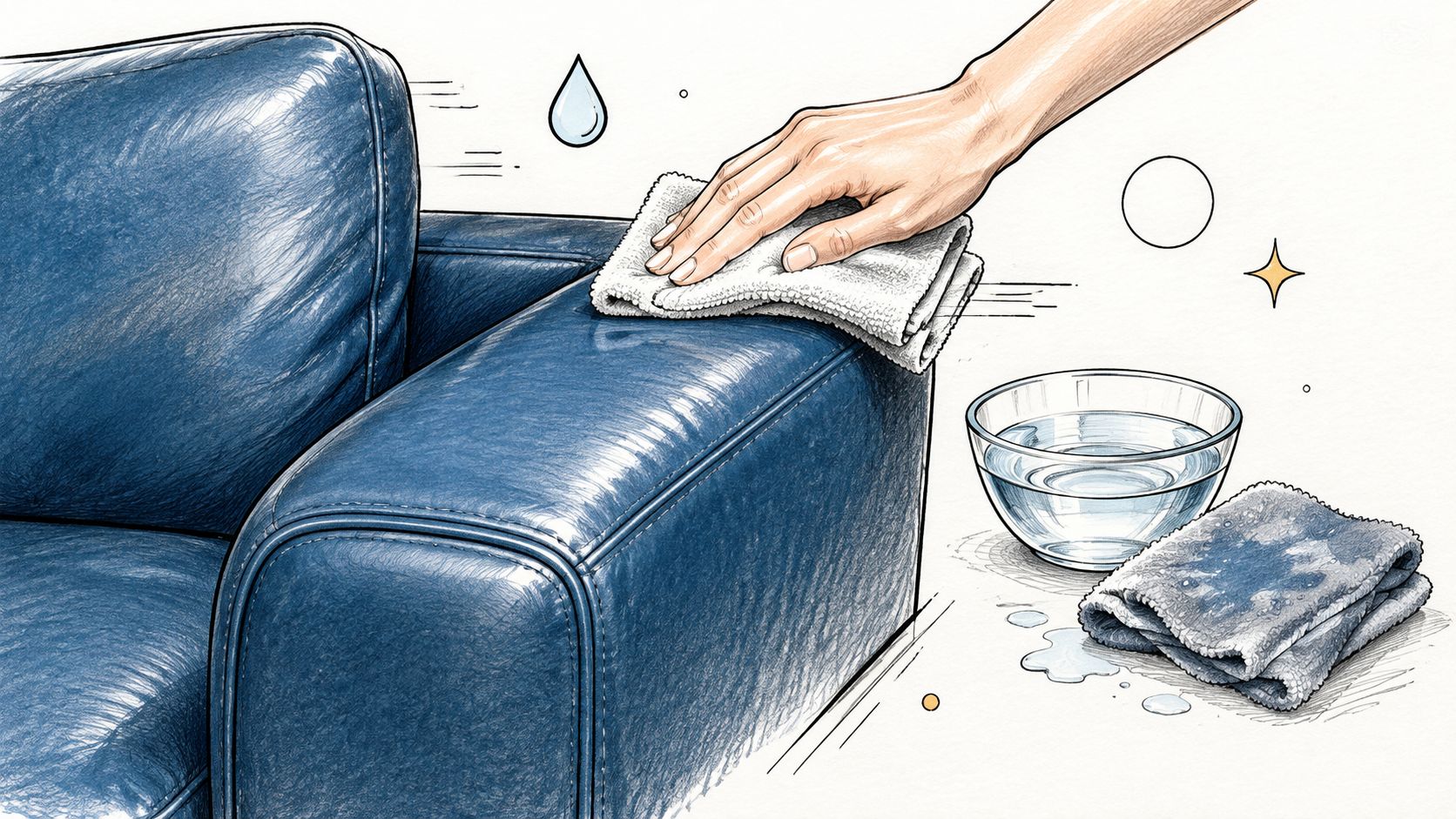
Dust the sofa weekly with a dry microfiber cloth. Use a vacuum with a brush attachment around seams, under cushions, and along the frame where grit collects.
Every four to six weeks, wipe the leather with a microfiber cloth lightly dampened with water and a non-detergent soap, then let the surface dry completely. Use a product designed for finished leather if the manufacturer approves it. Apply conditioner sparingly and test it in an unseen area first, because some formulas darken blue leather.
At the start of humid and dry seasons, inspect the armrests, seat fronts, seams, and cushion edges. These stress points show drying and micro-cracking before the rest of the sofa does. Conditioning every six months is a sensible maintenance rhythm for a finished blue hide, provided the care label permits it.
Never use saddle soap, household sprays, baby wipes, vinegar, abrasive pads, waxes, or silicone polish. These products can strip the protective finish and permanently damage the surface.
Blot spills immediately. Don’t scrub ink, denim transfer, or pet stains deeper into the coating. Remove loose residue, use an approved cleaner, and stop if the color begins transferring to the cloth. Commercial seating or valuable pieces may justify professional stain-protection treatment rather than experimenting with a kitchen product.
Stop uneven fading near windows
Direct sunlight and heat accelerate dye fading. The problem is worse when one arm or cushion receives the strongest exposure, because uneven fading creates a visible color shift rather than ordinary patina.
Use lined curtains or blinds during intense afternoon sun. Consider UV-blocking window film, since good-quality film can block a very large share of UVA and UVB rays and meaningfully slow fading. Also move the sofa away from the very brightest exposure where possible.
Rotate loose cushions when the design allows it, and reposition the sofa when the layout permits. If only one cushion fades, don’t assume cleaning will restore the color. A professional may be able to recolor it, but matching adjacent leather is a specialist repair, not a weekend project.
Sleepers, Futons, and Sectionals for Real Living
A blue leather sofa may need to host guests, absorb movie nights, or convert into a bed several times a week. Judge the format by how often it changes jobs, not by how impressive it looks closed.
| Format | Best For | Conversion Speed | Mattress Quality | Trade-off |
|---|---|---|---|---|
| Traditional pull-out sleeper | Guest rooms and frequent overnight use | Moderate | Can support a dedicated innerspring or foam mattress | Heavier mechanism and less seating depth |
| Click-clack futon | Studios and flexible rooms | Fast, one-motion conversion | Works with a dedicated mattress selected for sleep | Back angle and mattress feel need careful testing |
| Sleeper sectional | Family rooms with regular guests | Moderate | Can offer a substantial sleep surface | Larger footprint and more complex delivery |
| Storage sectional | Studios and clutter-prone rooms | Varies by model | Storage may matter more than mattress quality | Chaise orientation and access need checking |
A traditional sleeper makes sense when mattress comfort is the priority. A click-clack futon wins when conversion speed and a slim profile matter more. Browse futon sofa and futon bed formats with the mattress included in your decision, not as an afterthought.
Match the mechanism to the room
For a small apartment, a reversible chaise with storage can replace both a separate bed and a bulky storage cabinet. In a family room, a sectional with a hidden sleeper handles regular visitors while preserving everyday seating. Choose low arms on a blue leather sectional when the room is tight. High, bulky arms make the color and mass feel heavier.
Don’t accept a bargain mechanism without checking its mattress rating. A thin mattress on a weak frame creates the familiar sleeper disappointment: the sofa looks useful, but guests avoid sleeping on it. Prioritize kiln-dried hardwood frames and either sinuous springs or eight-way hand-tied suspension across every format.
Conversion speed also affects real use. If opening the bed requires clearing a coffee table, removing cushions, and lifting a heavy section, the feature will be ignored. Test the complete motion in the showroom, including where the back lands and whether the open bed blocks the main route.
Putting It Together With Futonland
The practical buying process should begin with the room, not the product page. Measure the wall and clearances, then measure the route through your building. In New York City apartments, elevator entries, hallway turns, and stair landings can eliminate a sofa that technically fits the living room.
Ask for blue swatches before placing an order. Compare them against the rug, wall, flooring, metal finishes, and the room’s natural light. A navy that looks neutral at noon may read green at night under warm bulbs. A slate blue may appear gray beside a cool white wall.
Futonland can be one option for shoppers comparing blue sofas, sleeper sofas, storage sectionals, and leather or faux-leather upholstery. Its service offering includes custom cut-and-sew covers, white-glove assembly and debris removal, delivery arrangements, and design help for customers working through space and style decisions. Those services are useful when the purchase involves a tight entry, a convertible frame, or a cover that must coordinate with an existing room.
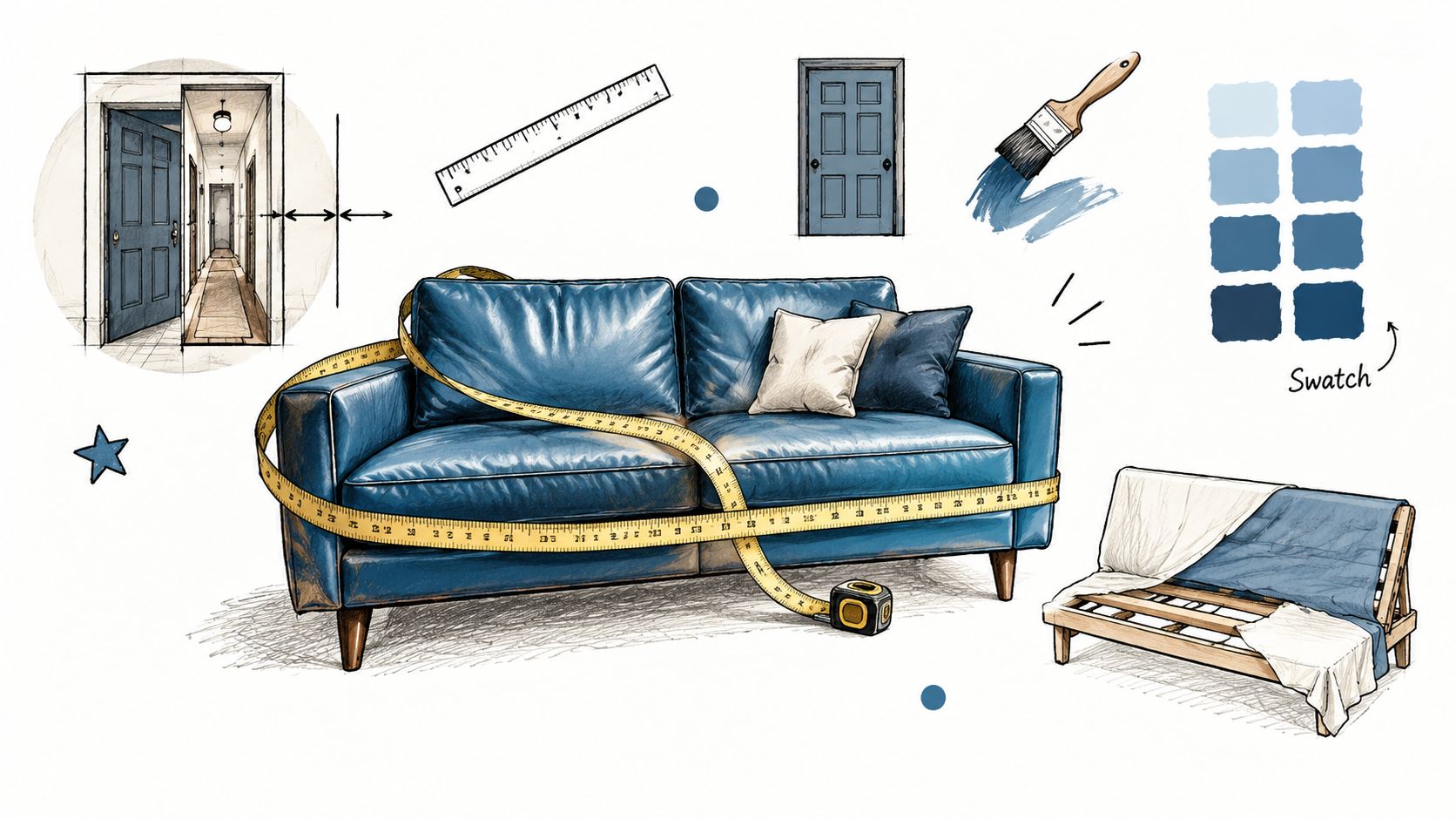
For a conventional sofa, compare frame construction, suspension, cushion fill, leather finish, and color batch. For a futon or sleeper, add mattress thickness, mechanism clearance, conversion path, and cover fit. The leather sofa sets collection is a starting point for comparing leather seating configurations rather than assuming every blue sofa uses the same grade or finish.
Before checkout, confirm four details:
- Frame: ask whether it uses kiln-dried hardwood, engineered boards, or a combination.
- Support: identify the suspension type and whether the cushions use structured foam, down wrapping, or feather fill.
- Color batch: request a current swatch and confirm that replacement covers or matching pieces will use the same color reference.
- Delivery access: record doorway, stair, elevator, and room-clearance notes before scheduling delivery.
A blue sofa should arrive as a planned part of the room, not as a large surprise that needs to be forced through the front door.
Blue Leather Sofa Questions Buyers Ask Most
Will blue leather fade near a south-facing window?
Yes, direct sunlight and heat can fade dyed and finished leather, especially when one part of the sofa receives stronger exposure. Use blinds or lined curtains, consider UV-blocking film, and move the sofa away from the brightest window when possible. Rotate loose cushions and inspect the exposed arm regularly. If a single cushion has already changed color, ask a leather-restoration professional about recoloring before trying a household cleaner.
Can cats and dogs damage it?
Claws and nails can scratch full-grain aniline leather, where marks remain visible and become part of the surface character. Corrected-grain pigmented leather is the more forgiving choice because its coated, uniform surface handles routine scuffs better and makes minor marks less visually prominent. No leather finish is claw-proof. Trim nails, provide a scratching post, and choose a mid-tone blue if you want everyday marks to blend more.
Can an existing futon or sleeper frame get a blue cover?
Often, yes, if the frame dimensions, mattress thickness, hinge movement, and attachment points match the cover pattern. A leather-look fabric may be more practical than genuine leather on a moving futon because the cover must flex during conversion. Measure the frame and mattress carefully, then ask the cover maker whether the design supports your exact model before ordering.
Is a genuine blue leather sleeper realistic on a budget under $2,500?
You’ll find more options in bonded leather, faux leather, and mixed-material upholstery than in higher-grade genuine top-grain leather. A lower price can still produce a useful sleeper, but inspect the mechanism, mattress, frame, and warranty instead of judging the blue finish alone. If genuine leather is essential, consider a simpler sofa format or a used piece with a sound frame. Start by defining whether the priority is authentic leather, overnight comfort, or conversion speed, because one purchase rarely maximizes all three at a tight budget.
Measure your room and delivery path today, then order blue swatches before you compare sofa silhouettes. Reject any option that fails the shade, finish, or access test, and choose the blue leather sofa that will still look intentional after real sunlight, daily seating, and ordinary household mess.