Organic Floor Mattress Guide: Materials, Sizing & Mold Prevention
You’re probably considering floor sleeping for a very current reason, not a historical one. Maybe you live in a studio and want the room back during the day. Maybe you’re building a low, calm Montessori bedroom. Maybe you like the clean restraint of Japanese interiors but don’t want the practical downsides that usually get ignored.
That’s the right instinct. An organic floor mattress can work very well, but only if the mattress is built for low-airflow use and only if you treat moisture control as part of the setup, not an afterthought. Material choice matters more on the floor than it does on a bed frame. So does your routine.
The Rise of Floor Sleeping
A lot of floor sleeping starts with a room problem, not a mattress problem.
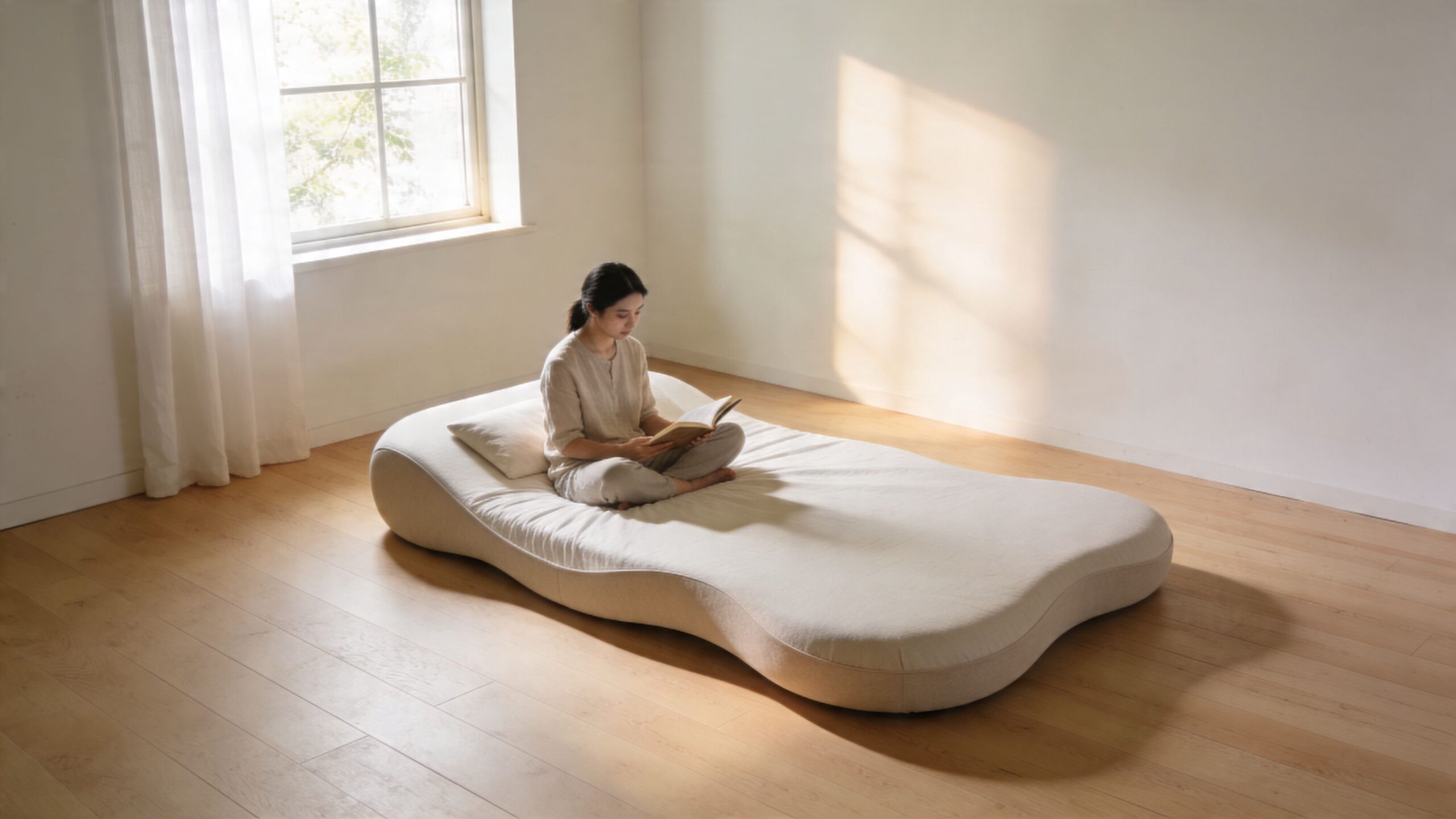
Someone wants a bedroom that can also act as a workspace, a guest room, or a play area. A low sleep surface solves that faster than buying a heavier bed frame that locks the room into one use. Parents come at it from a different angle — they want a child’s room that feels accessible, simple, and less cluttered. Others are drawn to the visual quiet of Japanese-style living and want the same low profile at home.
Why this is growing now
This isn’t a niche curiosity anymore. Interest in organic and natural-material mattresses has grown steadily as more shoppers pay attention to what’s actually inside the products they sleep on.
That matters because the floor-sleeping customer usually cares about the same things driving that broader shift. Fewer chemical inputs. Better indoor air. Materials that feel grounded and durable instead of disposable.
The real appeal
Floor sleeping works when you want flexibility.
- Small rooms: a rollable or foldable sleep surface can free up floor area during the day.
- Minimal interiors: low bedding changes the look of a room immediately, even without replacing other furniture.
- Guest use: a proper mattress on the floor is often a more stable option than an inflatable bed.
- Kid spaces: a low setup makes entry and exit easy and keeps the room visually open.
Compare futon mattress options to clarify the difference between a casual floor pad and a mattress that can reliably hold up to repeated use.
Floor sleeping is simple. Keeping it comfortable and clean is where the real decisions start.
What Makes a Floor Mattress Organic and Safe
A mattress that works on a platform bed can fail on the floor.
On the floor, there is almost no air moving under the mattress. That puts more pressure on the materials, the cover, and the way the mattress is built. If the interior traps humidity or relies on heavy chemical treatments, you notice it faster in a floor setup because the sleep surface sits in the least ventilated zone of the room.
What organic means in practice
For a floor mattress, “organic” should refer to verified material standards, not soft marketing language on a product page.
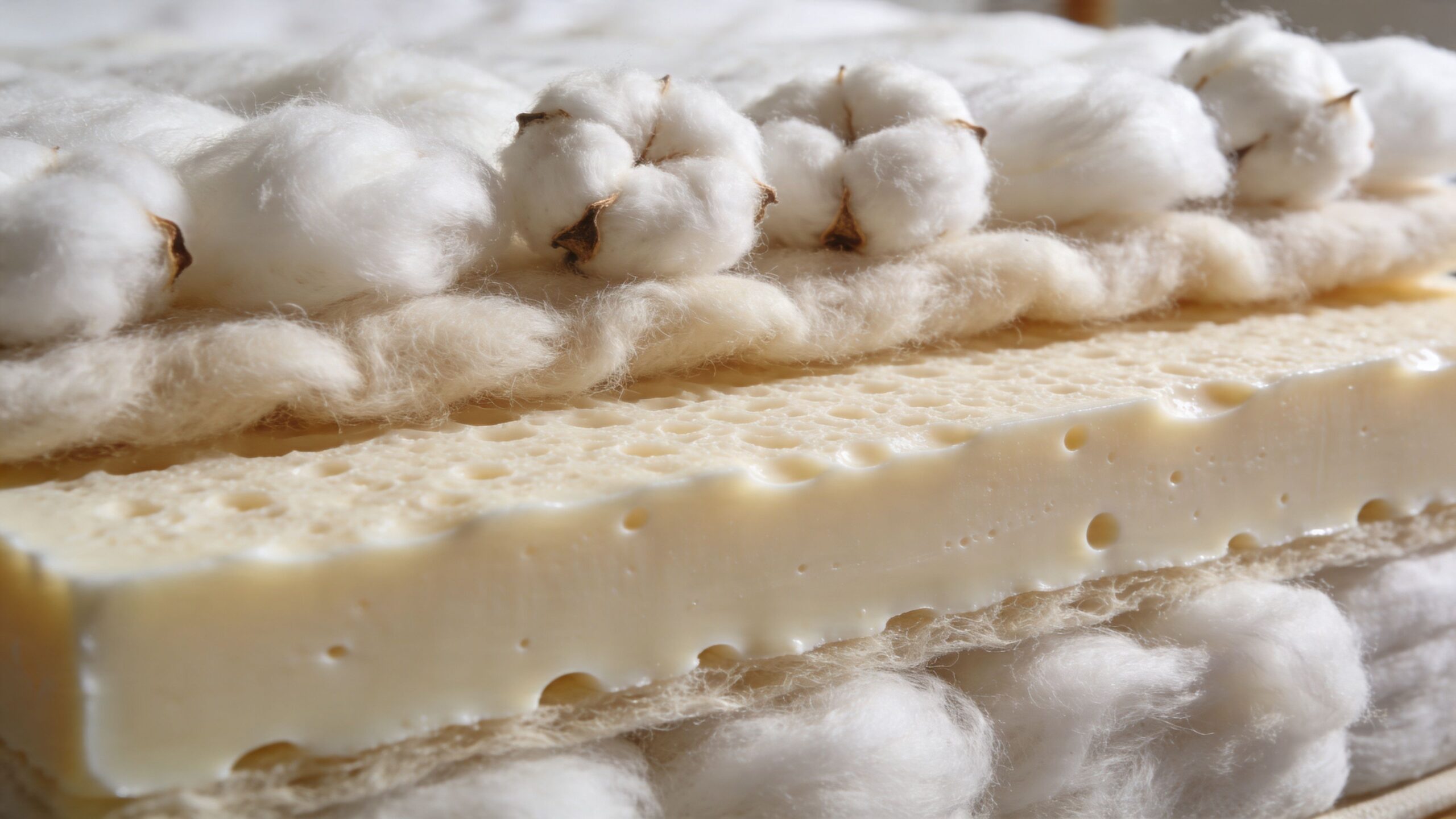
The labels that matter most are GOTS for textiles such as cotton and wool, and GOLS for latex foam. Those certifications are used to verify organic content and restrict a range of problematic chemical inputs during production. That matters on the floor, where you sleep closer to the room’s dust zone and where stale air tends to collect first.
A safe floor mattress also needs plain, honest construction. Look for clear disclosure about the fill, batting, foam, fire barrier, adhesives, and cover fabric. If a brand says “natural” but won’t tell you what’s inside, treat that as a warning sign.
What makes a mattress safe on the floor
In practice, a safe floor mattress has to do three jobs well.
Release moisture
Floor sleeping fails fast when the mattress holds onto body humidity night after night. Breathable fibers and ventilating materials help reduce that risk.Keep chemical exposure low
A low bed brings you closer to whatever is in the mattress and whatever settles near the floor. Clean fibers and clearly identified components make more sense than mystery foams and added treatments.Hold a stable shape on a hard surface
The floor is already firm. The mattress should absorb pressure at the shoulders and hips without collapsing into a hot, soft pocket.
That combination is why many floor-suitable models use cotton, wool, latex, or layered versions of those materials. Each one has trade-offs, but they’re usually chosen for breathable performance and honest support, not just for a plush showroom feel.
Construction matters as much as certification
A certified organic mattress can still be the wrong mattress for floor use.
Very thick builds often hold more heat. Overly soft tops can feel comfortable for ten minutes and frustrating by morning because there’s no slatted base underneath to add airflow or flex. Fully enclosed designs with dense synthetic quilting can also work against you, even if part of the mattress uses better materials.
Compare organic mattresses made with certified natural materials and pay close attention to profile, firmness, and how the layers handle moisture. On the floor, safety is not only about what the mattress is made of — it’s also about whether the construction gives you a realistic chance of keeping it dry, clean, and usable for years.
If a mattress cannot release moisture and recover its shape on a hard surface, it is not a strong floor-sleeping choice.
Choosing Your Natural Materials for Floor Use
A floor mattress succeeds or fails by how the fill behaves after night 30, not night one. On a hard surface, materials show their habits fast. Some pack down, some hold shape, and some manage moisture better than others.
Organic cotton is the traditional floor-sleeping material for a reason. It creates a flat, stable surface that feels grounded instead of buoyant. In a shiki futon, that dense cotton build works well for back and stomach sleepers, lighter-weight adults, and anyone who wants a simpler setup they can fold and move. Cotton and wool are commonly paired in floor-style mattresses because together they offer better breathability than typical synthetic-heavy builds.
Cotton has limits. It compresses with use, especially under hips and shoulders, and on the floor you’ll notice that compression sooner because there’s no box spring or slatted frame softening the surface. A cotton-heavy mattress also asks more of the owner — it needs regular rotation, occasional flipping if the construction allows it, and consistent airing. If you want a floor bed you can leave untouched for months, cotton alone is usually the wrong choice.
Wool earns its place as the working layer. It helps buffer temperature swings, manages day-to-day humidity better than many synthetic quilt fills, and adds a little surface comfort without turning the mattress soft. For floor use, that matters — the sleeper gets a drier feel at the top, and the mattress has a better chance of releasing moisture during airing.
Pay attention to where the wool sits. A wool wrap around a cotton core behaves differently from a thin wool batting tucked into a thick quilt panel. More wool generally improves moisture handling, but it can also raise cost and slightly change the hand of the mattress.
Natural latex shifts the feel the most. It adds spring, better pressure relief, and much better shape retention than cotton by itself. For side sleepers, combination sleepers, and heavier adults, latex often makes floor sleeping realistic instead of punishing. The trade-off is straightforward: latex is heavier, less rollable, and usually less traditional in feel than a classic shiki futon.
That trade-off matters in small apartments. If the mattress must be folded, stored, or stood up often, an all-cotton or cotton-and-wool build is easier to live with. If it will stay in one spot and be used every night, a latex-inclusive construction often holds comfort longer.
A breathable cover also matters more than shoppers expect. A dense, less permeable shell can work against good fill materials. A washable mattress protector for natural floor mattresses helps with spills and body oils, but it shouldn’t be thick or plasticky enough to trap heat and moisture.
For homes with wood flooring, material choice and maintenance connect directly. Moisture that lingers under any mattress can contribute to staining, odor, and eventually mold on the flooring underneath. Wool helps, breathable cotton helps, and a latex layer can reduce deep body impressions, but none of them excuse poor airflow habits.
Futonland’s natural and organic constructions include shiki futon styles and options from White Lotus Home, allowing shoppers to compare cotton-and-wool builds with latex-inclusive ones side by side. Comfort Pure’s guide to organic cotton and wool shiki futons is a useful reference for that comparison too.
Organic Material Performance on the Floor
| Material | Breathability | Moisture Management | Feel & Support | Best For |
|---|---|---|---|---|
| Organic cotton | Breathable in the right construction | Fair to good with regular airing | Dense, firm, low-profile | Traditional shiki futon feel, guest rooms, sleepers who like a flatter surface |
| Natural wool | Strong as a comfort and humidity-buffering layer | Very good in daily use | Slightly softer surface over a firmer core | Humid homes, hot sleepers, cotton builds that need better moisture control |
| Natural latex | Good in breathable builds | Good, especially when paired with wool and a venting cover | Responsive, pressure-relieving, more resilient over time | Daily adult use, side sleepers, heavier sleepers, buyers who want more cushioning |
The Secret to a Mold-Free Floor Mattress
The main risk in floor sleeping isn’t mystery. It’s moisture.
Your body gives off heat and moisture every night. When a mattress sits directly on the floor, that moisture can collect where you can’t see it. Hardwood, tile, laminate, and concrete-adjacent surfaces can all make that underside environment worse if the room already runs humid.
Why wool helps but routine matters more
Wool is one of the most useful materials here. It naturally resists holding moisture the way many synthetic fills do, and its fiber structure helps discourage the damp, stagnant conditions mold needs to take hold.
That’s excellent support from the material itself. It still doesn’t replace maintenance.
The protocol that works
If you want a mold-free floor setup, do these consistently:
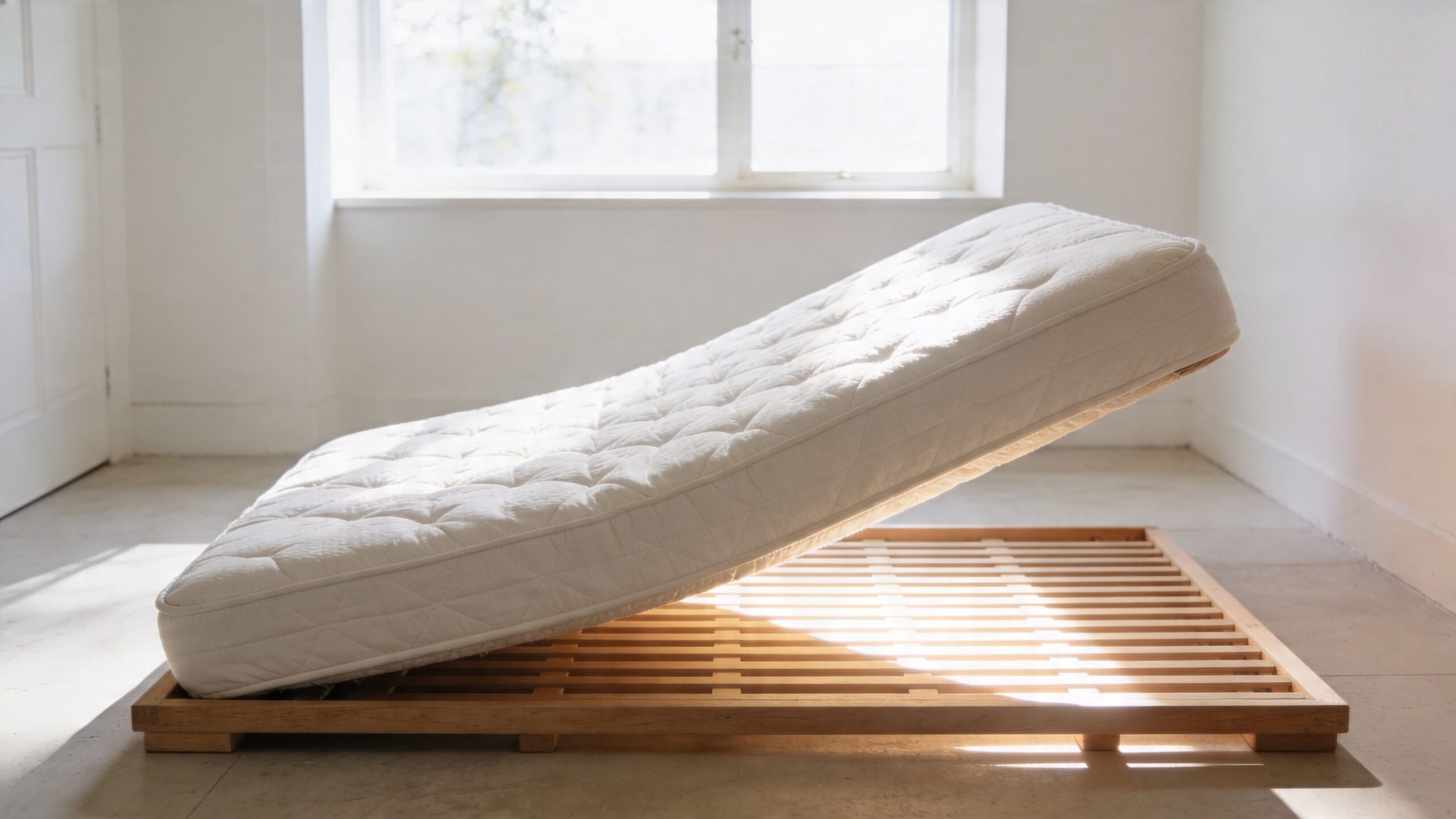
Lift or prop the mattress up regularly. Stand it against a wall, drape it over a railing, or fold it so the underside can dry.
Don’t trap it against a cold, sealed surface. A slatted base, tatami-style layer, or another breathable barrier improves airflow under the mattress.
Rotate it on a schedule. Rotation helps wear and drying happen more evenly.
Use a breathable cover. A waterproof plastic shell can solve one problem and create another if it blocks airflow. A better approach is a breathable mattress protector that guards the fabric without turning the bed into a moisture trap.
Pay attention to the room itself. If the room feels muggy, the mattress is already under stress. Ventilation matters.
This is not optional. Floor sleeping only stays clean when the underside gets air.
What fails in real homes
The mistakes are predictable. Leaving the mattress flat for weeks. Using a heavy non-breathable topper. Pushing the bed into a corner with no airflow. Assuming “organic” means maintenance-free.
It doesn’t. Good materials reduce risk. Habits prevent problems.
How to Choose the Right Size and Firmness
The floor makes every mattress feel firmer. That’s the first adjustment often underestimated.
A mattress that feels balanced on a foundation can feel noticeably harder on the floor because there’s no give underneath. That’s why thickness and internal build matter more than labels like “soft” or “firm.”
Thickness by use
For occasional sleeping, guest use, or a child’s room, a thinner build is usually enough. It stores more easily, feels visually lighter, and keeps the setup close to a traditional shiki format.
For daily adult use, especially if you sleep on your side, more substance usually works better. Extra thickness helps prevent pressure buildup at the shoulders and hips. A cotton-only mattress will feel firmer at the same thickness than a latex-inclusive one, so compare construction, not just profile.
Firmness by sleep style
- Back sleepers: usually do well with a firmer cotton-forward or cotton-and-wool build if spinal alignment feels steady.
- Side sleepers: often need more give — latex or a plusher natural comfort layer can make floor sleeping much more realistic.
- Stomach sleepers: usually need a flatter, less sinky surface so the midsection doesn’t dip too far.
Size and room behavior
Room function should guide size as much as body size does. In a studio or guest room, a mattress that folds, rolls, or stores without a fight is often the smarter purchase than the largest surface you can physically fit.
Use a mattress sizing chart before choosing. It’s easier to plan clearance around walls, walkways, and storage before the mattress arrives than after you’ve committed to a footprint that dominates the room.
A floor mattress should fit your body, but it also has to fit your daily routine. If moving it feels annoying on day three, the setup won’t last.
Perfect Placements for Your Floor Mattress
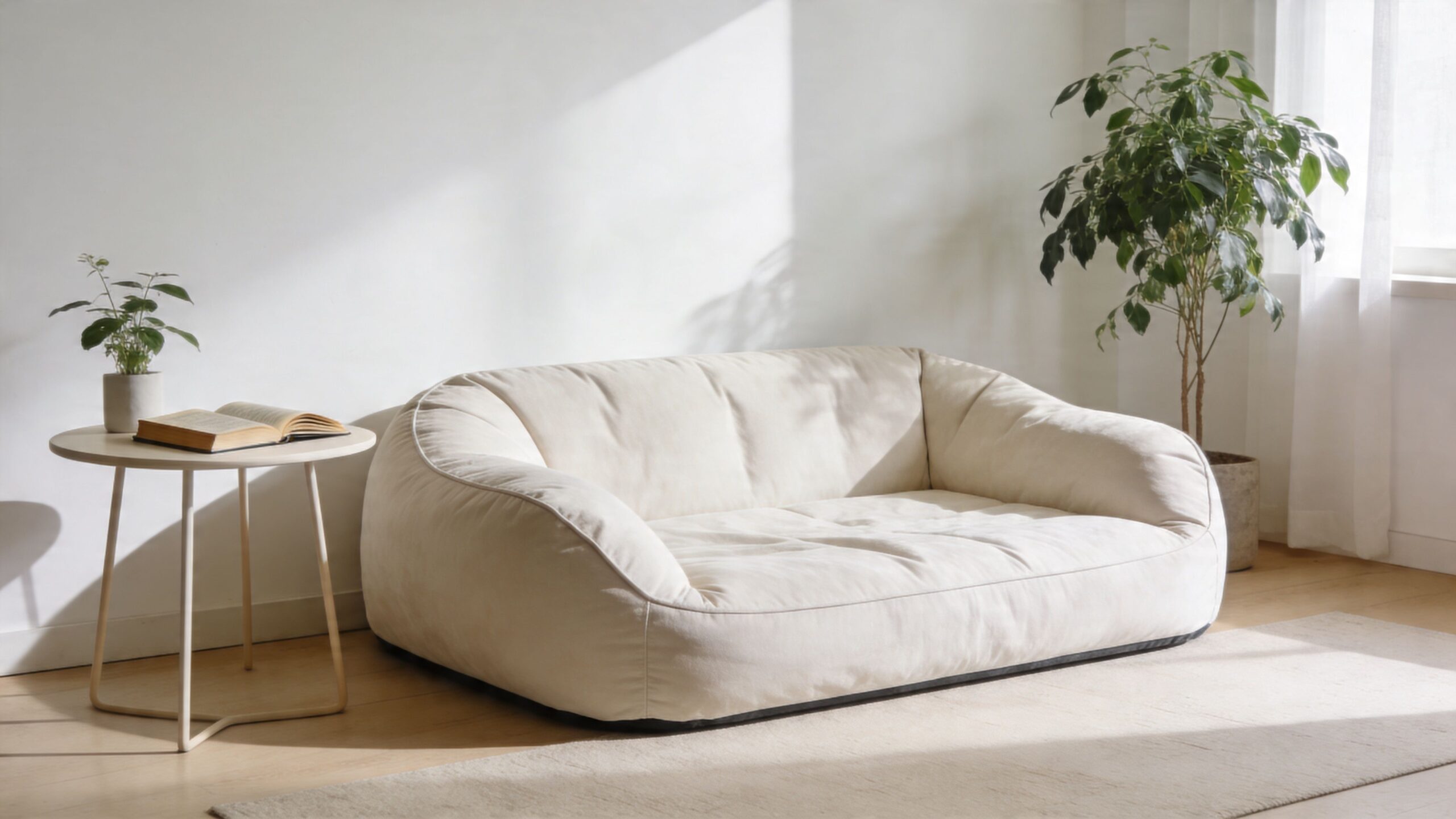
Some rooms make floor sleeping feel natural. Others fight it from the start. The difference usually comes down to how the room is used during the day and whether you can give the mattress space to breathe when it’s not in use.
The small apartment bedroom
In a studio or one-bedroom apartment, the floor mattress earns its keep when the room has to do more than one job. A low, foldable sleep surface can turn a bedroom corner back into usable floor area during the day — useful when the same square footage also has to handle work, exercise, or storage.
This setup works best with a mattress that’s manageable to lift and easy to air out. If it’s too bulky to move, the flexibility disappears.
The Montessori child’s room
A child’s room is one of the clearest use cases. A low sleep surface supports independent movement, keeps the room visually open, and avoids the heavy look of a conventional bed frame. Natural materials also make sense here because kids spend time close to the mattress, not just on it.
The practical side still matters. You want washable bedding, a simple routine for airing, and enough structure that the mattress doesn’t collapse into a heap after repeated use.
The guest room that isn’t really a guest room
Many homes don’t have a dedicated guest bedroom — they have an office, den, or flexible room that occasionally becomes one. A proper floor mattress works well there because it stores more neatly than a spare bed frame and usually feels more grounded than an air mattress.
Three placements work especially well:
- Along a clear wall: easy to prop upright for airing.
- On a breathable layer: better than placing it directly on a sealed floor.
- In a room with real ventilation: even natural materials struggle if the room stays stale.
The best placement is the one that makes maintenance easy. If the room layout discourages lifting, rotating, or drying the mattress, the setup looks good for a month and becomes a hassle after that.
Your Organic Floor Mattress Questions Answered
Can any mattress be used on the floor?
Technically, yes. Practically, no. Some mattresses handle floor use much better than others. For long-term use, you want breathable materials, low off-gassing potential, and a construction that doesn’t rely on lots of trapped synthetic foam. Organic cotton, wool, and natural latex are usually better suited to that environment than heavily padded synthetic builds.
Is floor sleeping good for back pain?
Sometimes, but it depends on the person and the mattress. What people often respond well to is the added firmness of the floor, which can help when a mattress feels too soft or unstable. It can also backfire if the surface creates pressure at the shoulders, hips, or lower back. The right question isn’t whether the floor is good or bad — it’s whether the mattress provides support without becoming punishing.
How thick should an organic floor mattress be?
For occasional use, a thinner mattress can be enough. For everyday adult use, especially if you sleep on your side or want more pressure relief, a thicker build is usually easier to live with. Material changes the answer — a dense cotton mattress and a latex mattress of similar height won’t feel the same on the floor.
Do organic materials solve the mold issue by themselves?
No. They help, but they don’t replace airflow. Wool improves moisture handling. Cotton and latex can outperform many synthetic alternatives in breathable constructions. But if the mattress never gets lifted, the room stays humid, and the underside never dries, you can still get odor and mildew problems.
Is a shiki futon the same as a cheap foldable floor pad?
Not necessarily. A real shiki-style mattress uses denser, more durable materials and is built for support. Many mass-market floor pads are designed around convenience first — they may work for a sleepover, but they don’t always perform like a proper nightly sleep surface.
Find Your Perfect Organic Mattress
A successful organic floor mattress setup comes down to a few essential factors. Choose breathable natural materials. Match the firmness to the floor, not just to a showroom feel. Air the mattress regularly. Treat moisture control as part of ownership.
If you’re comparing natural sleep surfaces for floor use, look at constructions that include organic cotton, wool, latex, and traditional shiki futon formats rather than only standard bed mattresses placed low by default. Futonland carries natural and organic mattress options, including selections from White Lotus Home, for shoppers who want a floor-suitable sleep surface without moving into synthetic foam territory.
If you’re unsure which build fits your room, sleep style, or maintenance tolerance, contact the team and talk through the setup before buying. That’s usually what separates a floor mattress that gets used for years from one that gets abandoned in a closet.