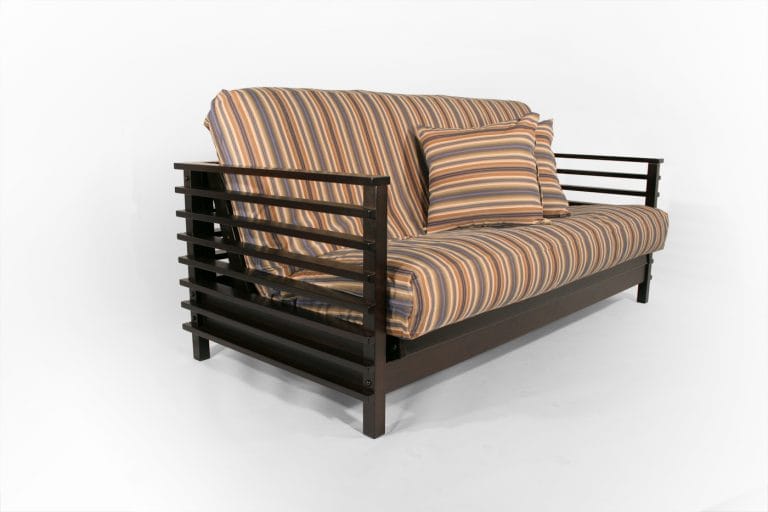

Furniture Delivery & Assembly in NYC: What to Ask Before You Buy
You buy the sleeper you’ve been hunting for all week. The dimensions look right. The fabric works. The price is settled. Then the delivery notice lands in your inbox, and the quintessential New York question starts nagging at you. Will it fit through the lobby turn, the elevator, the apartment door, and the hall corner without turning delivery day into a building-wide event?
That’s why people search for furniture stores that deliver and assemble, not just furniture stores that ship. In NYC, “delivery” can mean anything from a boxed item left at the curb to a trained crew bringing the piece in, assembling it, testing it, placing it, and hauling away the packaging. Those are very different outcomes.
Convertible furniture makes that difference even sharper. A futon, sofa bed, storage bed, or murphy bed isn’t just a static object. It has moving parts, alignment points, and weight-bearing hardware. If it’s assembled poorly, the problem isn’t cosmetic. It affects safety, comfort, and daily use.
The Real Last Mile: Navigating NYC Furniture Delivery
A lot of delivery problems start after the sale, not during it. The product is fine. The problem is the last stretch from truck to apartment.
In New York, that last stretch can involve a freight elevator reservation, a doorman who won’t accept early arrivals, a walk-up stairwell that narrows on the landing, or a co-op that needs paperwork before anyone touches the service entrance. Anyone who works in city furniture logistics learns quickly that the hardest part often isn’t moving the item across the region. It’s moving it the final few yards without damaging the piece, the building, or your patience.
What makes NYC different
City deliveries fail for predictable reasons:
- Building rules change the plan: some buildings only allow delivery in a narrow weekday window.
- Access is tighter than buyers expect: a sofa bed that fits the room still has to fit the front door, hall turns, and elevator cab.
- Staff coordination matters: doormen, supers, and management offices all affect timing.
- One missed detail snowballs: if the crew arrives without the right access notes, the job can stall downstairs.
Practical rule: In NYC, a successful furniture delivery starts with the building, not the furniture.
Local knowledge helps because the crew isn’t improvising from scratch. If you’re checking neighborhoods relative to pickup or showroom visits, Futonland’s store locations make it easier to plan around the Upper West Side, Greenpoint, and Newark.
What customers usually underestimate
Worry about assembly typically begins upon seeing the boxes. By then, the stress has already started. The better approach is to choose the service level before checkout and treat delivery, setup, and cleanup as part of the purchase, not an afterthought.
That mindset saves a lot of frustration in walk-ups and prewar buildings, where there’s no margin for confusion.
Decoding Your Delivery Options: From Curbside to White Glove
When stores say they deliver, the phrase covers several very different service levels. That’s why two orders with similar products can create completely different delivery days.
More furniture is arriving boxed than ever, shipped directly and assembled at home rather than delivered fully built. That shift is exactly why the service level you choose matters more than it used to — more customers need real help turning boxes into usable furniture.
The four service levels that matter
| Service Level | Where It’s Left | Assembly Included? | Packaging Removal? | Best For |
|---|---|---|---|---|
| Curbside | Outside the building or at the curb | No | No | Buyers with help on-site, easy access, and time to handle everything themselves |
| Threshold | Just inside the first door or lobby area | No | No | Ground-floor access where you can manage the rest |
| Room of Choice | Inside the selected room, usually boxed | Usually no | Usually no | Heavy items you want carried in, but plan to assemble yourself |
| White Glove | In the room, unpacked, assembled, placed | Yes | Yes | Convertible furniture, city apartments, busy households, and difficult building access |
What works and what usually doesn’t
Curbside sounds affordable until you remember you’re accepting the hardest part of the job — lifting, carrying, unpacking, assembly, and disposal. In NYC, that often means dragging cardboard and foam through a building after you’ve already exhausted yourself getting the item upstairs.
Threshold is only a small improvement. It gets the item over the first barrier, but the technical work remains yours.
Room of choice can be enough for a simple dresser or table if you’re comfortable assembling furniture and have the tools. It’s rarely the right choice for a sleeper, futon frame, wall bed, or anything with a lift mechanism.
White glove service costs more than a basic drop-off, but it usually costs less than a failed DIY assembly, a damaged wall, or a second appointment to fix what went wrong.
Compare service options while browsing free shipping futon sets and packages — the right bundle isn’t just about the item price, it’s about what happens when it reaches your building.
The practical decision test
Choose white glove if any of these apply:
- Your building has delivery restrictions
- The item converts, folds, lifts, or stores
- You don’t want packaging left behind
- You’re furnishing a studio, guest room, or home office where placement matters
- You need the furniture working the same day it arrives
That’s the essential dividing line. Not luxury versus budget. Responsibility versus handoff.
Why Pro Assembly Is Vital for Convertible Furniture
A basic side table assembled badly is annoying. A convertible bed assembled badly is a mechanical problem.
Futons, sofa beds, murphy beds, and storage beds depend on alignment. Their hardware has to open smoothly, close squarely, and hold weight in motion and at rest. That means the assembly crew isn’t just tightening fasteners — they’re setting up a moving system that people will use repeatedly.
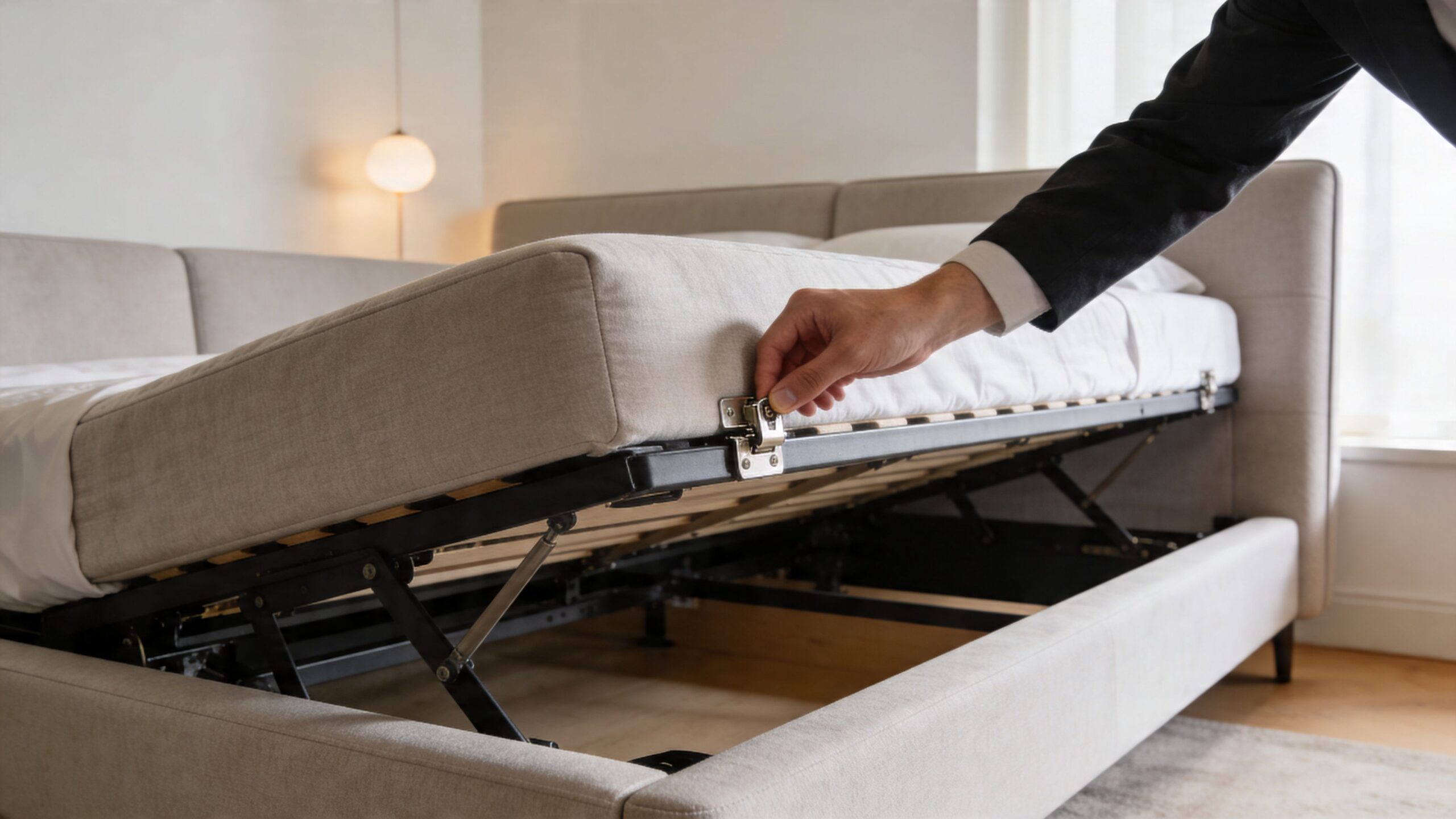
Why moving furniture needs precise setup
For murphy beds and futons, professional assembly helps ensure lift mechanisms are calibrated correctly for smooth, even conversion. Small misalignments during assembly — a hinge tightened out of sequence, a rail set slightly out of square — don’t always show up immediately, but they compound with repeated use.
That difference shows up in real use:
- The frame doesn’t open evenly
- One side bears more stress than the other
- The locking or support points don’t seat correctly
- The mechanism wears faster because the motion is slightly off each cycle
A lot of customers assume “close enough” is fine if the piece looks level. It isn’t. Convertible furniture has to do more than stand there.
Where DIY usually goes wrong
The common failure points are familiar. Hardware gets tightened in the wrong sequence. Side rails sit a little out of square. Moving arms look symmetrical but aren’t. Then the piece starts catching, rubbing, shifting, or resisting when you convert it.
That’s also why there’s a difference between a moving crew and an assembly crew — a mover’s job is getting the item into the apartment intact, not calibrating a folding mechanism, and those are genuinely different skill sets.
A convertible piece should feel boring to operate. Smooth, even, predictable. If it feels stubborn on day one, something is off.
Browsing actual convertible sofa beds side by side makes the assembly stakes obvious. Different mechanisms have different tolerances. Some are forgiving. Some aren’t.
Safety matters more than convenience
This is the part buyers shouldn’t shrug off. A misassembled futon or wall bed doesn’t just create noise or wobble. It can create pinch points, unstable support, bad weight distribution, and premature hardware failure.
That’s why professional assembly matters most on the pieces people are most tempted to treat casually. The more a furniture piece moves, the less room there is for guessing.
Navigating Furniture Delivery in New York City
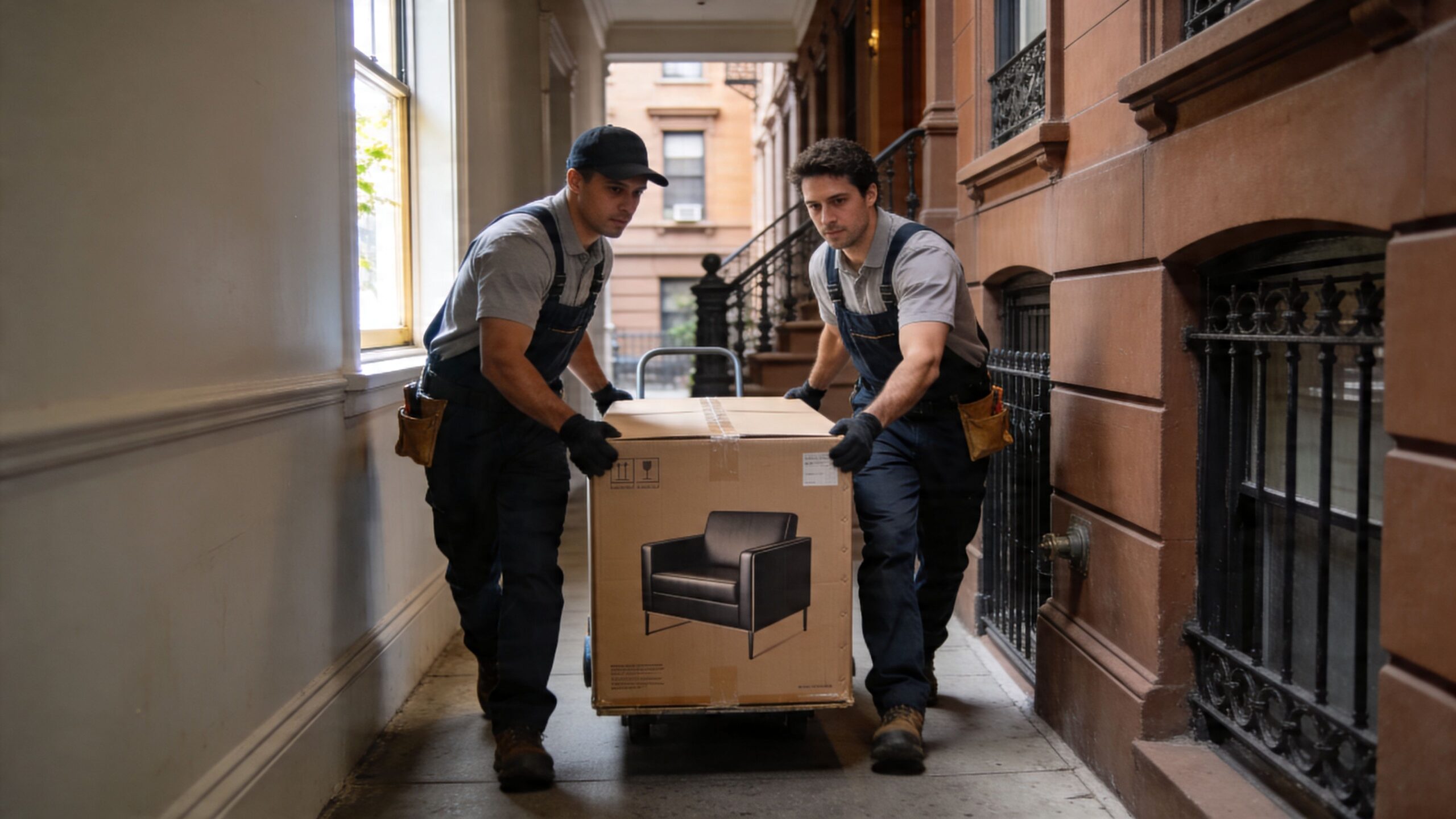
National delivery systems can move cartons efficiently. NYC delivery requires a different skill set. The crew has to read the building, not just the order — tight layouts, narrow doorways, and elevators are a routine part of the job for any experienced city delivery team, and the route from truck to room is often the whole job.
Walk-ups, elevators, and narrow stairs
A fifth-floor walk-up is its own category. The challenge isn’t only the weight. It’s the turning radius on landings, the stair rail clearance, and keeping the item controlled so it doesn’t scrape plaster, dent banisters, or twist under load.
In elevator buildings, the issue shifts. The crew has to confirm cab dimensions, door opening, padding rules, and whether the service elevator is available during the approved window. Many deliveries get delayed not because the truck is late, but because the building access wasn’t lined up properly.
Doorman and management coordination
Doorman buildings can be the easiest or the hardest deliveries in the city. If the timing and paperwork are set, they run cleanly. If not, a delivery can sit at the curb while the customer, doorman, and management office all try to sort out what should have been confirmed earlier.
The basics matter:
- Delivery window approval
- Service entrance instructions
- Elevator reservation
- COI requirements if the building asks for them
- Contact numbers for the resident and building staff
In Manhattan and Brooklyn, a well-prepped delivery often looks uneventful. That’s not luck. That’s coordination.
What experienced city crews do differently
The strongest local teams do the small things before they become big problems. They ask about access. They check whether the item is boxed or semi-assembled. They note if there’s a walk-up. They protect the route inside the apartment and move deliberately through tight turns.
That matters whether the order came from a showroom visit in the Upper West Side, Greenpoint, or Newark. The point isn’t the neighborhood. The point is whether the crew understands how real buildings behave once the truck stops.
What customers can do before delivery day
You can make the process smoother with a short pre-delivery check:
- Measure the path, not just the room. Doorways, hall turns, elevator openings, and stair width all matter.
- Tell the store about the building rules early. Don’t wait until the morning of delivery.
- Clear the final space. The crew can place faster and more accurately when rugs, chairs, and breakables aren’t in the way.
- Know who needs to be contacted. In some buildings that’s the doorman. In others it’s the super or management office.
The city punishes vague planning. Good delivery teams plan around that.
What to Expect From White Glove Service

White glove service should end with a usable piece of furniture in the right spot, not with boxes in your hallway and a wrench on your coffee table.
What the service includes
For customers shopping furniture stores that deliver and assemble, the practical checklist is straightforward. Futonland offers white-glove delivery and assembly, plus debris removal, with service details that are especially relevant for city apartments and convertible furniture.
Here’s what that looks like in practice:
Scheduling that accounts for the building
The appointment has to work for both the customer and the property. In NYC, that often means planning around elevator reservations, doorman windows, and co-op rules.In-home delivery, not lobby handoff
The team brings the item into the apartment or house, not just to the front door.Assembly in the intended room
Setup happens where the item will live. That matters for sleepers, futons, and wall beds that are difficult to reposition after assembly.Placement and adjustment
Once assembled, the piece is positioned in the room instead of being left loosely centered and unfinished.Packaging removal
Cardboard, plastic, foam, and wrap are taken away so the customer isn’t left managing debris.Optional removal services in NYC
Old mattress or furniture removal can be part of the plan when needed.
The part that matters most for sleepers
The true value isn’t just assembly. It’s the final operational check.
A proper white glove setup for a futon, sleeper, or murphy bed includes opening and closing the mechanism, checking that it tracks evenly, confirming hardware is seated, and making sure the finished piece works the way it’s supposed to. If a frame sticks, leans, or resists on day one, that should be caught before the crew leaves.
Good assembly ends with testing. If nobody opens the sleeper before leaving, the job isn’t finished.
What white glove prevents
Most delivery headaches fall into a few categories:
- Boxes left in small apartments
- Half-finished assembly
- Misaligned sleeper mechanisms
- Floor and wall scuffs during placement
- Customers discovering fit or function problems after the crew is gone
That’s why this service matters more in NYC than it might in a suburban setting with a garage, driveway, and extra floor space. In a city apartment, there’s usually no buffer zone. The delivery either lands cleanly or it takes over your home for the day.
Key Questions to Ask Before Finalizing Your Order
If you want to separate a reliable store from a vague one, ask direct questions and listen for direct answers. That’s not being difficult — it’s smart buying. Missed delivery windows and damaged furniture are common enough complaints across the industry that it’s worth confirming the specifics upfront rather than assuming the best case.
The questions worth asking
Is assembly included or charged separately?
“Delivery available” doesn’t answer the real question. You want to know whether the crew will actually build the piece.Will the team bring it into the room where it will be used?
Room-of-choice and white glove are not the same service.Do you remove all packaging?
In a small apartment, leftover debris becomes your problem immediately.Can you handle building requirements?
Ask about COIs, delivery windows, elevator reservations, and walk-up conditions.For convertible furniture, do you test the mechanism before leaving?
This question reveals whether the seller understands sleepers and wall beds or just sells them.What happens if the item arrives damaged or doesn’t fit?
You want the policy before the truck arrives, not during a hallway standoff.
Red flags that should make you pause
| Red flag | What it usually means |
|---|---|
| “Delivery means delivery, assembly is separate” | Extra charges may keep appearing |
| “We’ll see when the team gets there” | The store hasn’t planned for your building |
| “Someone should be able to figure it out on-site” | Nobody owns the assembly quality |
| “You’ll need to discard the packaging yourself” | The service is closer to drop-off than setup |
If you’re checking fit before ordering, Futonland’s sizing charts help verify furniture dimensions against room and access constraints before delivery day.
The goal of these questions
You’re trying to learn one thing. Is this store set up to finish the job, or only to start it?
That distinction matters most when the furniture is heavy, technical, or going into a difficult building. Clear answers usually mean the process is real. Fuzzy answers usually mean the customer will be doing cleanup, troubleshooting, or problem-solving after the truck leaves.
Enjoy Peace of Mind with a Perfect Delivery
The right furniture should improve your home on day one. It shouldn’t create a new project, a pile of debris, or a mechanical problem you discover the first time guests stay over.
That’s why experienced shoppers look for furniture stores that deliver and assemble, especially in New York. Delivery isn’t a side service. It’s the final stage of the purchase. If that stage goes well, the piece feels like it belongs immediately. If it goes badly, even a good product can feel like a mistake.
For futons, sofa beds, murphy beds, and other hard-working pieces, assembly quality matters as much as the item itself. In a city of walk-ups, narrow stairs, service elevators, and strict building windows, practical logistics matter too.
Choose the store that can answer the hard questions before delivery day. Then you can focus on the room, not the route it took to get there.
If you want help planning access, measuring a tight apartment, or choosing a sleeper that works in a real NYC layout, visit a local showroom in the Upper West Side, Greenpoint, or Newark, or reach out online for delivery and assembly guidance before you place the order.