

Beds on the Floor: 6 Setups That Actually Work
You strip the bed frame out of a small bedroom on Saturday morning, set the mattress lower, and the room immediately feels lighter. That part is real. The mistake is assuming any mattress on any floor will work long term.
A floor bed needs more than a good photo. It needs a setup that matches the mattress, the room, and the way you sleep. Airflow matters. Cleaning access matters. In humid rooms or apartments with cold floors, the gap between a smart floor bed and a mold problem is usually the base.
That’s why “bed on the floor” is never really one idea. A shikibuton on tatami, a low platform, a Montessori-style kids’ setup, and a styled mattress in a bohemian room all solve different problems and come with different trade-offs. Some save space better. Some look better. Some are easier to maintain.
The best versions look deliberate and stay comfortable because the support underneath is doing its job. If you want a true floor-sleeping setup, start with materials made for it, such as traditional shiki futon mattresses, tatami, or a low slatted base instead of dropping a standard mattress straight onto hardwood.
Good floor beds are built, not improvised.
The ideas below focus on what works in real homes, including airflow, comfort, maintenance, and how to make the room look finished instead of temporary.
1. The Authentic Japanese Floor Bed: Shikibuton on Tatami
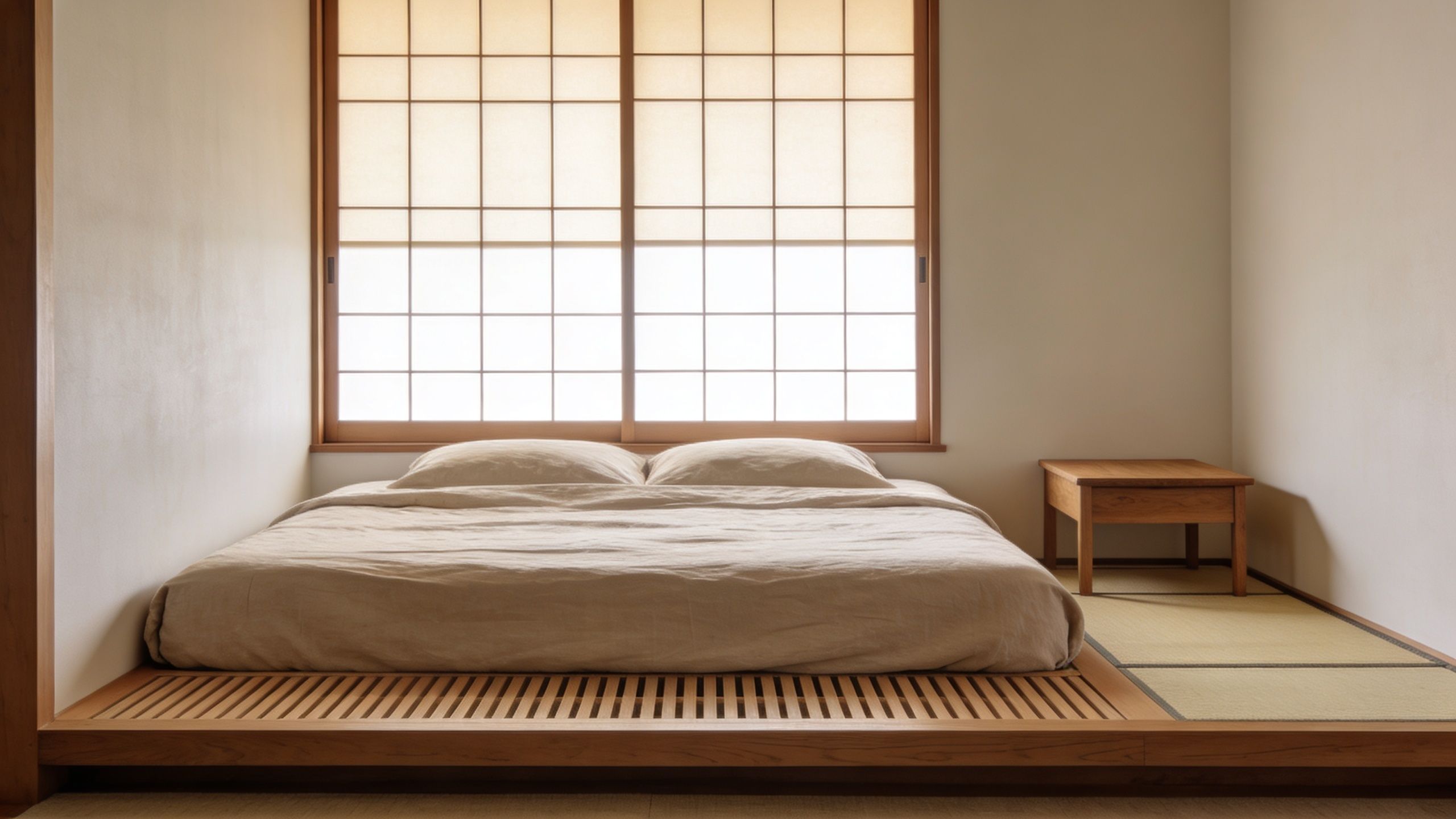
You clear the room, roll out tatami, set down a shikibuton, and the space starts working differently right away. It sleeps like a bedroom at night and feels open again once the bedding is folded and put away.
That daily reset is the primary advantage of this setup. A shikibuton on tatami is not just a mattress placed low. It is a floor-sleeping system designed to be lifted, aired out, and used in rooms where every square foot matters. If the goal is an intentional floor bed rather than a temporary-looking mattress on hardwood, this is the version that has the clearest logic behind it.
Why this setup works
Tatami changes the feel and function of floor sleeping. It adds a slight cushion under the futon, but its main advantage is creating a breathable layer between the sleep surface and the floor below. That matters in real homes, especially where subfloors run cool or the room holds humidity.
The shikibuton matters just as much. A standard mattress is usually too thick, too heavy, and too enclosed for this style of use. A proper shiki futon mattress is made to be folded, moved, and aired out regularly, which makes long-term maintenance more realistic.
This setup is worth prioritizing for adults who already sleep well on firmer surfaces and want a room that stays flexible.
Where it fits best
This style works well in smaller apartments, guest rooms, and multipurpose spaces where a full-height bed frame would dominate the room. It also suits interiors built around natural materials, low furniture, and visual restraint. If the room leans toward stronger decorative elements like bold patterns or artisanal tile work, tatami and a neutral futon can still work, but the bedding should look intentional and pared back so the room does not feel crowded at floor level.
It is also one of the few floor-bed ideas that feels authentic rather than improvised. The materials were developed for this use, and that shows in day-to-day handling.
Trade-offs to consider
This setup asks for routine. The bedding needs to be folded or lifted often enough to air out, and the tatami area needs regular vacuuming because dust is more visible at floor level.
Comfort is also specific. People who are used to thick pillow-top mattresses often find a shikibuton too firm at first. Some adjust well. Others never do. If you want the look of a low bed but not the discipline of storing and airing bedding, a low platform or slatted base usually makes more sense.
A final practical point. This is a good solution for direct floor sleeping only when the room is dry enough and the materials are chosen for that use. Done properly, it looks calm, deliberate, and easy to live with. Done casually, it becomes another mattress-on-the-floor mistake.
2. The Modern Minimalist: Low-Profile Platform Bed
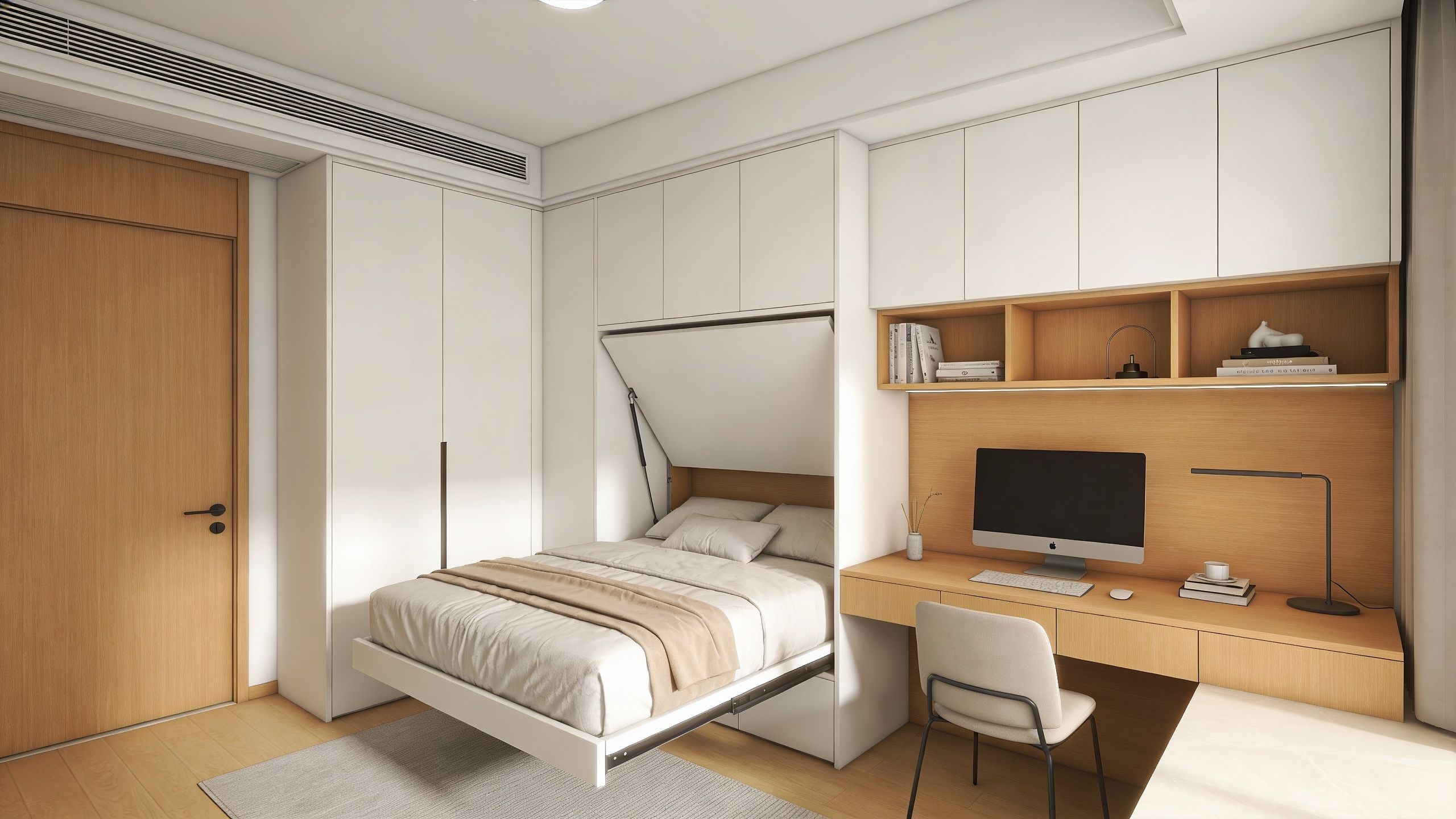
If you like the floor-bed look but want less maintenance, this is usually the smartest option. A low-profile platform keeps the visual calm of a floor bed while solving the biggest practical issue, which is airflow.
This is often the setup worth recommending most for adults who want something long-term. You still get the grounded silhouette, but you’re not pressing the mattress against a solid floor surface day after day.
Why it’s the easiest upgrade
Platform beds built for low height remove the bulk that makes small bedrooms feel top-heavy. Low-profile designs are increasingly popular in multifunctional living spaces because they eliminate the need for a box spring and keep the bed lower by several inches compared to a traditional frame. In practice, that lower stance matters visually as much as physically.
A good low-profile frame also helps the room look intentional. Instead of “mattress on floor because I just moved in,” you get “deliberate low bed with clean lines.”
What to look for in the frame
Use a frame with a platform or slatted deck that supports the mattress evenly and lets air move underneath. That small gap is what separates good low sleeping from mold-prone low sleeping.
For that look, low-profile beds are the right category to shop because they’re designed around the silhouette rather than forcing a standard-height bed lower than it was meant to sit.
- Slatted support: better for airflow than a solid panel.
- Low side rails: they keep the profile clean and make the mattress feel integrated into the frame.
- Simple wood or upholstered finishes: these read as intentional, not makeshift.
A low bed should still behave like real furniture. If the frame solves support and ventilation, the aesthetic usually takes care of itself.
Who should skip it
People with significant mobility issues sometimes assume “lower is easier.” Often, it’s the opposite. The lower the sleep surface, the more effort it can take to stand up from it. That’s one reason older shoppers or anyone with joint trouble are usually better served by low beds with some elevation, not direct floor setups.
This option also isn’t ideal if you want to roll up and store your sleeping area every morning. A platform bed is still a permanent footprint, even if it’s visually lighter than a conventional frame.
3. The Child-Centered Space: Montessori Floor Bed
For children, floor sleeping has a different logic. It’s less about design trends and more about access, independence, and a room that works at the child’s scale.
The appeal is straightforward. A child can get in and out without climbing, and the room feels less divided between “sleep zone” and “play zone.” That’s why this style keeps showing up in Montessori-inspired homes and nursery transitions.
What makes it work
The mattress height is only one part of the setup. The room itself has to be treated as part of the sleep environment. Once a child can leave the mattress independently, every reachable object matters.
That changes the design decisions. Heavy furniture needs secure anchoring. Loose cords, unstable lamps, and sharp-edged side tables stop being minor decor issues and become immediate problems. In other words, the bed is simple, but the room has to be more disciplined.
Good uses for this approach
- Early transitions out of a crib: some children settle better when the sleep surface feels open rather than enclosed.
- Shared parent-child routines: it’s easier to sit or lie next to the child for bedtime without leaning over rails.
- Rooms built around floor play: the bed feels like part of the environment, not a separate piece of equipment.
What works best visually is restraint. Keep the mattress low, use washable bedding, and avoid crowding the perimeter with bins, toys, and decor. The more open floor area around the bed, the calmer the room feels.
Keep the floor bed low, but don’t let the room get visually loose. A child’s room still needs boundaries, even when the furniture is minimal.
Trade-offs parents should think through
This setup gives the child freedom, which means it also gives the child access. Some families love that immediately. Others discover their child is more interested in exploring than sleeping.
There’s also a practical issue many floor-bed photo galleries ignore. A mattress directly on the floor is still vulnerable to trapped humidity if it isn’t lifted and aired. For children’s rooms, a breathable low base is generally the better choice over direct floor contact, since parents already have enough maintenance routines without adding hidden moisture problems.
For families who want the look but less risk, a very low framed floor bed or a thin breathable base usually lands in the sweet spot. It preserves the child-scale feel without turning the mattress underside into a blind spot.
4. The Bohemian Look: A Styled Mattress on the Floor
You see this setup often in photos. A mattress on the floor, washed linen bedding, a rug, a lamp, maybe a hanging textile. It looks relaxed because the room has been styled carefully.
In a real home, this look works only if the bed feels intentional from every angle. If the mattress looks slumped, the bedding puddles on the floor, or the wall behind it has no visual weight, the room reads as unfinished. That is the trade-off with this approach. The bed has no frame to do the design work for you.
How to make it look intentional
Start with scale. A floor-level bed needs something substantial around it so it does not disappear into the room. A wide headboard substitute, such as a large textile, a painted wall panel, a low book ledge, or oversized sconces, gives the mattress a clear place in the layout.
Keep the bedding edited. One quilt or duvet with some texture, standard sleeping pillows, and perhaps one accent cushion is usually enough. Too many layers make a floor bed look messy faster than a raised bed because everything is already sitting close to the ground.
Rugs need the same discipline. They should frame the bed, not swallow it, and fiber choice matters for wear and cleaning this close to the floor.
What helps this setup feel good to sleep on
The mattress has to earn its place. A bargain mattress with weak edge support or soft foam often looks tired quickly on the floor because there is nothing hiding its shape. A firmer, cleaner-lined mattress holds the look better.
Temperature is another real consideration. Floor sleeping can feel cooler, which some hot sleepers like. On cold surfaces, though, that same low placement can feel drafty and less comfortable across the season. This is usually where the romantic idea of a bohemian floor bed meets the practical reality.
If you want the bohemian look without putting the mattress flat on the floor, a very low base often solves the problem neatly. Options like tatami bed frames and low tatami-style foundations keep the profile close to the ground while making the bed look finished.
When this idea works best
This approach suits rooms with natural texture, warm light, and a little visual softness already built in. Plaster walls, wood tones, woven materials, and relaxed bedding all support the look.
It struggles in sharper interiors. If the rest of the room is polished and architectural, a bare mattress on the floor usually feels out of place. In those spaces, even a thin base or platform gives the room the structure it needs.
5. The Practical Middle Ground: A Slatted or Tatami Base
A floor bed often goes wrong in the same predictable way. The mattress looks good for a week, then the underside starts holding moisture because it has been placed directly on a hard surface with no air gap. A slatted base or tatami layer fixes that problem without giving up the low, grounded look that drew you to the idea in the first place.
For adults who want a floor bed that can stay in place long term, this is usually the smartest setup. It keeps the profile low, makes the bed look intentional, and gives the mattress a structure that behaves better over time.
Why the base matters more than people think
The issue is simple. People release moisture during sleep, and a mattress needs a path for that moisture to dissipate. Put the mattress flat on the floor and you remove that path.
A base creates separation. That small gap does a lot of work.
Tatami is the traditional solution and still one of the cleanest-looking ones. Slatted roll-up bases are easier for many homes because they are lighter, simpler to move, and work with more mattress types. Coir underlays can help under thinner sleep surfaces, but they are usually a support layer, not a substitute for a proper base if you want a permanent setup.
For shoppers who want Japanese-inspired simplicity without using a fully traditional shikibuton arrangement, tatami beds and low tatami-style foundations are a practical middle ground.
Good foundation choices
- Tatami panels: good for natural texture, firmer support, and a more finished floor-bed look.
- Low slatted bases: good for airflow, easy setup, and minimal visual bulk.
- Breathable underlayers: good as supplemental protection under thinner mattresses or futons, not as the whole foundation in most permanent setups.
Expert advice: On a floor bed, ventilation is part of the construction, not an accessory.
Who benefits most
This setup suits adults who want a stable bedroom arrangement without the height and visual weight of a standard bed frame. It also works well in guest rooms where a conventional bed can dominate the room, but a mattress placed directly on the floor can read as temporary.
It is also a better choice for sleepers who want low-to-the-ground living without making the floor itself part of the comfort system. The base handles airflow. The mattress handles pressure relief and spinal support. That separation matters, especially for anyone who already knows they sleep better on a medium-firm mattress rather than the extra-hard feel of a bare floor.
In practice, this is often the version worth recommending most when someone likes the floor-bed look but wants fewer compromises. It solves the main technical weakness of floor sleeping while keeping the room calm, low, and deliberate.
6. The Double-Duty Solution: Low-Profile Futon Sofa Bed
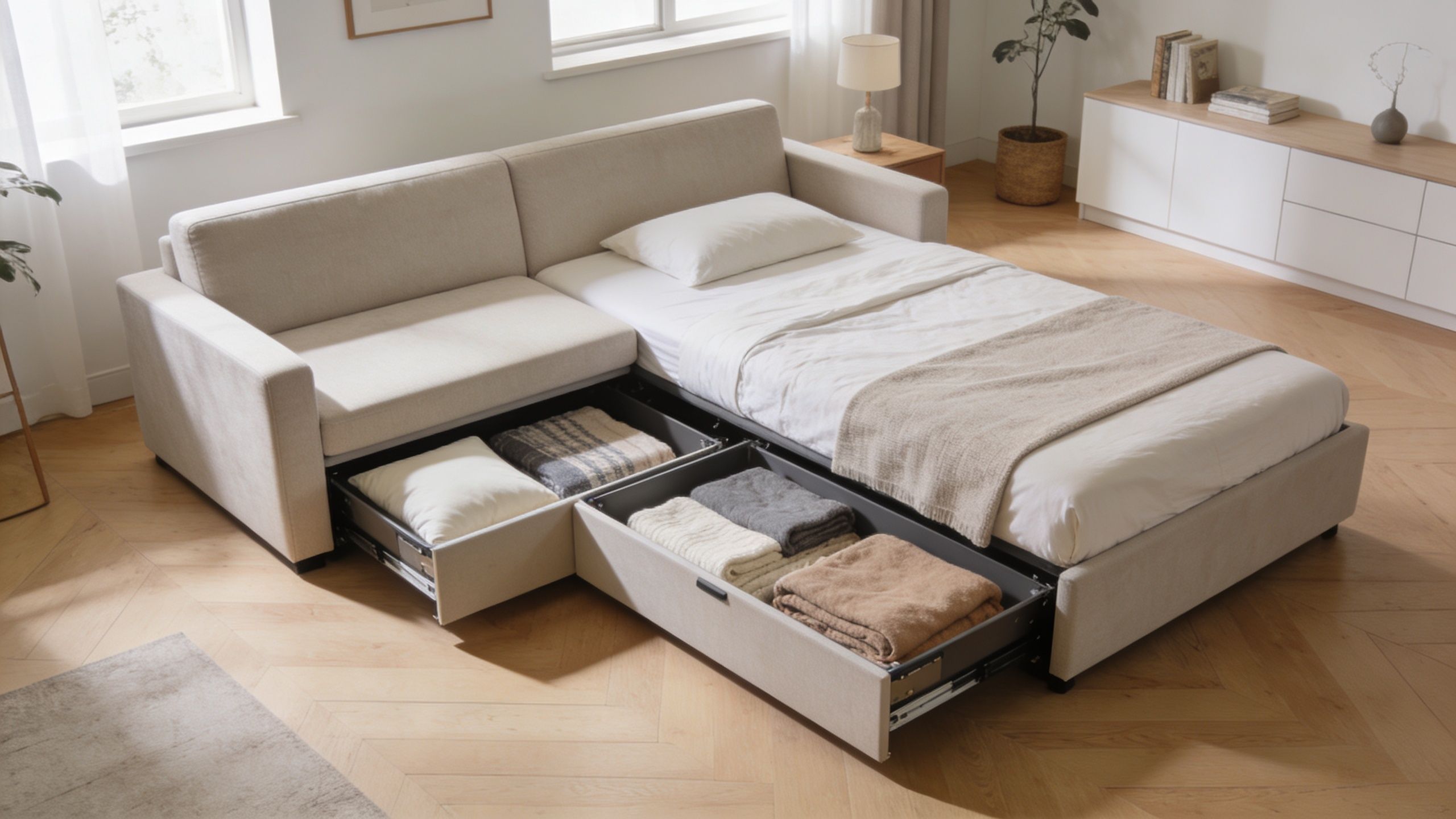
A room that works as your lounge by day and sleeping space at night needs furniture that earns its footprint. A low-profile futon sofa bed does that better than a mattress left on the floor, because it gives you a real seat, a proper sleep surface, and a setup that still reads intentional.
This option belongs in a floor-bed guide for one reason. It keeps the low visual line people want, but it avoids the unfinished look and daily inconvenience that come with treating a standard mattress like convertible furniture.
The difference is in the construction. Better futon sofa beds use frames designed for repeated opening and closing, with support systems that keep the mattress flatter and more stable over time. That matters in studio apartments, guest rooms, and home offices where the bed is not just for occasional overflow.
For that use case, convertible sofa beds make more sense than forcing a permanent bed into a room that needs open floor area during the day.
What makes this setup work
Start with the room’s main job. If it is primarily a living room, seat depth, back angle, and upright support matter as much as sleep comfort. If it is a guest room or office first, prioritize a sleeping surface that opens flat and stays supportive across the center.
Keep the profile low, but do not chase the lowest possible piece at the expense of comfort. Some very low convertibles look clean in photos and feel cramped in daily use, especially for taller adults or older guests who need a little height to sit down and stand up comfortably.
The frame should feel planted. The mechanism should open without twisting. The mattress should recover its shape after use instead of developing permanent body channels.
Buying guidelines
- Choose a model built for frequent conversion: occasional guest use and nightly use are different workloads.
- Check how the mattress is supported: slats, decks, or well-designed hinge systems usually hold shape better than thin suspended sections.
- Watch bulky arms and tall backs: they eat floor space and make a small room feel heavier.
- Measure open clearance carefully: account for walking space, side tables, and wall obstacles before you buy.
- Read the bed dimensions, not just the sofa dimensions: many shoppers approve the closed size and overlook the actual sleeping area.
A good futon sofa bed should function like a real sofa when closed and a dependable bed when open.
Best use cases
This is a practical choice for studio apartments, offices that need overnight flexibility, and family homes that want an extra bed without dedicating a full room to it. It also suits renters who move often and need one piece that can adapt to a changing layout.
There is a trade-off. You will not get the stripped-down simplicity of a shikibuton on tatami, and you will not get the fixed stability of a dedicated low platform bed. You do get a cleaner answer for mixed-use rooms, which is often the more durable decision in real homes.
6-Way Comparison of Floor Bed Ideas
| Item | Implementation complexity | Resource requirements | Expected outcomes | Ideal use cases | Key advantages |
|---|---|---|---|---|---|
| 1. Authentic Japanese Floor Bed: Shikibuton on Tatami | Medium, needs tatami placement and daily folding/airing routine | Tatami mats, shikibuton, duvet/pillow, closet/storage for daily stow | Firm, breathable sleep surface; space freed daily; improved ventilation if aired | Small/multi-use rooms, minimalist lifestyles, back-support seekers | Space-saving, natural materials, promotes tidiness and temperature regulation |
| 2. Modern Minimalist: Low-Profile Platform Bed | Low–Medium, assemble a low frame and pair with platform-ready mattress | Low-profile slatted or solid platform frame, mattress (6–10″), minimalist furnishings | Clean modern silhouette, better airflow than floor, easier entry/exit | Permanent bedrooms seeking a gallery-like aesthetic and low height | Good ventilation, contemporary look, stable permanent foundation |
| 3. Child-Centered Space: Montessori Floor Bed | Low–Medium, place mattress low and fully child-proof room | Firm non-toxic mattress, breathable underlay (coir/tatami), optional low frame | Safer, independent sleeping, seamless play-to-rest transition | Toddlers transitioning from cribs, Montessori-aligned families | Enhances safety and autonomy, cost-effective, child-scaled environment |
| 4. Bohemian Look: Styled Mattress on the Floor | Low, styling focus plus protective breathable base and regular maintenance | Thick mattress (8–10″+), breathable underlay/slatted base, rugs, pillows, throws | Cozy, relaxed lounge-like bed; highly movable but needs moisture control | Renters, casual/bohemian interiors, temporary or flexible sleeping areas | Budget-friendly, highly customizable styling, very flexible placement |
| 5. Practical Middle Ground: Slatted or Tatami Base | Low, lay out slatted base or tatami mats and place mattress on top | Roll-out slatted base or tatami platform mats, mattress, rug for floor protection | Low-profile look with improved airflow and support; simple setup | Those wanting floor aesthetic with mold prevention; renters/short-term setups | Solves ventilation issues, inexpensive, maintains minimalist low profile |
| 6. Double-Duty Solution: Low-Profile Futon Sofa Bed | Medium, select and install a quality convertible with reliable mechanism | Convertible futon sofa, foldable mattress, decorative pillows | Dual-use seating and sleeping; keeps mattress off floor; space-efficient | Micro-apartments, multipurpose living rooms, frequent guests | Functions as both sofa and bed, stylish daytime appearance, good airflow under frame |
Ready to Go Low? Your Final Considerations
A floor bed works best when it’s treated as a system, not a look. The mattress, the base, the floor surface, and the room all affect whether the setup feels calm and comfortable or damp and awkward. That’s why the first decision isn’t aesthetic. It’s whether you want direct floor sleeping, a breathable base, or a true low-profile frame.
The biggest mistake is putting a standard mattress straight onto a solid floor and leaving it there. That’s the version that creates moisture problems, stale airflow, and a setup that feels accidental. If you want floor-level sleeping, build in ventilation from the start with tatami, slats, or a platform that lifts the mattress slightly.
The second decision is honesty about how you sleep. Some people love firm surfaces and low visual weight. Some don’t. Side sleepers often need more pressure relief than a very firm floor arrangement provides, and anyone with mobility concerns should think carefully before choosing the lowest possible setup. Getting down is one thing. Getting up every day is another.
Design matters too. The best beds on the floor ideas don’t look unfinished. They use scale well, keep the bedding neat, and give the bed a visual anchor through lighting, wall treatment, or a clear furniture plan. A floor bed should feel grounded, not temporary.
If you want the most traditional route, a shikibuton on tatami gives you a flexible, Japanese-inspired room. If you want less maintenance, a low-profile platform is usually the better everyday choice. If you want the safest compromise, use a slatted or tatami base under the mattress. And if your room needs to serve multiple purposes, a low convertible sofa bed often makes the strongest practical case.
Futonland carries several of these categories, including tatami beds, low-profile beds, shiki futons, and convertible sofa beds, so it’s one place to compare approaches based on space, firmness, and daily use. The right low bed isn’t the one that looks best in a photo. It’s the one you can live with comfortably, keep dry, and make part of the room on purpose.