Pet-Friendly Furniture Fabrics: What Actually Holds Up
A new puppy hits an apartment like a weather system. First it’s the excitement. Then it’s the wet paws, the zoomies, the nap spots, the shedding, and the moment you realize your sofa bed isn’t just seating anymore. It’s a dog bed, a lookout tower, a chew-risk, and sometimes your guest bed too.
Cats do their own version of this. They test corners with claws, claim the warmest cushion, and somehow leave fur on colors you thought were safe. In a small apartment, one hard-working piece of furniture takes most of the abuse. That’s usually the futon or convertible sofa bed.
That’s where generic advice breaks down. A standard sofa only has to survive sitting. A convertible has to survive sitting, lounging, sleeping, and regular opening and closing. Add a pet, and fabric choice stops being a style question. It becomes a durability question, a cleaning question, and a sanity question.
Living with Pets in the City: Your Furniture Challenge
A lot of city pet owners start with the same goal. They want one attractive piece that fits the room, works for guests, and doesn’t look like they gave up the minute they brought home a dog or cat. Then real life starts.
The dog jumps up after a rainy walk. The cat picks one arm as a scratching post. Fur collects along seams. A friend stays over, so the sofa opens into a bed, and suddenly the upholstery is taking body oils, pet hair, and friction on a much larger surface area than a regular couch ever would.
In a bigger home, you can spread that wear around. In a studio or one-bedroom, you usually can’t. The futon in the living room might be your sofa every day and your bed at night, or it’s the guest bed, the movie seat, the pet nap zone, and the work-from-home crash pad. One piece does everything, so every weakness shows up faster.
What city pet owners run into first
- Loose texture gets punished fast. Claws catch, loops pull, and a fabric that looked rich in the showroom starts looking tired.
- Hair becomes part of the upholstery. Some fabrics let you brush it off in seconds. Others hold onto it like Velcro.
- Smells linger in the wrong material. The visible mess may wipe away, but the cushion can still tell the story later.
- Convertible use exposes weak seams. A piece that looks fine as a sofa can wear differently once it’s opened and closed regularly.
Pets don’t ruin furniture by existing. They reveal weak materials faster than a quiet household does.
That’s why pet friendly furniture fabrics matter so much in city apartments. The right one won’t make your furniture indestructible. Nothing does. But it can buy you easier cleanup, better resistance to daily abuse, and a piece you still like looking at after the honeymoon phase with your new pet is over.
What Actually Makes a Fabric Pet Friendly
“Pet friendly” gets used loosely. Some brands mean stain resistance. Others mean scratch resistance. Others just mean the color hides fur. If you’re shopping for upholstery, it helps to think the way you’d think about a winter coat. You don’t buy it because the tag says “outdoor.” You look at the shell, the lining, the weather resistance, and how it handles real use.
Upholstery works the same way. For pet friendly furniture fabrics, three things matter most: weave density, abrasion resistance, and how the fabric handles moisture and mess.
Start with the weave
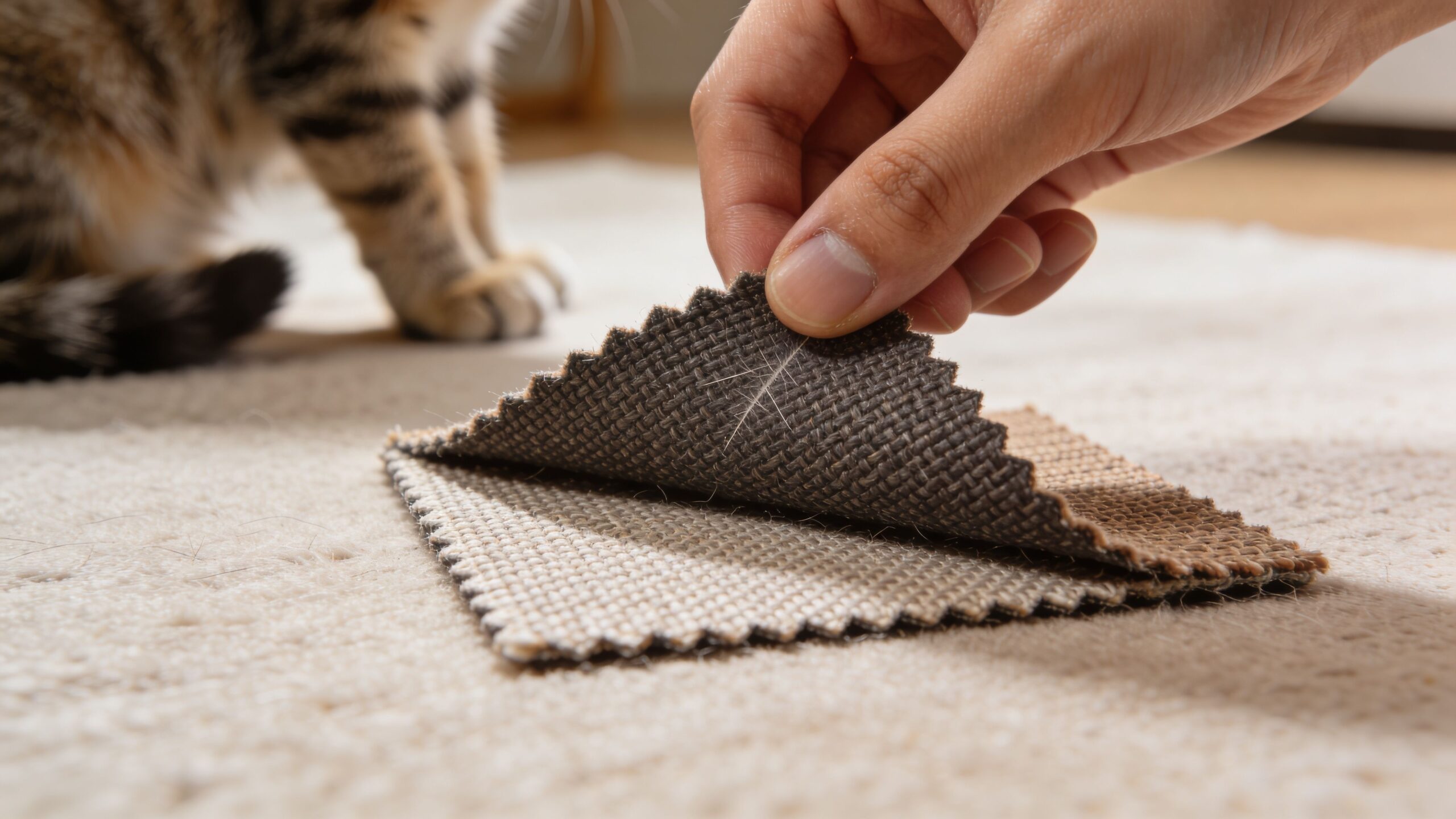
The first thing worth checking on a swatch is whether the surface feels open or tight. A tighter weave leaves fewer opportunities for claws to hook individual yarns.
Tight weaves tend to shrug off everyday pet contact better than loose, airy, highly textured fabrics. When a claw lands on a dense surface, the force spreads across more threads. That’s better than a loose fabric where one thread takes the hit and starts a snag. When comparing specific fabrics, ask the retailer for the actual weave density and abrasion rating rather than relying on marketing terms like “pet-friendly” alone — those specs vary enough between products that a general rule of thumb won’t tell you which one is actually more durable.
Then check abrasion resistance
If weave tells you how a fabric handles claws, double rubs (the standard abrasion test for upholstery) tell you how it handles repeated use. Pets don’t just touch upholstery once. They circle, scratch lightly before lying down, jump up and down, and grind dirt into the seating surface.
Look at abrasion numbers the way you’d look at treadwear on tires — the exact number doesn’t tell the full story, but it does tell you whether the fabric was built for easy living or occasional use. Higher double-rub ratings generally give you more margin for dogs that sprawl in one spot and cats that revisit the same corner repeatedly, but a high rating alone isn’t enough if the weave is loose or the coating is weak.
Practical rule: If a swatch looks delicate, fuzzy, or heavily nubby, it usually tells the truth about how it will age with pets.
Coating versus fiber construction
Not all stain resistance works the same way. Some fabrics rely mostly on a surface treatment. Others build performance into the fabric itself. That matters because pet life isn’t just one spill. It’s repeated cleanup, body oils, damp paws, and the occasional accident.
A good swatch should answer these questions:
- Does moisture sit on top long enough to blot it?
- Can fur be lifted without a fight?
- Will the surface pill or rough up after repeated friction?
- Does the texture invite snagging?
The same testing logic applies to pillows, throws, and other soft surfaces pets claim quickly, not just the main upholstery.
What the spec sheet won’t tell you by itself
A spec sheet won’t tell you how your own pet behaves. A calm older dog and a young cat are completely different upholstery tests. One mostly sheds and drools. The other tests every edge with claws.
That’s why swatches matter. Rub them against your sleeve. Press your fingernail into the surface. Brush hair across them if you can. If the fabric already looks grabby, fuzzy, or fragile in your hand, it won’t improve once it’s in your apartment.
Comparing Common Upholstery Fabrics for Pets
The search for a sofa bed often quickly focuses on three primary material categories: microfiber, faux leather, and genuine leather. Each can work. Each also has a failure point that matters more once a pet uses the furniture every day.
No upholstery wins every category. The right choice depends on whether your main battle is claws, fur, wipe-down cleaning, budget, or long-term aging.
Microfiber in real life
Microfiber gets recommended for pets for one good reason. It has a generally tight surface and it’s often easier to spot clean than many decorative woven fabrics. For a dog that tracks in a little dirt or a household that deals with everyday smudges, microfiber can be forgiving.
Its downside is just as real. Microfiber can trap hair, especially if the surface has more nap. It can also start to pill or roughen if a cat repeatedly scratches the same area. Once that top texture gets disturbed, the sofa starts looking worn even if the structure is still fine.
Microfiber tends to work better for dog owners than cat owners, especially if the cat is persistent about scratching upholstery.
Faux leather and its trade-off
Faux leather appeals to a lot of apartment shoppers because cleanup is simple. Fur doesn’t bury itself in the surface the way it does in woven fabric. Muddy paw marks and everyday grime usually wipe off quickly.
But faux leather isn’t a miracle material. It handles light scratching and routine pet contact reasonably well, yet a sharp claw can still puncture it. And over time, lower-quality faux leather can peel, especially on high-friction zones where people and pets sit, slide, and shift constantly.
For a dog owner who wants easy wipe-down care and doesn’t have a heavy clawing problem, faux leather can still make sense. For a cat owner with active scratching behavior, it’s riskier than it looks.
Genuine leather ages differently
Genuine leather usually gives the best long-term wear of the three if the household can handle the upfront cost. It doesn’t trap fur like woven fabrics. It wipes clean well. Minor marks often blend into the surface over time instead of announcing themselves.
That doesn’t mean leather is scratch-proof. It isn’t. A determined cat can mark it, and dogs can leave nail traces. The difference is in how it ages. Better leather tends to develop a patina rather than flaking apart. In many homes, that means the wear looks lived-in instead of damaged.
If you like a softer, broken-in look and want something that can mature with use, leather is often the most forgiving visually.
Tight-weave fabric as the practical middle ground
For many pet owners, the smart middle path is a tight-weave upholstery fabric that doesn’t have long loops, chunky texture, or an open basket pattern. These fabrics often hide everyday life better than shiny faux leather and avoid some of microfiber’s hair-grabbing tendencies, depending on the exact finish.
That’s especially relevant if you’re shopping among fabric sofa sets and need something that feels softer and more residential than leather but tougher than decorative upholstery.
Pet-Friendly Fabric Comparison
| Fabric Type | Scratch Resistance | Stain/Odor Resistance | Ease of Cleaning/Hair Removal | Overall Durability | Best For |
|---|---|---|---|---|---|
| Microfiber | Fair to good against light wear, weaker against repeated cat scratching | Good for everyday spot cleaning, but depends on finish | Mixed, can trap pet hair and show pilling over time | Solid for general use, less ideal for scratch-heavy homes | Dog owners, casual use, softer fabric feel |
| Faux Leather | Good against light claw contact, but punctures can happen | Good for wipe-down cleanup on the surface | Very easy to wipe, hair doesn’t embed much | Moderate, with peeling risk over time | Budget-minded homes, dogs, easy-clean priorities |
| Genuine Leather | Good overall, though claws can still mark it | Strong for surface cleanup and odor control if maintained | Easy to wipe, hair usually lifts quickly | High, ages with patina rather than surface breakdown | Long-term buyers, mixed pet households, mature look |
| Tight-weave fabric | Better than loose weaves because claws catch less easily | Varies by finish and treatment | Usually easier than textured weaves, but not as wipeable as leather | Strong if the weave is dense and the fabric is well made | People who want fabric comfort with better pet resistance |
If your pet scratches furniture as a habit, texture matters as much as material. A rough, looped, or open weave usually loses that fight first.
The wrong choice isn’t always the cheapest one. Sometimes it’s the fabric that looks rich under showroom lighting but starts collecting fur, snags, and worn spots the minute real life begins.
The Ultimate Upgrade: High Performance Pet Fabrics
If standard upholstery asks you to choose between softness, cleanup, and durability, performance fabrics are the category built to reduce that compromise. For pet owners, that matters most when the problem isn’t just fur. It’s repeated mess, lingering odor risk, and heavy daily use.
Two names come up often for a reason. Crypton and Sunbrella were built around performance, not just appearance.
Why Crypton gets attention
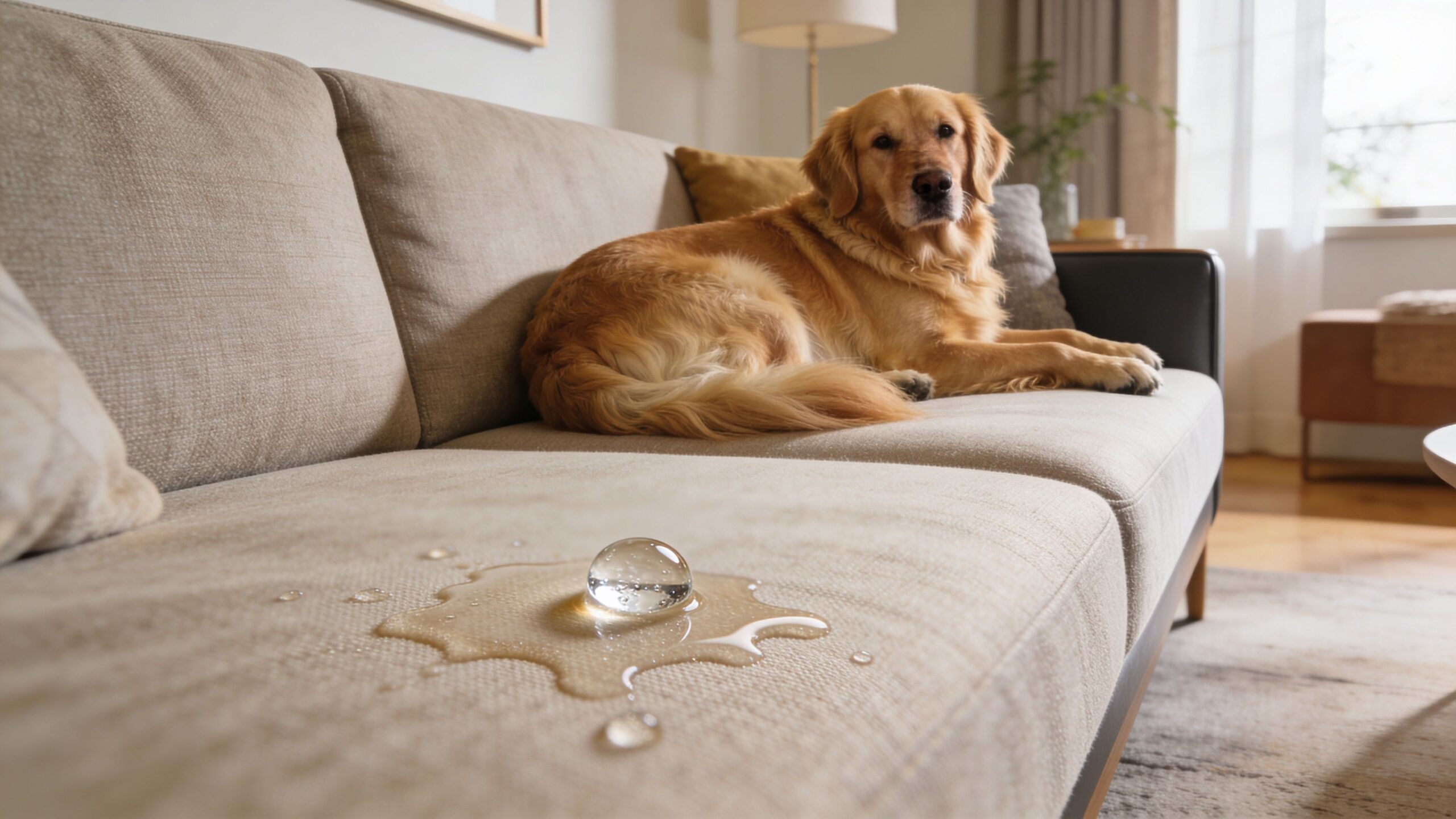
Crypton stands out because its performance story is specific, not vague. It’s engineered to be stain-proof, odor-resistant, and moisture-proof, with spills beading on the surface rather than soaking in, and it’s independently known for holding up to significantly more abrasion cycles than typical residential upholstery.
That matters for pet owners because the hardest messes aren’t always the visible ones. A major headache is when moisture gets through the upholstery and into the cushion. Once that happens, odor becomes harder to remove and the cleanup gets much less simple.
With Crypton, the appeal is straightforward. It gives you more time to react and a better chance of preventing that deeper soak.
Why Sunbrella solves a different problem
Sunbrella has a slightly different reputation. It’s known for solution-dyed acrylic fibers, easy cleaning with soap and water, and strong resistance to fading. That’s useful in bright apartments, sunrooms, and living spaces where furniture sits near windows and takes daily light exposure.
It also tends to work well in homes where pet hair and dirt need to come off without a big production. For cat owners especially, that low-drama cleanup can matter just as much as stain resistance.
What you’re paying for
Performance fabrics usually cost more than standard upholstery, and the upgrade isn’t necessary for every pet household. But they earn their price in a few specific situations:
- Accident risk is still part of life. Puppies, senior pets, and rescues in transition make moisture resistance far more valuable.
- The furniture takes heavy daily use. If the piece is the center of the apartment, you want more margin.
- You don’t want odor becoming the hidden problem. Surface cleanup isn’t enough if moisture gets underneath.
- Your apartment gets strong daylight. Fade resistance matters more than people expect.
A performance fabric isn’t about babying furniture less. It’s about recovering from normal pet life faster and with less damage left behind.
A common mistake is assuming every “easy clean” fabric belongs in the same class. It doesn’t. Some are easier to wipe. Others are engineered to stop the mess before it gets into the part of the furniture you can’t easily clean.
The Convertible Sofa Challenge: Why Futons Need Special Attention
A static sofa and a convertible sofa bed don’t live the same life. That’s where a lot of pet owners get caught. They read a list of pet friendly furniture fabrics, pick something that sounds durable, and assume that’s enough.
It often isn’t.
A convertible piece puts fabric under different stress. The upholstery has to handle people sitting upright, stretching out, sleeping overnight, and the motion of opening and closing the mechanism. Pets add another layer because they use every version of the furniture. Dogs jump onto it when it’s a sofa, then sprawl across it when it opens flat. Cats test seams, corners, and edges no matter what position it’s in.
The weak point most guides ignore
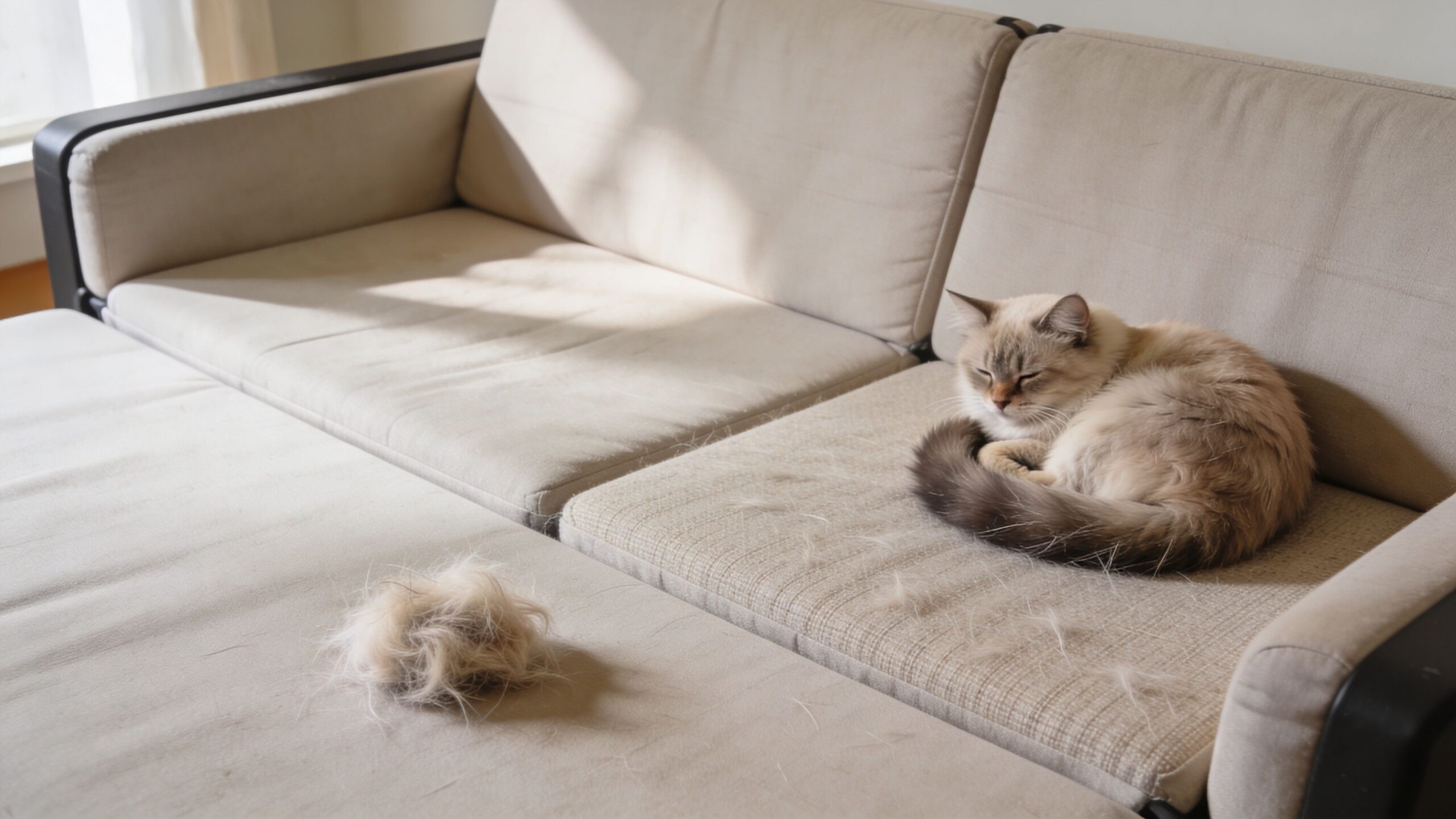
Most pet upholstery advice focuses on regular sofas and doesn’t address convertible furniture at all — a real gap, since repeated folding and unfolding can lead to premature wear and seam splits on fabrics that aren’t suited for high-flex use.
That’s the issue in plain language. A material that behaves well on a stationary couch may wear very differently once it bends often, rubs against a frame, or stretches across changing angles.
What pets do to convertibles specifically
- Seat-to-bed traffic means more body contact across a wider area.
- Seams work harder because they flex instead of staying in one position.
- Edges get targeted by pets jumping up or circling before lying down.
- Hair spreads farther because pets don’t stay on one cushion. They use the entire opened surface.
A fabric that’s merely “fine” on a sofa can become frustrating on a futon or sleeper.
What to prioritize on a futon or sofa bed
For a convertible, prioritize these in order:
- Tight, snag-resistant surface. Loose and decorative weaves are the first to show stress.
- Flex tolerance. The upholstery has to bend without looking strained quickly.
- Cleanability across the full surface. Pets use both seat and sleep positions, so the whole piece needs easy maintenance.
- Replaceability. Convertible furniture works hard. Being able to refresh the cover matters.
If you’re browsing fabric convertible sofa beds, think beyond the showroom look. Ask where the fabric folds, where the seams land, and which panel gets the most repeated friction once the piece is opened into bed mode.
On convertibles, upholstery doesn’t just need to resist the pet. It also needs to survive the mechanics of the furniture itself.
That one detail changes the buying decision more than generally expected.
Protecting Your Investment: Cleaning and Accessories
Even strong upholstery needs help. Good fabric buys you time. Good habits buy you lifespan.
Most pet damage doesn’t come from one dramatic event. It comes from repetition. Dirt left in the fabric, fur grinding into the surface, moisture that sits too long, and scratches that keep hitting the same exposed spot. If you stay ahead of that cycle, the furniture lasts longer and looks better doing it.
Clean according to the material, not your mood
The fastest way to age upholstery is to clean everything the same way.
Microfiber usually responds well to prompt spot cleaning and regular vacuuming, but it needs a gentle hand. Aggressive scrubbing can rough up the nap and make one area look older than the rest.
Faux leather and genuine leather are more about wipe-down maintenance. Dirt and pet oils should come off early, before they build up on the surface. Leather also benefits from routine conditioning because dryness makes wear more obvious.
Performance fabrics are easier in the moment, but that doesn’t mean you should let a mess sit. Blot first. Work with the care instructions. Don’t assume “performance” means “ignore it until tomorrow.”
Use barriers where pets actually land
Pet owners often protect the wrong areas. They throw a blanket over the center seat and leave the arms, front rail, and favorite corner exposed. Pets usually choose the same spots over and over, so that’s where protection matters.
Try a simple system:
- Washable throws for the main lounging zone your dog claims every day
- A dedicated pet blanket for the sleep position if your convertible opens often
- Grip accessories to keep protective layers from sliding around on slick surfaces
- Routine lint and fur removal before hair works down into seams
For stubborn shedding seasons, a rubber-bristled brush or a damp rubber glove pulls embedded hair out of upholstery far more effectively than most handheld vacuum attachments, especially on textured or looped fabrics where hair works its way deep into the weave.
Keep protective layers in place
Protection only helps if it stays put. That’s especially true on futons and sleeper surfaces, where covers and throws shift as the furniture moves. Non-slip support can make a noticeable difference, especially if the pet’s favorite nap spot is also the section that gets converted often. Products like futon non-slip strips and grip pads are useful for keeping layers from bunching and sliding.
A realistic maintenance rhythm
You don’t need a fussy routine. You need a repeatable one.
- After wet walks: blot and clean paw contact points before dirt dries in.
- During shedding weeks: vacuum more often than you think you need to.
- After accidents: treat the surface immediately and check whether anything reached underneath.
- Every few months: inspect seams, fold lines, and corners for early wear.
A little maintenance done consistently beats a heroic deep clean after the damage has already settled in.
Custom Covers and Expert Choices
There’s an honest truth about pet ownership and upholstery. Even when you choose well, wear eventually shows up. That doesn’t mean the whole piece is finished. On a good convertible, the frame and function may still have years left.
That’s why replaceable upholstery matters so much on futons and sofa beds. If the structure still works and the comfort still works, swapping the cover is often the practical move. It lets you respond to how your household lives now, not how you hoped it would live when you first bought the piece.
Why custom covers matter more for pet homes
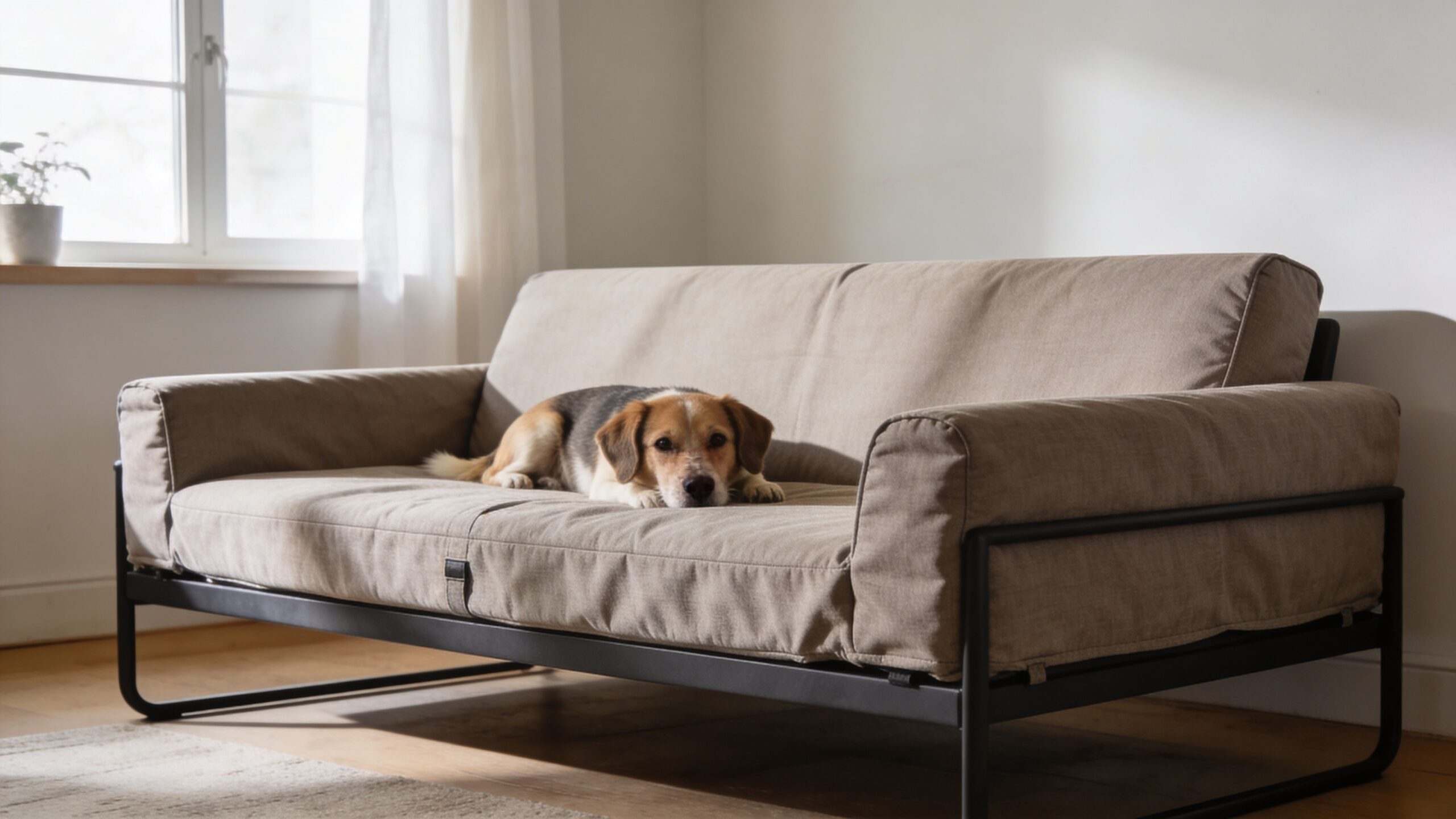
Convertible furniture sees uneven wear. One panel gets slept on more. One corner becomes the dog’s lookout. One arm takes repeated scratching attempts. A removable or replaceable cover gives you a way to refresh the furniture without starting over.
That’s especially useful if your first upholstery choice looked good but didn’t match your pet’s habits. Maybe the microfiber held too much hair. Maybe the faux leather cleaned easily but started showing claw damage. Maybe you want to move to a tighter weave or a stronger-performing fabric after living with the piece for a while.
A practical long-term approach
For shoppers who want a convertible that can adapt over time, it helps to think in layers:
- Start with a frame and style you’ll keep
- Choose upholstery based on your current pet reality
- Protect high-contact areas early
- Plan for refresh instead of total replacement
If you need that refresh, custom futon covers make that process more manageable because you can replace the textile component instead of the whole piece.
Futonland’s cut-and-sew cover service is relevant for pet owners who want replacement covers after the original upholstery wears — that matters on convertibles because the furniture itself often outlasts the fabric taking the daily abuse.
The smartest pet-friendly purchase isn’t always the one that promises perfection. It’s the one you can maintain, protect, and recover sensibly over time.
In a city apartment, furniture has to work hard. If you share that space with a dog or cat, your upholstery has to work even harder. Choose the surface for the life you live. Tight weaves beat loose ones. Better materials age better. And on convertibles, a replaceable cover isn’t an extra. It’s part of a durable plan.
If you’re choosing between fabric, faux leather, and leather for a sofa bed or futon, focus on your pet’s real behavior first. Scratching, shedding, accidents, and daily lounging each punish upholstery differently. Match the material to that reality, and your furniture has a much better chance of holding up gracefully.