
Best Furniture for Small Apartments: A Practical Guide
The best furniture for a small apartment is hardworking, flexible, and scaled just right. Think convertible sleeper sofas, storage ottomans, and expandable dining tables—pieces that pull double or even triple duty. This approach saves you precious square footage without forcing you to compromise on style or comfort.
Mastering Your Space Before You Shop
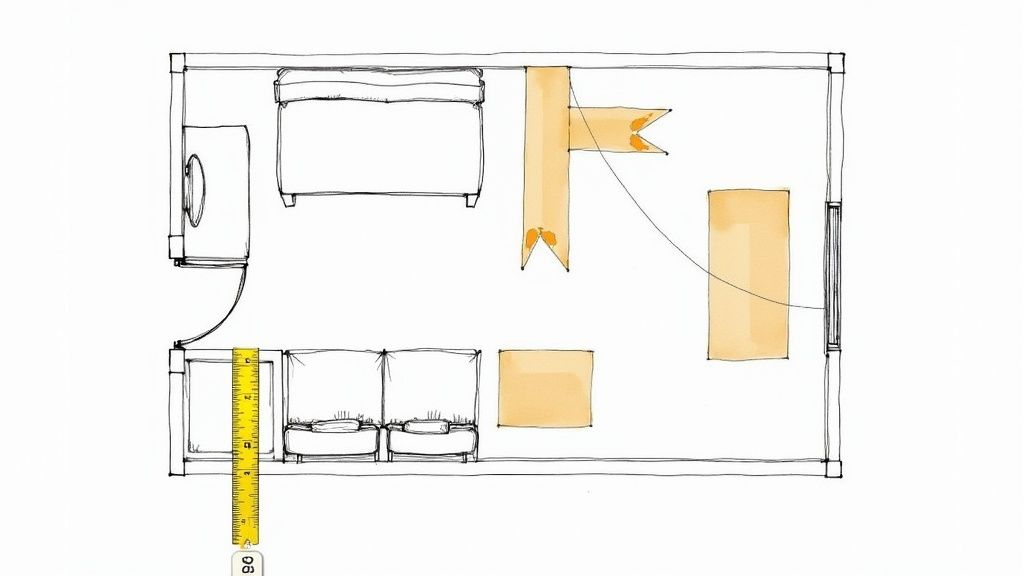
Before you even dream of clicking “add to cart,” your most important work happens with a tape measure and a notebook. We’ve seen it a hundred times: people fall in love with a piece online, only to find it completely swallows their room in real life. Choosing the right furniture for a small apartment is less about finding beautiful objects and more about strategic problem-solving. This initial planning phase is your secret weapon.

It’s easy to grab basic length and width measurements and call it a day. But a truly functional layout accounts for the way you actually live in the room. It’s about more than just the furniture’s footprint.
Measure Everything That Moves and Stays Still
Your first real task is to map out your space in detail. This isn’t just about the walls; it’s about understanding every single element that impacts where furniture can go and how you’ll move around it.
- Door Swings: How far does each door swing into the room? That gorgeous armchair is useless if it stops your bedroom door from opening all the way.
- Window Placement: Note where your windows are and how high they sit from the floor. You don’t want the back of a tall shelving unit blocking your only source of natural light.
- Outlets and Vents: Mark every single electrical outlet, light switch, and HVAC vent. Placing a huge media console over the only usable outlet in the room is a rookie mistake you don’t want to make.
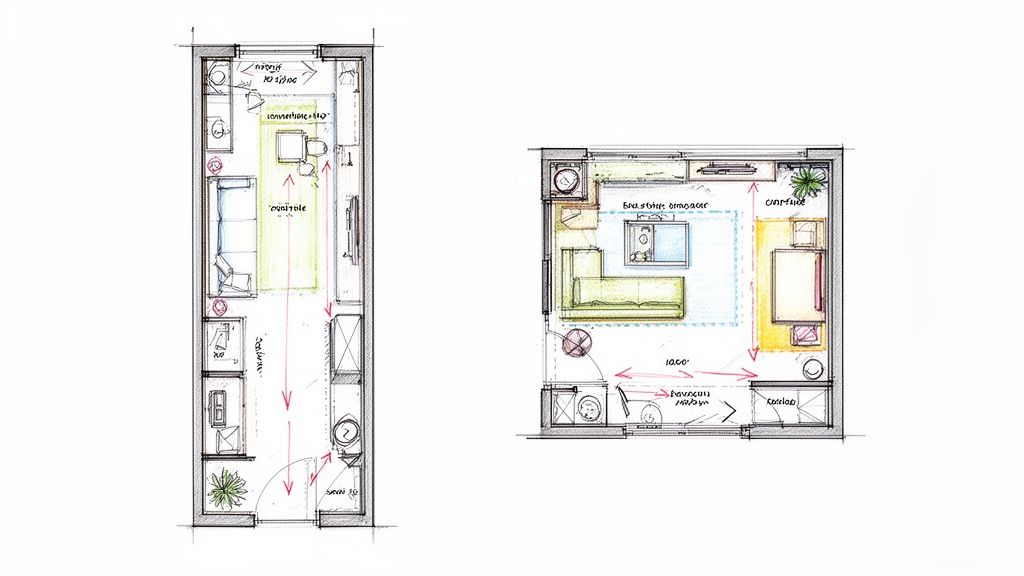
- Walkways: This is the most critical measurement, yet it’s the one most people forget. You need clear traffic lanes. Aim for at least 30-36 inches for your main pathways so you can walk through without having to shuffle sideways.
A well-furnished small apartment isn’t just filled with stuff; it’s engineered for movement. Your floor plan should prioritize clear, logical pathways that make the space feel intuitive and open, not like an obstacle course.
Once you have these numbers, get a feel for the scale. Our favorite low-tech trick is to use painter’s tape to outline the dimensions of potential furniture right on your floor. This gives you a tangible sense of how much space a sofa or coffee table will actually consume. It helps you feel the layout before you spend a dime. For a solid baseline, you can check out professional sizing charts to get a better idea of standard furniture dimensions.
Define the Job of Every Piece
In a tight apartment, every single item needs to earn its place. Before you fall for a specific design, ask yourself, “What problem does this solve?” or “What purpose does this serve?” This function-first approach ensures you’re not just decorating—you’re actively making your home work better for you.
Your living room, for example, might need to be a workspace during the day, a dining area at night, and a guest room on the weekends. That requires a very specific toolkit:
- A coffee table that lifts to become a work-from-home desk.
- An expandable dining table that can shrink when not in use.
- A high-quality convertible sofa bed that’s genuinely comfortable for both sitting and sleeping.
By defining these jobs upfront, your shopping list transforms from a random collection of furniture into a targeted hunt for solutions. To take it a step further, consider how decor can enhance the feeling of space. This intentional mindset is the foundation for creating a home that’s designed for your life.
Choosing Multifunctional Furniture That Works Overtime
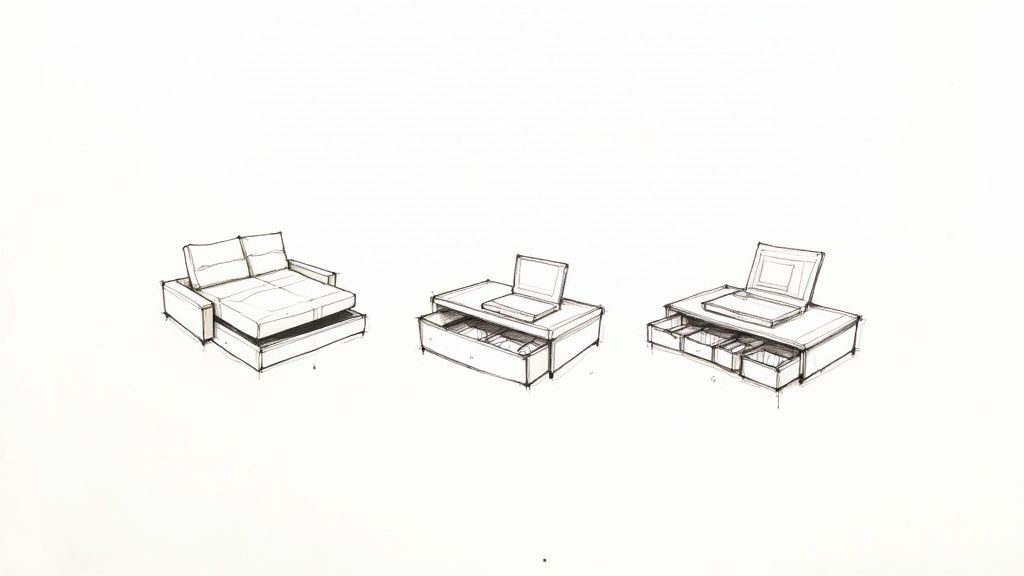
In a small apartment, every piece of furniture has to earn its keep. It can’t just take up floor space; it needs to be a hard-working asset that solves more than one problem. This is your cue to ditch the single-purpose items and embrace the true heroes of small-space living—multifunctional furniture.

The idea of a dual-purpose piece isn’t new, but today’s designs are lightyears ahead of those wobbly, unforgiving futons you might remember from college. Modern engineering has given us sleek, genuinely comfortable solutions that blend right into your decor without screaming “I turn into a bed!”
The Sofa Bed Reimagined
The living room is often ground zero for multifunctionality. For many of us, it has to be a lounge, an office, and a guest room all rolled into one. A high-quality convertible sofa is probably the most valuable player you can recruit for this job.
Modern convertible sofa beds are designed for daily use as your primary couch, built with supportive cushions and durable fabrics. But with one simple move, they transform into a comfortable bed for overnight guests. This completely eliminates the need for a separate guest room that sits empty 95% of the year.
If you’re curious about what separates a great sleeper sofa from a mediocre one, our in-depth guide to convertible sofa beds is a great place to start. It breaks down what to look for in terms of both style and sleep quality.
The market backs this up, too. In 2023, sofas and chairs made up a huge slice of the small-space furniture market, with adaptable pieces like sofa beds and sectionals accounting for over 40% of total sales. It just goes to show how essential these workhorses have become for city living.
Smart Storage Hiding in Plain Sight
Beyond the sofa, keep an eye out for other places where your furniture can pull double duty. Hidden storage is your absolute best friend in a small apartment, helping you conquer clutter without adding bulky, standalone cabinets that eat up precious square footage.
Here are a few of my favorite clever pieces:
- Storage Ottomans: These are the ultimate triple threat. They’re a place to put your feet up, extra seating when friends pop over, and a secret hiding spot for everything from blankets and board games to magazines.
- Lift-Top Coffee Tables: A total game-changer if you work from home without a dedicated office. The top lifts up and pulls forward to create an ergonomic desk-height surface, often revealing a hidden compartment for your laptop and notebooks.
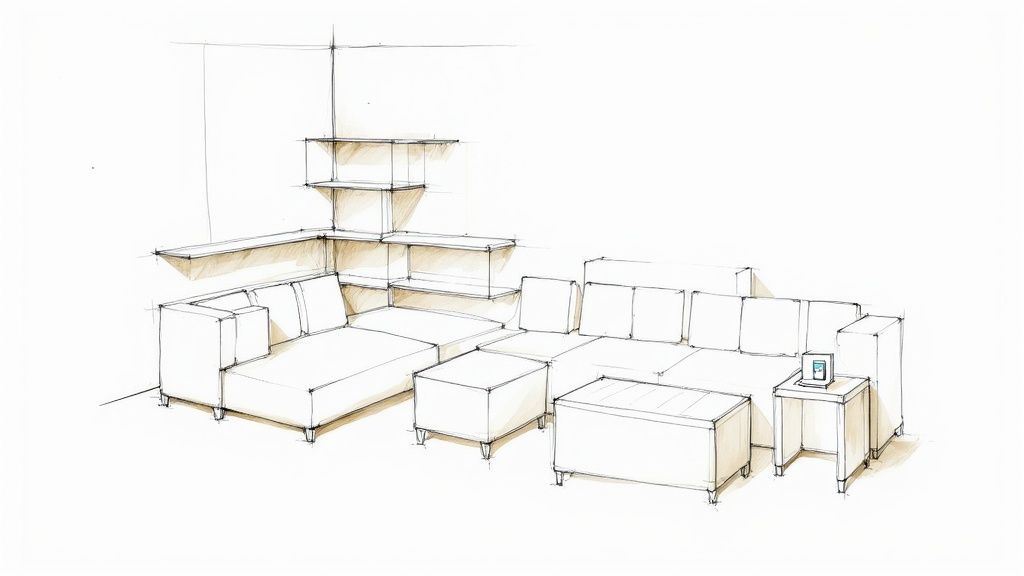
- Sectionals with Chaise Storage: If you have room for a small sectional, get one where the chaise lounge lifts up. It’s the perfect spot to stash extra pillows, bedding, or off-season clothes.
By building storage directly into the furniture you already need, you reclaim valuable floor space. One smart sectional can easily replace an entire bookcase or chest, making your room feel significantly larger and more organized.
Dining and Work Surfaces That Adapt to You
Having a dedicated dining room is a luxury most small apartments just don’t have. But that doesn’t mean you’re doomed to eat on your couch forever. Flexible dining and work solutions are key to creating functional zones in an open-plan living area.
To help you decide what might work for your space, here’s a quick look at how some of the most popular multifunctional furniture pieces stack up.
Multifunctional Furniture Feature Comparison
| Furniture Type | Primary Function | Secondary Function | Best For |
|---|---|---|---|
| Convertible Sofa Bed | Daily seating | Guest bed | Studio or one-bedroom apartments without a guest room. |
| Lift-Top Coffee Table | Coffee table | Work-from-home desk | Anyone who needs a temporary, ergonomic workspace in their living room. |
| Storage Ottoman | Footrest | Extra seating, hidden storage | Maximizing storage for blankets or games while providing flexible seating. |
| Expandable Dining Table | Small daily dining surface | Expands to host guests | Those who entertain occasionally but need to save space day-to-day. |
| Wall-Mounted Desk | Work-from-home station | Folds away to clear floor space | Creating a dedicated workspace in a bedroom or living room corner. |
The key is to think about your actual day-to-day habits. If you work from home often, a lift-top coffee table or a slim wall-mounted desk should be a top priority. If you love hosting dinner parties, an expandable table is a non-negotiable.
Ultimately, you want to invest in pieces that support your real lifestyle, turning your limited square footage into a highly efficient and comfortable home.
Embrace Smarter, More Flexible Furniture
Once you’ve nailed down dual-purpose pieces, it’s time to think about the next level: furniture systems that truly adapt and evolve with your life. This is where modular and smart furniture come in. It’s less about buying static, single-purpose items and more about investing in flexible solutions you can reconfigure as your needs change.

This idea is quickly becoming a cornerstone of modern city living. The global market for multifunctional furniture hit USD 15.9 billion in 2023 and is expected to grow by 4.9% annually through 2034. This isn’t just a fleeting trend; it’s a direct response to our need for smarter, more adaptable living spaces. If you’re interested in the numbers, you can read more about the growth of the multifunctional furniture market.
The Power of Modularity
Think of modular furniture as building blocks for your apartment. Instead of one huge, unchangeable sofa, you get a collection of components—chaises, armless chairs, corners, ottomans—that you can arrange in endless ways. This gives you a degree of customization that standard furniture just can’t offer.
Let’s say you’re in a studio with a cozy two-piece sectional. A year from now, you might move into a one-bedroom with a tricky L-shaped living room. With a modular system, there’s no need to ditch your sofa. You can simply rearrange the pieces or even add a new module to fit the new layout perfectly.
Here’s where modular design really proves its worth:
- Fits Awkward Spaces: It’s a lifesaver for apartments with weird nooks, alcoves, or unconventional layouts where a standard sofa would never work.
- Future-Proofs Your Purchase: Your furniture grows with you. As your home or needs change, your setup can change, too, making it a much more sustainable buy.
- Makes Moving a Breeze: Getting several smaller pieces through tight apartment hallways is so much easier than wrestling a massive, one-piece sofa up three flights of stairs.
Smart Tech and Even Smarter Design
While modularity is all about physical flexibility, “smart” furniture adds a layer of practical convenience. And I’m not just talking about a USB port tacked onto a nightstand. True smart design anticipates the headaches of modern life and integrates solutions seamlessly.
Think about how these features can simplify your day-to-day:
- Built-in Charging: End tables and headboards with integrated outlets and wireless charging pads finally put an end to that messy tangle of extension cords.
- Integrated Lighting: Shelving units or beds with built-in LEDs add ambiance and task lighting without cluttering up your surfaces with lamps.
- Space-Saving Mechanisms: The engineering behind modern wall beds is a perfect example of smart design. What used to be a clunky, intimidating piece of furniture is now a sleek, safe system that can give you back an entire room in seconds. You can explore some amazing modern wall beds that often come with built-in desks or sofas.
Good design isn’t just about how something looks—it’s about how it works for you. In a small apartment, the best furniture solves problems you didn’t even realize you had, from eliminating cord clutter to reclaiming an entire room’s worth of floor space.
Creating Visual Space with Your Material Choices
Finally, remember that making a small apartment feel bigger isn’t just about physical footprint. It’s also about visual weight. Heavy, dark, solid pieces can make a room feel cramped, even if they technically fit.
To create an illusion of openness, lean into materials that feel light and airy.
- Glass and Acrylic: A glass coffee table or clear acrylic chairs have almost zero visual weight. You can see the floor right through them, which instantly makes the room feel more spacious.
- Metals with Thin Profiles: Furniture with slim metal legs in finishes like chrome, brass, or matte black elevates pieces off the floor, creating a sense of airiness underneath.
- Lighter Wood Tones: While rich, dark woods have their place, lighter tones like birch, ash, or light oak reflect more light and contribute to a more open, breezy vibe.
By combining the physical adaptability of modular pieces, the day-to-day convenience of smart features, and the visual lightness of clever materials, you can create a furniture collection that makes your small apartment not only incredibly functional but also feel genuinely expansive and welcoming.
Navigating Delivery and Assembly Hurdles
So you’ve found it—the perfect sectional. It’s the right color, the right fabric, and has that glorious hidden storage you’ve been dreaming of. But hold on. Before you click “buy,” there’s a crucial, often-ignored step that can turn your furniture dream into a sidewalk nightmare: logistics. Getting that perfect piece into your apartment is half the battle.

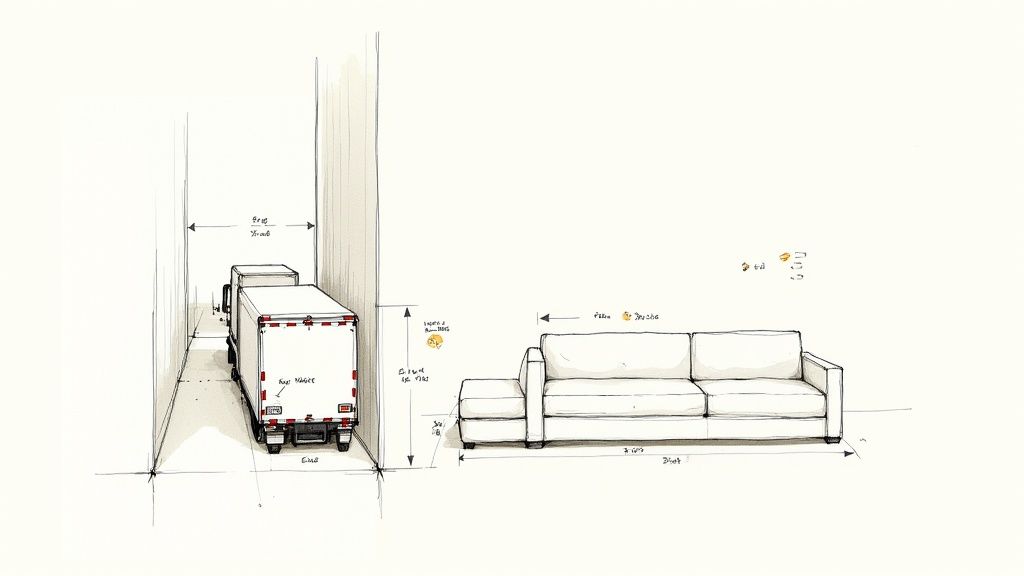
We’ve all seen the “pivot!” scene from Friends. It’s hilarious on TV but a soul-crushing experience in real life. You’d be surprised how many furniture deliveries fail not because the piece is too big for the room, but because it literally can’t get to the room. This is why measuring the entire delivery path is completely non-negotiable.
Your Pre-Delivery Measurement Checklist
Don’t just measure your living room. You need to map out every single inch of the route from the delivery truck to its final spot. Grab your tape measure and get these numbers down:
- Building Entryways: Measure the height and width of every exterior door.
- Hallways: Get the width of all corridors, paying close attention to any sharp turns or tight corners.
- Stairwells: Note the width of the stairs and the ceiling height, especially at landings or turns. This is where most oversized items get hopelessly stuck.
- Elevators: If you’re in a high-rise, get the elevator’s interior dimensions—height, width, and depth. Crucially, measure the elevator door opening, which is almost always smaller than the inside.
Pro Tip: When measuring doorways and elevator openings, take a diagonal measurement from the bottom corner to the opposite top corner. That diagonal line represents the true maximum width of an object you can squeeze through.
Flat-Pack vs. Pre-Assembled Furniture
With your measurements in hand, you can make a smarter choice between flat-pack (ready-to-assemble) and pre-assembled furniture. For apartment dwellers, each comes with its own set of trade-offs.
Flat-Pack Furniture: This is often the undisputed champion for small apartments. Why? Because it arrives in manageable boxes that can easily navigate tight stairwells and narrow halls. The catch, of course, is the assembly. It can be a time-consuming and sometimes frustrating weekend project.
Pre-Assembled Furniture: There’s nothing like instant gratification—no Allen wrenches, no confusing diagrams. But these pieces carry the biggest delivery risk. A solid wood dresser or a fully built sofa has a much higher chance of getting wedged in a tricky corner.
To DIY or Hire a Pro
So, should you build it yourself? The decision really comes down to three things: complexity, tools, and time. A simple bookcase? Absolutely a great DIY project. A complicated wall bed with spring-loaded mechanisms? That’s a job best left to the professionals.
You should seriously consider hiring a pro if:
- The instructions look like an engineering schematic with more than 20 steps.
- You need specialized tools you don’t own (and don’t want to buy).
- The piece is incredibly heavy or needs to be securely mounted to a wall.
- You value your weekend sanity more than the cost of assembly.
Many retailers get it. They understand these challenges and offer helpful solutions. For example, some companies simplify the whole process by offering free shipping futon sets and packages that bundle everything conveniently. Others provide “white-glove delivery,” where a team not only brings the item inside but also assembles it and hauls away all the packaging. It costs extra, but for large or complex pieces, the peace of mind is priceless.
Your Smart Renter’s Buying Checklist
You’ve done the hard work of planning, measuring, and dreaming. Now, before you click “buy,” it’s time for a final gut check. Think of this checklist as your last line of defense against buyer’s remorse, making sure the piece you’re eyeing is a smart, long-term fit for your rental lifestyle.
Don’t skip these final steps. A few minutes now can save you from a world of headaches later, especially when that beautiful sofa arrives and… doesn’t quite fit through the door.
Reconfirm Your Measurements and Pathways
You measured once, but do it again with the exact product dimensions in hand. It’s so easy to get swept up in the excitement and miss a critical half-inch.
- Final Footprint Check: Grab some painter’s tape and mark the furniture’s length and width right on your floor. How does it feel in the space? Does it create an awkward bottleneck in your main walkway?
- Delivery Path Walkthrough: Literally walk the route from your apartment’s front door to the spot where the furniture will live. Keep an eye out for tight corners, low-hanging light fixtures, or narrow hallways. A sofa that fits your living room is useless if it can’t get past the entryway.
- Don’t Forget Height: Double-check how the furniture’s height lines up with things like window sills, thermostats, or that piece of art you love.
Scrutinize the Fine Print
For renters, the terms and conditions are just as important as the furniture itself. Your ability to pack up and move in a year or two depends on making flexible, informed choices today.
Policies are your safety net. A great return policy or a solid warranty isn’t just a bonus; it’s a critical feature that protects your investment when you live a life that might involve moving every few years.
Get direct answers to these questions before you commit:
- What is the full return policy? Look for restocking fees and find out who pays for return shipping. For a big item, that cost can easily run into hundreds of dollars.
- Is there a warranty? What does it cover—the frame, the fabric, the sleeper mechanism—and for how long? Save a digital copy of the warranty info.
- Can this be disassembled for a move? This is a huge one for renters. A stunning sectional that can’t be taken apart might have to be abandoned (or sold for pennies) when your lease is up. Prioritize pieces with removable legs or modular components.
Quality, Budget, and Long-Term Value
Finding the right furniture for a small apartment is all about balancing cost with durability. You’re not just buying for this place; you’re investing in pieces that can move with you to the next one, too.
There’s a reason the global small space furniture market was valued at USD 23.4 billion in 2023 and is growing fast. Urban dwellers are ditching throwaway pieces for smarter, more adaptable furniture that lasts.
Before you finalize, think about how the piece will hold up over time. Check for solid wood frames instead of particleboard, and scan customer reviews for any red flags about fabric pilling or cushions sagging after a few months.
Sometimes, the smartest budget move isn’t buying new at all. A little paint and new hardware can completely transform a thrift store find into something that feels custom-made for your space.
Ultimately, the goal is to walk away feeling confident, not anxious. A regret-free purchase is one that will serve you well, not just in this apartment, but wherever you land next.
Got Questions About Furnishing a Small Space? We Have Answers.
Even after you’ve measured twice and made a plan, a few questions always come up. It’s totally normal. Finding the right furniture for a small apartment can feel like a high-stakes puzzle, so let’s walk through some of the most common sticking points. This should clear things up before you start adding things to your cart.
Getting these final details right is what separates a cluttered apartment from a home that feels smart, intentional, and genuinely comfortable.
What’s the One Piece of Furniture I Should Splurge On?
While everyone’s needs are a little different, the multifunctional sofa is almost always the MVP. A high-quality convertible sofa or a sectional with hidden storage is the ultimate workhorse for a small space. It’s your main seating, a guest bed, and a storage chest all rolled into one.
Think about it: you’re solving three problems with a single footprint. That one smart purchase frees up a ton of floor space that would otherwise be eaten up by separate, single-purpose pieces. It’s the strategic cornerstone of a well-designed small home.
How Can I Use Furniture to Make My Apartment Look Bigger?
This is all about creating an illusion. It has less to do with the actual size of your furniture and more to do with its visual weight and how it lets light move through the room.
Here are a few tricks I’ve seen work time and time again:
- Get Your Furniture Off the Ground: Choose pieces with visible legs, like you see in a lot of mid-century modern designs. When you can see the floor underneath a sofa or console, the room instantly feels more open and airy.
- Keep a Low Profile: Sofas and chairs with lower backs make your ceilings feel much taller, which expands the sense of space in the entire room.
- Use “Invisible” Surfaces: Glass, acrylic, or mirrored pieces are your best friends. A glass coffee table, for instance, has almost zero visual weight. Light passes right through it, making the area feel way less cluttered.
- Stick to a Lighter Color Palette: For your big, dominant pieces like the sofa or a large bookshelf, go for lighter colors. Whites, creams, light grays, and even soft pastels reflect more light and create a breezy, open vibe.
Are Murphy Beds Really a Good Idea for a Studio?
Absolutely. For a studio apartment, a Murphy bed is probably the single most powerful space-saving tool you can buy. It’s the key to making one room live like two, giving you a proper bedroom at night and a wide-open living or work area during the day.
A modern Murphy bed doesn’t just fold into the wall; it literally gives you back an entire room’s worth of usable square footage every single morning. The daily value you get from that reclaimed space makes the initial investment completely worth it.
And forget the clunky, scary models from old movies. Today’s designs are engineered to be safe and effortless to lift. Many even come with built-in extras like a fold-down desk, an integrated sofa, or surrounding shelving, adding even more function to your home.
What Are the Biggest Mistakes People Make?
When you’re buying furniture for an apartment, a few common slip-ups can turn a promising space into a cramped, frustrating maze. Knowing what to watch out for can save you a world of hassle (and money).
From what I’ve seen, these are the three biggest mistakes:
- Ignoring Scale: This is the number one offender. People fall in love with a sofa that’s simply too massive and bulky for their room, throwing the entire space off balance and making it feel crowded.
- Forgetting About Traffic Flow: You have to leave clear pathways to walk. When you don’t, you end up with awkward, tight squeezes that make just moving through your home feel like an obstacle course.
- Buying Single-Use Pieces: In a tight space, every piece of furniture needs to earn its keep. Choosing a standard coffee table when a lift-top or storage version exists is a huge missed opportunity.
Always measure your space and your walkways first. Then, before you buy anything, ask yourself: can this do more than one job? That simple discipline is the secret to a small apartment that truly works.
Ready to find furniture that works as hard as you do? At Futonland, we specialize in smart, space-saving solutions that don’t compromise on style or comfort. Explore our collection of convertible sofa beds, storage sectionals, and innovative wall beds designed for modern living. Visit us at https://futonland.com to discover the perfect pieces for your apartment.