

Finding the Best Futon for Small Spaces
The best futon for a small space isn’t a single model. It’s really the perfect combination of a space-conscious frame, like a Trifold or an armless Click-Clack, paired with a flexible and comfortable mattress. Getting that mix right is what turns a tight corner into a functional living area and a cozy guest bed.
Best Futons for Small Spaces: Quick Picks
Before you dive into all the details, it helps to match your room type with the kind of futon that will work hardest for you. Here are a few small-space scenarios and the combinations that tend to work best:
- Best for studio apartments: A compact Trifold frame paired with a flexible 6″ mattress that folds easily and tucks out of the way when you need floor space.
- Best for a small guest room/home office: A Bifold futon frame with an 8–10″ mattress that feels closer to a traditional bed for overnight guests but still works as a sofa during the day.
- Best for narrow rooms and tight hallways: An armless Click-Clack futon that needs minimal wall clearance and offers a full sleeping surface without bulky arms eating up visual space.
- Best for maximum storage in a small space: A futon with integrated storage drawers underneath, ideal for small apartments where linens, pillows, or seasonal items need a dedicated spot.
- Best for everyday sleeping in a small space: A sturdy hardwood Bifold frame with a premium 8–10″ futon mattress designed for nightly use.
Once you know which situation looks most like your own, the rest of the guide will help you fine-tune the frame, mattress, and features so you get the best futon possible for your small space.
Your Smart Solution for Maximizing Small Spaces
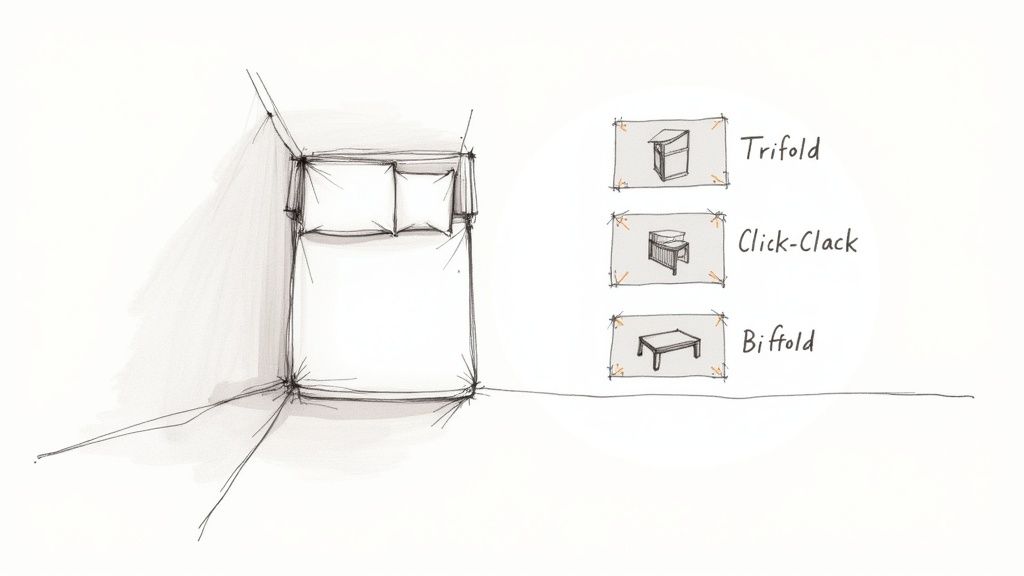
Trying to furnish a compact room can feel like playing a tricky game of Tetris. The right futon is that one versatile piece that makes everything else just click into place. It’s a sofa by day, a guest bed by night, and sometimes even a storage unit—all rolled into one incredibly efficient footprint.
Modern futons have left their simple dorm-room reputation far behind. They are now a cornerstone of adaptable home furnishings, designed for anyone looking to get the most out of a small apartment, studio, or guest room without sacrificing style. This isn’t just a trend; it’s a reflection of a real shift toward smarter, more efficient living.
The Rise of Multi-Functional Furniture
The market data tells the same story. While the broader furniture market is projected to hit around $684.5 billion by 2035, the folding furniture category—which is where futons and other convertible pieces live—is set to grow much faster, reaching nearly $19.63 billion by 2032. That’s a clear signal that people are actively seeking out furniture that works harder, especially in smaller homes.
This is exactly why a futon is more than just another piece of furniture; it’s a strategic investment in your home’s flexibility that is perfect for compact living.
A futon is the ultimate space-saving chameleon. It effortlessly adapts to your needs, transforming from a comfortable seating area for your daily life into a welcoming bed for overnight guests in just a few moments.
A Quick Comparison of Futon Types
Before you can pick the best futon for your small space, you need to get familiar with the basic frame types. Each mechanism offers different advantages depending on your room’s layout and how you plan to use it.
To get you started, here’s a quick breakdown of the most common options and what they’re best for.
Futon Types at a Glance for Small Spaces
This table gives you a quick summary of common futon mechanisms and their best-fit scenarios for compact living.
| Futon Type | Mechanism | Best For | Space Requirement |
|---|---|---|---|
| Bifold | Folds in half lengthwise, like a hot dog bun. | Everyday sofa use, slightly larger small rooms. | Requires more wall clearance. |
| Trifold | Folds into three sections, often with a hidden ottoman. | Extremely tight spaces, studios, micro-apartments. | Very compact when upright. |
| Click-Clack | Backrest clicks into different positions and lays flat. | Effortless conversion, modern look. | Minimal wall clearance needed. |
| Armless | A Click-Clack or Bifold without side arms. | Narrow rooms, maximizing seating in small layouts. | Visually opens up the space. |
Understanding these core differences is the first step in finding a futon that won’t just fit in your room, but will make it feel bigger and more functional.
How to Choose the Right Futon Frame for a Small Space

The futon frame is the true workhorse. It’s the skeleton that gives the futon its shape, dictates how it operates, and ultimately decides how well it will function in your home. Picking the right frame isn’t just about style; it’s about choosing the right engineering for your space and how you plan to use it.
Think of it like choosing a car. You wouldn’t pick a two-seater sports car for a family of five, right? Similarly, each futon mechanism is built for a specific job, whether that’s saving every possible inch in a studio apartment or offering a quick, hassle-free conversion every single day.
Getting to know the core differences between these mechanisms is the secret to picking a futon you’ll be happy with for years. Let’s break down the most popular types so you can make a smart choice.
The Classic Bifold Frame
The Bifold frame is probably what pops into your head when you think “futon.” It works with a simple, intuitive motion, folding in half lengthwise like you’re closing a book. The mattress simply drapes over the frame, creating the seat and the backrest when it’s in the sofa position.
This design is a fantastic option if you’re replacing a primary sofa because it often feels the most like a traditional couch. That simplicity does come with a spatial trade-off, though. To lay it flat for sleeping, you have to pull the entire frame several inches away from the wall so the back has room to fold down.
- Best For: Everyday sofa use in rooms that have a little breathing room.
- Keep in Mind: You’ll need at least 8–12 inches of space behind it for a smooth conversion.
The Space-Saving Trifold Frame
For truly tight quarters, the Trifold frame is an efficiency expert. Just like an accordion compresses into a small package, this frame folds into three sections. This design shrinks its footprint way down, making it one of the best futon options for small spaces where every inch is precious.
Usually, two sections make up the seat and back, while the third section either tucks underneath or sticks out like a little lounger. When it’s bedtime, the frame unfolds into a full-length bed. Its compact, upright profile makes it a perfect fit for home offices, dorms, and micro-apartments.
A Trifold frame is the ultimate problem-solver for rooms that seem too small for any convertible furniture. Its clever folding mechanism allows you to reclaim valuable floor space that other designs would occupy.
Because of its unique folding action, the Trifold frame needs a more flexible mattress, typically one that’s 6 inches thick or less. Anything thicker and more rigid just won’t be able to handle those tight folds.
The Effortless Click-Clack Mechanism
If “easy to use” is at the top of your list, you can stop right here. The Click-Clack mechanism is your answer. Named for the sound it makes when you convert it, this design works a lot like a reclining pool lounger. You just lift the backrest forward until you hear a “click,” then push it back down to lay it completely flat.
The system is brilliantly simple and incredibly quick, making it ideal for anyone who plans on switching their futon from a sofa to a bed every day. Many Click-Clack models are also armless, which is another huge plus in a narrow room. It creates a more open feel and maximizes every inch of seating area.
- Why It’s Great for Tight Spaces: Most Click-Clack futons require very little, if any, wall clearance to operate.
- Design Style: They often have a sleek, modern look that fits right in with contemporary decor.
Choosing the right frame is the foundational step in finding your perfect futon. If you want to see these different mechanisms in action and check out various materials, you can browse a wide selection of high-quality futon frames to find the ideal match for your home’s unique layout and style.
Choosing the Right Futon Mattress for a Small Space
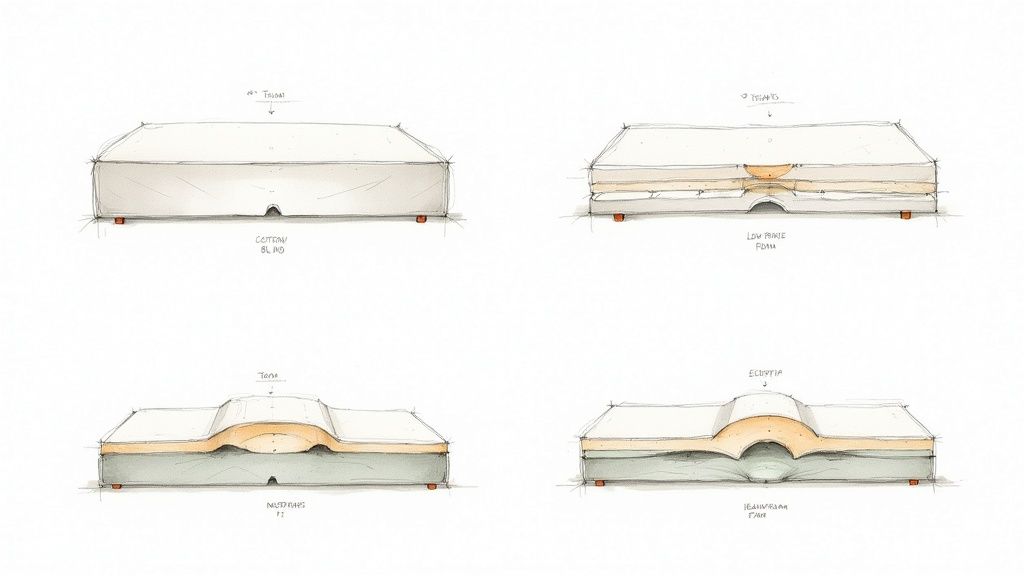
If the frame is the futon’s skeleton, the mattress is its heart and soul. This is what makes the difference between a stiff, barely-there temporary bed and a genuinely comfortable piece of furniture you’ll love using every day. A great futon mattress has to strike a delicate balance: it needs to be plush enough for a good night’s sleep but firm enough for sitting, all while being able to fold and unfold constantly without breaking a sweat.
The mattress has to be perfectly suited for the frame it lives on and the job you need it to do—whether that’s hosting movie marathons or overnight guests in a small apartment.
Matching Mattress Thickness to Your Needs
Futon mattress thickness isn’t just a number; it dictates comfort, support, and how well it works with your frame. Most fall somewhere between 6 to 10 inches.
Thicker mattresses, typically in the 8 to 10-inch range, are the heavyweights. They’re often packed with innersprings or dense layers of foam, giving them a feel that’s surprisingly close to a traditional bed. This makes them a fantastic choice if your futon is pulling double duty as your primary sleeper. The trade-off? All that robust construction makes them less flexible, so they’re best paired with Bifold frames that only require a simple, single fold.
On the flip side, a thinner mattress, around 6 inches, is much more agile. It can handle the more complex folds of a Trifold frame with ease, without putting extra strain on the materials or the mechanism. It might not have the deep, luxurious cushion for sleeping on every single night, but it’s the perfect practical choice for a guest room, office, or primary sofa that sees occasional slumber parties.
Core Materials: The Building Blocks of Comfort
What’s inside your futon mattress is what really defines how it feels, how long it lasts, and even its health benefits. Modern futons have come a long way from the simple cotton batting of the past.
Here’s a quick look at the most common materials you’ll find today:
- Foam and Cotton Blends: This is the classic futon feel. You get firm, durable support from the foam core, while the cotton adds breathability and a bit of substance.
- Innerspring Coils: Just like the mattress on your bed, these use a core of steel coils for that familiar bouncy support. They’re fantastic for distributing weight evenly, which helps them resist sagging from everyday sitting and sleeping.
- Memory Foam: Known for its incredible pressure relief, memory foam molds to the shape of your body. This makes it a dream for daily sleepers who need that extra bit of targeted support for their hips and shoulders.
- Latex and Wool: If you’re leaning toward natural and sustainable materials, latex and wool are the premium options. Latex is naturally hypoallergenic and offers responsive, springy support, while wool is a brilliant temperature regulator, keeping you cool in the summer and warm in the winter.
The best futon mattress doesn’t just fit your frame—it fits your lifestyle. For daily use, prioritize support and durability with an innerspring or memory foam model. For a guest room or occasional sleeping in a small space, a versatile foam blend offers a great balance of comfort and flexibility.
Choosing the right mattress is probably the most important decision you’ll make for your futon. To see all these options and find the perfect match for your frame and comfort needs, you can browse our complete collection of futon mattresses and find the ideal one for your home.
Smart Features That Maximize Your Space
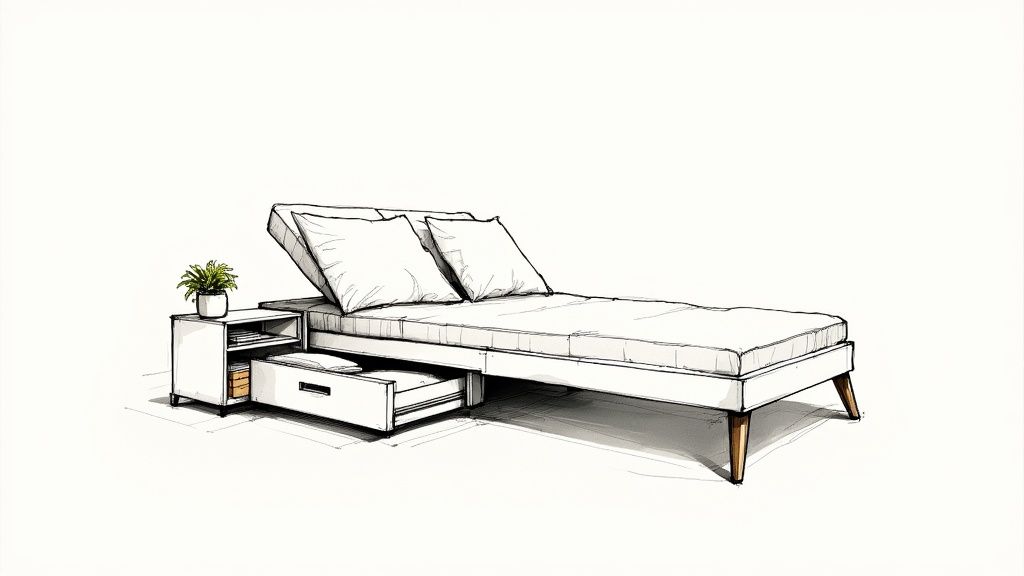
Beyond just being a place to sit and sleep, the best futons for small spaces are masters of efficiency. Today’s designs have become true multi-tasking powerhouses, packed with clever features that help you reclaim every last inch of your room. These aren’t just little bells and whistles; they’re smart additions that can genuinely change how you use your space.
A basic futon will get the job done. A futon with smart features can eliminate the need for other furniture, cut down on clutter, and streamline your daily routine in a small space.
Integrated Storage Solutions
Let’s be honest, the biggest battle in any compact home is finding a place for everything. Futons with built-in storage are a brilliant fix, tackling clutter right at the source. Instead of letting all that valuable space under your sofa go to waste, these models turn it into prime real estate.
Many futons incorporate large, slide-out drawers perfect for stashing extra pillows, blankets, and bedding. This keeps your guest linens out of sight but always ready to go, freeing up that precious closet space. To see what’s possible, you can explore the different styles of futon bed storage drawers and find a setup that works for you.
By choosing a futon with integrated storage, you’re not just buying a sofa or a bed—you’re investing in a piece of furniture that actively works to declutter your home.
Built-In Convenience and Comfort
Smart features are also about making your life more comfortable and convenient, often by building the functions of other furniture right into the futon’s design. This kind of consolidation is what makes a small room feel open and airy instead of cramped.
You can find models that come with all sorts of clever additions designed for how we live now.
- Integrated Side Tables: Some futons have built-in or fold-out side tables. They’re the perfect spot for a drink, a book, or your phone, meaning you don’t need to squeeze in separate end tables.
- Built-in USB Ports: A growing number of designs include USB charging ports right in the frame. No more hunting for an outlet behind the sofa.
- Adjustable Armrests: You can prop them up for support while you’re reading or lay them flat to create extra seating or lounging space when friends are over.
- Convertible Chaise Lounges: Some models feature an ottoman or a chaise piece that can be moved around, giving you total flexibility for kicking back and relaxing.
These thoughtful details add huge value. They prove that the best futon for a small space does more than just fit—it actually enhances the way you live in it.
Small-Space Futon Buying and Care Checklist
Choosing the perfect futon for a small space is about more than just falling in love with a style. A little bit of planning before you buy, and some simple upkeep after, will make sure your new furniture is a perfect, long-lasting fit for your home.
The Pre-Purchase Prep Plan
Before you even think about clicking “add to cart,” spending just a few minutes with a tape measure can save you from a world of headaches later. A futon has two different footprints—one as a sofa and one as a bed—and you have to plan for both.
- Map Out Your Space: Grab a tape measure and get the length and width of the spot where your futon will live. Critically, don’t forget to measure its dimensions when it’s fully opened up as a bed. A great pro tip is to use painter’s tape on the floor to outline both the sofa and bed footprints. This helps you actually see how much room it will take up.
- Check Your Pathways: Your beautiful new futon has to actually get into the room. Measure the width and height of every doorway, hallway, and staircase on its path. This is the step people forget most often, and it can turn delivery day into a disaster.
- Confirm the Futon’s Dimensions: Check the product page for the exact sofa and bed dimensions. You’ll want enough clearance to walk around it comfortably when it’s opened into a bed—a good rule of thumb is to have at least 24 inches of free space on one side.
Delivery and Assembly, Unpacked
Understanding your delivery options is the key to a smooth, stress-free setup. Most companies offer a couple of different services to fit your budget and how much work you want to do yourself.
- Curbside Delivery: This is your most basic and budget-friendly choice. The futon is delivered to the curb outside your home, and you take it from there—bringing it inside, unboxing, and assembling it.
- White-Glove Service: For a completely hands-off experience, this premium service is the way to go. The delivery team brings the futon into your room of choice, assembles it for you, and even hauls away all the packaging. It’s a fantastic option for more complex frames or for anyone who’d rather skip the heavy lifting.
Picking the right delivery service really comes down to convenience versus cost. If you’re comfortable with a little DIY and have a friend to help, curbside is a great, efficient option. If not, white-glove service guarantees your futon is set up perfectly without you breaking a sweat.
A Simple Guide to Long-Term Care
Once your futon is all set up, a little routine maintenance will keep it looking and feeling fantastic for years. It only takes a few simple steps to protect your investment.
- Rotate Your Mattress: Just like the mattress on a regular bed, your futon mattress should be flipped and rotated every few months. This helps it wear evenly and prevents any deep, permanent body impressions from forming.
- Clean Spills Immediately: Life happens. For fabric covers, blot spills right away with a clean, dry cloth—never rub, as that can set the stain. For tougher spots, a gentle soap and water solution usually does the trick. Always double-check the manufacturer’s care tag first.
- Maintain the Frame: For wood frames, a regular dusting and an occasional wipe-down with a wood-safe cleaner will keep them looking sharp. For metal frames, a simple wipe with a damp cloth is all you need to stop dust from building up. It’s also a good idea to check and tighten any bolts or screws once a year to keep the frame sturdy and squeak-free.
Your Futon Questions, Answered
Alright, you’ve sifted through the frames, mattresses, and features, but a few questions might still be lingering. It’s those last-minute details that often make the difference between a purchase you like and one you absolutely love. Let’s tackle those common sticking points head-on.
How Much Should I Spend on a Good Futon?
This is always the big question, isn’t it? For a quality futon that’s a good fit for a smaller space, you can expect to spend anywhere from a few hundred dollars to well over a thousand. What you get for your money really changes as you move up that ladder.
- Under $500: These are your entry-level models. You’ll typically find simple metal frames and basic foam mattresses. They get the job done for a guest who’s staying for a night or two, but they aren’t built for the long haul.
- $500 to $1,000: This is the sweet spot for most people. In this range, you’ll see durable hardwood frames and much thicker, more comfortable innerspring or dense foam mattresses. These are designed for more regular use, whether for sitting or sleeping.
- Over $1,000: Welcome to the premium tier. Here, you’re looking at solid hardwood construction, top-of-the-line memory foam or latex mattresses, and smart features like built-in storage drawers.
Setting a realistic budget from the start helps you zero in on the best quality and features you can get for your money. It’s all about finding that perfect balance of value and comfort.
Can a Futon Be Comfortable Enough for Daily Sleeping?
Absolutely, but with one major condition: the mattress is everything. If you’re planning to sleep on your futon every single night, you have to make the mattress your number one priority. A standard, thin futon pad just won’t cut it for the kind of support you need for long-term, restorative sleep.
For daily sleeping, you really need to be looking for a mattress that’s at least 8 to 10 inches thick. The inside matters just as much as the thickness.
- High-Density Memory Foam: This contours to your body, giving you incredible pressure relief for your shoulders and hips.
- Supportive Innerspring Core: A mattress with a solid coil system provides that classic, even support that prevents sagging and keeps your spine happy night after night.
When you pair a premium mattress with a sturdy, solid hardwood frame, you’re not just buying a futon—you’re investing in a true dual-purpose bed that’s every bit as supportive as a traditional setup. If it’s your main bed, don’t skimp on the mattress.
What Is the Easiest Futon to Convert?
When it comes to pure, effortless transformation, the Click-Clack mechanism is the hands-down winner. Its design is so simple and intuitive, making it perfect for anyone who will be switching from sofa to bed on a regular basis.
It works just like one of those reclining lounge chairs you see by the pool. You just lift the frame up a bit until you hear that satisfying “click,” then lower it back down flat. The whole thing takes about three seconds and requires almost no muscle.
While traditional Bifold or Trifold frames are great, they do require a bit more work. You often have to pull a Bifold away from the wall to slide the frame out, and a Trifold means unfolding multiple sections. If ease of use is at the very top of your list, nothing beats the speed and convenience of a Click-Clack.
Are There Stylish Futons That Look Like Real Sofas?
Yes. The days of the clunky, sad-looking “dorm room” futon are officially over. Modern futons have had a major glow-up, and many of today’s models are so stylish, you’d never guess they were hiding a bed inside.
Designers have started incorporating all the little details that make a piece of furniture feel sophisticated and intentional.
- Elegant Frame Details: You can now find models with beautiful hardwood arms, sleek metal legs, or even fully upholstered bodies that completely hide the frame.
- Refined Mattress Finishes: Many mattresses now come with details like tufting, piping, and high-quality upholstery fabrics that look just like the cushions on a high-end sofa.
- Modern Silhouettes: Whether your style is minimalist and armless or plush and cozy, there’s a futon design to match.
You no longer have to sacrifice style for function. The best futon for your small space can be a chic, comfortable centerpiece that just so happens to be the most practical piece of furniture you own.
At Futonland, we’re experts in finding that perfect piece that fits both your space and your style. Our collection has it all, from compact Trifolds to elegant convertible sofas with mattress upgrades. Explore our full range of futons and space-saving solutions today and see just how easy it is to make your small space work for you.