

Smart Storage Solutions for Small Apartments
Here’s the thing about creating more space: the best storage solutions aren’t something you buy off a shelf. They’re something you create. Before you even think about dropping money on new furniture, the real work begins with a practical, honest-to-goodness declutter. This isn’t just about tidying up; it’s about making smart decisions that free up both physical and mental breathing room.
The Real First Step to Gaining More Space
Before you buy a single bin or piece of furniture, the most powerful thing you can do is a thorough clean-out. We’re not talking about chasing some minimalist fantasy you saw on Instagram. We’re talking about making pragmatic choices that directly confront the reality of your square footage.
Organizing clutter just gives you neatly arranged clutter. It doesn’t solve the actual problem.
By getting rid of what you no longer need, use, or love, you get a crystal-clear picture of your actual storage needs. This strategic purge keeps you from wasting money on organizers and furniture that just end up housing things you should have parted with ages ago. Think of it as laying the foundation for every other smart storage decision you’ll make.
A Practical Framework for Sorting
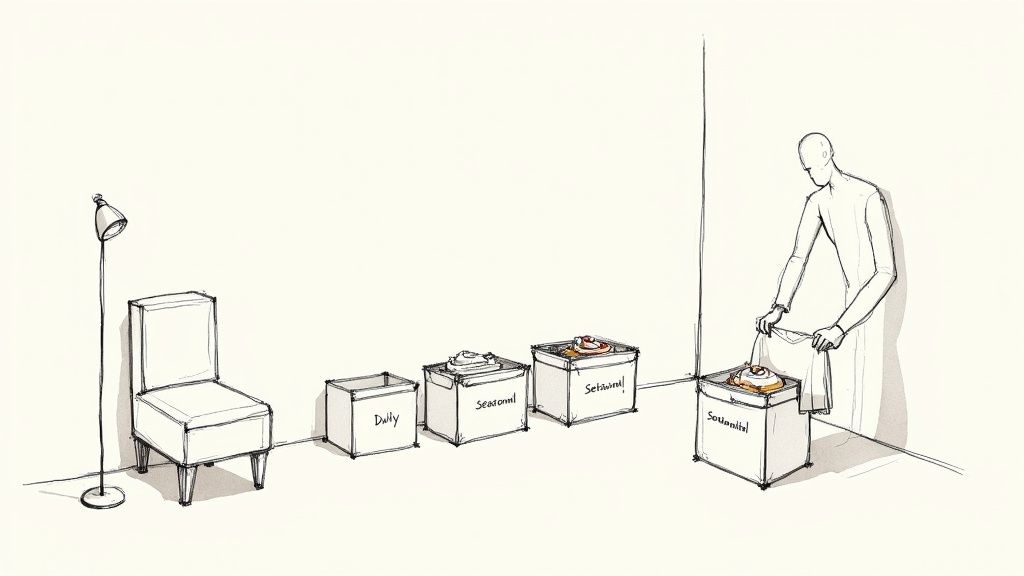
Forget those overwhelming “keep, toss, donate” piles that leave you paralyzed with indecision. A much better approach is to sort items by how often you use them and how much they mean to you. This system cuts through the emotional fog and helps you make logical choices.
Try creating four distinct zones for your belongings:
- Daily Essentials: These are the non-negotiables you reach for every single day—your toothbrush, your go-to coffee mug, your work laptop. They need to be front and center, no exceptions.
- Weekly & Frequent Use: This is for things you use regularly but not daily. Think of your favorite cooking pan, your workout gear, or supplies for your weekend hobby.
- Seasonal & Occasional: Your heavy winter coat, holiday decorations, and the fancy dinnerware for special occasions all live here. They’re important, but they can be tucked away in less-prime real estate.
- Sentimental & Archival: This category is for things that pull at your heartstrings but don’t serve a practical purpose—old photos, travel souvenirs, inherited keepsakes. They’re keepers, but they shouldn’t be hogging valuable, easy-access space.
This method forces you to be brutally honest. If that fancy kitchen gadget hasn’t seen the light of day in over a year, it doesn’t get to live in the “weekly” pile, no matter how good your intentions were when you bought it.
Key Takeaway: The whole point of decluttering isn’t just to ditch your stuff. It’s to figure out exactly what you need to store. That way, you can pick solutions that fit your life, not the other way around.
Tackling Real-World Scenarios
Let’s put this into practice. What about that collection of old concert t-shirts? They’re full of memories but are taking up an entire drawer. Under this system, they’re squarely in the “sentimental” category. Instead of letting them crowd out your everyday clothes, you can vacuum-seal them into a compact bag and slide them under the bed or on a high closet shelf.
The same logic works wonders in the kitchen. Do you really need that avocado slicer, banana keeper, and apple corer taking up prime real estate? If they only get used a few times a year, they are “occasional” items. They have no business being in the main drawer next to the spatula you use daily.
This is all about giving every item a home that reflects its role in your life. Your most accessible storage should be reserved for your most-used things. It just makes daily life smoother. To get the most out of your apartment, decluttering is a must.
Once you have a clear inventory, you can start planning your layout with real measurements. To make sure new furniture will actually fit, resources like these futon sizing charts can be a huge help.
Creating Your Small Space Storage Blueprint

Alright, you’ve sorted through your belongings and have a much better handle on what you actually need to store. Now comes the fun part: moving from purging to planning. This is where you get to be the architect of your own space, creating a blueprint for a home that’s not just organized, but truly livable.
Hold off on buying any new organizers just yet. That’s a rookie mistake. A bit of strategic planning is what separates a thoughtfully designed apartment from a room that’s just stuffed with mismatched containers. It all starts with a tape measure and a little imagination.
Measure Twice, Buy Once
This old saying is the golden rule of small-space design. Accurate measurements are the foundation of everything, and they’ll save you the soul-crushing disappointment of bringing home a new bookcase that’s half an inch too wide for the only nook you have.
Start with the basics: get the length and width of each room, jotting down where doors, windows, and radiators are. But don’t stop there. In a small apartment, your most valuable real estate is often vertical.
- Wall Height: Measure from floor to ceiling. This immediately tells you the maximum height for any shelving unit you’re considering.
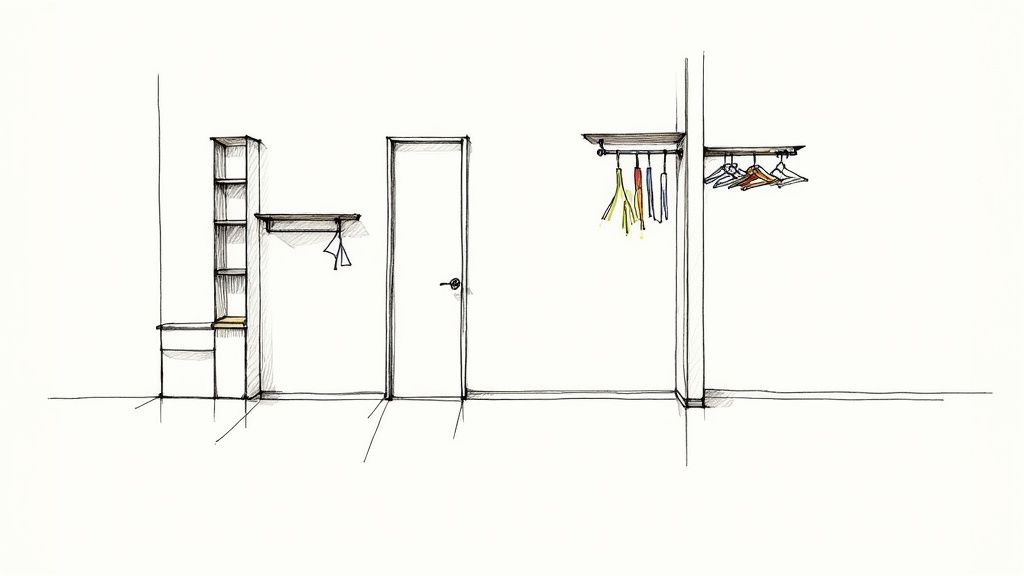
- Above Doorways: That awkward, empty space over your bedroom or bathroom door? It’s perfect for a high shelf to stash things you rarely need, like guest bedding or off-season decor.
- Inside Closets: Check the distance from your top shelf to the ceiling. You might be able to squeeze in another shelf for things you only pull out once a year.
- Window Clearance: Measure the space below your windowsills. This is prime real estate for a low-profile bench with built-in storage that won’t block the light.
Taking these detailed measurements gives you a precise inventory of every inch you have to work with. It turns vague ideas into concrete possibilities and helps you see potential in places you’d normally overlook.
Sketching a Simple Floor Plan
You don’t need fancy software to map out your space. A simple hand-drawn sketch on graph paper is all it takes to prevent expensive mistakes and create a home that flows better. Think of this visual blueprint as your secret weapon.
First, draw the outline of your apartment, marking the doors and windows. Then, sketch in your big-ticket furniture—your bed, sofa, dining table—to scale. Suddenly, you can see exactly how much floor space you actually have. This simple drawing helps you visualize traffic patterns, ensuring you can walk through your home without bumping into things.
Pro Tip: Before you commit to buying a new piece of furniture, cut out a piece of cardboard or paper to its exact dimensions. Place it on the floor where you plan to put it. This lets you physically walk around it, pretend to open its drawers, and get a real feel for how it will impact the room’s flow.
Identifying Storage Zones
With your floor plan in hand, you can start thinking in terms of “zones.” This just means designating specific areas for different activities, which in turn clarifies what kind of storage you need where. It’s an incredibly effective way to bring order to a studio or a cramped one-bedroom.
Think about these common zones:
- Work Zone: This might just be a small corner with a desk. Storage here is all about wrangling documents, chargers, and supplies. Wall-mounted shelves are a great way to keep your desk surface clear.
- Relaxation Zone: This is the area around your sofa. Where will you put blankets, remotes, and books? A storage ottoman or a coffee table with drawers and shelves can work wonders here.
- Sleep Zone: Your bedroom needs a home for clothes, extra linens, and personal items. Under-bed storage and tall, narrow dressers are your best friends in this space.
By assigning a purpose to each part of your apartment, you create a logical system for everything. This blueprint isn’t just about cramming more stuff in—it’s about creating an intentional, organized home where everything has its place.
Choosing Furniture That Works Overtime
In a small apartment, every single piece of furniture needs to earn its keep. Single-use items are a luxury you just can’t afford when square footage is tight. The real secret is choosing pieces that work overtime—furniture that can pull off at least two essential jobs without breaking a sweat.
This isn’t just about finding a coffee table with a tiny drawer. We’re talking about investing in smart, hard-working furniture that actively solves your storage problems while looking great. These are the pieces that make a studio feel more like a one-bedroom or let you turn your living room into a guest room in a snap.
The Modern Sleeper Sofa: A Storage Powerhouse
Let’s be honest, the clunky, back-breaking pull-out couches from the past have given sleeper sofas a bad name. But today’s versions are a whole different animal. They’re stylish, genuinely comfortable, and packed with hidden storage potential. A good sleeper sofa is probably the most valuable player you can have in a small apartment.
Modern designs go way beyond just a mattress tucked inside.
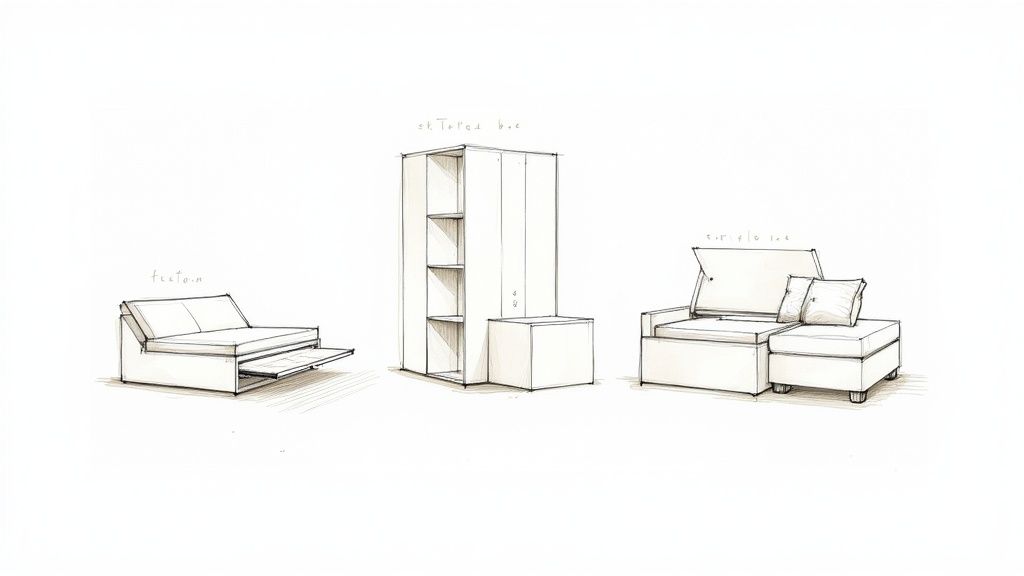
- Sectional Sleepers with Storage Chaises: These are an absolute game-changer. The chaise lounge lifts up easily, revealing a huge compartment inside. It’s the perfect spot to stash bulky pillows, duvets, and extra blankets right where you’ll actually use them.
- Storage Futons and Sofa Beds: Many new models come with drawers built right into the base of the frame. This is prime real estate for organizing board games, electronics, or even off-season sweaters, keeping your living area from looking cluttered.
When you’re shopping, really pay attention to the conversion mechanism. A high-quality, easy-to-use system means you’ll actually use the sleeper function instead of dreading it. Also, think about the fabric—performance textiles are a lifesaver, especially for a piece that gets daily use as both a sofa and a bed. You can explore a huge variety of these multitasking heroes by checking out modern convertible sofa beds that put both style and function first.
Vanishing Beds: The Magic of Murphy and Cabinet Beds
When floor space is the ultimate prize, making a bed completely disappear feels like magic. Wall beds and Murphy cabinet beds are the best solution for reclaiming that precious square footage during the day. You’re not just saving space; you’re practically gaining an extra room.
A traditional wall bed (often called a Murphy bed) folds up vertically into a cabinet that blends in, looking like a sleek wardrobe or bookshelf. This lets you transform a home office or living room into a comfortable bedroom in seconds. Best of all, you get the comfort of a real mattress without it hogging the floor all day.
A Murphy cabinet bed is a brilliant, freestanding alternative. These clever pieces look just like a handsome credenza or media console. When it’s time for bed, the cabinet unfolds into a queen-sized bed. Since they don’t have to be bolted to the wall, they’re a fantastic option for renters who need a guest bed without any permanent installation.
To help you decide which space-saving bed is right for you, here’s a quick comparison of the most popular multifunctional options.
Comparing Multifunctional Furniture for Small Apartments
| Furniture Type | Primary Function | Key Storage Benefit | Best For |
|---|---|---|---|
| Storage Futon | Seating & Sleeping | Under-frame drawers | Studios and multi-use living rooms. |
| Sectional Sleeper | Seating & Sleeping | Hidden chaise compartment | Living rooms needing to hide bulky bedding. |
| Murphy Cabinet Bed | Sleeping | Freestanding cabinet design | Renters or anyone needing a guest bed without wall installation. |
| Wall Bed | Sleeping | Folds into wall unit | Dedicated home offices or small spaces needing to maximize floor area. |
Each of these pieces brings something different to the table, but they all share one crucial goal: making your small space live larger than it is.
Beyond the Bed: Creative Multifunctional Pieces
While sleeper sofas and wall beds are the heavy hitters, plenty of other furniture can pull double duty and add critical storage in unexpected places. The key is to look at every potential purchase with versatility in mind.
Think about bringing some of these clever pieces into your home:
- Storage Ottomans: An absolute must-have. They work as extra seating, a footrest, a makeshift coffee table (just add a tray), and a hidden bin for everything from magazines to remote controls.
- Lift-Top Coffee Tables: These tables have a top that raises up to a comfortable height for dining or working, often revealing a hidden storage compartment underneath for laptops, books, and chargers.
- Nesting Tables: Instead of one bulky end table, a set of nesting tables gives you multiple surfaces when you need them and tucks away into a tiny footprint when you don’t.
When you’re really looking to get creative, innovative designs like freestanding wood stairs with integrated storage can turn otherwise wasted vertical space into valuable hidden compartments. By choosing furniture that serves more than one purpose, you aren’t just organizing your apartment—you’re actively multiplying its functionality and making every square foot count.
Thinking Vertically to Maximize Every Inch
Once you’ve run out of floor space, the only way to go is up. This is the secret weapon for making a small apartment feel surprisingly large. It’s all about tapping into the potential of your walls, closets, and even the air above your head—spaces you probably don’t even think about as usable real estate.
Building upward allows you to reclaim your living area from clutter. Instead of adding another bulky, floor-hogging piece of furniture, you draw the eye upward, creating an illusion of height and openness. It’s a simple trick that turns blank walls into hard-working storage assets.
Reclaiming Your Walls and Corners
Floating shelves are a classic for a reason. They give you that clean, minimalist look while providing a much-needed surface for books, plants, or decor—all without the heavy footprint of a traditional bookcase. Stick them above a sofa or desk to keep your daily essentials within reach but off your primary surfaces.
A tall, narrow bookcase can also become a fantastic anchor in an awkward, underused corner. These pieces are masters of vertical efficiency. They hold a ton of stuff while only taking up a tiny patch of the floor, making them one of the best storage solutions for small apartments.
And if you’re dealing with kids’ rooms or a shared space, going vertical is a total game-changer. High-quality bunk and loft beds, for instance, are the ultimate space-savers. They free up the entire floor underneath for a desk, a play area, or even more storage.
Hacking Your Closets for Maximum Capacity
Your closet might feel completely stuffed, but chances are it’s not working at its full potential. Most closets come with just a single rod and one high shelf, leaving a massive amount of vertical space totally wasted. A few simple tweaks can easily double your capacity.
Here are a few tactics to try:
- Add a Second Rod: An adjustable tension rod installed below your main one is a five-minute fix that instantly doubles your hanging space. Use the top for longer items like dresses and coats, and the bottom for shirts and folded pants.
- Embrace Cascading Hangers: These clever hangers have a little hook that lets you hang another one from it, creating a vertical chain of clothing. They’re perfect for grouping outfits or storing similar items like blouses in a fraction of the horizontal space.
- Use Slim Hangers: Ditch those bulky wooden or plastic hangers. Switching to uniform, slim-profile velvet hangers can free up a surprising amount of rod space, letting you fit more clothes without cramming them in.
Expert Insight: Don’t forget the closet floor. A low-profile shoe rack or a set of clear, stackable drawers can give shoes and folded items a proper home, preventing that dreaded pile-up at the bottom of your closet.
The Underestimated Power of Over-the-Door Organizers
That forgotten sliver of space behind your door is pure storage gold. Over-the-door organizers are no longer just for shoes—they’re incredibly versatile tools that can declutter almost any room in your apartment.
Think about it:
- In the Bathroom: A pocket organizer is perfect for holding toiletries, hair tools, and cleaning supplies, freeing up that precious counter and cabinet space.
- In the Pantry: Use one to store spices, snacks, and other small items, making everything easy to see and grab.
- In the Home Office: It can work as a fantastic vertical filing system for notebooks, pens, and other supplies that would otherwise clutter your desk.
These organizers require zero installation and add a ton of storage without taking up a single square inch of your floor.
A Critical Note on Safety
As you start building upward, safety has to be your top priority. Any tall, freestanding furniture like a bookcase or shelving unit poses a tipping risk, especially if you have kids or pets. It is absolutely essential to anchor these pieces securely to the wall.
Most new furniture comes with an anti-tip kit. Never skip this step. Use a stud finder to locate a secure point in the wall. Properly securing your tall storage isn’t just a friendly suggestion—it’s a critical safety measure that ensures your beautifully organized space is also a safe one.
How to Budget for Your Storage Makeover
An organized, functional apartment is a genuine investment in your well-being, but it doesn’t need to drain your bank account. Creating a realistic budget is about being strategic, not just throwing money at the problem. It’s about prioritizing purchases that deliver the biggest impact on your daily life.
This whole process starts with a simple audit of your needs. After you’ve decluttered and sketched out a floor plan, you know exactly what needs a home. Now, you can start assigning a dollar value to solving your most pressing storage problems.
Prioritize High-Impact Investments
Not all storage solutions are created equal. It’s tempting to grab a cartful of small bins and organizers, but your first investment should almost always be a large, multifunctional piece of furniture. Why? Because one great piece can often eliminate the need for several smaller ones, saving you both money and precious floor space down the road.
Think about your biggest pain points. Is your bedroom overflowing? Is your living room doubling as a chaotic guest room?
- For Clothing Chaos: A quality storage bed is a much smarter first purchase than a new dresser and a dozen closet organizers combined. The built-in drawers can hold an entire season’s worth of clothes, instantly freeing up your closet. You can explore different styles to see how futon bed storage drawers can completely transform a bedroom.
- For Multi-Use Spaces: A sectional sleeper with a storage chaise solves three problems at once. You get seating, a comfortable guest bed, and a massive hidden compartment for all your bedding and pillows.
Focusing your initial budget on one of these workhorse pieces provides the biggest return on your investment, hands down.
Finding Quality Across Price Points
You don’t need a limitless budget to create a beautiful, organized space. The key is knowing where to save and where to splurge. A smart mix of high and low-cost items can give you a result that feels cohesive and works for your wallet.
For those foundational pieces like your sofa or bed, it’s wise to invest in the best quality you can comfortably afford. A durable frame and a well-made mechanism will last for years, probably moving with you from one apartment to the next. For smaller items, you can get creative.
Savvy Spending Tip: Never underestimate the power of a good DIY hack. A simple coat of paint can unify mismatched organizers, and adding stylish new hardware to a basic IKEA cabinet can make it look like a high-end custom piece.
The Real Cost of Off-Site Storage
Sometimes, even with the best in-home solutions, you might feel squeezed and start thinking about an off-site storage unit. While it can be a practical fix for truly seasonal or sentimental items, it’s crucial to analyze the real cost before you sign anything. The global self-storage market has become a massive industry, estimated at about USD 60.1 billion in 2024 and projected to approach USD 89.7 billion by 2033, partly because of demand from people in small spaces. You can find more insights on the self-storage market at ResearchAndMarkets.com.
Before you commit, do the math. A storage unit costing $100 per month is $1,200 a year. For that same amount, you could likely buy a high-quality storage bed or a new wall unit that solves the problem permanently, right inside your home. Off-site storage should be a last resort for things you rarely need, not a long-term crutch for everyday overflow.
Common Small Apartment Storage Questions
Even with the best game plan and the smartest furniture, you’re bound to run into a few tricky situations when you’re trying to tame a small space. We get it. From navigating landlord rules to figuring out why your organized apartment still feels chaotic, certain challenges pop up again and again.
Here are our answers to some of the most common questions we hear.
How Can I Add Storage Without Drilling Holes in My Rental?
This is probably the number one concern for renters, and for good reason—getting that security deposit back is crucial. Thankfully, you don’t need a drill to add a ton of storage. The secret is to think vertically and use freestanding pieces that work with your space instead of fighting it.
Forget the wall anchors. Your best friends in a no-drill apartment are:
- Freestanding Vertical Furniture: Tall, narrow bookcases or leaning ladder shelves are brilliant. They use vertical space, which is often ignored, and don’t require a single screw. Just make sure they’re in a spot where they won’t get knocked over.
- Tension Rods: These things are incredibly versatile. You can use them to add a second hanging rail in a closet, create a makeshift closet in an alcove, or even hang cleaning supplies under a sink.
- Over-the-Door Organizers: Don’t sleep on these. A good one with deep pockets can handle everything from bathroom toiletries to kitchen spices, clearing off precious counter and cabinet space.
- Furniture with Built-In Storage: This is the ultimate renter-friendly hack. A storage ottoman, a lift-top coffee table, or a bed frame with drawers gives you a huge amount of storage without leaving a single mark behind.
What Is the Best First Storage Purchase for a Studio Apartment?
In a studio, every single item has to earn its keep. There’s no room for slackers. That’s why the most impactful first purchase is always a high-quality storage bed or a convertible sleeper sofa that has a storage chaise.
Why? Because these pieces tackle the two biggest space hogs—your bed and your sofa—and force them to do double duty.
A bed with deep, built-in drawers can literally replace an entire dresser. Just like that, you’ve freed up a huge chunk of floor space and cut down on visual noise. In the same way, a sleeper sofa with a storage chaise gives you guest seating, a place to sleep, and a massive hidden compartment for bulky stuff like duvets and extra pillows.
Start with one of these foundational pieces. You’ll get the biggest organizational bang for your buck right away, setting the stage for a genuinely uncluttered home.
My Apartment Feels Cluttered Even with Organizers. What Am I Doing Wrong?
This is a super common and frustrating problem. It usually comes down to one of two things.
First, you might have too much open storage. All those open shelves look fantastic on Pinterest, but in the real world, they can quickly turn into visual chaos. The fix is simple: lean into closed storage. Think cabinets, drawers, and solid-colored baskets. They hide the mess and instantly make a room feel calmer and more put-together.
The second culprit is often a bit harder to admit: the organizers have become a crutch for hoarding things you don’t actually need. The best long-term strategy is to adopt a strict “one in, one out” rule. Every time you bring something new home, something similar has to go. This simple habit keeps things in balance and is the single most effective way to stop clutter from creeping back in.
When Should I Consider Off-Site Storage?
An off-site storage unit can be a lifesaver, but only for a very specific job. It’s for things you absolutely need to keep but almost never need to access. We’re talking seasonal holiday decorations, inherited furniture you don’t have room for right now, or that kayak you use three times a year.
Before you sign a lease on a unit, do a quick cost-benefit analysis. Look at the monthly fee and ask yourself if the items are worth the “rent” you’re paying for them. If you find yourself driving to the unit more than a couple of times a year, it’s almost always smarter and cheaper to find a solution at home.
Think about it: if a year of storage fees could pay for a beautiful new storage bed, the investment in your own home is the much better choice.
At Futonland, we believe that smart, multifunctional furniture is the foundation of a happy, organized home. From storage beds that eliminate the need for a dresser to sleeper sofas that hide away bedding, our curated collection is designed to help you make the most of every square foot. Explore our space-saving solutions and find the perfect piece to solve your storage challenges.