No-Setup Guest Beds for Rental Units: Host’s Buying Guide
You’re probably dealing with one of two situations right now. A guest wants to book for three or four people, but your unit only sleeps two comfortably. Or you manage a small apartment, office-guest-room combo, or a rental where adding a permanent bed feels like inviting a compliance headache.
That’s where no setup guest beds for rental units earn their keep. The right option adds sleeping space without drilling into walls, hauling in a massive frame, or leaving your cleaner wrestling with hardware between turnovers. It also gives you a way to say yes to more bookings without making the place feel cramped or improvised.
The mistake new hosts make is buying for the listing photo. Experienced hosts buy for the fifth turnover, the tired guest arriving late, and the cleaner who has twenty minutes to reset the room. Those are the moments that decide whether a guest says “surprisingly comfortable” or “never again.”
Why Smart Guest Beds Boost Rental Revenue
A common hosting problem shows up on high-demand weekends. The calendar is full of inquiries, but the unit has one fixed queen bed and one decent sofa that isn’t meant for sleep. A couple books instantly. A small family hesitates. A group of friends moves on because they filtered for more sleeping spots.
That’s not a styling issue. It’s a revenue issue.
There’s a real, well-documented relationship between how many people a listing can sleep and what it can charge — both Airbnb and Vrbo let hosts charge extra guest fees, which turns each additional workable sleeping surface into incremental revenue. When demand isn’t doing all the work for you, flexible sleep capacity can help your listing win the booking.
What this looks like in practice
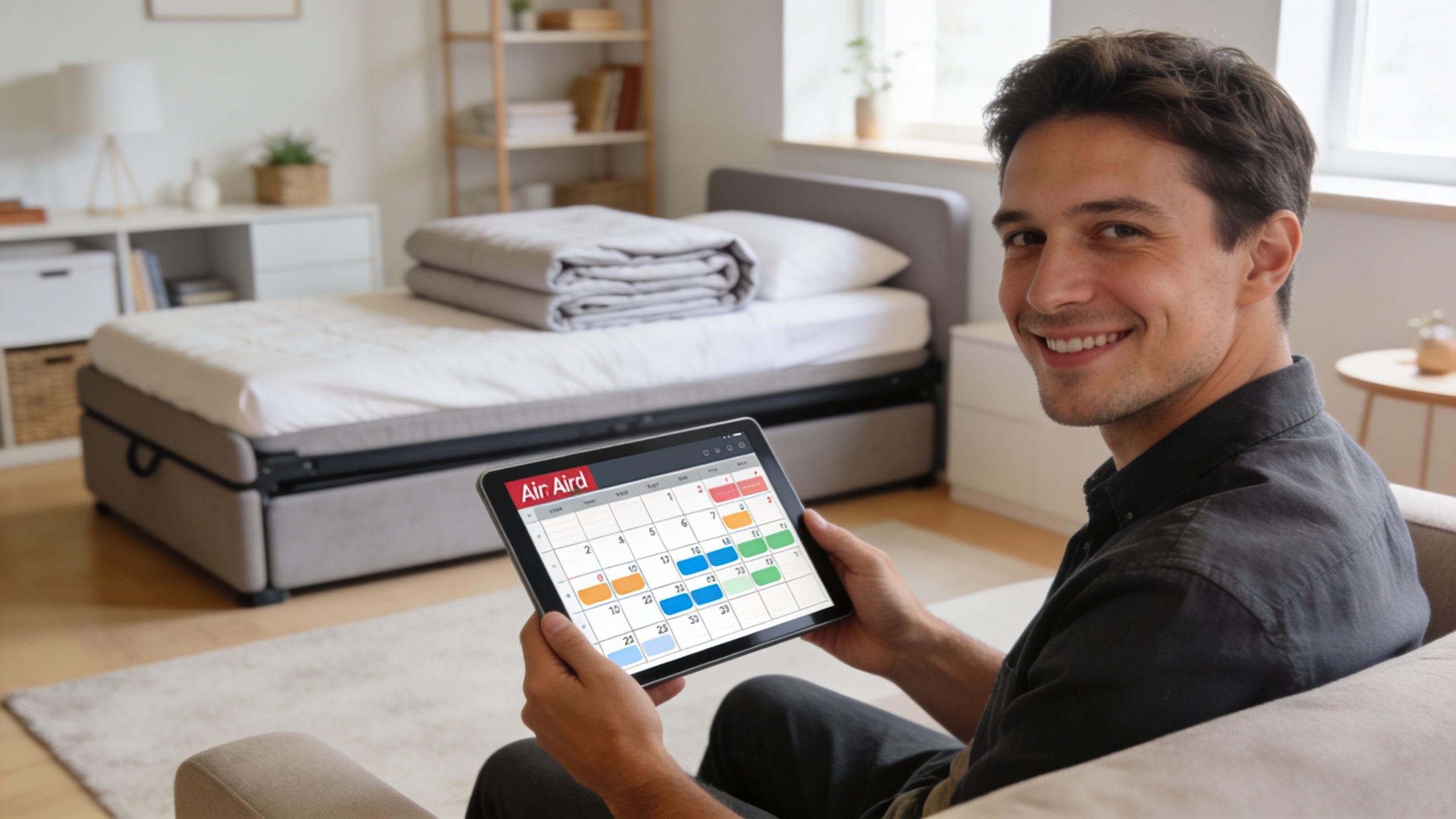
A host with a compact one-bedroom doesn’t always need another bedroom. Often, they need one more credible place to sleep. That could be a convertible sofa in the living room, a cabinet bed in a den, or a well-made futon in a flex room. The point is simple. Guests search by capacity, and platforms treat beds and guest count as functional filters.
Practical rule: Don’t add a sleeper just to raise the headcount on paper. Add one only if a tired guest can set it up in seconds and wake up without cursing your listing.
The ROI question hosts should ask
The useful question isn’t “Can I fit another bed?” It’s “Can I add another sleep surface that guests will use and that cleaners won’t hate?”
That’s why many hosts start by comparing proven categories such as space-saving futons for guest-ready rooms. You’re not only buying an extra bed. You’re buying more booking flexibility, better use of square footage, and one less reason for a guest to scroll past your listing.
What Qualifies as a No Setup Guest Bed
Hosts throw around “no setup” too loosely. In rental terms, no setup means a guest can use the bed without tools, without moving half the room, and without needing instructions longer than a sticky note. Think of it as plug-and-play furniture for sleep.
That standard matters because there’s a big difference between “arrives assembled” and “works smoothly in a rental.” A guest bed can be easy to install once and still be annoying every single stay.
True no setup
These are the easiest options operationally. The bed is already part of the furniture, and converting it takes very little effort.
Examples include:
- Convertible sofas that open in one motion. Guests understand them immediately.
- Futons with a simple fold-flat mechanism. Fewer moving parts usually means fewer service calls.
- Rollaway beds that unfold and lock quickly. Best when you can store them out of sight.
- High-quality inflatable mattresses with built-in inflation. Fast to deploy, but quality varies a lot.
Minimal setup
These options aren’t hard, but they aren’t instant either. They may need light positioning, handle attachment, unpacking, or a separate mattress component.
A cabinet bed often lands here. It doesn’t require wall mounting like a traditional Murphy bed, but it still needs more intention than a sofa that folds down. Some folding guest beds also count as minimal setup because they’re easy to unfold but still need storage planning and linen handling.
If a cleaner needs to watch a video every time they reset it, it isn’t no setup in any meaningful rental sense.
A quick test before you buy
Use this three-part filter:
Guest test
Could a late-arriving guest figure it out alone?Cleaner test
Can your turnover team reset it fast without pinched fingers, missing parts, or awkward lifting?Storage test
When it’s not in use, does it leave the room looking intentional rather than temporary?
Many hosts shopping for this category end up looking at folding beds for small rentals and guest overflow, but the product page never tells the whole story. You’re not just buying convenience. You’re buying repeatable use by strangers who won’t treat the furniture gently or patiently.
This is its definition. A no setup guest bed works for the guest, the cleaner, and the room.
Comparing Top No Setup Bed Categories
Some guest beds look good in product photos and fail under rental traffic. Others look plain but perform reliably for years. The best choice depends on who stays in your unit, how often the bed is used, and how much daytime floor space you can give up.
Side by side trade-offs
| Bed Type | Guest Comfort | Durability | Daytime Footprint | Best For |
|---|---|---|---|---|
| Convertible futon or sofa bed | Strong when the mechanism is simple and the mattress is decent | Good if built for repeated opening and closing | Moderate, doubles as seating | Studios, living rooms, mixed-use spaces |
| Murphy cabinet bed | Usually better than people expect because it feels more like a real bed | Strong when the cabinet and hardware are well made | Low when closed | Dens, home offices, premium small units |
| High-quality inflatable mattress | Acceptable for occasional overflow, weak for frequent use | Lower under repeated rental use | Very low when stored | Rare extra guest situations |
| Modern rollaway bed | Better than old hotel-style versions if the mattress is solid | Moderate, depends on frame quality and storage handling | Medium, needs closet or corner storage | Families, seasonal guest overflow, larger units |
Convertible sofas and futons
These are often the best all-around choice for hosts because they solve two problems at once. They give you seating during the day and a usable bed at night. In a rental, that matters more than novelty.
The catch is mechanism quality. A clumsy pull-out or stiff hinge turns a convenient idea into a guest complaint. The better models convert in one or two obvious motions and don’t force guests to remove heavy cushions and guess where to stash them.
For hosts comparing layouts, convertible sofa beds for compact rental spaces are often the category to study first because they affect both your sleep capacity and your daytime staging.
Murphy cabinet beds
These earn strong reviews from practical hosts because they hide the bed without requiring wall mounting in the way a traditional Murphy bed often does. That makes them appealing in rentals where drilling is off limits or undesirable.
Cabinet beds preserve daytime floor space in a way most other guest-bed categories don’t, and better-built models are engineered for exactly the kind of frequent guest-use cycles a rental puts them through. That tracks with what many operators see on the ground. Guests like rooms that don’t feel like bedrooms all day.
A guest forgives compact square footage faster than they forgive awkward square footage.
The downside is weight and bulk. Cabinet beds are furniture pieces, not casual add-ons. You need a clear delivery path and a room layout that leaves enough opening space.
Inflatable mattresses
These solve a very narrow problem well. They’re cheap to store, easy to deploy, and useful when you only occasionally need one more sleep spot.
They also create the highest risk of your listing feeling improvised. If the unit is marketed for that extra guest every week, an inflatable bed usually isn’t the professional answer. Leaks, pump issues, low height, and the “camping indoors” feel all catch up with you.
Rollaway beds
Modern rollaways are better than the old rattling hotel versions many people remember. The good ones open quickly, store fairly compactly, and feel more bed-like than an air mattress.
Their weak point is aesthetics. Unless you have a real storage plan, they tend to live in the corner and make the unit feel less polished. For family-oriented rentals or larger homes, that may be fine. For tighter city apartments, it often isn’t.
How to Choose the Right Bed for Your Rental
The wrong guest bed creates work every single stay. The right one disappears into your operation. It fits the room, survives turnover, and gives guests a clear, comfortable place to sleep without forcing you into layout or legal mistakes.
Start with guest use, not product type
Before you compare models, decide how the bed will be used.
If the extra bed is for occasional children or one-night overflow, you can accept more compromise. If adults will sleep on it regularly, don’t buy a backup solution and hope reviews stay kind. Guests may tolerate a smaller room. They won’t forget a bad night’s sleep.
A useful filter is to ask which sentence you want a guest to say: “The place sleeps four” or “All four of us slept well.” Those are not the same thing.
Five factors that matter most
Conversion speed
The best no setup guest beds for rental units open in one or two intuitive motions. If operation feels mechanical or fussy, guests will either avoid it or use it incorrectly.Cleaning workflow
Every extra bed adds linen handling, inspection, and reset time. Choose materials and designs your cleaner can wipe down, vacuum around, and remake fast.Durability under turnover
Rental furniture gets opened by strangers, pulled from odd angles, and used by people who don’t own it. Simpler moving parts usually age better than elaborate systems.Room function during the day
A guest bed shouldn’t destroy the daytime value of the room. If the office, den, or living room becomes dead space whenever the bed is out, think hard about whether the room is working for you.Regulatory context
New hosts often overlook this. Depending on where you operate, local short-term rental rules can affect what kind of sleep setups are appropriate or how a unit is classified. This is a legal question worth confirming with your local regulations or an attorney, not something furniture choice alone resolves.
Field note: If a bed choice makes your listing harder to explain to a landlord, co-op board, or cleaner, it’s probably the wrong bed.
What usually works best
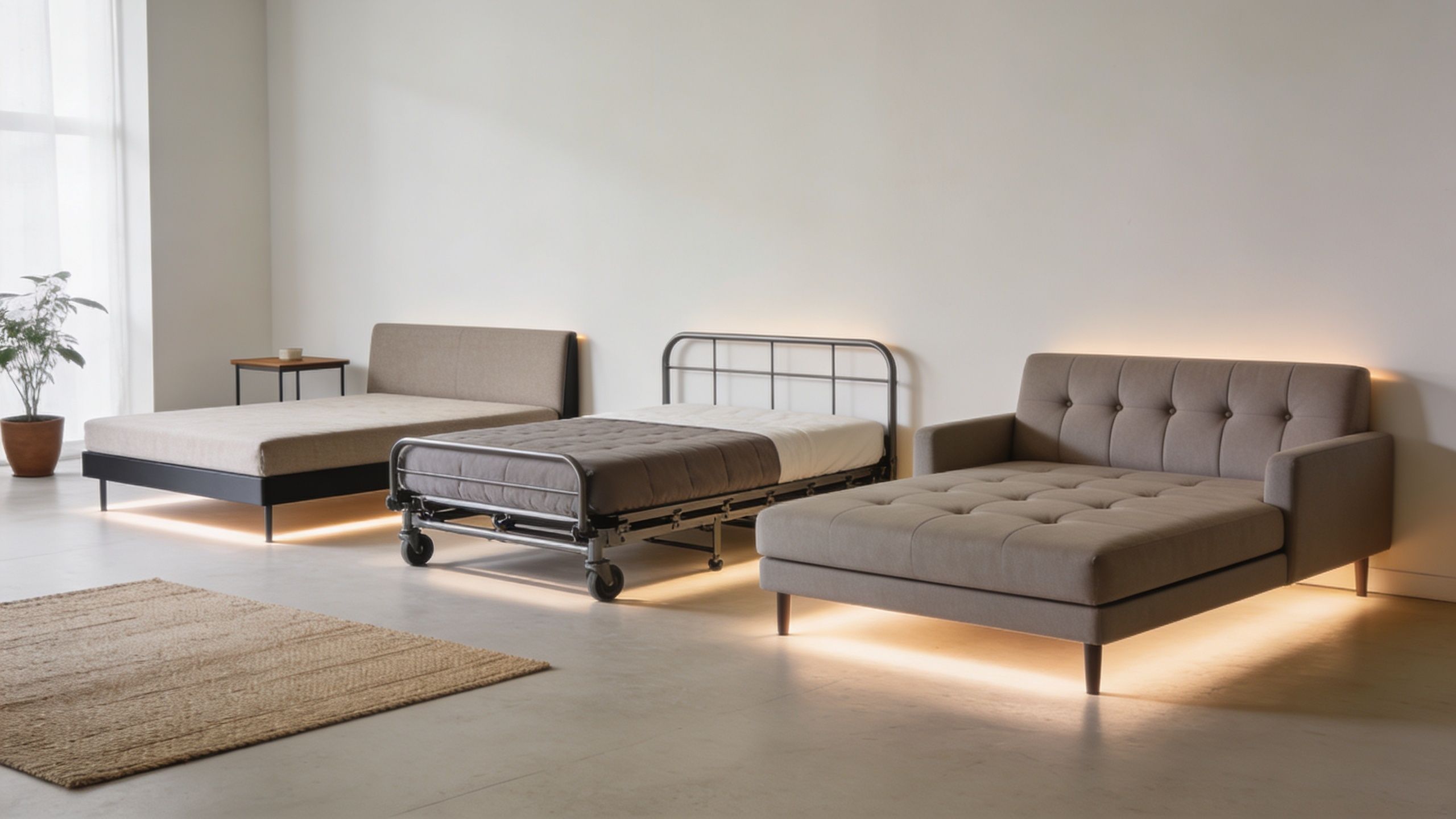
For most hosts, the sweet spot is a sleeper that feels intentional, not temporary. A convertible sofa works well in living areas. A cabinet bed works well in flex rooms where daytime space matters. A rollaway can work if the property is larger and storage is easy. Air mattresses are best kept as rare backup, not front-line inventory.
The right bed lowers friction. That’s the metric that matters. Less friction at booking, less friction at check-in, less friction at turnover.
Streamlining Your Rental with Futonland Services
Property managers don’t just buy furniture. They buy fewer headaches. Delivery delays, assembly problems, packaging debris, and old furniture removal can turn a simple bed upgrade into a multi-day project.
That’s where service matters as much as the product. Many hosts sit on usable spare capacity in a home simply because turning that space into a real guest-ready bedroom is a bigger project than they want to take on, and regulatory or lease constraints can make permanent build-outs impractical anyway — which is exactly why flexible, non-permanent furniture matters so much for rental operators.
Why full-service help changes the math
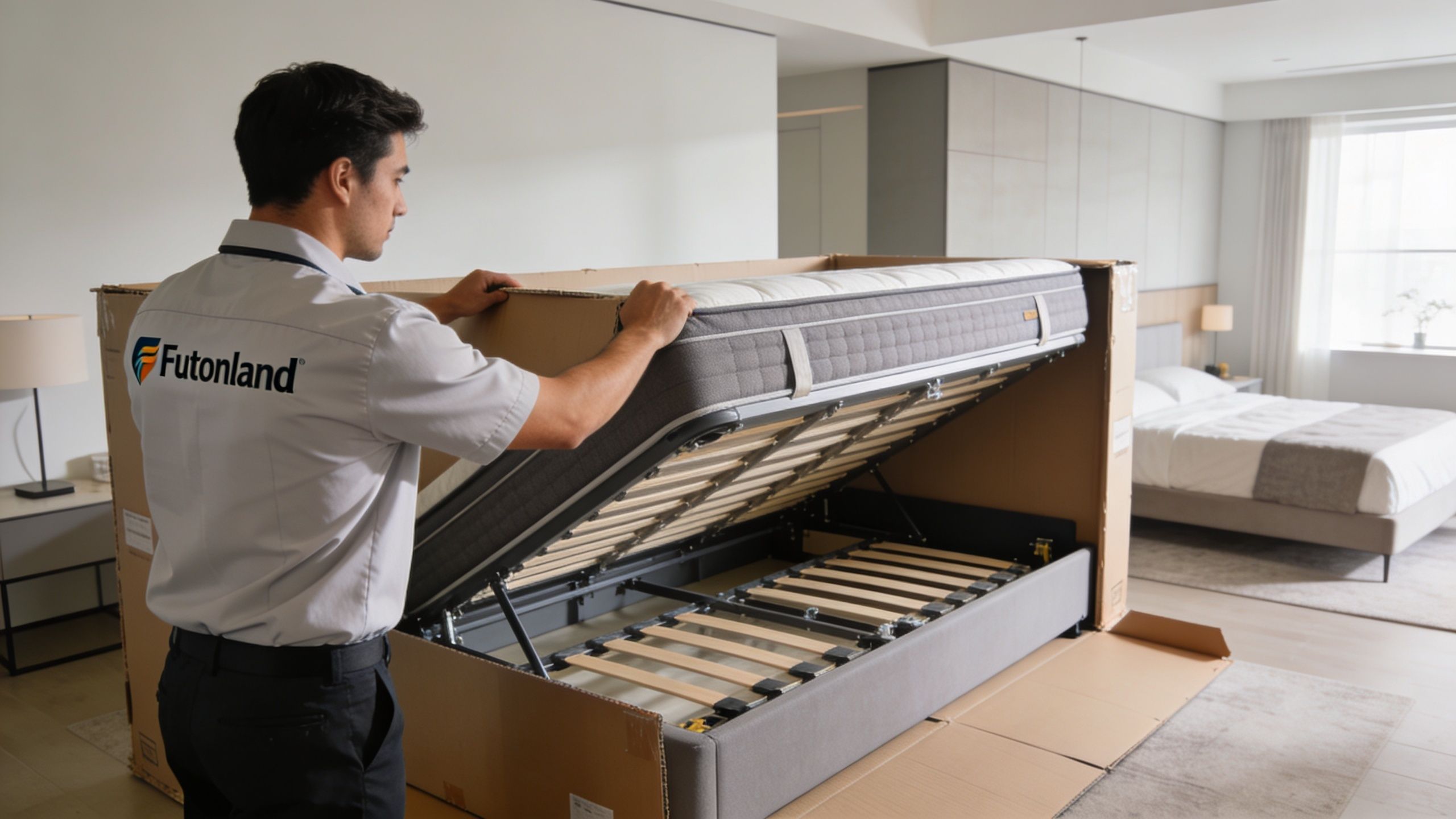
For a busy host, “no setup” should apply to the purchase experience too. White-glove delivery and assembly remove the most failure-prone part of the process. You don’t have to coordinate a handyman, deal with missing hardware, or ask your cleaner to help move a heavy frame.
That’s especially useful in city properties where stairwells, tight entries, and limited storage make every install harder. Add debris removal and old furniture disposal, and the switch from one sleep solution to another becomes manageable instead of disruptive.
Where Futonland fits
Futonland’s advantage for hosts is that it combines the furniture categories rental operators use with services that reduce operational drag. That includes futons, convertible sofa beds, sectional sleepers with storage, Murphy cabinet beds, wall beds, mattress upgrades, custom covers, and delivery support.
For owners furnishing a unit quickly, guest-ready futon sets and packaged sleep solutions can simplify the buying decision. Instead of piecing together frame, mattress, and accessories from different vendors, you can get a coordinated setup that’s easier to install and easier to manage.
Good rental furniture isn’t just comfortable on night one. It stays easy to run after dozens of arrivals, departures, and deep cleans.
The practical appeal is straightforward. One vendor, fewer moving parts, less downtime between deciding to add sleeping space and listing that extra capacity.
If you’re trying to add sleeping space without drilling, heavy assembly, or making your unit feel makeshift, start with the bed type that matches your turnover routine and your local rules. Then buy from a seller that can help you get it in place fast. For hosts who want flexible sleep solutions plus delivery, assembly, and support, Futonland is worth a look.
Host FAQ for No Setup Guest Beds
How should I explain the bed to guests?
Keep instructions short and visible. A laminated card in the room works well. So does a message in your check-in guide with two or three plain-language steps. If the conversion has one common mistake, mention that directly.
Don’t write a manual. Guests skim.
What kind of bedding setup works best?
Store the bed made as far as the design allows, or keep the full linen set bundled together nearby. The goal is to make setup obvious and fast. If a guest has to hunt through closets for fitted sheets, you’ve already made the experience feel temporary.
How do I help cleaners maintain it?
Ask cleaners to test the opening and closing motion during every turnover. Small issues show up early that way. Also have them check for loose covers, trapped linens, or items that slid into the mechanism.
A quick visual check prevents most guest-day surprises.
Are cabinet beds durable enough for rentals?
The good ones are, provided they’re built for repeated use and the room has enough clearance to open them properly. Most failures come from poor placement or rough handling, not the concept itself.
Should I ever rely on an air mattress?
Only as true overflow. If your listing regularly needs the extra bed to meet guest expectations, upgrade to a more stable sleep solution. Guests can tell the difference between “thoughtfully flexible” and “we needed one more place to put someone.”
What should I avoid?
Avoid anything that requires tools, complicated lifting, or moving multiple furniture pieces every stay. Also avoid sleep solutions that look fine folded up but feel flimsy once opened. In rentals, ease of use and repeatability beat cleverness every time.