
Your Guide To The Best Eco Friendly Mattresses
The best eco-friendly mattresses are made from natural, non-toxic materials like GOLS-certified organic latex, GOTS-certified organic cotton, and organic wool. These materials are a huge upgrade over conventional petroleum-based foams, creating a healthier sleep environment while supporting sustainable, earth-friendly practices.
Begin Your Journey to Healthier Sleep
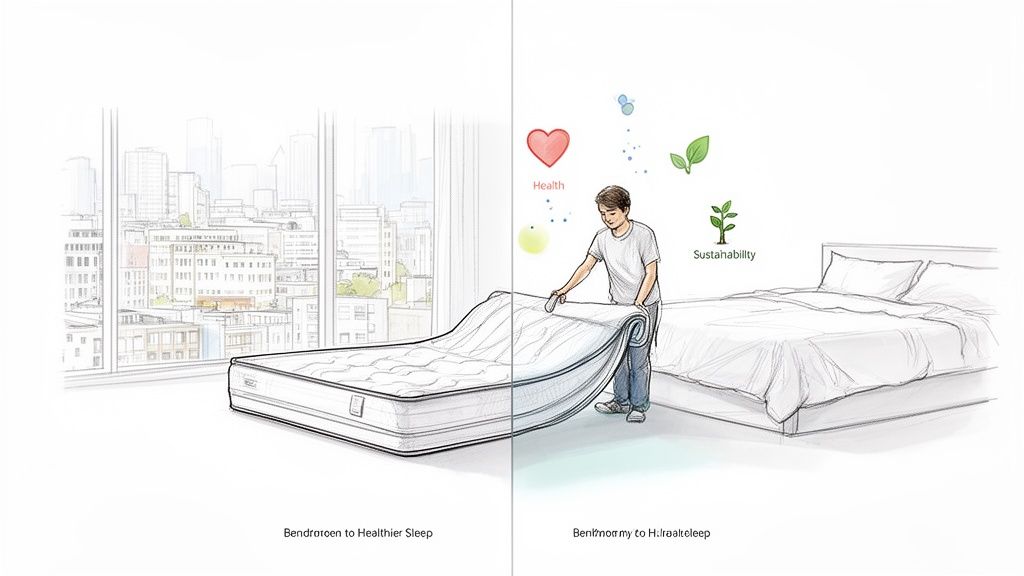
Choosing a new mattress is far more than just a simple purchase—it’s a real investment in your well-being. For decades, the standard mattress has been a cocktail of synthetic foams, chemical glues, and flame retardants that can release volatile organic compounds (VOCs) into your home. This process, called off-gassing, can seriously impact your indoor air quality and, over time, your health.
This guide is your straightforward roadmap to a better, healthier alternative. We’ll cut through all the confusing marketing jargon and get straight to what makes a mattress truly eco-friendly, helping you understand the real benefits behind terms like ‘natural,’ ‘organic,’ and ‘non-toxic.’
Why Your Mattress Choice Matters
Think about your mattress the same way you think about the food you eat. You wouldn’t want to eat ingredients you can’t pronounce or that are known to be harmful, right? Well, you spend about a third of your life sleeping on your mattress, breathing in whatever it’s made of. The best eco-friendly mattresses are built with materials that work with your body and the environment, not against them.
Here’s what making the switch to an eco-friendly mattress really means for you:
- Improved Indoor Air Quality: Natural materials like latex, cotton, and wool don’t off-gas nasty VOCs. This creates a much cleaner breathing space, which is especially important in smaller city apartments or cozy bedrooms. If improving air quality is a top priority, looking into low VOC furniture is a great next step.
- Reduced Chemical Exposure: By skipping the polyurethane foams and chemical fire retardants, you minimize your direct contact with potentially irritating or toxic substances night after night.
- Sustainable Sourcing: The core ingredients are renewable. Natural latex, for example, is tapped from rubber trees that continue to grow and absorb carbon dioxide from the atmosphere.
- Enhanced Durability: High-quality natural materials almost always outlast their synthetic counterparts. Your investment lasts longer, and you create less landfill waste. With an estimated 40 million mattresses thrown out each year in the USA alone, choosing a durable one makes a real difference.
An eco-friendly mattress is designed to have a lower carbon footprint than traditional mattresses. They are popular choices for those who are environmentally conscious and want to avoid breathing in chemicals while they sleep.
This guide will give you the confidence to navigate your options, whether you’re furnishing a master bedroom or finding the perfect, flexible futon mattress for a compact city apartment. Your journey to a healthier, more restorative sleep starts right now.
What Truly Makes a Mattress Eco Friendly
Navigating the world of “eco-friendly” products can feel like trying to read a map in a foreign language. Vague terms like “green” and “natural” are everywhere, but what do they really mean when it comes to your mattress? It’s time to cut through the marketing noise and get straight to what makes a mattress a healthier, more sustainable choice for your home.
Think of it like shopping at a farmer’s market versus a giant supermarket. At the market, you can see the fresh ingredients, talk to the farmer, and understand exactly how everything was grown. A truly eco-friendly mattress invites that same level of transparency, focusing on its entire lifecycle—from the farm to your bedroom, and eventually, back to the earth.
This shift isn’t just a passing trend. The demand for healthier sleep has fueled massive growth, with projections showing the eco-friendly mattress sector expanding from around $2 billion to over $2.9 billion by 2025. This surge is driven by shoppers who are tired of chemical-heavy products and are actively seeking cleaner alternatives.
The Three Pillars of Sustainability
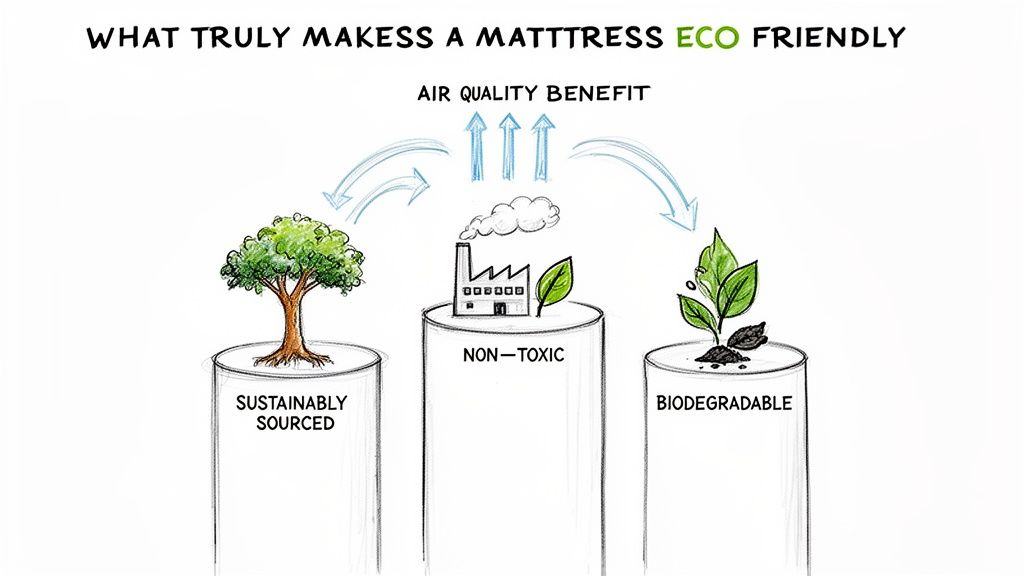
For a mattress to be genuinely eco-friendly, it needs to stand on three foundational pillars. These aren’t just buzzwords; they represent a real commitment to a product that’s better for you and the planet.
-
Sustainably Sourced Materials: It all starts with the raw ingredients. The best eco-friendly mattresses use renewable resources like natural latex tapped from rubber trees, GOTS-certified organic cotton, and organic wool. These materials are grown and harvested in ways that work with the environment, not against it.
-
Non-Toxic Manufacturing: This is where the difference becomes crystal clear. Unlike conventional mattresses made with petroleum-based foams and chemical adhesives, sustainable manufacturing avoids harmful substances altogether. That means no toxic flame retardants and no glues that release VOCs (Volatile Organic Compounds) into your home.
-
End-of-Life Consideration: A product’s lifecycle doesn’t end when you bring it home. A truly sustainable design accounts for what happens after its useful life is over. Mattresses made from biodegradable materials like latex and wool can break down naturally, keeping them out of landfills.
Why It Matters For Your Health
The real-world benefit of these pillars is a healthier indoor environment. Traditional mattresses can “off-gas” VOCs for years, polluting the very air you breathe while you sleep. This is especially concerning in smaller living spaces like city apartments, where air circulation is often limited.
A non-toxic mattress is about more than just avoiding chemicals; it’s about actively creating cleaner air and reducing your daily chemical load. By choosing materials that are inherently safe, you turn your bedroom into a true sanctuary for rest and recovery.
Many manufacturers use wool as a natural flame barrier—a clever solution that meets federal fire safety standards without resorting to harsh chemicals. If you want to dive deeper, you can explore mattresses that use no fire retardant chemicals to see just how beneficial this approach can be.
How To Spot Greenwashing
“Greenwashing” is a sneaky marketing tactic where companies make misleading claims about their environmental practices. To avoid it, always look for specific, third-party certifications, which we’ll break down in the next section. Vague phrases like “eco-made” or “made with natural materials” without any proof are major red flags.
By focusing on verifiable facts and certifications over fuzzy language, you can confidently choose a mattress that truly aligns with your values and supports a healthier home.
How To Decode Eco-Friendly Certifications
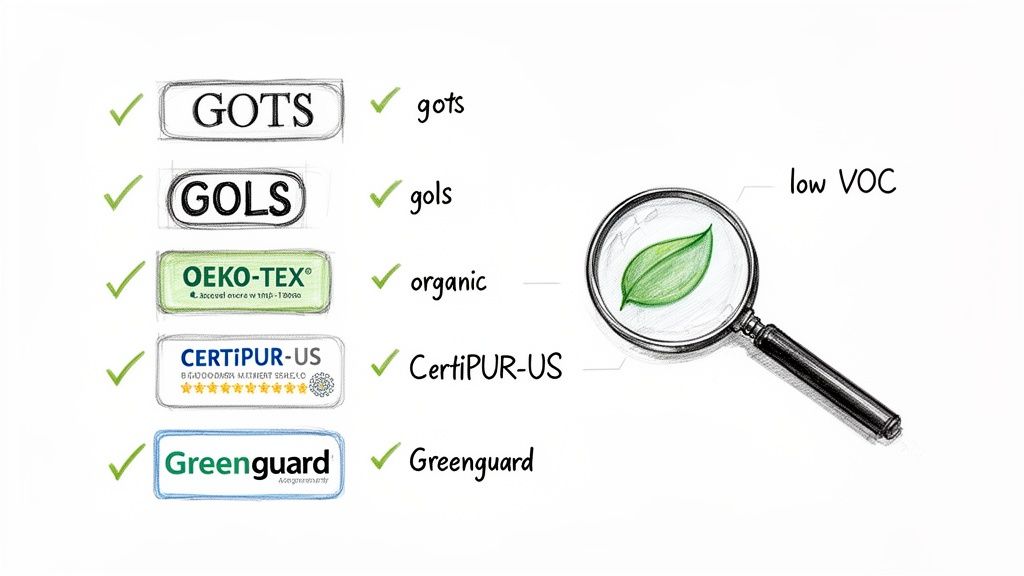
When you start shopping for an eco-friendly mattress, you’ll find yourself in a sea of logos and labels. Think of these certifications as your personal, third-party inspectors. They’re here to cut through the marketing jargon and “greenwashing” to give you verifiable proof that a mattress meets strict health and environmental standards.
Without these seals of approval, you’re just taking a company’s word for it. Certifications are what separate a genuinely sustainable product from one that just throws around buzzwords. They’re your guarantee that the materials are truly organic, the manufacturing was clean, and your new bed is free from a long list of harmful chemicals.
This demand for clean, verified products is making waves. The global organic mattress market was valued at $1.3 billion in 2023 and is on track to more than double to $2.5 billion by 2032, largely driven by people wanting beds free from chemicals like formaldehyde.
Navigating all these acronyms can feel like decoding a secret language. To make it simple, we’ve created a quick cheat sheet to help you understand what each certification really means for you and your home.
Eco Friendly Mattress Certification Cheat Sheet
| Certification Logo | What It Guarantees | Materials Covered | Key Takeaway |
|---|---|---|---|
| GOTS | At least 95% of materials are certified organic, with strict environmental and social criteria from farm to factory. | Textiles (Cotton, Wool) | The gold standard for organic. Ensures the entire production process is clean and ethical. |
| GOLS | At least 95% of the latex is from certified organic rubber tree plantations. | Natural Latex Foam | The ultimate proof that your latex foam is genuinely organic and sustainably sourced. |
| OEKO-TEX | Every single component of the final product has been tested and is free from harmful levels of over 100 substances. | All Components (Foam, fabric, zippers, thread) | A powerful health and safety check. It doesn’t mean “organic,” but it does mean it’s safe for your skin. |
| CertiPUR-US | The foam is made without ozone depleters, certain flame retardants, heavy metals, and has low VOC emissions. | Polyurethane Foams (Memory foam, plant-based foams) | Your assurance that any foam in the mattress is made without the worst chemicals and won’t pollute your indoor air. |
| GREENGUARD Gold | The product meets some of the world’s most rigorous standards for low chemical emissions (VOCs) into indoor air. | Finished Products | A top-tier certification for clean air. Ideal for kids, the elderly, and anyone with chemical sensitivities. |
This table is your quick guide, but let’s take a closer look at what each of these powerful certifications really stands for.
GOTS: The Gold Standard For Organic Textiles
The Global Organic Textile Standard (GOTS) is one of the most important seals you can find. It’s the ultimate stamp of approval for materials like organic cotton and wool. When you see the GOTS logo, it means that at least 95% of the materials in the product are certified organic.
But it goes way beyond that. GOTS audits the entire supply chain—from how the cotton is harvested and processed to how the final product is manufactured and labeled. This ensures every single step is environmentally and socially responsible. For you, it’s peace of mind that the cotton in your mattress was grown without pesticides and processed without toxic dyes.
GOTS is your guarantee of a truly organic product from seed to stitch. It confirms not just the material’s purity but also the ethical and environmental integrity of its entire journey to your bedroom.
GOLS: Verifying Pure Organic Latex
While GOTS is for textiles, the Global Organic Latex Standard (GOLS) is the specific seal for natural latex foam. To earn this certification, the latex must contain a minimum of 95% certified organic raw natural rubber.
This confirms the latex came from rubber trees grown on certified organic plantations, meaning no harmful pesticides or fertilizers were used. GOLS also sets strict limits on fillers and harmful substances, ensuring the final foam is as pure and natural as it gets. When you browse Futonland’s collection of organic mattresses, the GOLS seal is a key marker of authentic, high-quality latex.
OEKO-TEX: Testing For Harmful Substances
The OEKO-TEX STANDARD 100 certification is all about your health and safety. Unlike GOTS or GOLS, it doesn’t certify a material as “organic.” Instead, it tests the final product for a massive list of substances known to be harmful to human health, including pesticides, carcinogenic dyes, and heavy metals.
If a mattress carries this label, it means every single component—from the thread and zippers to the foam and fabric—has been tested and found to be free from dangerous levels of over 100 different chemicals. It’s a powerful safety check.
CertiPUR-US And Greenguard: For Cleaner Air
Two other key players focus specifically on the air you breathe while you sleep. They tackle the issue of off-gassing and VOCs (Volatile Organic Compounds).
-
CertiPUR-US: This certification applies to polyurethane foams, which includes memory foam and many plant-based foams. It verifies that the foam is made without ozone depleters, heavy metals like mercury or lead, formaldehyde, or certain banned flame retardants. Most importantly, it guarantees low VOC emissions for better indoor air quality.
-
GREENGUARD Gold: This is one of the most stringent certifications for low chemical emissions. Products with this seal have been tested in a controlled chamber and are proven to meet extremely low VOC limits. This makes them an excellent choice for sensitive individuals, children, and anyone looking to maintain the purest possible indoor air. If this is a priority, you should definitely explore options that have earned CertiPUR certifications.
Exploring the Best Natural Mattress Materials
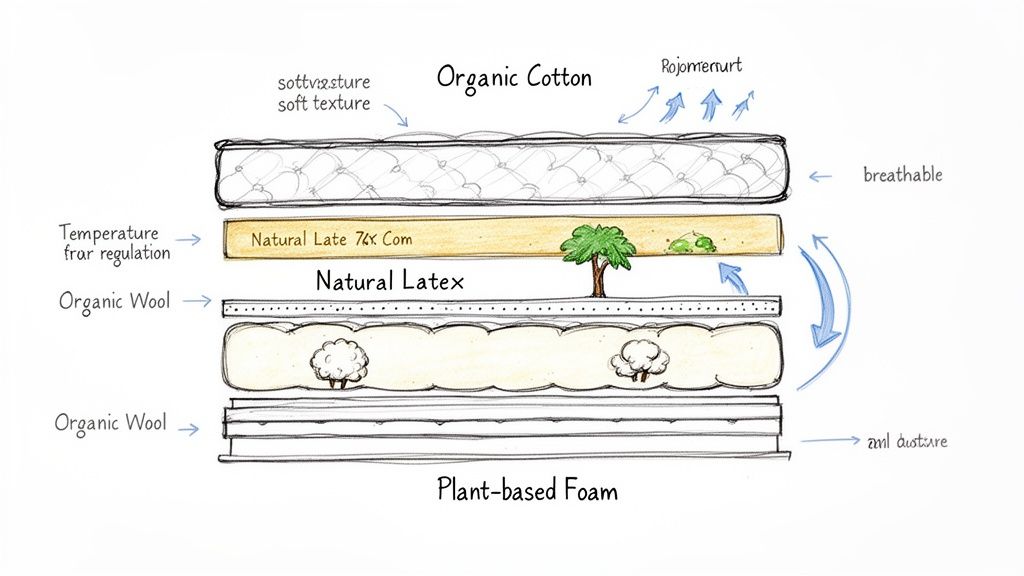
The secret to the best eco-friendly mattresses isn’t some complex chemical formula; it’s a return to simple, pure ingredients sourced straight from nature. Unlike conventional mattresses made from petroleum-based foams and synthetic fabrics, these beds rely on materials that are renewable, durable, and just plain healthier.
Each layer has a specific job, and they all work together to create a sleep surface that’s supportive, breathable, and free from harsh chemicals. Getting to know these core components is the key to finding a mattress that truly fits you. Let’s peel back the layers and meet the superstar materials that make a truly great sustainable mattress.
Natural Latex: The Resilient Foundation
Imagine a material with the responsive bounce of springs and the contouring relief of foam, all harvested from a tree. That’s natural latex. It’s a milky sap tapped from rubber trees in a process that’s completely sustainable—think of it like tapping a maple tree for syrup. This sap is then processed into a durable, supportive foam that forms the core of many of the best eco-friendly mattresses.
When you start looking at latex, you’ll hear about two main types:
- Dunlop Latex: This is the original method. Liquid latex is poured into a mold all at once and baked. The result is a foam that’s a bit denser on the bottom and softer on top, creating a firm, supportive feel that’s exceptionally durable.
- Talalay Latex: This is a more involved, multi-step process. The mold is only partially filled, then vacuum-sealed to expand the sap. After that, it’s flash-frozen and baked, which creates a lighter, more consistent foam with a plusher, more buoyant feel.
Both Dunlop and Talalay are excellent choices. Dunlop is often praised for its robust support and longevity, making it a great core material. Talalay, on the other hand, is frequently used in top comfort layers for its cloud-like pressure relief.
Organic Cotton: The Breathable Comfort Layer
The soft, breathable surface you first touch on a mattress is crucial, and nothing beats organic cotton for this job. Conventional cotton is one of the most pesticide-heavy crops in the world, but GOTS-certified organic cotton is grown without any of those toxic chemicals. That means no nasty pesticide residues in your bed.
But the benefits go way beyond purity. Organic cotton is incredibly breathable, letting air circulate freely through the mattress. This helps wick away moisture and keep your sleep surface cool and dry—a huge advantage for anyone who tends to sleep hot. This natural airflow is a simple but powerful feature for staying comfortable all night long.
Organic Wool: The All-in-One Wonder
Organic wool is nature’s own high-performance fiber and one of the most valuable materials you can find in an eco-friendly mattress. Its uniquely crimped structure creates millions of tiny air pockets, making it an incredible natural insulator.
This structure allows wool to do several critical jobs at once:
- Natural Fire Barrier: Wool is naturally flame-resistant. It needs way more oxygen to burn than most materials and will often self-extinguish. This allows mattress makers to meet strict federal fire safety standards without dousing their products in chemical fire retardants.
- Temperature Regulator: Those same air pockets help it regulate temperature. It keeps you warm in the winter and cool in the summer by wicking moisture away from your body and letting it evaporate.
- Moisture and Allergen Resistant: Wool can absorb up to 30% of its weight in moisture without feeling damp. This keeps your sleep environment dry and makes it a terrible place for dust mites, mold, and mildew to live.
Plant-Based Foams: A Step Away From Petroleum
For those who love that classic, body-hugging feel of memory foam, plant-based foams offer a more sustainable alternative. Traditional memory foam is a type of polyurethane foam, which is derived entirely from petroleum.
Plant-based foams are made by replacing a portion of that petroleum with plant-derived oils, like those from soy or castor beans. While they aren’t fully “natural” like latex, these foams reduce the reliance on fossil fuels and typically have lower VOC emissions than their conventional counterparts. A CertiPUR-US® certification is a must-have here, as it ensures the foam is made without the worst offenders and has been tested for low emissions.
By understanding these powerful ingredients, you can better appreciate what makes up the best natural mattresses available today and choose the combination that promises your most restorative sleep.
Choosing the Right Eco Mattress for Your Sleep Style
You’ve explored the ingredients and sorted through the certifications. Now for the fun part: translating all that knowledge into the mattress you’ll actually sleep on. Picking the right mattress isn’t just about finding the best materials; it’s about matching those materials to your body, your space, and your lifestyle.
Think of it like being fitted for a perfect pair of running shoes. A pro wouldn’t just hand you a box. They’d ask about your running style, whether you hit the trails or the pavement, and what your goals are. The best mattress for you depends entirely on how you sleep.
Matching Firmness to Your Sleep Position
Your go-to sleeping position is the single biggest clue to finding the right firmness. The goal is simple: keep your spine in a neutral, straight line from your neck all the way down to your tailbone. If a mattress is too soft, you’ll sink into a hammock-like curve. Too firm, and you’ll create uncomfortable pressure points.
-
Side Sleepers: Most of us fall into this category. Side sleepers need a mattress with a soft to medium-firm feel. It has to be plush enough to cushion the shoulders and hips, letting them sink in just enough to keep the spine perfectly aligned.
-
Back Sleepers: If you sleep on your back, you’ve got a bit more flexibility, but you’ll generally feel best on a medium to firm surface. The mattress has to provide solid support for your lower back, preventing your hips from sinking too low and throwing your spine out of whack.
-
Stomach Sleepers: This position puts the most stress on the spine, so mattress choice is critical. Stomach sleepers absolutely need a firm to extra-firm mattress. This keeps their hips elevated and in line with their shoulders, preventing that unnatural “U” shape in the lower back.
Solutions for Small Spaces and Convertible Furniture
Living in a cozy apartment or needing a guest room that pulls double duty doesn’t mean sacrificing eco-friendly comfort. In fact, many of the best eco-friendly mattresses are a natural fit for convertible furniture like futon frames and convertible sofa beds.
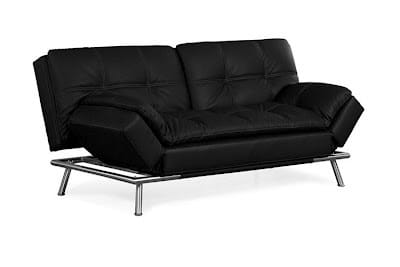
When you’re choosing a mattress for a futon, flexibility is everything. The mattress needs to bend and fold daily without breaking down. Natural latex and cotton/wool blends are fantastic choices here because they’re both durable and pliable. Look for a thickness between six and eight inches—that’s the sweet spot for providing plenty of comfort for both sitting and sleeping without being too bulky to fold.
For a huge selection designed specifically for these needs, you can browse a variety of futon mattresses built for durability and comfort.
A great futon mattress has to do two jobs perfectly: it must be a comfortable sofa by day and a supportive bed by night. Natural materials like latex and wool really shine here, offering a resilience that stands up to daily conversion.
Addressing Allergies and Sensitivities
For anyone with allergies, an eco-friendly mattress isn’t just a sustainable choice—it’s a lifesaver. Conventional mattresses, with their synthetic foams and fibers, can quickly become a five-star resort for dust mites, mold, and mildew.
This is where natural materials completely change the game for sensitive sleepers.
- Natural Latex: The open-cell structure of latex allows air to flow freely, creating a dry environment that’s naturally resistant to mold and mildew. It’s also inherently antimicrobial and hypoallergenic.
- Organic Wool: Wool is a moisture-wicking superstar. It can absorb a surprising amount of moisture without ever feeling damp, which is key to stopping dust mites and other allergens that love humidity.
By choosing a mattress made with GOLS-certified latex and GOTS-certified wool, you’re basically creating a sleep environment with a built-in “no vacancy” sign for common allergens. You’ll breathe easier all night long.
Budgeting for a Long-Term Investment
Let’s be honest: a high-quality eco-friendly mattress often has a higher upfront price than a conventional memory foam bed-in-a-box. But it’s crucial to see this as an investment, not just an expense—an investment in your health, your sleep, and the planet.
A well-made natural latex mattress can easily last 15 to 20 years. That’s often double the lifespan of a typical synthetic foam mattress you might have to replace in less than a decade. This incredible durability means less waste in landfills and less money spent over the long run. When you add in the perks of better indoor air quality, no chemical exposure, and truly restorative sleep, the value is impossible to ignore.
Frequently Asked Questions About Eco Friendly Mattresses
Switching to a natural mattress is a big step, and it’s normal to have a few questions. From unexpected smells to how long your investment will last, getting the right answers helps you choose with total confidence. Here are the most common things people ask when shopping for an eco-friendly mattress.
Do Eco Friendly Mattresses Have A Smell?
Yes, but it’s not the harsh chemical smell you might be used to. New natural mattresses often have a mild, earthy scent from materials like wool or latex. This is completely harmless and a world away from the chemical “off-gassing” of VOCs that you get with synthetic memory foam.
This natural aroma usually disappears within a few days. If you want to speed things up, just let your new mattress air out in a well-ventilated room for a day or two before you make the bed.
Are Organic Mattresses Better For Allergy Sufferers?
Absolutely. Materials like GOLS-certified latex and GOTS-certified wool are naturally resistant to the stuff that makes you sneeze and itch. Their inherent properties create an environment where dust mites, mold, and mildew just can’t get comfortable.
For sensitive sleepers, an organic mattress isn’t just a luxury—it’s a practical tool for creating a cleaner, healthier sleep sanctuary. By removing the materials that allergens love, you can significantly reduce nighttime irritation and breathe easier.
This built-in resistance means you get a fresher sleep surface without any chemical treatments or synthetic additives. It’s a game-changer for anyone dealing with allergies or sensitivities.
How Long Do Eco Friendly Mattresses Last?
This is one of the best parts about investing in a high-quality eco-friendly mattress: they are built to last. Natural latex, in particular, is famous for its incredible resilience and can easily last 15 to 20 years—often double the lifespan of a typical memory foam mattress.
While the upfront cost might be a bit higher, the longevity makes it a fantastic long-term value. You’ll replace your mattress far less often, which saves money over the years and keeps bulky waste out of landfills. It’s an investment that pays you back, both in your wallet and for the planet.
Ready to feel the difference a natural mattress can make? Explore the full collection of healthy, sustainable sleep solutions at Futonland and find your perfect match today. Visit us at https://futonland.com.